


What Is Gemstone Home Decor? A Stylist’s Guide
Gemstone home decor is one of those concepts that sounds niche until you see it done well, and then you want it everywhere. Simply put, what is gemstone home decor?
It’s the practice of using natural mineral specimens, including geodes, crystal clusters, agate slices, and polished spheres, as intentional decorative objects inside your home.
These aren’t novelty rocks sitting in a dish. They’re geological art pieces that bring texture, color, and a sense of deep natural history into your living spaces. This guide walks you through what gemstone decor really includes, how to style it confidently, and why it outlasts every passing trend.
Table of Contents
- Key Takeaways
- What gemstone home decor actually is
- Styling gemstone decor room by room
- Functional gemstone pieces for workspaces
- Caring for your gemstone decor
- Why gemstone decor outlasts trends
- My take on gemstone decor’s real value
- Explore gemstone-inspired pieces from Hermj
- FAQ
Key Takeaways
| Point | Details |
|---|---|
| Gemstone decor is geological art | Natural mineral specimens like geodes and agate slices serve as sculptural, aesthetic accents for any room. |
| Placement shapes impact | Large specimens work best as focal points, while smaller pieces suit desks, nightstands, and bookshelves. |
| Care extends beauty | Keep gemstones away from direct sunlight and clean only with a soft, dry or slightly damp cloth. |
| Function meets form | Selenite lamps, onyx pen holders, and gemstone paperweights bring both beauty and purpose to workspaces. |
| Gemstone decor is genuinely sustainable | Each piece carries millions of years of geological history, making it far more lasting than mass-produced decor. |
What gemstone home decor actually is
Gemstone home decor includes natural mineral specimens used as sculptural, functional, or purely aesthetic objects inside a home. The category is broader than most people realize.
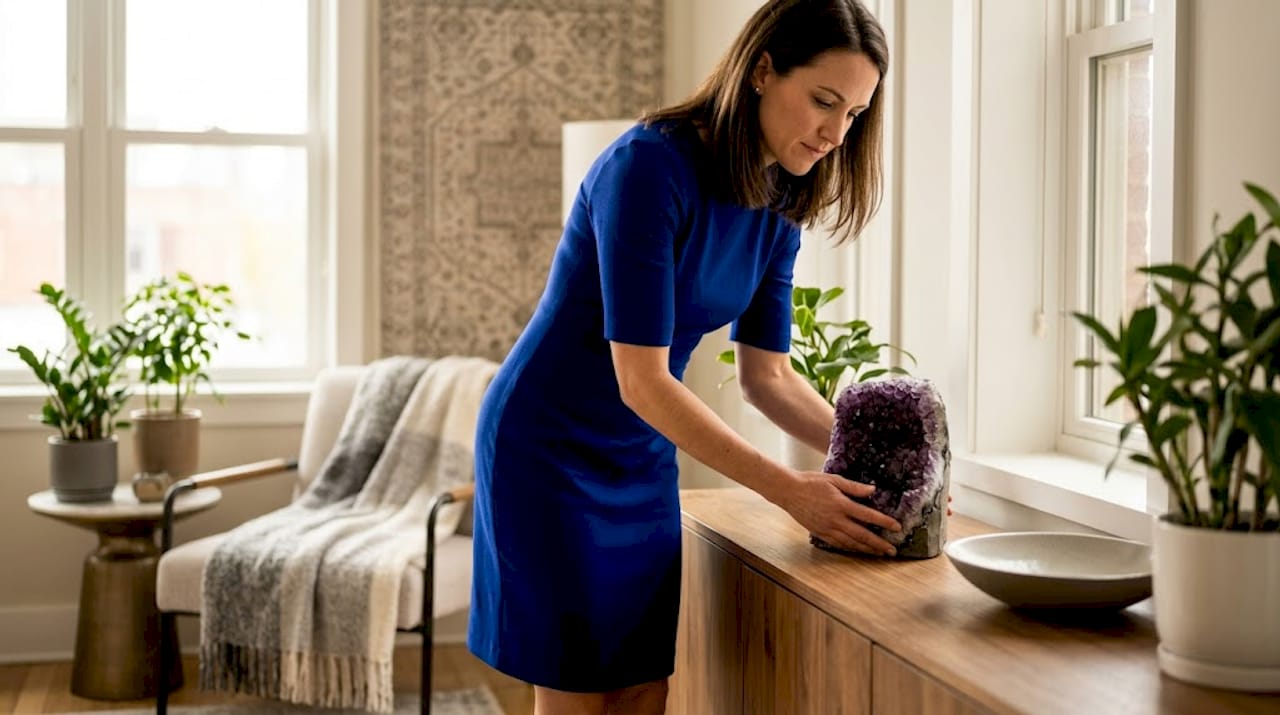
It runs from a small rose quartz sphere on a nightstand all the way to a cathedral amethyst geode standing on the floor of a living room. Both are gemstone decor. The difference is scale and intent.
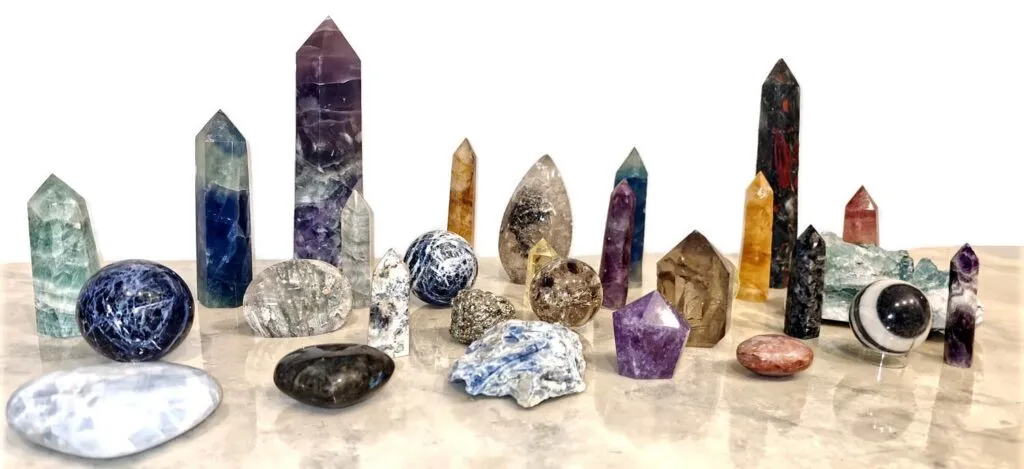
The most common forms you’ll encounter are geodes, crystal clusters, polished towers (also called points), spheres, freeform slabs, agate slices, and tumbled stones arranged in bowls or on trays.
Materials range widely. Amethyst, clear quartz, rose quartz, selenite, pyrite, agate, labradorite, and obsidian all appear regularly in home decor contexts. Each brings a distinct visual character.
Here’s a quick reference for the most popular stones and what they contribute aesthetically:
| Gemstone | Color range | Visual character | Best placement |
|---|---|---|---|
| Amethyst | Purple, lavender | Dramatic, jewel-toned | Living rooms, entryways |
| Rose quartz | Blush, soft pink | Soft, romantic | Bedrooms, vanities |
| Selenite | White, translucent | Luminous, clean | Offices, shelves |
| Agate | Earth tones, blues | Graphic, layered | Framed, desks, walls |
| Pyrite | Metallic gold | Luxe, architectural | Bookshelves, bars |
| Clear quartz | Clear, icy white | Minimalist, bright | Any room |
| Labradorite | Teal, gold, gray | Iridescent, moody | Accent tables |
Pricing varies considerably. Agate slices and quartz clusters often start below $50, making gemstone decor accessible to a wide range of budgets. Large statement specimens can cost several hundred dollars, but they function as permanent art investments rather than seasonal decor you’ll replace.
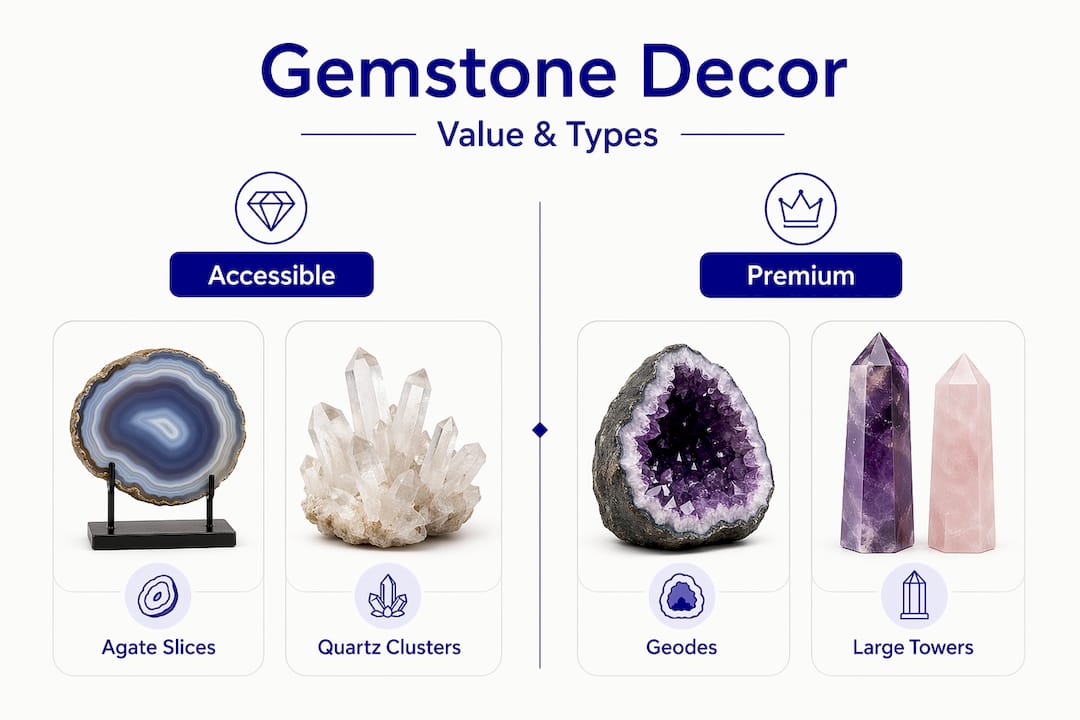
One thing worth knowing before you shop: no two specimens perfectly match in color, inclusions, or shape. If you’re buying a high-value piece online, request an exact photo of the actual specimen. What you see in stock photography may not match what arrives.
Styling gemstone decor room by room
Raw angular stones fit minimalist spaces, while earth-toned pieces warm neutral interiors with ease.
That’s the core principle of gemstone interior design: matching the stone’s visual energy to the room’s existing palette and mood, rather than treating every piece the same way.
Here’s how to think about each major space:
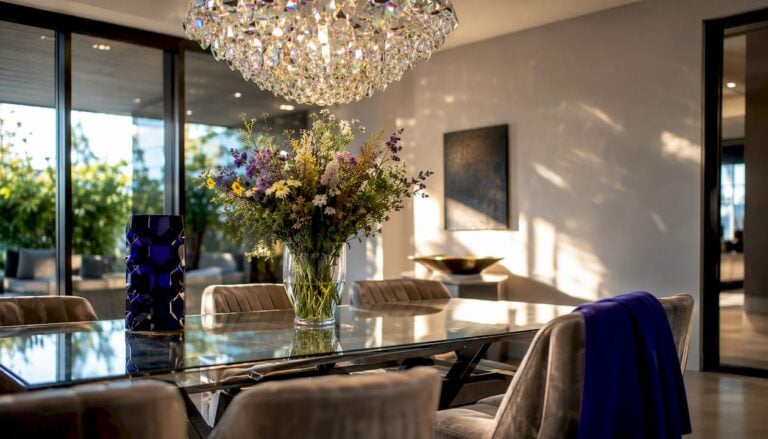
Living rooms and entryways. These are the right places for your most dramatic specimens. A large amethyst cluster or a cathedral geode creates an immediate focal point that anchors the room. Specimens 30cm and larger are recommended for rooms over 400 square feet. Anything smaller in a large living room simply disappears visually.
Bedrooms. Soft-hued stones are your best friends here. Rose quartz, selenite, and pale pink calcite all bring a calming quality without competing with the restfulness a bedroom needs. Keep pieces small to medium and place them on nightstands or a dresser.
Home offices and desks. This is where gemstone decor can be both beautiful and functional. Small towers, spheres, or polished worry stones sit naturally on a desk without crowding your workspace. The visual grounding they provide is genuinely calming during long work sessions.
Bookshelves and display shelves. Pyrite cubes, agate bookends, and small labradorite freeforms mix beautifully with books and ceramics. These spots reward variety in scale and texture.
Bathrooms. Selenite and rose quartz tolerate humidity reasonably well. A selenite wand or small rose quartz sphere on a bathroom shelf adds a spa-like calm that feels intentional.
Experts recommend treating gemstones as art by placing them with attention to light and giving each piece visual breathing room. Using a stone base, a small plinth, or a natural wood slice underneath a specimen instantly transforms it from “rock on a shelf” to a curated object.
Pro Tip: Position gemstone decor near a light source, whether natural or a soft lamp, to activate its translucency. Amethyst and clear quartz especially come alive when light passes through them, which adds dimension and warmth to a room that no printed art can replicate.
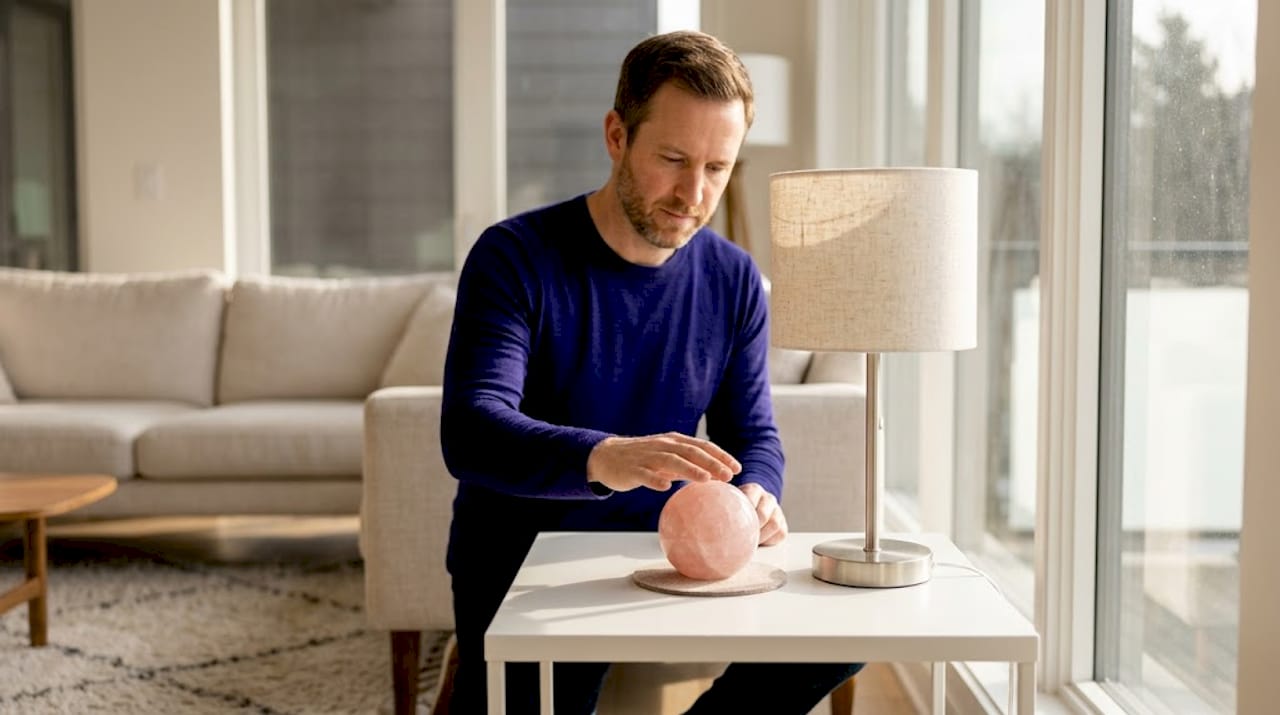
Over-styling gemstone decor diminishes the impact. Grouping too many small stones together creates visual noise rather than beauty. Choose one or two pieces per surface and let each one breathe.
Functional gemstone pieces for workspaces
Using gemstones in decor doesn’t stop at the purely aesthetic. Selenite lamps and onyx pen holders are among the most popular functional gemstone pieces, especially for home office and meditation spaces. They combine real utility with the natural warmth that mass-produced desk accessories simply can’t offer.
Some of the most practical gemstone home accessories worth considering include:
- Selenite charging plates. Flat slabs of selenite serve as a resting surface for jewelry, phones, or small objects. They’re beautiful on a desk or nightstand and don’t require any electricity.
- Onyx pen holders and desk organizers. Black onyx has a polished, architectural quality that looks at home in both traditional and modern offices. It reads as sophisticated rather than decorative.
- Gemstone paperweights. A polished sphere of labradorite or obsidian makes a striking paperweight with iridescent depth. Far more interesting than anything from an office supply store.
- Selenite lamps. These emit a warm, amber glow when lit. They work beautifully as ambient lighting in meditation rooms or as a soft bedside light.
- Agate coasters. Thin agate slices sealed for protection are genuinely functional coasters that double as decor when not in use.
Pro Tip: If you work from home and want to create a more focused atmosphere at your desk, try a small clear quartz tower positioned just outside your direct line of sight. It introduces a natural grounding element without distracting from your screen.
For more gemstone decor ideas beyond the desk, consider how a selenite lamp in the corner of a meditation room creates a completely different light quality from any artificial bulb. The glow is warmer, softer, and organic in a way that shifts the atmosphere of a room noticeably.
Caring for your gemstone decor
Gemstone decor’s fragility requires careful placement away from direct sunlight and abrasive cleaning methods to preserve optical clarity and polish. Many homeowners don’t realize that sunlight is one of the biggest threats to gemstone beauty. Amethyst and rose quartz are particularly susceptible. Prolonged exposure will gradually fade their color, and once that color is gone, it doesn’t return.
Key care habits to build from the start:
- Avoid direct sunlight. Place specimens away from south or west-facing windows, or use curtains to diffuse light in those rooms.
- Clean only with soft, dry or slightly damp cloths. Harsh chemicals damage the surface and will dull the natural polish over time. A microfiber cloth is ideal.
- Handle with care. Crystals with natural terminations or spiky clusters are fragile. Pick them up from the base, not the points.
- Dust regularly. Dust buildup in crystal formations is harder to remove the longer it sits. A soft brush, like a clean makeup brush, works well for getting into crevices.
- Don’t use ultrasonic cleaners. These are designed for jewelry and will crack or shatter many raw specimens.
Pro Tip: Keep a rotation in mind. If a piece has been in a bright room for a season, move it somewhere with lower light for a while. This extends the vibrancy of color-sensitive stones like amethyst.
Why gemstone decor outlasts trends
Gemstone decor carries millions of years of geological history, making it sustainable, timeless, and meaningful in a way that mass-produced decor simply can’t match.
That amethyst geode in your living room isn’t a product. It’s a natural object that formed inside the earth over an incomprehensible length of time, and it will outlast every other item in your home if you care for it well.
Here are the genuine benefits of gemstone decor over disposable alternatives:
- No two pieces are alike. Every specimen is naturally unique in color, pattern, and form. You’re not buying something thousands of others have in their homes.
- Longevity. With minimal care, gemstone decor lasts indefinitely. There’s no fading from poor manufacturing, no glue joints to fail, no paint to chip.
- Eco-conscious by nature. When you choose natural stone over plastic or resin decor, you’re choosing a material that required no synthetic production process.
- Conversation value. People notice and ask about gemstone pieces. They carry a story, which is something a mass-produced decorative object can’t offer.
“The narrative quality and story behind gemstone pieces add unique value to interiors, elevating them from decoration to collection.” The Gem Museum
Gemstone decor offers a natural counterpoint to modern architecture’s clean lines, introducing texture, presence, and geological depth that manufactured materials simply can’t replicate.
If you’re interested in luxurious gemstone home decor and how it adds a layer of authentic character to modern interiors, the variety of available pieces is genuinely wider than most people expect.
My take on gemstone decor’s real value
I’ve spent years working with natural gemstones, both as jewelry and as decor objects, and the single biggest mistake I see people make is treating gemstone pieces like accessories instead of art.
They tuck a small cluster into a crowded shelf corner and wonder why it doesn’t look the way it did in the shop. Scale and space are everything.
In my experience, one well-chosen, generously sized specimen placed with intention outperforms a dozen small stones scattered around a room every single time. The piece needs room to communicate. It needs light, a considered base, and some open space around it to let the eye settle.
What I find most underappreciated is the geological depth these objects carry. When you place a large amethyst geode in a room, you’re not just adding a purple accent. You’re introducing an object that formed over millions of years inside volcanic rock. That’s a completely different kind of presence from anything manufactured.
I’ve also encountered the misconception that gemstone decor belongs only in “spiritual” or maximalist spaces. That’s simply not true. A single pyrite cube on a minimalist white shelf is as architectural as any sculpture. A slab of agate framed on a wall reads as graphic art. The key is restraint and intentional placement, not a particular aesthetic.
My honest advice: treat your gemstone pieces as long-term additions to your home, not seasonal decor. Buy fewer, buy better, and give each piece the space it deserves.
— Veronique
Explore gemstone-inspired pieces from Hermj
If the world of gemstone decor has you thinking about how natural stones can extend beyond your shelves and into your personal style, Hermj is a natural place to explore next.
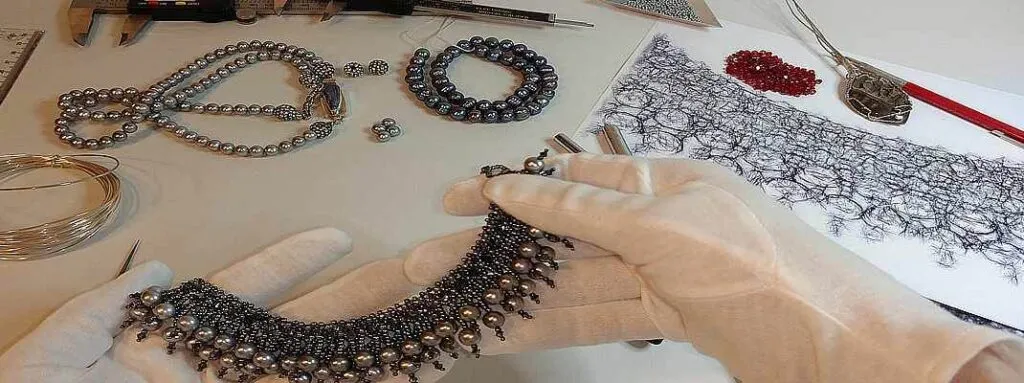
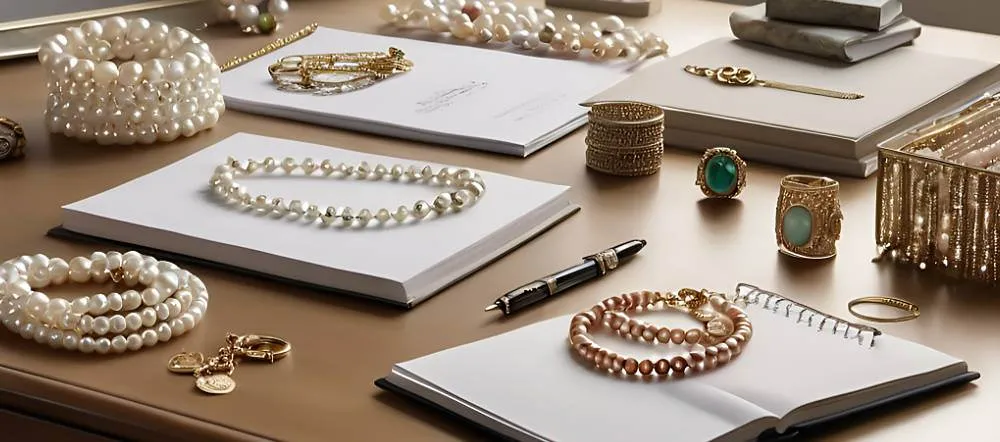
At Hermj, every piece is handcrafted from genuine pearls and gemstones, the same materials that make decor so compelling, now worn close. From artisan graduation jewelry perfect for gifting to everyday pieces that reflect the beauty of natural stone, Hermj brings the same respect for geological character to wearable form.
If you love the aesthetic of genuine gemstones in your home, you’ll find that wearing them carries that same warmth and intention. Browse the full collection at Hermj to find something that resonates with your personal style, whether for yourself or someone you love.
FAQ
What is gemstone home decor exactly?
Gemstone home decor refers to natural mineral specimens, such as geodes, crystal clusters, agate slices, and polished spheres, used as decorative or functional accents inside a home. These pieces range from small desk accessories to large floor statement pieces.
Which gemstones are most popular for home decor?
Amethyst, rose quartz, selenite, clear quartz, agate, and pyrite are among the most widely used stones in home decor, each offering distinct colors, textures, and visual character suited to different rooms and styles.
How do I care for gemstone decor at home?
Keep gemstone decor away from prolonged direct sunlight, which fades color-sensitive stones like amethyst and rose quartz. Clean only with a soft, dry or slightly damp cloth and avoid any chemical cleaners or abrasive materials.
Can gemstone decor fit a minimalist interior?
Yes. Raw angular stones and single polished specimens work particularly well in minimalist spaces. A pyrite cube or a clear quartz tower on a clean, uncluttered surface reads as sculpture rather than decoration.
Is gemstone decor expensive?
Prices vary widely. Entry-level pieces like small agate slices and quartz clusters often start below $50, while large statement specimens can cost considerably more. Most pieces are long-term investments that don’t need replacing the way trend-driven decor does.
Recommended
- Why Gemstones Are The Rage In Interior Decorating
- Crystal Decoration Ideas: 5 Tips To Master Healthy Home Decor
- Luxurious Gemstone Home Decor And Crystal Decoration
- Your Gemstone Home: Merge Enriching Crystal Color & Serenity