


Why Jewelry Symbolizes Relationships: Meanings and History
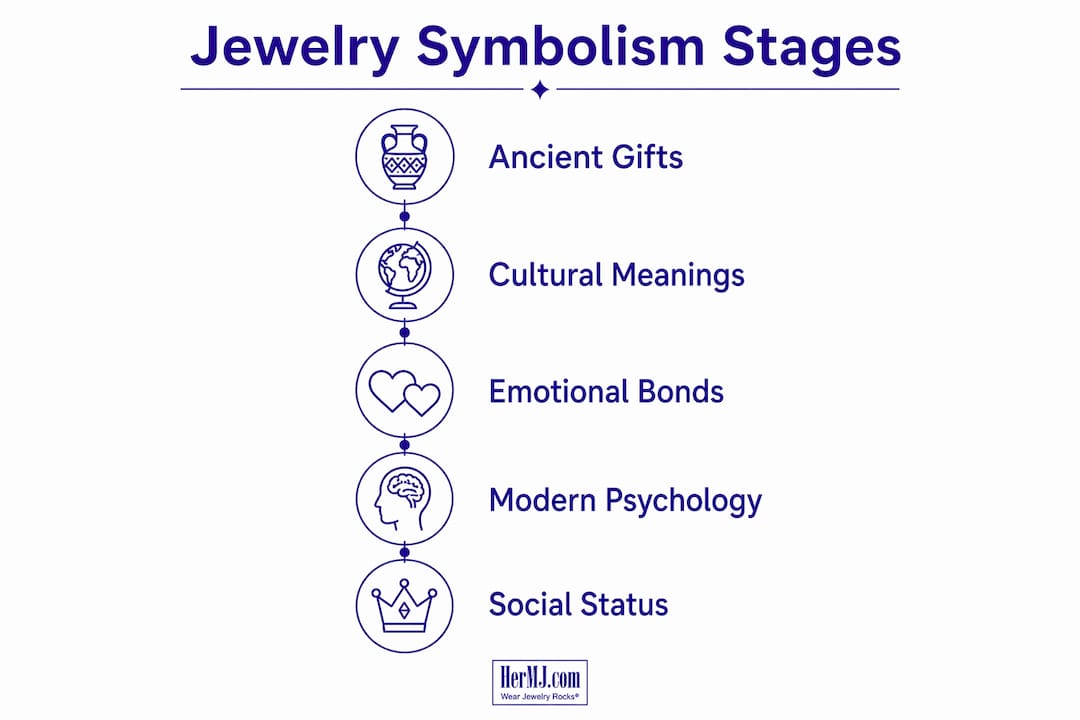
Jewelry symbolizes relationships by turning invisible feelings into tangible symbols you can see, touch, and wear every day. It’s one of humanity’s oldest forms of nonverbal communication, predating written language and used across every culture to signal love, commitment, and belonging.
Give someone a necklace or a bracelet, and your’representing them with a visible, lasting declaration of the bond you share.
- Jewelry signals social bonds without words, communicating love, loyalty, and belonging at a glance.
- It carries emotional messages that spoken language sometimes can’t fully express.
- Its roots lie in human social evolution, where adornments helped people navigate identity and relationships.
- Each piece links two people symbolically, carrying the giver’s presence into the wearer’s daily life.
- Common pieces like heart pendants, lockets, and charm bracelets reinforce these emotional connections through widely recognized symbols.
Common symbolic jewelry pieces and what they mean in relationships
Certain jewelry forms have earned their symbolic weight through centuries of consistent use. Heart-shaped pendants are the most direct expression of affection, their shape universally understood as a stand-in for love and emotional warmth.
Lockets go a step further, holding a photograph or a small keepsake inside, making the piece a private world the wearer carries close to their chest.

Charm bracelets work differently. Each charm represents a moment, a person, or a milestone, so the bracelet grows into a wearable autobiography over time. A charm added after a first trip together or the birth of a child carries a story no price tag can capture.
Unbroken circles appear throughout relationship jewelry for good reason. Their shape has no start or end, making them a natural symbol of eternity and unity.
Couple necklaces, often sold as two halves of a single pendant, take this further by making the connection literal: each person wears a piece that becomes whole only when the two are placed together.
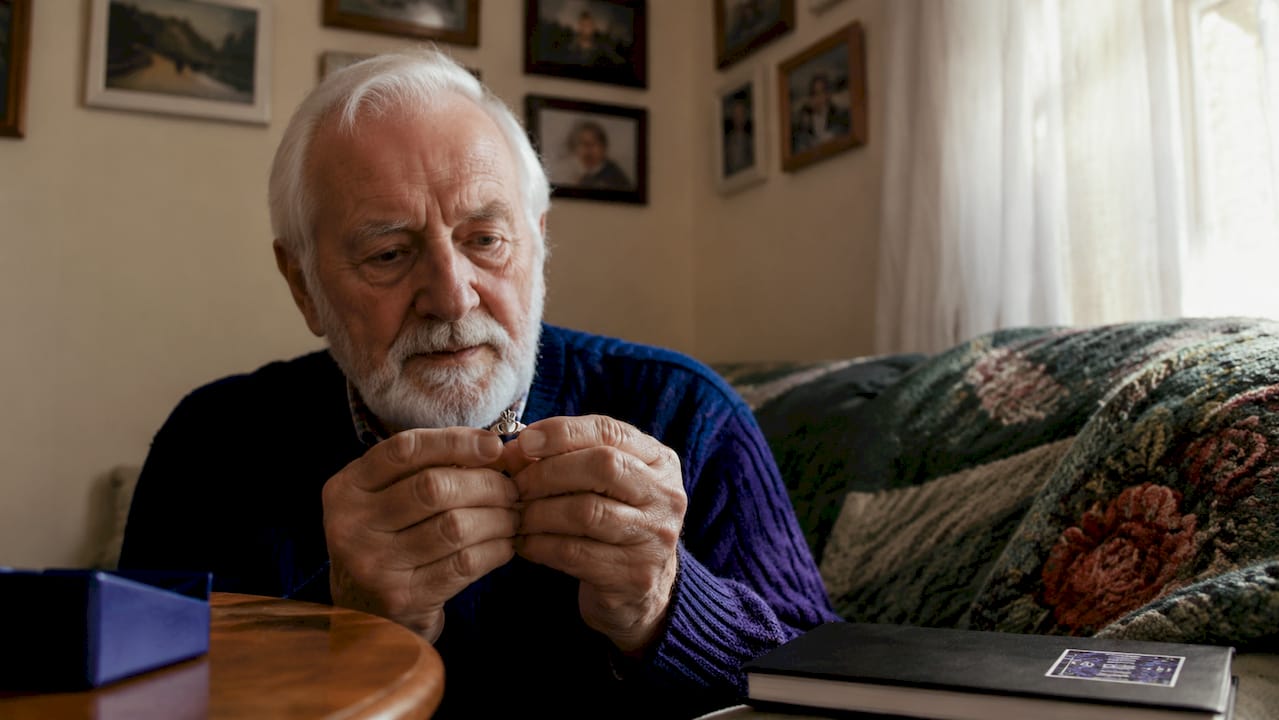
Cultural variations add richness here. The Irish Claddagh, with its hands, heart, and crown, expresses friendship, love, and loyalty in a single design.
In many South Asian traditions, layered gold necklaces given at weddings carry meanings tied to prosperity and family continuity. The jewelry’s cultural role shifts by community, but the core impulse remains the same.
How history and culture shaped jewelry’s role in relationships
Ancient cultures treated jewelry as far more than decoration. In Greece and Rome, people gifted jewelry as talismans and amulets to protect loved ones from harm or wish them safe travels.
Egyptian partners exchanged hemp circles as symbols of commitment, a practice that echoes in the way we exchange jewelry at ceremonies today.
These rituals weren’t arbitrary. Giving a physical object to someone you love creates a tangible record of the relationship. The piece outlasts the moment, carrying the emotional weight of the occasion forward through time.
Pro Tip: When choosing a gift for a milestone like an anniversary or a new chapter in someone’s life, look for pieces with historical symbolic weight, such as aquamarine for protection or gold for enduring value. The meaning behind the material deepens the gift.
Across centuries, the colors and forms of jewelry evolved alongside social customs, but the practice of marking relationships through gifting stayed constant. What changed was the sophistication of the craft and the range of stones and metals available. The emotional intention behind the gesture never did.
What gemstones say about love and commitment
Gemstone choices in relationship jewelry are rarely accidental.
Diamonds, ranking highest on the Mohs scale of mineral hardness, symbolize strength and sincerity in love, their clarity echoing the purity of genuine feeling.
Rubies carry a heartfelt desire for good fortune, particularly in matters of love, making them a meaningful choice for romantic gifts.
- Emeralds are associated with growth, loyalty, and protection, often chosen to celebrate family bonds or new beginnings.
- Aquamarines represent peace and serenity, with a long history as protective stones for those embarking on journeys.
- Garnets carry deep associations with passion and devotion, making them a quietly powerful choice for expressing commitment.
A faceted garnet necklace captures exactly this kind of intentional symbolism: the stone’s rich color and emotional resonance make it a gift that communicates something words alone can’t.
Choosing a gemstone with care, rather than defaulting to whatever’s trending, tells the recipient you thought about what the piece means, not just how it looks. For a fuller guide to making that choice, gemstone meanings for gifts break down the symbolism behind each stone clearly.
Modern psychology explains jewelry’s emotional power
Psychology gives us a precise framework for what most people already sense. Research on the “extended self,” published in the Journal of Consumer Research by consumer researcher Russell Belk, found that possessions become part of identity, especially gifts from loved ones. Jewelry sits at the center of this: it’s worn on the body, given with intention, and rarely discarded.
Gifts from loved ones are perceived as carrying a part of the giver’s identity, which allows the wearer to feel an ongoing emotional connection even across distance or time.
A bracelet from your mother or a pendant from a close friend isn’t just an accessory. It’s a surrogate presence.
Psychoanalytic theory adds another layer. Jewelry functions as a transitional object, bridging the emotional space between two people and maintaining connection when they’re apart. The concept of “intersubjectivity” describes how the piece itself holds a shared emotional space between giver and wearer, making it a genuinely relational object rather than a personal one.
The “Broken Jewelry Theory,” which gained traction on social media, reflects this psychological depth in a striking way. When a cherished piece tied to a relationship breaks or goes missing, people often interpret it as a signal about the relationship itself.
There’s no scientific proof of causation, but the theory reveals something real: we’ve embedded so much emotional meaning into these objects that their physical state feels like a mirror of our inner one. It’s less about fate and more about how the mind uses symbols to process feelings it hasn’t yet put into words.
How jewelry gifting shapes relationship dynamics and social status
The act of giving jewelry does something a card or a bouquet can’t quite replicate. It creates a lasting, visible record of the relationship. Every time the recipient wears the piece, they re-experience the moment and the connection it represents. That’s a form of emotional continuity most gifts simply don’t offer.
Jewelry also carries social weight. In American culture, jewelry marks life’s milestones, from engagements and weddings to graduations and anniversaries, making relationship status and personal achievements visible to the wider world.
The choice of piece communicates care, attention, and the desire to give something enduring rather than momentary.
There’s also the matter of heirlooms. When jewelry passes between generations, it concentrates family memory into a small, portable object. A grandmother’s pendant or a parent’s bracelet becomes a physical thread connecting people across time.
For ideas on meaningful jewelry gifts that carry this kind of lasting resonance, the range of options is wider than most people realize.
Key Takeaways
Jewelry symbolizes relationships because it transforms emotional bonds into something visible, wearable, and lasting, grounded in both human social evolution and modern psychological research.
| Point | Details |
|---|---|
| Jewelry as nonverbal language | It has communicated love, status, and belonging for hundreds of thousands of years, predating written language. |
| Gemstones carry specific meanings | Diamonds reflect strength, rubies signal good fortune in love, and garnets express passion and devotion. |
| Extended self theory | Research in the Journal of Consumer Research shows gifts from loved ones become part of the wearer’s identity. |
| Transitional object function | Psychoanalytic theory identifies jewelry as a bridge maintaining emotional connection between giver and wearer. |
| Gifting marks milestones | In American culture, jewelry visibly affirms commitments, achievements, and family bonds across generations. |
Recommended
- What Is The Purpose Of Jewelry: Its History And Empowerment
- The Role of Jewelry in Fashion: Your Modern Style Guide
- Gemstone Meaning for Gifts Explained: Choose With Intent
- Crafted For Eternity: Ancient Egyptian Jewelry History