


What Makes Corundum Hardness Durable And Second Only To Diamonds

What Makes Corundum Hardness Durable And Second Only To Diamonds?
Corundum is a crystalline form of aluminum oxide (Al₂O₃) known for its remarkable hardness, rating 9 on the Mohs scale of common minerals, and is one of the most durable minerals used industrially and as a gemstone 1.
Typically, it takes the form of hexagonal barrel-shaped crystals or densely formed hexagonal plates.
While naturally transparent, corundum can display a variety of colors due to the presence of impurities such as iron, chromium, and titanium (responsible for the shimmering optical properties within the star sapphire).
These impurities result in one of the most sought-after stones. In their most famous gemstone forms, colored by iron and titanium, they’re known as sapphires; when colored by chromium impurities, the resulting stones are known as rubies. 2
Just as impressive, beyond its appeal as a gemstone, corundum is used in various industries for its high thermal conductivity and optical transparency, making it a versatile mineral with significant economic value.
Chemical Composition

The stone’s main component, aluminum oxide (Al₂O₃) accounts for 95% of its structure. This means that each ionic lattice of corundum is made up of two aluminum atoms and three oxygen atoms.
In addition to aluminum and oxygen, corundum can contain small amounts of other elements as impurities, which can influence its mineral colouration. For instance, the presence of chromium gives corundum a red hue, resulting in ruby, while the presence of iron and titanium gives it a rich blue color, resulting in a sapphire. Despite these variations in color, aluminum oxide remains the primary component of corundum.
Corundum Crystal Structure

Corundum’s structured aluminum oxide and oxygen structure make it one of the most durable gemstones. Although pure corundum lacks a color of its own, trace elements such as iron, titanium, and chromium give the gem its signature color range.
Exceptional Hardness of Corundum

Known for its extreme hardness, corundum ranks just below diamond, the hardest mineral on the Mohs hardness scale with an impressive rating of 9, owed to its unique crystal structure, where oxygen atoms are arranged in a hexagonal close-packing pattern, and aluminum atoms filling two-thirds of the octahedral gaps (a compound with six aluminum atoms symmetrically arranged around a central oxygen atom).
This structural arrangement not only accounts for its profound hardness but also its unusually high density for a mineral composed of relatively light elements like aluminum and oxygen.
The quality of corundum hardness makes it an ideal material for industrial applications, particularly as an abrasive material, where it is used in everything from sandpaper to large-scale machining tools. Its durability and resistance to scratching also contribute to its use in creating synthetic jewel watch bearings, offering a cost-effective alternative to diamonds in precision instruments. Additionally, the hardness of corundum, coupled with its rarity and beauty as a gemstone, makes it valuable in both industrial and jewelry design markets.

Friedrich Mohs Gemstone Hardness Scale
Corundum hardness ranks just below diamond on the Mohs Hardness Scale, which sits at the pinnacle with a hardness of 10.
Rated at 9, corundum is twice as hard as topaz (8) and considerably harder than quartz (7).
Common varieties of corundum include ruby and sapphire, known for their exceptional durability and scratch resistance. Although corundum is surpassed only by diamond, it is not simply one-tenth as hard as diamond.
Importantly, since the magnitude of difference between the Mohs Scale is not the same between each of the ratings in the sequence, the diamond is nearly four times harder than corundum, despite corundum’s ranking of 9 compared to the diamond’s ranking of 10.
Listen To The Podcast
Industrial Applications
The mineral composition makes corundum incredibly useful across various industries due to its toughness and durability. Imagine trying to scratch a diamond; although it’s far from easy, corundum is almost as resilient.
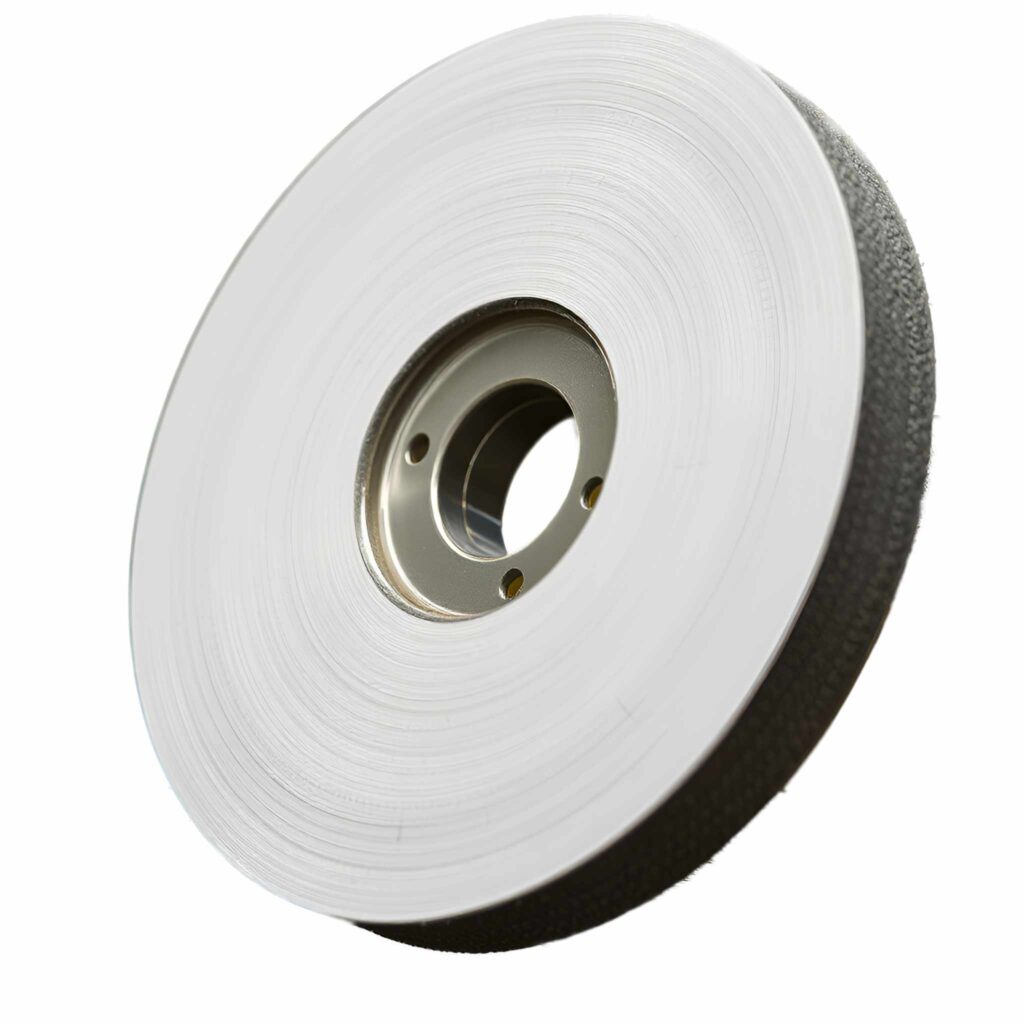
This makes it perfect for producing materials like sandpaper and grinding wheels that need to withstand heavy wear and tear. It’s also used to line furnaces because it can withstand extraordinarily high temperatures without melting.
The stone also plays a role in electronics by insulating electrical components to prevent short circuits. Plus, it’s used to help make chemicals like ammonia and methanol.
So, whether it’s polishing metal, lining a hot furnace, or keeping electronics safe, corundum is a behind-the-scenes workhorse in multiple industries.
Gemstone Varieties of Corundum
Corundum is renowned for its stunning gemstone varieties, primarily rubies and sapphires, captivating the attention of jewelry lovers for centuries because of the stone’s vibrant hues and unparalleled hardness.
Rubies, with their deep red color, owe their allure to trace amounts of chromium, while the enchanting blues of sapphires result from iron and titanium impurities.
Beyond its traditional colors, corundum’s diverse composition allows a spectrum of shades, leading to the creation of “fancy sapphires” that can be pink, yellow, green, or purple.
These types of corundum gemstones remain highly popular for their aesthetics and durability, making them a favorite for fine jewelry.
The unique properties and exquisite colors of corundum-based gemstones continue to make them a cherished part of both historical and contemporary necklaces, bracelets, and earrings.
Rubies

A corundum stone is specifically classified as a ruby when it exhibits a deep red color, which is primarily due to the presence of chromium impurities within its crystalline structure.
This distinctive red hue differentiates rubies from other varieties of gem-quality corundum, which are collectively referred to as sapphires when they display colors other than red.
The gem’s quality and vibrant coloration make it highly valued in the jewelry industry. The allure of rubies, coupled with their exceptional Mohs-scale hardness, contributes to their status as one of the most sought-after and recognizable gemstones in the world.
Sapphires
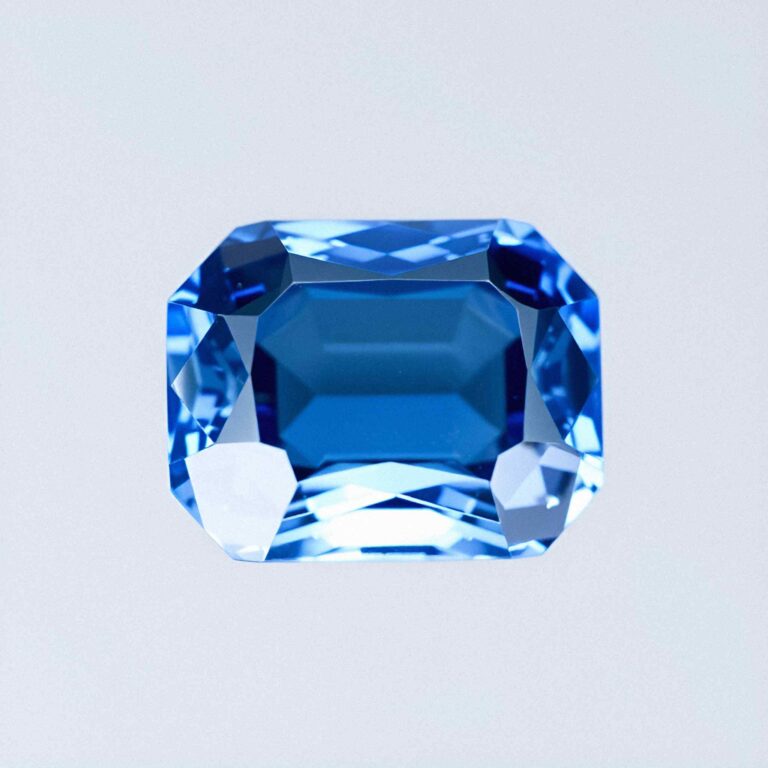
A corundum stone is classified as a sapphire primarily based on color and quality. While the mineral corundum can occur in various hues, a blue gemstone-quality specimen is specifically called a “sapphire.”
The blue coloration is due to trace elements such as iron and titanium within the corundum structure.
In addition to the traditional blue variety, any gemstone-quality stone not red (ruby) or colorless (white sapphire) is also categorized as a “fancy sapphire,” which encompasses a spectrum of corundum colors, such as pink, yellow, green, and purple.
The rarity, vibrancy, and clarity of these colored corundum stones contribute to their value and desirability in the gemstone market, making them highly sought after for a wide range of handmade artisan jewelry.
Industrial Uses of Corundum
Also valued in industrial applications for their exceptional hardness, heat resistance, and chemical stability, corundum stones are used as grinding wheels and cutting tools, effectively machining hard materials such as glass and metals.
Additionally, as a resistant material in high-temperature processes, corundum is indispensable in manufacturing and construction, where durability and thermal stability are crucial.
Because of its chemical resistance, the mineral also plays a role in electronics as an electrical insulator and in the production of chemicals such as ammonia, methanol, and hydrogen.
These diverse industrial uses underline the economic significance of corundum, contributing to advancements across a number of essential industries.
Jewel Bearings in Watchmaking
Corundum’s exceptional hardness and chemical stability make it an ideal rock type for manufacturing jewel bearings in watches.
These tiny, durable bearings are crucial components in watch movements, reducing friction between moving parts while enhancing the timepiece’s accuracy and longevity.
Using synthetic ruby, watchmakers ensure their timepieces can withstand the wear and tear of daily use.
The choice of corundum for jewel bearings is not only driven by its physical properties but also by its smooth surface, which minimizes friction and contributes to the efficient operation of the intricate mechanisms within a watch.
Components in Ruby Lasers
The stone’s aluminum oxide (Al₂O₃) plays a pivotal role in the development of ruby lasers. The first functional laser, invented by Theodore Maiman on May 16, 1960, took a synthetic ruby crystal, a form of corundum with chromium impurities, to stimulate intense light (or Light Amplified through Simulated Emission of Radiation), causing electrons within it to jump to a higher energy level and subsequently emit photons.

These photons then interacted with other atoms in the gain medium, triggering a chain reaction that produces a concentrated, intense beam of light characteristic of lasers.
This process of incorporating chromium into ruby allows the crystal to fluoresce (glow) red under UV light, enhancing the intensity and quality of the laser beam. 3
As a result, synthetic corundum, specifically in the form of ruby, is indispensable in laser applications, demonstrating its significant impact on modern technology.
Synthetic Corundum
The man-made version of the naturally occurring mineral dates back to 1837, with large-scale production beginning in 1903. Initially, synthetic stones were created to mimic rubies, but their uses have expanded considerably over time.
Today, it is employed in various industrial applications, such as making lenses for satellites, synthetic sapphire scratch-resistant glass for watches, and aircraft windows, due to its high-strength optical properties.
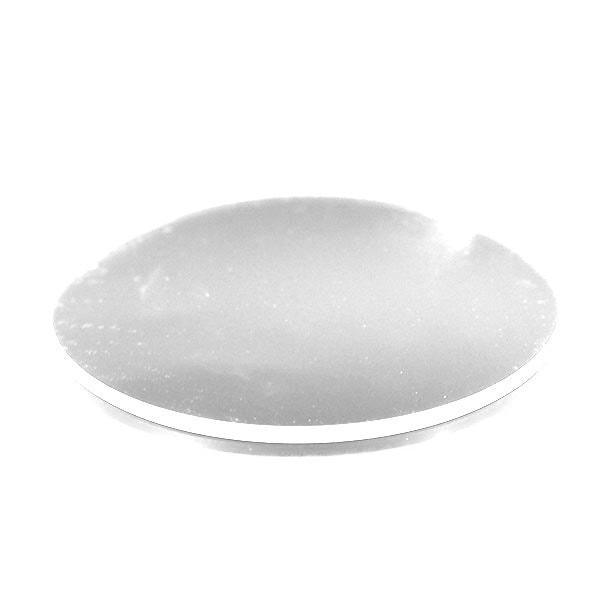
Additionally, as a synthetic material, man-made corundum is used as an industrial abrasive for glass grinding and as a material for metal polishing wheels.
Some labs use Verneuil, flux, and hydrothermal methods of controlled growth via chemical flame using oxygen and hydrogen to produce artificial corundum for specialty products like gemstones. This results in synthetic corundum that is gemologically second to organically mined stones because lab-grown varieties lack the rarity and unique allure of naturally occurring gems.
Advantages Over Natural Corundum
Synthetic corundum offers several advantages over its natural counterpart, primarily due to its consistent quality, cost-effectiveness, and environmental benefits.
Manufactured in a controlled laboratory setting, synthetic corundum can be produced with uniformity and precision, ensuring consistent properties that are difficult to achieve with naturally occurring corundum.
This uniformity makes synthetic corundum a particularly valuable material in industrial applications, such as abrasives, watch bearings, and electronic components, where reliability and performance are critical.
As an added benefit, the production of synthetic corundum is less environmentally damaging than traditional mining processes since it bypasses the ecological disruption and pollution associated with extracting natural corundum.
Economically, synthetic corundum is more affordable and accessible because it can be produced in large quantities without depleting natural resources. This combination of factors—consistency, affordability, and reduced environmental impact—makes synthetic corundum a highly advantageous material in various industrial sectors.
Enhancing Corundum Appearance
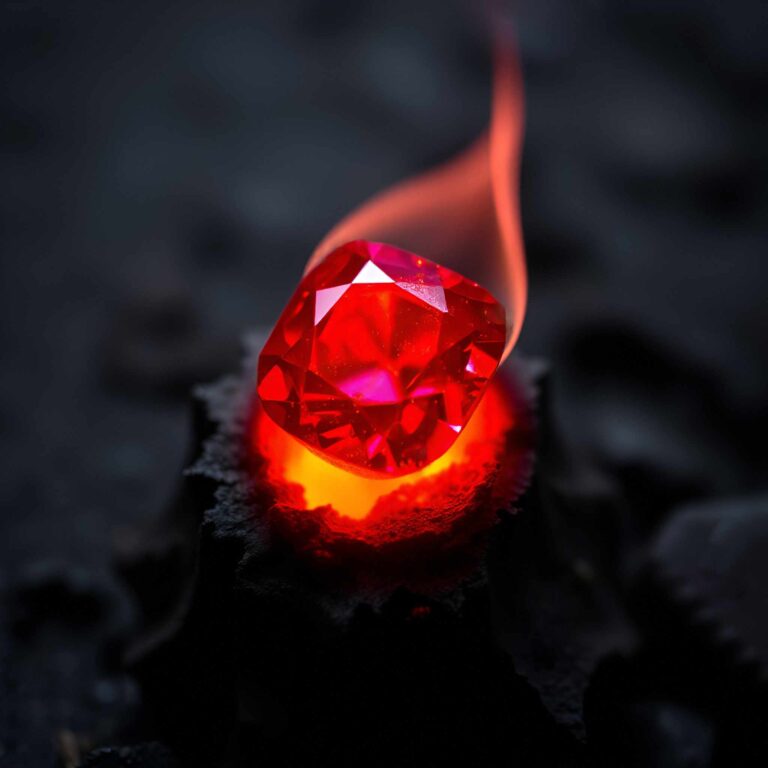
Enhancing the appearance of corundum often involves various treatment methods to improve its clarity and color. Heat treatment is one of the most common processes used to intensify the stone’s natural hues and enhance its transparency 4.
The process involves carefully controlled heating to alter the internal structure of the corundum, resulting in a more vibrant and clear stone.
Treatments and Techniques
Aside from heat treatment, diffusion treatment using Beryllium is another method for introducing additional elements into a gemstone’s crystal structure 5.
This method of creating new and desirable stones, such as “color change” Padparadscha-like sapphires, which transition from blue in daylight to purple-red under incandescent lighting due to the stone’s vanadium-to-chromium ratio. Importantly, the application of the diffusion process that creates this variety requires disclosure in accordance with GIA guidelines 6.
Fracture filling, another technique, involves filling fractures with a specific substance and enhancing the stone’s clarity by reducing the visibility of imperfections.
Importantly, although corundum does not have true cleavage planes (internal flat planes within a crystalline gemstone along which it tends to split or break more easily than other sections of the stone),
These enhancement techniques are widely recognized in the gemstone industry for maintaining corundum as a sought-after gemstone in jewelry-making while maximizing the beauty and value of each piece.
Market Impacts
The treatment of corundum stones by gemologists has significantly impacted the gemstone market by enhancing the appeal and value of these gems.
Through various treatments such as heat and diffusion, gemologists improve the clarity and color of corundum stones, making them more attractive to buyers.
With heat treatment dramatically increasing clarity and diffusion treatment introducing new colors, corundum stones find broader market appeal, satisfying consumer demand for high-quality, colorful gemstones while maintaining a relatively accessible price point compared to untreated, naturally perfect specimens.
This expanded market presence fosters increased consumer interest and supports the ongoing vitality of the gemstone industry.
Distinguishing Corundum from Imitations
Distinguishing corundum from its imitations involves examining several key characteristics that set it apart from other substances used to mimic its appearance.
Genuine corundum, whether natural or synthetic, has an absolute hardness of 9 on the Mohs scale, making it second only to diamond. This exceptional hardness is crucial in differentiating it from softer imitation materials.
Additionally, corundum’s crystalline structure is trigonal (three-dimensional), and its chemical composition is primarily aluminum oxide (Al2O3), occasionally with trace elements such as chromium, titanium, or iron, which give it distinct colors, like red for rubies or blue for sapphires.
The presence of these impurities results in unique color variations that are often difficult to replicate accurately in imitations. Natural corundum also displays specific inclusions and growth patterns that are absent in synthetic versions.
Advanced gemological tools and techniques are often used to identify these subtle differences, enabling the separation of authentic corundum from counterfeit or imitation gemstones in the jewelry market.
Market Trends
Corundum, best known as the gemstones ruby and sapphire, continues to hold a respected position in the jewelry industry due to its unparalleled hardness and beautiful colors.

Although market trends indicate sustained demand for naturally sourced corundum gemstones due to their rarity and unique imperfections, synthetic and enhanced stones are also in demand.
While synthetic corundum offers environmental and industrial advantages, the allure of natural corundum remains strong, particularly among collectors and connoisseurs who value its authenticity and age markings.
Color-Change Sapphires: A Trend To Watch
The growing interest in the diverse color spectrum of sapphires, including orange, yellow, and green varieties, alongside traditional red rubies and blue sapphires, creates an expanding palette for personalized jewelry.
A particularly exciting development in recent years is the growing market for color-change corundum varieties. The stones’ color-shift properties highlight this category of highly sought-after gemstones as a growing favorite among collectors and modern jewelry buyers.
These types of corundum gemstones remain highly popular for their aesthetics and durability, making them a favorite for fine jewelry. The unique properties and exquisite colors of corundum-based gemstones continue to make them a cherished part of both historical and contemporary necklaces, bracelets, and earrings.
Summary and Conclusion
Corundum’s exceptional hardness will always make it highly prized in both natural and synthetic forms. The far-reaching appeal and benefits of its natural stones and gem-quality synthetic corundum across the jewelry and industrial sectors underscore the mineral’s multifaceted value as one of the most popular gemstones.
Frequently Asked Questions
The Elegance Of Natural Gemstones
The Exclusive Collection.
Additional Reading
Wikipedia.org
Friedrich Mohs
geology.com
Naturally occurring corundum
gemdat.org
Gemological information about Corundum
References
- Deer WA, Howie RA, Zussman J. An Introduction to the Rock-Forming Minerals. 4th ed. Cambridge: Cambridge University Press; 2013. ↩︎
- Gemological Institute of America. Standardized laboratory protocols: corundum identification. Carlsbad (CA): GIA; 2022. ↩︎
- Maiman TH. Stimulated Optical Radiation in Ruby. Nature. 1960;187(4736):493-494.*Maiman TH. Stimulated Optical Radiation in Ruby. Nature. 1960;187(4736):493-494. ↩︎
- Webster R. Gems: Their Sources, Descriptions and Identification. 5th ed. Oxford: Butterworth-Heinemann; 2010. ↩︎
- Koivula JI, Kammer RC. Color-Change Sapphires from Madagascar and Tanzania. Gems & Gemology. 2019;55(3):248-267.*Koivula JI, Kammer RC. Color-Change Sapphires from Madagascar and Tanzania. Gems & Gemology. 2019;55(3):248-267. ↩︎
- GIA (Gemological Institute of America). Treatment Disclosure Guidelines for Corundum. Carlsbad, CA: GIA; 2022. ↩︎
Corundum: Use as a Gemstone, Abrasive, Refractory – Corundum is used as a gemstone, abrasive, refractory, and much more. Red corundum is a ruby, blue is a sapphire, and any other color is a fancy sapphire. Synthetic corundum is used instead of natural corundum in most applications. (geology.com)
Corundum | Properties, Formation, Uses » Geology Science – Corundum is a mineral that is primarily composed of aluminum oxide (Al₂O₃) and is one of the naturally occurring crystalline forms of aluminum oxide. It is a very hard mineral and is commonly used as an abrasive in various industrial applications. Co (geologyscience.com)
Corundum: Mineral information, data and localities. – The aluminum analogue of Eskolaite, Hematite, and Karelianite. The red (Cr-bearing) gem variety is called Ruby. The blue (Fe- and Ti-bearing) gem variety … (mindat.org)
What is corundum and what are its basic qualities? (eoas.ubc.ca)
Corundum – Corundum, a naturally occurring aluminum oxide mineral (Al₂O₃) that is, after diamond, the hardest known natural substance. Its finer varieties are the gemstones sapphire and ruby (qq.v.), and its mixtures with iron oxides and other minerals are called (britannica.com)
Corundum – Minerals Education Coalition – Corundum is a crystalline form of aluminum oxide (Al₂O₃) with traces of iron, titanium and chromium. It is a rock-forming mineral. It is one of the (mineralseducationcoalition.org)
The Corundum Conundrum Perspectives | EnvironBuzz Magazine – The conundrum around corundum. The earth is flooded with millions of variants of minerals, but despite its unique properties, the corundum group is one you may have never heard of. Did you know tw… (environbuzz.com)
CORUNDUM (Aluminum Oxide) (galleries.com)
Corundum – New World Encyclopedia (newworldencyclopedia.org)
Corundum – Details and Facts – Details and Facts for Corundum – Corundum is a very popular mineral composed of aluminum oxide. (allmineralsrock.com)