

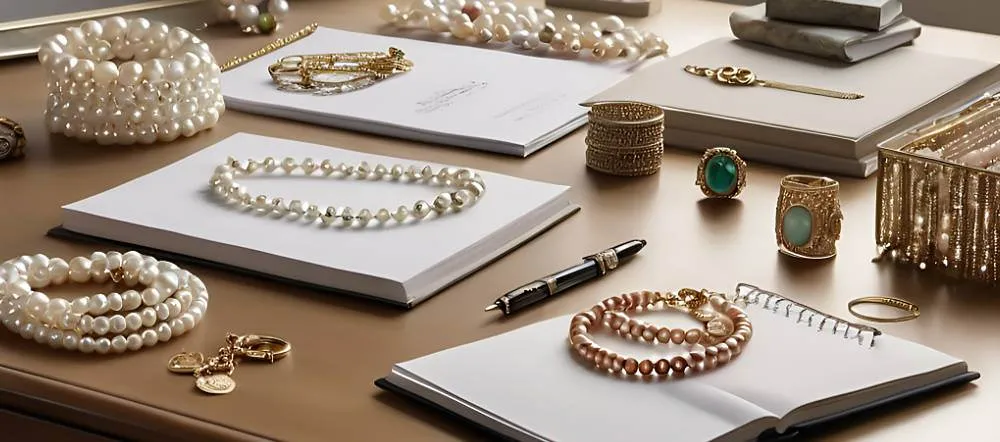

How to Appreciate Artisan Jewelry Craftsmanship Details
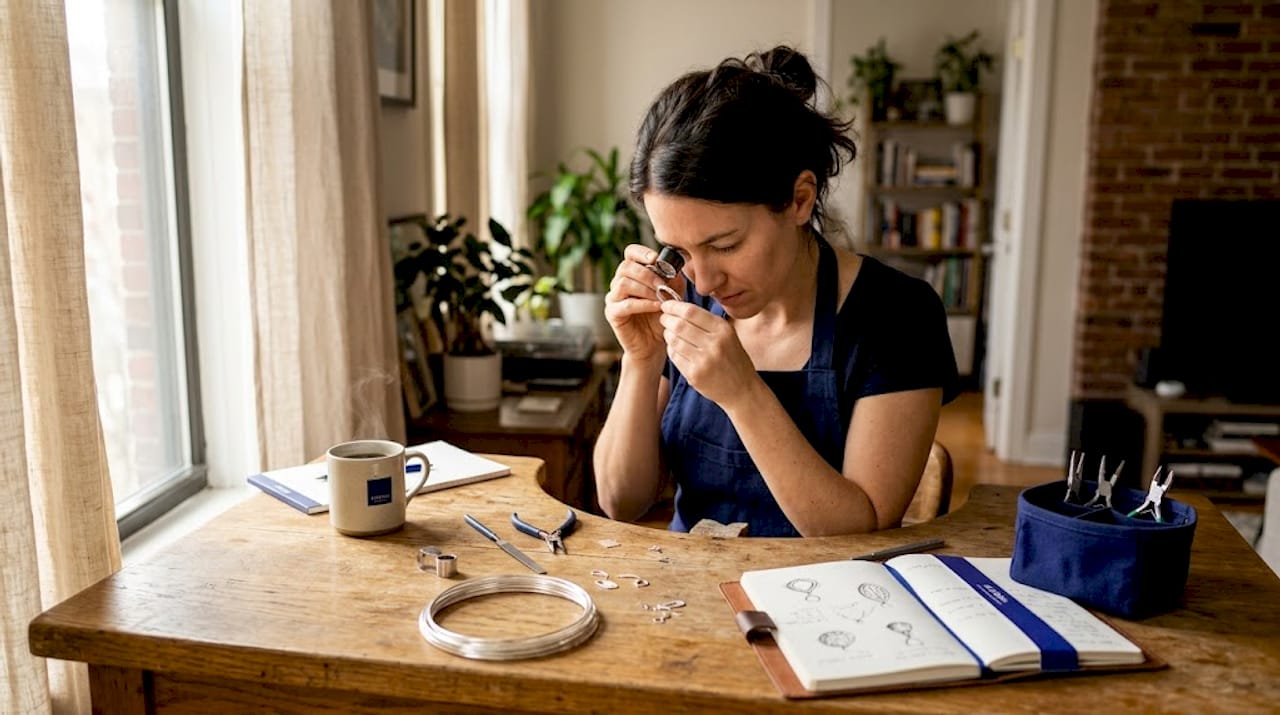
The Edit
- Most people overlook the intricate craftsmanship and cultural stories embedded in artisan jewelry. Genuine pieces display deliberate finishing, quality materials, and unique hand-created details that distinguish them from mass-produced items. Appreciating these elements enhances visual enjoyment, understanding of their long-lasting value, and cultural significance.
The majority of people pick up a handcrafted piece, admire its beauty for a moment, and move on. What they miss is the entire world living inside that piece.
When you truly learn to appreciate artisan jewelry craftsmanship details, you start seeing the hours of hand-carving, the deliberate finish on every surface, and the cultural story woven into each design choice.
This guide walks you through the materials artisans rely on, the techniques that separate handmade from machine-made, and the visual clues that reveal genuine quality. By the end, you’ll look at jewelry the way a collector does.
Table of Contents
- Key takeaways
- Materials and tools that define artisan jewelry quality
- The artisan craftsmanship process step by step
- Recognizing artisan craftsmanship details in a piece
- The stories and cultural significance behind artisan pieces
- My perspective on what craftsmanship really teaches us
- Discover Hermj’s handcrafted jewelry collections
- FAQ
Key takeaways
| Point | Details |
|---|---|
| Materials signal quality | Metals like 14k/18k gold and Argentium sterling silver indicate investment-grade artisan work. |
| Process creates uniqueness | Multi-day sculpting, layering, and hand polishing mean no two artisan pieces are identical. |
| Finishing reveals true craft | A polished finish on all surfaces, including undersides, separates artisan work from factory output. |
| Stories add lasting value | Pieces with cultural heritage and artisan narrative appreciate in both personal meaning and monetary worth. |
| Asymmetry is a feature | Slight hand-made variations and asymmetry are authenticity markers, not flaws. |
Materials and tools that define artisan jewelry quality
Before you can appreciate the craftsmanship in a piece, you need to know what you’re looking at from a materials standpoint. The choice of metal alone tells a significant story.
Precious metals and what they signal
Investment-grade handcrafted pieces typically use 14k or 18k gold, or Argentium sterling silver, because these metals hold or appreciate in value over time, unlike the alloys found in mass-produced fashion jewelry.
Argentium sterling silver is a modern alloy with higher silver content than traditional sterling, and it resists tarnish more effectively. When an artisan chooses these metals, they’re committing to a piece that deserves the labor they’re about to invest in it.
Specialty materials add another layer of appreciation. Thewa jewelry, originating from Rajasthan, India, uses ultra-fine 23-karat gold foil fused onto glass using an ancient technique. The glass itself becomes the canvas. This is a world away from a stamped metal pendant.
Tools that shape the work
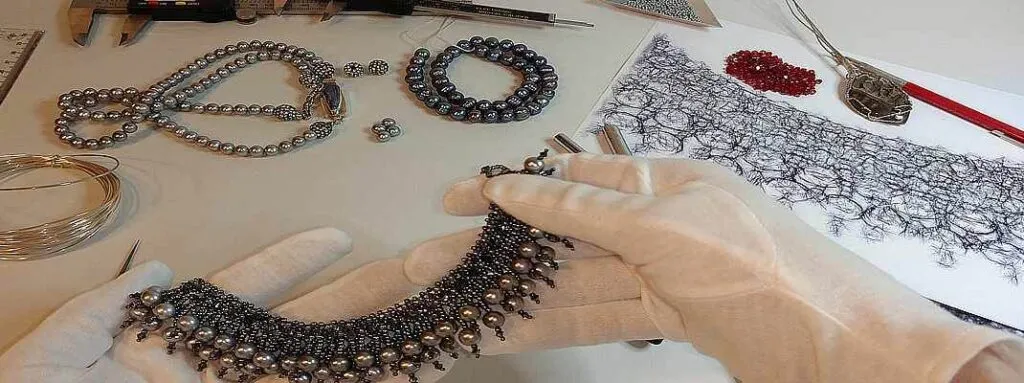
Artisans rely on hand gravers, wax-carving tools, filigree mandrels, and custom dies, often made by the artisans themselves.
In resin-based artisan jewelry, the tools include silicone molds, UV lamps, and layering syringes that let the maker build dimension within a single transparent piece. The resin artisan jewelry process is particularly fascinating because each pour layer must fully cure before the next is added, a process that stretches across days.
| Material | Typical use | Craftsmanship significance |
|---|---|---|
| 18k gold | Settings, fine wire work | High malleability allows intricate hand shaping |
| Argentium sterling silver | Bands, pendants, chains | Tarnish resistance preserves fine surface details |
| 23k gold foil (Thewa) | Figural designs on glass | Requires extreme precision; fused by hand |
| Epoxy or UV resin | Encapsulation, layered color pieces | Each pour is unique; no two pieces identical |
| Freshwater pearls | Focal stones, clusters | Organic origin means natural luster variation |
Pro Tip: When evaluating any artisan piece, ask what metal alloy or base material was used. If the seller can’t tell you, that’s worth noting.
The artisan craftsmanship process step by step
Understanding how a piece is actually made changes everything about how you see it. Here’s what the artisan jewelry-making process typically looks like for a handcrafted piece of meaningful complexity.
Concept and sketch
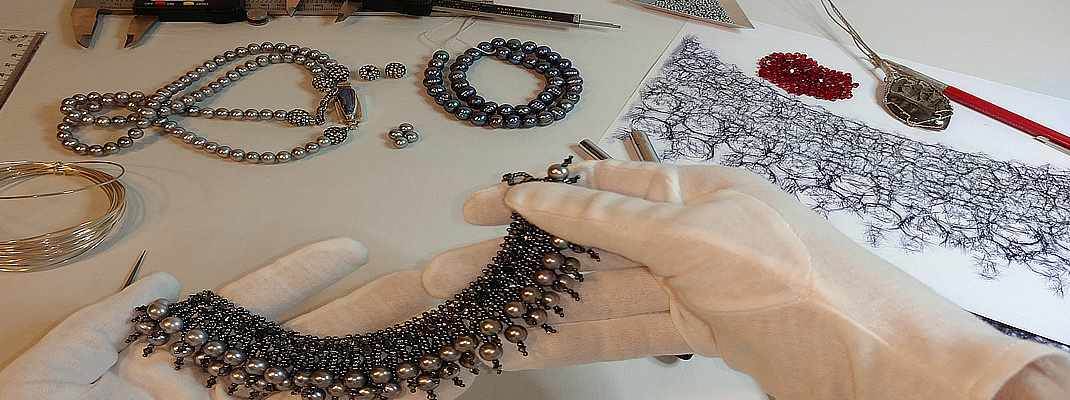
Most artisans start with hand-drawn sketches rather than digital files. These drawings capture proportion, texture direction, and motif placement. The sketch is a commitment to intention before a single gram of metal moves.
Material preparation
Metals are annealed (gently heated) to soften them for forming. Resin artisans measure and tint their medium to precise ratios. Pearl-centered pieces have the stones pre-graded by luster, size, and nacre depth before any stringing or setting begins.
Hand forming and carving
This is where the bulk of time lives. A carver working in wax or metal uses gravers and burins to deliberately remove material, stroke by stroke. For Thewa work (using intricately worked-out sheet gold on molten glass), a simple 1.5 cm design can take nearly 72 hours to complete. That number is not a typo.
Layering and building dimension
Filigree artisans twist and curl fine wire into patterns that stack on top of one another. Resin artisans pour layers and allow each to fully cure, a process that takes 4 to 6 hours per sculpted element before sanding and polishing can begin. Each resin piece varies subtly with every pour because bubble patterns and color saturation shift naturally.
Stone setting
Whether it’s bezel, prong, or pave, setting stones by hand requires the artisan to push metal precisely against each stone without cracking it. This step alone separates a trained craftsperson from an amateur.
Finishing and polishing
The last phase is arguably the most revealing. Hand buffing with progressively finer compounds brings out the final luster. Professional artisans polish every surface of a piece, including the back and underside, because they know someone will eventually look there.
Quality inspection
The artisan examines each piece in varied lighting to check for uneven surfaces, inconsistent polish, or metal stress marks. This is personal accountability that a factory line simply doesn’t replicate.
Pro Tip: Ask the seller how long the piece took to make. Even a rough answer tells you whether they know their own process, which itself signals craft integrity.
Recognizing artisan craftsmanship details in a piece
Learning how to recognize craftsmanship transforms you from a casual admirer into a genuine collector. The details of jewelry craftsmanship are visible once you know where to look.
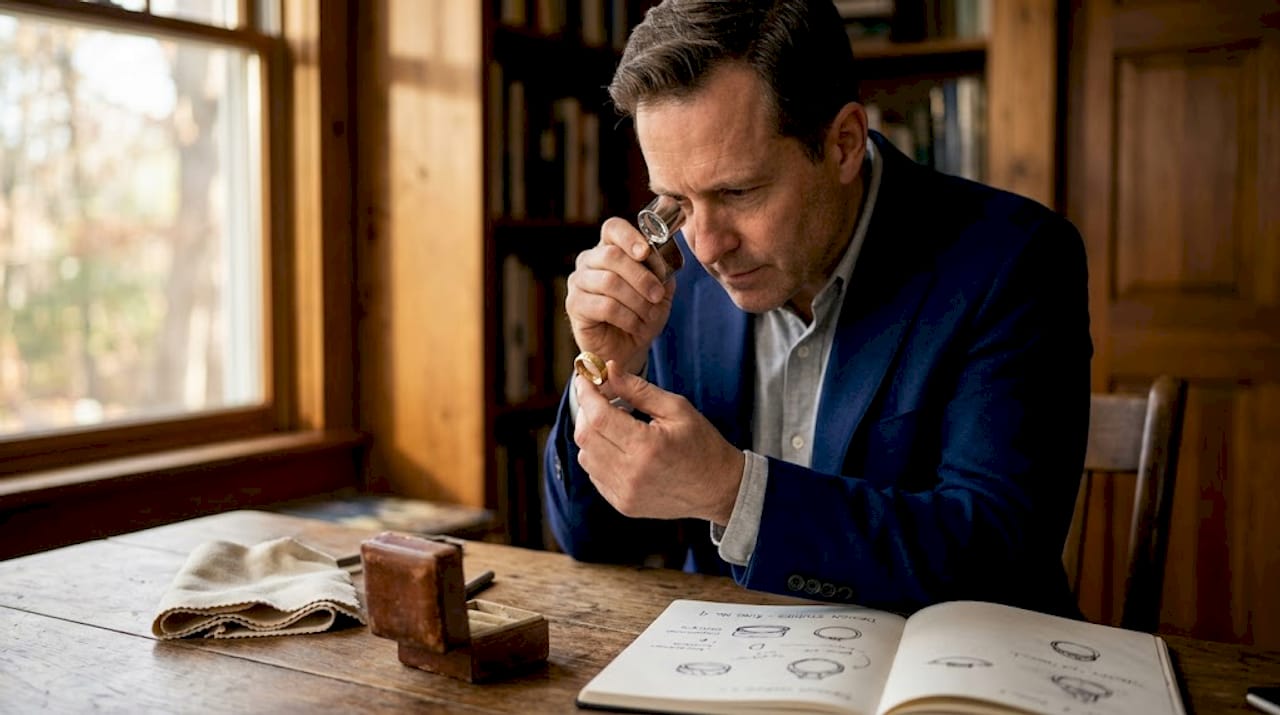
The single most reliable indicator of quality is the finish on the back of a piece. Hand buffing on all surfaces indicates professional artisan quality control, while factory tumble-polishing leaves the undersides dull and often rough. Flip the piece over. If it looks as considered as the front, you’re holding genuine craft.
Consistent carving strokes reveal a confident, practiced hand. In filigree work, the wire coils should follow a logical, intentional pattern. Random breaks in the flow, inconsistent wire thickness, or sloppy solder joints suggest the piece was assembled under time pressure rather than artistic intention.
Here’s a checklist of details to examine when evaluating any artisan jewelry piece:
- Surface consistency. Look for even texture across the entire design, with no rough patches or tool slip marks.
- Stone seating. Each stone should sit flush and level. Tilted stones or visible gaps in the setting indicate rushed work.
- Solder points. In metalwork, solder joints should be nearly invisible. Excess solder that wasn’t cleaned up is a red flag.
- Weight. Genuine metal with honest gauge feels substantial. Lightweight pieces often use thin or hollow construction.
- Slight asymmetry. Completely perfect symmetry sometimes means machine-made. Small, natural variations in hand-formed pieces are a signature of human craft.
- Hallmarks. Look for stamps indicating metal purity (925 for sterling, 750 for 18k gold). Their presence shows the maker stands behind the material.
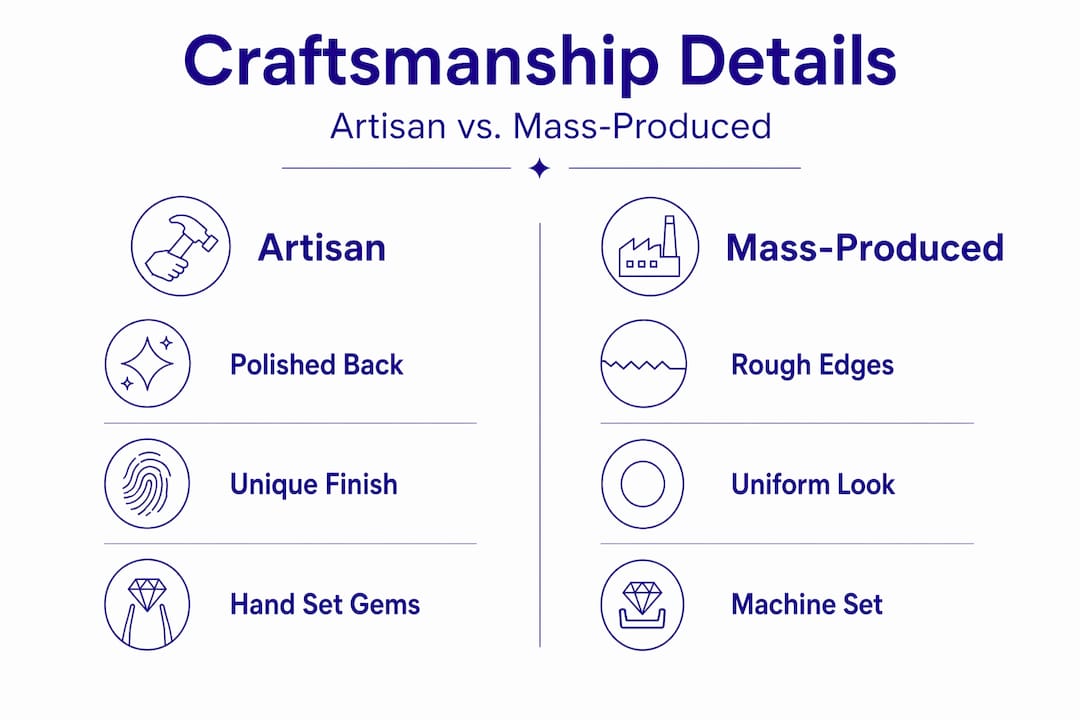
Comparing artisan versus mass-produced attributes makes this even clearer:
| Feature | Artisan piece | Mass-produced piece |
|---|---|---|
| Back finish | Polished, considered | Rough or dull |
| Stone setting | Hand-set, tight | Machine-pressed, sometimes loose |
| Design variation | Slight natural asymmetry | Identical across units |
| Metal gauge | Honest, consistent weight | Often hollow or thin |
| Surface texture | Intentional, varied | Uniform, stamped |
Unique artisan silver pieces appreciate over time precisely because their scarcity and craftsmanship details can’t be replicated at scale.
The stories and cultural significance behind artisan pieces
Here’s what separates a collector from someone who simply owns jewelry: collectors understand that the value of artisan jewelry lives partly in its story.
Thewa, as one example, carries over 400 years of Rajasthani heritage. The seventh generation of the family that developed the craft is still practicing it today, adapting the traditional motifs with modern frames and contemporary color choices while preserving the core technique. When you wear a Thewa pendant, you’re wearing a living tradition. That’s not a metaphor. That’s a material fact.
Designer Evangeline AdaLioryn has spoken openly about how collectors value artisan jewelry for its narrative, its intention, and its quality as wearable art, not simply as an accessory. Seasoned buyers describe pieces in terms of the story they tell and the emotion they carry. A bespoke pearl necklace made for a specific occasion carries meaning that no mass-produced version can replicate.
“When narrative and intention enter the design process, a piece stops being an object and becomes an experience the wearer carries with them.” — Evangeline AdaLioryn
Limited runs and bespoke commissions also affect long-term value in ways that are measurable. Similar to bespoke artisan craft objects in other luxury categories, jewelry made in small numbers or to personal specification holds its worth precisely because it can’t be restocked. Scarcity is crafted into the design from the start.
Pro Tip: When buying from an artisan, ask directly: “What inspired this piece?” A maker who can answer that question with specificity is a maker who cares about their work.
My perspective on what craftsmanship really teaches us
My thinking on this shifted over the years. Very early on, I evaluated jewelry with more weight on aesthetics than I do today. Did it look beautiful? Done. What I’ve learned along my journey is to use aesthetics as an entry point, not the whole conversation.
The finishing phase completely changed my perspective. I started turning pieces over before I looked at the front. If the back is polished, the maker was thinking about integrity, not just display. That one habit has saved me from buying beautifully fronted pieces that were essentially hollow promises.
What I’ve also come to understand is that artisan craftsmanship is a form of cultural preservation. When a traditional technique like Thewa or hand-engraving survives another generation, it’s because someone chose to learn it, practice it, and offer it to the world at a fair price. As buyers, we participate in that preservation when we choose handmade jewelry with genuine craft behind it.
My advice to anyone building their appreciation: stop looking at price first. Appreciate the process. Understand what the maker did, and why they did it that way. The price will make a lot more sense after that, whether it feels high or surprisingly accessible.
— Veronique
Discover Hermj’s handcrafted jewelry collections
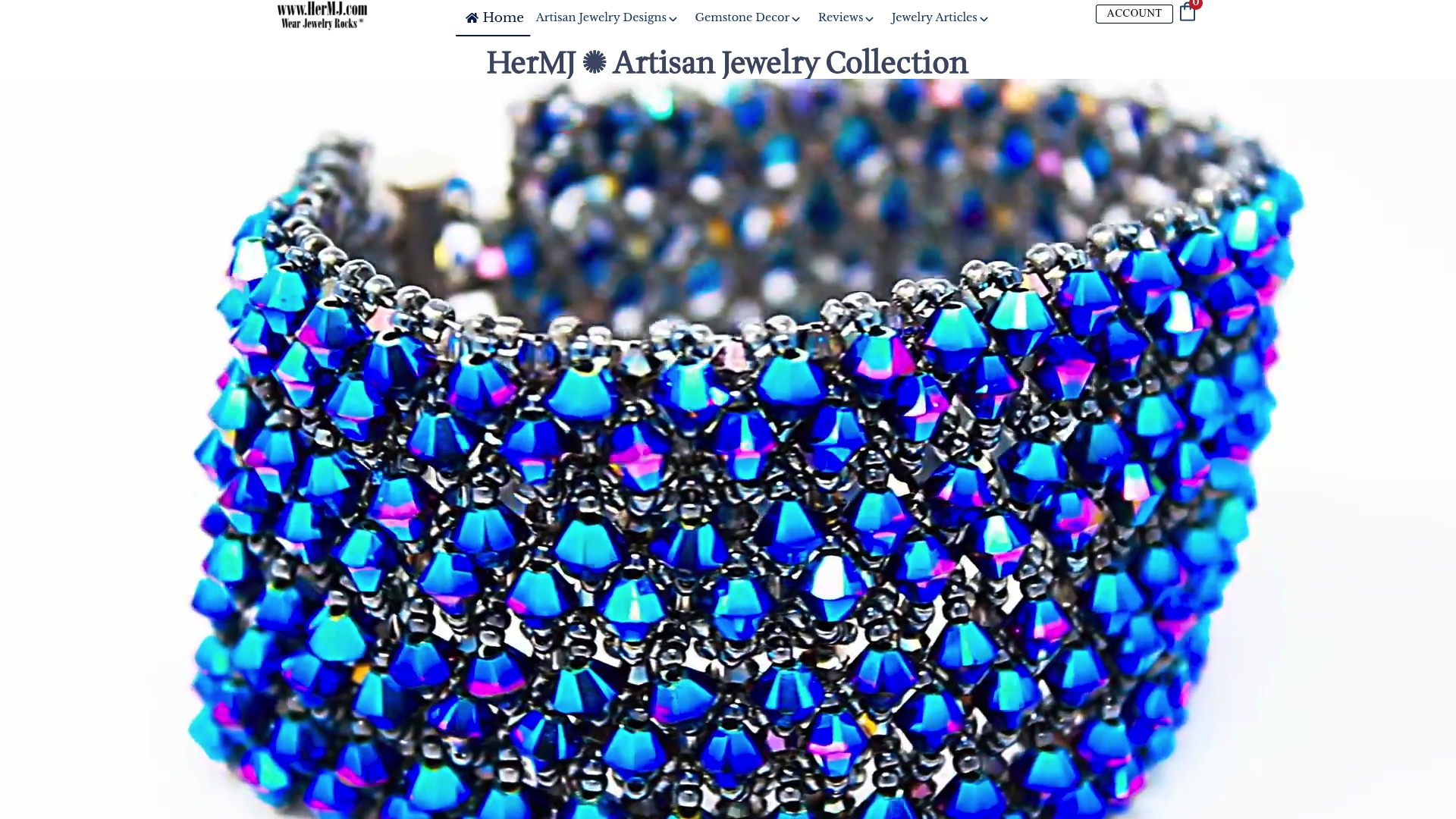
At Hermj, every piece starts with genuine materials and ends with personal attention to finish. The collections feature handcrafted pearl and gemstone jewelry made with the same care this guide describes, from thoughtful stone selection to polished undersides. Whether you’re drawn to freshwater pearls for everyday elegance or looking for a statement piece for a special occasion, Hermj offers artisan stone jewelry designs that carry real craftsmanship value at pricing that doesn’t require compromise. Explore the full range and find a piece whose story resonates with yours at Hermj’s handmade jewelry collection.
FAQ
What makes artisan jewelry different from mass-produced jewelry?
Artisan jewelry is shaped, set, and finished by hand, which means every surface reflects deliberate attention and skill. Mass-produced pieces use stamping and machine assembly, which creates uniformity but eliminates the individual craftsmanship details that give handmade work its character and long-term value.
How can I tell if a piece is genuinely handmade?
Flip the piece over and examine the back. A polished underside finish is one of the clearest signs of genuine artisan quality control. You should also look for slight natural asymmetry, visible hallmarks, and consistent texture that reflects intentional handwork rather than stamped uniformity.
Does artisan jewelry hold its value?
Yes, particularly pieces made with quality metals and genuine gemstones. Handcrafted silver jewelry with high purity and timeless design appreciates over time due to scarcity and craftsmanship quality, especially when artisan pieces are limited edition or bespoke.
How long does it take to make a handcrafted artisan piece?
It depends on the technique. A 1.5 cm Thewa design alone can take about 72 hours to complete. Resin-based artisan pieces involve multiple pours and curing cycles over several days. Even simpler handmade pieces typically require several hours of focused, skilled labor.
Why do artisan jewelry pieces feel more meaningful to wear?
Because they carry intention. Designers like Evangeline AdaLioryn describe how narrative transforms artisan pieces from accessories into wearable art, which is why collectors consistently describe their handmade pieces in terms of feeling and story rather than just appearance.
Recommended
- Crafted For Eternity: Ancient Egyptian Jewelry History
- Artisan Graduation Jewelry — The Best Choice For Graduation Gifts
- Discover Handcrafted Natural Stone Jewelry designs
- What Is Hand Stamped Jewelry: A Beginner’s Guide