


Crystal Decor Styles by Room: Your 2026 Home Guide
The Edit
- Matching crystals to each room’s purpose and palette enhances home decor with intentional elegance. Small, well-placed pieces create visual harmony, while lighting and scale maximize their impact. Proper care and thoughtful styling ensure these natural elements retain their beauty and purpose over time.
Crystal decor styles by room is the practice of matching specific crystal types, sizes, and placements to the function and mood of each living space.
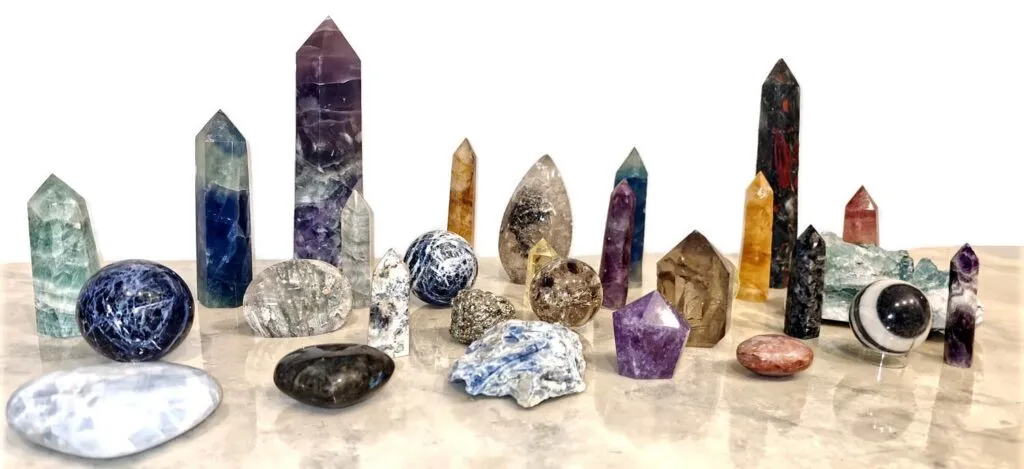
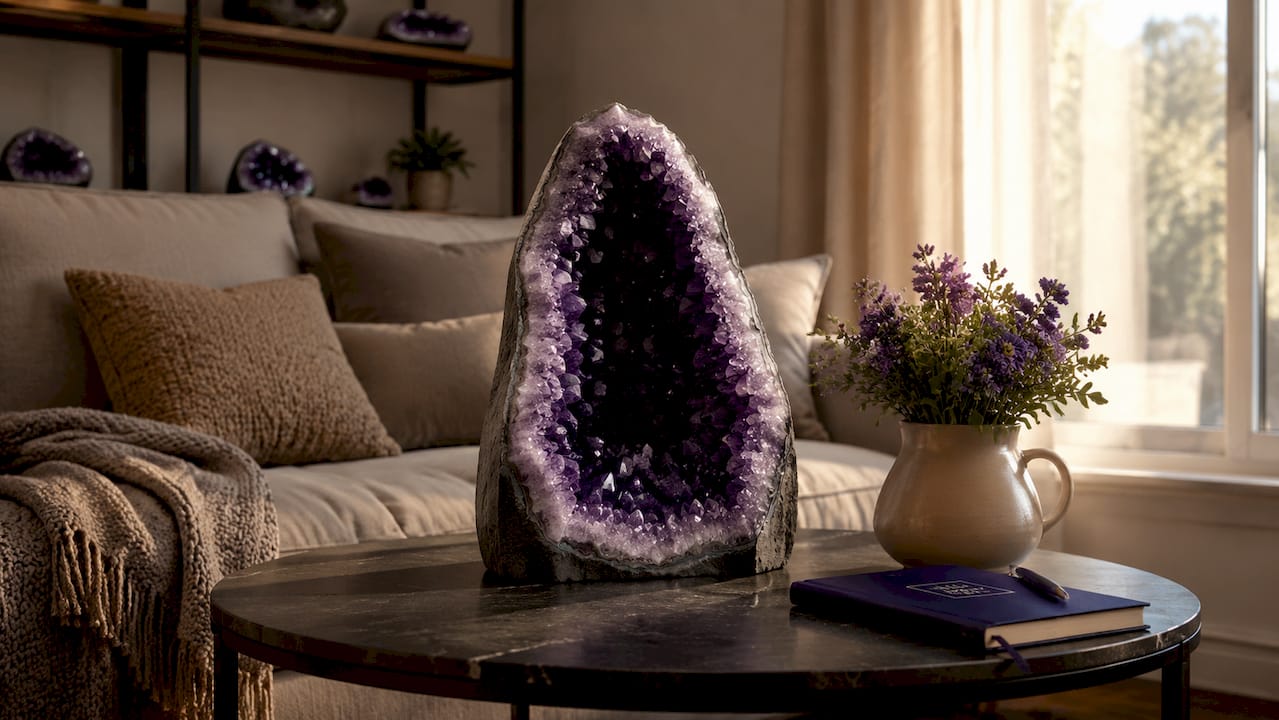
A well-chosen amethyst geode reads as furniture-scale art in a living room, while a small rose quartz cluster on a nightstand brings warmth to a bedroom without visual noise.
The difference between a home that feels curated and one that feels cluttered often comes down to this single principle: the right crystal in the right room. This guide walks you through every major space, with placement strategies and care tips that actually work.
Crystal decor styles by room: living room focal points
The living room is the best place to make a bold statement with crystals. Cathedral-style geodes 24 inches or taller function as furniture-scale art when placed on the floor or a low platform beside a sofa. That scale matters because anything smaller gets visually swallowed by full-sized furniture.
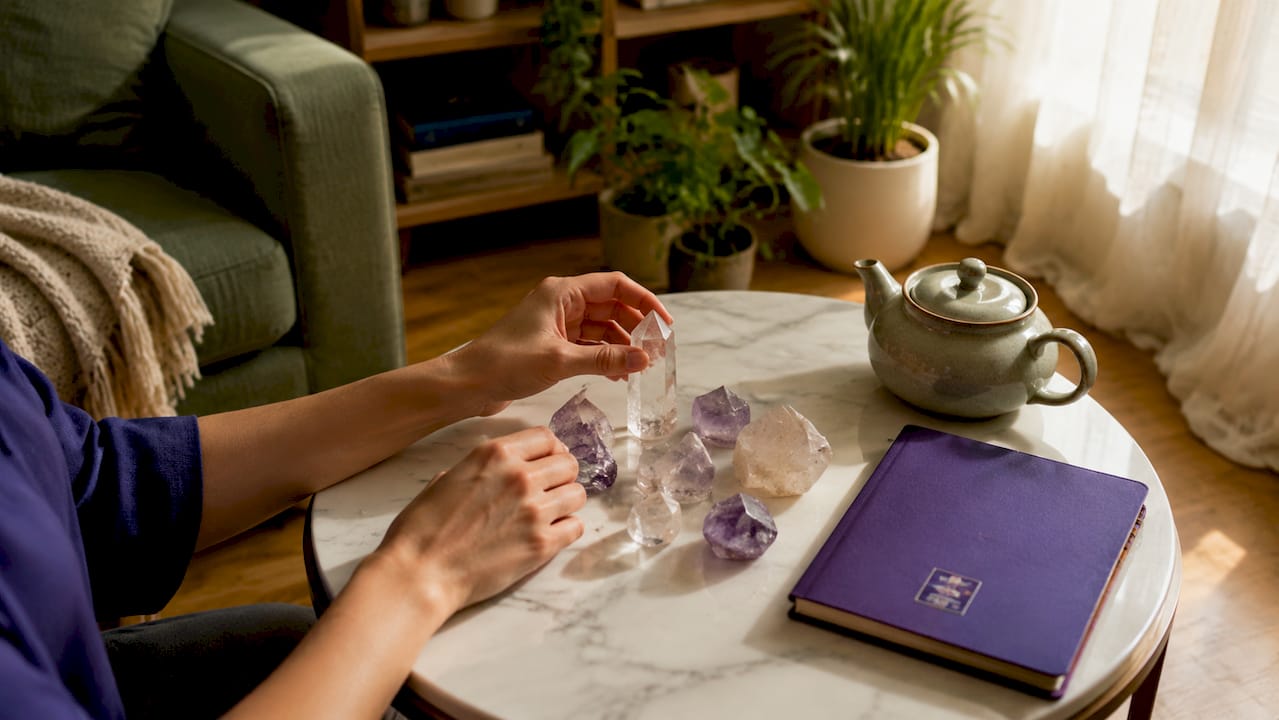
Crystal clusters on coffee tables and open shelves add dimension without clutter.
The key is spacing: one or two pieces per surface, not a collection. Grouping three different-sized clusters too close together creates visual noise rather than elegance.
Crystal-integrated lighting, such as wall sconces and chandeliers, refracts light to add depth and ambiance without occupying surface space. This is one of the most underused ideas in room decor with crystals. A crystal sconce does double duty as both art and illumination.
Color palette coordination matters more than most people realize. Deep violet amethyst contrasts beautifully against neutral and warm palettes, while clear quartz suits cool-toned contemporary rooms. Choosing the wrong color family makes even a stunning crystal look out of place.
- Large amethyst geodes (24 inches or taller) work as floor-level focal points
- Crystal clusters on coffee tables add texture without bulk
- Crystal sconces and chandeliers serve as art and light sources simultaneously
- Clear quartz suits cool, modern palettes; amethyst suits warm, earthy tones
Pro Tip: Amethyst fades with prolonged UV exposure because radiation-induced iron impurities bleach under intense sunlight. Keep amethyst pieces away from south-facing windows to preserve their deep purple color.
Best crystal styles for the bedroom
Rose quartz is the strongest choice for bedroom decor. Its versatile pink tones fit almost any palette, from soft whites to deep charcoals, making it one of the most adaptable crystals you can own.
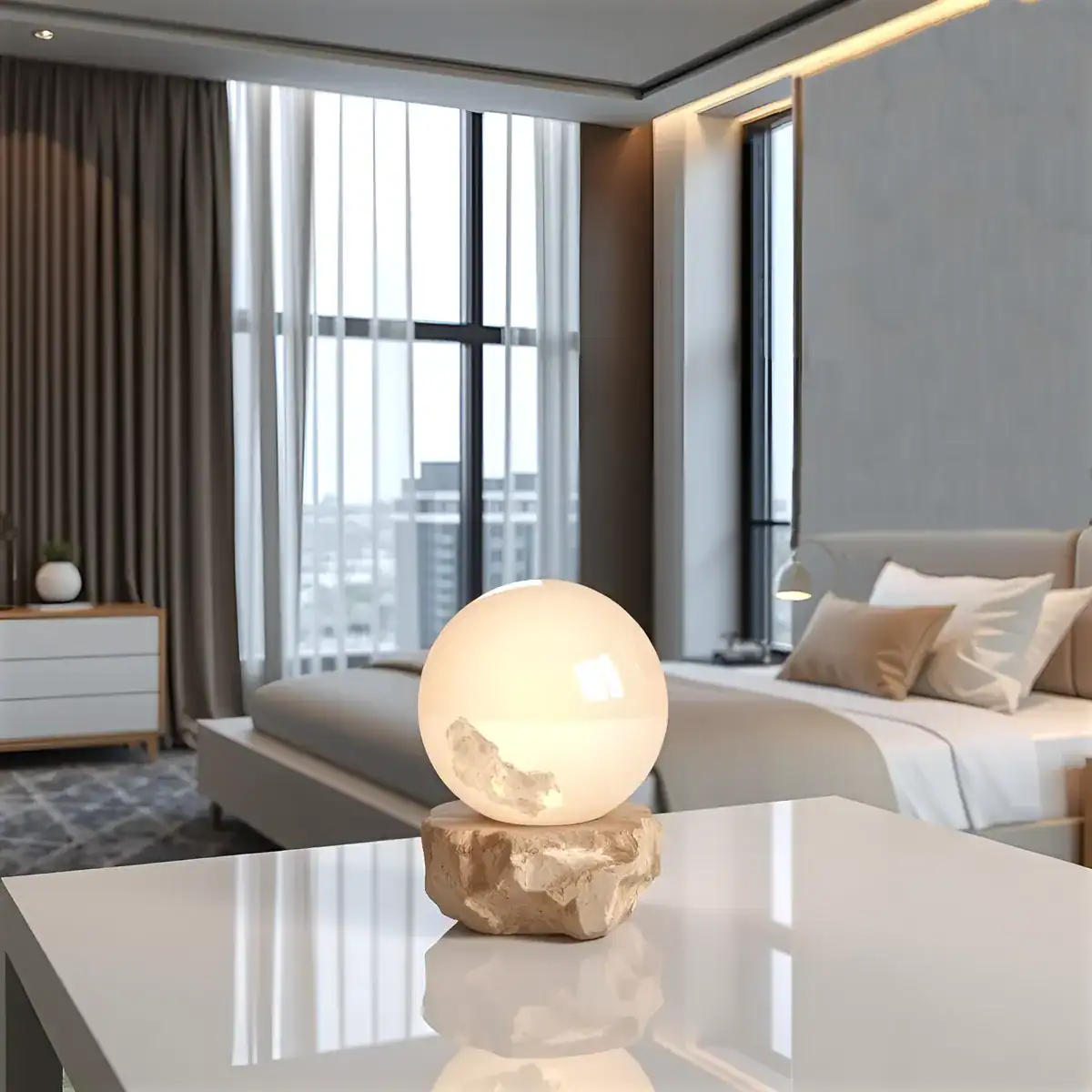
Place a raw chunk or a polished sphere on a nightstand or dresser, ideally on a small wooden or ceramic stand that lifts it slightly and gives it presence.
Amethyst clusters work well in bedrooms too, but scale them down. A small cluster on a shelf or windowsill adds calm without dominating the space. The bedroom calls for restraint; one or two crystal pieces styled thoughtfully outperform a crowded arrangement every time.
Pairing crystals with soft linens, natural wood, and matte ceramics creates a layered, grounded look. The organic textures of these materials complement the natural formation of raw crystals in a way that polished chrome or glass does not.
- Rose quartz on nightstands or dressers for warm, versatile color
- Small amethyst clusters on shelves for a calm, low-profile accent
- Raw crystal chunks on wooden or ceramic stands for organic elegance
- Pair with linen, cotton, and matte ceramics for a cohesive feel
Pro Tip: Place a small crystal near a bedside lamp or wall sconce rather than in direct overhead light. The soft, directional glow creates a warm, relaxing illumination that highlights the crystal’s natural texture without casting harsh shadows.
Elegant crystal pieces for the dining room and kitchen

Warm-tone crystals belong in dining rooms and kitchens. Citrine, with its golden yellow color, works beautifully on windowsills or as a table centerpiece because it catches natural light and radiates warmth. It’s a natural fit for spaces centered on nourishment and gathering.
For overhead lighting, crystal ceiling lamps, each around 81 cm in diameter, illuminate dining tables evenly without dominating the room. A useful rule: choose a lamp diameter roughly half the width of your dining table. That proportion keeps the fixture from feeling too heavy or too small.
Finish selection ties the whole look together. Chrome finishes suit cool, modern dining rooms, while gold finishes complement warm wood tones and earthy palettes. Matching your crystal fixture’s finish to existing hardware, like cabinet pulls or chair legs, creates a unified aesthetic.
For table styling, try a tray arrangement with polished agate slices, a small citrine cluster, and a candle. This creates a centerpiece with depth and texture without requiring a single large statement piece.
- Choose citrine or warm amber crystals for windowsills and centerpieces
- Size ceiling fixtures proportionally to your dining table
- Match fixture finish (gold or chrome) to existing room hardware
- Style a tray with polished agate slices, a small cluster, and a candle
- Dust crystal fixtures with a soft, dry cloth only; avoid liquid cleaners that dull surfaces
Crystal accents for bathrooms and entryways
Selenite is the go-to crystal for bathrooms because of its clean, luminous white appearance. It looks genuinely luxurious on a vanity or tub surround. The critical caveat: selenite is water-soluble, so it must stay completely dry. Place it away from the sink and shower splash zones, and dry it immediately if it gets wet.
Black tourmaline is the ideal crystal for entryways. It’s durable, sculptural, and visually striking against light walls and warm wood tones. A raw or polished piece on a console table near the front door creates a strong visual anchor the moment someone walks in. You can also place it in a shallow bowl or on a small tray for a styled, intentional look.
For small-space crystal styling, spacing is everything. One crystal per surface in a bathroom or entryway reads as curated. Two or more pieces on the same small surface read as crowded.
- Selenite bars or plates on dry vanity surfaces for quiet elegance
- Black tourmaline on console tables or in entry bowls as a sculptural anchor
- Wall-mounted crystal sconces in entryways for art and light combined
- One crystal per surface in small spaces to avoid visual clutter
Pro Tip: In high-traffic entryways, choose polished crystals over raw ones. Polished surfaces are easier to wipe clean and less likely to chip if accidentally bumped.
How to style crystal decor cohesively throughout the home
Cohesive crystal styling across a home comes down to three principles: color harmony, scale balance, and material restraint.
Matching crystal color to your room’s palette is the foundation. Interior designers recommend pairing crystals to complement interior tones rather than contrast sharply, unless contrast is the deliberate design choice.
Scale balance means choosing crystal sizes that relate to the surrounding furniture. A small tumbled stone on a large dining sideboard disappears. A cathedral geode in a tiny studio apartment overwhelms.
The crystal should feel like it belongs in the room, not like it was placed there as an afterthought.
Dual-use pieces, crystals built into lighting fixtures, are the most efficient way to add crystal decor without consuming surface space. Crystals integrated into lighting provide functional illumination and dimensional sparkle, turning fixtures into sculptural focal points. This approach works in every room, from the kitchen to the bedroom.
For a practical reference, here’s how common crystals map to room suitability:
| Crystal | Key characteristic | Best room |
|---|---|---|
| Amethyst | Deep violet, light-sensitive | Living room, bedroom |
| Rose quartz | Soft pink, versatile palette | Bedroom, bathroom |
| Citrine | Warm golden yellow, light-catching | Dining room, kitchen |
| Clear quartz | Neutral, cool-toned clarity | Living room, office |
| Selenite | White, luminous, water-soluble | Bathroom (dry zones only) |
| Black tourmaline | Dark, durable, sculptural | Entryway, hallway |
Mixing raw and polished crystal forms within a single room adds visual interest without requiring more pieces. A raw amethyst cluster beside a polished rose quartz sphere on the same shelf creates a textural contrast while remaining within the same color family.
That’s the kind of detail that makes a space feel genuinely designed rather than assembled. You can find more guidance on crystal types for home decor to build out your room-by-room selections with confidence.
Key takeaways
Matching crystal type and placement to each room’s function and palette is the single most effective approach to crystal home styling.
| Point | Details |
|---|---|
| Match crystal to room palette | Violet amethyst suits warm neutrals; clear quartz suits cool, modern tones. |
| Scale crystals to furniture | A 24-inch geode anchors a living room; a small cluster suits a nightstand. |
| Use crystals in lighting | Crystal sconces and ceiling fixtures add ambiance without using surface space. |
| Protect light-sensitive crystals | Keep amethyst away from direct sunlight to prevent color fading over time. |
| Care for moisture-sensitive pieces | Selenite must stay dry; dust all crystal decor with a soft, dry cloth only. |
What I’ve learned from years of styling crystals at home
The most common mistake I see is treating crystals like a collection rather than a design element. People buy a beautiful amethyst geode, then surround it with six other crystals on the same shelf until nothing stands out. A single well-placed piece with breathing room around it will always outperform a crowded arrangement.
The second mistake is ignoring light. Crystals are fundamentally about how they interact with light, and placing them in dark corners defeats the purpose entirely. I always position crystals near a light source, whether that’s a lamp, a sconce, or a window, so their natural refraction can do its work.
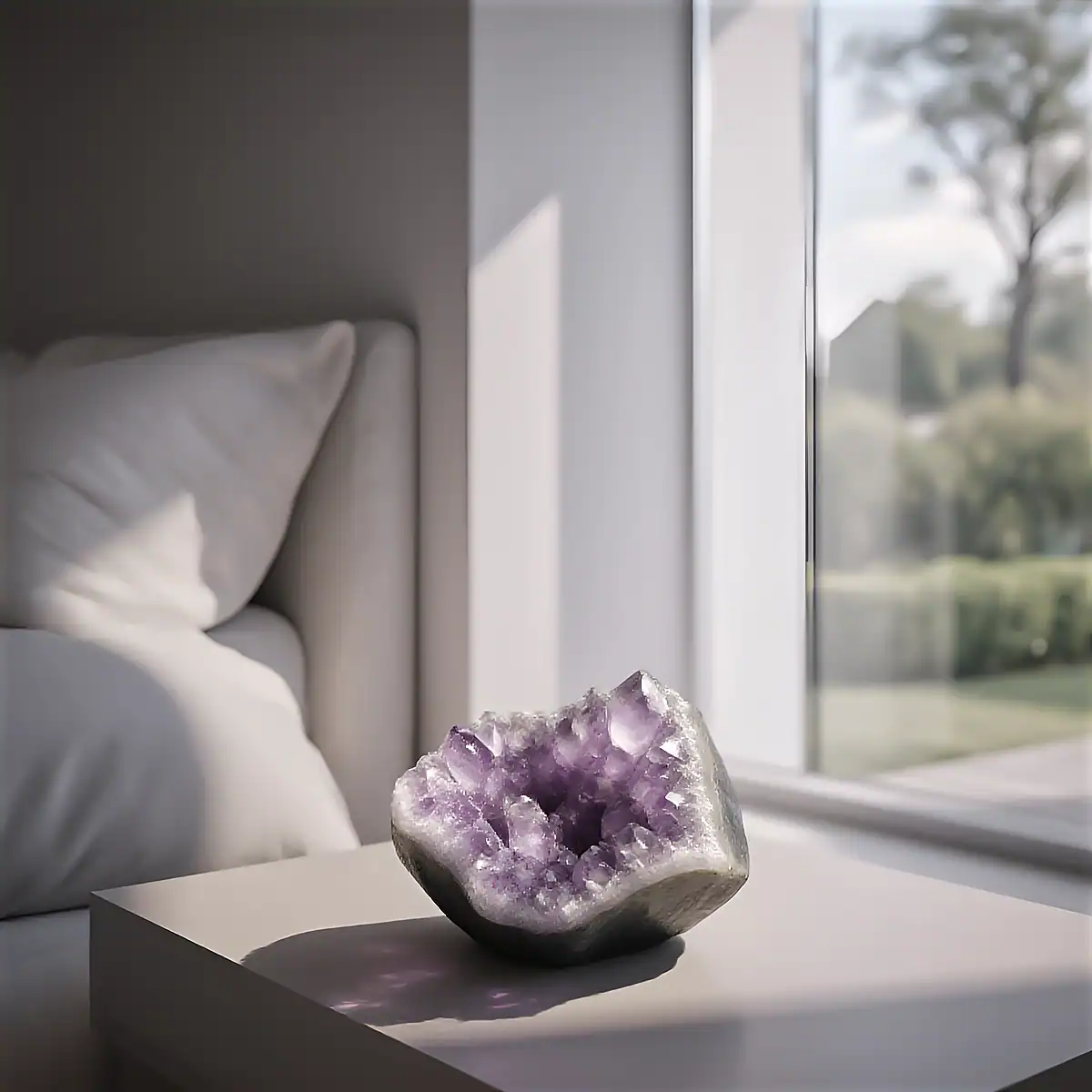
What I find genuinely rewarding is layering raw and polished forms together. A rough, uncut amethyst cluster next to a smooth rose quartz sphere creates a conversation between textures that feels organic and alive. That combination, raw beside polished, is one of the simplest ways to make a shelf or tabletop look intentional rather than random.
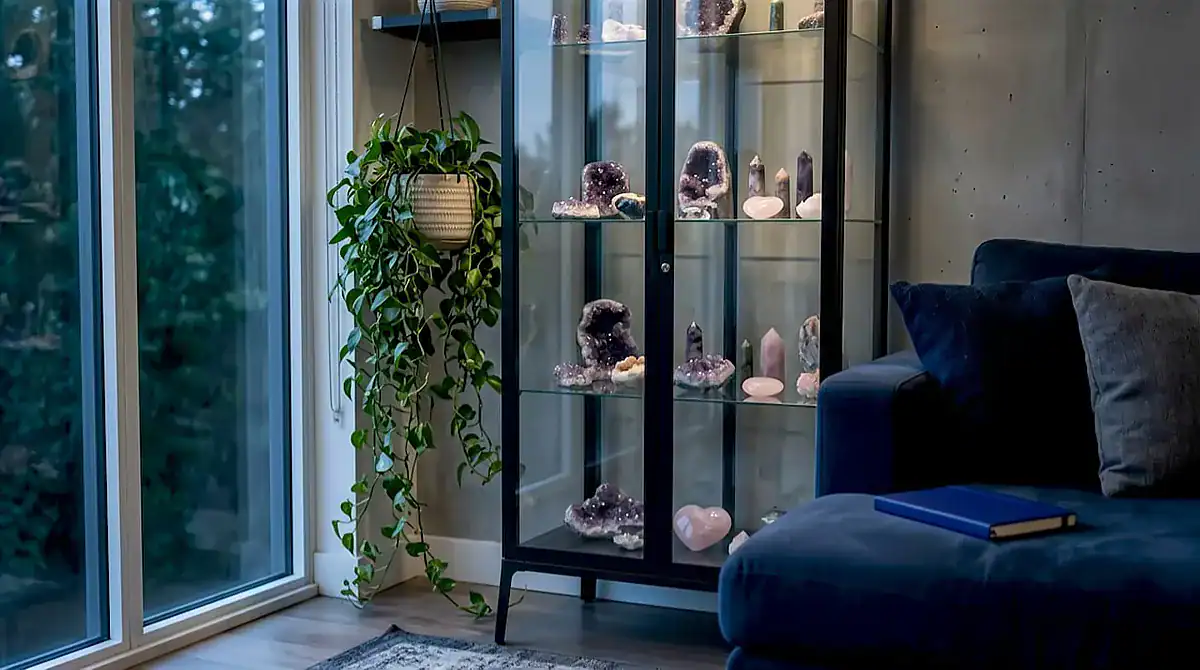
My strongest advice: choose crystals that genuinely appeal to you visually, then find the room where their color and scale fit naturally. Styling crystal decor for specific rooms in your home works best when personal taste and design logic work together, not against each other.
— Veronique
HerMJ’s gemstone pieces that complement your crystal decor
Crystals don’t live only on shelves and tabletops. The same stones that make a room feel curated translate beautifully into wearable form, and that’s exactly where HerMJ shines.

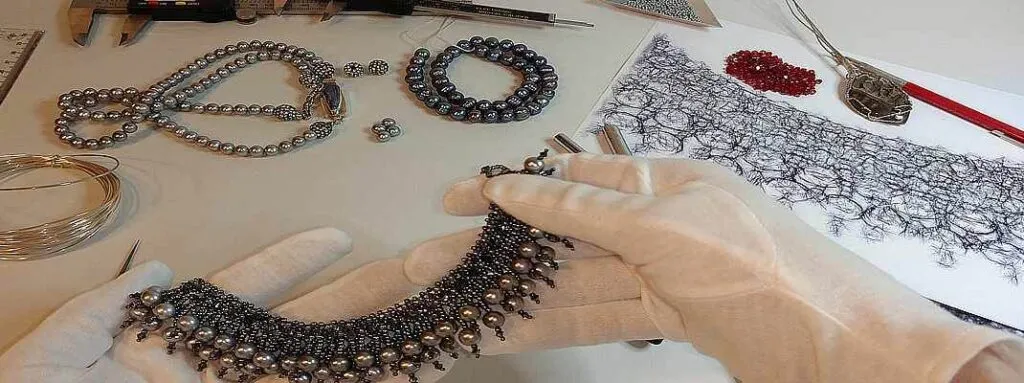
HerMJ crafts artisan jewelry from genuine pearls and gemstones, including pieces featuring aquamarine, garnet, and quartz-family stones that echo the crystal palettes you’ve built into your home. A pearl and aquamarine necklace carries the same cool, luminous quality as clear quartz decor. A faceted garnet gemstone necklace brings the same warm depth as citrine on a dining table. Every piece is handmade, affordably priced, and ships free within the US with no minimum order.
FAQ
What crystals work best in a living room?
Large amethyst geodes (24 inches or taller) work best as living room statement pieces, while clear quartz suits cool, modern palettes. Crystal-integrated lighting, such as sconces, adds ambiance without using surface space.
How do I style crystal decor without cluttering a room?
Limit crystal pieces to one or two per surface and choose sizes proportional to nearby furniture. Spacing between pieces is what makes each one read as intentional rather than crowded.
Which crystals are safe for bathroom decor?
Selenite works beautifully in bathrooms but must stay completely dry because it’s water-soluble. Rose quartz is a safer all-around option since it tolerates humidity without surface damage.
Does amethyst fade in sunlight?
Yes. Amethyst fades under prolonged UV exposure because radiation-induced iron impurities bleach in intense light. Keep amethyst away from direct sunlight to preserve its color.
How do I clean crystal decor and fixtures?
Dry dusting with a soft cloth is the correct method for all crystal decor. Avoid liquid cleaners and abrasives, which dull natural surfaces and damage crystal lighting fixtures.
Recommended
- Types of Crystals for Home Decor: Your Style Guide
- Crystal Decoration Ideas: 5 Tips To Master Healthy Home Decor
- What Is Gemstone Home Decor? A Stylist’s Guide