


What Is Hand Fabricated Jewelry? Craftsmanship Explained
Most people assume “handmade jewelry” means someone shaped molten metal in a mold. That assumption misses an entirely different world of craft. What is hand fabricated jewelry, exactly? It’s a process where a jeweler builds each piece from scratch using raw metal stock, cutting and shaping every component by hand without a single mold involved. Understanding this distinction changes how you see, shop for, and value jewelry. This article walks you through the techniques, the skills, and the very real reasons why hand fabricated pieces carry a different kind of meaning.
Table of Contents
- Key Takeaways
- What hand fabricated jewelry actually means
- How fabrication differs from casting and forging
- The artisan skills behind every fabricated piece
- Why buyers choose hand fabricated jewelry
- How to recognize and shop for hand fabricated pieces
- My perspective on hand fabrication and why it matters
- Discover handcrafted jewelry made for you
- FAQ
Key Takeaways
| Point | Details |
|---|---|
| No molds, no casting | Hand fabricated jewelry is built piece by piece from raw sheet, wire, and tubing using only manual tools. |
| Visually distinct | Solder seams, hand-cut edges, and joins are telltale signs that a piece was fabricated rather than cast. |
| Stronger construction | Fabricated pieces tend to be denser and more structurally precise than cast jewelry. |
| Higher price reflects skill | Bench time and specialist collaboration drive costs, with custom fabricated pieces typically starting around $100 to $150. |
| “Handmade” isn’t always fabricated | Many pieces labeled handmade still involve casting or machine finishing, so asking questions matters. |
What hand fabricated jewelry actually means
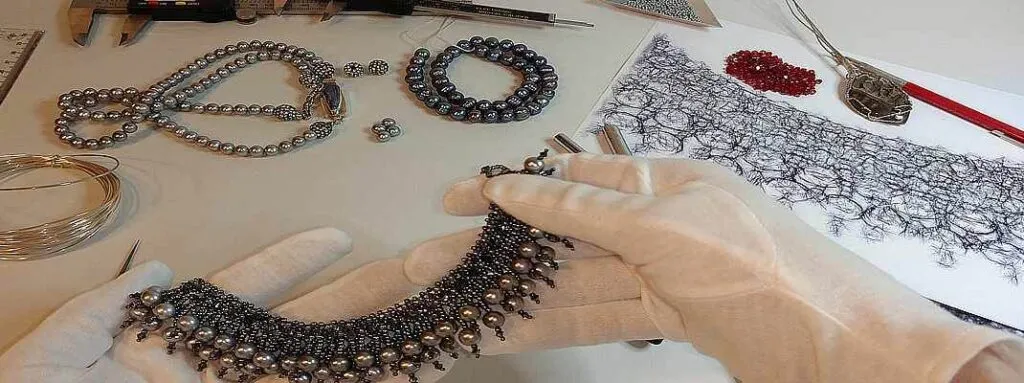
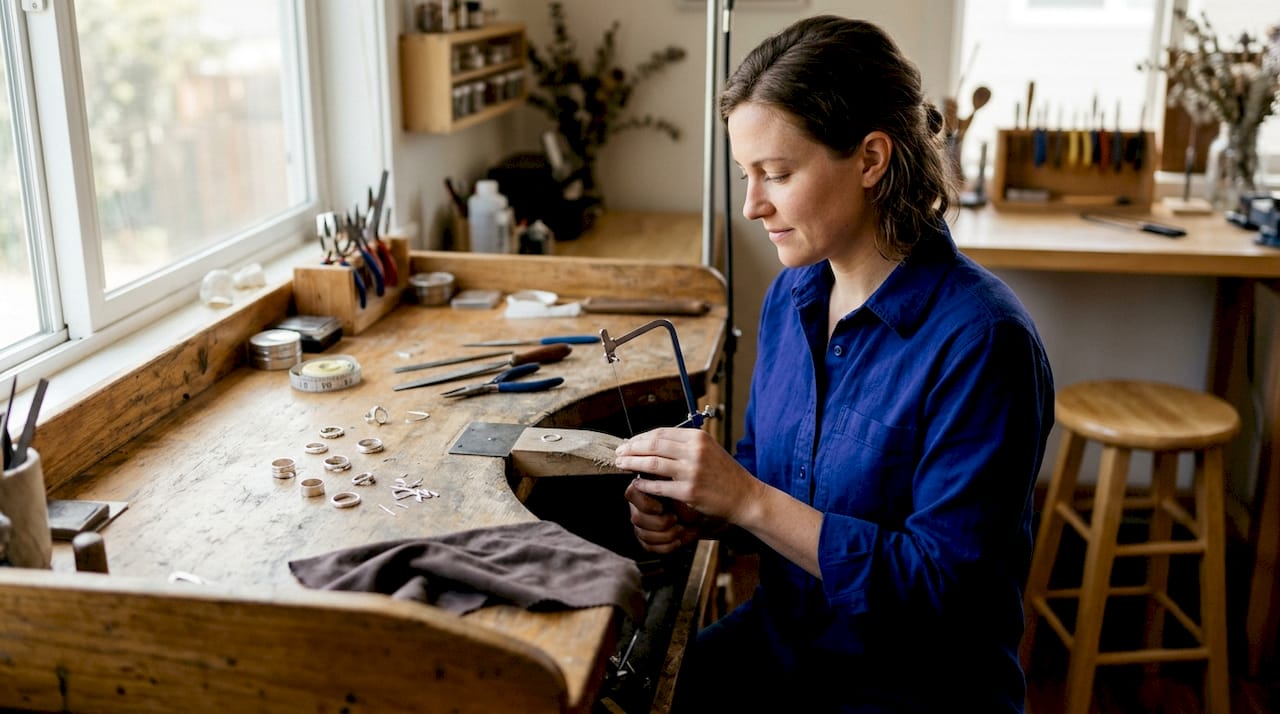
Hand fabricated jewelry is built piece by piece from raw metal stock, including sheet metal, wire, and tubing, using cutting, bending, forging, and soldering performed entirely by hand. There are no molds. There’s no liquid metal poured into a pre-shaped cavity. Each element of the finished piece is physically constructed by an artisan using tools like torches, hammers, files, and mandrels, guided by skill and intention.
Think of it the way a carpenter frames a house stud by stud rather than pouring concrete into a pre-made shell. The result is structurally assembled, not molded into shape. When a jeweler fabricates a bracelet, they might cut a strip of silver sheet to the precise width they need, anneal and shape it around a mandrel, then solder a clasp mechanism they’ve also cut and bent from wire stock. Every element has its own origin and its own story.
Because of this process, no two hand fabricated pieces are identical. Even when a jeweler attempts to recreate the same design, the slight variations in hand pressure, tool angle, and soldering flow create pieces with their own individual character. That’s not a flaw. That’s the signature of the craft.
The core techniques involved in hand fabrication include:
- Sawing and cutting: Shapes are cut from metal sheet using a jeweler’s saw, creating flat forms that become structural elements.
- Forming and bending: Metal is shaped around mandrels, stakes, or by hand pressure to create curves, rings, and tubes.
- Soldering: Components are joined using metal alloy solder heated by a torch, bonding pieces with precision.
- Filing and finishing: Surfaces are refined by hand using files and abrasive papers to achieve the desired texture and sheen.
Pro Tip: If you’re exploring hand stamped jewelry techniques as well, you’ll notice fabrication and stamping often overlap in artisan bench work, though they serve different design goals.
How fabrication differs from casting and forging
Understanding what hand fabricated jewelry is becomes clearer when you place it beside casting and forging. These three techniques are genuinely different in how they shape metal, and each leaves distinct marks on the finished piece.
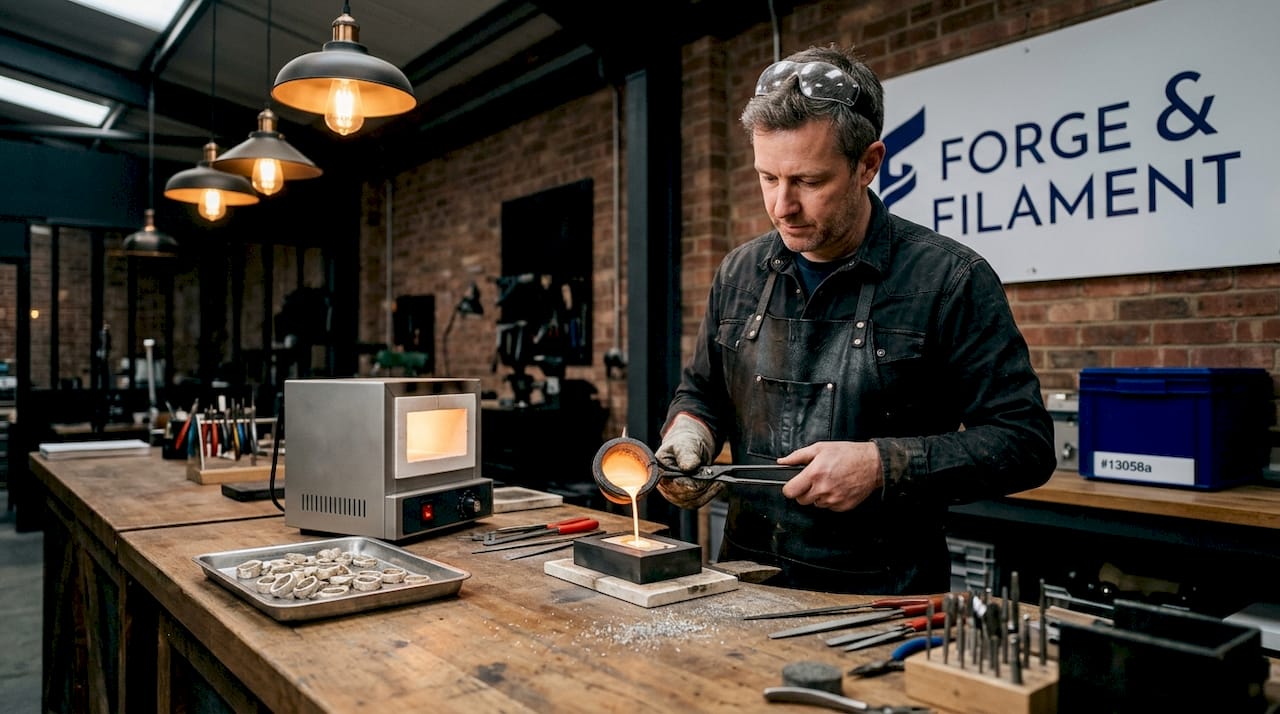
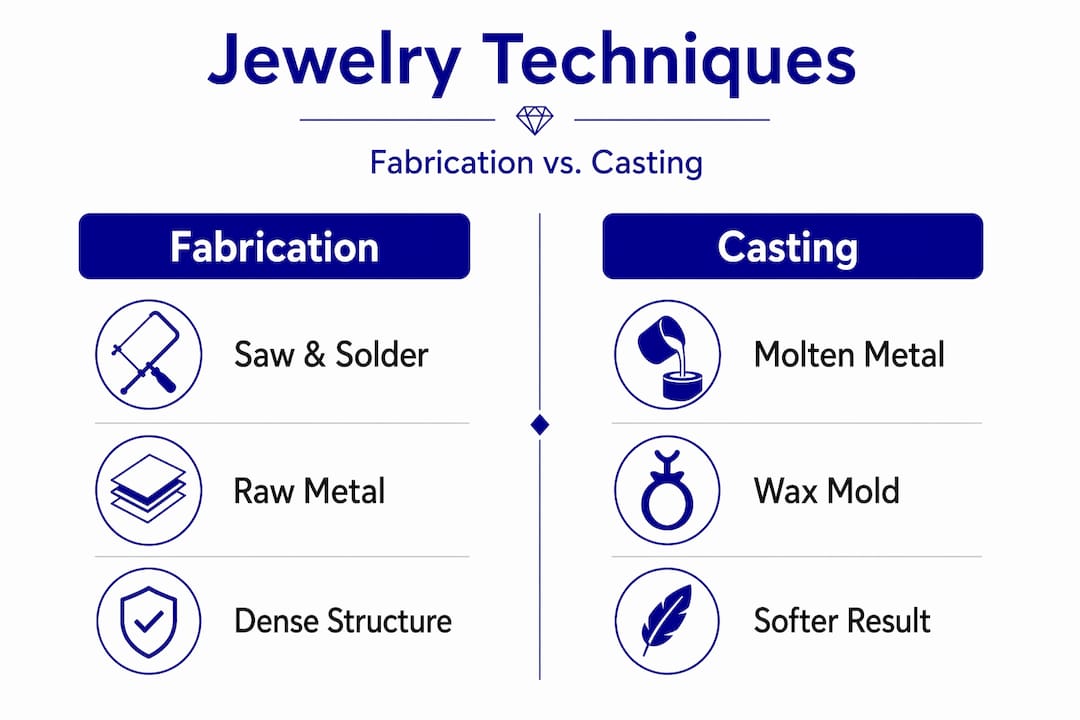
Casting involves melting metal until it’s liquid and pouring it into a mold, either a one-use wax mold in the lost-wax process or a reusable metal die. The mold defines the shape entirely. High-quality casting includes hand finishing afterward, and some jewelers combine cast elements with fabricated ones. But the fundamental act of casting relies on the mold to create form. Fabrication offers superior control over clean lines and symmetry precisely because each component is assembled rather than grown from a single pour.
Forging is something else again. Forging reshapes metal through controlled hammering in its solid state, which compresses and aligns the grain structure of the metal. This is different from fabrication, which assembles shaped components together. Forging doesn’t create new forms by assembling parts. It transforms a single piece of metal by moving material. The result is exceptionally dense and resilient, and forged pieces often show organic surface textures that reflect the hammer’s work.
Here’s a side-by-side comparison:
| Technique | Process | Visual Cues | Strength |
|---|---|---|---|
| Hand fabrication | Cuts and assembles raw metal components | Solder seams, sharp joins, hand-cut edges | Dense, structurally precise |
| Casting | Pours molten metal into a mold | Smooth flow lines, consistent texture, possible porosity | Variable, depends on finishing |
| Forging | Hammers solid metal to reshape it | Organic hammer textures, no seams, compressed grain | Very high resilience |
The real-world difference matters when you’re choosing a piece for daily wear. Fabricated pieces are stronger and denser than cast jewelry because they’re constructed from solid stock rather than a cooled pour that can carry microscopic voids.
Pro Tip: When you examine a piece at a jewelry counter, look along the inner edges of bands and settings. Visible solder lines or subtly different metal textures at join points are strong indicators you’re holding a fabricated piece.
The artisan skills behind every fabricated piece
There’s a common image of a lone jeweler at a small bench, quietly working through the night. The reality of hand fabrication is often more collaborative than that. Hand fabrication involves multiple specialists, including bench jewelers, stone setters, and engravers, who contribute different stages of expertise to a single finished piece. This isn’t a shortcut. It’s how quality gets distributed across the full range of skills required.
The bench jeweler handles the core metalwork: cutting, forming, and soldering the structural body of the piece. A stone setter then brings their own precision to securing each gem without disturbing the surrounding metalwork. An engraver might add decorative surface texture that the bench jeweler’s tools can’t produce. Together, they create something neither could finish alone to the same standard.
What makes this demanding is the spatial intelligence required throughout. A fabricator must visualize the finished form before the first cut and plan every subsequent step in the correct sequence. Soldering a joint in the wrong order, for instance, can overheat a nearby completed join and open it back up. You’re always thinking three steps ahead.
“The skill of hand fabrication lies not only in what you do with the tools, but in understanding the sequence of every action before you begin. Metal has memory, and the best fabricators learn to work with it rather than against it.”
The result of all this bench time is jewelry that carries a different weight, literally and figuratively. Structurally, the metal is consistent throughout. Artistically, each piece holds the quiet decisions of everyone who touched it.
Why buyers choose hand fabricated jewelry
The benefits of hand fabricated jewelry become tangible the moment you hold a well-made piece. The density feels different. The edges have a clarity that cast pieces often don’t match. And the knowledge that it came into being through accumulated skill rather than a production mold shifts how you relate to wearing it.
Custom hand fabricated pendants typically start at $100 to $150, with prices rising based on metal market rates, design complexity, stone selection, and the number of specialists involved. That’s not cheap compared to mass-produced options, but the price reflects something real. You’re paying for bench time, specialist skill, and a piece that can’t be exactly replicated.
Here’s what draws buyers to hand fabricated jewelry over alternatives:
- Uniqueness: Because each piece is assembled by hand, no two are precisely alike, even within the same design.
- Durability: The solid construction method means fewer internal weaknesses than cast pieces, making fabricated jewelry excellent for heirloom use.
- Custom design flexibility: A skilled fabricator can achieve geometric precision, unusual proportions, or structural details that molds can’t produce.
- Authenticity: For buyers who value traditional craftsmanship, fabricated jewelry connects them to a centuries-old way of working with metal.
Understanding the handmade jewelry definition also helps here. Handmade jewelry is more time-intensive than handcrafted pieces that may blend manual skill with some machinery. Hand fabrication sits firmly in the “fully by hand” category, which makes it genuinely rare at accessible price points.
How to recognize and shop for hand fabricated pieces
Knowing what hand fabricated jewelry is gives you a real advantage when shopping. The market uses terms like handmade, artisanal, and handcrafted loosely, and not all of them mean fabrication. Being able to ask the right questions and read the physical signs helps you shop with confidence.
Start with what you can see. Solder seams and hand-cut edges are visible signs that a piece was constructed from assembled components rather than poured in a mold. Look at joins where different elements meet. If you can see where two metals were bonded rather than formed together, that’s fabrication. Slight surface variations in texture or the subtle trace of a file are also signs of handwork.
Then ask direct questions. A jeweler who fabricates their work will tell you readily. Ask whether molds were used, which metals came from sheet or wire stock, and whether the piece involves cast elements or is fully fabricated. Most artisan jewelers love this conversation because it lets them talk about their craft.
Watch for a few common situations that can mislead buyers:
- A piece described as “handmade” may still be cast if the original wax model was shaped by hand. The handwork was in the model, not the metal.
- The FTC doesn’t regulate the “handmade” label but does police deceptive claims. “Handmade” should reflect skilled manual labor and minimal automation to be an honest description.
- Machine-finished pieces sometimes carry “handcrafted” labeling even when automation handled most of the production.
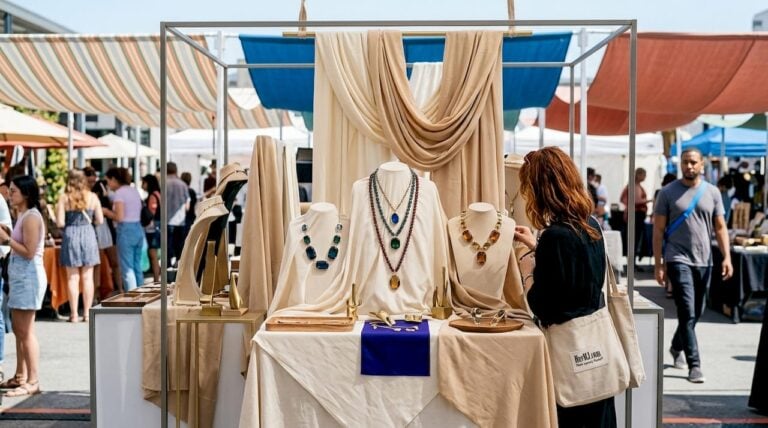
Pro Tip: When you’re at a market or boutique, ask the seller to show you the back of the piece. Hand fabricated jewelry often shows distinct finishing marks on interior or reverse surfaces that machine-made pieces don’t carry.
Shopping for hand fabricated jewelry is also an opportunity to connect with the artisan. When you know the process, you can appreciate what you’re holding in a way that no catalog description can give you.
My perspective on hand fabrication and why it matters
I’ve spent years surrounded by jewelry made in both ways, and I’ll tell you directly: hand fabrication is where you feel the maker in the metal. When I hold a cast piece alongside a fabricated one from the same designer, the fabricated piece always carries a weight of intention that’s hard to describe but easy to feel.
What I find most misunderstood is the idea that “handmade” is just a marketing term. For true hand fabrication, it’s a technical reality. Every cut, every solder join, every filed edge represents a decision someone made with their hands. That’s not nostalgia. That’s craft.
I’ve also learned not to dismiss casting outright. Both fabrication and casting have genuine merits, and a skilled designer uses each where it serves the piece best. But if I’m choosing jewelry to pass down or to wear through years of real life, I want the structural integrity of hand fabrication. And I want to know someone’s hands shaped every piece of it.
My advice is simple. When you invest in a piece that matters to you, ask how it was made. The answer tells you more than the price tag ever will.
— Veronique
Discover handcrafted jewelry made for you
At Hermj, artisan craftsmanship isn’t a selling point. It’s the standard we work from every day. Our collection features handmade jewelry built from genuine pearls and gemstones, designed for the person who knows that what they wear should feel as considered as who they are. Every piece reflects real bench work, real materials, and real care for the person wearing it.
Whether you’re drawn to the luster of freshwater pearls, the depth of natural gemstones, or a custom design you’ve been imagining, you’ll find it made with the same attention to craft this article has explored. Browse our handmade jewelry collection to find pieces worth wearing for years. And if you’re looking for something exceptional at a special price, our handcrafted seasonal picks are a great place to start.
FAQ
What is hand fabricated jewelry in simple terms?
Hand fabricated jewelry is built piece by piece from raw metal sheet, wire, and tubing using manual tools like saws, hammers, and torches, with no molds or casting involved.
What’s the difference between handmade and fabricated jewelry?
Handmade jewelry is a broad term that can include casting done by hand. Fabricated jewelry specifically refers to pieces assembled from raw metal components without molds, making it a more precise construction method.
How can I tell if jewelry is hand fabricated?
Look for solder seams at join points, hand-cut edges, and slight surface variations from filing. These are physical signs that the piece was constructed from assembled components rather than cast in a mold.
Why does hand fabricated jewelry cost more?
The higher price reflects labor-intensive bench time and the skill of multiple specialists, including bench jewelers, stone setters, and engravers. Custom fabricated pendants typically start around $100 to $150.
Is hand fabricated jewelry stronger than cast jewelry?
Yes. Fabricated pieces are generally denser and structurally more precise than cast jewelry because they’re constructed from solid metal stock rather than cooled poured metal, which can carry microscopic internal voids.
Recommended
- What Is Hand Stamped Jewelry: A Beginner’s Guide
- Handmade Jewelry And Its Unique Benefits ✺ HerMJ
- Crafted For Eternity: Ancient Egyptian Jewelry History