


2026 Runway Rules: Statement Necklace or Pendant for Your Shape
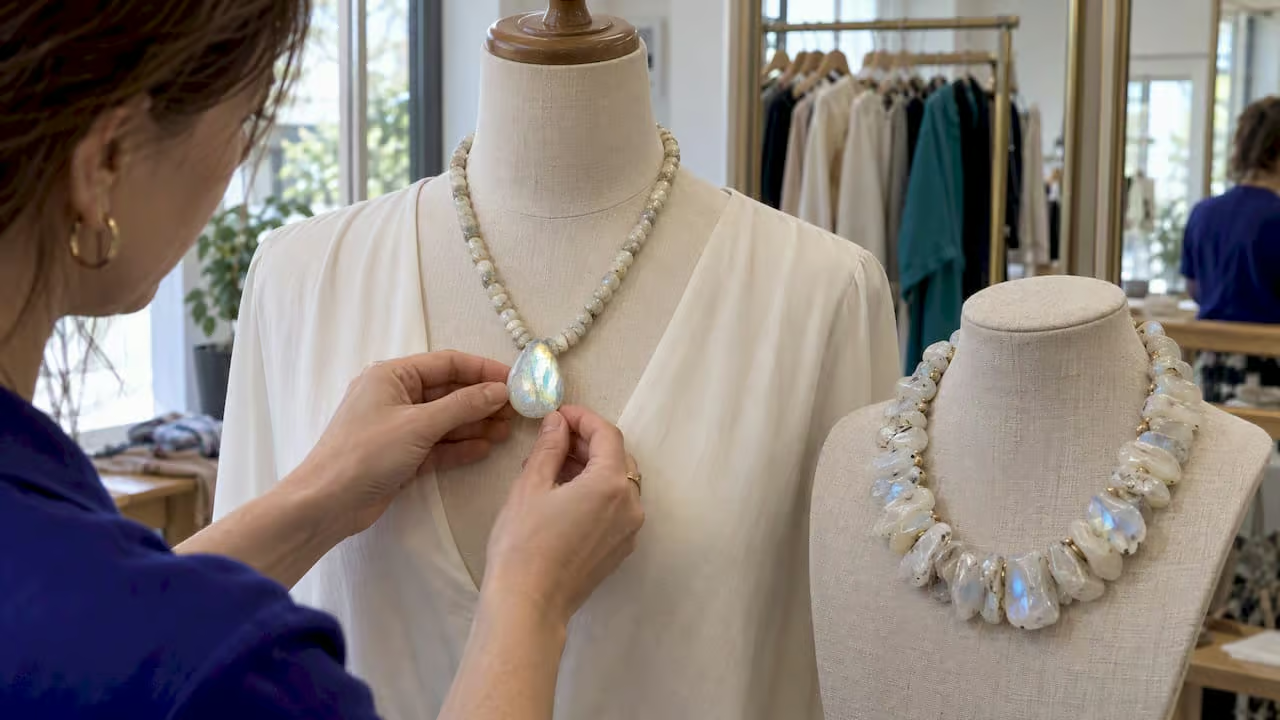
A statement necklace is a bold, oversized piece meant to be the focal point of an outfit, while a pendant is a single small charm on a simple chain built for everyday versatility.
The right choice comes down to three things: scale, focal weight, and how the piece sits against your neckline. Once you’ve got that sorted, length and proportion fall into place naturally.
The Edit
- Statement necklaces typically feature bold size, multiple materials, and command attention, making them suitable for evening or standout looks.
- Pendant necklaces are generally smaller, subtle, and ideal for daily wear, especially when paired with tailored or simple outfits.
- Choosing the right piece depends on body proportions and neckline, with specific lengths and styles complementing different face 2026shapes and clothing cuts.
- Layering necklaces involves staggering chain lengths by 1 to 2 inches and mixing metals carefully to create balanced, intentional looks.
- Both styles require different craftsmanship, with pendants focusing on setting and delicacy, while statement necklaces demand structural balance and sturdier findings.
What really separates a statement necklace from a pendant
A statement necklace is built for volume. Think chunky beads, sculptural metal links, or layered stones designed to pull the eye and anchor an entire look. A pendant, by contrast, is a single charm, often a stone or small motif, hanging from a delicate chain that quietly complements whatever you’re wearing rather than competing with it and becoming a distraction.
The difference comes down to visual weight and intent:
- Statement necklaces use size, texture, and often mixed materials to command attention on their own.
- Pendants rely on one small focal point and a thinner chain, making them easy to wear daily or layer with other pieces.
- Width and material matter too: a chunky resin or brass statement piece reads as bold, while a slim gold chain with a single pearl reads as refined.
We’re seeing this distinction play out across the runways again. Coverage of the statement necklace trend shows the style returning to major fashion weeks and editorial shoots in 2026, often worn against neutral bases rather than saved for red carpets alone.
How to choose by body type and neckline
Your proportions and your outfit’s neckline do most of the deciding. Here’s how we’d approach it.
- If you’re short-waisted, favor shorter pendants (16 to 18 inches) that sit high and don’t visually shorten your torso further.
- If you’re long-waisted, a longer statement piece (22 to 24 inches) fills space gracefully without looking lost.
- Round or full face shapes benefit from longer, V-shaped pendants that elongate the neckline.
- Square or angular faces pair well with rounded statement necklaces that soften strong jawlines.
- Heart-shaped faces tend to suit both, though a smaller pendant avoids competing with a narrower chin.
Neckline compatibility matters just as much. A V-neck invites a pendant that follows its line. A crew or boat neck gives a statement necklace room to sit flat without crowding your collarbone. Turtlenecks pair beautifully with long pendants layered over the fabric, and off-shoulder tops practically beg for a statement piece since there’s no collar to interrupt it.
Pro Tip: Hold the necklace up to your neckline in a mirror before buying. If it disappears into the fabric, size up; if it overwhelms the space, size down.
For more on pairing pendants with specific necklines, our guide on wearing gemstone pendants with casual necklines walks through this in more depth.
Necklace length chart and pendant sizing guide
Length does more work than most people realize. The same pendant can look elegant or awkward depending on where it sits.
| Length | Where it sits | Best suited for |
|---|---|---|
| 14 inches | Tight at the collar | Chokers, delicate accent pieces |
| 16 inches | At the collarbone | Small pendants |
| 18 inches | Just below the collarbone | Small to medium pendants |
| 20 inches | At the upper chest | Medium pendants |
| 22 to 24 inches | Mid-chest | Large statement pendants |
| — | Below the bust | Layered or opera-style pieces |
| — | Rope length | Statement wraps, doubled strands |
According to a necklace length guide, 16 to 18 inches tends to flatter small pendants, while 20 to 24 inches gives larger statement pendants the room they need. A small pearl drop at 14 inches can crowd the collarbone, while the same pearl at 18 inches sits with breathing room and reads as intentional rather than accidental.
When to wear each piece
The general rule we live by: when you wear a statement necklace, let everything else go quiet.
- Workwear and daily looks call for pendants. A thin gold chain with a small gemstone works under a blazer or against a crew neck without pulling focus from your face.
- Layering days favor pendants too, since multiple statement pieces together read as cluttered rather than curated.
- Evening events and low necklines are where statement pieces shine. An off-shoulder dress or a simple black coat gives a chunky necklace the space it needs to shine.
- Outfit anchors like a plain white tee, a tailored blazer, or an off-shoulder dress all work because they let the necklace, not the clothing, carry the visual interest.
Styling coverage from DressMeUpNY echoes this: pare back everything else when a bold piece is doing the talking.
Layering pendants and mixing metals the right way
Layering rewards a little math. Stagger your chains by 1 to 2 inches so each pendant gets its own visual space, and keep at least a 2-inch gap between focal charms so they don’t collide.
- Start with three lengths: 14, 18, and 22 inches work well for a beginner-friendly stack.
- Mix metals sparingly: gold and silver together can look intentional when one metal clearly leads, a balance that runway styling has leaned into this season.
- Mind the pull: heavier pendants drag chains into a sharper V and can elongate the neck, while lighter pieces sit softer and stack more easily.
Our full walkthrough on layering necklaces for beginners covers exact pairings if you want a head start.
Our picks for every necklace moment
We offer a collection designed with various styling needs in mind, helping you pair the right piece with the right occasion.
- For an everyday pendant that moves easily from desk to dinner, our Elegant Freshwater Pearl Necklace offers a single, quiet focal point.
- For something with a little more color without tipping into full statement territory, the Pearl And Aquamarine Necklace works as a versatile in-between.
- For evenings and events, our Faceted Garnet Gemstone Necklace brings the bold, sculptural presence this season calls for.
Our pieces are handcrafted, and many come with free extenders so you can adjust the length to your proportions. Browse the full range in our necklaces category.
Materials and craftsmanship behind each style
Pendants are typically built around a single gemstone, pearl, or charm set on a fine chain, so the craftsmanship focus sits on the setting itself: how securely the stone is held, how smoothly the bail moves, how the chain catches light without overpowering the focal piece.
A well-made pendant feels light and precise, almost like a punctuation mark rather than a sentence.

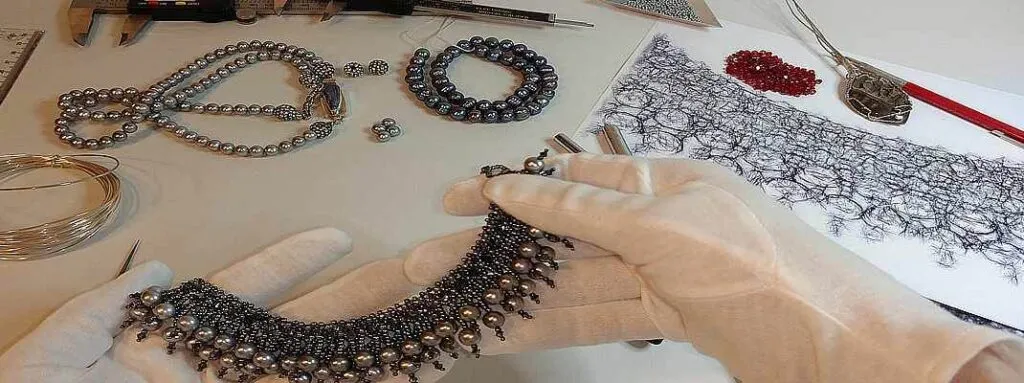
Statement necklaces require a different skill set. Multiple stones, beads, or metal elements have to balance in weight and proportion so the piece hangs evenly rather than twisting or pulling to one side.
Mixed materials, think freshwater pearls next to faceted garnet or tiger eye set against brass, need to be matched not just visually but structurally, since heavier elements require sturdier findings and clasps that can handle the load.

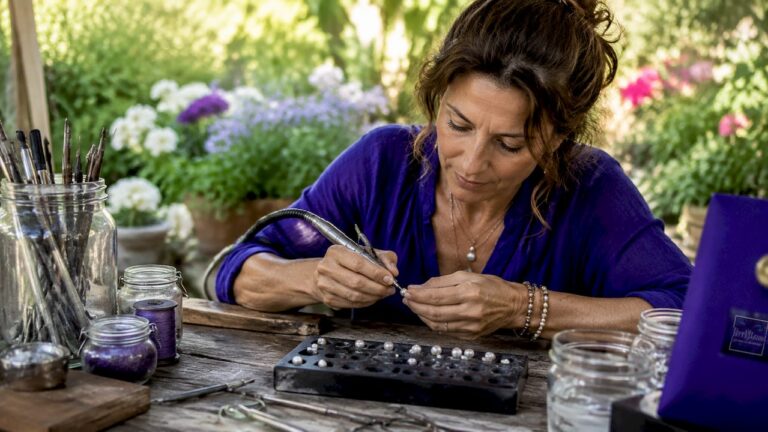
We work with genuine freshwater pearls and natural gemstones for both categories, which means the craftsmanship conversation is really about construction: a pendant succeeds through restraint and precision, while a statement piece succeeds through balance and engineering. Neither is simpler to make well. They just ask different things of the maker.
Caring for pendants and statement pieces differently
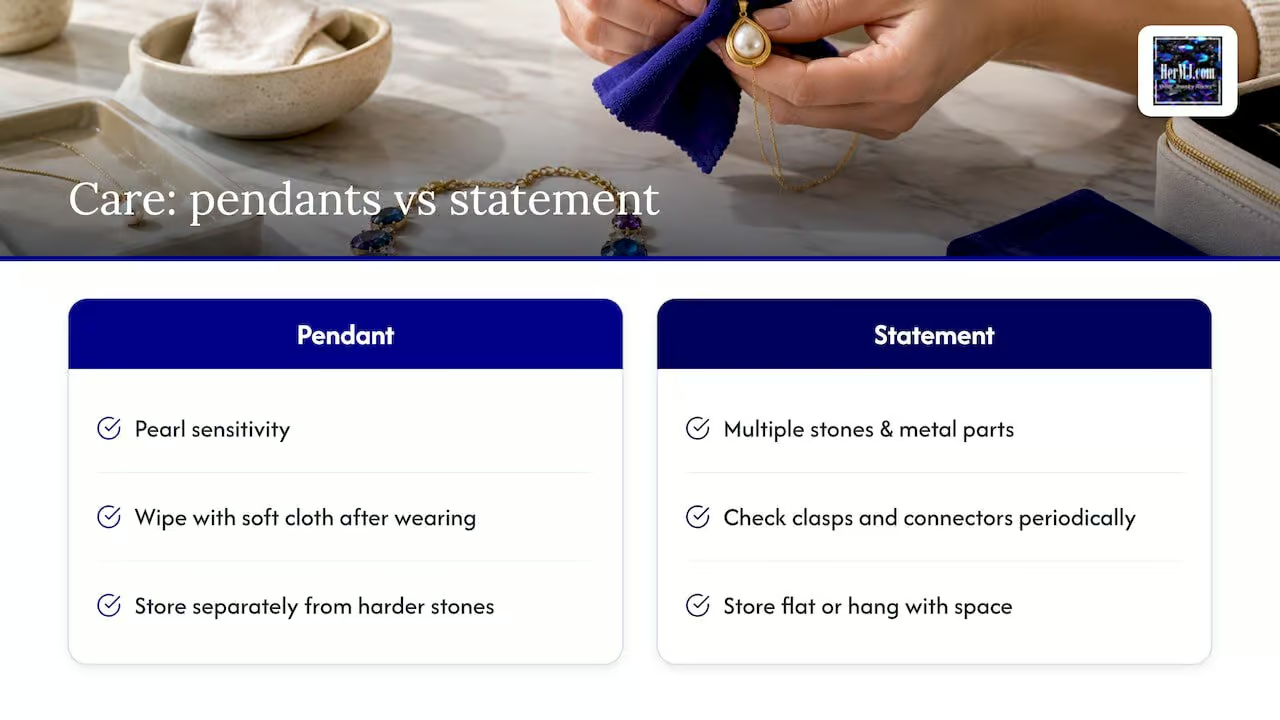
Pendants, especially those set with pearls, need gentle handling because pearls are organic gems with delicate surfaces.
Wipe pearls with a soft cloth after wearing to remove oils and perfume residue, and store them separately from harder stones that could scratch their luster.
Statement necklaces, particularly those with multiple stone or metal elements, need a slightly different approach.
Check clasps and connector points periodically since the added weight puts more stress on these spots than a simple pendant chain does. Store statement pieces flat or hanging with enough space that beads and links don’t tangle or knock against each other.
For both types, avoid exposure to perfume, lotion, and direct sunlight for long stretches, since these can dull luster and fade certain stones over time.
Think of it less like maintenance and more like caring for a small piece of art: a few minutes of attention keeps either style looking as good as the day you fell in love with it.
A short history of two necklace styles
Pendants have one of the longest histories in jewelry, stretching back to Ancient Egypt and Mesopotamia, where a single stone or amulet often carried religious or protective meaning.
The format stayed remarkably consistent: one chain, one focal object, worn close to the body.
Statement necklaces trace a different lineage, rooted in the elaborate collars and layered beadwork of ancient civilizations and later revived by Art Deco designers and mid-century couture houses that used scale and sculpture to make jewelry a centerpiece rather than an accent.
Each revival since has repeated the same idea: when fashion wants drama, it reaches for scale.
That history is part of why the two styles feel so different to wear today. A pendant still carries a sense of personal meaning, something chosen and close. A statement necklace still carries theater, meant to be seen from across a room.
My quick checklist for picking a focal necklace
When I’m deciding fast, I ask two things: does this piece fight my neckline, and does it match the room I’m walking into? My checklist is simple: one focal piece, one neutral base, one neckline check in the mirror.
— Veronique
Find your next necklace with us
We’ve matched every styling rule above to pieces we actually make, so you don’t have to guess which length or weight suits your closet.
For a quiet everyday pendant or a bold evening piece, our necklace collection features genuine pearls and gemstones, with customization available if you want a different length or stone.
US orders ship free with no minimum, and international orders ship free for orders over a certain amount. Take a look at our Faceted Garnet Gemstone Necklace if you’re ready for your next statement piece.
FAQ
Are statement necklaces out of style?
No, statement necklaces are seeing a clear resurgence, with 2026 runway coverage showing them worn across major shows and styled for everyday wear. They’ve shifted from occasion-only pieces to everyday accents paired with simple basics.
What is the difference between a pendant and a necklace?
A pendant is a single charm or stone hanging from a chain, while “necklace” is the broader category that includes pendants, chokers, statement pieces, and chains. Every pendant is a necklace, but not every necklace is a pendant.
What does a statement necklace mean?
A statement necklace is designed to be the visual centerpiece of an outfit rather than a subtle accent, using size, texture, or bold materials to draw attention. It works best worn alone against a simple base, as trend coverage on recent collections repeatedly shows.
How do you wear statement jewelry without overdoing it?
Keep the rest of your outfit and accessories minimal so the necklace can be the focus. Stylists recommend one bold piece per look, pairing it with neutral clothing and skipping heavy earrings or bracelets that compete for attention, per 2026 jewelry trend guidance.
Sources
- The Statement Necklace Is The Jewellery Piece Trending This Season
- Necklace Length Guide Body Type: How to Choose the Right Length for Your Frame and Style – Human Design Studios Fine Jewelry
- From Chanel to Saint Laurent: The Statement Jewelry Ruling Jewelry Trends 2026
- 2026 Jewelry Trends, Per a Stylist
Recommended
- Types of Jewelry Statement Pieces: Annual Style Guide
- Statement Jewelry for Formal Occasions: Your Style Guide
- The Right Necklace For Your Face Shape
- Statement Jewelry With Significance – Bracelet And Necklaces