


How Light Transforms Crystal Decor in Your Home
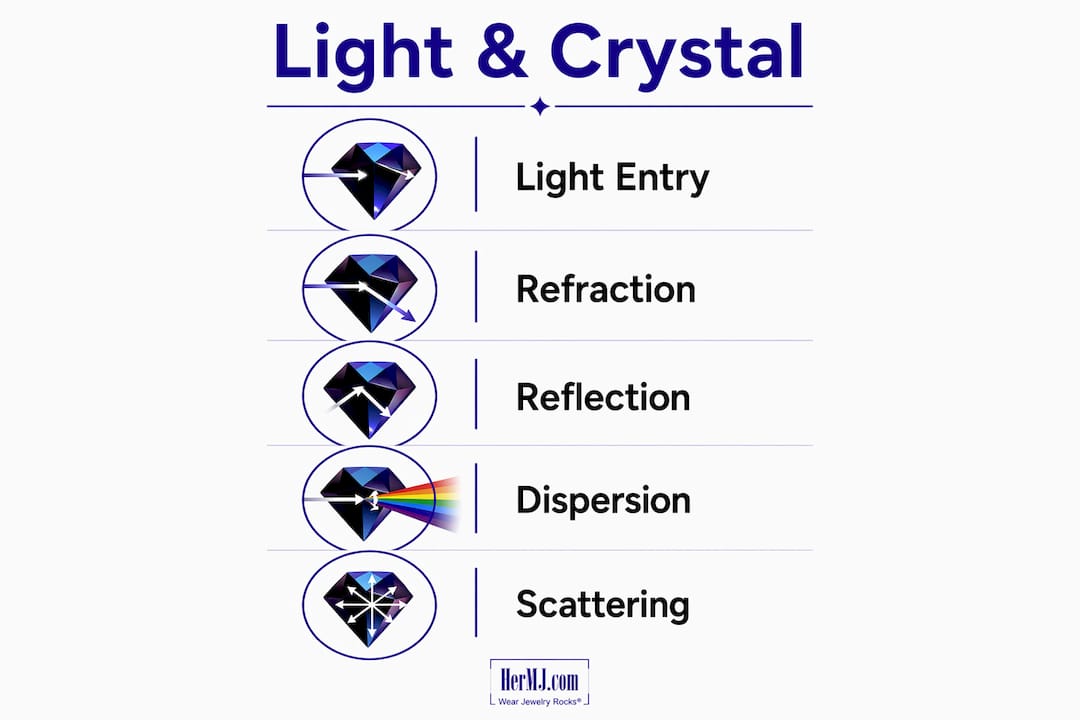
Crystal decor earns its place in luxury interiors not through size or price, but through what it does with light. The role of light in crystal decor is fundamentally optical: when light strikes a crystal surface, it reflects off the exterior, refracts through the body, and disperses into a spectrum of color.
That three-part interaction turns a simple object into a living focal point that shifts with the hour, the season, and the source of illumination.
Here’s what crystals actually produce in an interior:
- Reflection: Light bounces off polished facets, amplifying brightness across walls and ceilings.
- Refraction: Light bends as it passes through the crystal body, slowing and redirecting its path.
- Dispersion: White light splits into its spectral colors, casting rainbow patterns across surfaces.
- Fluorescence: Certain crystals glow under ultraviolet light due to internal elements, adding a secondary layer of color in decorative lighting.
- Scattering: Faceted surfaces scatter both natural and artificial light, increasing perceived room brightness.
No other decorative material combines all five of these effects at once. That’s why crystal has anchored luxury interiors from 18th-century European ballrooms to modern American penthouses.
How light interacts with crystal decor: the science explained
Crystal’s optical power starts at the atomic level. A crystal’s refractive index governs how sharply it bends incoming light, and high-lead crystal glass bends light more dramatically than standard glass, producing richer dispersion.
Think of it like a prism: white light enters, slows inside the denser material, and exits split into its component wavelengths. The result is those unmistakable rainbow flickers on your ceiling.
“Crystals possess a natural refractive index that bends light as it passes through, creating the rainbow-like dispersion of colors commonly associated with prisms. This scientific property gives crystal home decor a functional design advantage: it naturally enhances lighting, even in small or dimly lit rooms.” — Natalie Jayne Interiors
The cut of a crystal piece matters enormously. Faceted cuts, like the multi-sided drops on a chandelier, multiply the number of light-bending surfaces.
A smooth, rounded crystal produces a soft glow. A sharply faceted one throws distinct, directional sparkle. Oval cuts tend to concentrate light into a single bright point, while emerald-style flat cuts scatter it more evenly.
| Crystal cut | Primary light effect | Best use |
|---|---|---|
| Multi-faceted (chandelier drop) | Strong dispersion, rainbow patterns | Chandeliers, pendant lights |
| Smooth/rounded | Soft diffused glow | Bedside lamps, accent pieces |
| Flat/emerald cut | Even light scatter | Wall sconces, decorative panels |
| Pointed/obelisk | Concentrated sparkle | Tabletop displays, shelving |
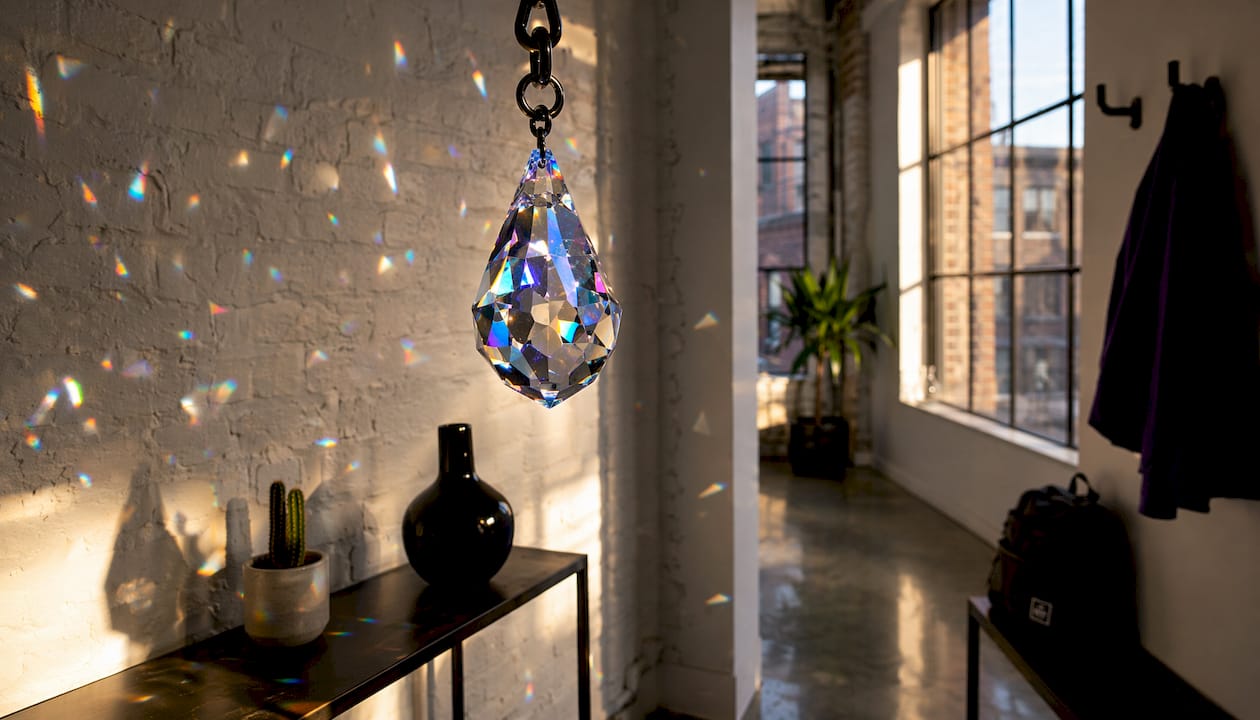
Pro Tip: Place a faceted crystal object near a south-facing window in the morning. The low angle of winter sunlight produces the longest, most dramatic rainbow projections across your walls.
At the molecular level, light interacts with electrons and lattice vibrations inside the crystal structure, a phenomenon that underpins the complex play of color you see in high-quality decorative crystal. That’s not mysticism. It’s physics, and it’s why a well-cut piece of crystal glass catches your eye across an entire room.
Crystal decor’s effect on mood and the feel of a space
The psychological impact of crystal light interaction is real, and interior designers have long relied on it.
Dynamic light movement, the kind that shifts as you walk past a chandelier or as afternoon sun crosses a window, prevents a room from feeling flat or static.
Design experts note that this subtle variation in a room’s energy subconsciously stimulates both creativity and calm, two qualities that rarely coexist in a single material.
“Homes filled with crystal objects often feel cleaner, more energized, and welcoming. The constant interaction of crystal with light creates dynamic movement in a room, which subconsciously stimulates creativity and calmness.” — Natalie Jayne Interiors
Many people also associate natural crystal forms, including rose quartz, amethyst, and clear quartz, with metaphysical benefits like stress reduction and emotional balance.
Whether or not you subscribe to crystal healing, the practical effect is consistent: shimmering, light-filled decor lifts the atmosphere of a room in a way that static materials simply don’t. A room with crystal accents feels alive. One without them can feel finished but inert.
Pro Tip: If you want a calming bedroom rather than an energizing one, choose smooth, rounded crystal pieces over sharply faceted ones. Softer light diffusion creates a gentler, more restful ambiance.
How to use crystal decor in different rooms
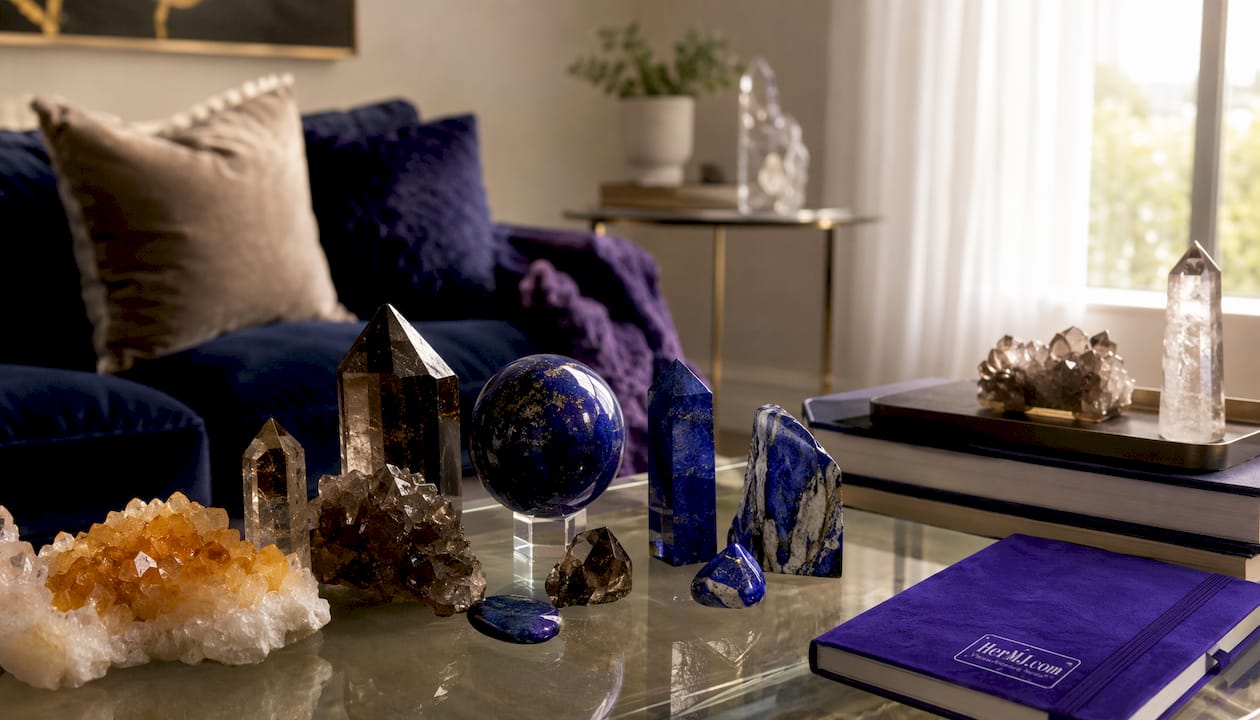
Each room in your home has a different relationship with light, and crystal decor responds to those differences in distinct ways. Placement and piece selection matter as much as the crystal itself.
Living room
The living room benefits most from crystal chandeliers and light fixtures that scatter illumination throughout the space.
A chandelier above a seating area creates a dazzling focal point while distributing soft, warm light across the room. Crystal accent lamps, decorative trays, and side tables add sparkle without competing with the main fixture.
- Position crystal lamps near mirrors to double the reflected light.
- Use crystal coasters or trays on coffee tables to catch afternoon sun.
- A single large crystal sculpture on a shelf reads as art rather than clutter.
Dining room
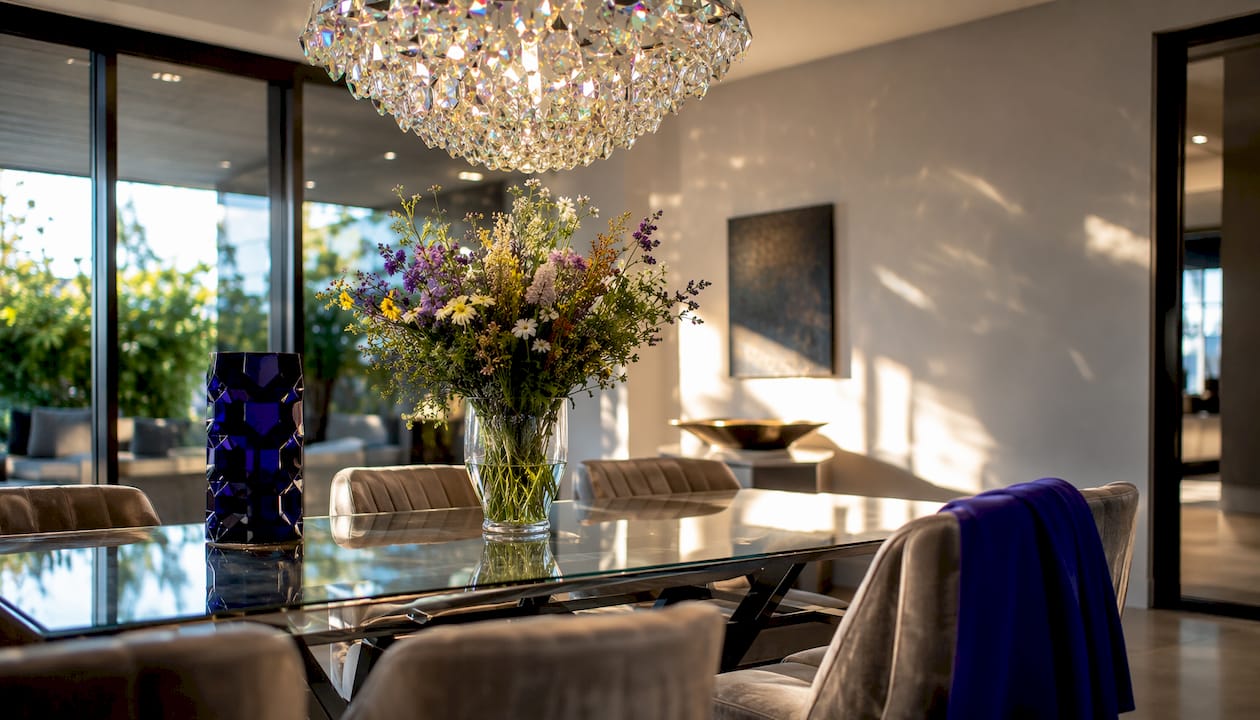
A cascading crystal pendant above the dining table is one of the most effective uses of crystal in any home. It draws the eye upward, creates a sense of occasion, and casts warm, flattering light on everyone seated below.
Crystal candleholders and vases on the table amplify this effect during evening meals, layering multiple light sources.
Bedroom

The bedroom should feel serene rather than dramatic. Bedside lamps with crystal bases, subtly beaded chandeliers, and crystal drawer pulls all add elegance while keeping the light soft. Avoid heavily faceted pieces directly above the bed, since they can create distracting light patterns when you’re trying to sleep.
Bathroom

Few materials suit a bathroom as naturally as crystal. Soap dispensers, trays, drawer pulls, and sconce lighting all work beautifully here.
Crystal amplifies ambient light in spaces with limited natural sunlight, making it especially useful in interior bathrooms or rooms with small windows.
The clean, reflective quality of crystal also reinforces the spa-like aesthetic most people want from a well-designed bathroom.
For a full guide to placing crystal accents throughout your home, crystal decor by room covers specific ideas for every space.
Customizing and pairing crystal decor for your lighting conditions
Crystal decor isn’t one-size-fits-all. The color, cut, and finish of a piece interact differently depending on your room’s existing light sources and your personal aesthetic.
Color choices and their light effects:
- Clear crystal produces the most dramatic rainbow dispersion and suits neutral or white interiors.
- Smoky or gray crystal absorbs some light, creating a moody, sophisticated effect.
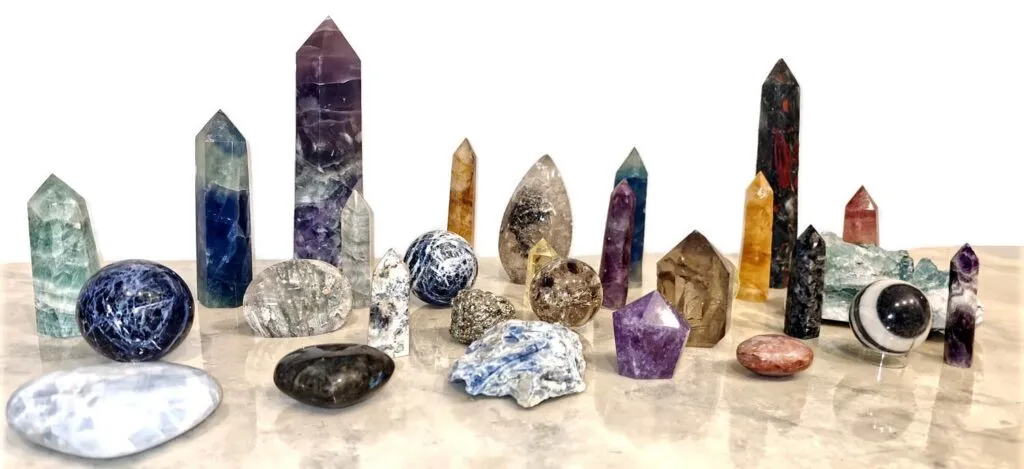
- Colored crystals (amethyst, rose quartz, citrine) tint the light they scatter, adding warmth or coolness to a room’s palette.
- Champagne or gold-tinted crystal glass pairs naturally with warm-toned lighting.
| Pairing material | Effect on light | Best room |
|---|---|---|
| Gold or brass | Amplifies warm tones, adds richness | Living room, dining room |
| Chrome or silver | Enhances cool, crisp reflections | Bathroom, modern kitchen |
| Mirrored surfaces | Doubles reflected light patterns | Hallways, small spaces |
| Dark wood | Contrasts with crystal sparkle, grounds the display | Study, bedroom |
When crystal decor is paired with metallic finishes like gold and brass, it magnifies the luxurious quality of the light in a room, adding warmth and richness that neither material achieves alone.
Chrome and silver pairings work in the opposite direction, sharpening the light’s crispness for a more contemporary feel.
Smart lighting integration is an emerging trend worth considering. Programmable LED systems let you shift color temperature throughout the day, so your crystal pieces respond differently at breakfast than they do at a dinner party.
For practical guidance on pairing lighting types with decorative elements, accent lighting for homeowners offers a clear breakdown of the options available in 2026.
For inspiration on crystal types and their visual qualities, types of crystals for home decor is a useful starting point.
Sustainability and ethical sourcing in crystal decor
The beauty of crystal decor carries a responsibility that more consumers are taking seriously.
Crystal mining, particularly for decorative minerals like amethyst, quartz, and selenite, can involve significant land disturbance, water use, and labor concerns depending on the country of origin.
Ethical sourcing certifications and sustainability standards are increasingly essential for consumers choosing crystal decor in luxury interiors.
When shopping for crystal decor, look for these indicators of responsible sourcing:
- Fair Trade certification: Confirms fair wages and safe working conditions at the mine or production site.
- Responsible Jewellery Council (RJC) certification: Covers ethical, social, and environmental practices across the supply chain.
- Country of origin transparency: Reputable suppliers disclose where their crystals are sourced, not just where they’re finished.
- Recycled or reclaimed crystal: Some manufacturers now use recycled crystal glass, which reduces mining demand entirely.
- B Corp certification: Increasingly adopted by home decor brands committed to environmental and social accountability.
Consumer expectations around sustainability have shifted noticeably in the luxury decor market. Buyers who invest in high-quality crystal pieces now routinely ask about sourcing, and brands that can’t answer that question are losing ground to those that can. Choosing ethically sourced crystal doesn’t require compromising on quality or beauty. It simply means asking the right questions before you buy.
What lighting works best with crystal decor?
Lighting choice can make or break a crystal display. The single most important variable is color temperature.
LED lighting in the 3500K–4000K range best mimics daylight and enhances crystal’s natural brilliance. Standard warm white bulbs at 2700K cast a yellow hue that makes clear quartz look dirty or muddy. That’s a detail most people don’t realize until they’ve already installed the wrong bulbs.
| Color temperature | Effect on crystal | Recommended use |
|---|---|---|
| 2700K (warm white) | Yellow cast, dulls clear specimens | Avoid for display lighting |
| 3500K (neutral white) | Clean, natural appearance | General crystal displays |
| 4000K (cool white) | Enhances brilliance, sharpens color | Feature pieces, chandeliers |
| UV/blacklight | Triggers fluorescence in select crystals | Specialty display, accent |
Direction matters just as much as temperature. Top-down lighting creates glare on polished crystal surfaces. Museum-quality installations use angled uplighting or sidelighting with diffused LED strips to create a soft shimmer without harsh reflections.
For transparent stones like selenite or clear quartz, uplighting is particularly effective. An LED light base or a routed channel in a shelf with an upward-facing LED strip transforms a specimen from a gray rock into something luminous.
Using diffuser channels to cover LED strips prevents the individual “dots” of light from reflecting on crystal surfaces. An aluminum track with a frosted plastic cover blurs those dots into a continuous bar of light, giving you a professional, gallery-quality result at home.
Pro Tip: After setting up your crystal display, sit in the main seating area of the room and check whether any light source shines directly into your eyes. If it does, adjust the strip’s angle or add a small baffle to hide the fixture. Glare ruins the effect entirely.
For a broader look at how to match lighting types to different decorative contexts, decorative lighting by room covers the full range of options.
How crystal prisms bend light and change a room’s atmosphere
A crystal prism doesn’t just look beautiful. It actively reorganizes the light in a room. When white light enters a prism-shaped crystal, each wavelength bends at a slightly different angle because shorter wavelengths (violet, blue) slow more than longer ones (red, orange). The result is dispersion: a fan of spectral color projected onto surrounding surfaces.
The size and angle of the prism determine how wide that fan spreads and how far it travels. A large hanging prism in a south-facing room can project rainbow bands several feet across a wall. A smaller tabletop prism creates a more intimate, concentrated effect. The time of day shifts everything: low morning or evening light produces longer, more dramatic projections than midday overhead sun.
Crystal chandeliers work on this same principle at scale. Each individual drop acts as a small prism, and the combined effect of dozens or hundreds of them creates the layered, shimmering atmosphere that makes a crystal chandelier so visually commanding. The crystals don’t just decorate the fixture. They extend its light throughout the entire room.
Keeping your crystal decor at its most brilliant
Crystals’ light-enhancing qualities depend entirely on clean, unobstructed surfaces. Dust, fingerprints, and residue scatter light in uncontrolled ways, dulling the sparkle and muting the color dispersion. A regular cleaning routine is the simplest way to protect your investment.
For crystal decorative objects and displays:
- Dust weekly with a soft, dry microfiber cloth to prevent buildup.
- For deeper cleaning, use lukewarm water with a drop of mild dish soap. Rinse thoroughly and dry immediately with a lint-free cloth.
- Never use abrasive cleaners, ammonia-based products, or rough cloths. They scratch the surface and permanently reduce light transmission.
- For crystals with metal settings or hardware, clean the crystal and metal separately to avoid chemical reactions.
For crystal chandeliers:
- Turn off the power and allow bulbs to cool completely before cleaning.
- Remove individual drops or pendants, if possible, and wash them in warm, soapy water. Dry each piece before rehanging.
- For in-place cleaning, use a crystal chandelier spray cleaner. Lay a towel beneath the fixture to catch drips.
- Rehang drops carefully. A twisted or misaligned drop catches light at the wrong angle and breaks the visual rhythm of the fixture.
The frequency of cleaning depends on the room. A kitchen chandelier collects grease and needs attention more often than a bedroom piece.
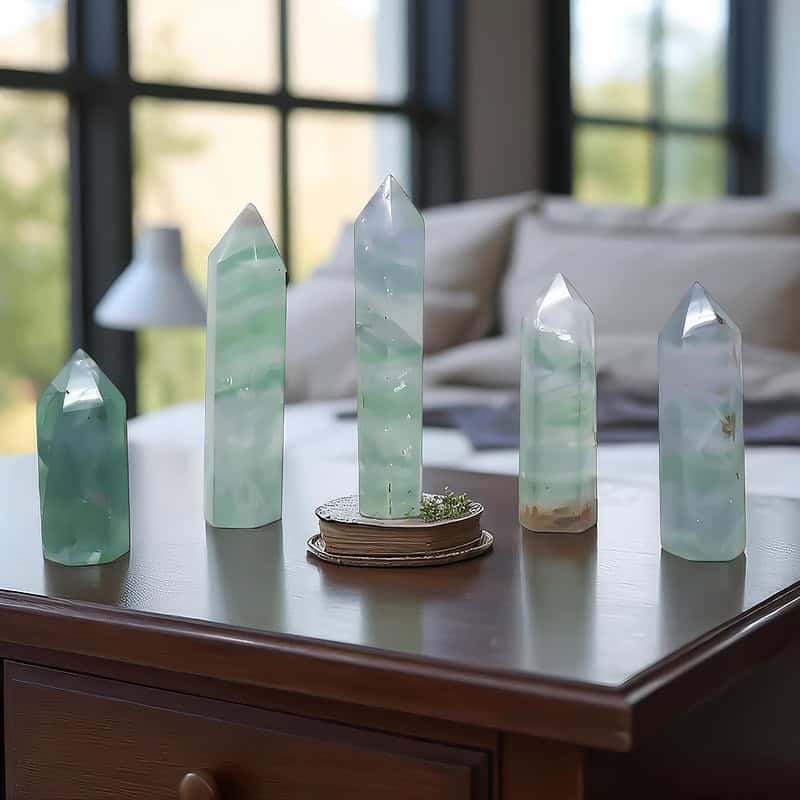
A bathroom crystal display benefits from a quick wipe-down after steamy showers. The effort is minimal, and the payoff in brilliance is immediate.
Bring the light home with HerMJ

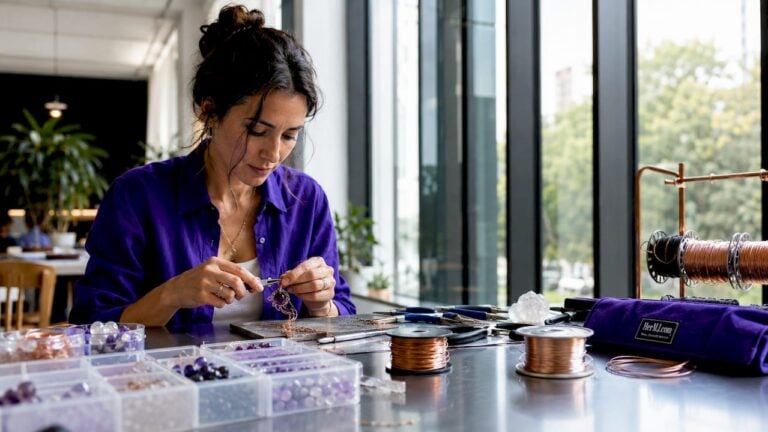
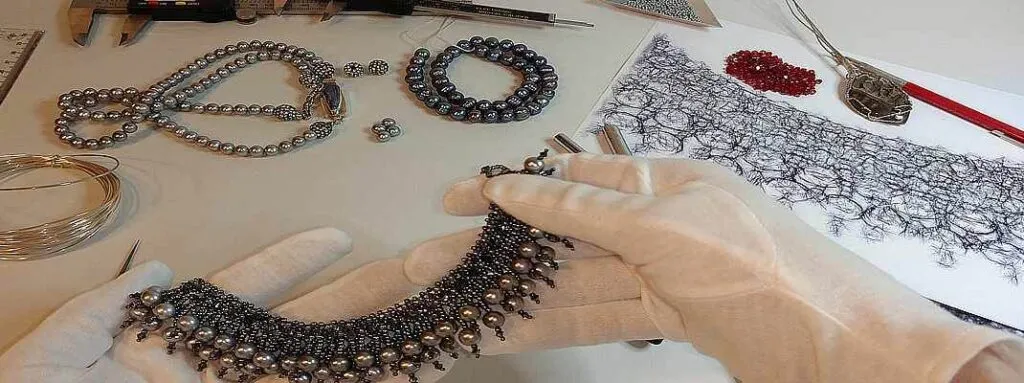
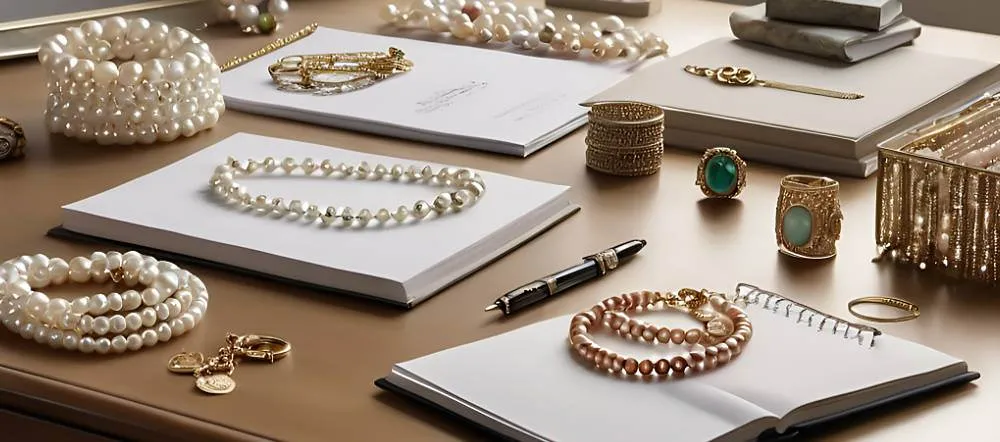
Crystal’s relationship with light isn’t limited to home decor. At HerMJ, we craft handmade jewelry from genuine gemstones and freshwater pearls, each piece chosen for the way it catches and holds light.
A faceted garnet necklace throws deep red light the way a crystal prism throws a rainbow. A freshwater pearl bracelet carries that same soft, organic luminosity you love in crystal decor, worn close to you every day.
Every piece ships free within the US, with no minimum order. International orders over $150 also ship free.
Key Takeaways
Crystal decor transforms interior spaces by bending, splitting, and scattering light through reflection, refraction, and dispersion, making lighting choice and crystal placement the two most powerful tools you have.
| Point | Details |
|---|---|
| Lighting temperature matters | LEDs in the 3500K–4000K range enhance crystal brilliance; 2700K warm bulbs dull clear specimens. |
| Cut determines light behavior | Faceted cuts produce strong dispersion and rainbow patterns; smooth cuts create a softer, diffused glow. |
| Direction beats intensity | Uplighting and side lighting outperform top-down lighting by eliminating glare on polished surfaces. |
| Pairing amplifies the effect | Gold and brass finishes magnify warm light; chrome and mirrored surfaces sharpen cool reflections. |
| Cleaning preserves brilliance | Weekly dusting and periodic gentle washing with mild soap keep crystal surfaces fully light-transmissive. |
Recommended
- Types of Crystals for Home Decor: Your Style Guide
- Crystal accents: crystals for the bathroom, bedroom and more
- Festive Holiday Home Decor ✺ HerMJ
- Luxurious Gemstone Home Decor And Crystal Decoration