


Wire-Wrapped Gemstone Jewelry: 8 Inspiring Examples
The Edit
- Wire-wrapped gemstone jewelry involves encasing stones in hand-manipulated wire without solder or glue. Mastering techniques like cabochon framing and rough crystal wrapping helps create diverse, durable designs for various jewelry pieces.
Wire-wrapped gemstone jewelry is defined as the art of encasing polished or raw stones in wire by hand, creating wearable pieces without solder or adhesive.
The craft uses no glue or soldering, relying entirely on wire tension and manipulation to hold each stone securely. If you’re drawn to a simple labradorite pendant or an intricate tree-of-life design, the range of wire-wrapped gemstone jewelry examples is genuinely surprising.
This guide walks you through eight standout styles, the techniques behind them, and the gemstones that make each design sing.
Examples of wire-wrapped gemstone jewelry worth knowing
Wire-wrapped jewelry spans everything from beginner-friendly cabochon pendants to gallery-worthy freeform sculptures. The eight styles below represent the most popular and visually distinct categories you’ll encounter as you explore this craft.
1. Cabochon pendant with basket weave frame
The cabochon pendant is the most recognized form of wire-wrapped gemstone work. A cabochon pendant uses 3–4 base wires in 20–22-gauge at 6–8 inches, with a thinner 24–28-gauge wire woven between them to form a basket-like cage around the stone.
That combination of gauges creates both structural strength and visual texture. Labradorite and moonstone are the most popular stones for this style because their flat backs sit flush against the wire frame.
2. Rough crystal wrap
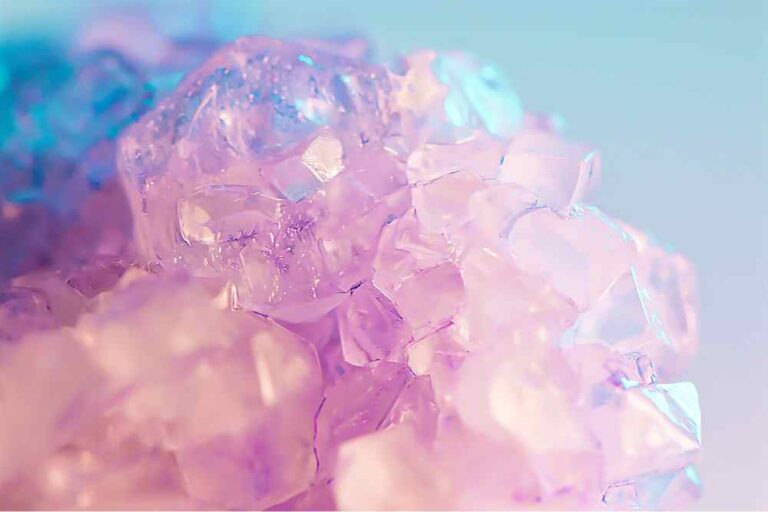
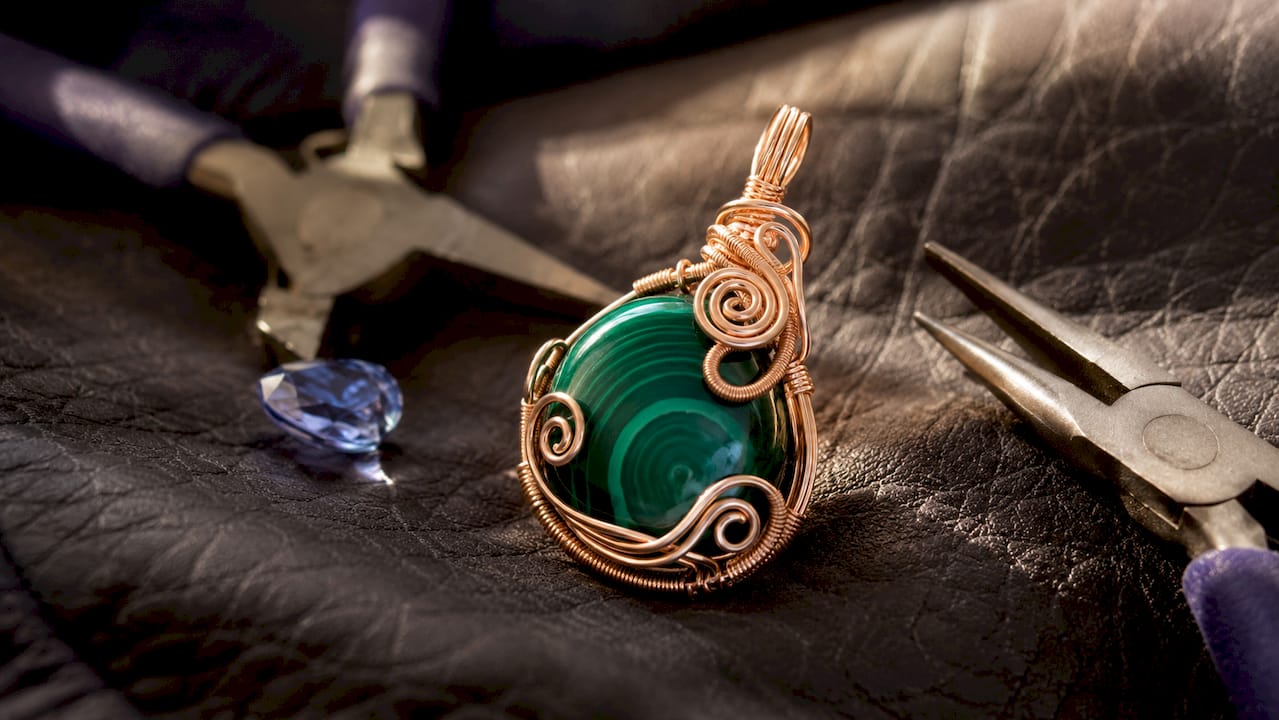
Rough crystal wraps celebrate the raw, unpolished beauty of stones like amethyst points, quartz clusters, and vivianite. The wire coils around irregular surfaces, so the design adapts to the stone rather than forcing the stone into a preset shape. Sterling silver, copper, brass, and gold-plated wire are all common choices for this style. Each metal changes the mood of the piece: copper reads as earthy and organic, while sterling silver feels clean and modern.
3. Tree of life pendant
The tree of life motif is one of the most recognized wire-wrapped jewelry ideas in the craft community. Thin-gauge wire forms the trunk and branches, which spread across the face of a flat stone like agate or jasper.
Tiny gemstone chips or beads are often threaded onto the branch wires before they’re secured, adding color and dimension. The result is a miniature landscape that doubles as a pendant.
4. Spiral swirl pendant
Spiral designs use a single continuous wire coiled into decorative swirls that cradle the stone from the front. This style works especially well with oval or teardrop-shaped cabochons in turquoise or chrysocolla.
The swirls add movement to the piece without adding bulk. Beginners often start here because the technique requires fewer wires than a full basket weave.
5. Multi-stone cluster pendant
Cluster pendants group two or more stones together in one setting, connected by a shared wire framework. Amethyst, citrine, and clear quartz are frequently combined for their contrasting colors and compatible shapes.
The wire acts as both the structural element and the visual connector between stones. This style suits gemstone cluster jewelry enthusiasts who want maximum visual impact from a single piece.
6. Double-terminated crystal pendant
Double-terminated crystals have points at both ends, which creates a natural challenge for wire wrapping.
The solution is a central wire coil that grips the widest part of the crystal, with decorative wraps extending toward each tip. Herkimer diamonds and selenite wands are classic choices for this format. The exposed points make the stone the undeniable focal point of the design.
7. Wire-wrapped gemstone earrings
Earrings translate wire-wrapping techniques into a smaller, lighter format. A simple wrapped loop connects a small cabochon or faceted stone to an ear wire, creating a gemstone dangle earring with minimal material. Labradorite and moonstone are popular here because their flash catches light with every movement. Matching pairs require consistent wire tension on both pieces, which makes earrings a useful skill-building project.
8. Wrapped gemstone bracelet
Wire-wrapped bracelets connect individual stone settings along a flexible wire spine or integrate stones into a cuff frame. Amethyst and opalite are well-suited to bracelet formats because their colors hold up against skin tones across a range of complexions.
The Amethyst Stone Bracelet format at HerMJ shows how a single stone type, repeated with consistent wrapping, creates a cohesive and wearable piece. Bracelets demand more wire and more consistent tension than pendants, making them a natural next step after mastering single-stone settings.
Core gemstone wrapping techniques
Understanding the techniques behind these designs helps you appreciate what you’re looking at and gives you a real foundation if you want to try them yourself.
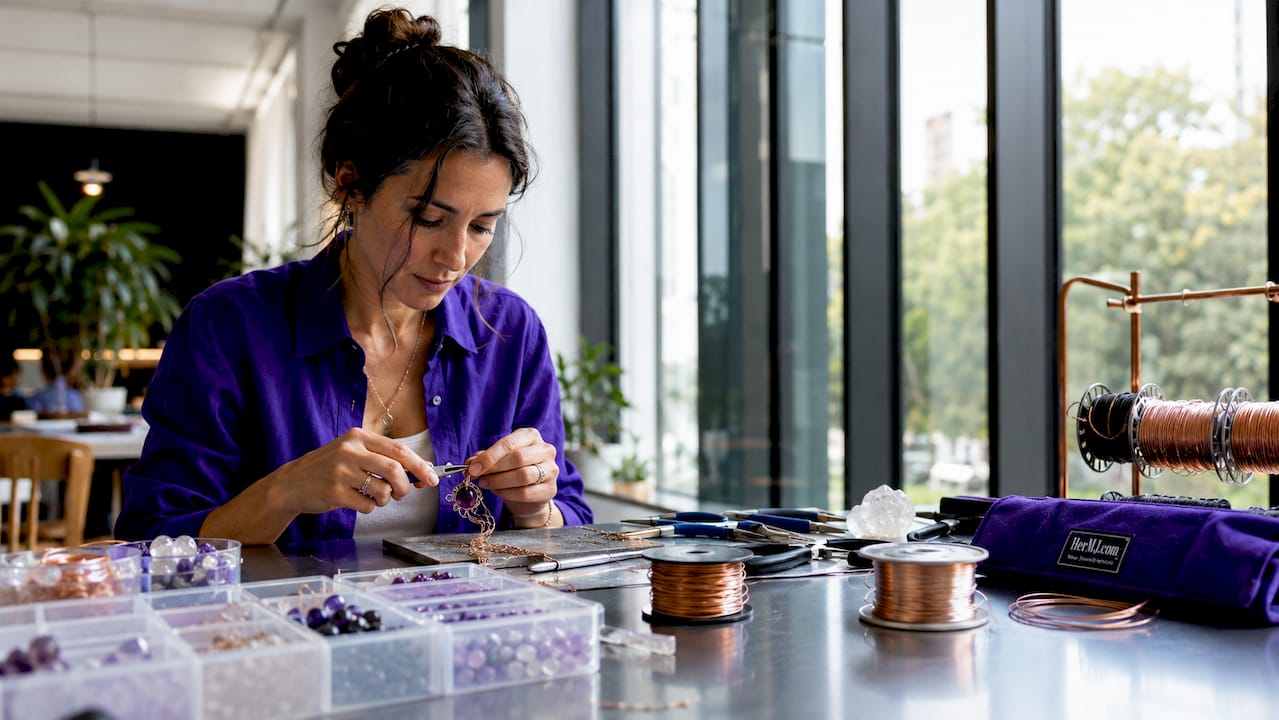
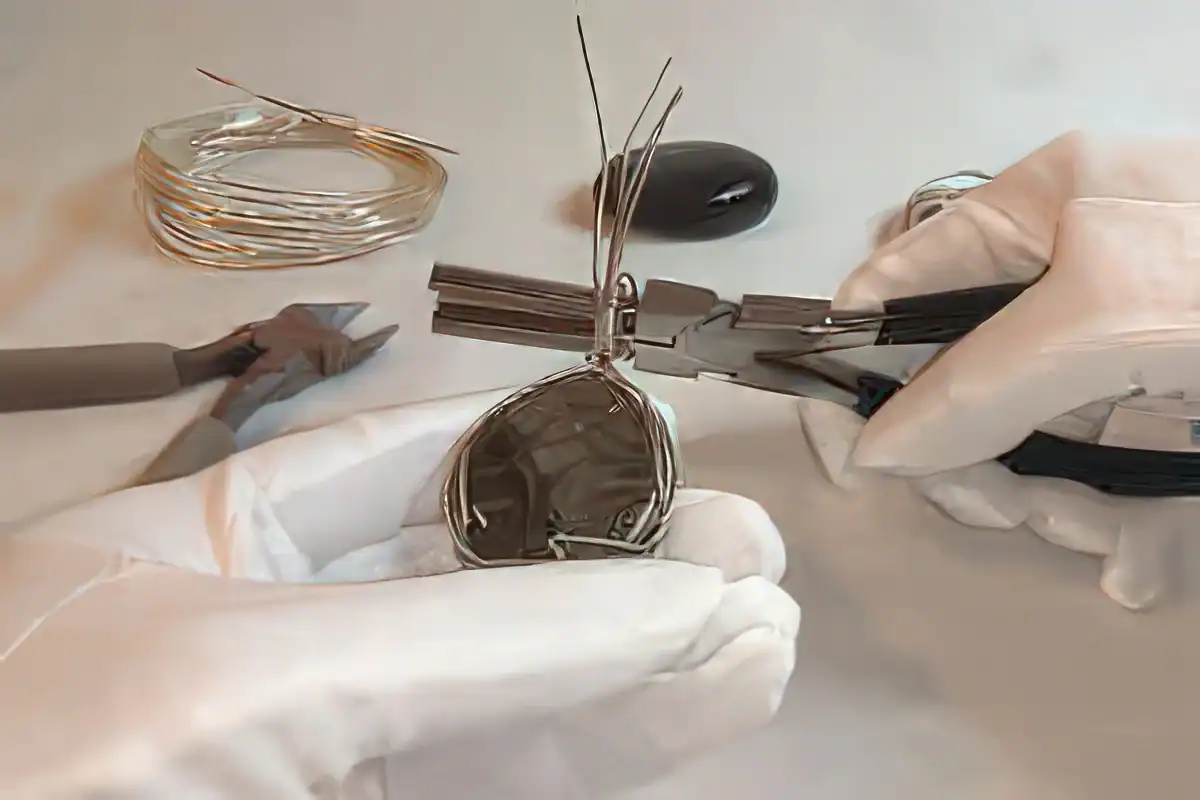
The standard process for a cabochon pendant follows a clear sequence. You cut your base wires to 6–8 inches, align them in parallel, then bind them together at the center with your thinner wrapping wire.
You fold the bundle around the stone’s edge to form a frame, then weave the thin wire back and forth across the base wires to lock the stone in place. The final step is to form a top loop bail so the pendant can hang from a chain or cord. That step in the process transforms a wrapped stone into a wearable piece.
Popular weave patterns include the basket weave, which crosses the thin wire in a tight grid; the figure-eight weave, which creates a rounder, more organic texture; and freeform swirls, which follow no fixed pattern and suit rough or irregular stones. Each pattern changes the visual weight of the setting. A tight basket weave reads as formal and structured, while freeform swirls feel loose and expressive.
Pro Tip: Maintain firm, even tension on your wrapping wire throughout the process. Wire tension is the single biggest factor in whether your stone stays secure over time. Loose wraps look unfinished and allow the stone to shift during wear.
Best gemstones for wire wrapping
The shape and surface of a stone determine how well it accepts a wire wrap. Flat-backed cabochons are the easiest starting point because their wire frames have a stable edge to grip. Rough crystals and double-terminated points require more adaptive wrapping but reward the effort with dramatic visual results.
Popular stones for wire wrapping include labradorite, moonstone, amethyst, turquoise, and agate. Each brings a different visual quality to the finished piece.
- Labradorite: Its iridescent flash shifts from blue to gold depending on the angle of light. It pairs beautifully with silver or gold-plated wire.
- Moonstone: Soft, milky translucency makes it feel ethereal. Copper wire adds warmth that complements its cool glow.
- Amethyst: Deep purple tones work with both silver and gold wire. Available as polished cabochons, rough points, and faceted stones.
- Turquoise: The matrix pattern on natural turquoise adds visual complexity without needing an elaborate wrap. Simple spiral designs let the stone speak.
- Agate: Flat slabs with banded patterns are ideal for tree-of-life designs because the stone becomes the “canvas.”
Wire metal choice matters as much as stone selection. Copper wire is affordable and easy to work with, making it the standard recommendation for beginners learning gemstone wrapping techniques. Sterling silver is harder but produces a cleaner finish. Gold-filled wire sits between the two in both cost and workability.
Pro Tip: Match the wire color to the stone’s undertone. Warm-toned stones like carnelian and citrine look richer with copper or gold-filled wire. Cool-toned stones like labradorite and aquamarine read best in sterling silver.
Creative wire-wrapped jewelry ideas for every skill level
Wire wrapping scales naturally from simple beginner projects to complex artistic statements. The format you choose depends on your skill level, the occasion, and how much time you want to invest.
For beginners, a single-stone spiral pendant in copper wire with a tumbled amethyst is the most forgiving starting point. The irregular surface of a tumbled stone hides minor inconsistencies in the wrap, and copper wire is soft enough to manipulate without specialized tools.
A faceted garnet necklace shows how a single faceted stone, set simply, can look polished and intentional without requiring advanced technique.
For gifting, wire-wrapped jewelry carries a personal quality that mass-produced pieces can’t replicate. Wire wrapping creates heirloom-quality pieces suited for special occasions because each one is genuinely one of a kind.
A wrapped moonstone pendant for a birthday or a turquoise bracelet for a graduation feels more considered than a store-bought piece rarely does.
For more experienced makers, multi-stone cluster pendants and full cuff bracelets offer real creative challenges. Combining an opalite beaded bracelet format with wire-wrapped accent stones creates a piece that blends two techniques. You can also experiment with mixed metals, layering copper and silver wire in the same setting for a two-tone effect.
- Pendants: the most versatile format, suitable for any stone shape or size
- Earrings: fast to make, great for practicing consistent tension on matched pairs
- Necklaces: multi-stone designs work well for unique gemstone necklace styles with layered visual depth
- Bracelets: demand more wire and patience, but the wearability payoff is high
- Cluster pieces: combine three or more stones for a statement pendant or brooch
Seasonal styling also opens up creative possibilities. Pairing wire-wrapped pieces with outfits across seasons is a natural extension of the craft, and a seasonal gemstone style guide can help you match stone colors to wardrobe palettes year-round.
Key takeaways
Wire-wrapped gemstone jewelry is best approached by mastering one technique at a time, starting with cabochon pendants in copper wire, then moving on to rough crystals or multi-stone designs.
| Point | Details |
|---|---|
| Start with cabochons | Flat-backed stones are the easiest shape for beginners to wrap securely. |
| Use the right wire gauges | 20–22 gauge for base wires, 24–28 gauge for wrapping, per standard practice. |
| Match wire metal to stone tone | Copper suits warm stones; sterling silver suits cool-toned gems like labradorite. |
| Build a bail for every pendant | A top loop bail is what makes a wrapped stone wearable on a chain or cord. |
| Tension determines durability | Consistent wire tension prevents stones from shifting and keeps designs intact over time. |
Wire wrapping as a creative practice: my perspective
I’ve watched a lot of people pick up wire wrapping, expecting it to feel like a craft kit activity. It doesn’t.
The first time you hold a piece of labradorite and try to build a frame that actually holds it, you realize this is a skill with real depth. The wire has opinions. The stone has a personality. Getting those two things to agree takes patience.
What I find most rewarding about this craft is that imperfection is part of the aesthetic. A slightly asymmetrical swirl or an uneven coil doesn’t ruin a piece. It marks it as handmade, which is exactly the point.
The moon and stars pendant style, for example, gets its charm from the organic quality of each gemstone’s hand-set framing, not from machine precision.
The skill progression in wire wrapping is also unusually satisfying. You can feel yourself improving from piece to piece in a way that’s hard to fake. Your tension gets more consistent.
Your bails get cleaner. Your stone selection gets more intentional. That feedback loop keeps people coming back to the craft long after the novelty wears off.
My advice: don’t wait until you feel “ready” to try a complex design. Pick a rough amethyst, grab some copper wire, and see what happens. The stone will tell you where the wire wants to go.
— Veronique
HerMJ’s handmade gemstone jewelry collection
HerMJ crafts artisan jewelry from genuine gemstones at prices that don’t require a special occasion to justify. Every piece reflects the same care and attention you’d put into a handmade wire-wrapped design, without the hours at the workbench.
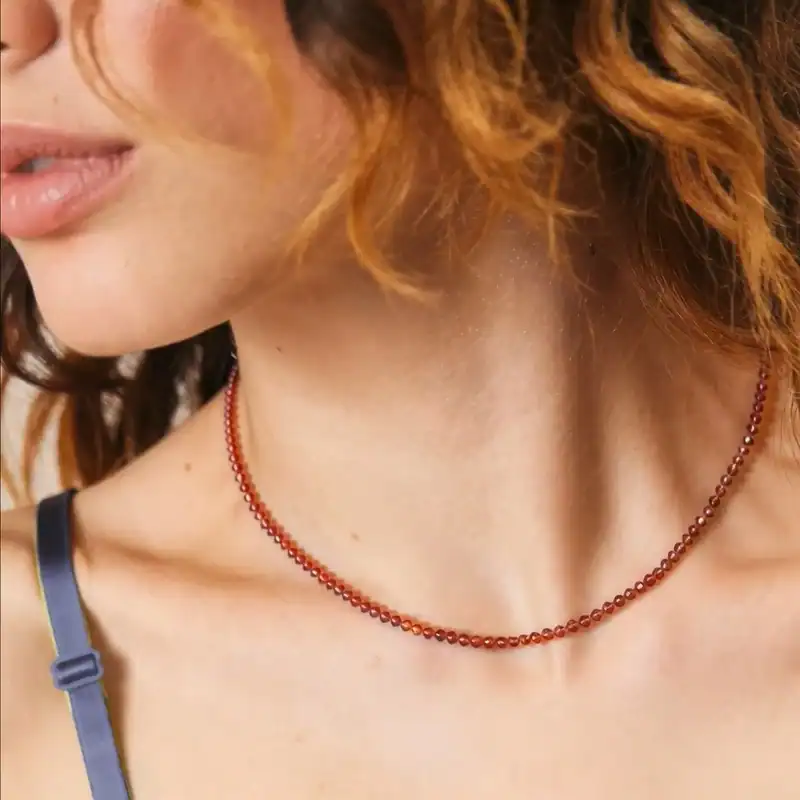
The Faceted Garnet Necklace is a standout for anyone who loves the deep red warmth of garnet in a clean, wearable setting. The amethyst stone bracelet and opalite beaded bracelet both show how gemstone color and texture carry a design on their own.
US orders ship free with no minimum. International orders ship free for orders of $150 or more, and orders under $150 ship via USPS, with the customer covering the cost.
FAQ
What wire gauge is best for wrapping gemstones?
The standard is 20–22 gauge for base wires and 24–28 gauge for the wrapping wire that secures the stone. Thicker base wires provide structural support, while the thinner wire handles the decorative and binding work.
Which gemstones are easiest to wire wrap?
Labradorite, moonstone, amethyst, turquoise, and agate are the most beginner-friendly choices because their shapes and polished surfaces accept wire frames cleanly. Flat-backed cabochons in any of these stones are the easiest starting point.
Can you wire wrap a rough crystal?
Yes. Rough crystals wrap well using adaptive coiling techniques that follow the stone’s irregular surface. Sterling silver, copper, brass, and gold-plated wire all work for rough crystal wraps, with copper being the most forgiving for beginners.
Do wire-wrapped pieces hold up over time?
Consistent wire tension is the key factor in durability. A well-tensioned wrap keeps the stone secure and the design intact through regular wear. Loose wraps are the most common cause of stones shifting or falling out.
What’s the difference between a wire wrap and a wire weave?
A wire wrap uses one or more wires coiled or bent around a stone to hold it in place. A wire weave adds a second wire woven in a pattern between the base wires, creating a more textured, fabric-like surface on the setting.