


Wedding Pearl Etiquette: Who Can Wear Pearls and When
Yes, pearls are appropriate for weddings in nearly every role: bride, guests, bridesmaids, and parents alike.
The exceptions are narrow but worth knowing.
Skip pearls if the couple has requested a different palette, if a specific cultural superstition around the couple’s heritage treats pearls as a symbol of tears, or if your piece is big enough to compete with the bride’s own jewelry. Wedding pearl etiquette really comes down to one rule of thumb for guests: understated beats statement, every time.
- Couple’s wishes come first. A stated dress code or “no white” request overrides any general pearl guidance.
- Check for cultural superstition. Some traditions still link pearls to tears or mourning.
- Never outshine the bride. Save statement strands and hair-pinned pearls for her, not her guests.
Key Takeaways
Wedding pearl etiquette allows pearls for nearly every role, provided guests keep pieces modest, respect the couple’s wishes, and check for cultural sensitivity when in doubt.
| Point | Details |
|---|---|
| Default answer is yes | Pearls suit brides, guests, and the wedding party unless the couple requests otherwise. |
| Watch for cultural superstition | Some traditions still link pearls to mourning, so ask a family member if unsure. |
| Guests stay understated | Small studs or a single pendant beat statement pieces or headpieces every time. |
| Size signals formality | 2 to 6mm suits casual looks, 6 to 8mm suits classic formality, 10mm and up is bridal territory. |
| Care protects the day | Apply perfume and sunscreen before jewelry, and wipe pearls down after wear. |
| HerMJ offers customizable pieces | HerMJ’s freshwater pearl collection covers guest, bridesmaid, and bridal styles with palette customization available. |
Who Can Wear Pearls at a Wedding, and How
Pearl jewelry wedding rules shift depending on your role in the day, and getting them backward is the fastest way to feel out of place in photos.
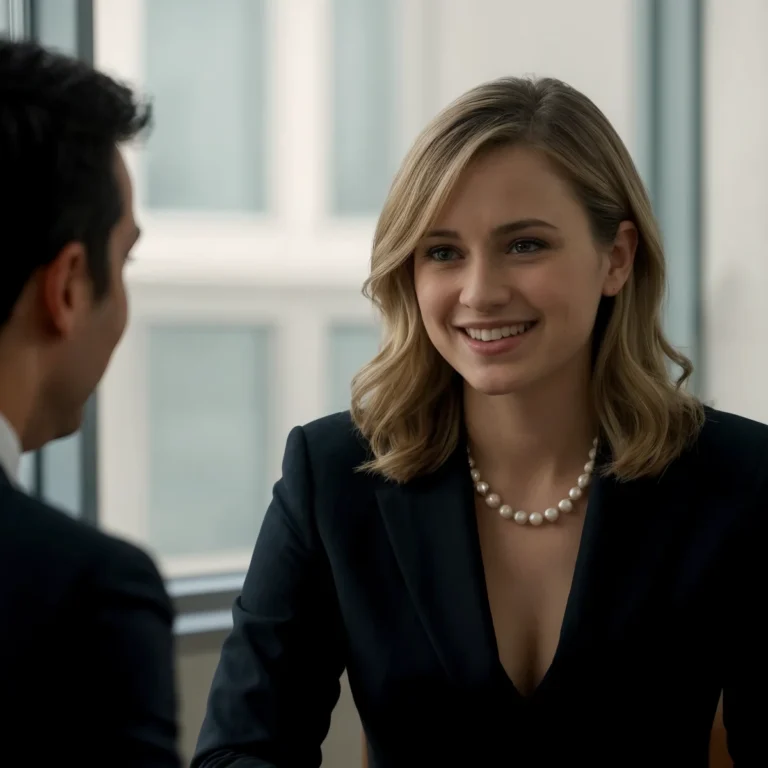
Guests do best with modest studs (think 6 to 8mm) or a single small pendant. Skip anything that reads as a headpiece, and steer clear of full white outfits where pearls would only reinforce the bridal look.
Always let the dress code drive the final call. A black tie invitation reads differently than a backyard barbecue, even when the jewelry box you’re pulling from is the same one.
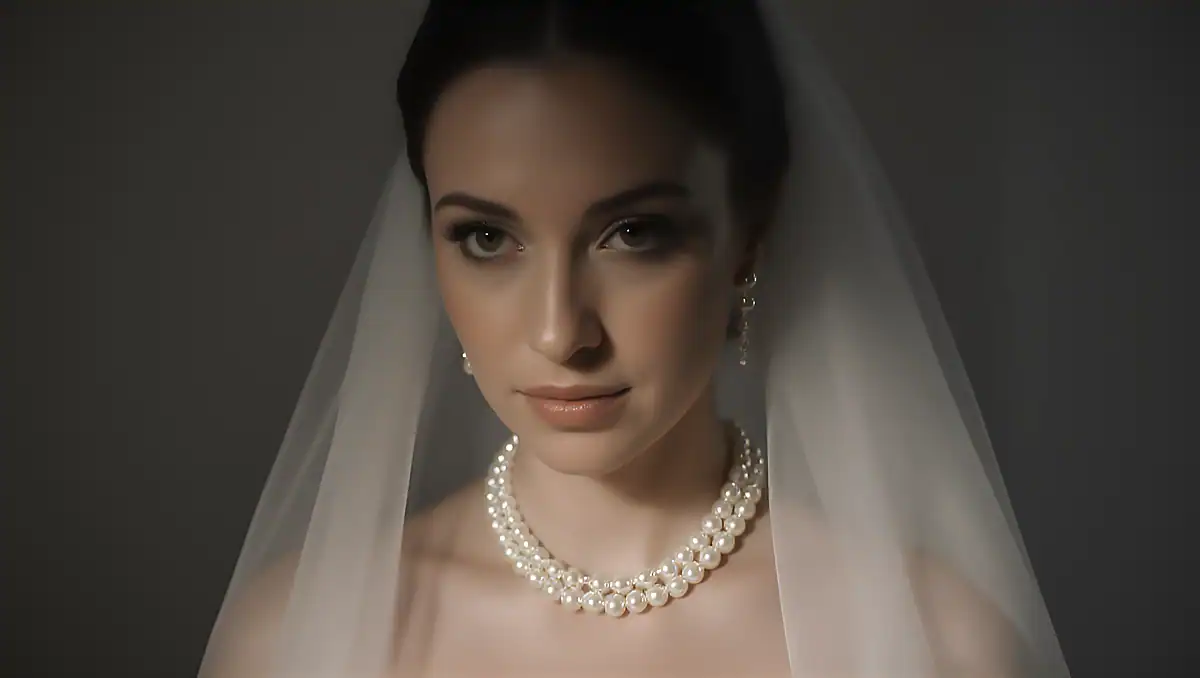
The bride has the most room to play. Pearls pair naturally with lace, silk, and minimalist gowns alike, and a bride can wear layered strands, a statement collar, or a pearl-studded hairpiece without anyone questioning the choice, because wearing pearls as a bride is one of the oldest and most flattering traditions in bridal style.
Bridesmaids and parents, including the mother of the bride, should follow the bride’s direction first. If she asks for matching sets, wear them. If she leaves it open, choose something understated that won’t pull focus.
Men get the subtle version: pearl cufflinks or a single pearl tie pin work as quiet accents without looking out of place next to a suit.
- Guests: small studs or a single pendant, no headpieces
- Bride: full range, from delicate to statement
- Bridal party: matched sets on request, understated otherwise
- Men: cufflinks or a tie pin, nothing louder
What Can the Bride Wear That Guests Should Skip?
The clearest way to think about bridal pearl jewelry style versus guest style is a short list of contrasts, since the same gemstone reads completely differently depending on scale and placement.
- Statement pieces. The bride can wear a large single strand, a multi-layer necklace, or a pearl-encrusted hair comb. A guest wearing any of these risks looking like she raided the bridal suite.
- Headpieces. Pearl hairpins, combs, or halos are bridal territory. Guests should keep pearls at the ears or throat, not in the hair.
- Color coordination. If the wedding has a visible color scheme, bridesmaids should coordinate with the bride’s direction. Guests without direction should default to small, complementary pieces rather than trying to match the party.
Bridesmaids without explicit instructions are safest choosing one modest piece, a pair of studs or a slim bracelet, rather than guessing at a theme.
Are Pearls Bad Luck at Weddings?
Wedding pearl traditions carry a strange footnote: for over a century, some cultures have linked pearls to tears, largely tracing back to Victorian mourning jewelry, where pearls symbolized grief as often as they symbolized elegance. That association softened over generations, and modern etiquette generally treats pearls as entirely appropriate for weddings, but the superstition never fully disappeared in every culture or family.
If you’re a guest and you’re unsure if the couple or their families hold that belief, the safest move is simple: ask. A quick text to the couple, or to a close relative who knows the family’s traditions, settles the question faster than guessing. When in doubt, choose a small, subtle piece that won’t read as a statement either way.
Etiquette experts note that these beliefs vary widely and modern Western weddings rarely enforce them, but “rarely” isn’t “never.” If a couple or their culture objects, defer without argument. Good wedding accessories etiquette means respecting your hosts over defending your jewelry choice.
Pro Tip: If you inherited pearls from a family member and you’re not sure how they’ll be received, wear them to the rehearsal dinner first. It’s a lower-stakes way to gauge reactions before the ceremony.
How Should You Style Pearls by Wedding Formality?
Wedding pearl traditions flex a lot depending on the dress code, and matching your pearls to the formality of the event is the single fastest way to look intentional rather than accidental.
For black-tie weddings, a classic single-strand necklace or a matched set of pearl earrings and bracelet reads as timeless and appropriately formal. Stick to one finish, whether that’s a bright white luster or a soft cream, rather than mixing tones.
For cocktail or semi-formal weddings, pendant pearls or simple drop earrings hit the right note. Avoid layering pearls with heavy gemstone pieces in the same look; pick one focal point and let it carry the outfit.
For casual, beach, or outdoor weddings, small studs, a single delicate pendant, or mixed-material pieces that combine pearls with light metal accents feel appropriate without overdressing for the setting.
Neckline matters as much as the venue. A high neckline pairs well with a choker-length strand. A V-neck or scoop calls for a short strand or single pendant that fills the space without crowding it. If your dress already has beading or embellishment at the neckline, skip the necklace entirely and let earrings do the work.
Larger or colored pearls raise the formality of a look almost automatically. Freshwater pearls tend to suit accessible, modern styling, while Akoya and South Sea pearls, with their larger size and brighter luster, push a piece toward higher formality. A 10mm South Sea pearl pendant will always read more formal than a 4mm freshwater stud, regardless of setting.
- Black tie: single strand or matched set, one finish
- Cocktail: pendant or drop earrings, one focal point
- Casual/outdoor: studs or a single delicate pendant
- High neckline: choker length; V-neck: short strand or pendant
Can You Wear Heirloom Pearls, and What About Gifting Them?
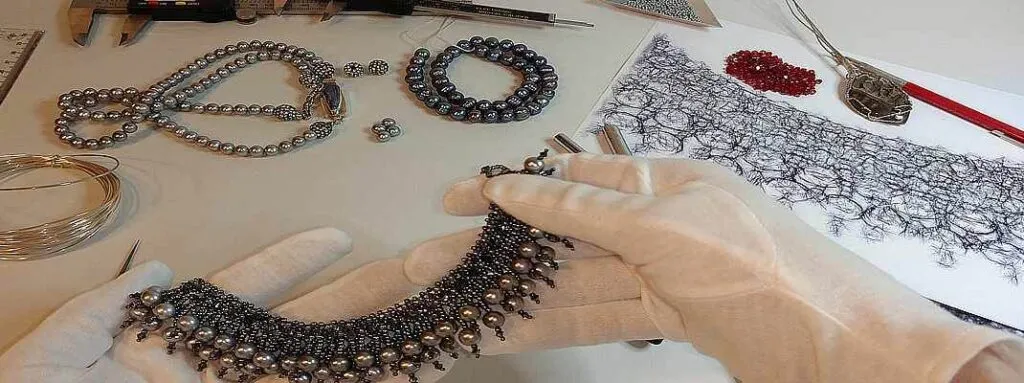
Wearing heirloom pearls at a wedding honors the family history behind them, but decades-old strands often need a checkup before they see a dance floor again. Restringing and clasp replacement are the two most cost-effective updates that make an old piece both safe to wear and modern-looking again.
To keep an heirloom feeling current rather than dated, pair it with a simple modern setting, or mix it with a delicate contemporary chain instead of wearing it exactly as your grandmother did.
Keep the overall styling modest unless the bride specifically wants a statement heirloom moment.
If you’re gifting pearls for a wedding, consider the cultural weight first. Ask a close friend or family member, subtly, if pearls carry any meaning in the couple’s background. A short handwritten note explaining why you chose pearls, whether for their timelessness or a personal connection, turns a simple gift into a genuinely thoughtful one.
- Get old strands checked before the big day
- Modernize with simple settings or mixed metals
- Ask quietly about cultural meaning before gifting
- Add a note explaining the sentiment behind the gift
What Size Pearls Work Best, and How Do You Care for Them?
Size does most of the talking in pearl styling. Small studs suit minimal, everyday-elegant looks. A single strand of medium-size pearls reads as classically formal without overwhelming an outfit. Larger pearls move into statement territory, best reserved for brides or wedding party members with the bride’s blessing.
Comfort matters more on a wedding day than any other. Secure hairpins well before the ceremony, choose shorter strands if you plan to dance, and always test the clasp and overall weight of a necklace before the event, not the morning of.
Simple care habits protect pearls through a full day of photos, hugs, and dancing: avoid direct contact with perfume and sunscreen, both of which can dull the nacre over time, and wipe pearls gently after wear rather than storing them dirty. Older strands benefit from a professional restringing check before any major event.
Pro Tip: Always remember, put your perfume on first, let it dry for a few minutes, then put your pearls on last. That single habit does more for their luster than almost anything else.
How Do You Pair Pearls With Other Wedding Jewelry?
The most common mistake at weddings isn’t wearing pearls; it’s wearing them alongside three other statement pieces that fight for attention. A cohesive look starts with picking one dominant material and letting everything else support it.
If pearls are your centerpiece, pair them with a thin gold or silver band bracelet rather than a chunky gemstone cuff. Earrings should echo the necklace’s tone without duplicating its size. A pearl pendant calls for pearl or simple metal studs, not another pendant at the ears.
Mixing metals with pearls works fine as long as you commit to one finish. Rose gold settings warm up cream-toned pearls nicely, while classic silver or platinum settings keep white pearls looking crisp. What doesn’t work is switching metals piece to piece: gold necklace, silver earrings, rose gold bracelet, since that reads as thrown together rather than styled.
Bracelets deserve more attention than most guests give them. A lustrous freshwater pearl bracelet sits quietly at the wrist and photographs well without competing with a ring or a necklace.
For brides layering pearls with other gemstones, an accent piece like a lapis lazuli bracelet with a Tahitian pearl detail adds color without breaking the overall cohesion, since the pearl accent ties it back to the rest of the look.
Do Pearls Change With the Wedding Season?
Pearls have a quiet advantage over most gemstones: they work in every season, but the way you style them should shift with the weather and the venue.
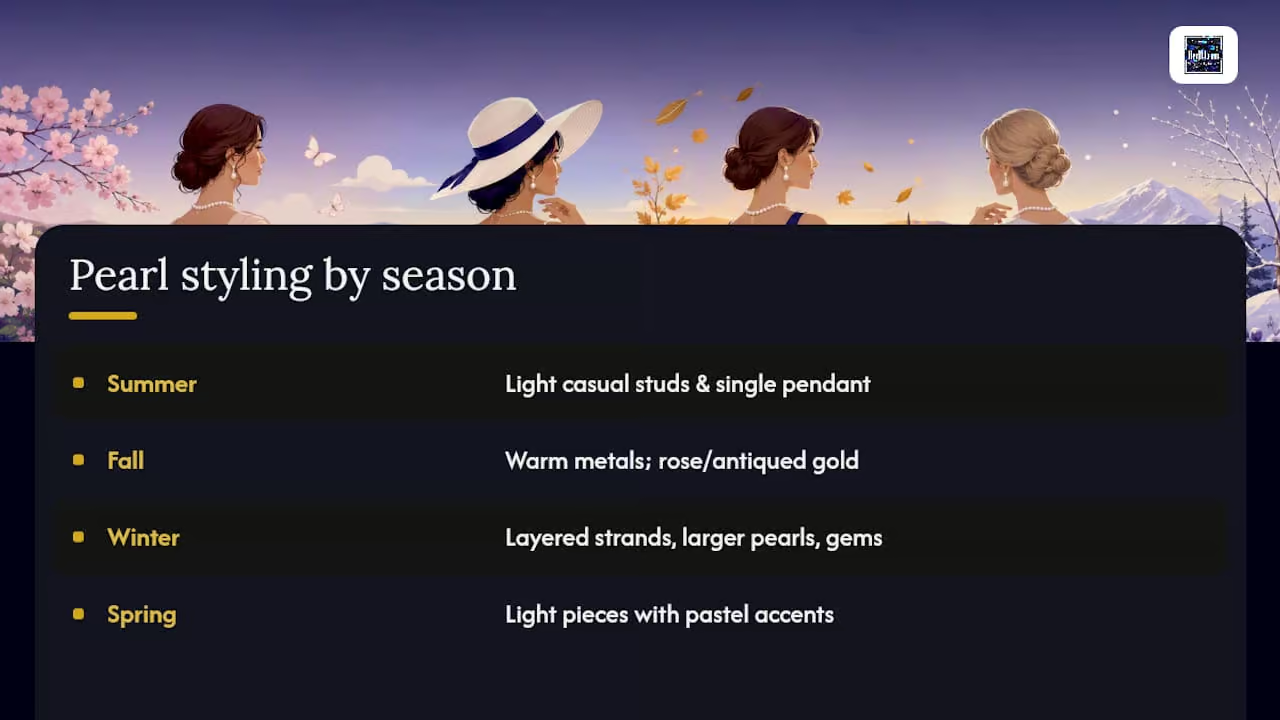
Summer and beach weddings call for lighter, more casual pearl pieces. Small studs, a single delicate pendant, or a mixed pearl-and-shell bracelet suit the relaxed setting without looking like you dressed for a ballroom. Humidity and heat also mean less jewelry generally sits more comfortably, so this is the season to simplify.
Winter weddings, especially indoor black-tie events, give pearls more room to shine. Layered strands, larger pearls, and pearl-and-gemstone combinations feel appropriate against heavier fabrics like velvet and satin.
A pearl and aquamarine necklace works well here too, since the cool blue tone plays nicely against winter color palettes without looking out of place in warmer months either.
Fall weddings split the difference. Warmer metal tones, rose gold or antiqued gold, pair naturally with cream and champagne pearls against autumn foliage backdrops. Spring weddings favor the same lighter approach as summer, though pastel accents alongside pearls feel especially fitting during that season.
The venue matters as much as the calendar. An outdoor garden wedding in July calls for a different scale than an indoor February gala, even if both fall under “formal.”
What Are Modern Ways to Wear Pearls at a Wedding?
Traditional pearl styling still dominates, but modern brides and guests are finding less conventional ways to work pearls into their look. Scattered pearl hairpins instead of a single comb create texture without the formality of a full headpiece.
Asymmetrical earrings, one pearl stud paired with a small gemstone drop on the other ear, have become a quiet trend for guests who want something slightly unexpected.
Mixing pearls with colored gemstones is another shift from strictly matched sets. A faceted garnet gemstone necklace worn alongside pearl earrings adds warmth and contrast rather than a single monochrome palette.
Similarly, pairing a strawberry quartz gemstone bracelet with pearl studs softens the overall effect for daytime weddings.
Brides are also experimenting with pearls in non-traditional placements: sewn into a veil edge, threaded through a belt, or clustered at a single shoulder strap rather than worn as standalone jewelry.
An incredible seraphinite bracelet or an Australian opal necklace paired with a moonstone pendant show how pearls increasingly share the stage with other organic gemstones rather than standing alone, a shift toward more personalized, less rule-bound bridal style.
How Do You Protect Pearls During the Wedding Day?
Pearls are organic gems, formed by a living mollusk, and they need gentler handling than diamonds or sapphires.
That soft, luminous surface, the nacre, is also what makes pearls susceptible to damage from chemicals most people apply without thinking twice: perfume, hairspray, and sunscreen all rank among their biggest threats.
Protect your pearl jewelry by putting it on in the right sequence (after every spray and lotion has fully dried) to prevent more dulling than any cleaning routine could fix afterward. During the reception, if you’re dancing or hugging guests all night, check clasps periodically, since a loose clasp is how pearls end up lost on a dance floor rather than back in their box.
At the end of the night, wipe pearls gently with a soft cloth before storing them, ideally in a soft pouch rather than tossed into a bag with other jewelry, where clasps and hard edges can scratch the surface. Older strands, especially heirlooms, benefit from a restringing check well before the wedding date rather than a last-minute scramble.
A Stylist’s Take on Wearing Pearls to a Wedding
Handcrafted freshwater pearls suit nearly every role in a wedding because they photograph beautifully in natural light and hold up to a full day of movement without losing their shape.
What I appreciate most is how customizable they can be. A piece designed for a specific wedding palette, cream pearls against sage green, or soft pink against ivory, feels considered rather than generic, and that’s the difference between jewelry that just matches and jewelry that actually belongs in the photos.
— Veronique
Find Wedding-Ready Pearls Without the Guesswork
Every rule in this piece points to the same conclusion: the right pearl piece for your role is usually simpler and smaller than you’d think, and HerMJ builds pieces around exactly that principle. Our elegant freshwater pearl necklace covers the classic single-strand look that works for black tie or cocktail weddings, while our freshwater pearl jewelry collection gives guests, bridesmaids, and brides room to find studs, bracelets, or pendants scaled to their role.
What sets HerMJ apart from big retail chains is color and variety, from delicate designs to statement pieces that go from casual to dressy. US orders ship free with no minimum, and international orders ship free on orders of $150 or more.
If you’re planning what to wear, or what to gift, reach out to HerMJ. With our wide range of styles and colors, you’ll find something perfect for your wedding date and palette, and we’ll help you choose a piece that fits both the etiquette and the occasion.
Sources
- Pearls On the Wedding Day: Good or Bad Luck? — The Knot
- Can You Wear Pearls to a Wedding? Tips for Elegant Accessorizing — LoveYouWedding
Recommended
- Modern Wedding Pearls: What To Wear
- Why Pearls Elevate Outfits: Style Guide for Today’s Best Look
- Fashionable Pearl Necklaces For Brides And Grads ✺ HerMJ