


What Is Bespoke Jewelry? Your Complete 2026 Guide

The Edit
- Bespoke jewelry is entirely designed and crafted from scratch exclusively for one client, ensuring a unique and meaningful piece. The process involves multiple collaborative steps, including consultations, sketches, material selection, prototypes, and final crafting, lasting typically 4 to 15 weeks. It offers unmatched exclusivity, personal storytelling, superior quality, and long-term value compared to limited-edition or made-to-order jewelry.
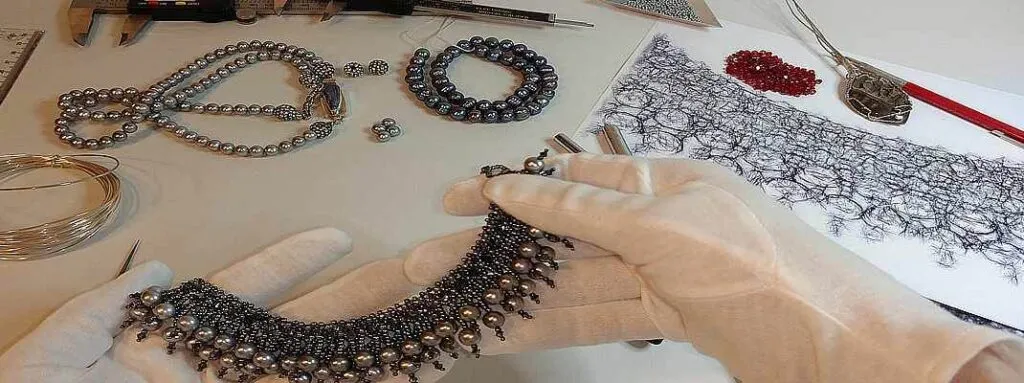
Bespoke jewelry is defined as a piece designed and crafted entirely from scratch for a single client. The word “bespoke” originates from the verb “bespeak,” meaning to arrange or commission something to personal specification, a tradition rooted in fine tailoring.
But what is bespoke jewelry in practical terms? It’s the blank-page approach to adornment: no pre-existing template, no catalog selection, no compromise.
You bring the vision, and a skilled jeweler translates it into a wearable, one-of-a-kind piece.
At HerMJ, I believe every person deserves jewelry that tells their own story, and while the luxury of bespoke jewelry may be impractical due to availability and cost, limited-edition designs offer an alternative in both pricing and uniqueness. It combines the uniqueness of design with affordability.
Requirements of the bespoke jewelry design process
The bespoke jewelry process follows a collaborative sequence from first conversation to finished piece. Each stage builds on the last, and your input shapes every decision along the way.
Initial Consultation. You share your inspiration, preferences, occasion, and budget with the jeweler. Early consultation phases, where clients share inspirations, reduce rework and help translate personal stories into design. Bring reference images, sketches, or even a mood board. The more specific you are, the closer the first draft lands to your vision.
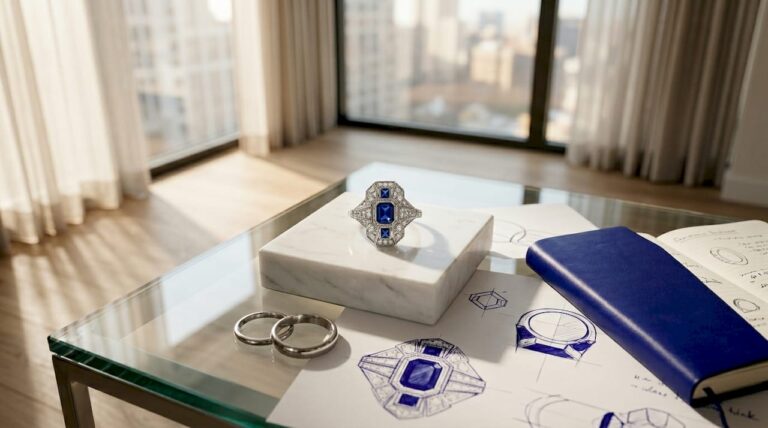
Sketching and CAD Renderings. The jeweler produces hand sketches or computer-aided design (CAD) renderings based on your brief. You review these and request adjustments. Scheduling a back-and-forth is not a delay. It’s the heart of the bespoke process, and it requires time to ensure the best results.
Material and Gemstone Selection. Once the design direction is confirmed, you choose metals, stones, and finishes. This is where a piece gains its character. A freshwater pearl set in rose gold reads entirely differently from the same pearl in oxidized silver.
Prototype Approval. Many jewelers produce a physical prototype, sometimes called a wax model or resin cast, before committing to precious materials. Reviewing physical prototypes helps to manage cost changes and ensure visual balance. This step should be performed patiently and with great care.
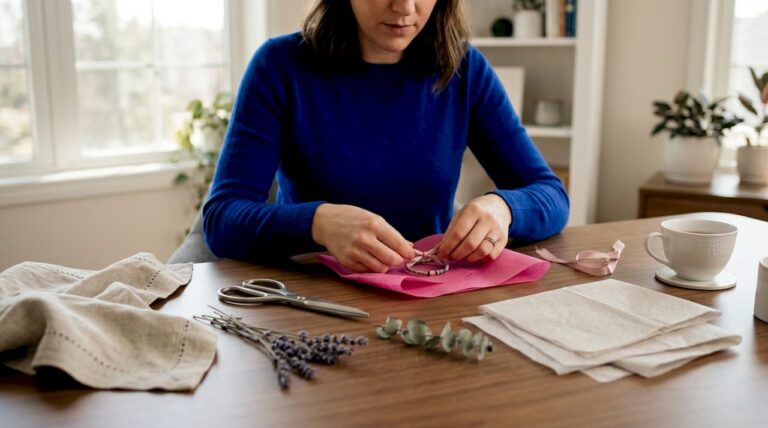
Final Crafting and Inspection. The jeweler assembles the finished piece, sets the stones, polishes the surfaces, and conducts a final quality check before delivery.
The bespoke process typically lasts between 4 and 15 weeks, depending on design complexity and materials. That timeline reflects the care involved, not inefficiency.
Pro Tip: Save a folder of reference images before your first consultation. Jewelers work visually, and concrete examples communicate far more than words like “elegant” or “modern.”
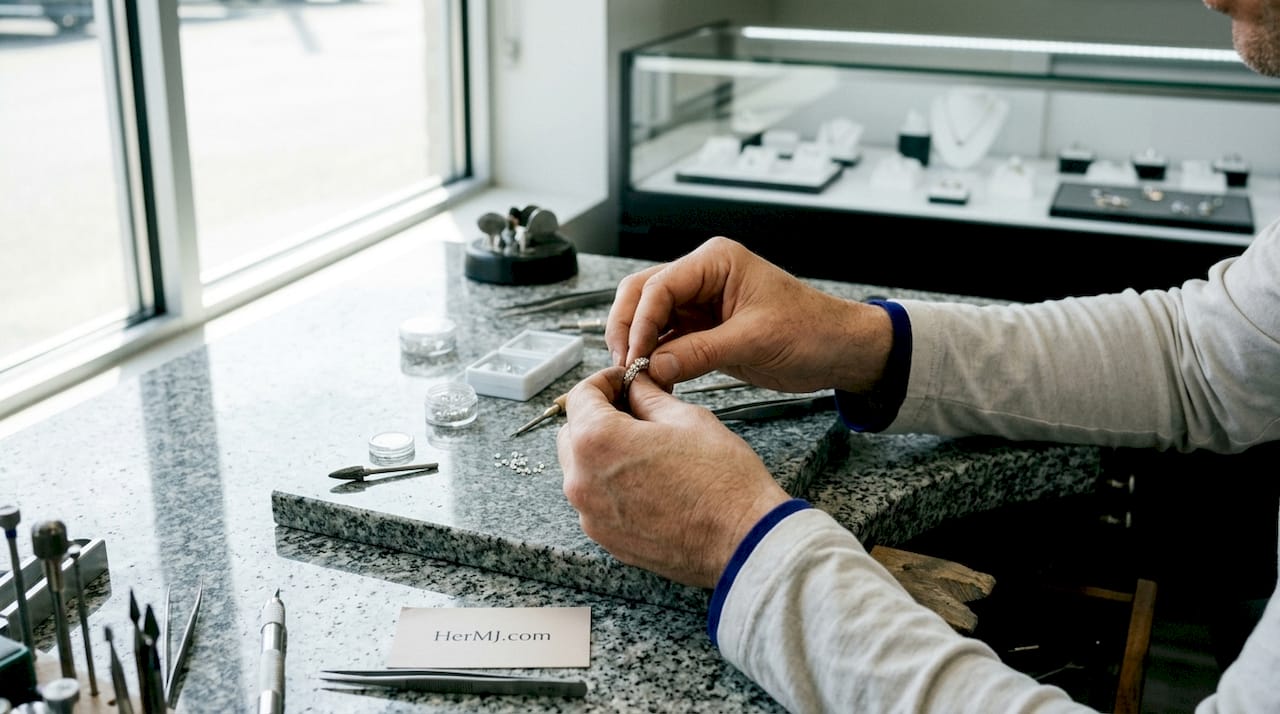
How does bespoke jewelry differ from limited-edition designs and made-to-order?
These three terms get used interchangeably, but they describe very different experiences. Understanding the distinction protects you from paying bespoke prices for a semi-custom result.
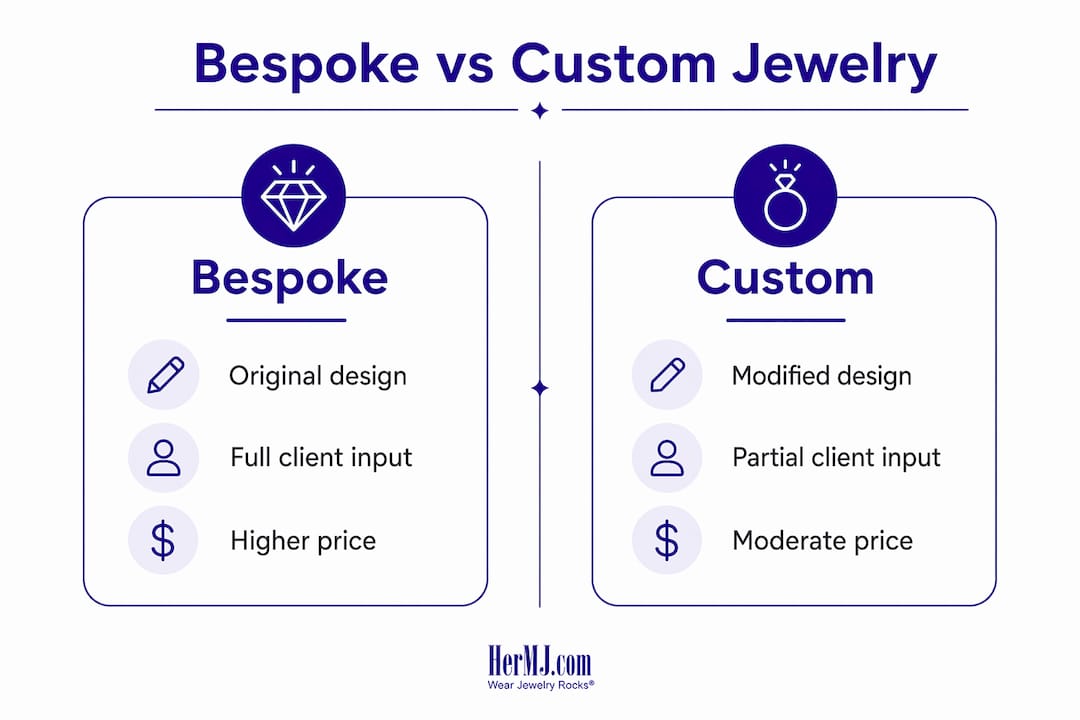
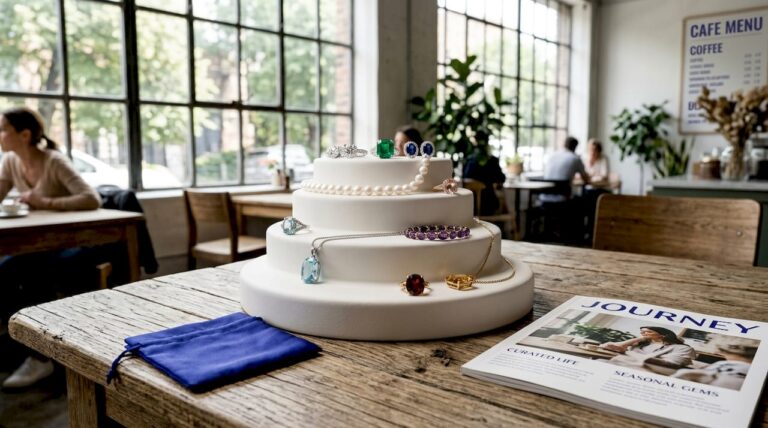
True bespoke jewelry starts from an original design created from scratch, while limited-edition jewelry modifies existing designs. Made-to-order typically means a jeweler builds a fixed design only after you place an order, with little or no design input from you. The table below clarifies the key differences.
| Category | Design Origin | Client Input | Typical Price Point |
|---|---|---|---|
| Bespoke | Blank page, original design | Full creative control | Highest |
| Limited-Edition | Existing design, Artisan’s vision | Limited adjustments | Mid-range |
| Made-to-Order | Fixed template, built on demand | Minimal | Lower |
Limited-Edition designs are just that: there are only so many pieces in existence, with the artisan determining when production will end, allowing the shopper an opportunity to own an exclusive product in limited supply.
Bespoke means a blank-page commission designed uniquely for the client, not adapted from existing designs. The process and the cost differ considerably from other design types when you’re making an investment in something meant to be a signature piece.
Here are the questions to ask any jeweler before commissioning a piece:
- Does the design start from scratch, or do you modify existing templates?
- Will I receive initial sketches and CAD proposals for approval?
- Is a physical prototype included in the process?
- How many revision rounds are included in the quoted price?
Asking for sketches, CAD proposals, and prototypes confirms a jeweler’s genuine bespoke workflow. You can also explore the differences between made-to-order and bespoke in more detail before your first consultation.
What are the real benefits of choosing bespoke jewelry?
Although bespoke jewelry sits at the high end of the jewelry design spectrum in terms of cost and design requirements, those who can support it value what it delivers beyond its aesthetics, including:
- True exclusivity. Your piece exists nowhere else in the world. No other person will wear the same necklace, bracelet, or earrings. That singularity carries real meaning, especially for milestone occasions.
- Personal storytelling. Incorporating heirloom stones or remodeling existing jewelry can be part of a bespoke commission. A grandmother’s sapphire can live inside a completely new design, preserving sentiment while creating something fresh.
- Fit and comfort. Bespoke pieces are sized and proportioned for your body. A bracelet designed for your wrist sits differently from one pulled from a standard size range.
- Craftsmanship and material quality. Because every element is chosen deliberately, bespoke pieces tend to use higher-quality materials than mass-produced alternatives. You’re not inheriting someone else’s cost-cutting decisions.
- Long-term value. A well-made bespoke piece appreciates in sentimental value over time and often holds its material value better than trend-driven ready-made jewelry.
Understanding artisan jewelry craftsmanship details helps you recognize quality when you see it, and that knowledge makes the bespoke investment feel even more worthwhile.
Pro Tip: If you’re commissioning a bespoke piece as a gift, consider the recipient’s daily lifestyle. A delicate pearl pendant suits someone who wears jewelry every day; a bold gemstone statement piece works better for someone who saves jewelry for special occasions.
Considerations for an investment in bespoke jewelry
Starting a bespoke commission requires a commitment. When you approach it with a clear plan, your investment will support a rewarding experience. Be sure to:
Gather your inspiration. Browse jewelry on platforms like Pinterest and Instagram, as well as in museum collections. Save images that speak to you, even if you can’t articulate why. Patterns in your saved images reveal your genuine aesthetic preferences.
Set a realistic budget before you approach anyone. Bespoke jewelry pricing includes design consultation and iterations in addition to materials and craftsmanship. Design time costs money. Build that into your expectations from the start, not as an afterthought.
Research jewelers carefully. Look for portfolios that show original work, not just modifications of standard designs. Read reviews that specifically mention the design process, not just the finished product. HerMJ’s customer jewelry reviews offer a useful reference point for what attentive, quality-focused service looks like.
Communicate clearly and often. The bespoke process rewards well-invested clients who stay engaged. Respond to design proposals promptly, ask questions freely, and don’t approve a stage you’re uncertain about. A good jeweler welcomes your input at every step.
Understand the timeline and plan accordingly. With a typical window of 4 to 15 weeks, bespoke jewelry isn’t a last-minute purchase. If you’re commissioning a piece for a specific occasion, build in extra time for unexpected revisions or material sourcing delays.
If you’re new to the benefits of handmade jewelry, reading up on what sets handcrafted pieces apart from mass-produced pieces gives you a stronger foundation before your first bespoke consultation.
Key takeaways
While bespoke jewelry is the only jewelry category that starts from a blank page, giving you full creative control over design, materials, and meaning, limited-edition artisan designs may be an alternative that offers affordability while maintaining expert craftsmanship and exclusivity.
| Point | Details |
|---|---|
| Bespoke starts from scratch | No pre-existing template is used; the design originates entirely from your brief. |
| The process takes 4–15 weeks | Timeline depends on design complexity, material sourcing, and revision rounds. |
| Bespoke differs from Limited-Edition | Limited-Edition takes its vision from artisan designs; bespoke creates an original from the ground up. |
| Ask the right questions | Request sketches, CAD renderings, and a prototype to confirm a genuine bespoke workflow. |
| Value extends beyond aesthetics | Bespoke pieces carry sentimental, material, and personal value, while Limited-Edition designs reflect the artisan’s vision and offer a more affordable price point. |
Why a balance of bespoke jewelry and Limited-Edition jewelry is worth a conversation
I’ve seen many clients debate the value of bespoke jewelry vs limited-edition designs with a vague idea and leave with something that genuinely moves them. That transformation doesn’t happen because a jeweler is a mind reader. It happens because understanding the distinction itself draws out clarity. You discover what you actually want by being asked the right questions.
The biggest misconception I encounter is that limited-edition jewelry, as well as bespoke jewelry, is only for the very wealthy or for grand occasions.
That’s simply not true in 2026. More jewelers now offer limited-edition designs at accessible price points, and the rise of artisan studios means you don’t need to walk into a luxury flagship to get a genuinely original piece. What you do need is a clear sense of your own taste and an understanding of design differences.
I also think jewelry is one of the few purchases that genuinely becomes more valuable over time, not just financially, but emotionally.
A piece whose design carries a different weight than something you pulled off a shelf. It holds the memory of the conversation that created it. That’s not sentiment for sentiment’s sake. That’s the difference between an object and an heirloom.
My honest advice: don’t wait for a “big enough” occasion to invest in limited-edition jewelry. The experience is a reward in itself.
— Veronique
Discover handcrafted jewelry at HerMJ
If the idea of owning a piece designed around your personal style resonates with you, HerMJ is a natural place to start exploring. HerMJ specializes in artisan jewelry crafted from genuine pearls and gemstones, combining skilled handwork with accessible pricing so that beautiful, quality jewelry isn’t reserved for a select few.
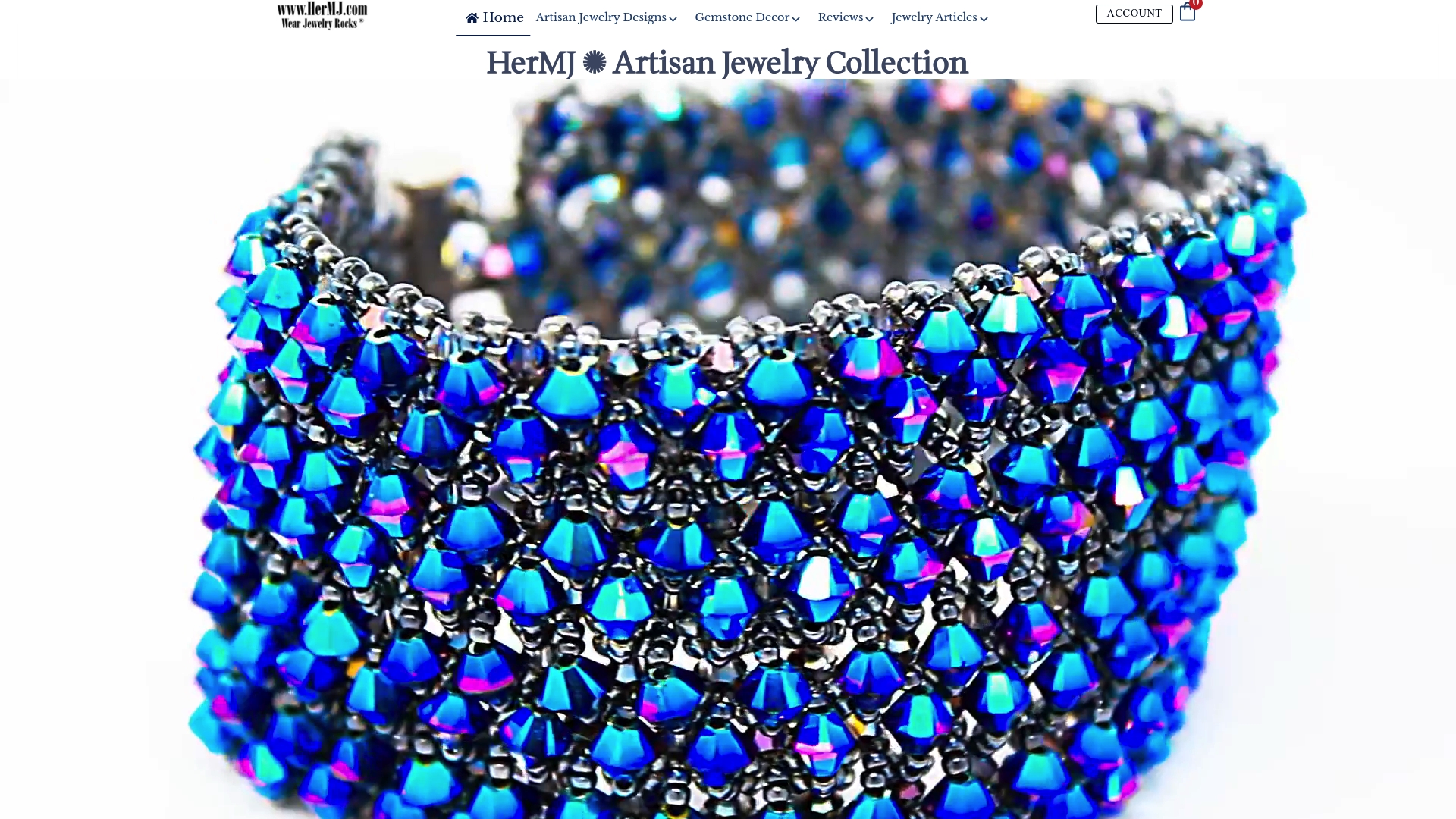
Whether you’re drawn to the quiet elegance of the Elegant Freshwater Pearl Necklace or the vivid color of the Faceted Garnet Gemstone Necklace, each HerMJ piece reflects the same philosophy that drives artisan design: that jewelry should feel personal, intentional, and made to last. Browse the collection and find the piece that speaks to you.
FAQ
What does “bespoke jewelry” actually mean?
Bespoke jewelry is a piece designed and created entirely from scratch for one specific client, with no pre-existing template or catalog design involved. The term comes from the verb “bespeak,” meaning to commission something to personal specification.
How long does a bespoke jewelry commission take?
The bespoke process typically lasts 4 to 15 weeks, depending on design complexity, material sourcing, and the number of revision rounds required.
Is bespoke jewelry more expensive than limited-edition jewelry?
Yes, bespoke jewelry generally costs considerably more because design consultation and iterations are priced on top of materials and craftsmanship, reflecting the original creative work involved.
Can I use existing stones in a bespoke piece?
Absolutely. Incorporating heirloom stones or remodeling existing jewelry is a common and meaningful part of many bespoke commissions.
Recommended
- Jewelry Styles Explained: Know What’s Important
- What Is Gemstone Cluster Jewelry: Style Guide 2026
- What Is Hand Fabricated Jewelry? Craftsmanship Explained