


What Makes Jewelry Unique: A Complete Style Guide
The Edit
- Unique jewelry combines rare materials, skilled craftsmanship, verifiable provenance, and personal meaning to create one-of-a-kind pieces. It emphasizes storytelling behind the stones, artisanal construction, and authentic origins that reflect individual values and style. Choosing truly unique jewelry involves considering material authenticity, handmade details, documented history, and personal resonance rather than appearance alone.
Unique jewelry is defined by the convergence of rare materials, skilled craftsmanship, verifiable provenance, and personal meaning that together create a piece no one else can replicate. What makes jewelry unique goes far beyond a pretty design.
It’s the story behind the stone, the hand that shaped the metal, and the moment it becomes yours. Certifying bodies like GIA, IGI, and AGS have formalized this idea, making provenance documentation a standard part of how collectors and buyers assess value.
If you’re building your first collection or refining an existing one, understanding these layers helps you choose with confidence and intention.
What makes jewelry unique: materials that set a piece apart
The foundation of any distinctive piece is its materials. Gold with international fineness standards, natural gemstones with traceable origins, and ethically sourced metals contribute directly to a piece’s authenticity and long-term value.
Traceability adds a layer of meaning that pure aesthetics can’t provide, especially for classic stones like Colombian emeralds or Burmese rubies.
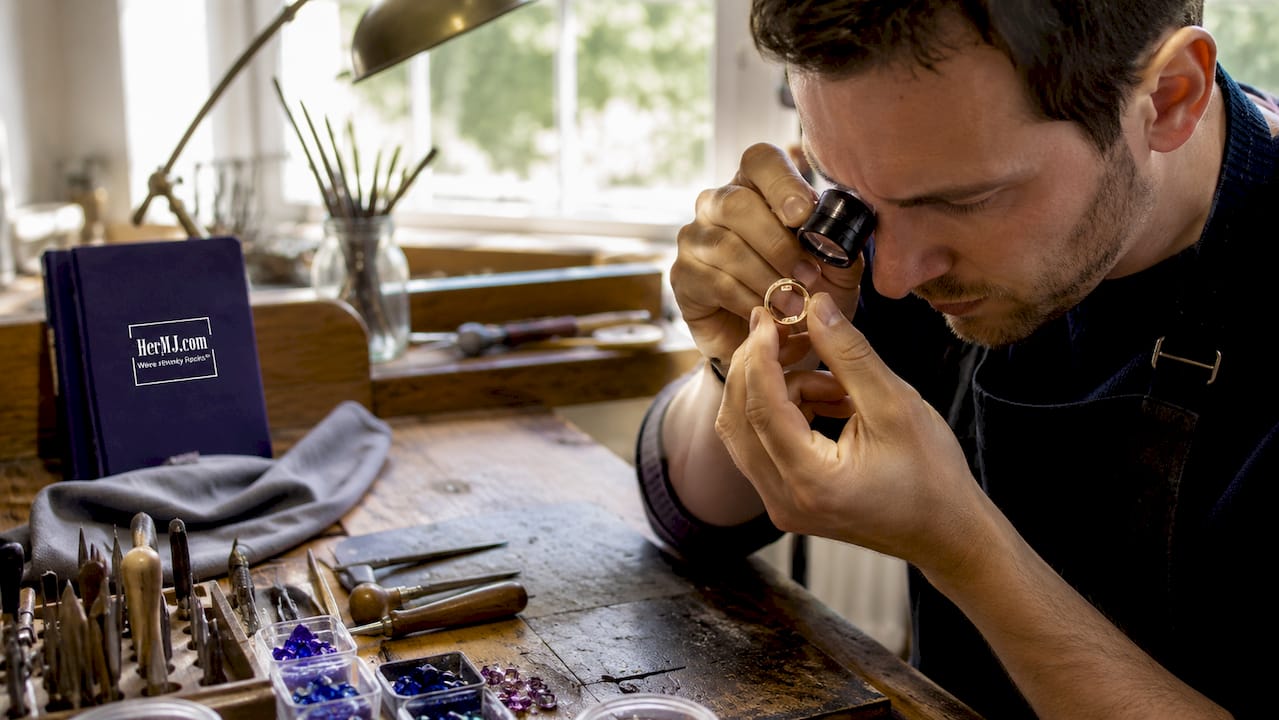
Precious metals carry their own identity markers. Hallmarks like 14K, 18K, and .925 sterling silver tell you exactly what you’re wearing and where it falls on the quality spectrum.
A piece stamped 18K gold isn’t a mere color choice. It’s a material commitment that affects durability, luster, and resale potential.
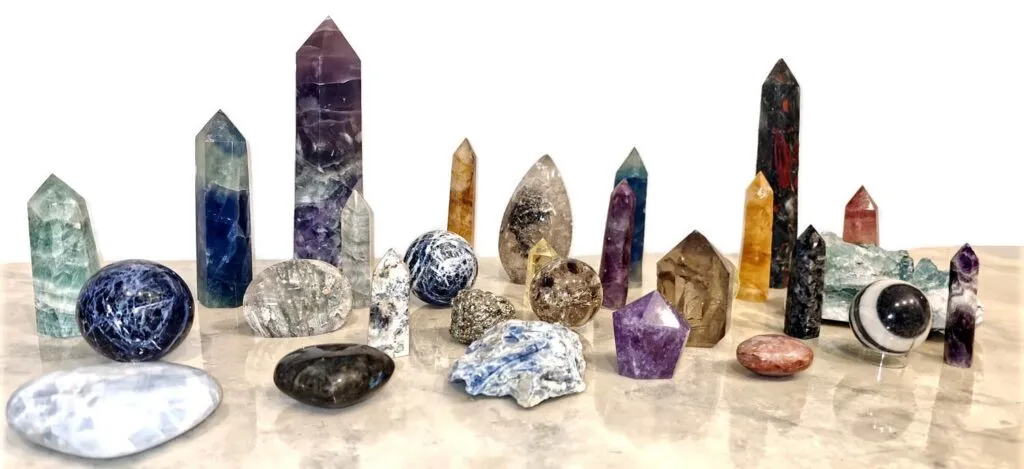
Gemstone characteristics add another dimension entirely. Cut, color, clarity, and inclusions are all part of what makes each stone singular.
Two sapphires from the same mine can look completely different under light. That natural variation is something no factory can manufacture.
Ethical sourcing has become a genuine value layer, not just a marketing phrase. Conflict-free gems and traceable mines are now central to how buyers define a piece’s identity. Lab-grown diamonds are chemically identical to mined diamonds but carry a different origin story, one that many buyers find more aligned with their values. That origin story is itself a unique jewelry feature.
Here’s what to look for when evaluating materials:
- Hallmarks and stamps: Confirm metal purity with visible stamps (14K, 18K, .925).
- Gemstone certification: Ask for GIA, IGI, or AGS documentation for any significant stone.
- Origin traceability: Prefer stones with documented mine or lab origins.
- Ethical sourcing statements: Look for Kimberley Process compliance or Fairtrade Gold certification.
- Natural inclusions: Understand that inclusions in natural stones are identity markers, not flaws.
Pro Tip: When shopping for gemstone pieces, ask the seller directly for the stone’s country of origin. A seller who can answer confidently is a seller who knows their supply chain.
How does craftsmanship create truly one-of-a-kind jewelry?
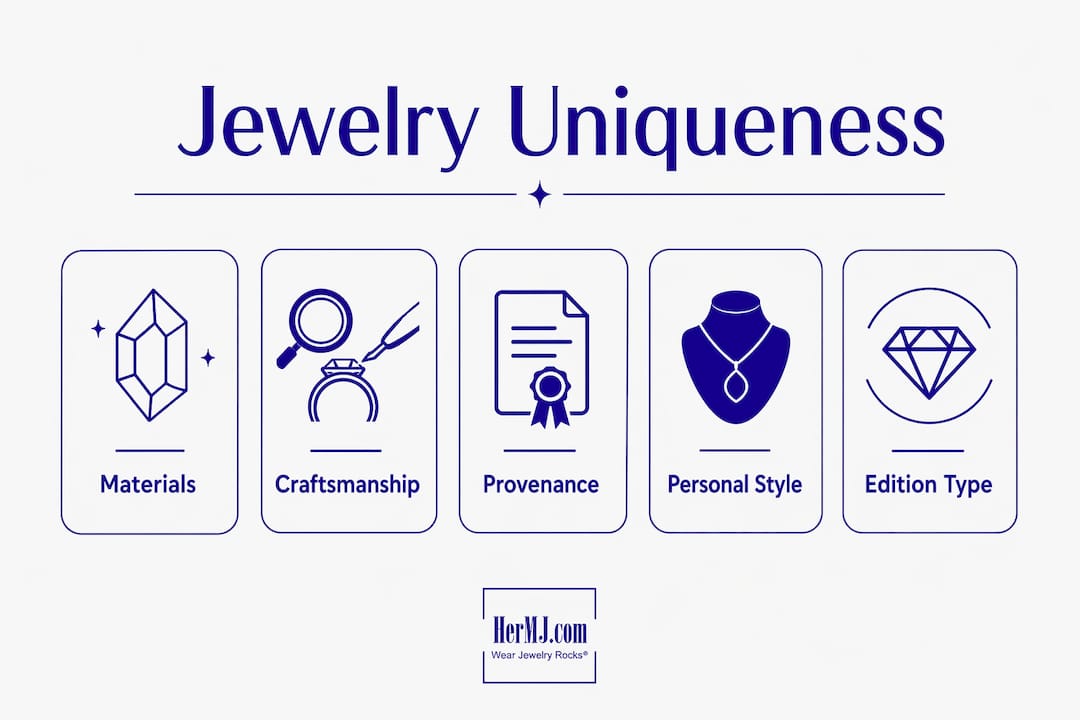
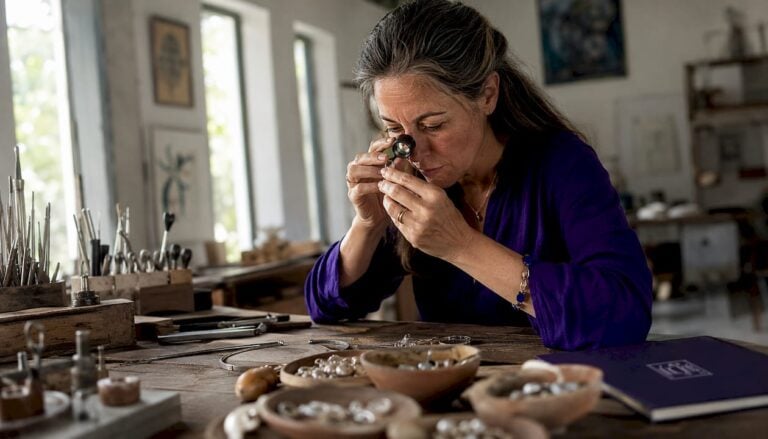
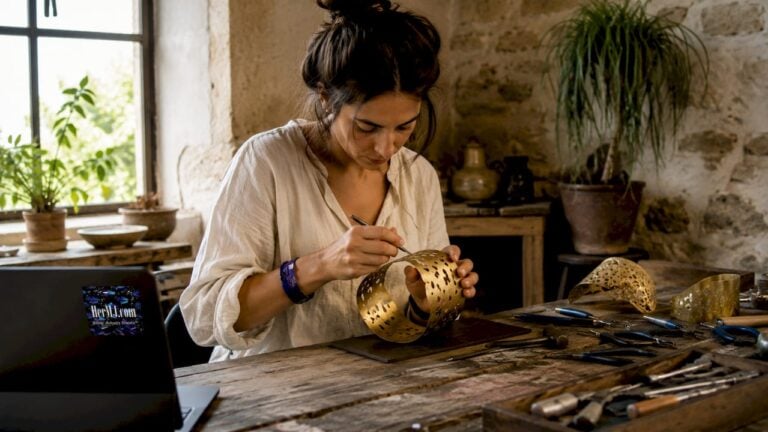
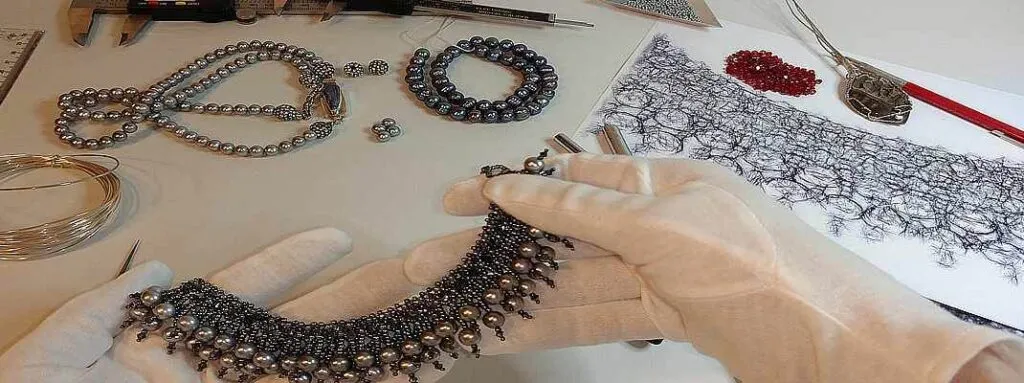
Craftsmanship is the human fingerprint on a piece of jewelry. Handmade jewelry carries subtle tool marks and variations that distinguish it from the uniform output of machine production.
Those small imperfections aren’t defects. They’re proof of a human hand at work, and they make each piece genuinely individual.
The difference between handmade and machine-made goes deeper than surface texture. Machine-made pieces are designed for consistency.
Every unit in a batch looks identical. Handmade pieces, by contrast, carry the maker’s decisions in every curve and setting. You can learn more about identifying handcrafted pieces by looking for these subtle signs of artisanal origin.
Bespoke design takes this further. When a jeweler works directly with a client to shape a piece around a specific stone, a personal symbol, or a particular aesthetic, the result is co-created.
That process makes the piece impossible to replicate, not just because of the materials, but because of the conversation that produced it.
Proprietary techniques also matter. Some artisans specialize in granulation, a technique dating to ancient Etruscan jewelry, where tiny gold beads are fused to a surface without solder. Others use reticulation, which creates organic, rippled textures by heating silver to its melting point. These methods produce surfaces and structures that mass production simply cannot copy.
What to look for in artisan craftsmanship:
- Visible tool marks: Fine lines, slight asymmetry, and texture variation signal hand-finishing.
- Stone setting quality: Prongs should be even but not robotically identical in handmade work.
- Solder points: Hand-soldered joins look slightly different from machine-welded seams.
- Maker’s marks: Many artisans stamp their initials or studio mark alongside the metal hallmark.
Pro Tip: Hold a piece up to natural light and rotate it slowly. Handmade work catches light differently at each angle. Machine-made pieces tend to reflect light uniformly.
Does provenance documentation really affect jewelry’s value?
Provenance is the documented history of a piece, and it’s one of the most underappreciated factors in jewelry value. GIA, IGI, and AGS certifications don’t just confirm a stone’s quality. They tie it to a specific grading event, a specific lab, and a specific moment in time. That paper trail separates authentic pieces from convincing copies.
Provenance documentation comes in several forms:
- Gemological certificates: GIA and IGI reports confirm cut, color, clarity, and carat weight for diamonds and major gemstones.
- Artisan statements: A signed letter or card from the maker describing the piece, materials, and techniques used.
- Purchase receipts: Original receipts from reputable jewelers establish ownership history and purchase price.
- Repair and appraisal records: A history of professional maintenance shows the piece has been cared for and valued over time.
- Auction or estate records: For vintage and collectible pieces, auction-house documentation lends significant credibility.
The table below shows how different documentation types affect perceived uniqueness and resale value:
| Documentation type | Impact on uniqueness | Impact on resale value |
|---|---|---|
| GIA or IGI certificate | Confirms stone identity and grade | High: buyers pay premiums for certified stones |
| Artisan statement | Proves handmade origin | Medium to high: valued by collectors |
| Original purchase receipt | Establishes provenance chain | Medium: supports authenticity claims |
| Appraisal record | Confirms market value at a point in time | Medium: useful for insurance and resale |
| Auction or estate record | Adds historical narrative | High for vintage and collectible pieces |
Reliable paperwork ties a piece to a specific studio or origin, making it genuinely distinguishable from copies and fakes.
For vintage and high-value pieces, documented provenance can significantly increase resale price. A Colombian emerald with a Gübelin origin report commands a different price than an identical-looking stone with no documentation at all.
How does personal style shape what makes a piece of jewelry special?
Materials and craftsmanship define a piece’s objective qualities. Personal style determines whether it becomes yours. Jewelry uniqueness is also about the emotive story and confidence the wearer brings to a collection. Pieces that connect emotionally are worn more often and valued more deeply than technically superior pieces that feel wrong on the body.
Designers recommend building your collection around an aesthetic anchor. That anchor is a consistent style identity that guides every purchase. Without it, collections become scattered, and pieces compete rather than complement each other.
The four most common aesthetic anchors in jewelry are:
- Minimalist: Clean lines, single stones, negative space. Think delicate freshwater pearl pendants or thin gemstone bars.
- Bold: Statement scale, layered textures, high contrast. Think chunky gemstone necklaces or sculptural metalwork.
- Romantic: Soft curves, floral motifs, warm tones. Think rose quartz, moonstone, and vintage-inspired settings.
- Edgy: Asymmetry, dark stones, unconventional materials. Think raw crystal pendants or oxidized silver.
Symbols and personal narratives add another layer. A piece featuring your birthstone, a motif tied to your heritage, or a stone from a meaningful place carries weight that no catalog item can replicate. That weight is part of what defines unique jewelry for the person wearing it. You can explore jewelry styles explained to find the aesthetic language that fits you best.
One-of-a-kind vs. limited edition vs. mass-produced: what’s the difference?
Not all jewelry marketed as “unique” actually is. Understanding the distinctions helps you spend wisely and collect intentionally.
One-of-a-kind pieces are shaped by individual stones and bespoke design processes, making them impossible to reproduce identically. The stone itself drives the design. When that stone is gone, the design cannot be repeated. This is the highest tier of jewelry uniqueness.
| Category | Replicability | Craftsmanship | Personal connection | Typical value |
|---|---|---|---|---|
| One-of-a-kind | Cannot be replicated | Fully handmade, bespoke | Highest: co-created with wearer | Premium |
| Limited edition | Finite run, some variation | Often handmade or semi-handmade | Moderate: shared with a small group | Mid to high |
| Made-to-order | Replicable design, custom sizing | Machine or hand-finished | Moderate: personalized but not singular | Mid-range |
| Mass-produced | Fully replicable | Machine-made, uniform | Low: identical to thousands of others | Entry level |
Limited edition pieces occupy an interesting middle ground. They’re not singular, but their scarcity creates a form of exclusivity.
Made-to-order pieces allow personalization within a fixed design, adding meaning without achieving true singularity. Mass-produced pieces can be beautiful, but they don’t carry the characteristics of unique jewelry in any meaningful sense.
The practical takeaway is this: if a piece can be reordered from a catalog next year, it isn’t unique. If it was built around a specific stone or a specific conversation with a maker, it is.
Key takeaways
Unique jewelry is defined by the combination of traceable materials, artisan craftsmanship, verified provenance, and personal meaning that together make a piece impossible to replicate.
| Point | Details |
|---|---|
| Materials define the foundation | Look for hallmarked metals, certified stones, and traceable ethical origins. |
| Craftsmanship leaves a fingerprint | Handmade pieces carry tool marks and variations that machine production cannot copy. |
| Provenance adds verifiable value | GIA, IGI, and artisan documentation increase both authenticity and resale potential. |
| Personal style completes uniqueness | An aesthetic anchor helps you build a cohesive collection that reflects your identity. |
| One-of-a-kind differs from limited edition | True singularity comes from bespoke design built around an individual stone or story. |
What I’ve learned about choosing jewelry that’s truly yours
I’ve spent years looking at jewelry from both sides: as someone who appreciates the craft and as someone who helps people find pieces that actually mean something to them.
The most common mistake I see is treating uniqueness as the sole indication of quality. People pick a piece only because it looks different. Six months later, it sits in a drawer because it never connected.
The pieces that stay with people share something beyond good design. They have a story the wearer can tell. That story might be about the stone’s origin, the maker’s process, or the occasion that prompted the purchase.
Ethical provenance has become a genuine part of that story for a growing number of buyers, and I think that’s a healthy shift. Knowing a piece didn’t cause harm adds to how it feels to wear it.
My advice is to slow down before you buy. Ask where the stone came from. Ask how the piece was made. If the seller can’t answer those questions, that’s information too.
The best jewelry purchases I’ve seen happen when someone walks in knowing their aesthetic anchor and walks out with a piece that fits it precisely. That clarity is what separates a meaningful collection from a box of pretty things.
I also think the benefits of handmade jewelry are genuinely undervalued in a market flooded with mass-produced options. The price difference between a handmade artisan piece and a factory piece is often smaller than people expect, and the difference in meaning is enormous.
— Veronique
Find your signature piece at HerMJ
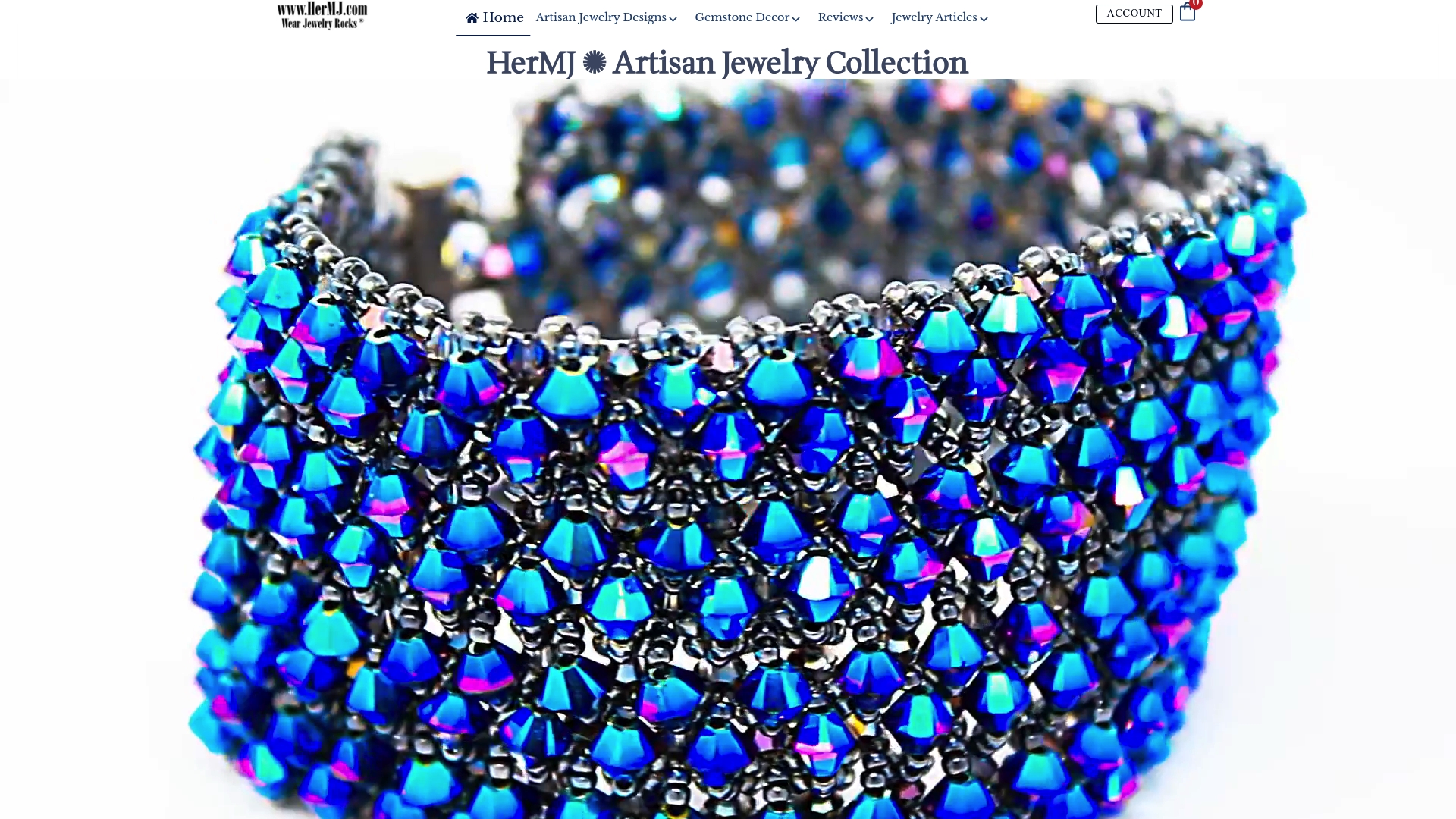
HerMJ was built on the belief that truly distinctive jewelry shouldn’t require a luxury budget. The pieces in the HerMJ collection are handmade using genuine freshwater pearls and natural gemstones, with craftsmanship you can see and feel.
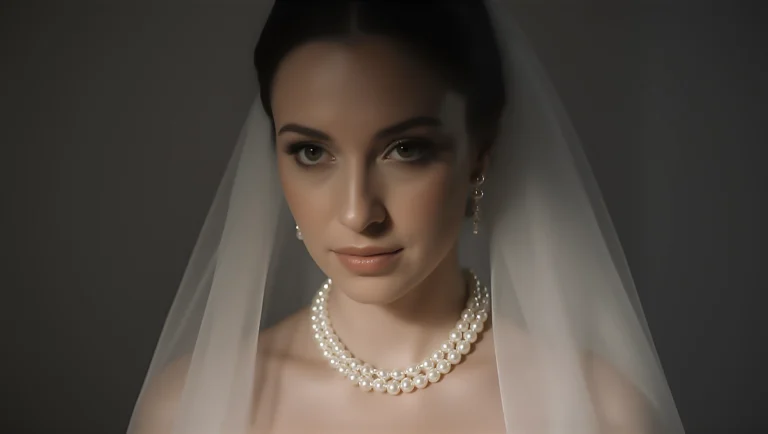
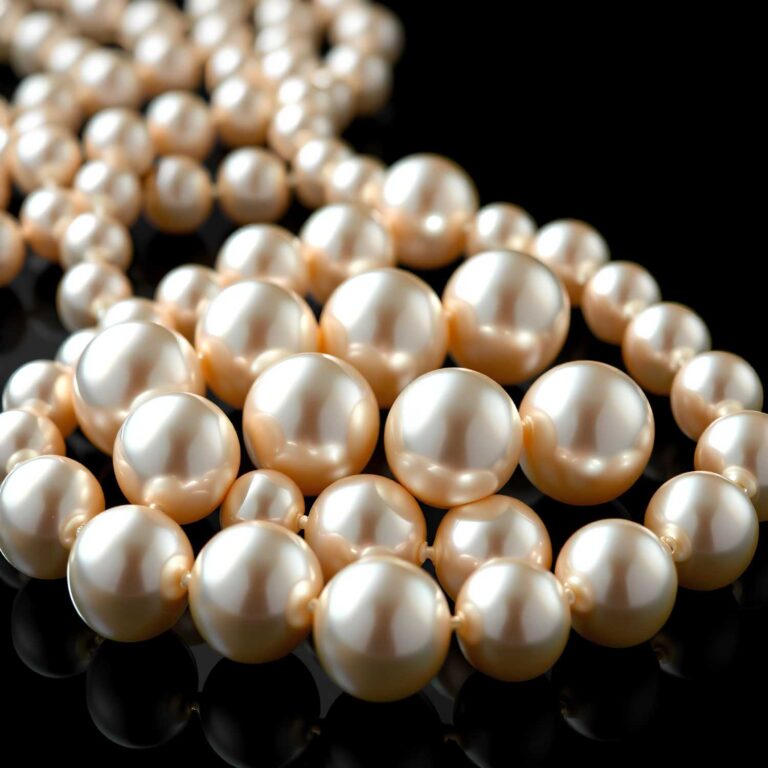
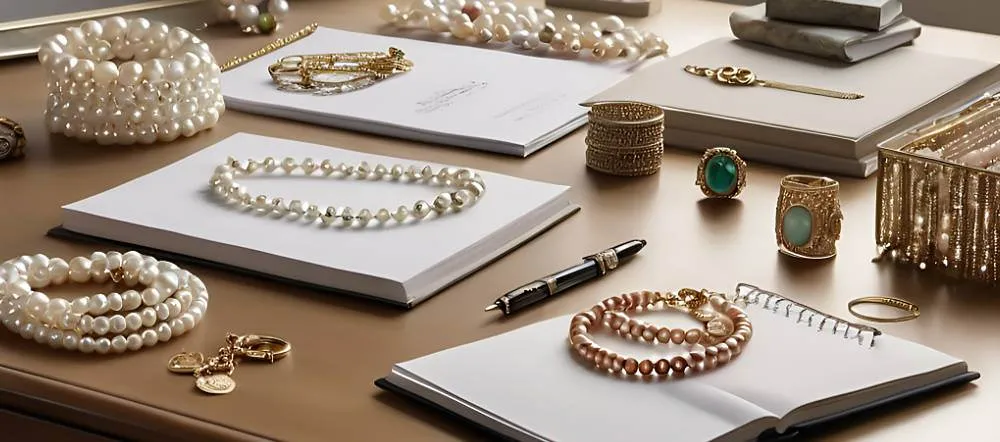
The elegant freshwater pearl necklace is a perfect example: ethically sourced, artisan-finished, and designed to be worn every day or saved for something special.
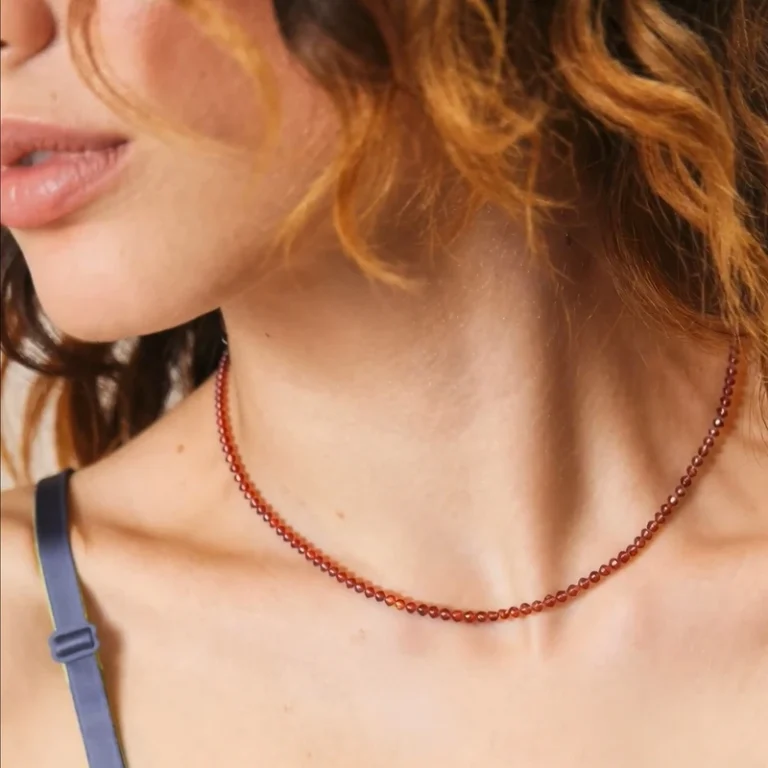
If you prefer color and texture, the faceted garnet gemstone necklace brings warmth and depth that no mass-produced piece can match. US orders ship free with no minimum order, and international orders ship free on orders of $150 or more. Browse the full collection and find the piece that tells your story.
FAQ
What defines unique jewelry beyond its appearance?
Unique jewelry is defined by its materials, craftsmanship, provenance, and personal significance combined. A piece that uses certified stones, shows evidence of handmade construction, and carries documented history is genuinely unique in ways that appearance alone cannot convey.
How do I recognize truly handmade jewelry?
Look for subtle tool marks, slight asymmetry in settings, and a maker’s stamp alongside the metal hallmark. Handmade pieces catch light differently at each angle because no two surfaces are finished identically.
Why does provenance matter when buying jewelry?
Provenance documentation from bodies like GIA or IGI confirms a stone’s identity and grade, which directly affects resale value and authenticity. A piece with a verifiable history commands more trust and typically a higher price than an undocumented equivalent.
What’s the difference between one-of-a-kind and limited edition jewelry?
One-of-a-kind pieces are built around a specific stone or bespoke design and cannot be reproduced. Limited-edition pieces are made in a finite quantity but share the same design across multiple units, making them scarce rather than singular.
How do I choose unique jewelry that fits my personal style?
Identify your aesthetic anchor first, whether that’s minimalist, bold, romantic, or edgy, and use it as a filter for every purchase. Pieces that align with a consistent style identity form a cohesive collection rather than a disconnected assortment.
Recommended
- Unique Gemstone Necklace Styles Worth Wearing
- Jewelry Styles Explained: Know What’s Important
- What Is Gemstone Cluster Jewelry: Style Guide 2026