

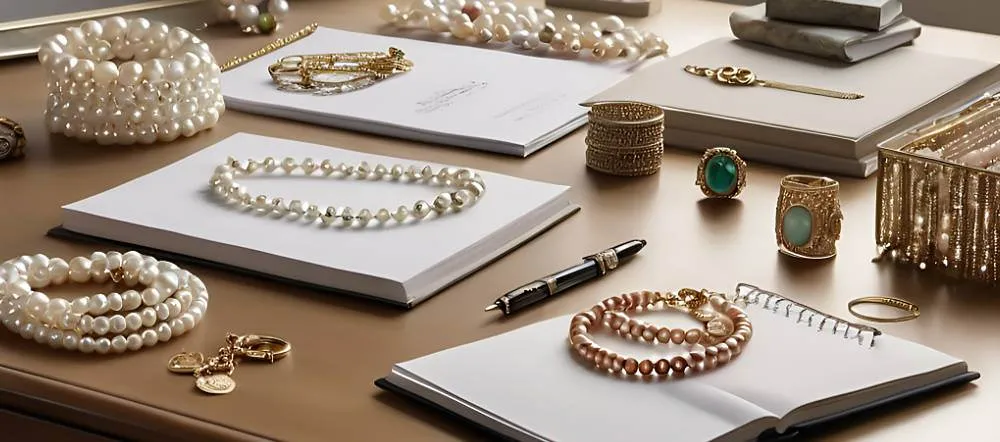

How to Identify Truly Handcrafted Jewelry Pieces
The Edit
- Authentic handcrafted jewelry displays subtle imperfections, organic variations, and visible construction signs reflecting human involvement.
- Verifying genuine artisan pieces involves examining weight, tool marks, stone settings, and asking about the maker’s background and provenance.
You’ve picked up a bracelet at a boutique, something that feels different from the usual department store selection, and you wonder: Is this actually handmade?
I’ve seen this question trip up even seasoned shoppers.
Learning to identify truly handcrafted jewelry pieces takes more than a glance. It requires knowing what to look for, what to feel, and what questions to ask. This guide walks you through the materials, construction details, and verification methods that separate genuine artisan work from the flood of factory pieces marketed with the same words.
Table of Contents
- Key takeaways
- How to identify truly handcrafted jewelry pieces: key material and craft signals
- A step-by-step inspection method for artisan craftsmanship
- Common mistakes when judging genuine artisan jewelry
- Verifying authenticity beyond what you can see
- My honest take on why this matters
- Discover artisan jewelry you can trust at Hermj
- FAQ
Key takeaways
| Point | Details |
|---|---|
| Imperfections signal authenticity | Slight surface variations and visible joins are marks of real artisan work, not flaws to avoid. |
| Weight and thickness matter | Handcrafted pieces tend to feel heavier because hand shaping requires thicker metal sections. |
| Stone setting reveals the truth | Glued or pressure-set stones point to mass production; secure, hand-set prongs signal skilled craftsmanship. |
| Provenance confirms origin | Knowing the maker’s story and requesting background information is as important as any physical clue. |
| Uniformity can mislead you | Perfect, machine-like consistency in a piece marketed as handmade is often a red flag, not a quality indicator. |
How to identify truly handcrafted jewelry pieces: key material and craft signals
The industry term for jewelry made by hand without the use of casting machines or automated fabrication is hand-fabricated jewelry. Understanding what hand-fabricated jewelry actually means gives you a practical foundation before you start examining any piece.
Materials that point to artisan origin
Genuine handcrafted jewelry typically uses materials that demand careful handling. Recycled sterling silver, hand-rolled gold sheet, and responsibly sourced stones are common in authentic artisan work because small-batch production makes ethical sourcing both practical and meaningful.
Natural gemstones with organic surface variations, freshwater pearls with subtle overtones, and raw or minimally treated stones all suggest a maker who selected materials with intention.
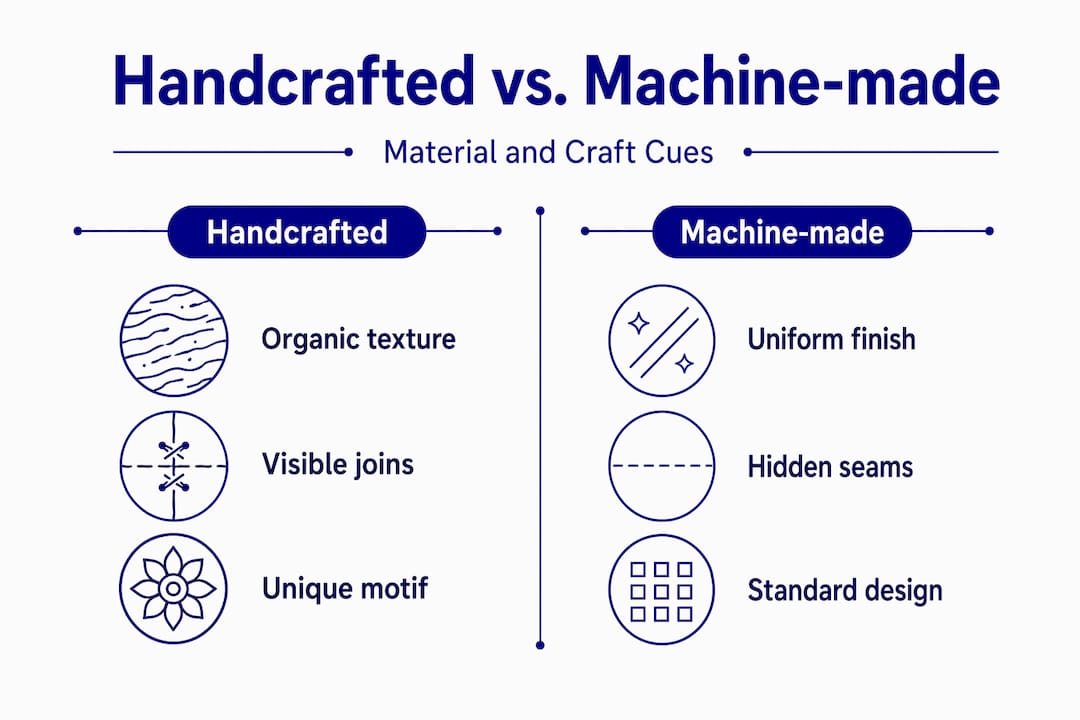
In comparison, machine-made jewelry leans on uniformly cut synthetic stones, plated base metals, and standardized components ordered in bulk. Considering the material itself, you’ll be able to identify what’s most telling.
Construction techniques and stylistic cues
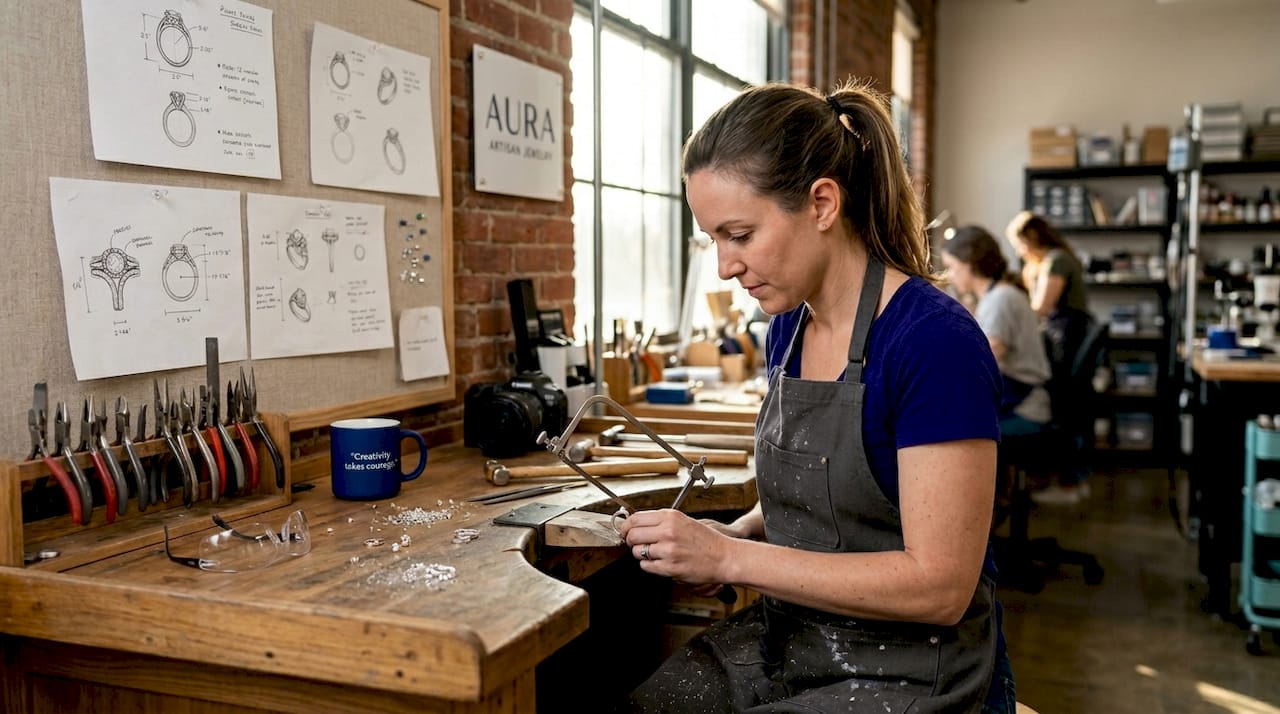
When we design jewelry by hand, it involves sawing, filing, soldering, and shaping metal by hand; the process leaves traces. Visible joins and hand-formed elements are signs of a handmade design. It’s part of the piece’s charm, not signs of poor craft. Solder points may show slight texture differences. Prong tips might vary in height by a mere fraction of a millimeter. These organic details are what make a piece a unique piece of artisanal design.
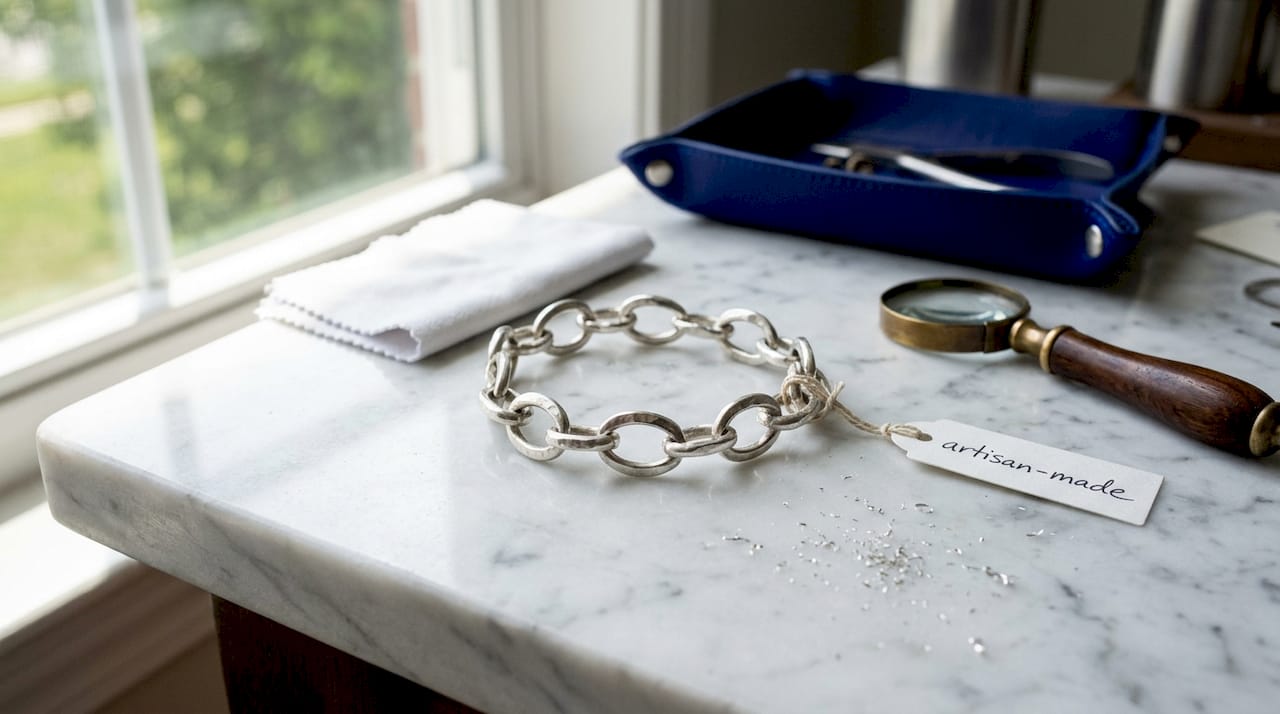
Artisan pieces often incorporate regional motifs, cultural symbols, or design elements tied to a specific tradition. In heritage motifs, infused with identity, you can recognize the story behind a piece. That cultural depth isn’t a priority in a factory’s mass-production line.
| Feature | Handcrafted | Machine-made |
|---|---|---|
| Surface texture | Slight variations, organic feel | Uniformly smooth, “China finish” |
| Solder joints | Visible, slightly textured | Hidden or nonexistent |
| Stone setting | Hand-set prongs, slight variation | Uniform, pressure-set or glued |
| Weight | Heavier relative to size | Lighter, thinner metal sections |
| Design motifs | Cultural, unique, or personal | Generic, repeated across batches |
Pro Tip: Run your thumb along the inside of a band or along a bezel setting. A faint ridge or slight unevenness where metal meets metal is one of the most reliable signs of hand fabrication you can feel without any tools.
A step-by-step inspection method for artisan craftsmanship
Knowing the theory helps, but having a repeatable process makes identifying genuine pieces feel natural. Here’s how to physically evaluate any piece you’re considering.
First, take a look at the clasp or closure. A handcrafted clasp often has a slightly heavier feel and may show small file marks or a solder seam where it attaches to the chain. Factory clasps are stamped out identically and feel light, almost hollow.
Examine the prongs on any stone setting. Prong variation and stone alignment are reliable indicators of artisan work. In a hand-set piece, prongs are bent over stones individually, which creates micro-differences in height and angle. In machine-made pieces, every prong looks identical under magnification.
Check for glued or pressure-set stones. Glued or pressure-set stones are common in mass production. If you can see a thin ring of adhesive at the base of a stone, or if a stone pops free easily, the piece almost certainly wasn’t hand-fabricated.
Assess the finish depth and polish. Handcrafted pieces show depth in their polish, almost like light is coming from within the metal rather than bouncing off a flat surface. The overly bright, mirror-like coating you see on mass-produced pieces is often called a “China finish” in the trade. It looks impressive at first glance, but feels cold and impersonal up close.
Weigh the piece in your palm. Handcrafted jewelry tends to feel heavier because hand-shaping requires thicker metal sections to ensure structural integrity. A bracelet or necklace that feels surprisingly light for its size often indicates thin stamped metal rather than hand-worked metal.
Look at the interior surfaces. The inside of a cuff, the back of a pendant, or the inner edge of a bezel will show tool marks, subtle texture, or slightly uneven finishing in a genuinely handmade piece. Factory interiors are uniform and featureless.
Use a loupe or your phone camera. Zooming in on a piece reveals details invisible to the naked eye. Hand-filed edges show tiny, consistent tool strokes. Machine-cut edges are perfectly straight and show no individual tool marks at all.
Pro Tip: When evaluating a necklace or bracelet, hold it up to a light source and let it drape naturally. Hand-formed links will catch light at slightly different angles, giving the piece a lively, animated quality. Machine links reflect light in one flat, uniform plane.
Common mistakes when judging genuine artisan jewelry
Even experienced buyers fall into traps. These misconceptions can send you in the wrong direction when choosing authentic handcrafted accessories.
Mistaking a high polish for high quality. A brilliant shine is easy to apply on an industrial scale. Too-polished pieces can actually signal machine finishing rather than artisan care. Real hand-polished pieces have warmth and depth, not just brightness.
Thinking uniformity means craftsmanship. This is one of the most common errors. Perfect consistency, every link identical, every stone precisely the same height, actually points away from handcraft. Slight imperfections and visible construction steps are part of what makes artisan jewelry authentic.
Ignoring metal thickness. Thin sheet metal bent into shape and then plated can look similar to hand-formed metal at a glance. Flex a component gently between two fingers. Hand-formed metal resists with substance; thin stamped metal feels almost springy and insubstantial.
Being fooled by artisan-style marketing language. Words like “handcrafted-inspired” or “artisan-look” on product listings are frequently used to describe machine-made items. The phrasing distances the claim from a direct statement that the piece is handmade.
Overlooking cultural context. Handcrafted pieces often reflect specific regional techniques. A Bangladeshi filigree piece looks and feels different from a Taxco silver cuff or a Balinese granulation necklace. Recognizing those craft traditions, even at a basic level, helps you spot authentic work and understand the human story behind each design.
Imperfections and variability in jewelry reveal human involvement and a unique story, separating artisan pieces from sterile, industrial products.
Verifying authenticity beyond what you can see
Visual and tactile inspection gets you most of the way there. Confirmation comes from the context around the piece.
Ask for the maker’s story. Genuine artisans and the retailers who carry their work can tell you who made the piece, where they trained, and how long they’ve been working. Vague answers like “made by skilled craftspeople overseas” are not the same thing.
Look for hallmarks and certifications. Sterling silver pieces should carry a “925” stamp. Gold pieces carry karat marks. Some artisan jewelry carries additional studio or maker’s marks. Provenance and maker background are as important as any physical feature for confirming authenticity.
Research the brand or seller. Trusted artisan brands document their process, share photos of their studio or workspace, and often show work-in-progress images. That transparency is hard to fake. Check reviews specifically for mentions of quality, uniqueness, and customer interaction.
Support sustainable and ethical makers. Brands that prioritize recycled metals and responsibly sourced stones and work in small batches almost always produce genuinely handmade pieces. Industrial production at scale simply doesn’t align with those practices.
Consider the price. Truly hand-fabricated jewelry takes hours of skilled labor per piece. If the price seems impossibly low for a “handmade” item, that’s worth questioning. Accessible pricing is possible with genuine artisanship, but a $12 “handmade” sterling-and-pearl bracelet on a mass marketplace warrants skepticism.
Pro Tip: Ask the seller if the piece can be customized or adjusted. Artisan makers typically say yes because they built the piece and understand exactly how it was constructed. Factory sellers almost always say no.
You can also explore artisan drinkware craftsmanship as a parallel reference point. The same principles of hand-formed variability, material quality, and maker storytelling apply across all handmade goods categories, which makes cross-category comparison genuinely useful.
My take on why this matters
I’ve handled a lot of jewelry over the years, both mass-produced and truly artisan-made, and the difference goes well beyond what you can measure or photograph.
What I’ve learned is that most buyers have been trained by fast-fashion retail to see perfection as quality. That conditioning works against you when you’re looking at real handcraft.
The slight asymmetry in a hand-rolled bezel, the barely-there texture on the inside of a band, the way a pearl sits just a fraction off-center in its setting. These aren’t mistakes. They’re the signature of a human being who spent time making something for you.
The social weight of that choice is real, too. When you buy a genuinely handcrafted piece, you’re sustaining a skill that took years to develop. Artisan communities, whether in Southeast Asia, Latin America, or the studio of an independent jeweler in your own city, depend on buyers who know the difference and care enough to pay for it.
What I find most rewarding is when a buyer stops focusing on whether a piece is “perfect” and starts asking who made it and how. That shift in question changes everything about how you shop for jewelry and what you end up owning. A piece with a story wears differently than one without.
— Veronique
Discover artisan jewelry you can trust at Hermj
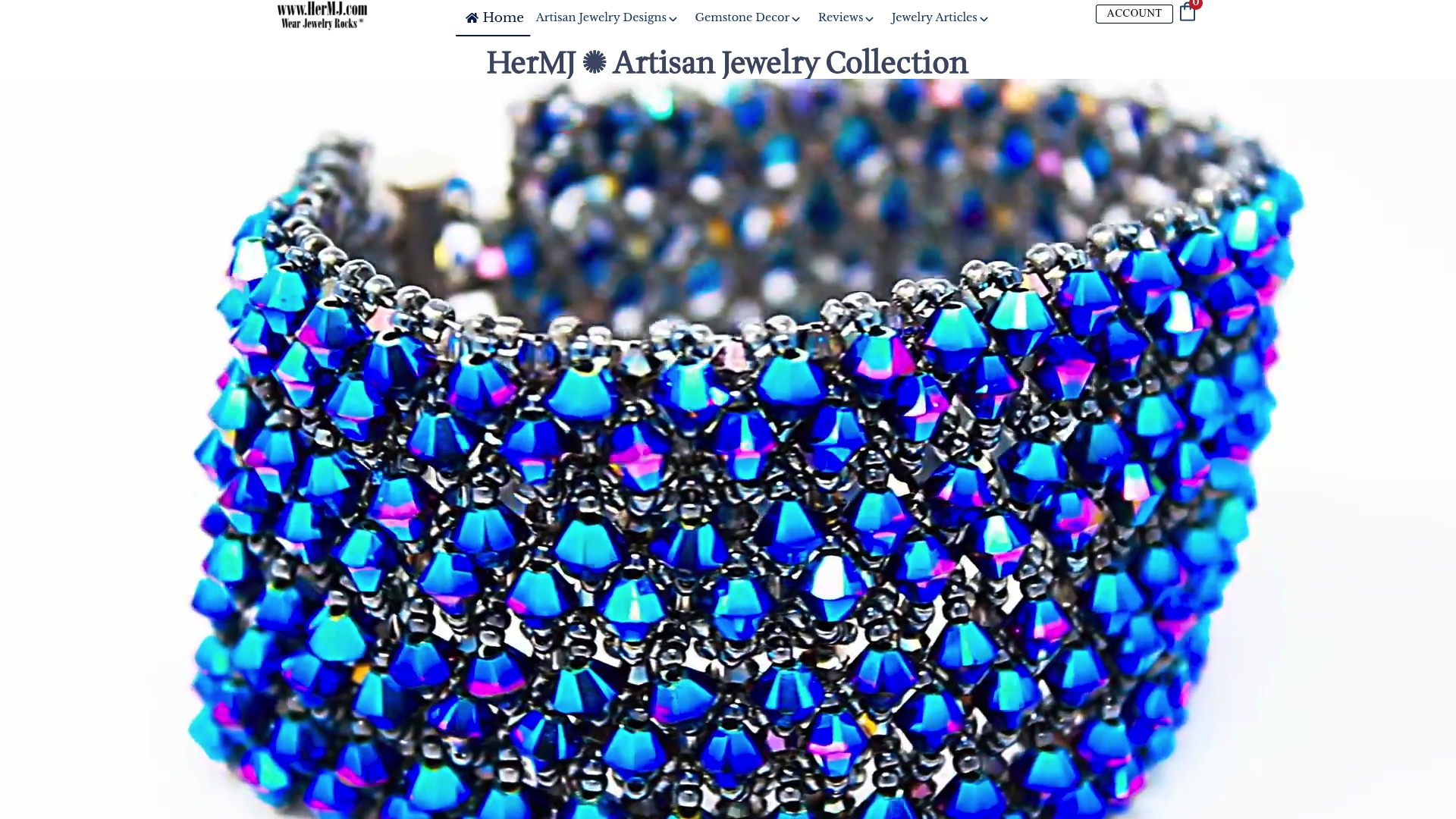
If this guide has sharpened your eye for craftsmanship, the next step is putting that knowledge to work. At Hermj, every piece is made from genuine pearls and natural gemstones by artisans who take real pride in their work.
You’ll see the depth of hand-polished metal, the organic beauty of each stone, and the kind of quality that photographs can’t fully capture. Explore the full story of what handmade jewelry benefits actually look like in a finished piece, or go deeper on the techniques behind each design with a look at hand-fabricated craftsmanship.
If you’re shopping for a meaningful gift, Hermj’s artisan graduation jewelry collection is worth a close look too.
FAQ
What makes jewelry truly handmade?
Truly handmade jewelry is fabricated by hand using techniques like sawing, filing, soldering, and hand-setting stones rather than cast or stamped by machines. Signs include visible tool marks, slight surface variations, and hand-set prongs with minor height differences.
How can I recognize handmade jewelry without tools?
Hold the piece and feel for weight relative to size, check for slight asymmetry in prongs or links, and look at the interior surfaces for subtle texture. A piece that feels heavier and shows small organic variations is far more likely to be genuinely hand-fabricated.
Are imperfections in jewelry a sign of poor quality?
No. In genuine artisan jewelry, slight imperfections like minor prong variation or subtle texture at solder joints are signs of authenticity, not poor workmanship. Overly uniform, flawless surfaces often indicate machine production.
How do I verify a seller’s handmade claims?
Ask for the maker’s background, look for studio documentation and work-in-progress photos, and check whether the piece carries appropriate hallmarks. Authentic artisan sellers can explain their process specifically and often offer customization.
What is the difference between hand fabricated and handmade-look jewelry?
Hand fabricated jewelry is constructed by hand from raw materials using traditional metalsmithing tools. Handmade-look jewelry is machine-produced with surface finishes designed to mimic artisan characteristics, often labeled with vague language like artisan-inspired rather than a direct handmade claim.
Recommended
- What is Hand-Fabricated Jewelry? Craftsmanship Explained
- What Is Hand Stamped Jewelry: A Beginner’s Guide