


How to Compare Gemstone Jewelry Online Marketplaces

The Edit
- Comparing gemstone jewelry online requires evaluating pricing, seller transparency, and buyer protections to avoid misrepresentation.
- Marketplace models like auctions, direct stores, and multi-vendor sites serve different buyer needs, from rarity to transparency.
- Verifying authenticity involves cross-checking prices, requesting lab reports, and reviewing seller ratings before purchasing.
Comparing gemstone jewelry online marketplaces means evaluating pricing, design variety, seller transparency, and buyer protections before you spend a dollar. The gemstone jewelry market spans auction sites, direct-to-retailer stores, and multi-vendor platforms, each with distinct strengths and trade-offs.
GIA certification, Amazon’s A-to-z guarantee, and Shopify-hosted seller disclosures are industry benchmarks that some shoppers use to distinguish trustworthy listings from risky ones. Getting this comparison right saves you money, protects you from misrepresented stones, and connects you with pieces that genuinely reflect your taste.
What key features should you compare across gemstone jewelry marketplaces?
The most important features to compare are pricing transparency, design uniqueness, seller accountability, and buyer protection policies. These four factors determine whether your purchase delivers real value or leaves you with a misrepresented stone and no recourse.

Pricing structures and ranges vary dramatically. Budget fashion platforms carry gemstone pieces at low price points, while specialized artisan stores and certified retailers price higher because they disclose stone origin and treatment history.
Price differences and shipping policies vary widely across platforms and must be factored in alongside gemstone quality. A $30 piece with a $15 shipping fee and no return window often costs more overall than a $55 piece with free shipping and a 30-day return window.
Design uniqueness separates platforms sharply. Mass-market multi-vendor sites carry thousands of near-identical listings.
Artisan-focused stores and curated boutiques offer handmade pieces where the stone selection, setting style, and finish are genuinely distinct. If you want something that doesn’t look like it came off an assembly line, you need to filter by seller type, not just price.
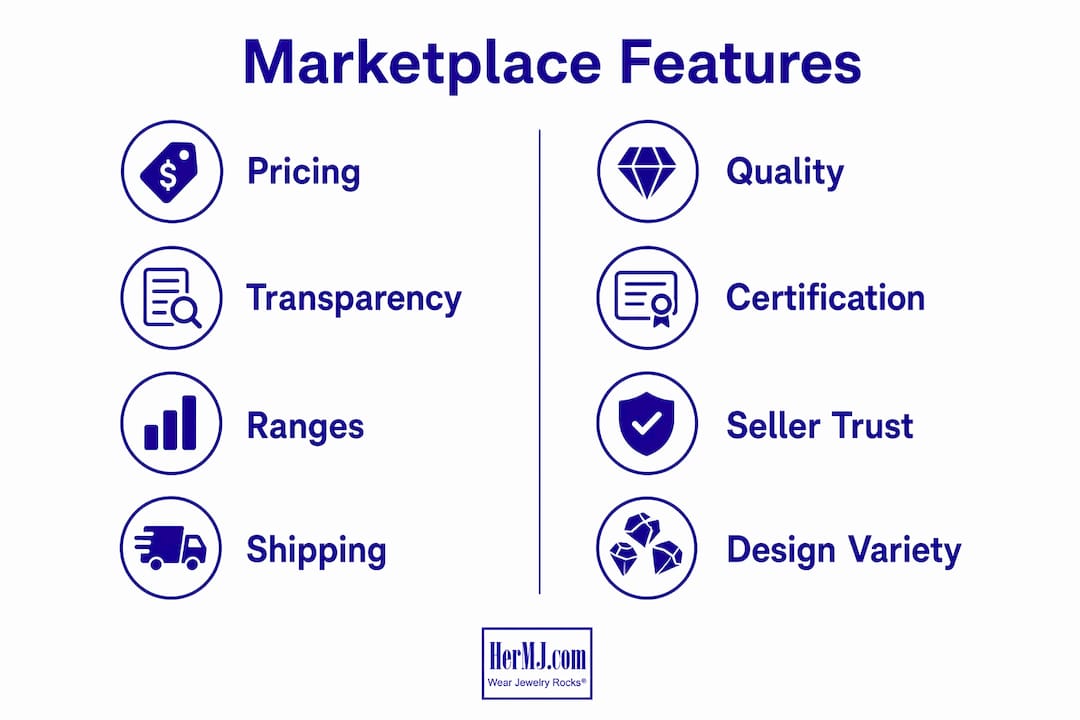
Seller transparency covers stone origin, treatment disclosures, and certification. Treatments such as heating or irradiation affect both value and durability, and reputable sellers disclose them up front. If a listing doesn’t mention treatments, that’s a red flag, not an oversight.
Buyer protection policies are the safety net. Customer reviews and return policies vary by marketplace and directly impact your confidence in the purchase. Standardized return guarantees on large platforms differ significantly from the limited protections on cross-border or auction sites.
- Pricing: Check total cost including shipping, taxes, and return shipping fees
- Design: Filter for artisan, handmade, or certified listings to find unique pieces
- Transparency: Look for stone origin, treatment history, and lab report availability
- Protections: Confirm return windows, dispute resolution processes, and seller ratings
- Certification: Prioritize listings that reference GIA or equivalent lab reports
Pro Tip: Before you buy, independently search the seller’s name. Many reputable gemstone vendors operate their own websites alongside marketplace storefronts, and their direct site often has fuller product descriptions and better pricing.
How do different marketplace models compare for gemstone buyers?
Gemstone jewelry platforms fall into three main models: auction-based sites, direct retailer stores, and multi-vendor marketplaces. Each model serves a different type of buyer.
Auction-based platforms attract shoppers hunting for rare, vintage, or one-of-a-kind pieces. Auction sites offer unique vintage pieces but require a higher time investment to evaluate seller credibility.
You’ll find listings with minimal product details, inconsistent photography, and seller ratings ranging from excellent to alarming. The upside is genuine rarity. The downside is that due diligence falls entirely on you.
Direct retailer stores hosted on platforms give buyers the clearest product information. Self-hosted jewelry stores offer greater product transparency, including detailed stone-origin and treatment disclosures, than auction-style platforms do.
When a seller controls their own storefront, they have both the space and the incentive to present their products honestly. You can usually contact them directly, read their policies in full, and see consistent photography across their catalog.
Multi-vendor marketplaces blend variety with buyer protections. Amazon is preferred for mid- to high-value gemstone purchases because of stronger buyer protections, such as the A-to-Z guarantee, and reliable logistics.
The trade-off is that product quality varies widely across sellers, and you need to read individual seller reviews carefully rather than trusting the platform’s overall reputation.
Budget fashion platforms carry affordable fashion pieces but offer a limited selection for buyers who want certified or artisan gemstone jewelry. These platforms work well for trend-driven, low-stakes purchases. They’re not the right fit if stone quality and authenticity matter to you.
Pro Tip: Use large multi-vendor marketplaces to research styles and price ranges, then visit the seller’s independent website to check for better pricing and more detailed product information. You’ll often find the same piece at a lower cost when the marketplace commission isn’t built into the price.
Shipping speed and logistics also differ meaningfully across models. Direct retailer stores and established multi-vendor platforms typically offer faster, more trackable fulfillment.
Budget platforms and some auction sellers rely on slower international shipping, which adds weeks to your wait and complicates returns if something goes wrong.
How do you compare prices and verify gemstone authenticity online?
Verifying authenticity and accurately comparing prices require a structured approach. Skipping steps here is where most buyers make costly mistakes.
| Verification Step | What to Check | Why It Matters |
|---|---|---|
| Cross-check prices | Compare the same stone type across 3+ platforms | Reveals fair market value and flags outliers |
| Request lab reports | Ask for GIA or equivalent certification | Confirms stone identity and treatment history |
| Review seller ratings | Read recent reviews, not just the overall score | Exposes patterns in quality or service issues |
| Check return policy | Confirm window length and who pays return shipping | Protects you if the piece doesn’t match the listing |
| Calculate total cost | Add shipping, taxes, and insurance | Gives you the real price for comparison |
Start with price benchmarking. Search the same gemstone type (for example, faceted garnet or onyx) across at least three different platform types. This gives you a realistic price range and helps you spot listings that are priced suspiciously low.
Request lab certification. Reputable marketplaces require vetting seller reviews and demand lab certification like GIA to verify authenticity, especially for high-value stones. If a seller can’t provide a lab report on request, treat that as a meaningful signal about the stone’s quality.
Analyze seller ratings in detail. Look at reviews from the past three months, not just the aggregate score. A seller with a 4.8-star rating but several recent complaints about misrepresented stones is a risk, regardless of their overall history.
Confirm all hidden costs. Some inexpensive pieces come with slower shipping or limited return policies that reduce overall value. Factor in return shipping costs, import duties on international orders, and any restocking fees before you commit.
Knowing how to buy crystals and gemstones online without getting scammed comes down to one principle: verify before you pay, not after. The verification process takes 15 minutes and can save you significant frustration.
What mistakes should you avoid when shopping for gemstone jewelry online?
The most common buyer mistakes are predictable, and knowing them in advance puts you well ahead of the average shopper.
Choosing price over certification. A low price without a lab report or treatment disclosure is not a deal. Verification can add up to 100% of cost if certification is missing from the original purchase. Buying cheap and certifying later costs more than buying right the first time.
Ignoring seller reviews. A seller’s review history tells you more than their product photos. Inconsistent product descriptions, complaints about stone color not matching photos, and slow response times are all red flags to watch for before you buy.
Overlooking return policies. Some cross-border sellers offer return windows as short as 7 days, with the buyer responsible for international return shipping. That effectively makes the purchase non-returnable for most shoppers. Read the policy before you add anything to your cart.
Skipping treatment disclosures. Gemstone treatments like heating, filling, or irradiation are standard in the industry, but they must be disclosed. A stone sold without disclosure of treatment may be misrepresented, and treatments affect both resale value and long-term durability. Always ask if the listing doesn’t specify.
Trusting platform reputation over seller reputation. A well-known marketplace doesn’t guarantee that every seller on it is trustworthy. Buyer protections help when things go wrong, but they don’t prevent a poor purchase. Vet the individual seller, not just the platform. You can find practical guidance on protecting yourself when shopping online to build a solid pre-purchase checklist.
Neglecting to confirm stone origin. Origin affects value for certain gemstones, particularly rubies, sapphires, and emeralds. A Burmese ruby and a Thai ruby of the same size carry different market values. If origin matters to you, ask for documentation before you buy.
Key Takeaways
Comparing gemstone jewelry online marketplaces requires evaluating certification standards, seller transparency, buyer protections, and total cost before committing to any purchase.
| Point | Details |
|---|---|
| Certification is non-negotiable | Always request GIA or equivalent lab reports for any high-value gemstone purchase. |
| Marketplace model shapes your experience | Auction sites offer rarity; direct retailer stores offer transparency; multi-vendor platforms offer protection. |
| Total cost beats sticker price | Factor in shipping, taxes, return fees, and certification costs for an accurate comparison. |
| Seller vetting matters more than platform reputation | Read recent reviews and check for treatment disclosures before trusting any individual listing. |
| Use marketplaces as discovery tools | Find vendors on large platforms, then check their independent sites for better pricing and fuller details. |
What I’ve learned from years of watching shoppers get this wrong
The single biggest mistake I see is treating a marketplace as a store rather than a search engine. Shoppers land on a large platform, find a piece they love, and buy it without ever asking who the seller is or whether the stone has been treated. The platform’s brand gives them a false sense of security.
I suggest a different approach. Use large marketplaces to identify styles and price ranges, then research the seller directly. Savvy buyers use marketplaces as search engines to identify reputable vendors, then compare prices by checking if vendors have independent websites to avoid commission fees. This strategy consistently surfaces better pricing and more honest product descriptions.
The other thing I’d push back on is the idea that clear designation is only for expensive purchases. A $90 piece of gemstone jewelry with no treatment disclosure is still a misrepresented product if the stone has been irradiated or filled. The dollar amount doesn’t change what you deserve to know. Demand transparency at every price point, and you’ll build a collection you can actually trust.
For shoppers who want unique designs without the research burden, a curated artisan store with clear sourcing and consistent quality is worth more than the widest possible selection. Variety without accountability is just noise. You can find unique gemstone necklace styles that come with the transparency and craftsmanship that make a piece worth keeping.
— Veronique
HerMJ’s curated gemstone collection
HerMJ specializes in handmade gemstone jewelry built for shoppers who want genuine quality at accessible prices. Every piece comes with clear product information, so you know exactly what you’re getting before you buy.
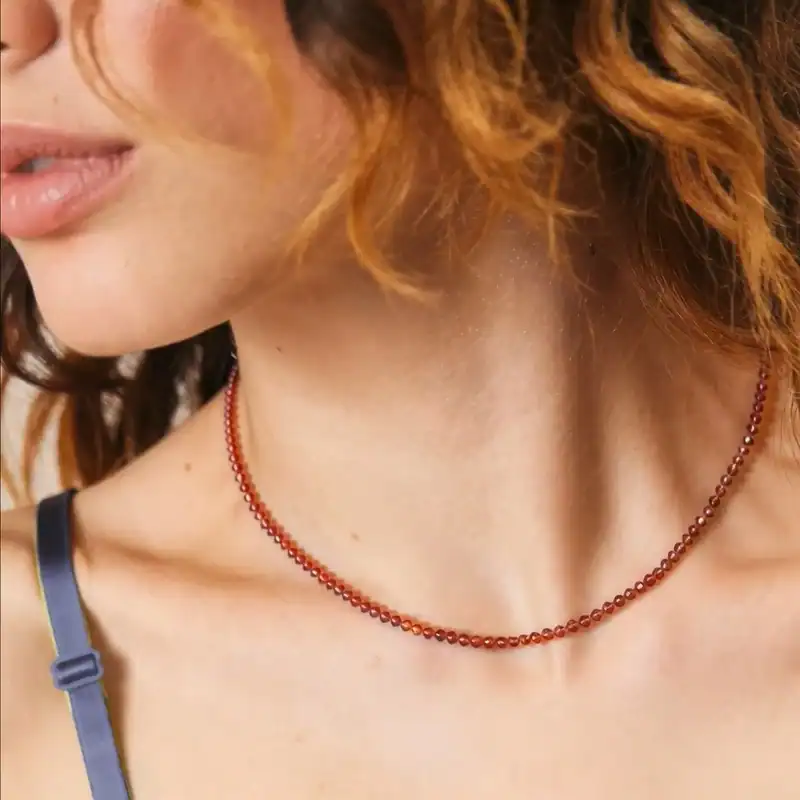
The collection includes pieces like the Faceted Garnet Necklace, a rich, warm piece that works for everyday wear and special occasions alike.
The Onyx Beads Bracelet and the Golden Tiger Eye Bracelet showcase HerMJ’s commitment to genuine stones and artisan craftsmanship. US shoppers receive free shipping with no minimum order. International orders ship free for orders of $150 or more, with USPS available for orders below that threshold.
If you want affordable gemstone pieces that look far more expensive than they are, HerMJ’s catalog is a strong place to start.
FAQ
What’s the most reliable way to compare gemstone jewelry prices online?
Cross-check the same stone type across at least three platform types, then calculate the total cost including shipping, taxes, and return fees. Sticker price alone doesn’t reflect real value.
How do I know if a gemstone sold online is authentic?
Request a GIA or equivalent lab report from the seller before purchasing. Reputable sellers disclose stone treatments and origin upfront; those who can’t or won’t provide documentation are a risk.
Are auction sites safe for buying gemstone jewelry?
Auction sites offer access to rare and vintage pieces, but buyer diligence on seller ratings and certification varies significantly. They’re safe when you vet the seller carefully and confirm return options before bidding.
What buyer protections should I look for on a gemstone marketplace?
Look for standardized return windows, clear dispute resolution processes, and seller ratings with recent reviews. Platforms with formal buyer-guarantee programs offer the strongest protection for mid- to high-value purchases.
Why do some gemstone pieces cost so much less on certain platforms?
Lower prices often reflect fashion-grade stones, undisclosed treatments, slower shipping, or limited return policies. A lower price without certification or disclosure of treatment is not a bargain. It’s an unknown.
Recommended
- Affordable Gemstone Jewelry Types That Look Expensive
- What Is Gemstone Cluster Jewelry: Style Guide 2026
- Gemstone Jewelry Outfit Pairing: Style It Right