


How to Evaluate Gemstone Setting Handmade Quality
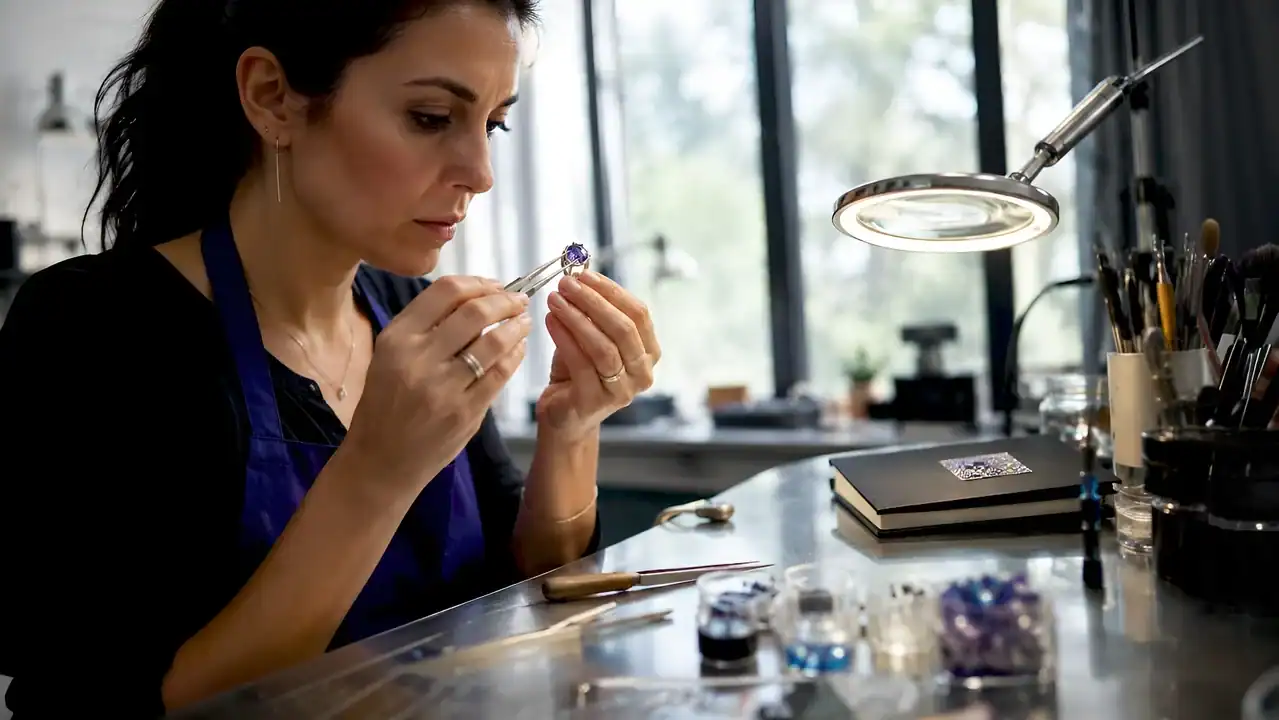
The Edit
- Evaluating handmade gemstone setting quality involves checking stone security and metal finishing to ensure craftsmanship integrity. Well-made settings hold stones securely with notched prongs or bezels, and their metalwork has smooth, even surfaces free of residue. Buyers should inspect for subtle irregularities and ask for certification to confirm authenticity and proper sourcing.
Evaluating handmade gemstone setting quality means inspecting the stone’s security, metal finishing, and artisan craftsmanship to distinguish a genuinely handcrafted piece from a mass-produced imitation.
The industry term for this process is gemstone setting quality assessment, and it covers everything from prong integrity to interior surface smoothness. Buyers who skip this step often end up with glue-set stones, uneven metalwork, and jewelry that fails within months.
Learning to read these details confidently protects your investment and ensures the piece you love actually lasts.
What are the key criteria to assess craftsmanship in handmade gemstone settings?
The setting is the most common point of failure in jewelry. Glue-set stones and loose prongs compromise structural integrity regardless of how beautiful the stone looks. A well-made handmade piece holds its gemstone mechanically, through notched prongs, a tight bezel, or a precisely formed channel, never through adhesive alone.
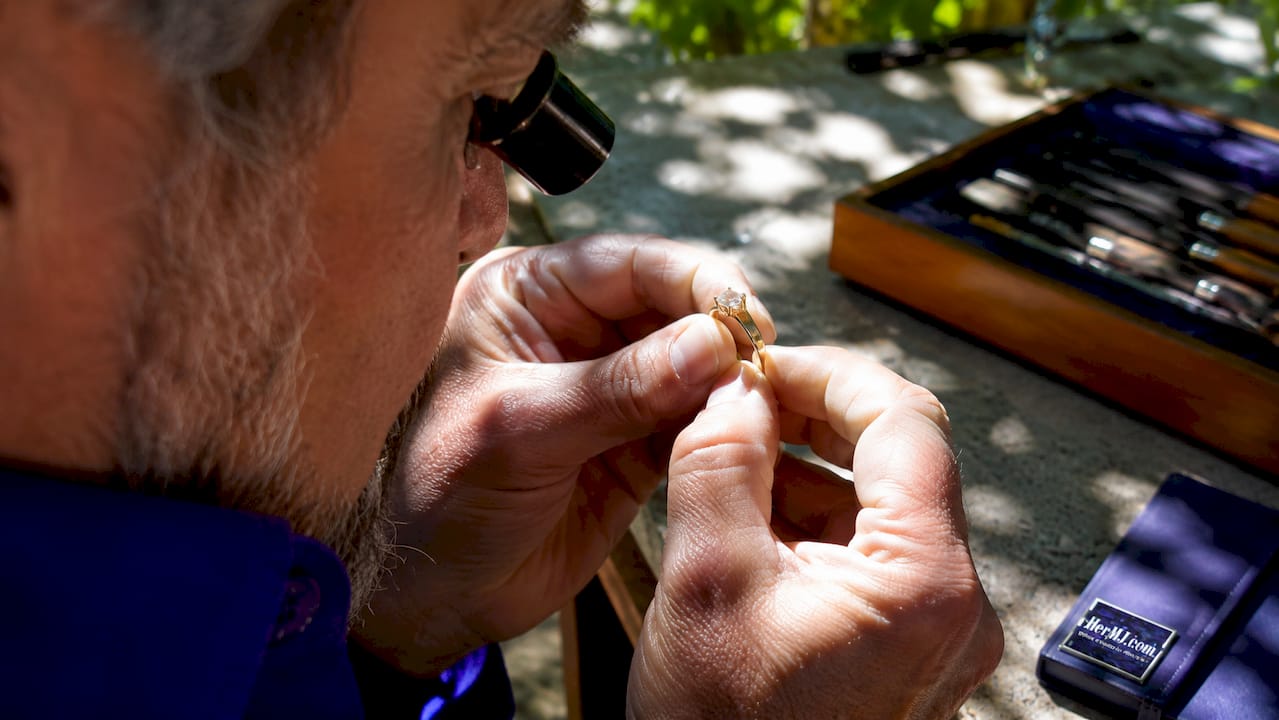
Metal finishing
High-quality handmade metalwork shows consistent polishing, clean solder joints, and a smooth interior surface. That smoothness matters because rough interiors snag clothing and irritate skin, two signs of rushed production. Mass-produced pieces often have a shiny exterior but reveal uneven surfaces and visible solder residue on the back or inside the band.
Gemstone setting styles and what they signal
Three setting styles dominate handmade artisan jewelry, and each tells you something about the maker’s skill level.
- Bezel setting: A metal rim wraps around the entire perimeter of the stone. When done well, the rim sits flush and even. Uneven height around the rim signals inconsistent handwork.
- Prong setting: Individual metal claws grip the stone. Check that all prongs are the same height, evenly spaced, and fully seated against the girdle of the stone. Bent, missing, or asymmetric prongs are red flags.
- Pavé setting: Small stones are set close together, with tiny metal beads holding each one. This style demands the most skill. Loose or tilting stones in a pavé cluster reveal poor technique immediately.
Signs of hand finishing versus machine production
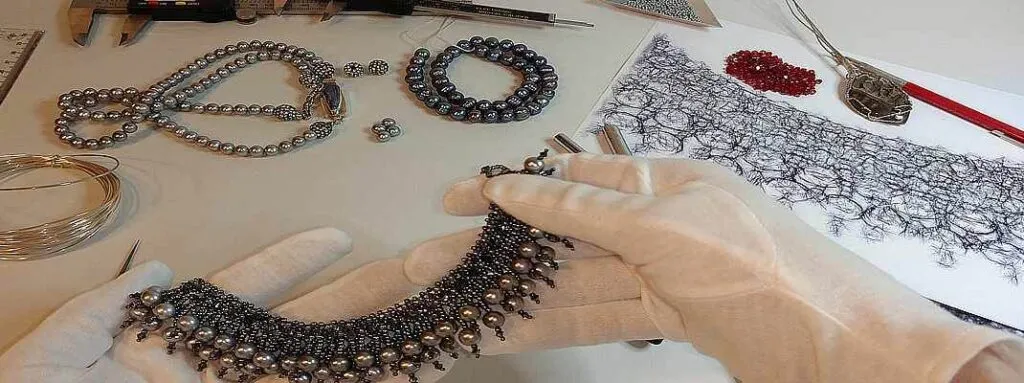
Hand-finished pieces carry subtle irregularities that actually confirm quality. Slight tool marks on the back of a setting, minor variation in prong thickness, and a matte texture on recessed areas all point to individual craftsmanship.
Machine-polished pieces look uniformly shiny everywhere, including areas a wearer never sees. That uniform gloss is a sign of bulk production, not artisan care.
Pro Tip: Run your fingernail along the interior of a pendant back or the inside of a bracelet clasp. Artisan-finished pieces feel smooth and even. Rough, scratchy surfaces mean the maker cut corners on finishing.
Learning to identify truly handcrafted jewelry takes practice, but these physical cues give you a reliable starting point every time.
How to evaluate gemstone quality on a low budget
Budget-conscious shoppers can still access genuinely high-quality natural stones. A budget range of $300–$2,000 gives beginners access to natural gemstones with good clarity and color, avoiding the heavily treated stones common in cheaper categories. Spending below $100 significantly increases the risk of encountering synthetic or low-grade materials presented as natural.
The 5 Cs for colored stones
The classic 4 Cs (color, clarity, cut, carat) apply to colored gemstones with one addition: certification. Here’s how to prioritize them when evaluating artisan pieces on a budget.
- Color comes first. Saturation and tone matter more than size. A vivid, medium-toned sapphire in a secure setting outperforms a pale, large stone every time.
- Cut determines brilliance. A well-cut stone reflects light evenly. Flat, dull areas in the face-up view mean the cut sacrifices beauty for carat weight.
- Clarity requires nuance. Natural gemstone inclusions vary by stone type and actually help authenticate them. “Silk” in rubies and “jardin” in emeralds are natural features, not defects. Suspiciously flawless clarity in a natural stone is a warning sign, not a selling point.
- Carat is the least important factor. Experts consistently prioritize a smaller, brighter stone in a well-crafted setting over a heavier stone in a poor one. A smaller stone that’s well-cut and securely set delivers more beauty and durability.
- Certification from labs like GIA or IGI verifies authenticity, treatment disclosure, and origin. Certified stones provide transparency that no amount of visual inspection alone can match.
Using setting quality as a proxy for stone authenticity
A well-made setting signals a maker who cares about the whole piece. Artisans who invest in clean metalwork and secure stone placement rarely cut corners on the stones themselves. If the setting looks sloppy, assume the stone sourcing was equally careless.
Step-by-step guide to inspecting a handmade gemstone setting before purchase
A thorough inspection takes less than five minutes and requires minimal tools. Magnifiers and proper lighting are the two most useful aids for detecting subtle flaws in craftsmanship or loose stones. A 10x loupe or even a smartphone camera in macro mode reveals details invisible to the naked eye.
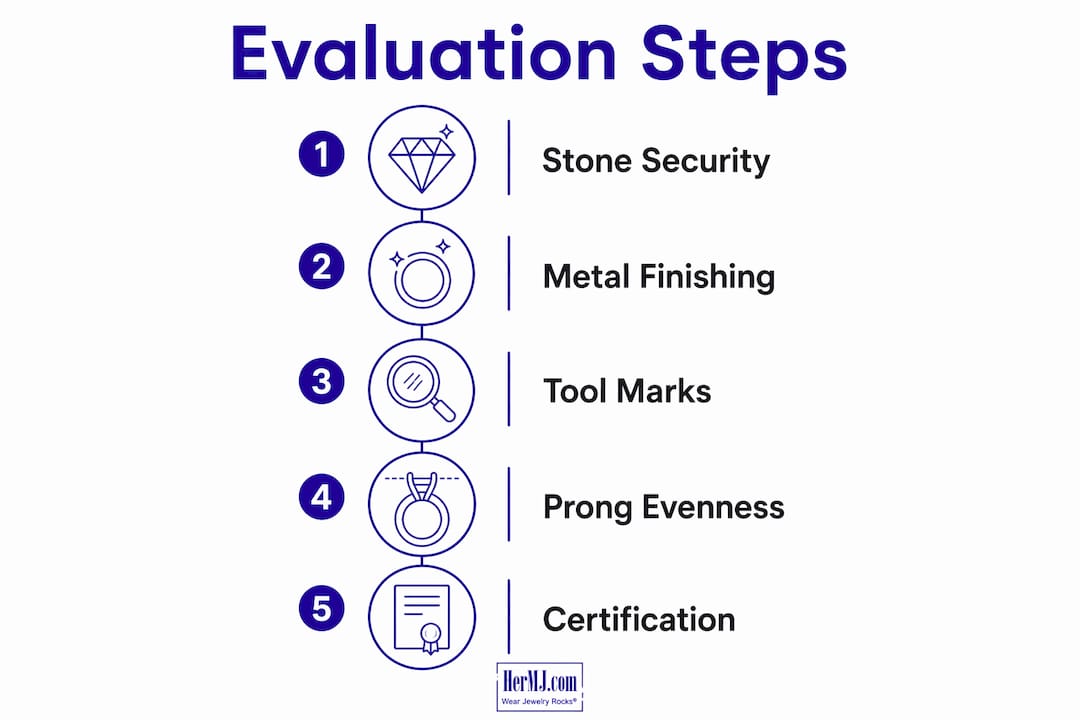
Inspection steps
| Step | What to check | Red flag |
|---|---|---|
| 1. Stone security | Gently press the stone sideways with a fingertip | Any movement, rattle, or tilt |
| 2. Prong inspection | Count prongs, check height and spacing | Uneven, bent, or missing prongs |
| 3. Metal finishing | Examine solder joints and interior surfaces | Visible residue, rough texture |
| 4. Stone alignment | View from directly above and from the side | Off-center or tilted stone |
| 5. Documentation | Ask for metal alloy disclosure and stone certification | Vague answers or no paperwork |
What to look for in the metal
Smooth interior surfaces reduce skin irritation and clothing snags, and they’re a hallmark of artisan-grade finishing. Run your finger inside a bracelet or along the back of a pendant.
Artisan work feels polished and even. Rough or scratchy surfaces indicate the maker skipped the finishing steps that separate handcrafted quality from bulk production.
Pro Tip: When buying online, ask the seller for a short video of the piece rotating under natural light. This reveals solder joints, prong evenness, and stone movement that still photos hide entirely.
- Ask the artisan directly: What metal alloy is used? Is the stone natural, treated, or synthetic?
- Request any available certification documents before completing the purchase.
- Check if the stone sits flush within the setting or protrudes unevenly on one side.
- Look at the back of the piece. Artisan work looks intentional even where no one sees it.
Understanding artisan craftsmanship details helps you ask the right questions and recognize quality before you commit.
Common mistakes when evaluating handmade gemstone settings
The most frequent error buyers make is fixating on carat weight. A heavier stone in a poorly made setting is a liability, not an asset. Carat weight is less important than cut, clarity, and the security of the setting holding the stone in place.
- Treating flawless clarity as a quality signal. In natural colored stones, perfect clarity often means the stone is synthetic or heavily treated. Reasonable inclusions are normal and expected.
- Ignoring interior finishing. Buyers focus on the face of a piece and miss the back. Rough interior surfaces cause discomfort and signal production shortcuts.
- Confusing machine polish with hand finishing. A uniformly shiny piece isn’t necessarily well made. Look for the subtle, intentional variation that marks genuine hand work.
- Skipping documentation. Asking for metal alloy and stone certification isn’t demanding. It’s standard practice. Any reputable artisan readily provides this information.
- Not confirming stone origin alongside setting quality. A beautiful setting can house a misrepresented stone. Certification and direct questions to the maker close that gap.
“The setting is where jewelry either holds together or falls apart. A stone can be gorgeous, but if the prongs are uneven or the bezel is thin, you’re buying a repair bill, not a keepsake.”
Avoiding these mistakes sets confident buyers apart from those who discover problems only after purchase.
Key Takeaways
Evaluating the quality of handmade gemstone settings requires inspecting stone security, metal finishing, and certification together, because no single factor tells the full story.
| Point | Details |
|---|---|
| Stone security is non-negotiable | Any movement, rattle, or tilt in the stone signals structural failure regardless of visual appeal. |
| Metal finishing reveals true craftsmanship | Smooth interiors, clean solder joints, and consistent polishing distinguish artisan work from bulk production. |
| Clarity perfection is a warning sign | Natural stones carry inclusions; suspiciously flawless clarity often indicates synthetic or heavily treated material. |
| Carat weight is the least important factor | A smaller, well-cut stone in a secure setting delivers more beauty and durability than a larger stone in poor metalwork. |
| Certification closes the gap | GIA or IGI documentation verifies authenticity and treatment disclosure that visual inspection alone cannot confirm. |
What I’ve learned from years of handling artisan gemstone pieces
I’ve held hundreds of handmade gemstone pieces over the years, and the ones that are the least inspiring to buyers almost always share one trait: the maker spent everything on the stone and nothing on the setting.
A gorgeous tsavorite garnet in a thin, glue-assisted bezel is a stone waiting to fall out. The setting isn’t a frame. It’s the architecture that keeps the whole piece alive.
The green flags I trust most are the ones buyers rarely notice at first. A pendant back that’s as smooth as the front. Prongs that are even without being identical, because identical means machine-made. A maker who answers metal alloy questions without hesitation. These details tell you the artisan respects the craft, not just the sale.
My advice: touch the piece before you trust it. Run your finger along every surface. Press the stone gently. Ask questions that require specific answers. A confident artisan welcomes that scrutiny. One who deflects it is telling you something important.
Pairing your evaluation skills with a trusted source matters too. When you know what quality looks like, you can fully appreciate it, whether you’re pairing gemstone jewelry with an outfit or choosing a piece for a special occasion.
— Veronique
Handcrafted gemstone jewelry worth trusting at HerMJ
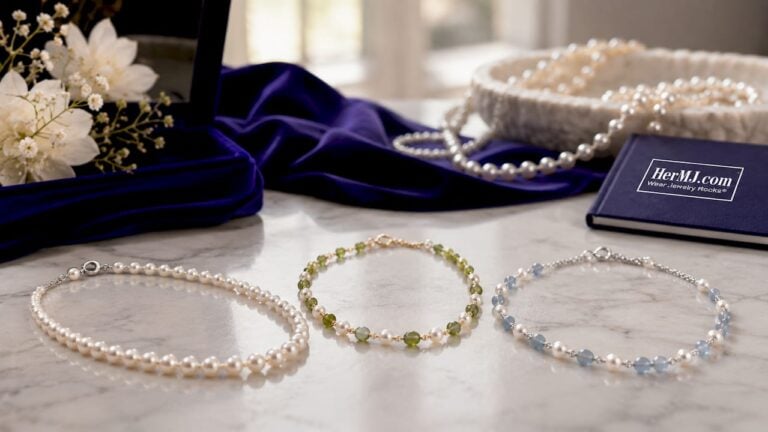
HerMJ builds every piece around genuine gemstones and real pearls, with metalwork that passes the same inspection criteria covered in this article. Each setting is handmade with attention to stone security, interior finishing, and material transparency, so you’re not guessing about what you’re buying.
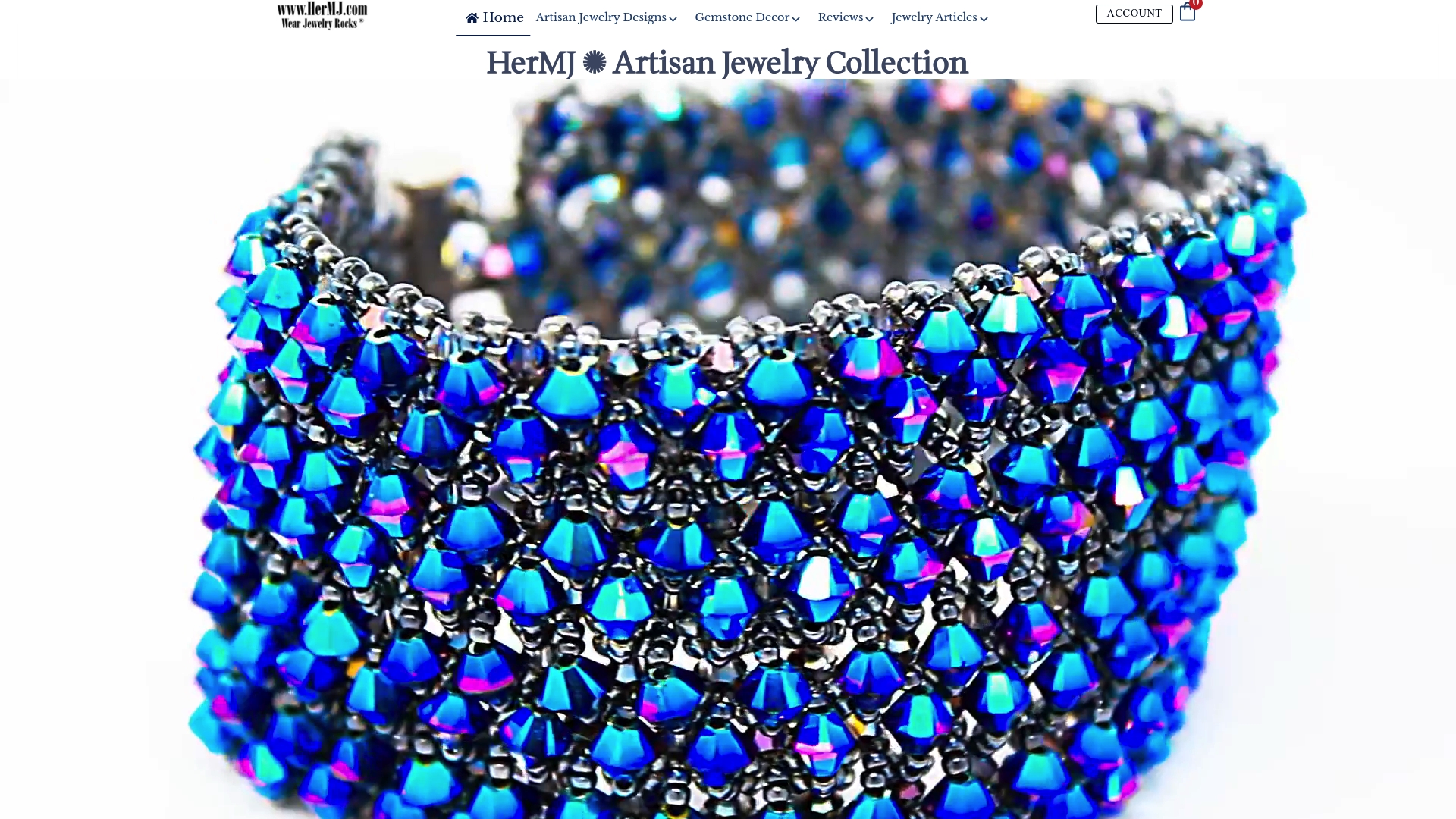
Whether you’re drawn to a faceted garnet necklace or a strawberry quartz bracelet, HerMJ’s pieces reflect the craftsmanship standards this article describes. US orders ship free with no minimum. International orders ship free at $150 or more. Browse the full handcrafted gemstone collection and shop with the confidence that comes from knowing exactly what quality looks like.
FAQ
What is the most important factor when evaluating a handmade gemstone setting?
Stone security is the most critical factor. A stone that moves, rattles, or tilts is compromised regardless of how polished the metalwork looks.
How can I tell if a gemstone setting is handmade or machine-made?
Hand-finished settings show subtle variation in prong thickness, tool marks on recessed areas, and smooth but not uniformly glossy interiors. Machine-made pieces look identically shiny on every surface.
Is a flawless gemstone always of better quality in handmade jewelry?
No. Natural colored stones carry inclusions that verify authenticity. Perfectly flawless clarity in a natural stone often signals synthetic or heavily treated material, not superior quality.
What tools do I need to inspect a gemstone setting before buying?
A 10x loupe or a smartphone in macro mode, combined with natural or bright directional lighting, reveals prong evenness, solder joints, and stone movement that the naked eye misses.
Should I ask for certification when buying handmade gemstone jewelry?
Yes. Certification from labs like GIA or IGI confirms the stone’s authenticity, treatment history, and origin. Reputable artisans provide this documentation without hesitation.
Recommended
- How to Identify Truly Handcrafted Jewelry Pieces
- How to Appreciate Artisan Jewelry Craftsmanship Details