


Custom Jewelry Turnaround: How Long Each Stage Takes

Custom jewelry takes weeks, not days, and the exact number depends on three things: how much of the piece is truly new, whether the stones are in hand, and how quickly you answer questions along the way. A lightly personalized necklace can move quickly.
A one-of-a-kind design built around a specific gemstone takes longer, because every step happens at a bench by a person, not on a production line.
I’m going to walk you through the stages, show you where time really goes, and give you a simple way to work backward from a birthday, a holiday or a wedding so you never end up in a last-minute scramble.
TL;DR:
- Turnaround is the sum of stages: conversation, design approval, materials, making, finishing and shipping. Ask which of those a quoted timeline includes.
- Simple personalization (a stone swap, a length change, a pairing of pearls and gems) moves faster than a fully custom design drawn from scratch.
- Most delays come from design revisions, slow approvals and hard-to-find stones, not from the bench itself.
- For a gift, order well ahead and build in a buffer for shipping. Counting back from your date beats hoping for the best.
- Rush requests are sometimes possible, but confirm in writing what changes: materials, revisions and shipping method.
What “turnaround” actually measures
When someone quotes you a turnaround, they might mean very different things. Some jewelers count from the day you pay a deposit.
Others count from the day you approve the design. A few count only the time the piece spends at the bench, which leaves out everything before and after it.
That’s why two people can both say “about a month” and mean different calendars. Before you plan around any number, I’d ask for the start line and the finish line.
Does the clock begin at your first message or at design approval? Does it stop when the piece is finished or when it lands in your mailbox?
There’s a second layer too. A quote is usually a best case with everything going smoothly: the materials are available, you respond quickly, and nobody changes their mind.
Real orders breathe a little. I treat the quoted time as the middle of a range, not the edge of a cliff.
The stages of a custom order, in order
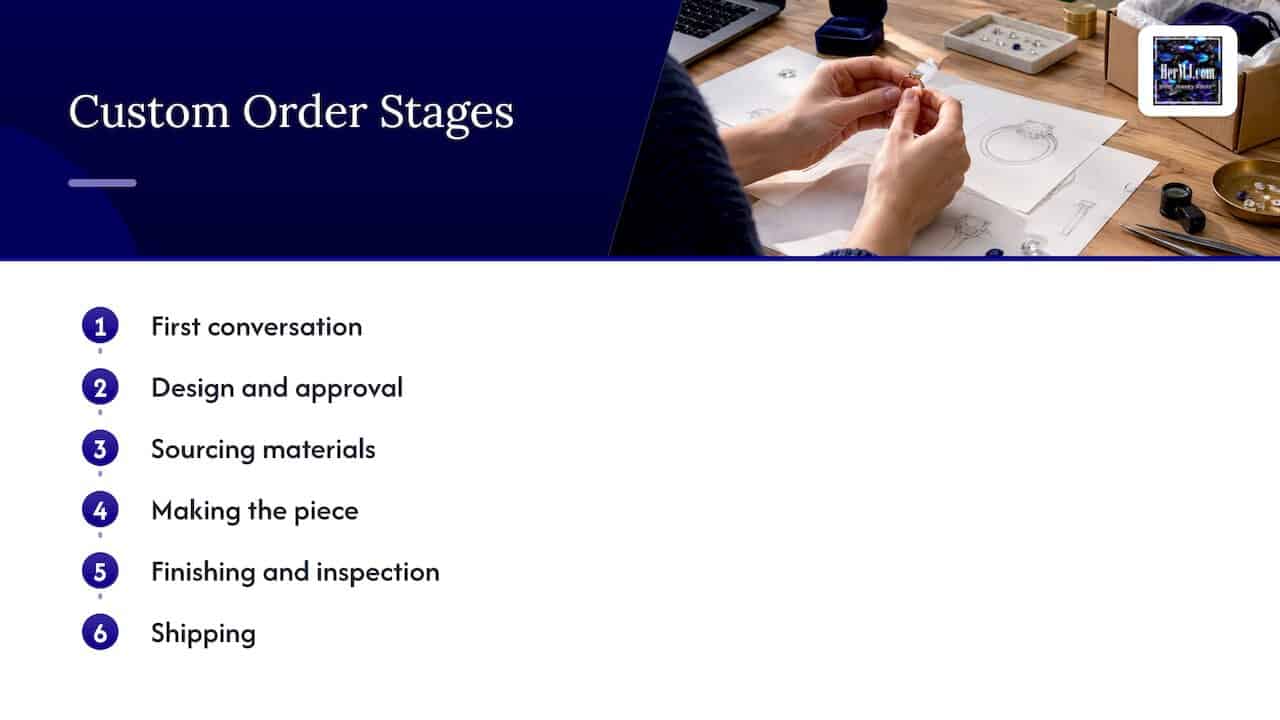
Every custom piece, whatever the metal or stone, passes through the same handful of stages. Knowing them helps you see which ones you can speed up and which ones deserve patience.
1. The first conversation
This is where you describe what you want: the kind of piece, the colors, the stones, the occasion, any budget you have in mind.
It can take a single message or a week of back and forth, and that part is largely in your hands. Bring photos of pieces you love, note whether you wear gold-toned or silver-toned metals, and tell us who it’s for. The clearer the brief, the fewer rounds you’ll need later.
2. Design and approval
Next, the idea becomes something you can react to: a sketch, a layout of the stones, a rendering or a description of the exact materials.
This stage is where most of the flexibility lives, and where most of the time gets spent. Changes here are cheap and quick. Changes after the making has begun are slow, and sometimes impossible.
One point I’ll repeat to every customer: the approval is the moment your specification locks. If you say yes while still unsure, you’re carrying that doubt into the finished piece.
3. Sourcing the materials
Stones and pearls are natural, which means no two match perfectly. Finding a matched set of freshwater pearls in a particular size and overtone, or a gemstone with the right depth of color, can happen in a day or take much longer.
If a design calls for something uncommon, this is the stage that stretches. If the materials are already on the shelf, it nearly disappears.
If you’re curious why natural stones can’t be hurried, our gemstone formation timeline shows how long these materials take to form before a jeweler ever touches them. Supply can also tighten for reasons far from the workbench, as in our note on the European crystal shortage.
4. Making the piece
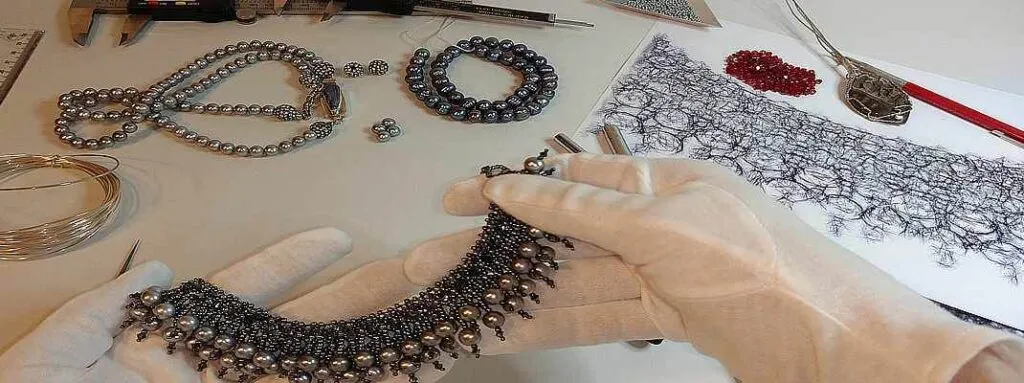
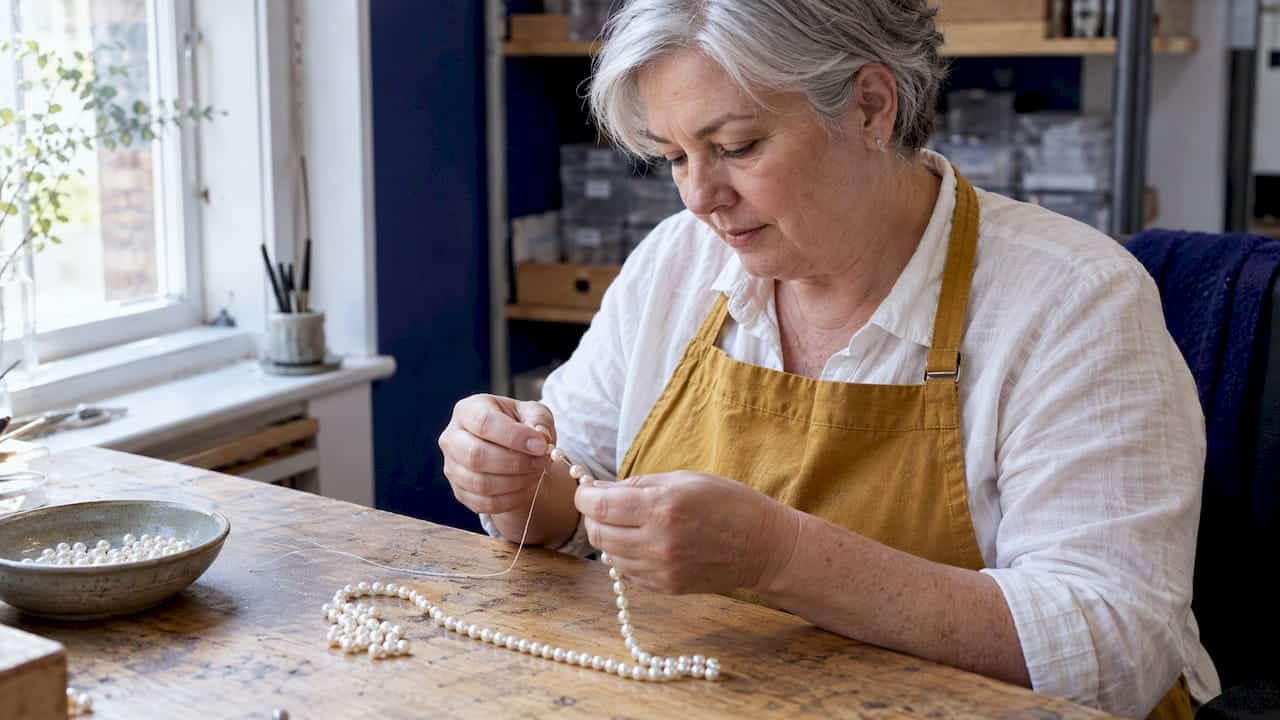
Now the work becomes physical. Stones are drilled or set, pearls are strung or wired, findings are attached, and each element is checked against the approved design.
Handwork is the slowest stage per piece and the one you can’t shortcut without cutting quality. I wrote more about that in why handmade jewelry takes longer, and it’s worth a read if you’ve ever wondered why “handmade” and “next-day” don’t often share a sentence.
5. Finishing and inspection
The last pass is about polish, clasp tension, symmetry and a close look at every stone. It’s quick compared with the making, but it’s not optional.
A piece that skips this step tends to show it within a few wears.
6. Shipping
The final leg is the one people forget to count. A beautiful piece that finishes on Monday still needs to travel.
Shipping speed depends on the method you choose and where you live, so check the carrier’s current estimates for your address instead of assuming.
At HerMJ, US orders ship free with no minimum, and international orders ship free at $150 or more, which means you can pick the shipping level that fits your date without a surprise at checkout.
Simple personalization versus a fully custom design
The word “custom” covers a wide range, and the turnaround follows it. I find it useful to think in three tiers.
| Tier | What it looks like | What drives the timeline |
|---|---|---|
| Light personalization | An existing design with a changed length, a different stone or a new color pairing | Whether the alternate material is on hand |
| Guided custom | A familiar style rebuilt around stones you choose, such as pearls with a particular gemstone accent | Matching stones and one or two approval rounds |
| Fully custom | A new design from your sketch or inspiration photos | Design rounds, rare materials, and the approval loop |
The lighter the change, the fewer unknowns, and the shorter the wait. A fully custom piece asks more of everyone, because each decision (shape, proportion, stone, finish) is being made for the first time.
If you’re not sure which tier you’re in, our guide to what a custom gemstone piece is explains the options so you can describe your idea in the right terms from the start. That alone saves a round of messages.
What slows an order down
Benches rarely cause delays. Conversations and materials do. These are the usual culprits, and you can influence most of them.
Revision loops. Each change request can ripple into the next. Move one stone, and the spacing changes, and then the length needs a second look. Three small tweaks can cost more time than one big decision made upfront.
Slow approvals. A design sitting in your inbox for a week is a week added to the calendar. If you need time to think, say so, and set a date to decide.
Hard-to-find stones. Natural materials vary, and a specific shade or size can take time to track down. If you’re flexible on color, tell us. A range often gets you a better match faster than a single exact request.
Seasonal demand. Gift-giving seasons compress everyone’s schedule. Ordering in the weeks right before a major holiday carries more risk than ordering in a quiet month, so I’d treat the lead time as longer in November and December than in, say, March.
Supply interruptions. Occasionally a material becomes scarce for reasons nobody controls. When that happens, the best response is a clear message about options, not silence.
How to plan around a gift or event
Here’s the method I give friends. Start with the date you need the piece in your hands, not the date of the event itself, then count backward.
- Pick your real deadline. Give yourself a few days before the occasion for wrapping, a resize conversation or a surprise swap if something’s off.
- Subtract shipping. Use the carrier’s current estimate for your address, then add a cushion for weather and holidays.
- Subtract the making and finishing time your jeweler quotes.
- Subtract the design stage. Plan for at least one revision, even if you think you’ll love the first version.
- Subtract your own decision time. Be generous here. Most people underestimate how long it takes to choose between two shades of green.
Whatever date that lands on is when to start the conversation. If it’s already behind you, you have two options: choose a lighter level of personalization, or pick a piece that’s ready now and add the personal touch in the card, the box or a handwritten note.
For milestone gifts, I’d start earlier than feels necessary. A birthstone piece, for example, is a lovely personal gift because it’s tied to a month, and it’s easy to plan around.
If the traditional stone isn’t quite right, our guide to alternative birthstones by month offers other gemstones you can choose from, which also widens your options if one stone is hard to source.
Can you speed up a custom order?
Sometimes, yes. Rush work depends on what’s happening at the bench and what’s in the stockroom, so it’s a conversation, not a button. If you need a piece quickly, these moves help most:
- Choose materials that are already in stock. This removes the most unpredictable stage.
- Decide on a design with fewer moving parts. Simpler pieces move faster.
- Approve promptly. Your quick answer is the cheapest rush there is.
- Pick the shipping speed that fits. It’s often the easiest way to save.
Before you agree to a rush, confirm a few things in writing: whether materials will be the same, whether you still get a chance to review the design, whether a rush fee applies, and whether the new date covers delivery or only completion.
A fast timeline that quietly removes your approval step isn’t a bargain.
Questions to ask before you pay
A short list protects you from nearly every misunderstanding about timing:
- When does the clock start, and what ends it: finished piece or delivered piece?
- Does the timeline include design revisions, and how many are covered?
- Which materials need to be sourced, and could that change the date?
- What happens if the stone you chose becomes unavailable?
- What are the return or adjustment policies for a personalized item?
Personalized pieces are often treated differently from stock items when it comes to returns, so read that policy before you order, not after. If a seller can’t answer these questions plainly, that’s useful information in itself.
Our perspective on custom timelines
We make pearl and gemstone jewelry by hand, and we’ve learned that the most helpful thing we can do is tell you what a piece involves before you fall in love with a date.
Handmade work earns its beauty from attention, and attention takes time. We’d rather give you a realistic window and meet it than promise something quick and cut corners to get there.
We also believe personal style shouldn’t require a luxury budget. That’s why we focus on genuine freshwater pearls, natural gemstones, and crystals at accessible prices.
— Veronique
Find a piece that fits your calendar
If your date is close, browsing finished pieces is the fastest route to something beautiful.
Our collections cover everyday and special-occasion wear, from necklaces and bracelets to modern drop earrings, all made with real pearls, natural gemstones and crystals.
Looking for something with a little sparkle? Our European crystal jewelry is another place to start.
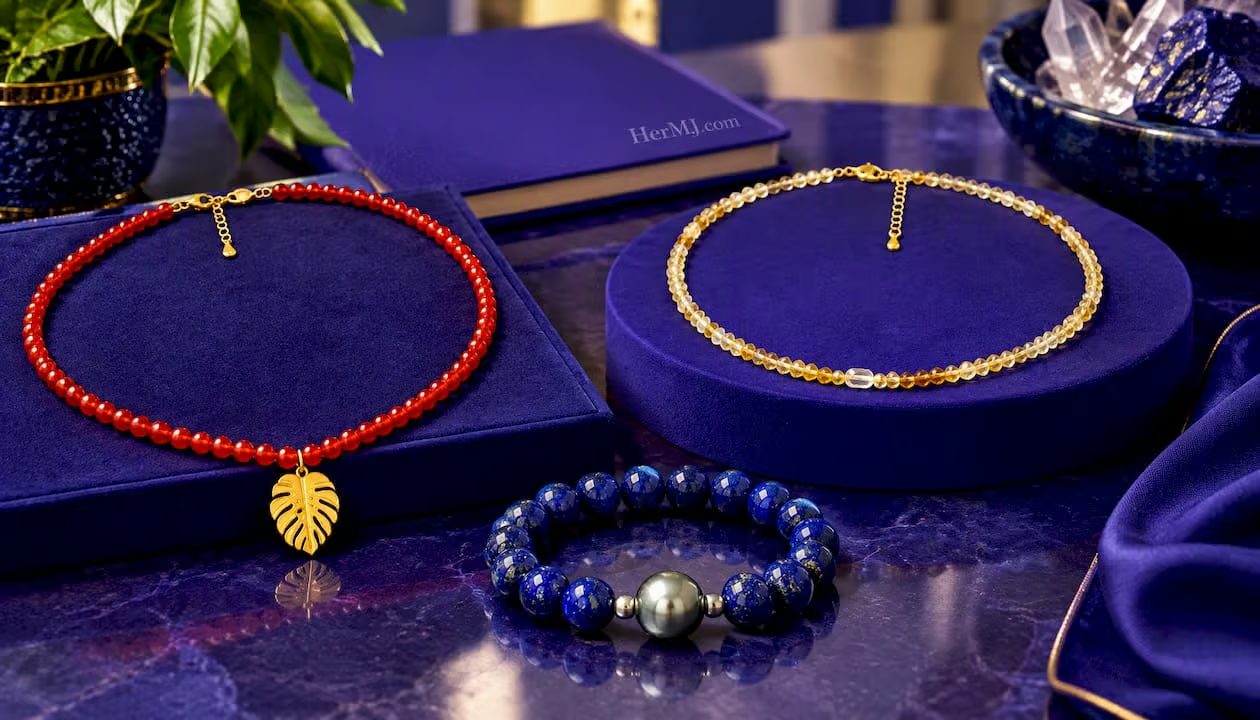
A piece like the lapis lazuli bracelet with Tahitian pearl accent shows how a gemstone and a pearl can work together, which is a good starting point for your own idea.
You can browse everything at HerMJ, and for pearl care, maintenance and storage, we’ve gathered that guidance on the site so you can keep your piece beautiful for years.
A few details that keep your timeline honest
Two habits make the biggest difference across every order I’ve seen, so I’ll leave them with you.
First, write down the decisions you’ve made and send them in one message. A single clear summary of stone, length, metal tone and finish prevents the small misunderstandings that stack up into extra rounds.
Second, ask for the next step and its date at the end of every exchange. Not as a demand, simply as a habit. When both sides know who owes the next move, an order rarely stalls.
Orders for your home work the same way. If you’re after gemstone or crystal decor, our room jewelry collection is a good place to see what’s available now.
FAQ
How long does custom jewelry take from start to finish?
Expect weeks rather than days. The total covers your design conversation, approval, sourcing materials, handwork, finishing and shipping. Lightly personalized pieces move faster than designs made from scratch, so ask for a window that covers every stage, including delivery.
Does a quoted turnaround include shipping and design revisions?
Not always. Some quotes count only the time at the bench, and others start the clock only after you approve the design. Ask exactly where the clock starts and stops, how many revisions are covered, and whether delivery is included.
When should I order custom jewelry for a gift?
As early as you can, and earlier still for the holiday season, when everyone’s schedules are tight. Count backward from the day you need the piece in hand: subtract shipping, making time, at least one design revision and your own decision time. That date is when to start.
Can a custom order be rushed?
Sometimes. Choosing in-stock materials, a simpler design and a faster shipping method all help. Confirm in writing what changes with a rush, including materials, your approval step, any fee, and whether the new date means finished or delivered.
Why does handmade jewelry take longer than store-bought pieces?
Because a person shapes, sets and checks each piece instead of a machine repeating one design. Natural stones and pearls also vary, so matching them takes judgment. You can read the longer explanation in our article on handmade jewelry and craftsmanship.
Sources
- Why Handmade Jewelry Takes Longer: Craftsmanship Explained
- What Is a Custom Gemstone Piece? Your Complete Guide
- Gemstone Formation Timeline: How Are Gems Created
- Crystal Jewelry News: European Crystal Shortage
Recommended
- The Role of the Jeweler in Design: A Complete Guide
- Handcrafted Jewelry Making Techniques for DIY Creators
- Artisan Jewelry Construction: 9 Handcrafted Techniques