




Crystals for Living Room: Best Picks and Styling Ideas
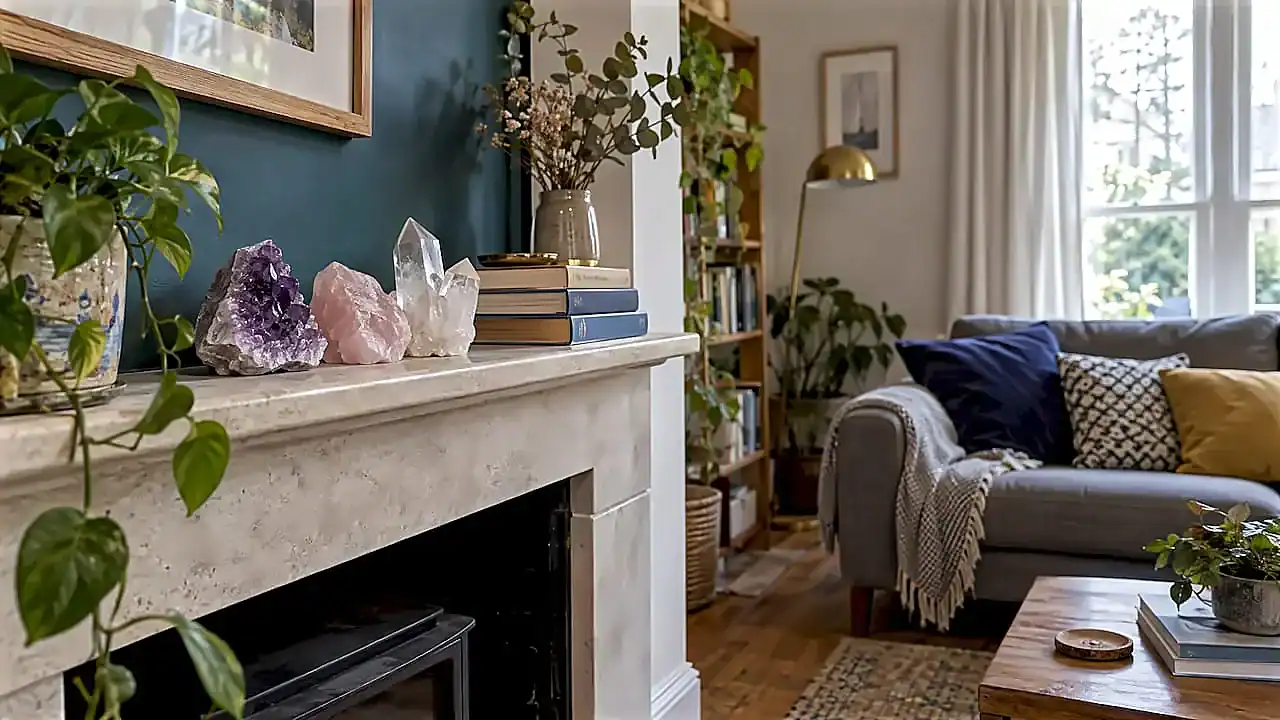
The best crystals for a living room are amethyst, rose quartz, clear quartz, citrine and black tourmaline. Choose pieces big enough for the surface they sit on, group them in threes, and keep the color-sensitive ones out of direct sun.
Beyond that, it’s about what you love looking at every evening. I’m going to walk you through each stone, where it works best, and how to style it so your room feels collected rather than cluttered.
TL;DR:
- Amethyst, rose quartz, clear quartz, citrine and black tourmaline are the most popular living room stones, and each brings a different color and mood.
- Scale matters most: a coffee-table centerpiece looks best at roughly 4 to 6 inches, while a shelf piece can be smaller.
- Arrange pieces in odd numbers, three or five, and vary height, shape and texture.
- Amethyst, citrine and rose quartz can fade with prolonged light, so place them away from sunny windows.
- Any energy claims are personal and traditional, not scientific, so choose stones you simply enjoy.
Which crystals work best in a living room
A living room is where you relax, host friends and unwind after work, so the stones that earn a spot here tend to be calming, warm or welcoming. Here’s how I think about the favorites.
Amethyst. GIA identifies amethyst as the purple variety of quartz. Deep violet clusters and geodes look wonderful beside a neutral sofa, and amethyst is traditionally linked with calm, which is why it shows up on so many lists for the room where you unwind.
Designers who write about displaying crystals often suggest amethyst alongside black celestite and angelite for relaxation, color and texture.
Rose quartz. GIA describes rose quartz as a pink quartz variety whose color comes from microscopic mineral inclusions. The soft blush tone suits warm, romantic or Scandinavian rooms, and it’s traditionally associated with affection and gentleness. A rose quartz sphere on a side table is an easy first piece.
Clear quartz. Clear quartz is the chameleon of the group. It picks up the colors around it, catches window light and pairs with anything. If you want one stone that won’t clash with your decor, start here. Quartz is also tough enough for everyday living: GIA lists quartz at 7 on the Mohs scale, though it notes that durability depends on toughness and stability as well as hardness.
Citrine. According to GIA, citrine is transparent quartz ranging from pale yellow to brownish orange. It brings a golden, sunny note to a living room, which makes it a good match for walnut furniture, caramel leather and warm white walls. Traditionally it’s connected with optimism and cheer.
Black tourmaline. This is the stone people most often put by the front door. If your living room opens straight from the entrance, a piece near the threshold both looks grounded and fits the old tradition of protection. GIA notes that tourmaline is a mineral family with one of the widest color ranges of any gem, so the black variety is a deliberate choice for its dark, matte contrast against lighter stones.
If you’d like a broader look at stones beyond these five, our guide to types of crystals for home decor walks through colors and styles in more detail.
Matching stones to your room’s mood
Before you buy, decide what you want the room to feel like. I find it easier to pick by mood and palette than by a long list of meanings.
| If your room feels… | Try | Why it works |
|---|---|---|
| Cool and neutral (grays, whites) | Amethyst, clear quartz | Purple and clear tones add depth without warmth overload |
| Warm and earthy (wood, leather, terracotta) | Citrine, smoky or brown tones | Golden shades echo the materials around them |
| Soft and romantic | Rose quartz | Blush tones blend with linen and cream |
| Modern and graphic | Black tourmaline, polished slabs | Dark, opaque forms read as sculpture |
| Open to an entryway | Black tourmaline near the threshold | A grounding piece where the room begins |
If your living room doubles as a reading or work corner, you may also like our list of desk crystals for a focused home office.
What crystals can and can’t do for a room
You’ll see plenty of bold claims online about cleansing energy and attracting good fortune. Here’s where I land.
There’s no scientific evidence that a crystal changes a room’s energy, but I can tell you I’ve spoken to so many people who hold that belief, and very strongly. What I can say that covers everyone’s viewpoint is the effect of beauty is how you view it: people choose objects with care, place them on purpose and feel at home among them.
That tradition has a long, public life. Designers have placed crystals in deliberate patterns, even under studio floorboards, to support visitors’ emotional experience. And actress Dakota Johnson has said that a large crystal in her home sends good vibes into the house. Those are personal and cultural choices, and they’re lovely ones. Treat the meanings as a story you enjoy telling, and choose with your eyes first.
If you’re curious about why people treat stones as art in the first place, this guide to crystals as art pieces is a good companion read.
Choosing the right size
The most common mistake I see is a stone that’s too small for its surface. A 2-inch piece on a big coffee table looks lost, like a button on a bedspread.
As a working rule in our own styling, I aim for a centerpiece of about 4 to 6 inches on a coffee table and a hero piece of 3 to 4 inches on a bookshelf. Treat those as starting points and trust your eye: stand back three or four feet and see whether the piece holds its own.
A few other size notes:
- Side tables and consoles: a sphere or polished point of 3 to 4 inches reads well and doesn’t crowd lamps or frames.
- Mantels: go a little taller, since mantels sit at eye level or above and a low piece disappears.
- Floors: large cathedral-style pieces look best standing alone in a cleared corner, not squeezed beside furniture. They’re heavy, so check that the surface or floor can handle the weight and use a protective pad underneath.
Styling crystals in the living room
This is where a collection starts to feel like decor. A few principles do most of the work.
Group in odd numbers
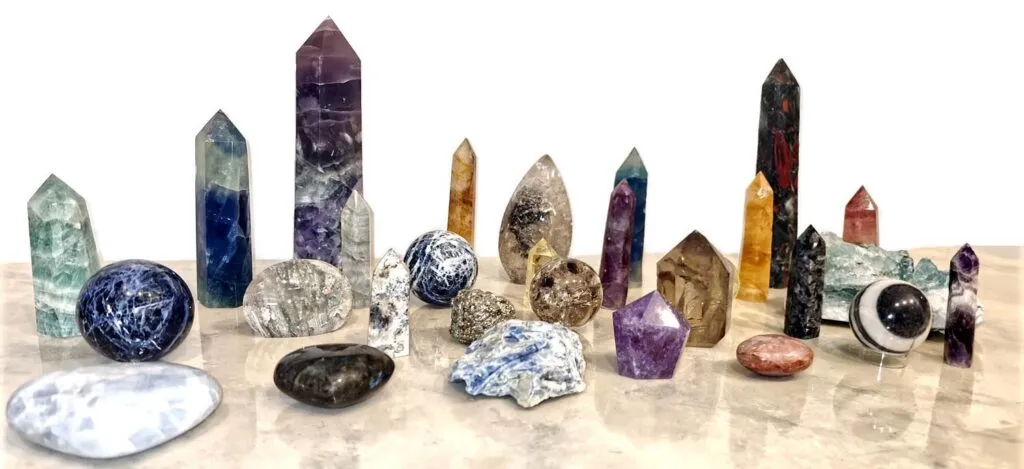
Interior stylists lean on the rule of odd numbers: arrangements of three or five usually feel more natural than pairs. Pick one tall piece, one medium and one low, and vary the shape. A pointed fluorite cluster, an amethyst sphere and a rough clear quartz chunk make a trio with different silhouettes but a shared softness.
Use contrast
Mix smooth with rough, glossy with matte. A polished sphere beside a raw cluster looks deliberate. Add a non-crystal object, like a small ceramic bowl or a stack of books, to keep the display from reading as a shop shelf.
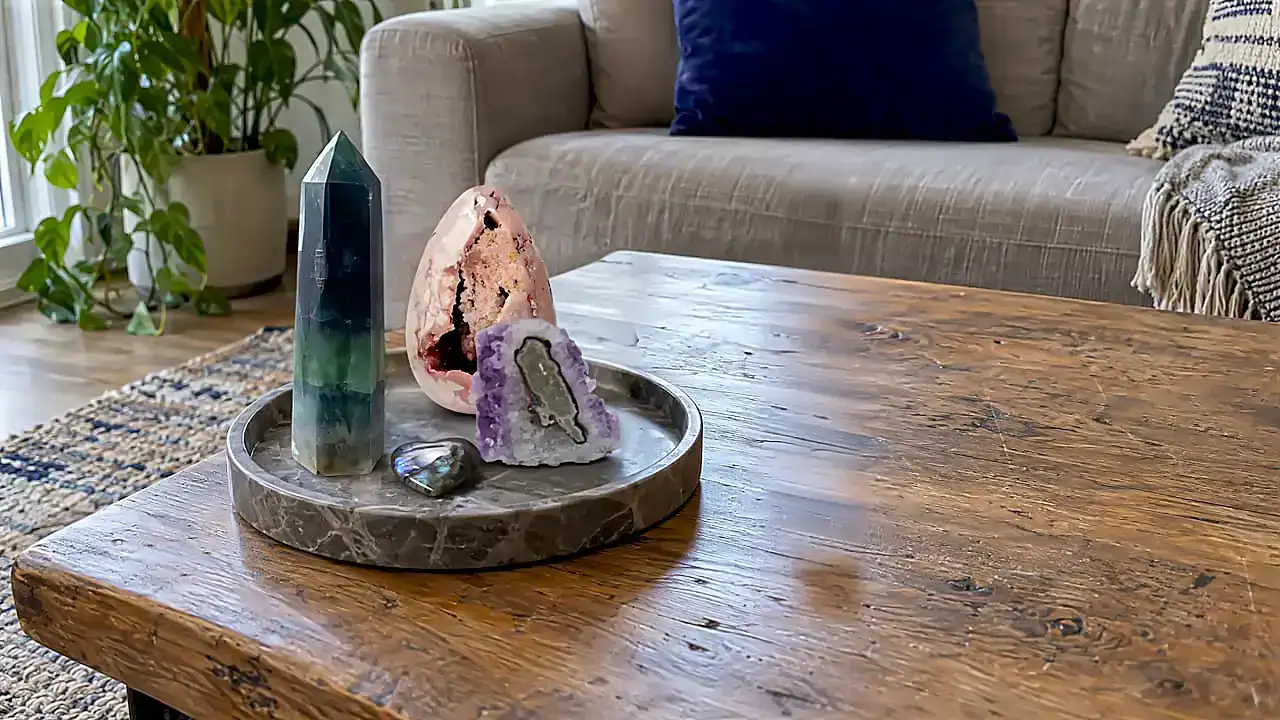
Build a coffee-table vignette
Put a tray or a low bowl in the middle of the table, set your largest piece slightly off center, and add two smaller ones at different heights. Leave breathing space around the tray. If the table is where you set drinks, keep the arrangement toward one end.
Shelves and mantels
On bookshelves, I use one or two crystals per section as punctuation, not the main event. Put a specimen at each end of a row with books between them, and the shelf reads as styled rather than stuffed. If you’d like more ideas room by room, see my crystal decor styles by room guide.
Think about flow
If your crystals live in several rooms, repeat a color or a stone type so the home feels connected. My piece on how to make room decor crystals flow from room to room covers this in more depth.
For bedroom and bathroom ideas, crystal accents for other rooms is a good next step.
When you’re ready to arrange heavier or larger centerpieces, it helps to read how others approach weight and balance. This short piece on how to display large statues safely at home offers practical thinking that carries over to big crystal specimens too.
Light, sun and placement
Light changes everything about a crystal, and it’s also the thing most likely to harm one.
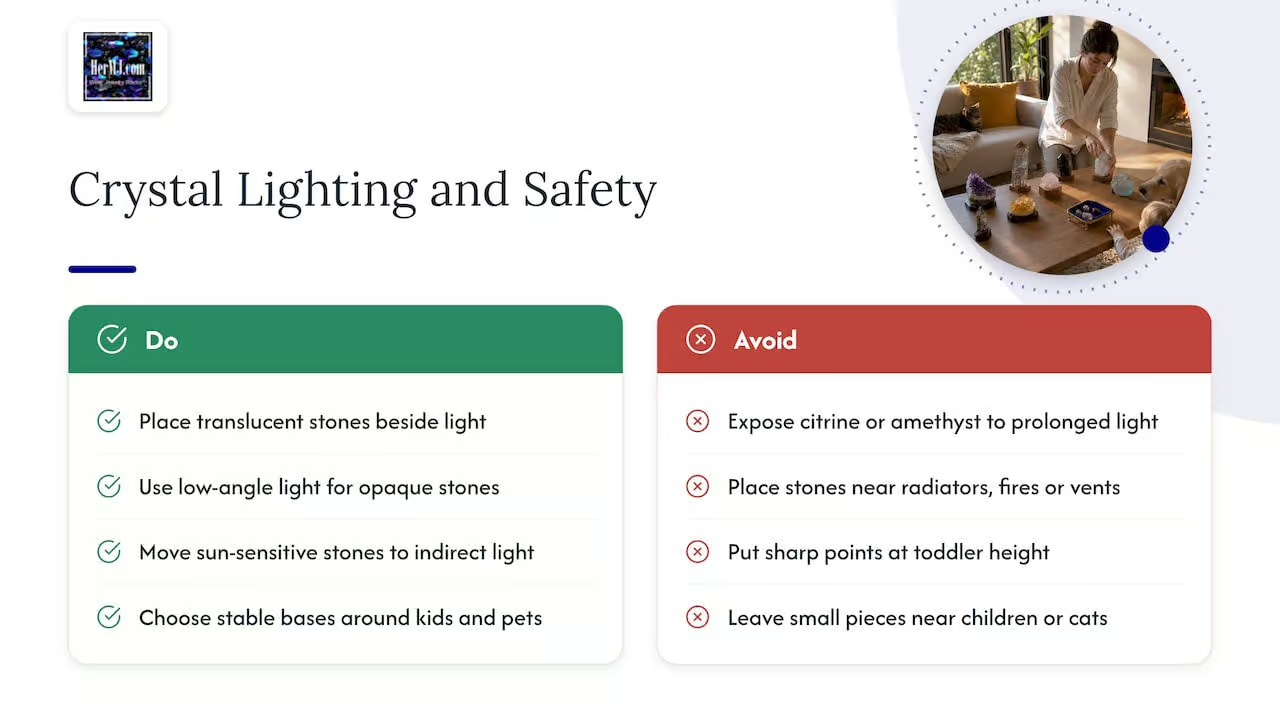
Show off the glow. Translucent stones such as amethyst, rose quartz, fluorite and selenite look their best with light behind or beside them. Opaque stones like black tourmaline and obsidian show their texture in low-angle side light.
A small lamp placed to the side of a shelf can turn a stone into a feature after dark. Our article on how light transforms crystal decor goes into lamp placement and color temperature.
Protect from fading. GIA warns that prolonged exposure to light can fade citrine and amethyst. That’s the reason I never put a purple cluster on a south-facing windowsill, however pretty it looks there.
If your best spot gets hours of direct sun, choose clear quartz or black tourmaline for it, or rotate the pieces and move color-sensitive ones to a spot with indirect light.

Avoid heat swings. Keep stones away from radiators, fireplaces and vents. Sudden temperature changes can stress a crystal, and a quiet shelf is safer than a mantel above an active fire.
Plan for kids and pets. Choose stable bases, avoid sharp points at toddler height and skip loose small pieces if little ones or curious cats share the room.
For cleansing and everyday care, our guide to cleansing crystals safely at home covers the details so I don’t have to repeat them here.
Where to buy and what to look for
When you shop, look for a clear description of what the stone is, where it’s from if the seller knows, and whether it’s been treated. Some citrine on the market, for instance, is heat-treated amethyst, so a seller that tells you plainly is a good sign. Check dimensions in inches against your surface, because photos can make a 2-inch stone look large. A stone that scratches easily or feels weirdly light may be glass or resin, so ask questions before you buy.
For quick sizing, measure your table or shelf and write down the number you want. Then look for pieces within a half inch of it. That small habit prevents most disappointments.
Perspective: why we start with the wearer’s eye
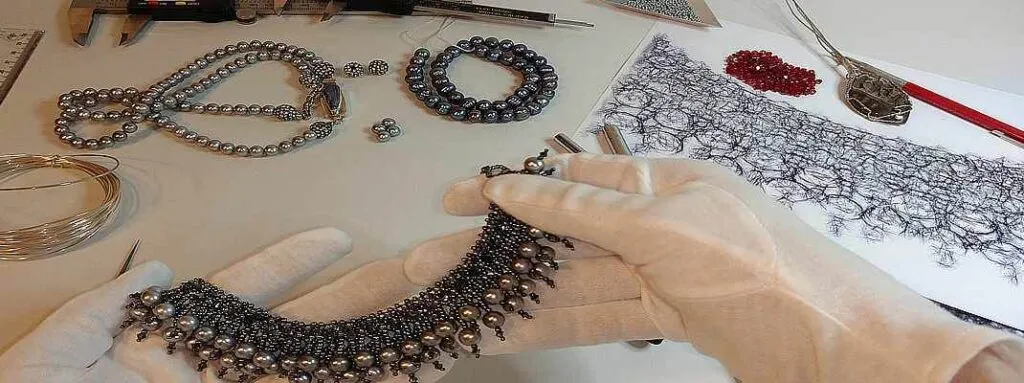
At HerMJ, we work with genuine freshwater pearls, natural gemstones and crystals every day, and we’ve learned that people don’t fall for a stone because of a list of properties. They fall for the color, the weight in the hand, the way it catches the lamp. That’s why we design our pieces around personal taste and keep the price accessible, so a beautiful stone isn’t something you have to hold back on.
We treat living room crystals the same way we treat jewelry: pick the one you’d reach for first, then build around it. A single quartz point you adore will do more for your room than a dozen stones chosen out of obligation. If a meaning speaks to you, wonderful. If it’s simply the color, that’s reason enough.
My golden rule: buy the piece you’d still want to look at in a year, and give it room to breathe.
— Veronique
Bring the stones closer, with HerMJ
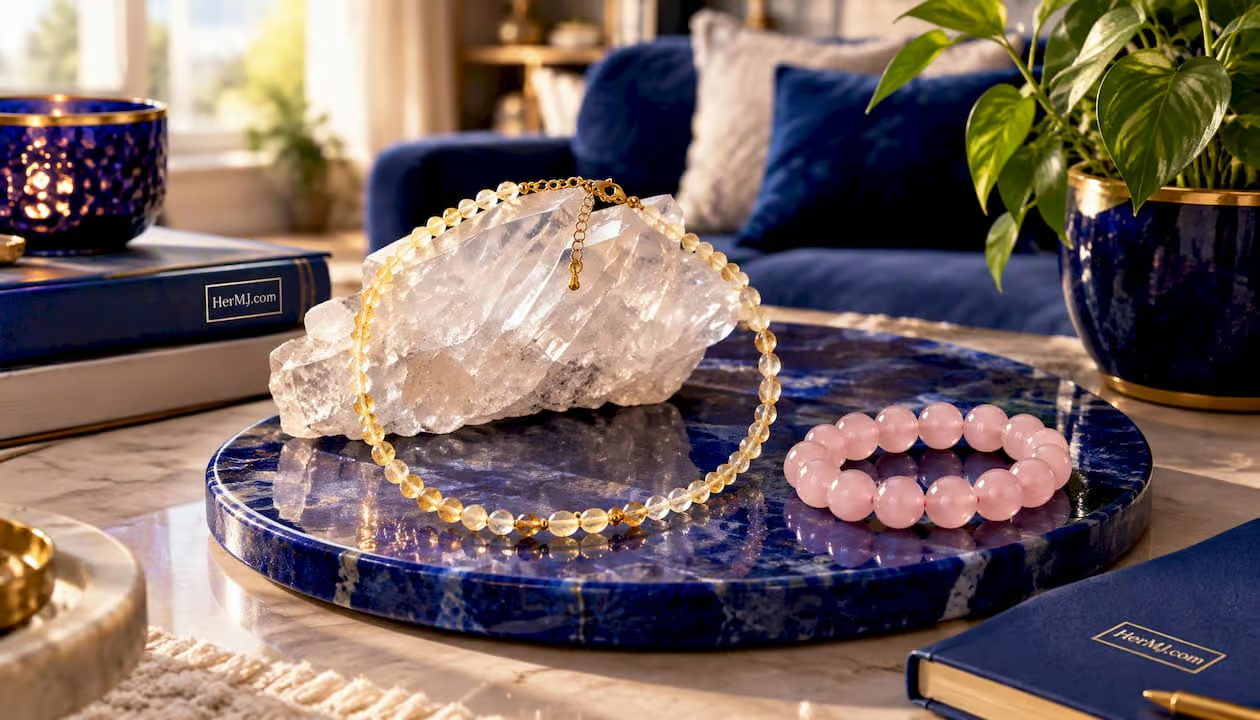
If you love how these stones look on a shelf, you may enjoy them near you too. Our Room Jewelry collection brings handcrafted gemstone and crystal accents into your space, and our European Crystal Jewelry lets you wear the same colors. For a soft pink option, try the Pink Rose Quartz Bracelet, or the Quartz Crystal Necklace for a clear, bright look.
US orders ship free with no minimum, and international orders ship free at $150 or more.
FAQ
What is the best crystal for a living room?
There isn’t one winner, but amethyst and clear quartz are the safest starting points. Amethyst adds calming color, and clear quartz blends into nearly any palette. Add rose quartz for softness or citrine for warmth once you know your style.
Can sunlight damage crystals in a living room?
Yes, for some of them. GIA notes that prolonged light can fade citrine and amethyst, and other sources say the same about rose quartz and fluorite. Keep those stones out of direct sun, and put sturdier ones such as clear quartz in bright windows.
How many crystals should I display?
Three is a reliable number for a coffee table or console, and five works on a larger surface. On bookshelves, one or two per section is plenty. The goal is a focal point, not a collection that crowds everything else.
Where should I place black tourmaline?
Traditionally it sits near the entrance, so if your living room opens straight from the front door, a piece by the threshold is a natural choice. It also works as a dark, matte accent against lighter stones on a shelf.
Sources
- GIA Gem Encyclopedia: Complete List of Gemstones
- GIA: More than the Mohs Scale, Understanding Gem Durability
- Living Spaces: How to Display Crystals in Your Home
- Vogue: How to Decorate Your Home and Office With Crystals
- Architectural Digest: Inside Dakota Johnson’s Serene Hollywood Home
- How to Display Large Statues Safely at Home
Recommended
- Crystal Decor Styles by Room: Your Modern Home Guide
- What Is Crystal Decor? A Home Design Guide
- Types of Crystals for Home Decor: Your Style Guide
- The Ultimate Crystal Decor for Living Room Updates