


South Sea Pearls: What Collectors Need to Know
The Edit
- South Sea pearls are large, naturally occurring saltwater gems produced by Pinctada maxima oysters, with colors ranging from white to gold. Their high value results from long growth periods, thick nacre, and natural coloration, with quality evaluated by luster, surface, and nacre thickness rather than official grading. Proper care, sourcing transparency, and matching quality are essential for maintaining their beauty and value in jewelry collections.
If you’ve been following the HerMJ journey of pearl jewelry, by now you know that not all pearls are created equal, and nowhere is that truth more vivid than with South Sea pearls. These are the giants of the pearl world, gems that take years to grow inside one of the ocean’s most demanding oysters and emerge in colors you simply won’t find in a freshwater jewelry case.
When you’re considering a purchase, building a collection, or just trying to understand why these particular natural pearls command prices that make other pearl types look modest, this guide covers everything. Origins, grading, care, and smart buying tactics, all in one place.
Table of Contents
- Key takeaways
- What makes South Sea pearls unique
- How quality and grading actually work
- South Sea pearls compared to other pearl types
- Caring for your pearl jewelry
- Buying guide: getting it right
- My take on owning these gems
- Discover pearl jewelry at HerMJ
- FAQ
Key takeaways
| Point | Details |
|---|---|
| Rare by nature | South Sea pearls grow for 2 to 5 years inside Pinctada maxima oysters, creating thick nacre and exceptional size. |
| Grading is vendor-driven | No official scientific standard exists; focus on luster, surface, and nacre rather than letter grades alone. |
| Color is never treated | Natural golden and silver tones come from oyster pigmentation, not dye or coating. |
| Matching adds real value | Strands with well-matched pearls represent only 1 to 5% of annual yield and command a significant price premium. |
| Care extends lifespan | Annual restringing and proper storage protect both the beauty and the long-term value of your pearl jewelry. |
What makes South Sea pearls unique
The pearl behind the legend is the Pinctada maxima, commonly called the silver-lipped pearl oyster. It’s the largest pearl-producing oyster in the world, and its size is exactly why the gems it creates are so extraordinary.
Two distinct varieties exist within this species. The silver-lipped oyster produces white and silver pearls with cool, luminous overtones. The gold-lipped oyster produces the celebrated golden pearls, a color that exists nowhere else in the natural pearl world.
These oysters thrive in warm, clean tropical waters. The primary farming regions include northwestern Australia (particularly the Broome coast), the Palawan and Mindanao islands of the Philippines, and the coastal waters of Indonesia. Each region imparts subtle differences in color and texture, much like terroir in fine wine.
The pearls themselves typically range from 11 to 16mm, significantly larger than Akoya or most freshwater varieties. That size is a direct result of cultivation time. Each pearl spends 2 to 5 years forming inside its host oyster, with longer growth periods producing thicker nacre and more vibrant luster.
Pro Tip: When shopping, always ask the seller about the pearl’s origin region. Australian South Sea pearls tend toward silver and white tones, while Philippine pearls are more associated with deep golden hues. Knowing the source tells you a lot before you even look at the price.
- Size range: 11 to 16mm on average, with exceptional specimens reaching 20mm
- Colors: white, silver, cream, champagne, and natural gold
- Nacre thickness: substantially greater than Akoya or freshwater pearls
- Growth period: 2 to 5 years per pearl
- Primary farming countries: Australia, the Philippines, and Indonesia
How quality and grading actually work
Here’s something most pearl retailers won’t tell you upfront: GIA does not assign official grades to South Sea pearls. The letter grades you see, AAAA, AAA, AA, and A, are vendor marketing constructs, not standardized scientific measurements. Two different sellers can use the same letter and mean entirely different things.
That doesn’t mean quality doesn’t exist. It absolutely does. What it means is that you need to evaluate pearls using the actual quality factors rather than trusting a letter printed on a certificate.
The factors that define pearl quality
Luster is the single most important attribute. South Sea pearls have a soft, satiny inner glow rather than the sharp, mirror-like surface you’d see on an Akoya pearl. This glowing luster comes from the thick layered nacre built up over years of growth. A dull or chalky pearl, regardless of its letter grade, is not a quality pearl.
Surface quality refers to the number and severity of blemishes, pits, or bumps visible on the pearl. No pearl is perfectly flawless, but top-tier specimens have minimal surface interruptions.
Nacre thickness directly affects durability and depth of luster. Thicker nacre means the pearl will age well and maintain its beauty for decades.
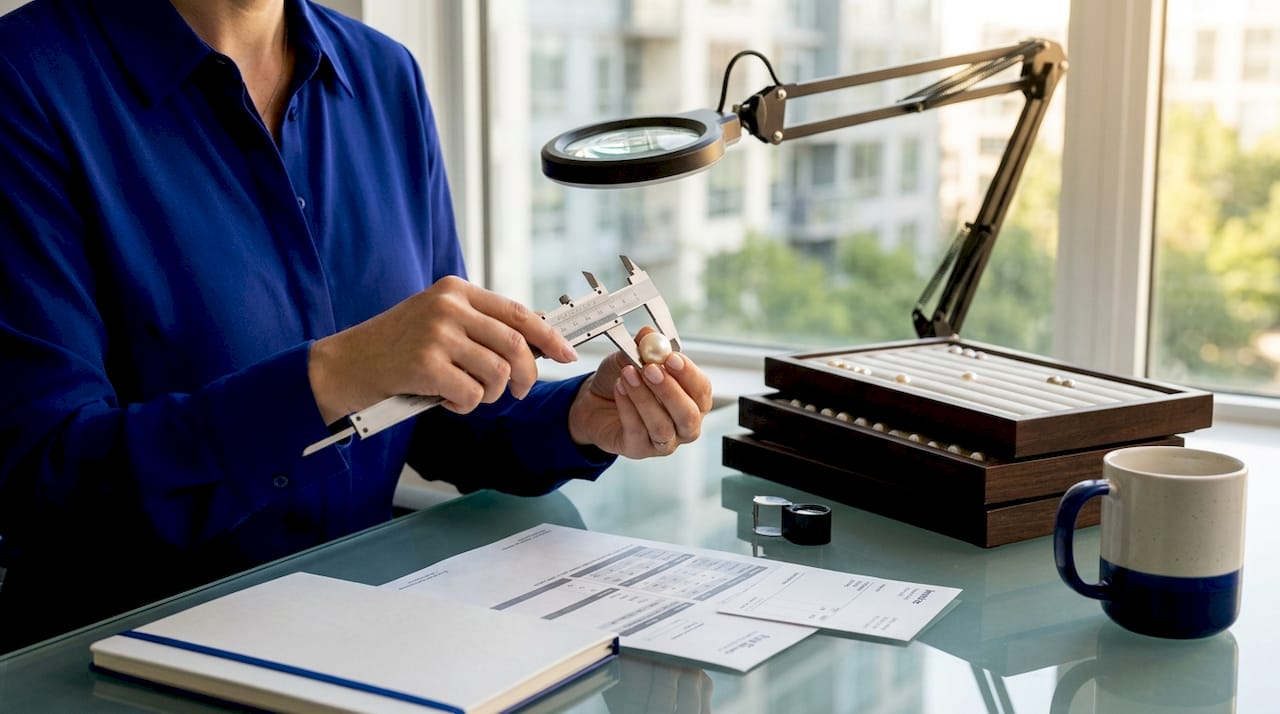
Shape ranges from perfectly round to baroque. Round pearls are the rarest and most valuable. Near-round, drop, and baroque shapes offer character at lower price points.
Color and overtone add another layer of complexity. The natural golden color in gold-lipped pearls comes from mantle pigmentation, genetically transferred into the nacre during growth. It’s never a treatment or coating. Deeper, more saturated gold commands a higher premium.
Size matters exponentially. The difference between a 12mm and a 14mm pearl of equal quality isn’t linear in price. It’s substantial because larger pearls are rarer and require longer growth periods.
| Quality factor | What to look for | Red flags |
|---|---|---|
| Luster | Deep, satiny inner glow | Dull, chalky, or plastic-looking surface |
| Surface | Minimal blemishes | Visible pits, cracks, or heavy spotting |
| Nacre | Thick, uniform layering | Thin nacre showing nucleus through surface |
| Color | Natural tone with clean overtones | Overly uniform color (possible treatment) |
| Shape | Round or near-round | Acceptable; baroque is artistic, not inferior |
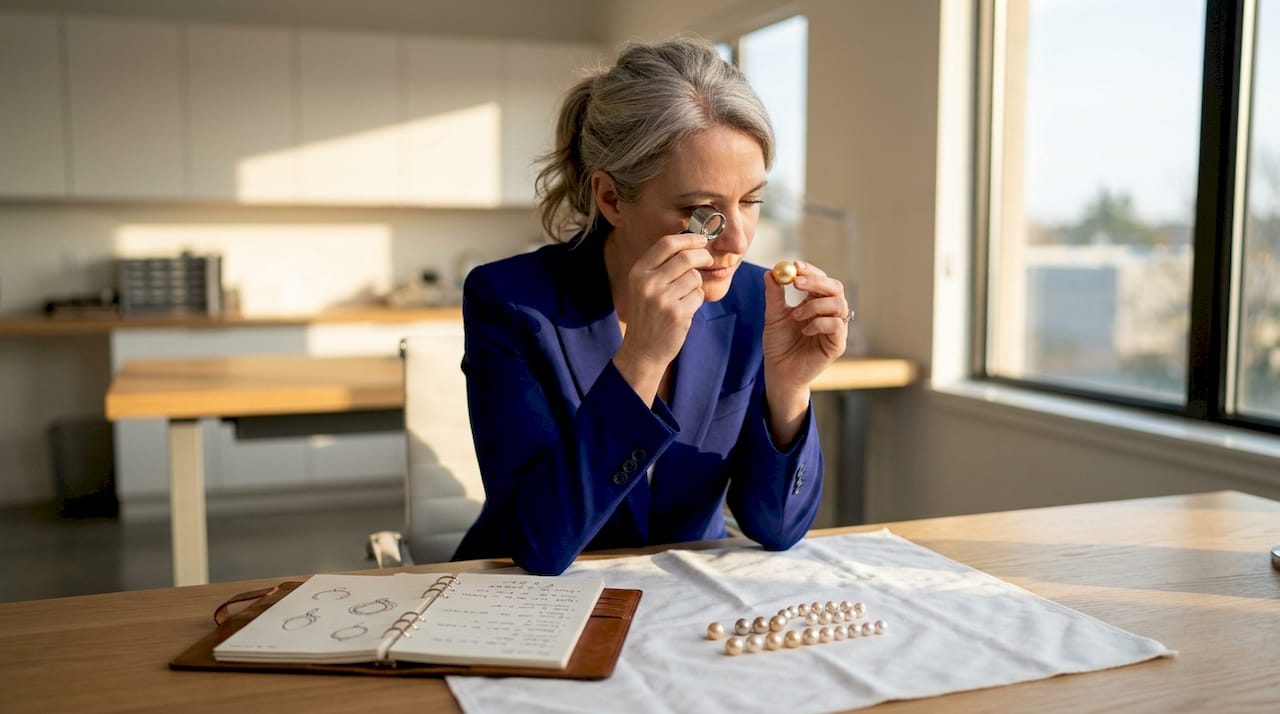
Pro Tip: Ask for the pearl to be examined under both warm incandescent light and cool daylight. The way overtones shift between light temperatures reveals the true depth and quality of the nacre. A great pearl looks beautiful in both.
South Sea pearls compared to other pearl types
Understanding these gems in isolation only gets you so far. Seeing how they compare to saltwater vs freshwater pearls puts the value proposition into sharp focus.
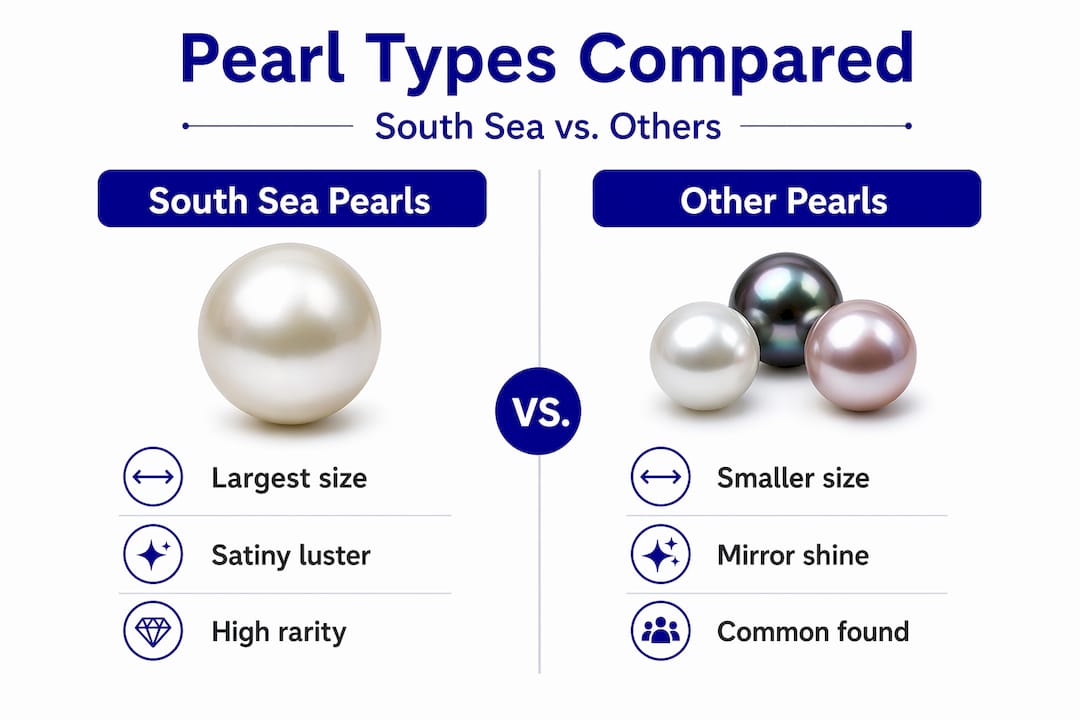
Akoya pearls, farmed primarily in Japan, are the classic round white pearl with a bright, mirror-like luster. They’re typically 6 to 9mm. Beautiful, yes, but they don’t approach the size or nacre depth of a South Sea specimen.
Freshwater pearls, farmed in China, offer enormous variety and accessibility but are often dyed, have thinner nacre, and top out at sizes still well below a premium South Sea pearl. Tahitian pearls come closer in prestige and are natural saltwater pearls farmed in French Polynesia, but their dark gray and green tones occupy a completely different aesthetic category.
The cultivation time for South Sea pearls is a key differentiator. Longer time in the water means greater investment risk for the farmer, higher production costs, and ultimately fewer pearls per oyster per year. That scarcity feeds directly into price.
- South Sea: 11 to 16mm, 2 to 5 year growth, natural white/gold tones, thick nacre, highest price tier
- Tahitian: 8 to 14mm, 2 to 3 year growth, natural dark tones, high luster, premium pricing
- Akoya: 6 to 9mm, 1 to 2 year growth, white/cream, mirror luster, mid-range pricing
- Freshwater: 5 to 12mm, 1 to 2 year growth, often dyed, thinner nacre, accessible pricing
The rarity and size of these pearls are ultimately what justify their position at the top of the luxury pearl jewelry market. You’re not paying for a brand name. You’re paying for years of biological investment and natural rarity.
Caring for your pearl jewelry
Pearls are living gems in the truest sense. They formed inside a biological organism, and they respond to their environment long after they leave the ocean. That means caring for them properly isn’t optional if you want them to remain beautiful for decades.
The single most neglected aspect of pearl maintenance is restringing. Annual restringing is recommended for any pearl strand worn regularly, at roughly $100 per service. The silk thread holding the strand absorbs perspiration and weakens over time. Without restringing, the strand can break suddenly, sending pearls scattering across the floor.
Here’s a proper pearl care routine:
- Wipe after every wear. Use a soft, lint-free cloth to remove body oils, perfume, and cosmetics before storing. These substances degrade the nacre slowly but surely.
- Store separately. Pearls scratch easily. Keep them in a soft pouch away from metal jewelry, gemstones, and hard surfaces.
- Avoid chemicals entirely. Hairspray, perfume, cleaning agents, and chlorine are all damaging. The rule is simple: pearls go on last before you leave the house, and come off first when you return.
- Wear them regularly. This surprises many people. Pearls actually benefit from contact with skin. Your natural oils help maintain their moisture balance and enhance luster over time. But be sure to wipe them before storing them until the next time you put them on.
- Check the knots. Inspect your strand periodically. Knots between pearls prevent total loss if the strand breaks, but worn knots are a warning sign that restringing is overdue.
Pro Tip: Never store pearls in an airtight container or plastic bag for long periods. Pearls need a small amount of ambient humidity to stay hydrated. A fabric-lined jewelry box or a soft cloth pouch works perfectly.
Buying guide: getting it right
Buying pearls with confidence requires a few practical strategies. The first is authentication. Any reputable seller of luxury pearl jewelry should be transparent about the pearl’s origin, species, and whether any treatments were applied. For South Sea pearls, the answer to treatments should always be none for color, though surface polishing is standard and acceptable.
Sourcing transparency matters. Philippine-origin pearls, for example, often carry documentation tracing them to specific farms in Palawan. That traceability is a mark of quality and ethical practice. When a seller can’t or won’t tell you where the pearls came from, that’s a signal worth heeding.
When evaluating a strand, remember that matching quality is as important as individual pearl quality. Because every pearl grows differently, assembling a strand where all pearls share consistent size, color, luster, and shape is extraordinarily difficult. Top AAAA matched strands represent only 1 to 5% of a farm’s annual yield. That rarity is baked into the price, and rightfully so.
Always inspect pearls under multiple lighting conditions. Natural overtones shift dramatically between warm incandescent light and cool daylight. A pearl that looks purely white under a shop’s halogen lighting might reveal gorgeous rose or green overtones in natural light, and vice versa. The best pearls hold their beauty across all lighting conditions.
Price-wise, size drives value exponentially. A 14mm pearl of the same grade as a 12mm pearl doesn’t cost 17% more. It costs two to three times more. Understanding that relationship helps you make smarter decisions about where to spend within your budget. For pearl value factors, size, color saturation, and matching quality are the three variables that move the price most dramatically.
My take on owning these gems
I’ve spent years handling natural pearls from nearly every corner of the world, and South Sea pearls still stop me. Not because they’re the flashiest gem in the room, but because their beauty is earned. Every millimeter of nacre represents months of biological growth inside a sensitive, demanding creature. That patience is visible in the way light travels through the surface.
What I’ve found most collectors overlook is matching quality. They’ll spend significant effort evaluating a single pearl and then accept a strand where three pearls are noticeably lighter than the others. Matching is where the real artistry lives. When a strand is truly well-matched, you don’t notice the individual pearls. You see the whole.
I’ve also learned that the buyers who get the most from their pearl investment are the ones who treat care as part of the purchase, not an afterthought. Annual restringing at around $100 is negligible compared to the cost of the strand. Skipping it is like buying a fine watch and never servicing it.
My recommendation? Spend as much time asking about the seller’s sourcing and matching process as you do looking at the pearls themselves. A jeweler who can explain both knows their craft. One who just points to a letter grade probably doesn’t.
— Veronique
Discover pearl jewelry at HerMJ
If you’ve spent time learning about these gems and you’re ready to explore pieces you can actually wear, HerMJ is a wonderful place to start. Every piece is handmade from genuine pearls and gemstones, crafted with the kind of care that matches the quality of the materials.
The Genuine Tahitian Pearl and Shell Necklace is a standout piece, showcasing the organic beauty of genuine sea pearls in an elegant, wearable design. For a broader look at what’s available, the pearl jewelry collection covers everything from everyday pieces to something made specifically for a special occasion. HerMJ also offers customization, so if you have a specific vision or occasion in mind, the team can help you bring it to life. Beautiful pearl jewelry at accessible prices, made by people who genuinely love what they create.
FAQ
What are South Sea pearls?
South Sea pearls are large, high-quality natural saltwater pearls produced by the Pinctada maxima oyster, farmed primarily in Australia, the Philippines, and Indonesia. They’re known for their exceptional size, thick nacre, and natural white or golden colors.
How can I tell if South Sea pearls are real?
Genuine pearls feel slightly gritty when rubbed gently against your teeth, while imitation pearls feel perfectly smooth. Authentic white South Sea pearls also display natural luster with soft overtones rather than a uniform, plastic-looking shine.
Why are South Sea pearl prices so high?
The price reflects the 2- to 5-year growth period required to produce each pearl, the difficulty of farming Pinctada maxima oysters, and the rarity of well-matched strands. Size and color saturation drive prices exponentially, not just proportionally.
How do I care for South Sea pearl jewelry?
Wipe pearls after each wear with a soft cloth, store them separately in a fabric pouch, and have strands professionally restrung annually at roughly $100 per service. Avoid contact with perfume, hairspray, and household chemicals.
Are the golden colors in South Sea pearls natural?
Yes. The deep golden color of gold-lipped South Sea pearls comes entirely from mantle pigmentation in the Pinctada maxima oyster, which is naturally transferred into the nacre during growth. No dyes or treatments are involved in authentic specimens.
Recommended
- Different Types of Pearls: Your Complete Visual Guide
- What Makes Pearls Valuable: Exploring The Origin of Elegance
- The Truth About Pearl Durability: A Designer’s Guide to Care
- Pearl Value: What is the most expensive pearl?