


Magnetic vs Toggle Clasp: Which One Fits Your Life?
A magnetic clasp is easier to fasten, while a toggle is more decorative. Neither is the most secure choice.
If you wear your piece mostly at a desk, at dinner, or at an event, either can work beautifully.
If you move a lot, a lobster or box clasp is safer. And if you have a pacemaker or another implanted device, skip the magnet and ask your clinician first.
That’s the short answer. The longer one depends on your hands, your day, and how heavy what’s hanging from the clasp is, so let’s walk through it.
TL;DR
- Magnetic clasps are the easiest to use, even one-handed or with limited grip strength, but they can separate when pulled.
- Toggle clasps are a design feature in their own right and need no springs, but they rely on tension, weight, and correct sizing to stay closed.
- For active days, a properly fitted lobster or box clasp beats both.
- People with pacemakers, ICDs, insulin pumps, and similar devices shouldn’t wear magnetic jewelry without medical guidance.
- Match the clasp to the piece: a heavy pearl or gemstone strand needs a clasp and end connections built for that weight.
How each clasp works
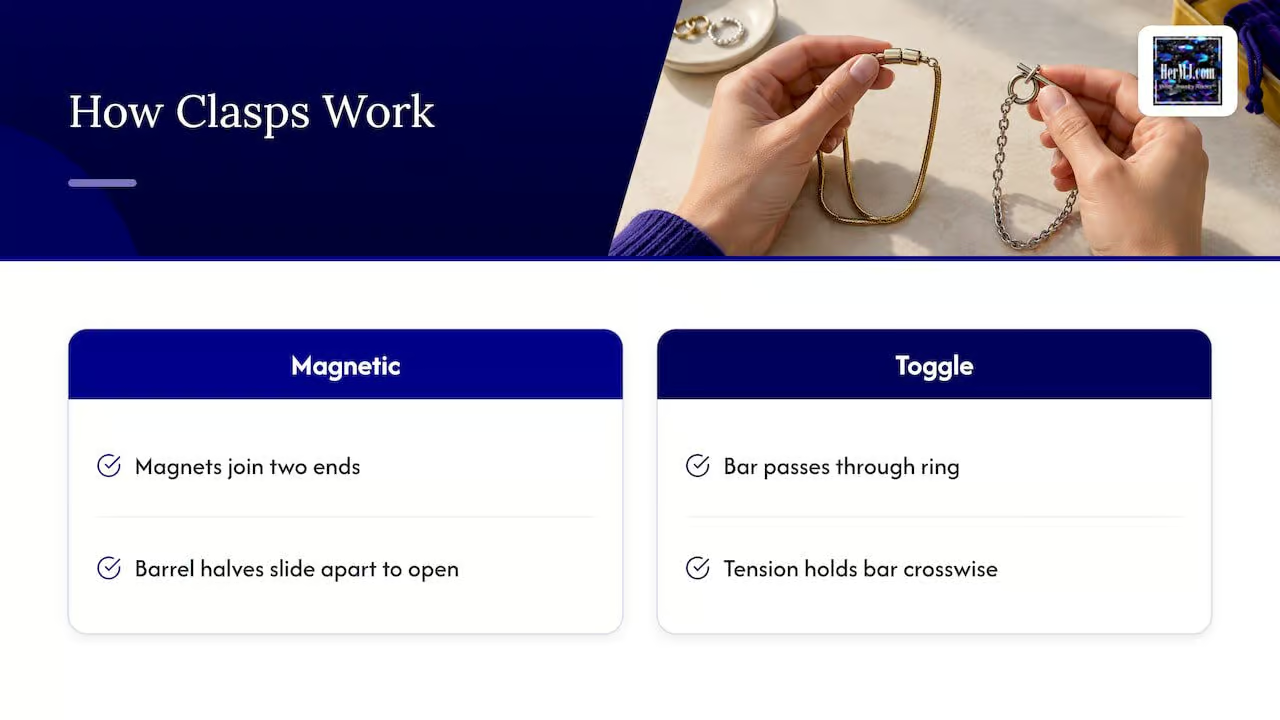
A magnetic clasp holds two ends together with magnets. The ends find each other almost on their own, which is why it’s popular with anyone who struggles with tiny hooks.
Barrel-style versions open by sliding the two halves apart rather than pulling straight, a detail worth knowing before you tug one open and stress the strand.
Toggle clasps have two parts: a ring (or open loop) on one end and a bar on the other. You pass the bar through the ring, and once it sits crosswise, the piece’s tension holds it in place. Jewelers Mutual describes toggle and magnetic clasps as stylish, user-friendly alternatives to the more traditional closures.
Both are easy to fasten one-handed, which matters more than people expect. If you’ve ever wrestled a bracelet closed with your free hand, you know why.
Magnetic vs toggle clasp, side by side
| Feature | Magnetic clasp | Toggle clasp |
|---|---|---|
| Ease of fastening | Easiest of the common types | Easy once you’ve done it a few times |
| Security | Can separate under a pull | Depends on tension, weight and bar length |
| Active wear | Not recommended | Not recommended |
| Look | Usually discreet, sometimes bulky | Often a visible design detail |
| Moving parts | None | None |
| Medical caution | Yes, for implanted devices | None specific to the clasp |
| Best on | Light to medium pieces, bracelets, gifts for people with limited dexterity | Bracelets and necklaces with some weight and a deliberate look |
The table hides the nuance, so the next few sections spell out where each one wins and where it doesn’t.
Security: the part most guides gloss over
People search for the most secure clasp, and the plain truth is that neither wins.
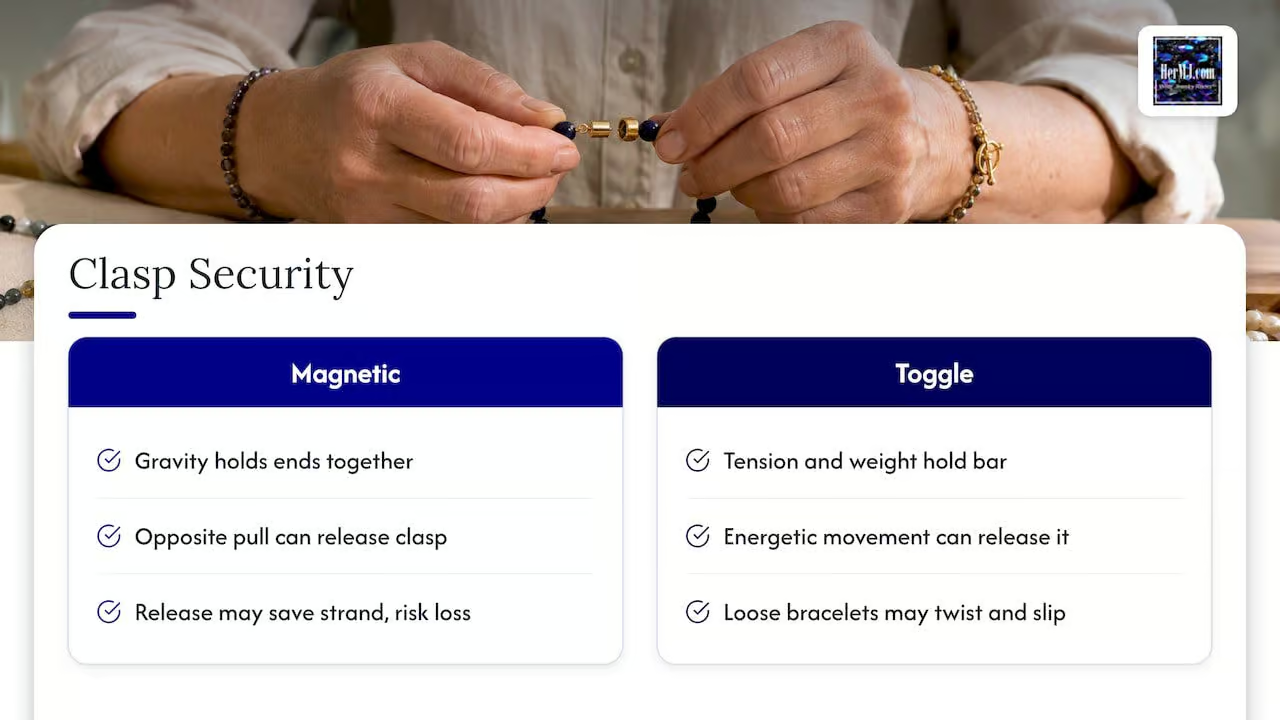
A magnetic clasp holds well against gravity but can come apart when you pull the two ends in opposite directions.
A toggle holds because of tension and weight, so it can release during energetic movement. Jewelers Mutual advises limiting physical activity with magnetic clasps and describes toggles as not especially secure when movement is high.
That matches what I see in practice. A bracelet snags on a coat sleeve, a car door, or a tote strap, and the magnet lets go before the strand does. That can be a feature, since a clasp that releases may save the strand from breaking.
It’s also how bracelets get lost.
A toggle behaves differently on different pieces. On a necklace, the strand’s weight pulls the bar flat against the ring.
On a loose bracelet, the same toggle can twist and slip through if the bar is too short for the ring or the piece has too much slack. Always check the bar length against the ring opening before you buy, and fasten it, then give it a gentle sideways tug.
Ease of use and dexterity
If arthritis, tremors, or limited hand strength are part of your day, a magnetic clasp is the friendliest option. You bring the ends close, and they snap together. A toggle is also workable one-handed, but it takes a little coordination to turn the bar crosswise.
I’d steer a gift for someone with limited dexterity toward magnetic, with one condition: no medical implant. More on that below.
Weight matters more than the clasp name
Here’s something I wish more shoppers asked about: how heavy is the piece? Good clasp advice always starts there.
A delicate clasp on a heavy strand is a poor match, and a magnetic clasp on a substantial gemstone strand can pull apart under its own load.
Magnetic clasps can also be relatively bulky, and on a necklace they tend to rotate toward the lowest point, so you may find the clasp sitting at the front.
That’s fine if it’s attractive, and less fine if it isn’t. Whatever the closure, the connection between clasp and strand (the end loops, the knots, the wire or cord) needs to be as strong as the clasp itself. Jewelers Mutual recommends matching clasp capacity to the jewelry’s weight, and I completely agree.
For pearls in particular, we’ve written a full guide on matching pearl necklace clasps to strand weight, and it’s worth reading before you choose a necklace closure.
Safety: who should avoid magnetic clasps
This is the part that ordinary clasp comparisons often skip.
If you have a pacemaker, an implantable cardioverter-defibrillator (ICD), a neurostimulator, an insulin or infusion pump, or another magnet-sensitive implant, don’t choose magnetic jewelry without talking to your doctor or the device manufacturer.
The FDA explains that magnets can affect pacemakers and other implanted medical devices, and the right distance depends on the device and the magnet. A clinical study of small neodymium magnets found interference with pacemakers and ICDs even though the magnets were tiny.
A clasp magnet is small, but small isn’t the same as harmless. Your cardiologist or the device maker can tell you what applies to your device. MedlinePlus makes the same general point for pacemaker patients: ask your provider about any item with a strong magnetic field.
A toggle has no magnet, so it’s the natural choice if you want a hands-friendly closure and have a medical device.
MRI appointments are another case. Medical centers typically ask you to leave metal at home, and Columbia University Irving Medical Center’s MRI guidance explains why.
Leave any clasp piece at home on scan day, magnetic or toggle, and follow your imaging team’s instructions.
Where lobster and spring ring clasps fit
Many people who land on this topic are really asking about bracelet clasp types in general, so here’s the quick context.
A lobster clasp is a spring-loaded claw you open with a small lever. A spring ring is a hollow ring with a tiny, spring-loaded gate you open with a trigger. Both close against a jump ring or a chain end.
- Lobster clasp: Sturdier and easier to open than a spring ring, a common choice for everyday chains and bracelets. The lever is bigger, so it’s easier to grip.
- Spring ring: Smaller and lighter, so it suits fine chains and lightweight pieces. The tiny trigger can be hard for some hands, and a small spring can wear out over time.
If you’re comparing a lobster against a toggle, the trade-off is simple. A lobster is usually more secure on active days. A toggle looks better and has no spring to wear out.
If you’re weighing a spring ring against a lobster, choose the lobster for anything you wear daily, and keep spring rings for delicate, lightweight chains.
Both springs and levers can fail eventually, so check them periodically. Fasten the clasp, tug gently, and watch that the gate closes fully.
Which clasp for which situation
Everyday bracelet at the office or on weekends. A toggle is a handsome choice, as long as the piece isn’t too loose. A magnetic clasp is fine if you’re careful around bags and sleeves.
Bracelet for someone with arthritis or limited grip. Magnetic, as long as there’s no implanted device.
Heavier gemstone strand. Look for a robust toggle or a lobster, and ask about the end connections.
Pearl necklace. A toggle can be a lovely front-facing feature. Think about weight and whether you want the clasp visible. My guides on choosing the right pearl necklace and pearl necklace styles help you picture the whole piece.
Gym, gardening, cleaning, travel days. Take the jewelry off. Jewelers Mutual recommends avoiding labor-intensive activities while wearing fine jewelry, and none of the clasps on this list are built for them.
My perspective on clasps
We make handmade pearl, gemstone, and crystal jewelry, and we think of a clasp as part of the design, not an afterthought. A freshwater pearl strand has a certain weight and a certain movement, and the closure should respect both. That’s why we look at the finished piece, not just the clasp name. A toggle that’s perfect on one bracelet may be wrong on another.
My advice is practical. Pick the clasp you’ll actually use. A closure that’s easy for your hands gets worn and gets closed properly, and that matters more than any ranking.
Then check the connections, give the piece a gentle tug before you head out, and take it off before anything strenuous. Pearls are living gems in the sense that they respond to how you treat them, and the same goes for the pieces that hold them.
If you have a medical device, tell yourself the magnet answer is no until your doctor says otherwise. It’s easy to get right, and hard to take back.
— Veronique
Shop handmade pieces at HerMJ
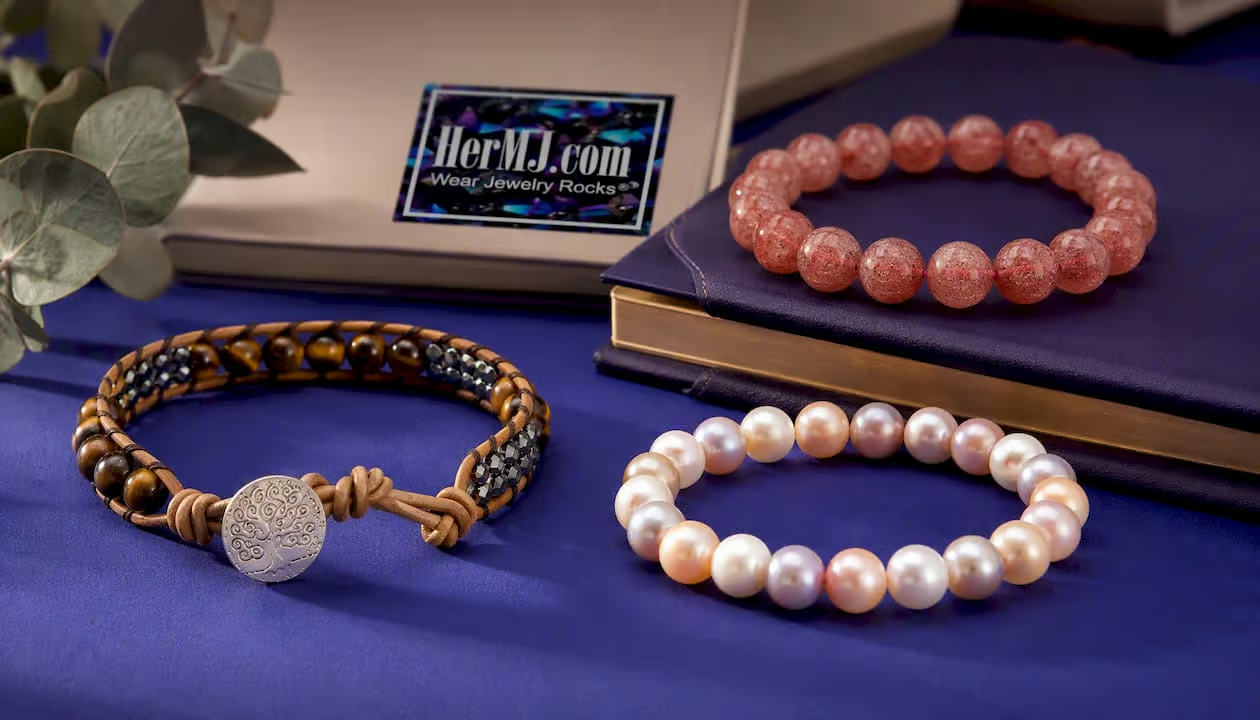
If you’re browsing for a bracelet and want to see how handmade gemstone and pearl designs look in person, start with HerMJ’s bracelets collection. You might like the Lustrous Freshwater Pearl Bracelet or the Strawberry Quartz Gemstone Bracelet.
Looking for a necklace instead? Our necklaces are right here. US orders ship free with no minimum, and international orders ship free at $150 or more.
Quick checks before you buy or wear
- Fasten it and tug sideways. A clasp that opens under light pressure will open in your day.
- Look at the ends. Loops, knots, and jump rings should be closed and snug.
- Match weight to closure. Heavier pieces need a bigger, sturdier clasp.
- Check the toggle bar. It should be clearly longer than the ring opening.
- Inspect springs. On lobster and spring ring clasps, the gate should snap shut fully.
- Keep jewelry off during active chores. Put it on last and take it off first.
Pearls are different from metals, since they need their own care. If a strand needs work, my guide to pearl restringing costs tells you what to expect, and my freshwater pearl price guide helps you budget for a new piece.
FAQ
Which clasp is most secure?
For everyday wear, a properly fitted lobster or box clasp is generally more secure than either a magnetic or a toggle clasp. Magnetic clasps can separate under a pull, and toggles rely on tension and weight. Whichever you choose, check the strand connections too.
Are magnetic clasps reliable?
They’re reliable for calm, low-impact wear on lightly weighted pieces. They can release if you pull the ends in opposite directions, so they’re not ideal for active days. Slide the halves apart to open a barrel-style magnet instead of yanking.
Who should not wear magnetic jewelry?
Anyone with a pacemaker, ICD, neurostimulator, insulin or infusion pump, or another magnet-sensitive implant should talk to their doctor or device manufacturer first. The FDA’s guidance on magnets and implanted devices explains why distance and magnet strength matter. A toggle is a magnet-free alternative.
Is a toggle clasp better than a lobster clasp?
It depends on what you value. A toggle is more decorative and has no spring to wear out, while a lobster is usually the more secure choice during busy days. For a bracelet you wear to dinner, a toggle is lovely. For one you wear to run errands, a lobster is safer.
Sources
- Common Types of Jewelry Clasps for Necklaces and Bracelets, Jewelers Mutual
- Magnets in Cell Phones and Smart Watches May Affect Pacemakers and Other Implanted Medical Devices, FDA
- Potential interference of small neodymium magnets with cardiac pacemakers and ICDs, PubMed
- Heart pacemaker discharge, MedlinePlus
- Staying Safe During an MRI, Columbia University Irving Medical Center
Recommended
- Avoid Losing Pearls: Match Pearl Necklace Clasps to Strand Weight
- How to Store Necklaces Without Tangling: A 60-Second Guide