



Pearls and Perfume: How to Wear Both Without Regret
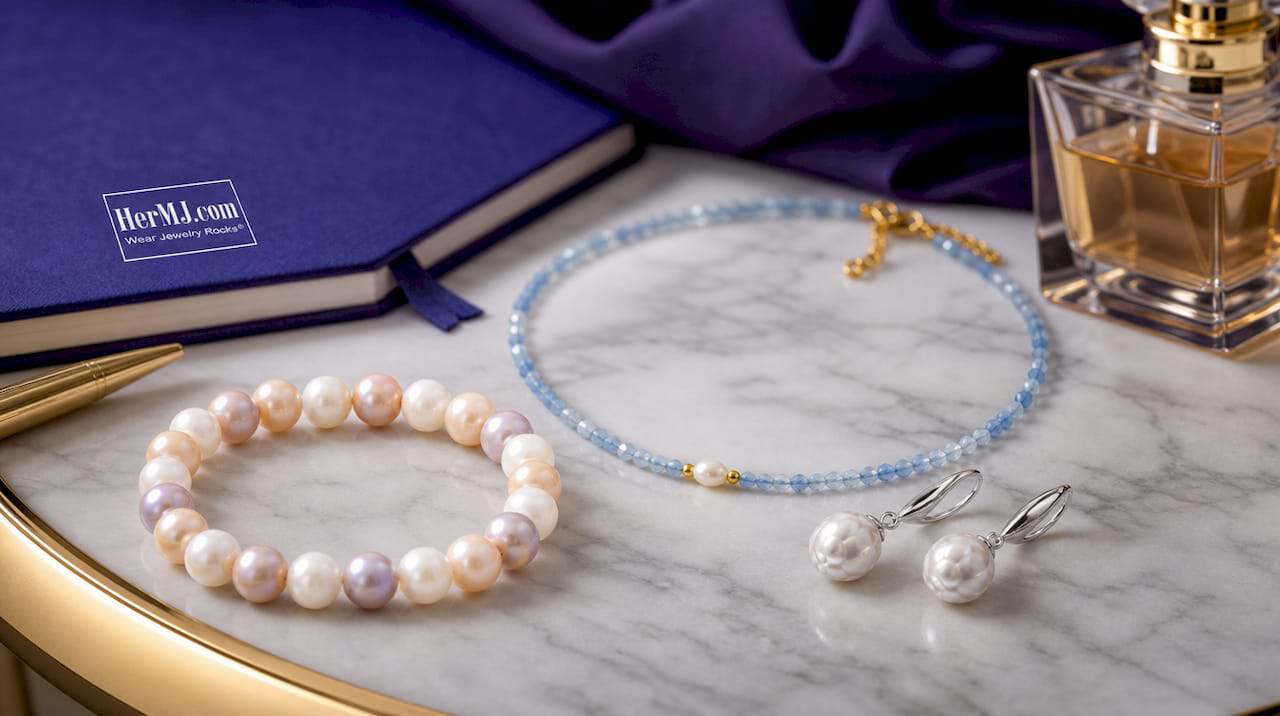
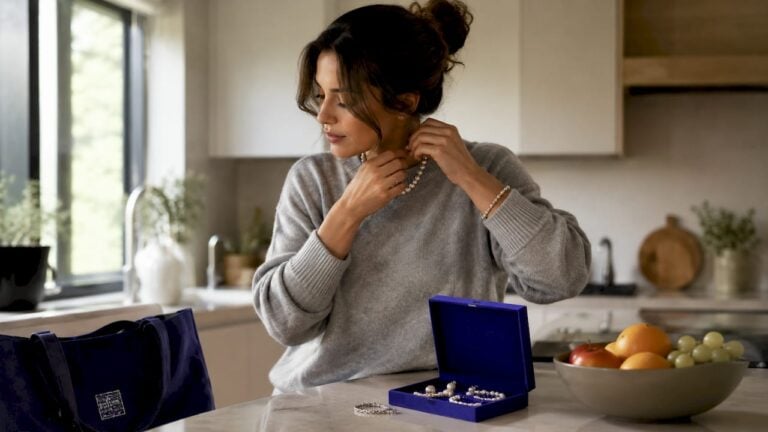
Yes, you can wear perfume with pearls, and you don’t have to choose between your favorite fragrance and keeping your pearls luminous. The rule is simple: last on, first off. Spray your fragrance, let it dry completely, then clasp on your pearls.
When you get home, pearls come off before anything else touches your skin. Damage from perfume builds slowly, and some of it can’t be undone, so this one habit does more to protect your jewelry than any cleaning routine ever will.
- Spray perfume first, wait for it to dry, then put on your pearls
- Take pearls off before washing your face or applying lotion at night
- Treat any skipped step as a small, permanent mark on your pearls’ future luster
Key Takeaways
Pearls and perfume coexist safely when you apply fragrance first, let it dry, and treat your pearls as the last thing on and the first thing off.
| Point | Details |
|---|---|
| Follow last on, first off | Apply perfume, let it dry fully, then put on your pearls; reverse the order when you undress. |
| Damage builds slowly | Alcohol and solvents erode nacre over weeks to months, and some etching can’t be reversed. |
| Choose longer lengths | Matinee necklaces, designed to sit below fragrance pulse points, offer safer daily wear. |
| Clean gently, restring regularly | Use a damp cloth with mild soap, never submerge pearls, and restring annually if you wear them often. |
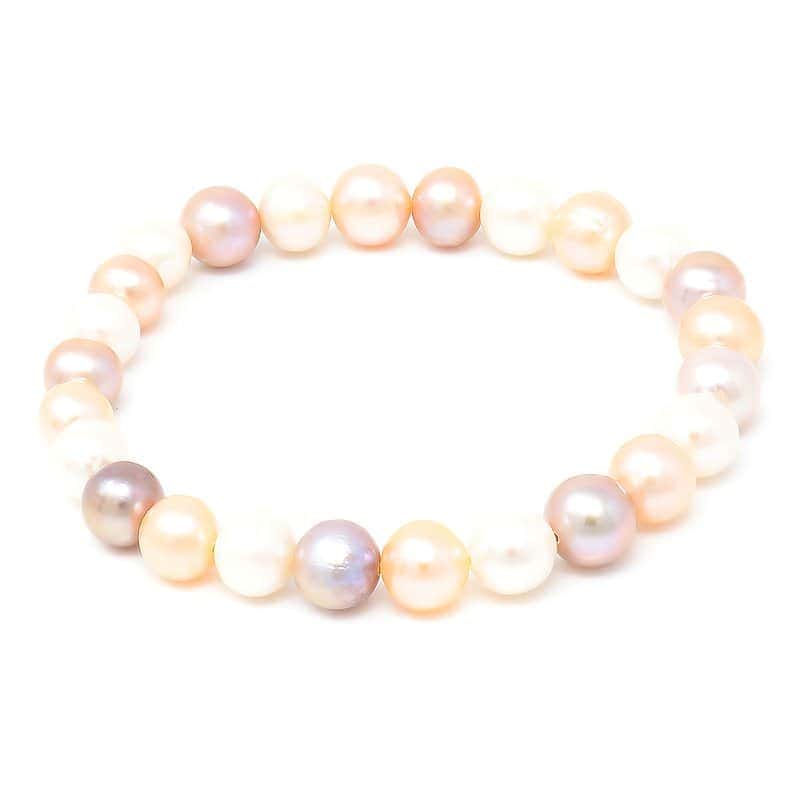
| Shop for solid nacre and knotting | HerMJ’s freshwater pearl bracelet and other handcrafted pieces meet those durability standards. |
Why Pearls and Perfume Need Some Distance When You Style
Where you place a strand of pearls on your body determines how much perfume ever touches it, and that’s the part most people never think about. A choker sits right against the neck, exactly where most of us spritz our favorite scent.
A princess-length necklace (18 to 20 inches) hovers just below that pulse point. A matinee length, running 20 to 24 inches, drops well past your collarbone, out of the direct line of fire from your perfume atomizer.
That’s not a coincidence. Longer lengths give you a genuine physical buffer, which is why I always suggest matinee styles to anyone who wears fragrance daily and refuses to give up either one.
Here’s how to build a scent-safe outfit around your pearls:
- Pair high necklines with matinee-length necklaces so the pearls sit outside the fragrance zone entirely
- Spray perfume on your clothing or the inside of your wrists rather than your neck
- Try applying scent behind your knees on days you’re wearing a choker or princess length
- Reach for pearl earrings on days you want pearls with zero neck contact
Freshwater pearls, in particular, are forgiving enough for this kind of everyday styling. Their thicker, solid nacre structure holds up better under regular handling than thinner-nacre varieties, which is part of why they’ve become the go-to for daily wear.
Pro Tip: Keep a small perfume atomizer in your bag for touch-ups on your wrists during the day, and leave your pearls out of the equation entirely after that first morning application.
What Perfume Actually Does to a Pearl’s Surface
Pearls are soft. On the Mohs hardness scale, they sit around 2.5, which puts them closer to your fingernail than to a diamond or sapphire.
That softness is what gives pearls their warm, almost skin-like glow, but it also means the outer layers of nacre and the organic conchiolin binding them together are genuinely vulnerable to abrasion and chemical exposure.
The GIA specifically lists perfume, hairspray, cosmetics, and perspiration among the substances that damage pearls. It isn’t one spray that ruins a strand. It’s the buildup.
Alcohol and solvents in fragrance dissolve conchiolin gradually, and repeated exposure over weeks to months causes dullness, pitting, and permanent discoloration. By the time you notice the surface looks tired, the chemical erosion has usually been happening for a while.
Watch for these signs that perfume exposure is catching up with a strand:
- A flattened, chalky look where the pearls used to reflect light
- Small pits or rough patches you feel with a fingernail
- A yellowish cast creeping in, especially near the drill holes
- Lifted or separating mother-of-pearl inlay on composite pieces
Here’s the part that stings: once nacre is etched or pitted, you can’t fully restore it. Repolishing smooths the surface, but it also shaves away nacre thickness, which is the very thing protecting the pearl underneath.
That’s why prevention costs you nothing and repair costs you luster. My designer’s guide to pearl durability covers this trade-off in more depth if you want to understand exactly how nacre thickness relates to long-term wear.
The After-Wear Routine That Actually Protects Your Pearls
Good pearl care doesn’t take much time. It just has to happen every single time you wear them, which is where most people fall short.
- Let your perfume, hairspray, and lotion dry completely before you put pearls on.
- When you get home, take pearls off first, then wipe them gently with a soft, lint-free cloth to lift oils and residue.
- For a deeper clean every few weeks, use a barely damp cloth with a drop of mild, pH-neutral, fragrance-free soap, then wipe again with a clean, damp cloth and let the strand air-dry flat.
- Never submerge pearls, and skip ultrasonic or steam cleaners entirely. They’re built for harder gemstones, not soft, organic ones.
- Store pearls separately in a soft pouch or linen-lined box, away from harder stones that scratch the surface, and in a spot with moderate humidity so the nacre doesn’t dry out.
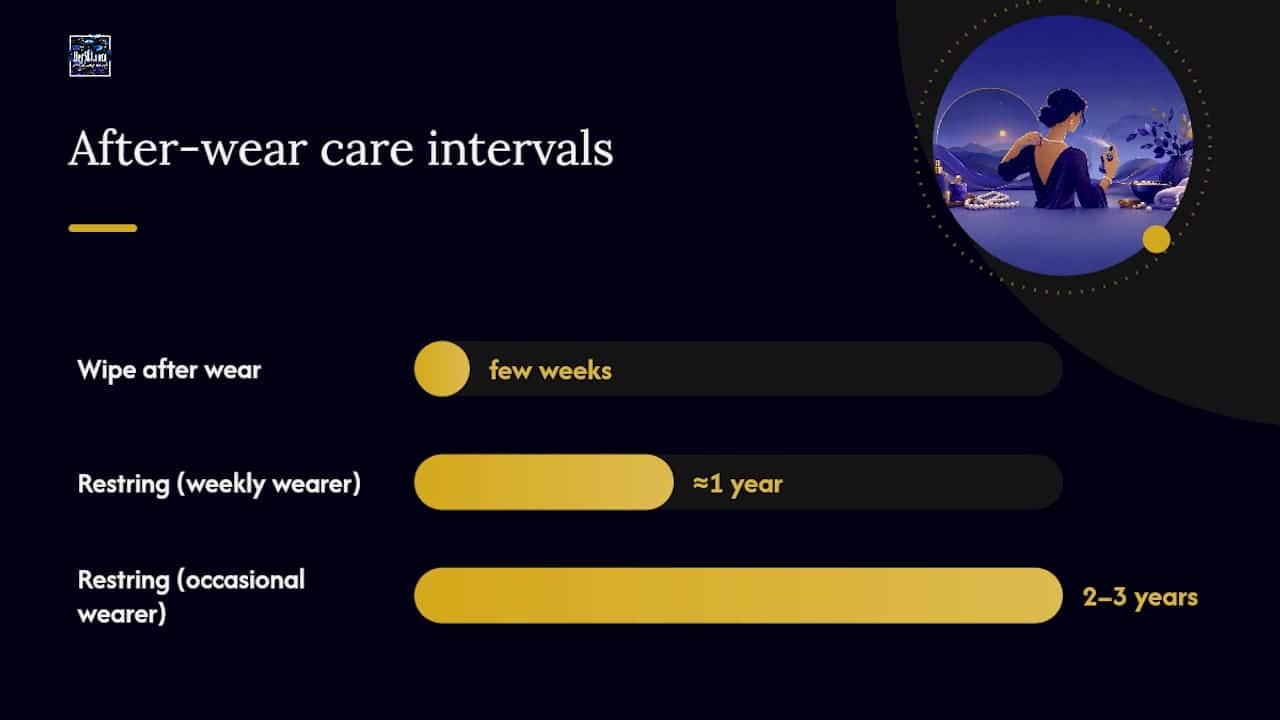
If you wear a strand weekly, plan to restring it about once a year; occasional wear stretches that to every two or three years. The silk thread is the quiet weak point in any strand, and it stretches and weakens long before the pearls themselves show wear.
Pro Tip: Hold your necklace up to the light once a season and check the spacing between pearls. If you see the thread through gaps that weren’t there before, it’s time to restring, not wait it out.
For more on humidity and long-term storage, my guide on how to store pearls walks through the details, and a fabric-lined jewelry safe is worth considering if you’re storing several pieces together.
What to Look for in Handcrafted Freshwater Pearl Jewelry
Buying pearls that resist damage starts before you ever put them on. A few details separate a strand that ages gracefully from one that dulls within a year:
- Solid, thick freshwater nacre rather than a thin coating over a bead
- Individually hand-knotted pearls, so one broken thread doesn’t scatter the whole strand
- A secure, well-finished clasp that won’t snag on clothing or scarves
- A length matched to how you’ll actually wear it, not just what looks good on a hanger
- Clean, smooth drill holes and settings with no rough edges rubbing against the nacre
Freshwater pearls earn their popularity for a reason: their dense, largely solid nacre structure holds up to daily wear better than many cultured alternatives, and they cost less to replace if something ever does go wrong.
That combination of durability and price is exactly why they’re the backbone of most everyday jewelry collections, including HerMJ’s.
Three pieces built around that checklist:
- The Lustrous Freshwater Pearl Bracelet for Elegance works as a low-fuss everyday piece or a thoughtful gift, since bracelets sit far from perfume pulse points and take less wear than a necklace.
- The Pearl and Aquamarine Necklace brings statement presence for special occasions, with aquamarine accents and hand-finished detailing that hold up under careful handling.
- The Modern Drop Pearl Earrings give you a daily pearl option with essentially zero perfume contact, which makes them the easiest scent-safe choice in a jewelry box.
Every HerMJ piece ships free within the US, and the freshwater pearl collection is for gift buyers who want something personal without the boutique price tag.
Which Fragrance Choices Are Gentler on Your Pearls
Not every perfume poses the same risk, and knowing the difference helps you make smarter choices without giving up scent entirely.
Traditional eau de parfum and eau de toilette formulas rely heavily on alcohol as a carrier, and that alcohol content is exactly what breaks down conchiolin over time. The higher the alcohol concentration, the faster that erosion happens with repeated contact.
Oil-based perfumes and solid fragrance balms contain far less alcohol, making them a gentler option if you like to wear scent close to your neckline. They still shouldn’t touch your pearls directly, but they’re less aggressive if any residue transfers during the day.
Fragrances heavy in citrus oils or strong solvents tend to be more reactive against organic gem surfaces than warmer, resin-based scents like sandalwood or amber, largely because of how those solvents interact with soft, porous materials.
That doesn’t mean you need to overhaul your fragrance wardrobe. It means the “last on, first off” habit matters even more if your go-to scent runs high in alcohol.
A practical middle ground: keep a lighter, oil-based fragrance for days you know you’ll be wearing pearls for hours, and save your stronger alcohol-based perfumes for days you’re reaching for earrings instead of a necklace. Small swaps like this add up over a strand’s lifetime, especially on pieces you plan to keep for years or hand down.
How Nacre Thickness Affects the Way You Should Handle Your Pearls
Importantly, not all pearls carry the same protection, and nacre thickness is the single biggest factor in how much wear a pearl will take before it starts to show damage.
Thicker nacre means more layers standing between the pearl’s surface and whatever touches it, if that’s a stray drop of perfume or the friction of daily wear.
You’ll get a rough read on nacre thickness just by looking and handling the pearl. Thicker-nacre pearls have a deep, almost three-dimensional glow, sometimes called orient, along with a smooth, unblemished surface. Thin-nacre pearls tend to look flatter and more uniformly shiny in a way that reads as glassy rather than luminous, and you may notice a slightly different weight in the hand.
Freshwater pearls are typically grown with solid nacre all the way through, unlike some bead-nucleated saltwater varieties with a thinner coating, which helps them tolerate daily handling better over time. My pearl grading guide breaks down the grading standards jewelers use to assess this.
If you already own pearls with thinner nacre, treat them with extra caution. Skip vigorous cleaning, keep them away from any fragrance contact at all, and lean on gentle wiping rather than the mild-soap method reserved for sturdier strands.
A Handmade Alternative Built Around Everyday Wear
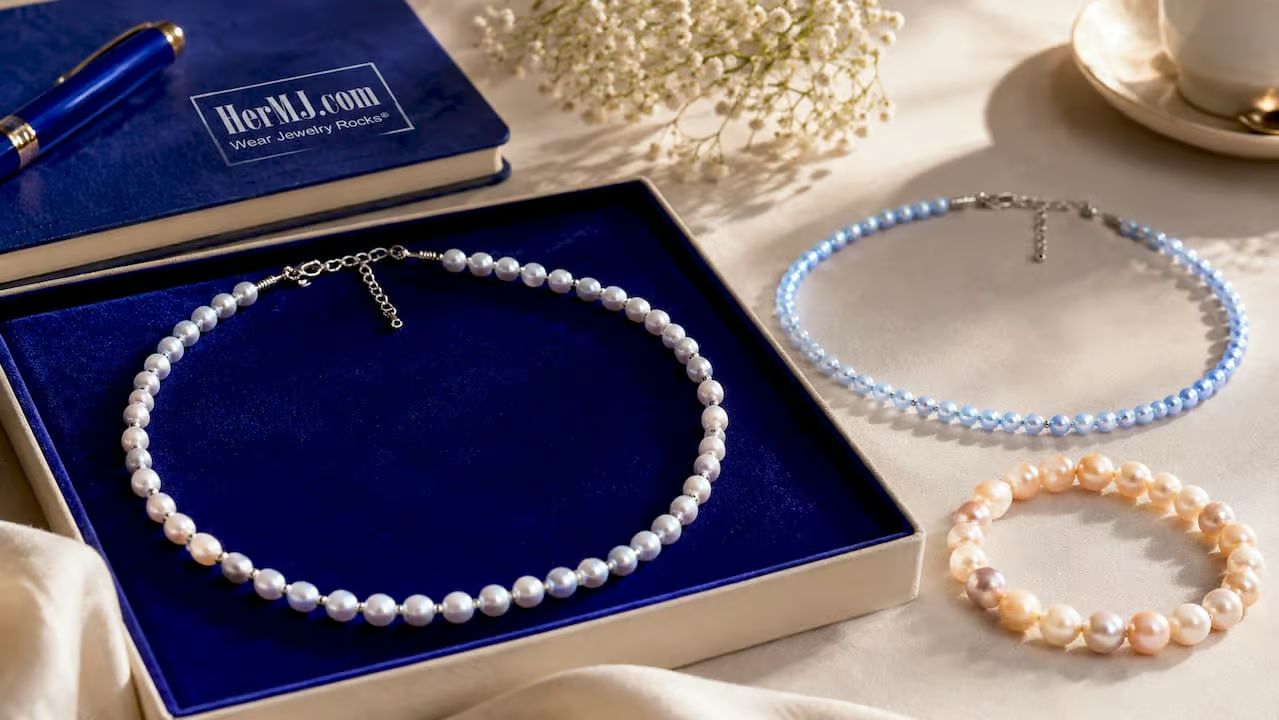
HerMJ designs every piece with the same checklist this article just walked you through: solid freshwater nacre, hand-knotting between pearls, and clasps finished to hold up under real, daily wear. You’re not choosing between a piece that looks beautiful and one that survives your morning routine. These pieces are built to do both.
US orders ship free with no minimum purchase, and international orders ship free on orders of $150 or more, so gift buyers and everyday shoppers can order without extra math at checkout.
If today’s routine has you eyeing something new, start with the freshwater pearl jewelry collection and pair your find with the care habits above. Your pearls will thank you for years.
A Personal Note on Wearing Pearls Well
I keep a pair of drop pearl earrings on my desk for exactly the mornings this article describes: perfume first, jewelry second, always.
My go-to piece lately has been a freshwater bracelet I never take off during the day, because bracelets simply see less fragrance contact than anything near the neck. HerMJ’s reputation is built by customers who come back after years of wear, not just a first impression at checkout. Try the “last on, first off” habit for a month. You’ll likely notice your pearls holding their glow longer than you expected.
Sources
The GIA’s pearl care and cleaning guide remains the most reliable science-backed reference for understanding why pearls react to perfume, cosmetics, and perspiration the way they do. Their broader pearl overview goes further into how cumulative chemical exposure translates into visible surface damage over time.
For hands-on maintenance advice, Robinson’s Jewelers offers a clear breakdown of restringing intervals and daily wear habits, while Mirenpearl’s cleaning guide walks through the exact damp-cloth and mild-soap method worth keeping on hand.
If you’re ready to shop with these standards in mind, start with the Lustrous Freshwater Pearl Bracelet for Elegance, the Pearl and Aquamarine Necklace, or the Modern Drop Pearl Earrings.
- Pearl care and cleaning — GIA
- Why should you never get perfume or hairspray on your pearls? — Robinson’s Jewelers
- Do pearls get damaged by perfume? — Mirenpearl
Recommended
- Style Pearl Jewelry with Everyday Outfits: Easy Looks
- Why Pearls Elevate Outfits: Style Guide for Today’s Best Look
- How to Style Pearl Jewelry for Everyday Elegance
- The Artful Balance Of Gemstone Pearl Pairing ✺ HerMJ