


Pearl Earring Styles: When to Wear 4–12mm Studs, Drops, and Hoops
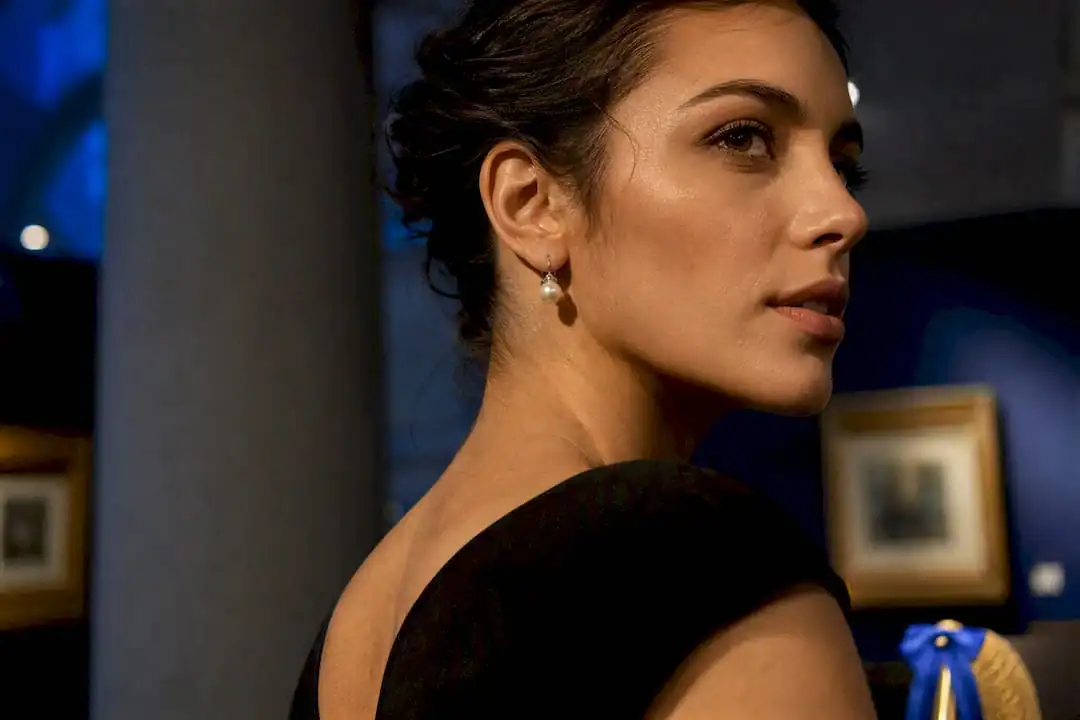
Studs give you an easy, everyday polish. Drops and chandeliers carry evening and bridal looks. Hoops bring a pearl into casual rotation. Baroque or mismatched pairs deliver the modern statement elegant, modern looks are built around. Pick your style by occasion first. The pearl shape and metal finish will do the rest.
TL;DR:
- Smaller pearls under 6mm are ideal for daily wear, while 8mm and larger make a deliberate statement for occasions or photos.
- Bezel settings are more durable for rough use, and matching metal tones to other jewelry ensures cohesive styling.
- Mismatched, baroque, and irregular-shaped pearls reflect current trends and add organic, unique accents to modern jewelry stacks.
- Freshwater pearls are the most affordable and versatile choice for everyday pieces, whereas Akoya and South Sea pearls are suited for luxury and higher price points.
- Proper care involves gentle cleaning, separate storage, and avoiding harsh chemicals or chlorine that can damage organic nacre.
Classic Pearl Studs: Sizes, Settings, and When to Wear Them
Studs are the pearl world’s equivalent of a white button-down. They go with everything, never look out of place, and are the piece most people reach for when they buy their first pair of pearl earrings.
Round or “button” studs are the two shapes you’ll see most. True round pearls roll smoothly and catch light evenly, which is why they read as more formal.
Button pearls are flattened on one side, sit closer to the ear, and cost less because they’re more common in nature.
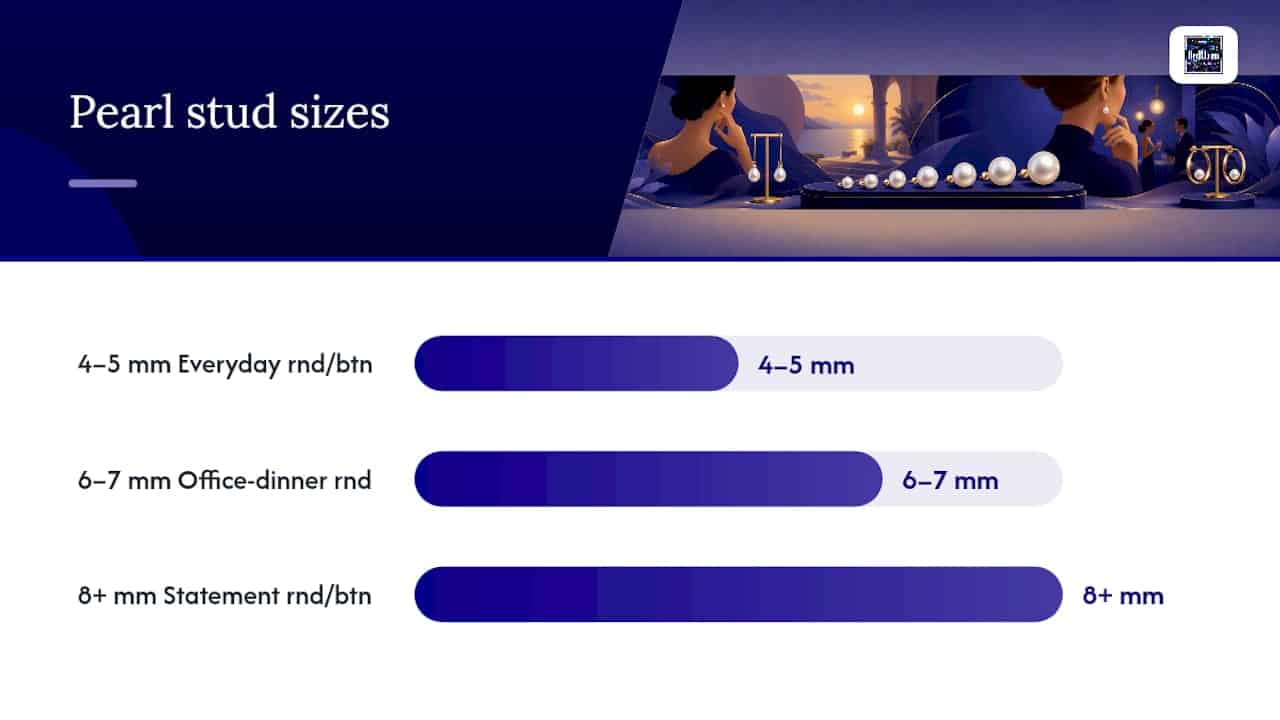
Size matters more than people expect: a 4mm to 5mm stud disappears into everyday wear, a 6mm to 7mm pearl is the sweet spot for office-to-dinner versatility, and anything 8mm and up starts to read as a deliberate statement rather than a quiet accent.
The setting style changes how the pearl sits against your ear. A post setting glues or drills the pearl directly onto a straight post, giving you the cleanest, most minimal look.
A bezel setting wraps a thin metal rim around the pearl’s base, protecting the nacre from chips and adding a slightly more structured, modern edge.
Prong settings, less common with pearls than with faceted stones, hold the pearl with small metal claws and expose more of its surface.
Metal choice matters just as much as shape. Yellow gold warms up the pearl’s natural cream or pink undertones, sterling silver and white gold sharpen the contrast for a cooler look, and rose gold splits the difference nicely for warmer skin tones.
A few practical notes on wearing studs well:
Stick to a moderate size suitable for daily wear under a work blazer or with a T-shirt.
Choose slightly larger sizes for weddings, both as a guest and as the bride, since they photograph beautifully without overwhelming a veil.
Choose bezel settings if you’re rough on jewelry or work with your hands often.
Match metal tone to the rest of your everyday jewelry so studs don’t feel like an afterthought.
Drop and Dangle Pearl Earrings for Elegant Movement
Drop and dangle designs let pearls do more visual work than studs ever could. A single teardrop pearl suspended from a simple wire earring is the most classic version, but the category extends far beyond that silhouette.
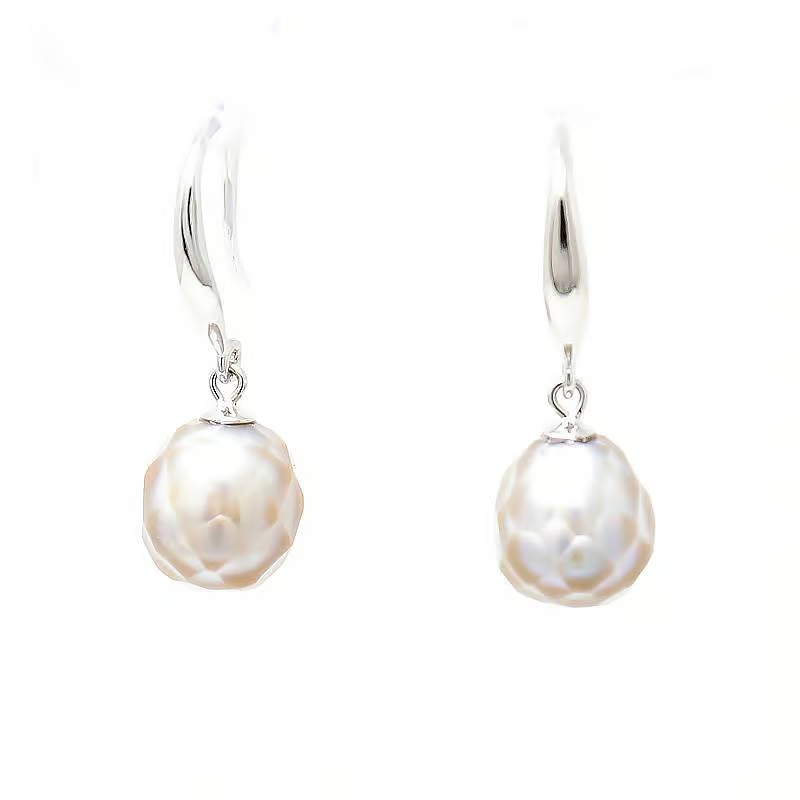
Pearl-on-chain designs, where a small pearl hangs from a delicate chain rather than sitting flush against a wire, add a bit of sway with every turn of the head.
Bezel drops wrap the bottom of a dangling pearl in a metal cap, which reads more structured and modern than a bare pearl on a hook. Multi-drop styles stack two or three pearls in graduating sizes down the ear, building toward the chandelier category without the full spread.
Length changes the mood entirely. A drop that sits an inch below the earlobe feels like a subtle upgrade from a stud.
Anything past two inches starts to compete with the hair and neckline, so it works best when pulled back or styled in an updo.
Pearl shape interacts with length too. A smooth teardrop elongates the face gracefully, while a baroque or irregular drop pearl adds texture, keeping a longer earring from feeling too formal.
- Choose single drops for date nights or dinners where you still want to feel like yourself.
- Pick multi-drop or chandelier-adjacent styles for weddings, galas, or any event with photography involved.
- Favor bezel-capped drops if you want a pearl earring that reads as contemporary rather than heirloom.
- Test the earring against your neckline before buying. A drop competing with a scoop-neck top will lose.
Pro Tip: Hold the earring up to your ear in front of a mirror, first with your hair down, then pulled back. If it only looks right one way, that’s the way to wear it.
Pearl Hoops and Huggies for Everyday and Dressy Wear
Hoops solve a real styling problem: they let you wear a pearl without committing to the formality that studs or drops can carry. A huggie, the small hoop that hugs close to the earlobe, is typically 8mm to 12mm and works as an everyday piece that layers easily under hair.
Classic pearl-accent hoops mount a single pearl at the base or along the curve of a thin gold or silver hoop, keeping most of the design metal with the pearl as a highlight.
Larger hoops, 20mm and up, shift the balance so pearls become clusters or repeated accents around the curve rather than a single focal point.
Half-pearl hoops, where pearls line only the lower half of the circle, are one of the more distinctive variations showing up in current designs, and they photograph well because the negative space at the top keeps the earring from looking heavy.
A few ways to wear hoops with pearls well:
- Small pearl huggies (8mm to 12mm) work under a blazer or with hair down, since they stay close to the ear.
- Mid-size hoops with a single pearl accent suit brunch, errands, or casual dinners.
- Large pearl-cluster hoops make a statement and are best saved for occasions where your outfit is otherwise simple.
- Mixed metal hoops, gold on one ear and silver on the other, echo the intentional-contrast trend without needing a new pair of earrings.
Threaders, Climbers, and Building a Pearl Ear Stack
Threaders and climbers are the two silhouettes most responsible for pearls feeling modern rather than inherited.
A threader is a thin chain that passes through the earlobe and drapes on both sides, often with small pearls dotted along its length.
A climber, sometimes called a crawler, sits along the curve of the upper ear rather than hanging below the lobe, with pearls set in a line that follows the ear’s natural shape.
Building a stack that includes pearls takes a little planning, but it doesn’t require multiple piercings to pull off:
- Anchor the lobe with a small pearl stud, 4mm to 5mm, as your base layer.
- Add a climber along the upper ear if you have a second piercing, choosing one with pearls small enough not to visually compete with the stud below.
- Mix in one non-pearl element, a thin gold hoop or a small cuff, so the stack reads as curated rather than matched.
- Keep the opposite ear simpler if you’re going asymmetric. One built-up ear and one quiet ear are the current balance points, not two identical stacks.
Threaders work particularly well for this kind of layering because their thin profile doesn’t crowd a stud sitting just below. The guide to mixing pearls with modern jewelry covers more combinations if you’re building a stack for the first time and want a starting template rather than a blank slate.
Statement and Chandelier Pearl Earrings for Bold Occasions
Statement and chandelier styles are built for rooms where you want to be noticed, not rooms where you’re trying to blend in.
Chandelier designs branch a metal frame into multiple tiers, each holding one or more pearls, so the whole earring moves and catches light as you do. Sculptural statement pieces skip the tiered structure entirely and instead cluster pearls into an asymmetric or geometric shape, often mixed with metalwork that has its own presence.
Construction quality matters more here than in any other style, because a heavier design puts real weight on the earlobe.
Look for lightweight metal frameworks, hollow tubing rather than solid metal, and secure settings on every pearl, since a dangling design has more points where a pearl could work loose over time.
These pieces work best at weddings, galas, and evenings where your outfit is deliberately simple. A structured black dress or a solid-color gown gives chandelier earrings room to be the focal point, rather than competing with your neckline or a busy pattern for attention.
- Wear hair up or pulled back so the full design is visible.
- Choose one statement element per outfit. Pair chandelier earrings with a simple necklace or none at all.
- Check the earring’s weight before buying if you have sensitive lobes, as heavier designs tend to feel uncomfortable after a few hours.
Baroque and Mismatched Pearl Earrings for a Modern Statement
Baroque pearls form with irregular, non-round shapes, the result of natural growth conditions inside the mollusk rather than any flaw in the pearl itself.
Keshi pearls are a specific type of baroque pearl with no nucleus at all, made entirely of nacre, which often gives them an especially bright, almost metallic luster. Both types have shifted from being considered “imperfect” to being sought after for exactly that organic irregularity.
Mismatched earrings, wearing two pearls of different shapes, sizes, or even colors, are one of the clearest markers of where pearl fashion is headed. British Vogue’s coverage of pearl trends points to designers deliberately pairing pearls with contrasting metalwork and building mismatched ear stacks rather than matched sets, treating asymmetry as a design choice rather than an accident.
If you’re buying baroque or mismatched pearls, a few things to check:
- Confirm whether a “mismatched” pair was designed that way intentionally or is simply an inconsistent match from a low-quality batch.
- Baroque pearls often cost less than round pearls of similar size, since irregular shapes are more common and less prized in traditional grading.
- Ask whether the pieces are sold as a permanent set or whether you can request different pairings.
Pearl Types and Shapes: A Quick Reference Guide
Not every pearl earring is made with the same raw material. Knowing what’s different changes what you should expect to pay and how the finished piece will look.
| Pearl type | Typical size | Color range | Best used for |
|---|---|---|---|
| Freshwater | 4mm to 5mm | White, pink, lavender, peach | Studs, everyday drops, layered stacks |
| Akoya | 6mm to 8mm | White, cream, with rose or silver overtones | Classic studs, bridal sets |
| Tahitian | 8mm to 12mm | Gray, green, black, peacock | Statement drops, chandelier pieces |
| South Sea | 8mm to 12mm | White, gold, cream | Large studs, luxury statement earrings |
| Keshi/baroque | Varies widely | Matches parent pearl type | Mismatched pairs, asymmetric designs |
Freshwater pearls dominate the everyday and affordable end of the market, and retail coverage of pearl earring brands confirms they’re the most common choice for accessible daily wear, while Akoya, Tahitian, and South Sea pearls command higher prices tied to their rarity and deeper luster.
Shape plays into this too. Round and near-round pearls suit clean stud settings since symmetry reads best up close.
Drop and pear shapes naturally lend themselves to dangle and chandelier designs, since their tapered ends already point the eye downward. Baroque shapes work best in settings that don’t try to force symmetry onto an inherently asymmetric pearl.
How to Choose Pearl Earrings for Your Face, Occasion, and Budget
Buying pearl earrings well comes down to matching four variables: scale, face shape, metal, and budget. Here’s the order to work through them:
- Start with scale. Decide whether you want an everyday piece (studs or small huggies under 8mm) or an occasion piece (drops, chandeliers, or large hoops).
- Match to face shape. Rounder faces tend to benefit from drop or dangle styles that add visual length, while longer faces often look best with studs or hoops that don’t add further vertical pull.
- Choose your metal. Gold warms cream and pink pearls, silver sharpens white ones, and mixed metals lean into the intentional-contrast trend if you want something less traditional.
- Set a budget and match it to pearl type. Freshwater pearls give you the most size and design options per dollar, while Akoya and South Sea pearls push price up in exchange for higher, more uniform luster.
Before buying, especially from a seller you haven’t used before, ask about nacre thickness, whether the pearls are treated or dyed, and how the drill holes are finished, since rough or off-center drilling is one of the fastest ways to spot a rushed piece. Bloomberg’s reporting on jewelry buying mistakes makes a point worth repeating here: focus on materials and construction quality, not marketing language, when you’re comparing sellers.
Pro Tip: If a listing doesn’t mention pearl type, size in millimeters, or setting material, email the seller before you buy. Vague listings are usually vague for a reason.
Styling Pearl Earrings from Everyday to Evening
The easiest way to keep pearls from feeling dated is to stop treating them as a single-occasion piece.
Small studs go under a blazer for work, then get swapped for a slightly larger drop when the same outfit heads into dinner. A guide to styling pearls with everyday outfits walks through exactly this kind of transition if you want outfit-specific pairings rather than general rules.
For work, keep it simple: 5mm to 7mm studs or small huggies read as polished without pulling focus in a meeting.
For evening, drops and chandeliers earn their keep, especially paired with hair worn up so the earring has room to be seen.
Bridal styling tends to favor Akoya or freshwater studs for the ceremony, with a swap to drops or chandeliers for photos and the reception.
The current trend direction leans hard into contrast and asymmetry rather than matched perfection, as highlighted in the Jewelry Trends 2026 Worth Wearing Now – Trinity Carter.
Designers are pairing soft, classic pearls with sharp, architectural metalwork, and building mismatched ear stacks that mix pearl sizes and shapes on purpose. A style guide on why pearls elevate outfits breaks down how to bring that same energy into a wardrobe without buying an entirely new jewelry box.
- Pair one pearl stud with one plain gold hoop on the same ear for quick asymmetry.
- Wear baroque drops with a structured blazer to balance organic shape with sharp tailoring.
- Save true chandelier pieces for events with formal dress codes.
- Layer a pearl necklace with earrings from the same pearl family rather than matching them exactly.
Caring for Pearl Earrings: Storage, Cleaning, and Buyer Questions
Pearls are organic gems, formed by a living mollusk rather than crystallized underground like most stones, and that origin makes them noticeably softer than diamonds or sapphires. Treat them more like fine silk than costume jewelry.
Wipe pearls with a soft, slightly damp cloth after wearing to remove oils and perspiration, then let them air dry completely before storing. Store them separately from harder gems in a soft pouch or lined box, since pearls can scratch against sharper stones or metal edges. Put pearls on last when getting dressed, after perfume, hairspray, and lotion, since those chemicals dull nacre over time.
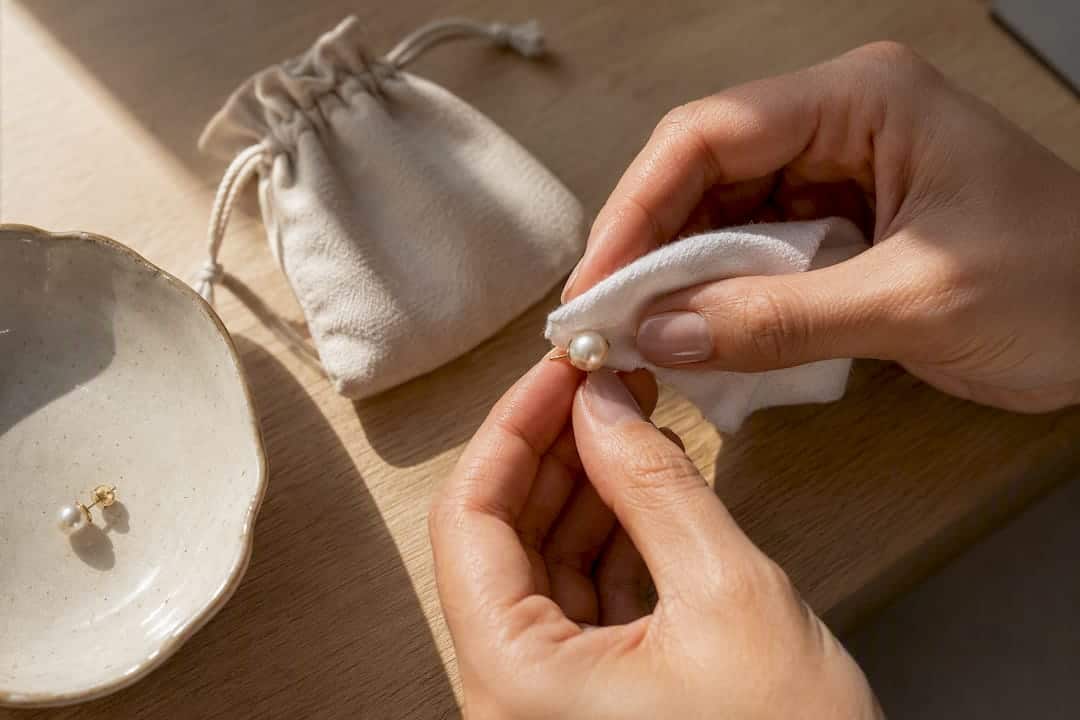
Avoid a short list of things entirely: swimming pools and hot tubs, since chlorine damages the surface, ultrasonic cleaners, which can crack a pearl’s structure, and any harsh jewelry cleaner not specifically labeled safe for pearls.
Before buying, ask the seller a few direct questions: is the pearl treated or dyed, what’s the nacre thickness, and what’s the return policy if the piece doesn’t match the listing. GIA’s own pearl quality factors, covering luster, surface, shape, color, and nacre thickness, give you a checklist to compare answers against.
Why I Design Pearl Earrings for How Women Actually Live
Classic silhouettes earned their place for a reason, but I don’t think that means they should stay frozen in time. When I design a stud or a drop earring, I’m thinking about someone wearing it to work on Tuesday and to dinner on Friday, not someone opening a velvet box once a year for a formal event.
That’s the gap I see most in how pearls get talked about. People treat them as either heirloom-precious or costume-cheap, with nothing believable in between. The truth is that a well-made freshwater pearl earring, set thoughtfully in solid metal with a secure setting, holds up beautifully to daily wear and still photographs like something special. You don’t need Akoya or South Sea pricing to get a piece that lasts.
At HerMJ, that’s the balance I keep coming back to: real pearls, careful construction, and pricing that doesn’t punish someone for wanting something beautiful on a normal Tuesday. Craftsmanship shouldn’t be the reason a good pearl earring stays out of reach.
— Veronique
Shop the Looks: HerMJ Pieces Built Around These Styles
HerMJ is the option for readers who want the elegance of a drop, dangle, or layered pearl look without the markup that usually comes with fine jewelry counters. HerMJ pieces are handmade with genuine freshwater pearls, so you get the softer, more natural luster this guide keeps pointing to, at a price that doesn’t require a special occasion to justify.
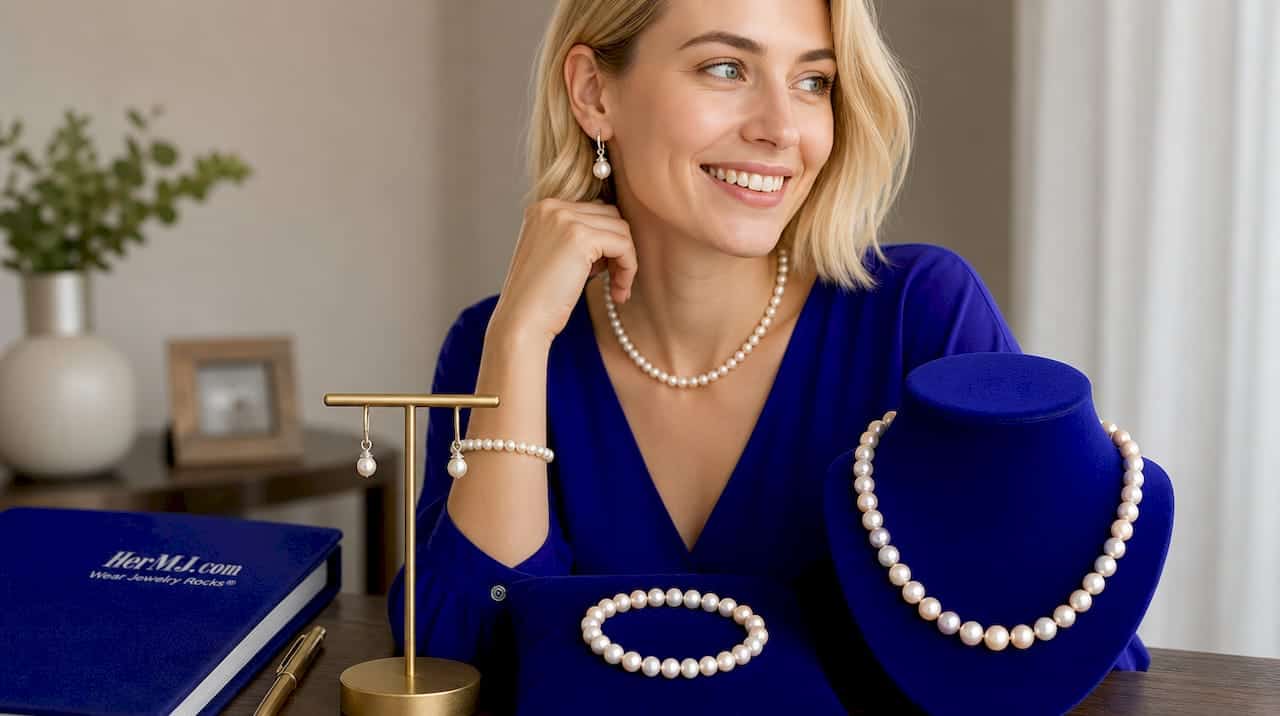
The Modern Drop Pearl Earrings are the direct answer to the dangle section above: a teardrop silhouette with clean bezel-style construction that works from office to evening without needing a second pair of earrings. Pair them with the Elegant Freshwater Pearl Necklace for a matched-family look that still reads as intentional rather than matchy, or add the Lustrous Freshwater Pearl Bracelet if you’re building toward a full set for a wedding or gift.
Every piece ships free on US orders with no minimum, and international orders ship free for order of $150 or more. Start with the drop earrings if you’re replacing a worn-out staple, or browse the full pearl edit at HerMJ to build a set from scratch.
Where to Verify These Pearl Standards Yourself
For grading language and quality benchmarks, GIA’s pearl quality factors page remains the clearest technical reference, covering luster, surface, shape, color, and nacre thickness in plain terms.
For trend direction heading into 2026, British Vogue’s pearl styling coverage documents the shift toward contrast and mismatched stacking. On buying fundamentals and avoiding common mistakes,
Bloomberg’s jewelry-buying guide and Jewelers of America’s buying guidance both offer useful seller-vetting questions worth asking before any purchase.
Sources
- Pearls Are Trending. This Is How To Wear Them In 2026 | British Vogue
- GIA — Pearl quality factors
- How to buy jewelry: an expert shares what you are doing wrong — Bloomberg
- 11 Jewelry Brands For Freshwater Pearl Earrings — The Good Trade
Recommended
- Pearl Sizes Guide: How to Pick the Right Size for You
- Style Pearl Jewelry with Everyday Outfits: Easy Looks
- How to Style Pearl Jewelry for Everyday Elegance
- How To Wear Pearls From Classic To Ultra-Modern