


The Ultimate Guide to Cultured & Freshwater Pearls
The Enduring Magic of Pearls
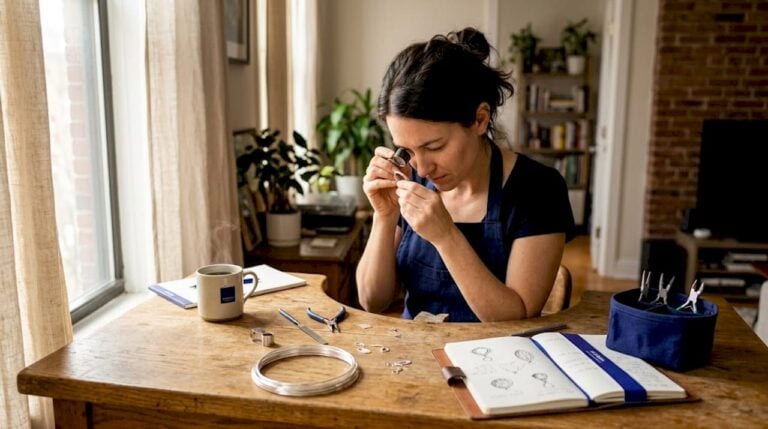
I’ve spent years working with gemstones, but pearls have always held a special place in my heart.
There’s something uniquely poetic about them; unlike diamonds or sapphires that require intense cutting and polishing to find their brilliance, pearls emerge from the water already finished.
They have an organic glow that no other stone can replicate.
However, I’ve noticed that many of my clients feel overwhelmed when they start shopping for pearls. Terms like “cultured,” “Akoya,” and “freshwater” get thrown around, and grading systems can seem like a secret language.
This ultimate guide to cultured and freshwater pearls will pull back the curtain on this process. I want to demystify how these gems are created and valued so you can shop with confidence and find a piece that truly speaks to you.
The Big Misconception: Natural vs. Cultured vs. Freshwater
One of the most common questions I get is about the difference between cultured and freshwater pearls. There’s a lingering belief that “cultured” means “fake,” but that couldn’t be further from the truth.
Natural Pearls are formed entirely by chance without any human help. They are incredibly rare; today, you’ll mostly find them in museums or at high-end antique auctions. Because they happen so infrequently in nature, they carry a massive price tag.

Cultured Pearls are what you’ll find in almost every jewelry store. A cultured pearl is still a real pearl; it just had a little help getting started. A human introduces an irritant into the mollusk to trigger the pearl-making process, but the oyster or mussel does all the actual work of creating the nacre.
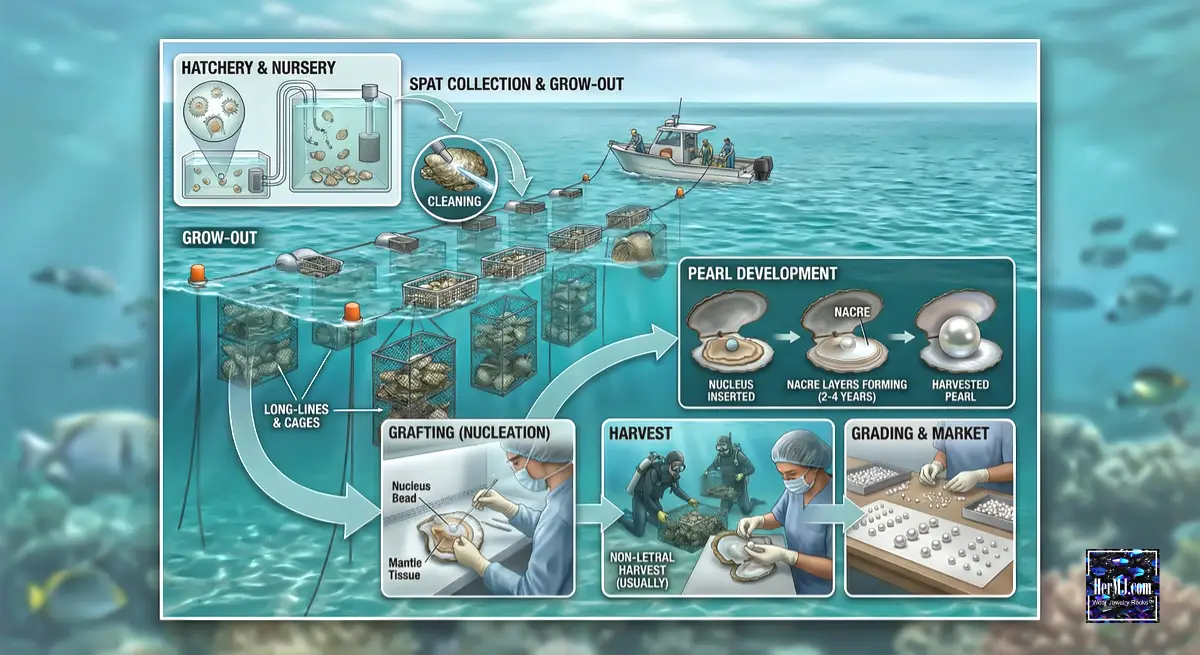
It’s also important to clarify that “cultured” and “freshwater” aren’t opposites. In fact, the vast majority of freshwater pearls are cultured. When you’re shopping, the real comparison you should be making is between Freshwater and Saltwater pearls.
How Cultured Pearls are Made: The Art and Science
The way a pearl grows depends heavily on where it lives. As an artisan, I pay close attention to this because it affects the durability of the jewelry I create.
Saltwater Nucleation (The Bead): For saltwater pearls, such as Akoya, the process usually begins by inserting a hard shell bead into the oyster. The oyster then coats this bead in layers of nacre. Because there’s a solid core, the actual layer of nacre can be relatively thin.
Freshwater Nucleation (The Tissue): Freshwater pearls are often grown using a different method. Instead of a bead, a tiny piece of mantle tissue is transplanted into the mussel. This means the pearl grows without a hard center; it’s composed almost entirely of solid nacre.
This difference is why I often recommend freshwater pearls for daily wear. Since they don’t have a bead core, they’re significantly more resistant to chipping and wear than their saltwater counterparts.
The Four Major Types of Cultured Pearls
While there are wide varieties, most high-quality jewelry falls into one of these four categories:
| Pearl Type | Origin | Typical Size | Characteristics | Price Point |
| Freshwater | Lakes/Rivers (Mostly China) | 6mm – 12mm | Solid nacre, highly durable, vast array of natural colors (white, pink, peach, lavender) and shapes (baroque, round). | Most Accessible / Best Value |
| Akoya | Saltwater (Japan/China) | 5mm – 9mm | The classic white, perfectly round pearl with mirror-like luster. Bead nucleated. | High |
| South Sea | Saltwater (Australia/Indonesia) | 9mm – 16mm+ | Very large, satiny luster, famous for deep golden and silvery-white hues. | Luxury / Highest |
| Tahitian | Saltwater (French Polynesia) | 8mm – 14mm | The exotic “black pearl,” featuring natural dark colors with overtones of peacock green, eggplant, and silver. | Premium |
A Deep Evaluation: The Rise of the Modern Freshwater Pearl
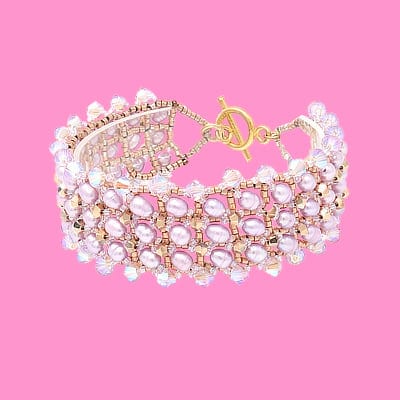
In my own designs at HerMJ, I lean heavily on freshwater pearls. There’s a common myth that they’re “cheaper” because they’re lower quality, but that’s simply not the case. The price difference comes down to biology: a single saltwater oyster usually produces only one or two pearls, whereas a single freshwater mussel can produce up to 50 pearls at once. This higher yield makes them more affordable for the consumer without sacrificing beauty.
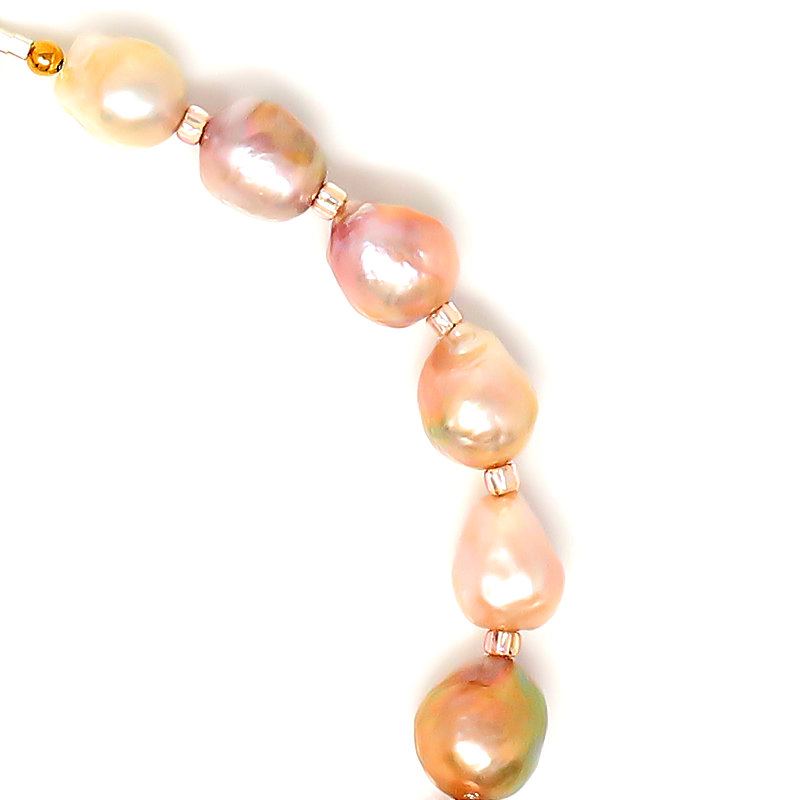
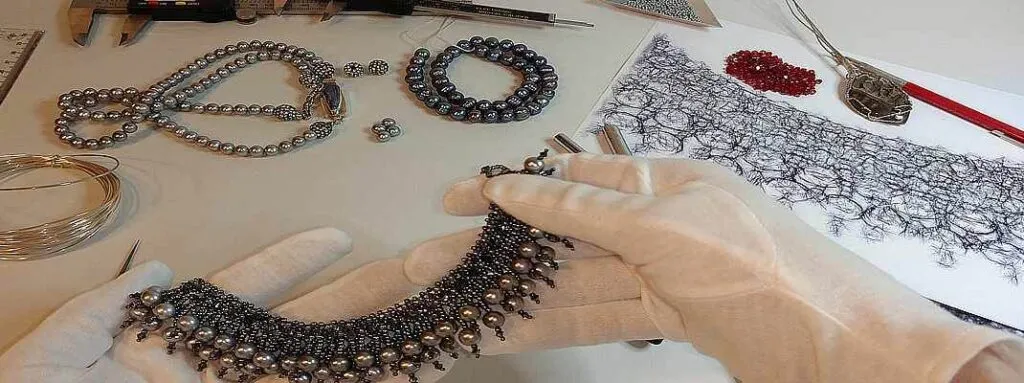
I also love working with non-traditional shapes. While round pearls are traditional, I find that near-round, button, coin, and organic Baroque pearls offer a much more contemporary feel. Baroque pearls, with their irregular and artistic forms, allow me to create one-of-a-kind pieces that feel like wearable sculptures.
(Internal Link: Explore our HerMJ pearl necklaces and bracelets) (Internal Link: Pearl Necklace Cost: What Your Budget Actually Buys)
The Pearl Grading Guide: How to Evaluate Quality
I’ve learned that the beauty of these gems lies in the details. If you’re looking to understand what actually makes a pearl valuable and beautiful, here is how I evaluate them in my studio. When I’m selecting pearls for a new collection, I look at five key factors:
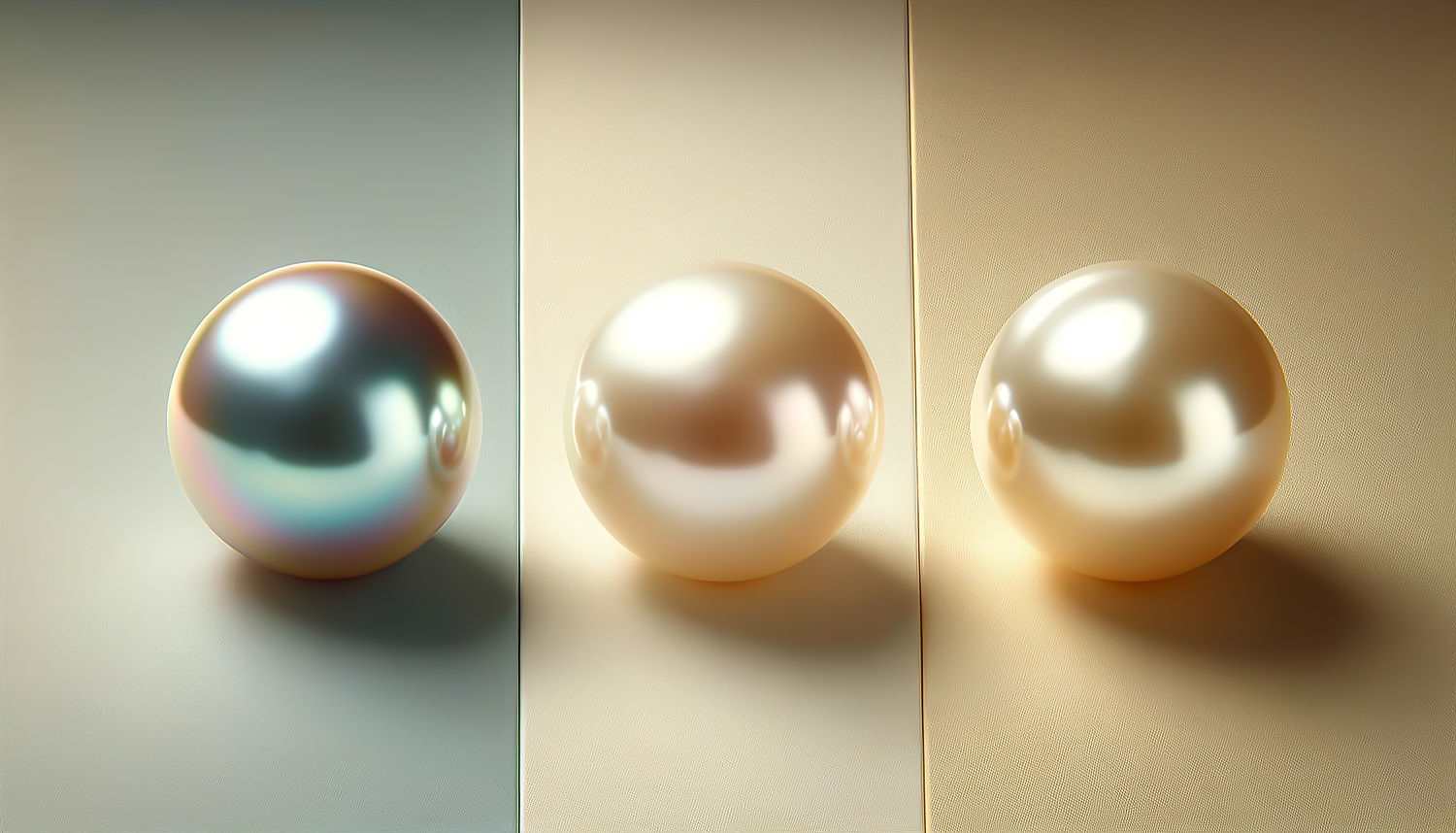
- Luster (The Heart of the Pearl): This is the most vital element. Luster is how well the pearl reflects light. High-quality pearls have a sharp, mirror-like reflection. In my experience, a pearl with brilliant luster is always more captivating and holds more value than a larger pearl that looks flat or chalky.
If you focus on only one characteristic when choosing a pearl, make it this. To me, luster is the “soul” of the gem; it’s the intensity and sharpness of the light reflecting off the surface, combined with that deep, inner glow created as light travels through the layers of nacre.- Excellent luster: The reflections are crisp and distinct. When I hold a high-luster pearl, I can see my own reflection mirrored clearly on the surface.
- Poor luster: pearls look chalky, dull, or milky. The light doesn’t bounce back sharply; instead, it looks blurred and diffused.
- Surface (The Beauty of Nature’s Markings): No organic gem is perfect. I look for tiny dimples or ridges; these are natural blemishes that prove the pearl is real, not a plastic imitation.
- Pearl Formation: In artisan jewelry, we actually celebrate these minor variations. They serve as the ultimate proof that you are wearing a genuine organic gemstone rather than a perfectly smooth, factory-pressed plastic bead.
- Grading: From a grading perspective, we categorize them by cleanliness: a “Clean” pearl has no blemishes visible to the naked eye, while “Lightly Spotted” or “Moderately Spotted” pearls have visible marks. While these spots can affect the market price, they rarely diminish the artistic beauty of the piece.
- Shape (From Classic Rounds to Sculptural Baroque): Perfectly round pearls command the highest price, but as I mentioned, Baroque shapes provide unique designer appeal. While traditional strands rely on perfect spheres, modern design embraces a wider spectrum.
Most freshwater pearls are “tissue-nucleated,” meaning they grow without a pre-inserted round bead, which allows them to form more diverse and creative silhouettes.- Round & Near-Round: These are the most difficult to find in nature and therefore the most expensive. “Near-round” pearls look spherical at first glance but have slight elongations.
- Button & Coin: These are flattened on one or both sides, making them my go-to choice for earrings because they sit flush against the earlobe.
- Baroque: This term refers to any irregular, asymmetrical shape. I love Baroque pearls for their sculptural quality; since no two are ever the same, every piece of jewelry becomes a unique work of art.
- Size (Understanding the Millimeter): Size is measured in millimeters (mm) across its widest diameter. As the diameter increases, so do rarity and price.
- Standard Sizes: Most freshwater and Akoya pearls fall between 6mm and 9mm. A 7-8mm pearl is generally considered the “classic” size for a traditional necklace.
- Statement Sizes: Once you hit 10mm and above, the rarity increases significantly because it takes much longer for the mollusk to produce that volume of nacre, which drives the price up exponentially.
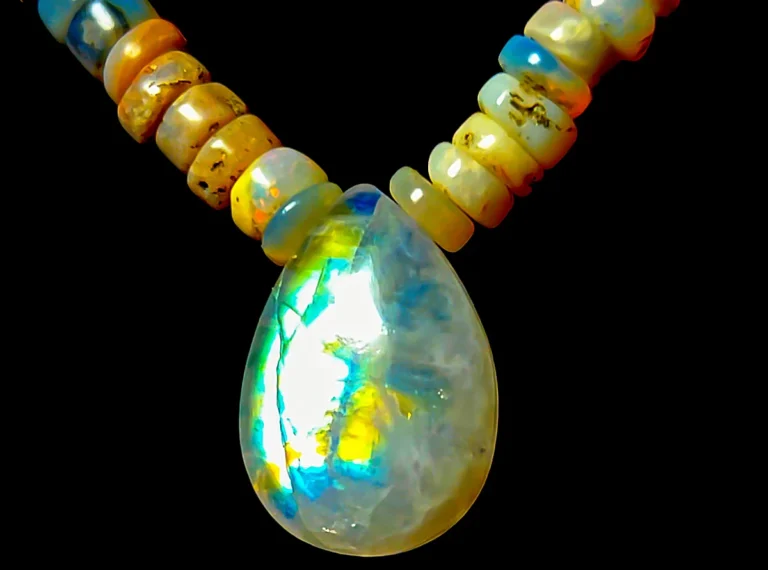
- Color & Overtone: The body color is the main hue of the pearl. The overtone is the translucent shimmer on the surface: think of it as a secondary “wash” of pink, green, or blue that dances over the primary color.
- Body Color: This is the dominant, base color—such as white, pink, peach, black, or gold. Freshwater pearls are famous for their natural pastel palette of lavenders and peaches, whereas Tahitian pearls naturally lean toward dark greys and blacks.
- Overtone: This is a translucent, secondary shimmer that seems to float on the surface. For instance, a white pearl might have a rosy-pink overtone, or a black pearl might display a “peacock” green shimmer.
How to Tell Real Pearls from Fakes (The Tooth Test & Beyond)
It’s easy to be fooled by high-quality synthetic pearls, but there are a few tricks I use to verify authenticity.
The Tooth Test: This is an old industry secret. Gently rub the pearl against the edge of your front tooth. A real pearl will feel slightly gritty, almost like very fine sandpaper, because of the crystalline structure of the nacre. A fake pearl made of glass or plastic will feel perfectly smooth.
Weight & Temperature: Real pearls are cold to the touch when you first pick them up; they take a moment to warm up against your skin. They also have a substantial weight that feels heavier than a hollow plastic bead.
Imperfections: I always tell my clients: look for “perfect” uniformity. If every single pearl on a strand is identical in size, shape, and color with zero flaws, you’re likely looking at synthetics. Nature isn’t that precise.
How to Care for Your Pearl Jewelry
Pearls are organic gems, which means they’re more sensitive than diamonds or rubies. To keep them glowing for decades, I follow one golden rule: “Last on, first off.”
Your pearls should be the very last thing you put on after your perfume, makeup, and hairspray have dried; chemicals in these products can eat away at the nacre. Similarly, they should be the first thing you take off when you get home.
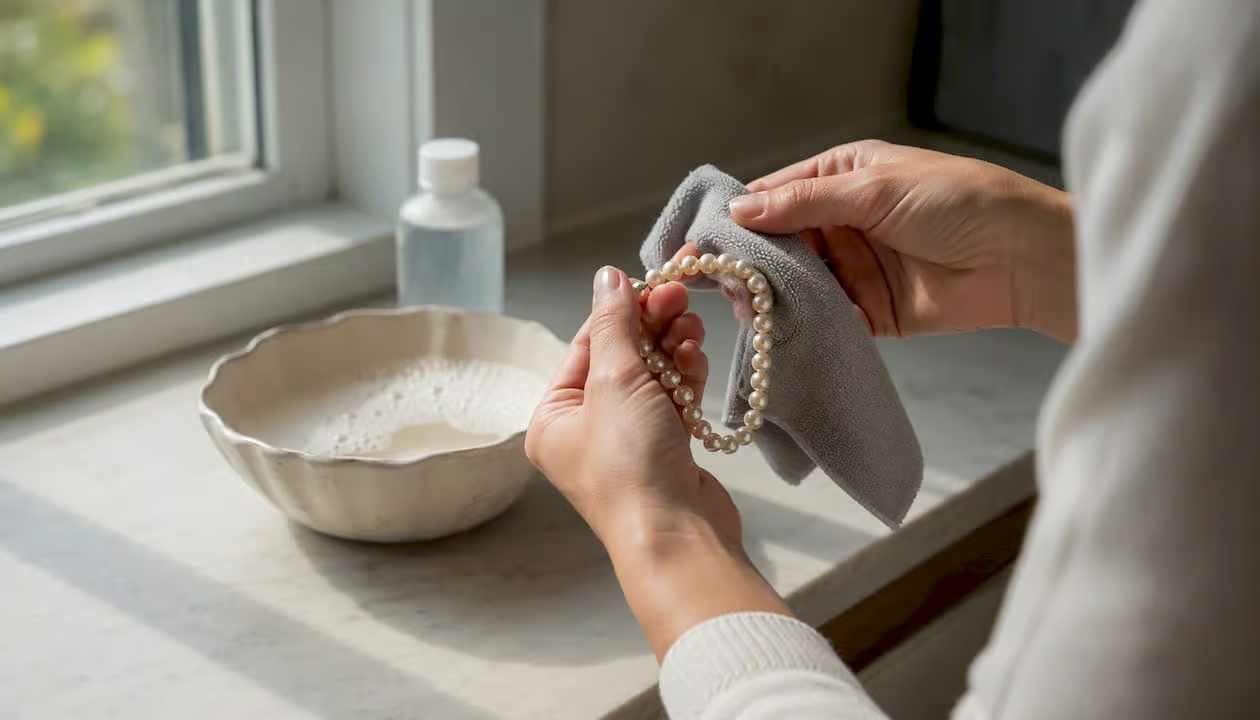
Cleaning: Please avoid harsh chemicals or ultrasonic cleaners: they’ll destroy a pearl’s luster quickly. Instead, use a soft, damp cloth to gently wipe away skin oils after each wear.
Storage: Store your pearls flat. If you hang them, the weight of the pearls can stretch the silk thread over time. I also recommend storing them in separate soft pouches so harder gemstones, like diamonds or quartz, don’t scratch the surface.
Conclusion: Finding Your Perfect Pearl
At the end of the day, the “best” pearl isn’t necessarily the one with the highest price tag; it’s the one that makes you feel beautiful. Whether you love the mirror-like precision of an Akoya or the wild, organic energy of a Baroque freshwater pearl, there’s a style for everyone.
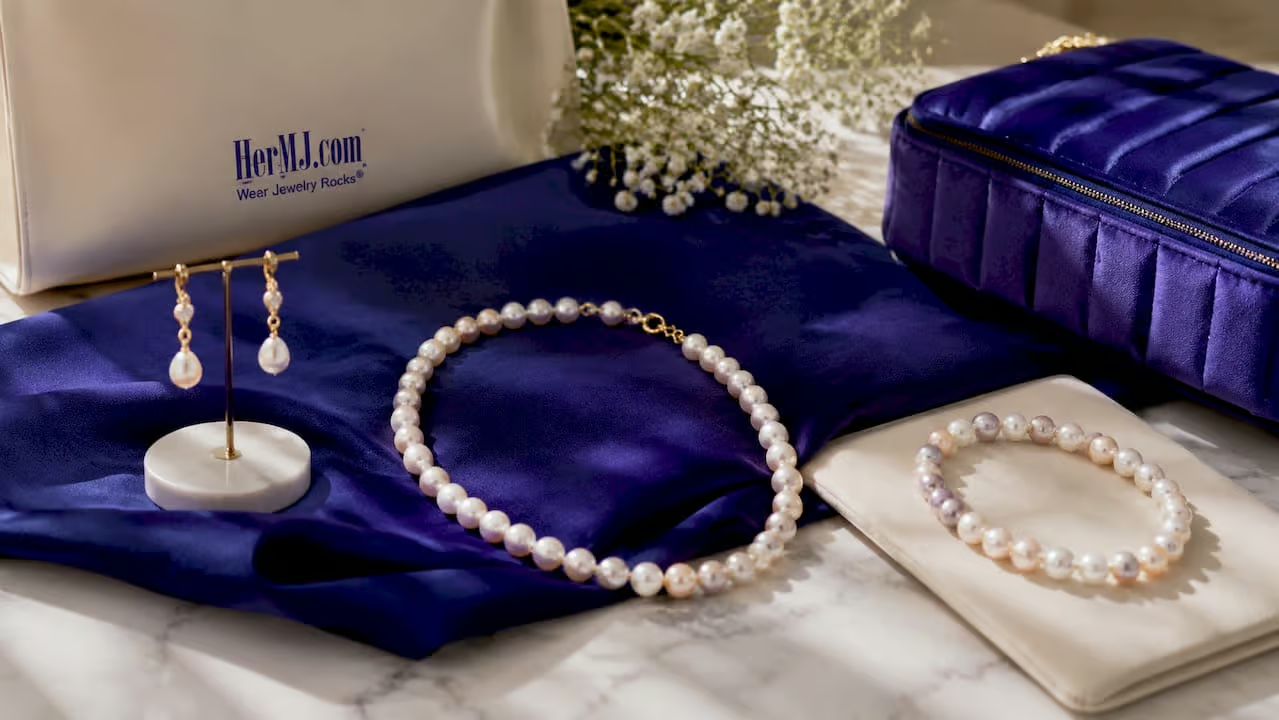
If you’re ready to see how these gems can transform your look, I invite you to explore the HerMJ Artisan Pearl Collection. I’ve carefully sourced high-quality freshwater pearls and integrated them into modern, handcrafted designs that bring timeless elegance into the contemporary world.
HerMJ Freshwater Pearls
Experience the beauty of Natural Artisan Pearl Jewelry