


What Is Sculptural Jewelry? Styles, Trends, and Tips
The Edit
- Sculptural jewelry emphasizes three-dimensional form, bold volume, and architectural design over gemstones or ornamentation. It combines artistic expression with sustainable materials and is designed to make a strong visual impact when worn. The style appeals to those seeking avant-garde fashion and values craftsmanship and ethical sourcing.
Sculptural jewelry is defined as wearable art that prioritizes three-dimensional form, bold volume, and architectural structure over gemstone brilliance or traditional ornamentation.
Unlike a delicate chain or a simple stud, a sculptural piece commands attention through its shape alone. It blurs the line between fashion accessory and art object, creating pieces that interact dynamically with light and movement.
You’ll find this style in everything from curved cuffs to abstract collar pieces, and it’s one of the most talked-about directions in contemporary jewelry design right now.
What is sculptural jewelry, and what defines it?
Sculptural jewelry is wearable art that emphasizes form, proportion, and volume over gemstone brilliance, elevating even simple clothing with bold, three-dimensional designs. That definition separates it clearly from most jewelry categories, which lead with materials or stones. Here, the shape is the statement.
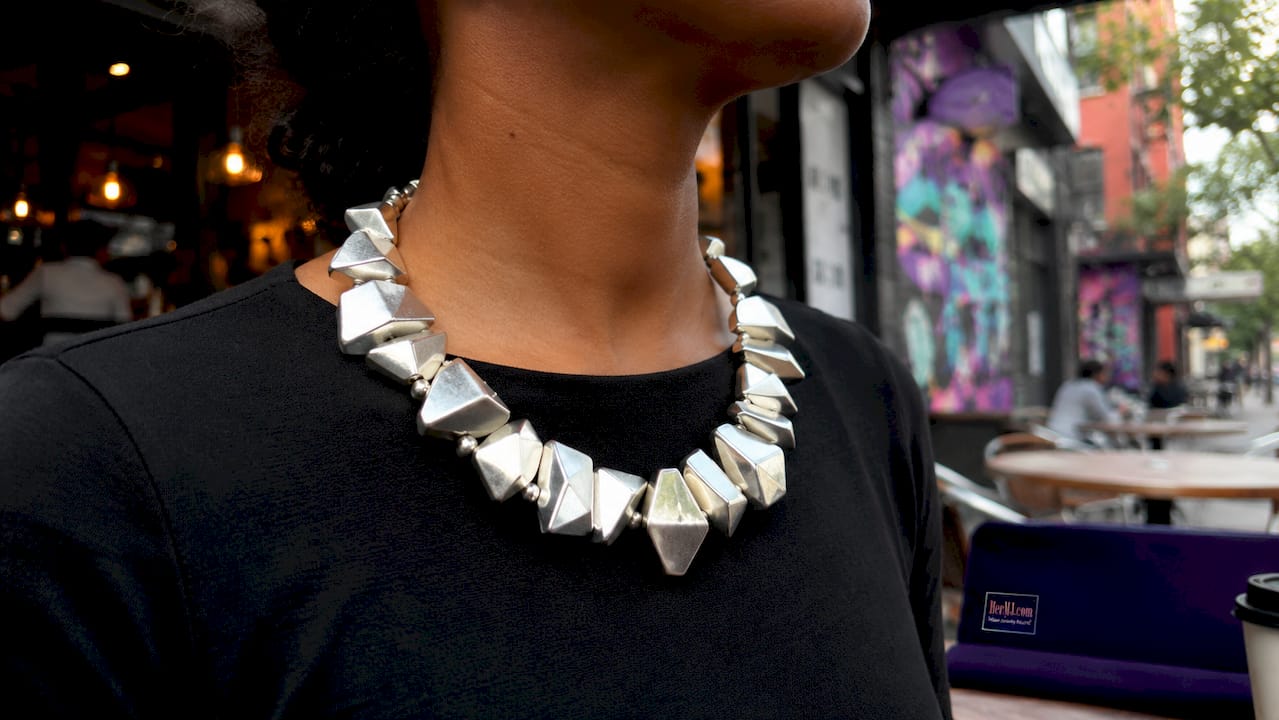
The industry term you’ll see used alongside this style is “art jewelry” or “wearable sculpture,” though “sculptural jewelry” has become the dominant phrase in both retail and editorial contexts. Designers working in this space treat the body as a canvas and the piece itself as a small sculpture you happen to wear.
What makes this category so compelling is its range. A sculptural necklace might reference the geometry of Brutalist architecture, or it might mimic the fluid curve of a wave.
Both qualify because both lead with form. The natural world remains a consistent inspiration for these designs, with motifs drawn from flora, fauna, and organic fluid forms. That breadth is exactly why the style has attracted such a wide audience, from avant-garde fashion collectors to everyday wearers who simply want something that feels different.
What are the main characteristics of sculptural jewelry?
Sculptural jewelry is considered wearable art that prioritizes architectural and organic silhouettes, moving beyond traditional techniques to focus on artistic expression and timeless design. Several defining features separate it from other jewelry styles.
Key characteristics of sculptural jewelry:
- Bold proportions. Pieces are deliberately oversized or asymmetric to create visual impact.
- Three-dimensional form. Curves, voids, and layered planes give the piece physical depth.
- Tactile textures. Hand-hammered surfaces, lattice structures, and carved details reward close inspection.
- Architectural and organic shapes. Designs reference both built structures and natural forms equally.
- Sustainable materials. Recycled metals and ethically sourced gemstones are common, reflecting a commitment to responsible luxury.
- Minimal reliance on stones. When gemstones appear, they serve the form rather than dominate it.
The materials most commonly used include recycled gold and silver, oxidized brass, sterling silver, and natural stones like quartz or agate. These choices aren’t accidental. Recycled metals add an ethical dimension that resonates with buyers who care about where their accessories come from.
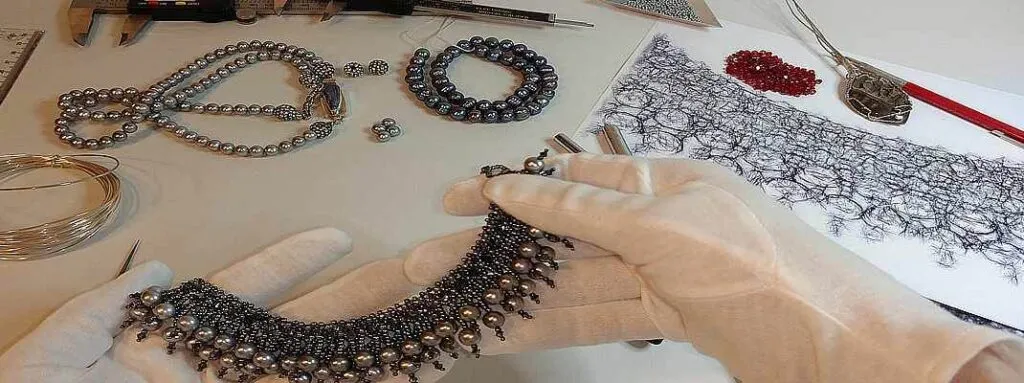
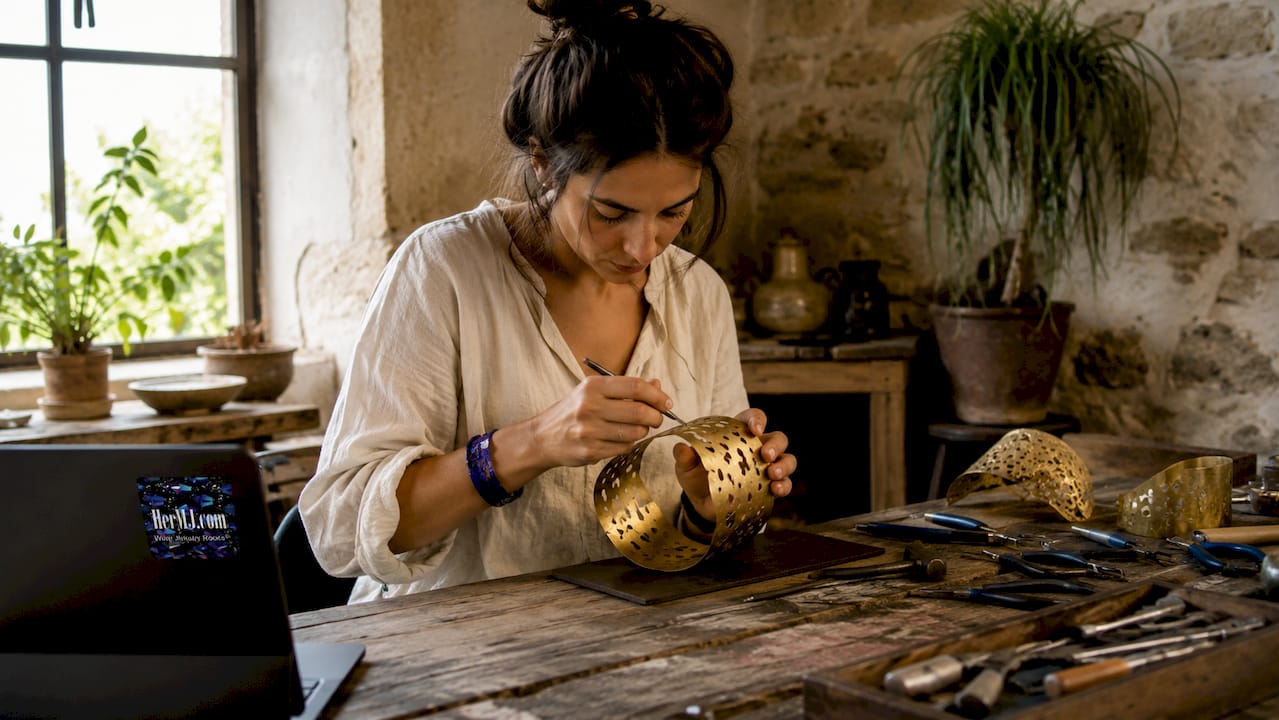
Designers also apply what’s known as “design logic” to these pieces. Complex lattice and hand-carved structures are balanced mathematically to maintain both aesthetics and durability. That means a piece that looks impossibly delicate is actually engineered to hold its shape through daily wear. You can read more about the handcrafted techniques behind this kind of work to appreciate just how much skill goes into each piece.
Pro Tip: When choosing a sculptural piece, hold it at arm’s length before buying. If the silhouette reads clearly from a distance, it’ll make the impact you’re looking for when worn.
How does sculptural jewelry differ from artistic jewelry?
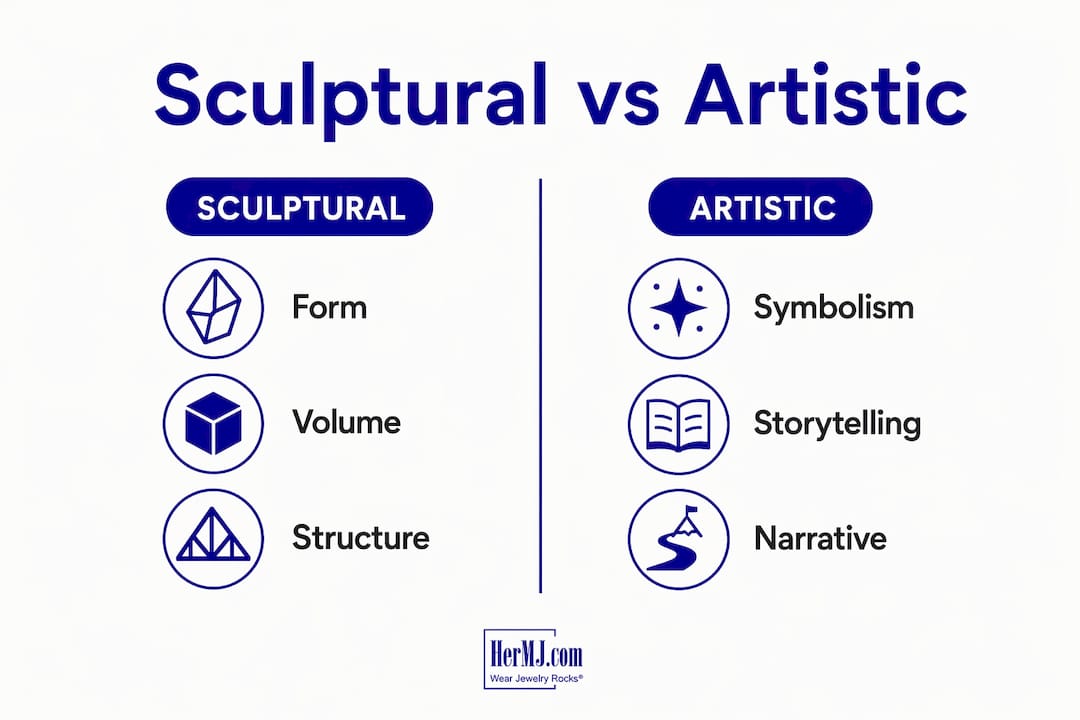
Sculptural jewelry focuses on structure, clean lines, and form, while artistic jewelry emphasizes symbolism and storytelling. That’s the clearest way to distinguish between two styles that are often grouped together. Both are expressive, but they express different things.
Artistic jewelry carries narrative weight. A piece might depict a specific myth, honor a cultural tradition, or encode personal meaning through symbols. The visual experience is secondary to the message. Sculptural jewelry flips that priority. The visual and physical experience of the form is the entire point.
| Feature | Sculptural jewelry | Artistic jewelry |
|---|---|---|
| Primary focus | Form, volume, and structure | Symbolism and storytelling |
| Design language | Abstract, architectural, geometric | Figurative, narrative, symbolic |
| Emotional appeal | Bold, avant-garde, architectural | Personal, meaningful, cultural |
| Material approach | Recycled metals, minimal stones | Mixed media, enamel, found objects |
| Typical wearer | Fashion-forward, design-conscious | Collectors, cultural enthusiasts |
The overlap exists, of course. A piece can be both sculptural and artistic, the way a Brancusi sculpture is both an abstract form and a cultural statement. But when you’re shopping or styling, knowing which priority drives a piece helps you choose with confidence.
Sculptural jewelry is chosen by those wanting bold, avant-garde fashion that adds architectural appeal and expresses individuality. Artistic jewelry tends to attract collectors who want their accessories to carry personal or cultural meaning.
What are examples and pricing ranges for sculptural jewelry?
Sculptural jewelry spans a wide market, from accessible artisan works to serious luxury. Pricing ranges from around $300 for accessible artisan pieces to over $23,000 for high-end 18k gold designer creations. That range reflects differences in materials, construction complexity, and designer reputation rather than any single measure of quality.
The table below shows how materials and construction methods influence price across market segments.
| Market segment | Typical materials | Price range |
|---|---|---|
| Accessible artisan | Sterling silver, recycled brass | $300–$800 |
| Mid-range designer | Gold-filled, natural stone accents | $800–$3,000 |
| High-end contemporary | 18k gold, ethically sourced gems | $3,000–$12,000 |
| Luxury designer | Solid 18k gold, rare stones | $12,000–$23,000+ |
Architecture and the natural world drive the most recognized design inspirations in this category. Pieces referencing coral formations, eroded stone, or the geometry of modernist buildings appear consistently across collections.
The hand-fabricated approach used by many sculptural jewelers means no two pieces are exactly alike, which adds to both the appeal and the price.
For readers who want to appreciate these pieces more deeply before buying, understanding artisan jewelry craftsmanship gives you a real advantage. You’ll know what to look for in construction quality, and you’ll understand why certain price points are justified.
How should you wear sculptural jewelry to make an impact?
Designers advise starting with one striking sculptural piece worn with simple, neutral clothing to let the jewelry become the focal point. That’s the single most reliable rule for wearing this style well. A sculptural cuff or a bold collar necklace needs breathing room to read properly.
Dos:
- Pair one sculptural statement piece with a solid-color, minimalist outfit.
- Choose sculptural earrings or a necklace for formal events where you want presence without excess.
- Let the piece dictate the color palette of your outfit, not the other way around.
- Mix textures in your clothing (linen, silk, matte jersey) to complement the jewelry’s tactile quality.
Don’ts:
- Don’t stack multiple sculptural pieces in the same look. One is a statement; two is competition.
- Don’t pair bold sculptural jewelry with heavily patterned clothing. The pattern wins, and the jewelry disappears.
- Don’t reserve sculptural pieces only for special occasions. A sculptural cuff works just as well with a white shirt and tailored trousers.
For eco-conscious dressers, pairing sculptural jewelry with sustainable cork accessories creates a look that’s both visually interesting and aligned with responsible fashion values. The matte, natural texture of cork complements the bold geometry of sculptural metal beautifully.
Pro Tip: If you’re new to this style, start with a sculptural bracelet or cuff. It’s the easiest sculptural piece to wear because it doesn’t compete with your face or neckline.
Key Takeaways
Sculptural jewelry is wearable art defined by three-dimensional form, architectural structure, and bold proportion, making it one of the most expressive categories in contemporary jewelry design.
| Point | Details |
|---|---|
| Core definition | Sculptural jewelry prioritizes form and volume over gemstone brilliance or traditional ornamentation. |
| Key materials | Recycled metals, sterling silver, and 18k gold are the most common, often with ethically sourced stones. |
| Price range | Accessible pieces start near $300; luxury designer works can exceed $23,000. |
| Styling rule | Wear one sculptural piece at a time with simple, neutral clothing to maximize visual impact. |
| Sculptural vs. artistic | Sculptural jewelry leads with form and structure; artistic jewelry leads with symbolism and narrative. |
Why sculptural jewelry resonates beyond fashion
I’ve spent years working with handcrafted jewelry, and I’ll tell you plainly: sculptural jewelry is the category that consistently surprises people.
Readers who come to it expecting something difficult or unwearable almost always leave converted. The reason is that a well-made sculptural piece does something no other jewelry category does as reliably. It changes how you carry yourself.
There’s a real shift happening in how people think about accessories. The appetite for bold, architectural designs has grown steadily, and it’s not driven by trend cycles alone.
It reflects a deeper desire to wear something that feels intentional, something that says “I chose this because it means something to me formally and aesthetically,” not just because it matched a dress.
What I find most compelling about this style is the intersection of craftsmanship and sustainability. The best sculptural jewelers aren’t just making beautiful objects.
They’re using recycled gold, ethically sourced stones, and hand-fabricated techniques that reduce waste and honor the material. That combination of artistic ambition and ethical practice is rare in any design field.
My advice: don’t wait for a special occasion to wear a sculptural piece. The right piece worn on an ordinary Tuesday does more for your confidence than saving it for a moment that may never feel grand enough.
— Veronique
HerMJ’s handcrafted pieces for bold jewelry lovers
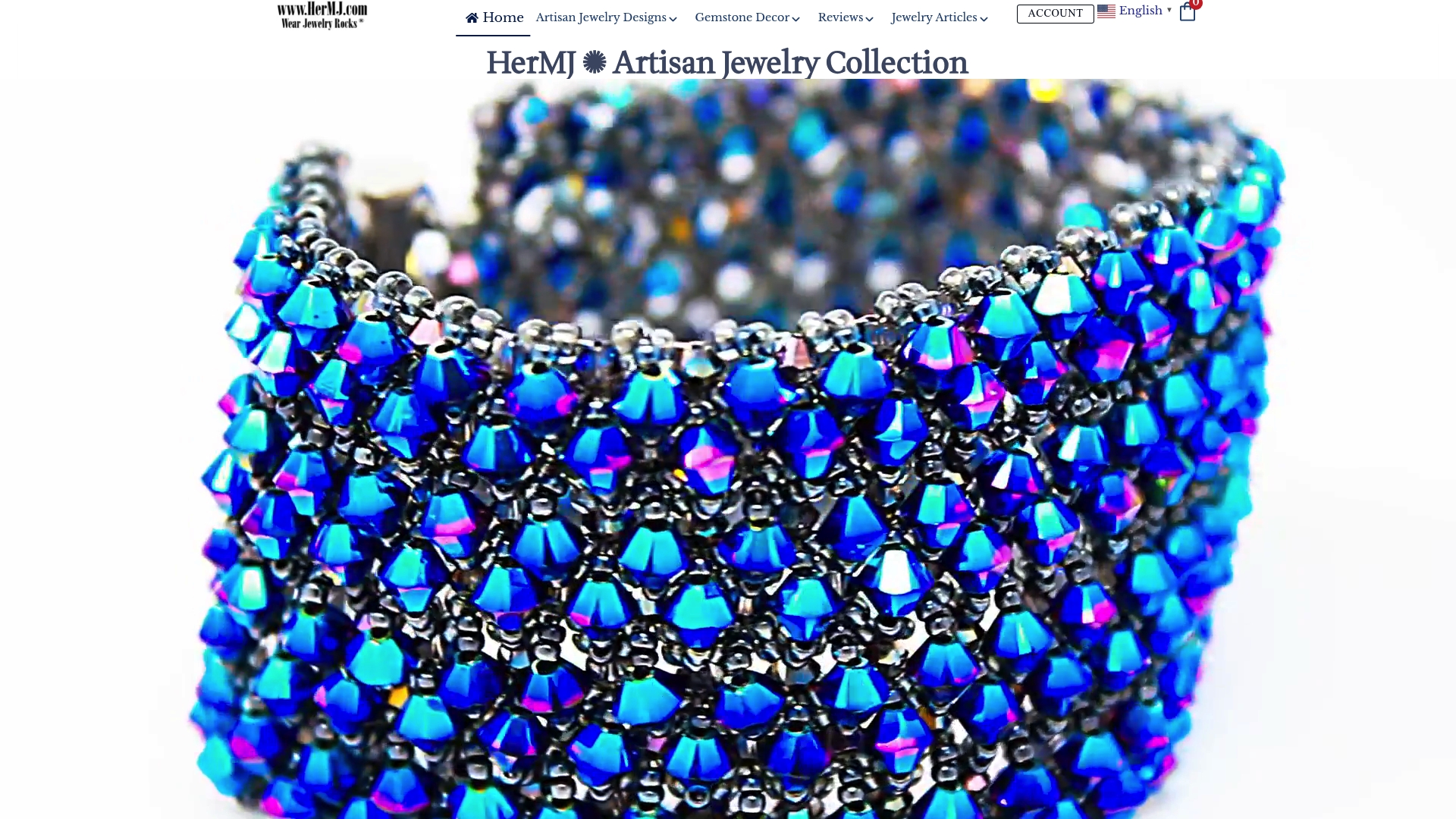
If sculptural jewelry has caught your attention, HerMJ’s handcrafted collection offers a natural next step. Each piece is made from genuine pearls and gemstones, with a focus on form, quality, and wearability that aligns with everything this style stands for.
The Elegant Freshwater Pearl Necklace is a strong starting point: clean, architectural in its simplicity, and handcrafted with the kind of attention to proportion that sculptural jewelry demands.
For those drawn to color and organic form, the Pearl and Aquamarine Necklace pairs natural stone with fluid design in a way that feels genuinely wearable. US orders ship free with no minimum, and international orders ship free for orders of $150 and above.
FAQ
What is the definition of sculptural jewelry?
Sculptural jewelry is wearable art that prioritizes three-dimensional form, bold volume, and architectural structure over gemstone brilliance. The shape itself is the primary design element, not the materials or stones used.
How does sculptural jewelry differ from regular jewelry?
Regular jewelry typically leads with materials, stones, or decorative motifs. Sculptural jewelry leads with form and proportion, treating the piece as a small sculpture that happens to be worn on the body.
What are some examples of sculptural jewelry styles?
Common examples include oversized curved cuffs, abstract collar necklaces, dome-shaped statement pieces, and hand-carved pendants with lattice structures. Designs often reference architecture, coral formations, or fluid organic forms.
How do you wear sculptural jewelry without overdoing it?
Wear one sculptural piece at a time and pair it with simple, solid-color clothing. Let the jewelry serve as the focal point of the outfit rather than competing with patterns or other bold accessories.
Is sculptural jewelry sustainable?
Many sculptural jewelry designers use recycled metals and ethically sourced gemstones as a core part of their practice. That ethical approach is one of the reasons the style has grown in appeal among design-conscious buyers.
Recommended
- What Is Gemstone Cluster Jewelry: Style Guide 2026
- Jewelry Styles Explained: Know What’s Important
- Handcrafted Jewelry Making Techniques for DIY Creators