


Hypoallergenic Earrings For Sensitive Ears and Kids
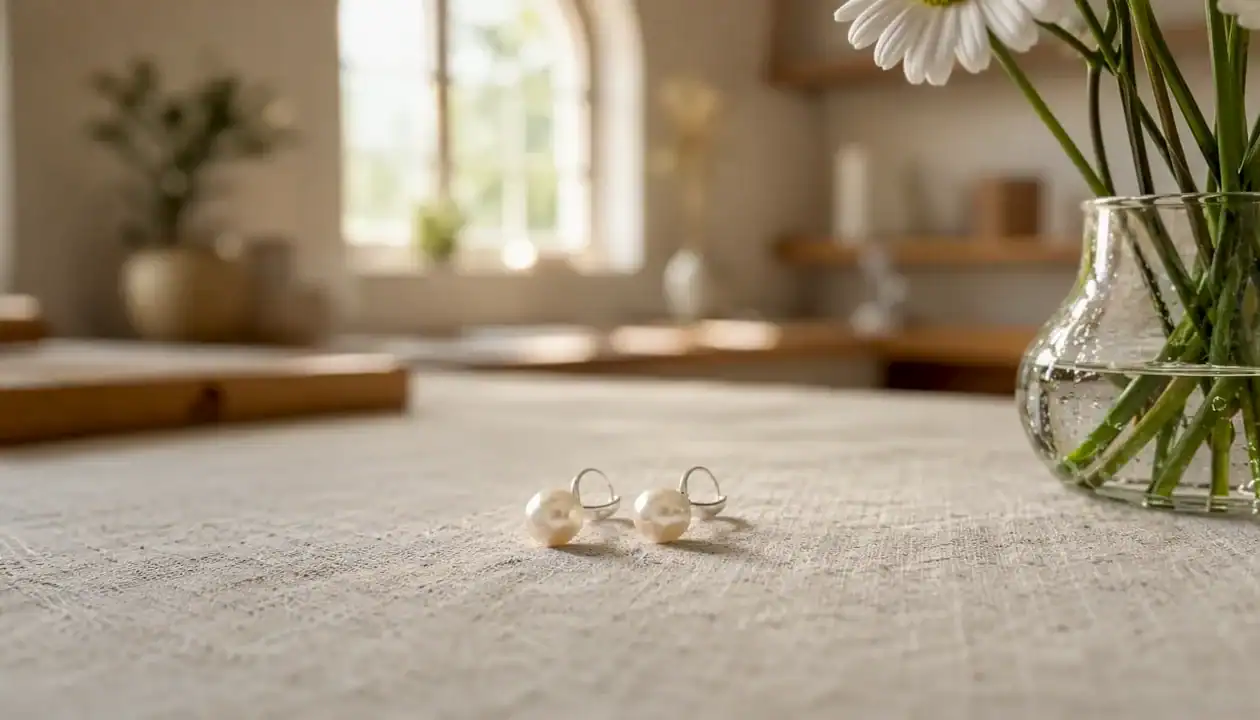
The safest hypoallergenic earrings are made from implant-grade titanium, platinum, solid 14K+ yellow gold, or niobium. These four metals resist the corrosion and nickel leaching that trigger most ear irritation, and they hold up whether you’re buying your first “safe” pair or replacing a set of cheap studs that never should have touched your skin. Pair any of them with a lightweight stud, huggie, or flat back, and you’ve solved most of the problem before you even check out.
For a quick shortlist, here’s where I’d point you first:
- Elegant Freshwater Pearl Necklace — not an earring, but a good example of HerMJ’s genuine, handmade materials if you’re building a matching set for sensitive skin.
- Titanium flat-back studs — the safest bet for sleepers and fresh piercings, since the flat disc backing won’t dig into pillows.
- Solid 14K gold huggies — a step up in cost, but reliable for daily wear if you know you tolerate yellow gold.
- Niobium hoops — an underrated option for people who’ve reacted to “hypoallergenic” stainless steel before.
- Screw-back titanium studs for kids — the closure that actually keeps small earrings in small ears.
If you only do one thing after reading this, buy one verified pair in implant-grade titanium or niobium and retire whatever you’re currently wearing that itches. Everything else in this guide is about making sure your next purchase, and the ones after it, actually deserve the word “hypoallergenic” printed on the label.
Key Takeaways
Implant-grade titanium, niobium, platinum, and solid 14K+ gold are the only metals reliably safe for sensitive ears, and lightweight styles with secure backs prevent most irritation.
| Point | Details |
|---|---|
| Choose verified metals | Look for implant-grade titanium, niobium, platinum, or solid 14K+ gold, not vague “hypoallergenic” labels. |
| Match backs to the wearer | Flat backs for sleepers, secure closures for daily wear. |
| Skip risky white gold | Avoid white gold unless it’s explicitly labeled nickel-free, since it often uses nickel alloying. |
| Watch for sensitization | Metals you’ve tolerated before can still trigger reactions later, so switch materials at the first sign of irritation. |
| Check HerMJ’s transparency | HerMJ product pages list materials and return terms clearly, the same standard to demand from any earring seller. |
What Makes Earrings Truly Hypoallergenic?
“Hypoallergenic” isn’t a regulated term, which is exactly why so many earrings that claim to be hypoallergenic still cause reactions. A pair is genuinely safe for sensitive ears only if the metal doesn’t contain nickel, or contains so little that it can’t leach into the skin over time. That’s a narrower list than most jewelry counters would have you believe.
Nickel is the single most common trigger for earring-related allergic contact dermatitis, and it hides in places you wouldn’t expect, including white gold and some grades of surgical steel. Blue Nile’s guide to sensitive-ear jewelry points out that nickel-free labeling is far more trustworthy than a vague “hypoallergenic” sticker, because it tells you what’s actually absent rather than what a marketing team hopes you’ll assume.
The metals that consistently pass the test are implant-grade or medical-grade titanium, platinum, niobium, and high-karat gold (14K or higher) that hasn’t been alloyed with nickel for color or hardness. BluDiamonds ranks these as top-tier options for sensitive skin, with surgical stainless steel a notch below them, since some grades still contain trace nickel. If your ears have ever reacted to “stainless steel” earrings, that’s likely why.
What Should You Check Before Buying Hypoallergenic Earrings?
Run through this list before you add anything to your cart, whether you’re shopping online or standing at a jewelry counter.
- Confirm the exact material and grade. Look for “implant-grade titanium,” “ASTM F136,” “solid 14K gold,” “platinum,” or “niobium” printed explicitly, not just the word “hypoallergenic” on its own.
- Match the backing to the wearer. Screw-backs for kids and anyone active, flat backs for people who sleep in their earrings, and secure friction backs for everyday studs.
- Weigh the piece, not just the price. Heavier earrings stretch the lobes and irritate fresh piercings more quickly than lightweight styles.
- Read the return policy before you buy. A retailer confident in its materials will back that confidence with an easy return window.
Pro Tip: Keep a small notebook, or even just a note on your phone, of which specific metals and grades you’ve worn without reaction. “Titanium” tells a jeweler almost nothing; “implant-grade titanium, no reaction after six months” tells them everything.
Pieces like Abalone Gold Splash Earrings show what a transparent product page should look like: the materials are named, not implied, and the return terms are easy to find. That transparency is the whole game when you’re shopping for sensitive skin.
Which Hypoallergenic Earrings Are Actually Worth Buying?
Here’s how the safest, most useful picks stack up against each other on the details that actually matter for sensitive ears.
The Elegant Freshwater Pearl Necklace earns its spot here because it shows how HerMJ approaches material transparency across its entire catalog, not just earrings. Every product page states what the piece is made from, which is exactly the standard you should hold any hypoallergenic earring seller to.
For the actual earring styles, implant-grade titanium studs are your safest all-purpose choice, especially for fresh piercings that need to heal without added irritation. Solid 14K gold huggies cost more but reward you with a warmer look and genuine longevity if you already know your skin tolerates yellow gold. Niobium hoops are the quiet standout for anyone who’s struck out with “hypoallergenic” surgical steel before; the metal is essentially inert and rarely causes a reaction even in people with confirmed nickel allergies.
Screw-back titanium studs round out the list because they solve a problem specific to kids: little hands that tug and twist. A flat back or a friction back can work loose during a nap or a car ride; a screw back generally can’t.
What’s Safe for Babies, Toddlers, and First Piercings?
Kids’ ears need a stricter standard than adult ears, mostly because their skin is more reactive and their earrings get far less gentle handling. The safest materials for children are the same top-tier options as for adults: implant-grade titanium and niobium, with solid 14K+ gold as a reliable but pricier alternative.
Backing choice matters even more for kids than metal choice. A screw-back stud is close to essential for infants and toddlers, since it resists the kind of accidental tugging that can turn a lost earring into a choking hazard. Older kids who can be trusted not to fiddle with their ears can usually move to a secure flat back once the piercing has fully healed, typically after six to eight weeks for lobes.
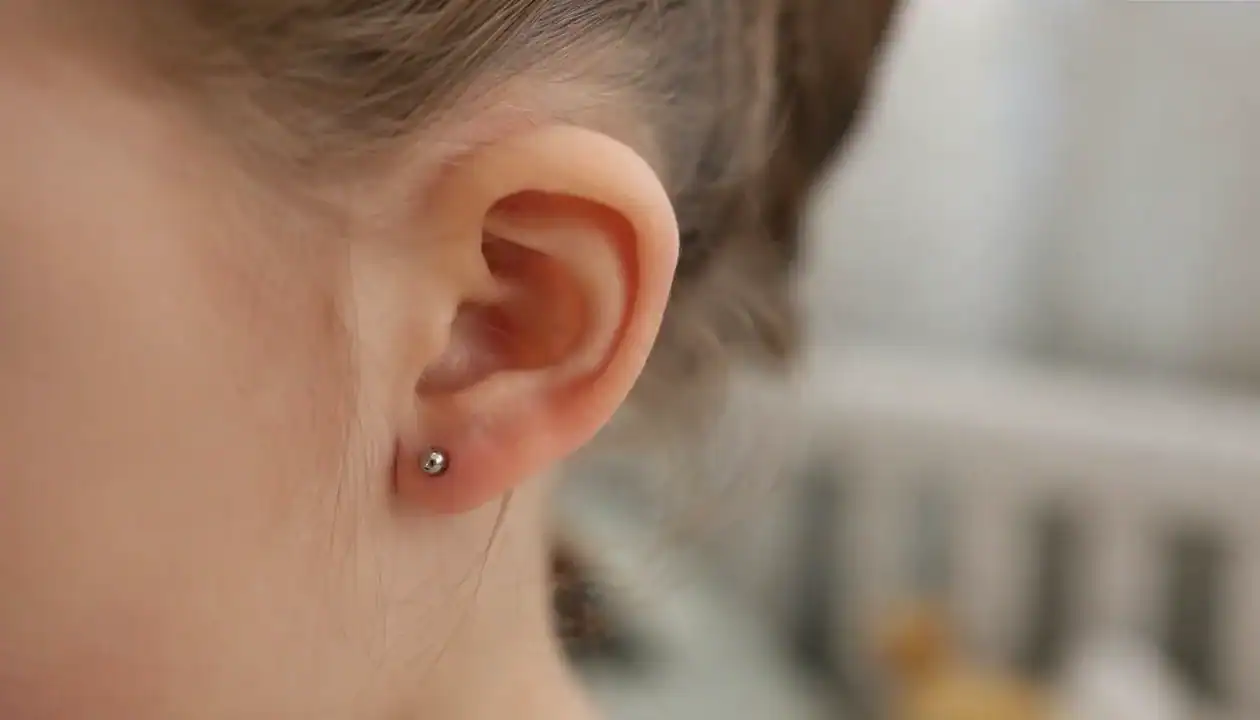
Keep the studs themselves small. A 3 to 4-millimeter stud sits closer to the ear and puts less strain on a small, healing lobe than a larger fashion piece. Weight matters here too: even a “hypoallergenic” earring can irritate a toddler’s ear if it’s heavy enough to pull.
Pro Tip: Check that any earrings for a young child arrive in sealed, sterile packaging, and inspect the backing for choking-hazard risks before you hand over a pair, even a “gift set” that looks harmless on the shelf.
If your child’s piercing shows redness, swelling, or discharge that doesn’t improve within a few days of switching to a verified nickel-free metal, that’s a conversation for a pediatrician or a professional piercer, not a wait-and-see situation.
Titanium vs. Stainless Steel vs. Gold: Which Metal Fits Your Sensitivity?
Not every “safe” metal deserves equal trust, and the differences come down to composition, not marketing.
Implant-grade titanium sits at the top for a reason. It’s the same material used in surgical implants, and it contains no nickel at all. Look specifically for ASTM F136 or “implant-grade” on the label; plain “titanium” without a grade can still be an alloy that includes trace amounts of other metals. Byrdie’s editorial testing of earrings for sensitive ears found that titanium picks consistently met the bar for comfort and lack of irritation, and noted that lightweight titanium styles don’t need to be expensive to work well.
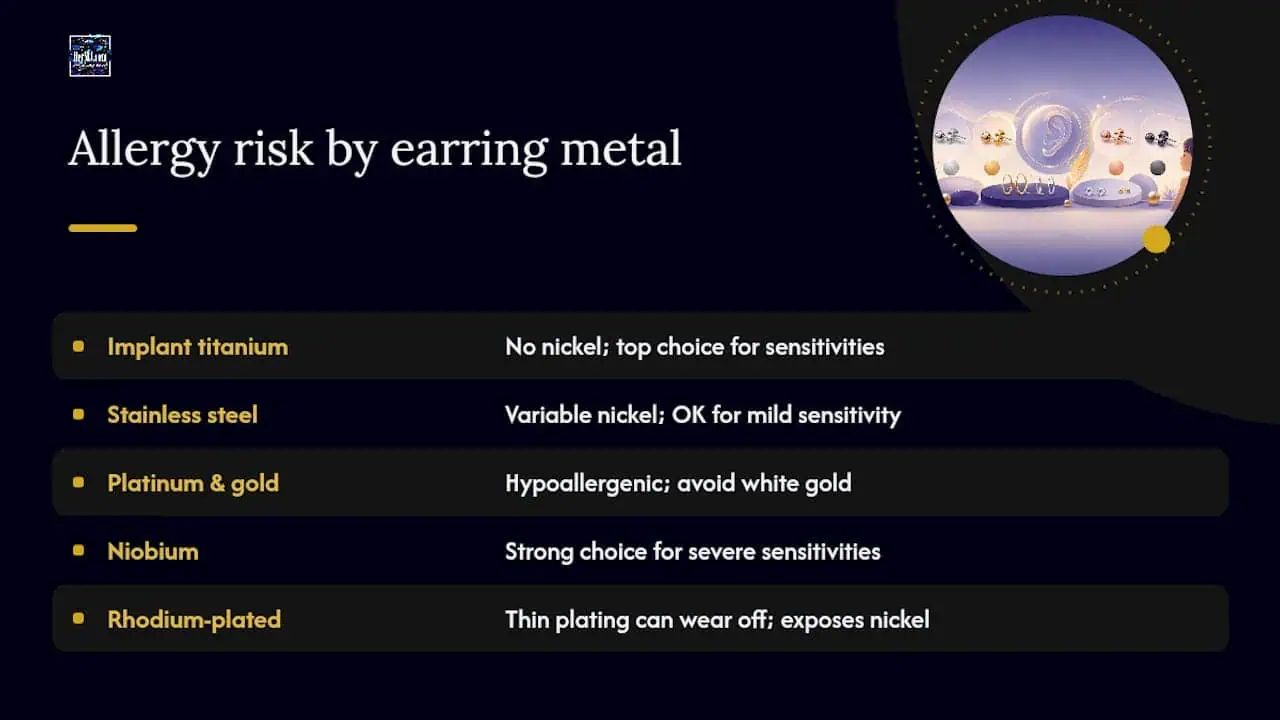
Surgical stainless steel is a middle-tier option. Some grades are genuinely low in nickel and fine for mild sensitivity, but not all “surgical steel” is created equal, and a portion of it still contains enough nickel to bother reactive skin. If you have a confirmed allergy rather than general sensitivity, don’t gamble on stainless steel; go straight to titanium or niobium.
Platinum and high-karat gold round out the reliable tier. Platinum is naturally hypoallergenic and doesn’t require nickel alloying. Solid 14K, 18K, or higher gold is generally safe too, but white gold is the exception that trips people up: it often gets its pale color from a nickel alloy. DoctorKatta’s explainer on nickel allergy and jewelry is direct about this. Unless a white gold piece is explicitly labeled nickel-free, someone with a real nickel allergy should choose yellow gold or platinum instead.
Niobium and rhodium plating serve two different purposes. Niobium is a strong choice for severe sensitivities on its own merits. Rhodium plating, on the other hand, is a thin protective layer often applied over white gold or silver, and it can wear away with regular contact, exposing the base metal underneath. That’s worth knowing before you buy anything described as “rhodium-plated” for daily wear.
Plated costume jewelry is where most reactions actually start. A thin gold or silver plating over a base metal alloy looks fine on the shelf, but as Blue Nile notes, that plating wears through with normal use, and once it does, the nickel-heavy base metal touches your skin directly. Solid metal, or at least a thick vermeil layer, avoids this problem entirely. A partner retailer’s gold-plated stainless steel bow earrings are a useful real-world example of exactly this construction; plated pieces like this can be fine for occasional wear but aren’t the right call for someone managing a confirmed sensitivity.
Fresh piercings deserve extra caution regardless of which metal you choose. Healing skin is more reactive than settled skin, so even people who later tolerate stainless steel earrings just fine often need titanium or niobium for the first several weeks.
How Should You Clean and Care for Hypoallergenic Earrings?
Good materials only get you halfway. Care habits determine whether those materials continue to protect you month after month.
- Wipe posts and backs daily with a soft cloth or a cotton swab dampened with mild soap and water. Skip harsh alcohol-based cleaners on plated pieces, since they can accelerate wear.
- Remove earrings before swimming or heavy sweating when possible, and clean them promptly afterward. Chlorine and saltwater accelerate corrosion even on titanium and gold.
- Rinse away makeup and skincare residue at the end of the day. Foundation and serums build up around posts and backs, trapping bacteria against the skin.
- Inspect plating regularly. Once you see the base metal peeking through a gold-plated or rhodium-plated piece, retire it. That’s the exact moment reactions tend to start.
- Replace worn backs and posts rather than reusing a pair with a stripped screw-back or a bent post; a compromised closure is both a comfort and a safety issue for kids.
A guide to storing sterling silver jewelry covers storage habits that extend to gold and plated pieces too: keep earrings dry, separated, and out of direct humidity to slow tarnish and plating wear.
Nickel sensitization is also a moving target. You can wear the same “safe” earrings for years and then suddenly react, because repeated exposure can build sensitivity over time in a way it didn’t before.
If a pair you’ve worn comfortably for months starts to itch or turn red, don’t assume it’s a fluke; switch to a verified nickel-free metal and see what happens.
Know the difference between irritation and infection. Redness and mild itching that fade within a day usually point to an allergic reaction to the metal. Warmth, swelling, pus, or pain that worsens over 24 to 48 hours points to infection and calls for a doctor, not just a metal swap.
How We Chose These Hypoallergenic Earring Picks
Every recommendation above went through the same basic filter: verified material claims first, comfort second, and return policy third. We checked product listings for explicit grade language (implant-grade, ASTM F136, solid karat gold) rather than relying on the word “hypoallergenic” alone, since it carries no legal weight.
We evaluated comfort and weight through hands-on wear, paying attention to how a stud or huggie felt after a full day, not just on first try-on. Kid-safety checks focused specifically on backing security: could a screw-back withstand normal toddler tugging, and did flat-back styles sit low enough to avoid snagging on fabric or hair?
Individual skin responses vary more than most buying guides admit. Two people can wear the exact same titanium stud, and one will have zero issues while the other still reacts to a trace contaminant or a personal sensitivity that has nothing to do with the metal’s overall safety profile. If you have a confirmed allergy, a dermatologist patch test is worth the appointment before you commit to a full jewelry wardrobe.
- Material verification against grade standards, not marketing language
- Hands-on comfort and weight testing across a full day of wear
- Kid-specific closure checks for security and choking-hazard risk
- Return and warranty policy review as a trust signal
Why I Take Sensitive-Ear Shopping Seriously
I’ve spent enough time around jewelry, both wearing it and helping people choose it, to know that “hypoallergenic” gets thrown around far too loosely.
It’s frustrating to watch someone spend real money on earrings marketed specifically to sensitive skin, only to have their ears react within a week because the listing never actually named the metal. That gap between promise and product is where most bad experiences start.
What I prioritize, and what I’d want any friend with sensitive ears to prioritize, is specificity. Implant-grade titanium. Solid 14K gold. A screw-back for a toddler, not just “kid-friendly” as a vague phrase on a box. Vague language is where allergic reactions hide.
If you have questions about a specific material or closure on any piece you’re considering, check the product page details first, or reach out to customer service directly. A retailer that can’t answer a direct question about what’s in their earrings isn’t one I’d trust with sensitive skin.
Where Hermj Fits If You Want Handmade, Nickel-Conscious Jewelry
If you’ve been comparing hypoallergenic earring brands and want something with real craftsmanship behind it rather than a generic titanium stud from a mass retailer,
Hermj takes a different approach worth considering alongside them. Instead of mass-produced pieces optimized for volume, Hermj hand-builds jewelry from genuine freshwater pearls and natural gemstones, with materials listed clearly on every product page so you’re never guessing what’s touching your skin.
This matters most for the pieces you wear every day and want to actually last. The Lustrous Freshwater Pearl Bracelet for Elegance pairs well with sensitive-ear-friendly earrings if you’re building a coordinated look, and it carries the same materials transparency and return policy you’d want from any earring purchase.
The Pearl And Aquamarine Necklace and Faceted Garnet Gemstone Necklace show the same standard applied to gemstone pieces, while the Strawberry Quartz Gemstone Bracelet and Tiger Eye Bracelet demonstrate it on lighter, everyday gemstone styles. None of these replace a dedicated hypoallergenic earring, but they show what handmade transparency looks like when a brand actually practices it.
US orders ship free with no minimum, and international orders ship free on orders of $150 or more. If you want to see how HerMJ approaches artisan jewelry construction or what separates handcrafted pieces from mass production, start with the Elegant Freshwater Pearl Necklace product page to see exactly how materials and return terms should be presented, then browse the full pearl jewelry collection for your next piece.
Sources
- The 13 Best Earrings for Sensitive Ears, Tested and Reviewed — Byrdie
- Earrings for Sensitive Ears: Materials, Styles and Tips — Blue Nile
- Nickel allergy and jewelry — DoctorKatta
- Why Hypoallergenic Earrings Are the Best Choice for Sensitive Ears — BluDiamonds
This general guidance isn’t a substitute for professional medical advice. If you have a confirmed metal allergy, talk to a dermatologist or your piercer about patch testing before committing to a new material.
Recommended
- Dangle Handmade Earrings And Artisan Handcrafted Earrings
- What Is Everyday Elegant Jewelry: Your Style Guide
- Style Pearl Jewelry with Everyday Outfits: Easy Looks
- How to Style Pearl Jewelry for Everyday Elegance