


Green Gemstones List: 14 Stones From Mint to Forest
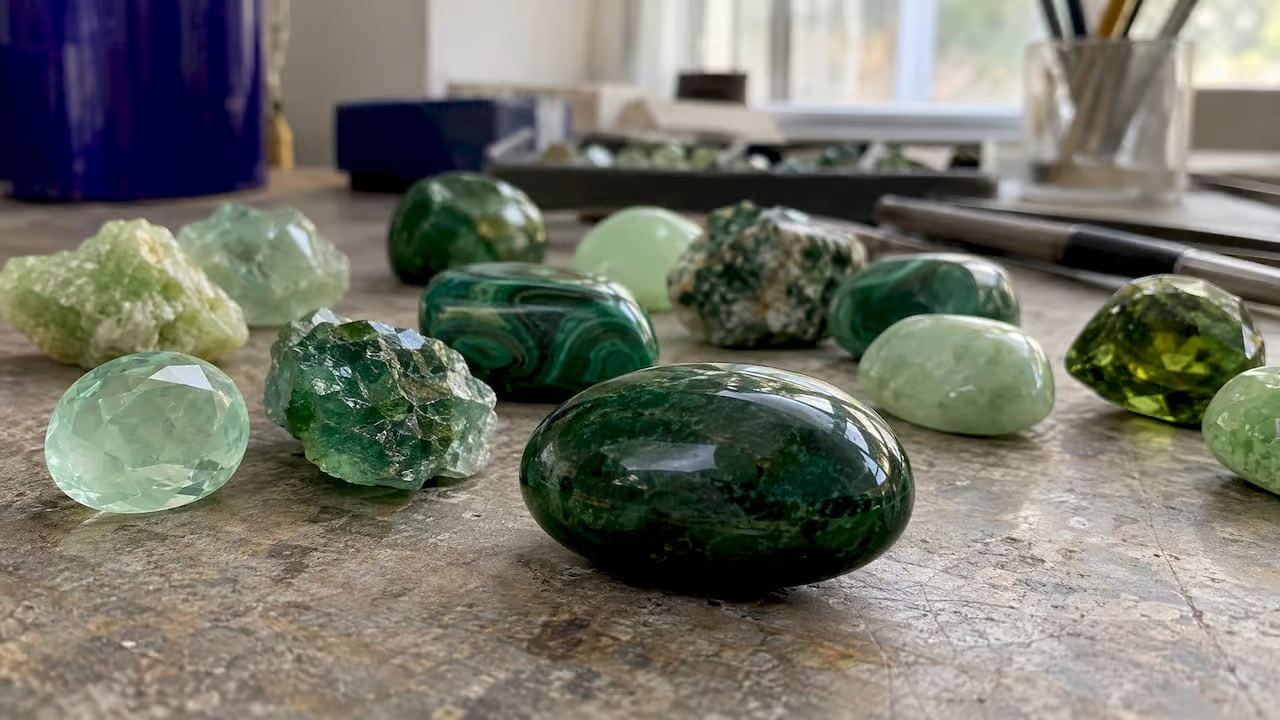
Green is the easiest color to wear and the hardest to choose, because the family is huge.
Emerald, peridot, jade, tourmaline and garnet all count, and each one behaves differently on your wrist or at your ear. This list sorts the main green gemstones by shade, then tells you how tough each one is, so you can pick a stone that suits your style and your daily life. I’m a jewelry designer at HerMJ, and I’ll keep it practical.
TL;DR
- Light green favorites are peridot, chrysoprase, prehnite and green aventurine. Deep green favorites are emerald, jade, malachite and tsavorite.
- Hardness matters: peridot, jade and chrysoprase suit everyday wear, while malachite and chrome diopside are better in earrings and pendants.
- Peridot, chrome diopside and green tourmaline are the best value green stones.
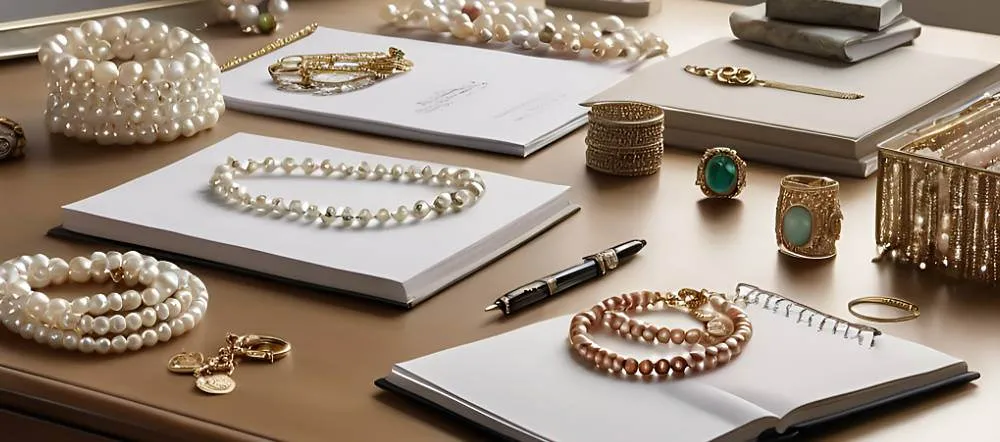
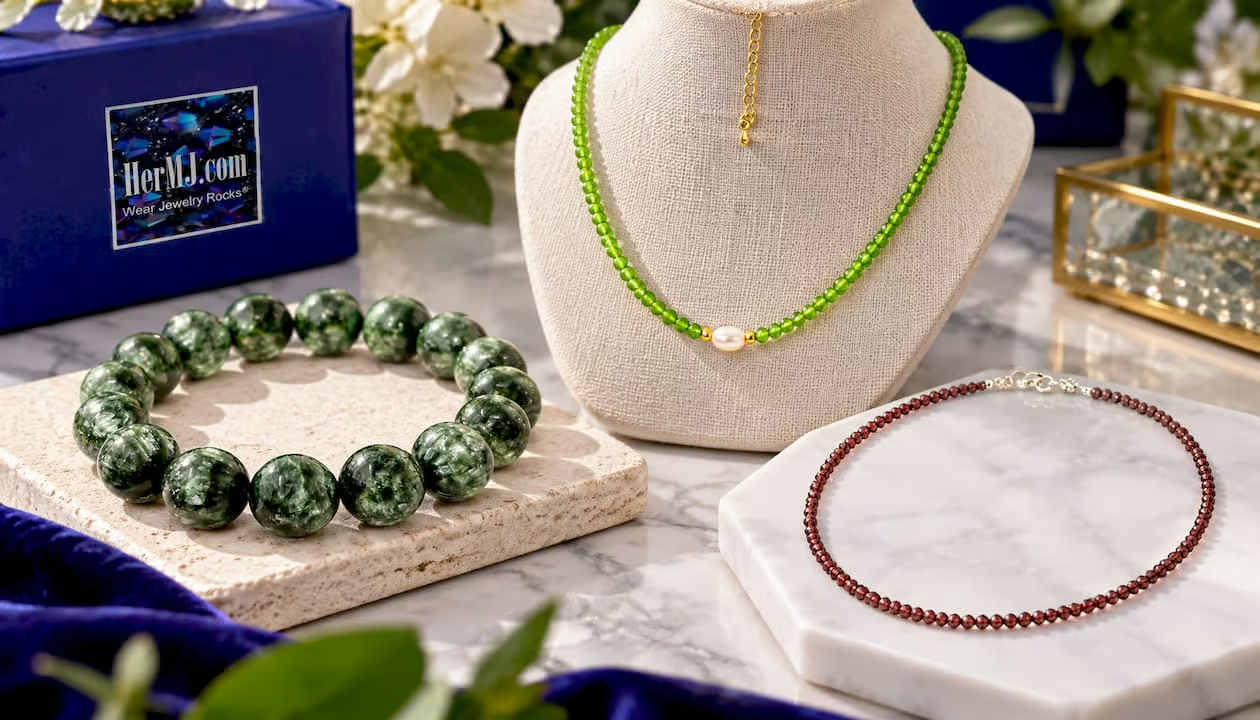
- Pearls pair beautifully with green, and our peridot and pearl necklace shows how.
What counts as a green gemstone
The U.S. Geological Survey defines a natural gemstone as a mineral, stone or organic material that can be cut and polished or otherwise treated for jewelry. It also says precious stones combine beauty, durability and rarity, while semiprecious stones offer one or two of those qualities.
Diamond, corundum, beryl, topaz and opal are usually classed as precious, and everything else is typically called semiprecious.
For shopping, that label matters less than it sounds. A semiprecious stone can be gorgeous, and many of the green stones below are far kinder to your budget than emerald.
A quick word on hardness. The Mohs scale rates scratch resistance from 1 to 10. Anything near 7 or above handles daily wear well. Below that, a stone wants a gentler life. If you’d like the full picture, my guide to Mohs gemstone hardness explains how stones scratch one another in a jewelry box.
Light green gemstones
Light greens read fresh, soft and easy. They work with white, cream and blush tones, and they flatter pearls.
Peridot
Peridot is the bright, lime-leaning green of the group. GIA says notes that the color comes from iron, and the finest stones run from saturated green to slightly yellowish green without brown tints. Smaller stones often show yellow-green to greenish yellow with brown undertones.
It rates 6.5 to 7 on the Mohs scale, so it’s fine for earrings and pendants and wants a little care in bracelets. It’s also the August birthstone in the U.S. You can read its story in our peridot birthstone history.

Chrysoprase
Chrysoprase is a translucent, minty green quartz-family stone colored by nickel. Its hardness is 7 on the Mohs scale, which makes it a sturdy choice for beads and cabochons. The soft apple-green tone is lovely against silver.
Prehnite
Prehnite is a pale, gentle green, often with a slightly creamy glow. It’s a quieter stone, perfect if you like a muted look rather than a loud one.
Green aventurine
Green aventurine is a soft, speckled green with a gentle shimmer. It’s widely available, easy to find in beads and polished decor pieces, and one of the most affordable green stones.
Green beryl
When beryl is too pale to qualify as emerald, it’s called green beryl. Geology.com notes that emerald needs a rich green between bluish green and slightly yellowish green, and paler stones should be named green beryl. Beryl is rated 7.5 to 8 in hardness, so it wears well.
Medium and vivid green gemstones
Green tourmaline
Tourmaline spans many greens. Its hardness is 7 to 7.5 for the dravite type GIA lists, which suits daily wear. Chrome-colored tourmaline commands much more than ordinary iron-colored green, according to Gems Lore.
Chrome diopside
Chrome diopside has a vivid green that’s often mistaken for emerald. Geology.com says its low hardness and fragile cleavage make it best for earrings, pendants and brooches rather than bracelets.
Green garnet
Garnet comes in green too. Tsavorite was discovered in Tanzania in 1967 and named by Tiffany & Co., according to Geology.com. It costs less than emerald but offers higher clarity and better resistance to breaking. Demantoid, another green garnet, can reach a rare, intense green. If you love garnet in general, take a look at our faceted red garnet necklace.
Dark green gemstones
Deep greens feel dramatic and a bit vintage. They look striking with gold, and they make strong statement pieces.
Emerald
Emerald is the classic. GIA describes it as beryl colored by chromium or vanadium, with the best stones bluish green to pure green. Most contain inclusions, and many are filled with oil, resin or wax, so they need gentle handling. Colombia, Zambia, Brazil and Zimbabwe produce most of the world’s emeralds, per Geology.com.
Jade
Jadeite’s most desirable shade is semi-transparent “imperial green,” while yellowish, grayish and blackish greens are more common, says GIA’s green gemstone guide. Nephrite jade is more subdued in color and less expensive. Jade is exceptionally tough because of its interlocking crystal structure, even with a modest 6 to 7 hardness, so it’s a great everyday stone.
Malachite
Malachite has banded swirls of deep green. It’s soft, at 3.5 to 4 on the Mohs scale, and brittle, so Geology.com recommends pendants, pins and earrings rather than bracelets. Its color doesn’t fade over time. Read more in my malachite meaning guide.
Seraphinite
Seraphinite has a feathery, silvery-green pattern that looks like a woodland shimmer. It’s a favorite in bracelets, like The HerMJ seraphinite bracelet.
Quick comparison
| Stone | Shade | Best in jewelry |
|---|---|---|
| Peridot | Lime to olive | Earrings, pendants |
| Chrysoprase | Mint to apple | Beads, pendants |
| Green aventurine | Soft speckled green | Bracelets, decor |
| Green tourmaline | Mint to forest | Everyday pieces |
| Chrome diopside | Vivid green | Earrings, pendants |
| Tsavorite | Bright to deep green | Necklaces, earrings |
| Emerald | Bluish to pure green | Special pieces |
| Jade | Soft to imperial green | Bracelets, beads |
| Malachite | Banded deep green | Pendants, earrings |
What affects price
The USGS notes that rarity is one of the most important factors in a gem’s price, and that cost equals price per carat times weight. For green stones, color comes first, then clarity, treatment and size.
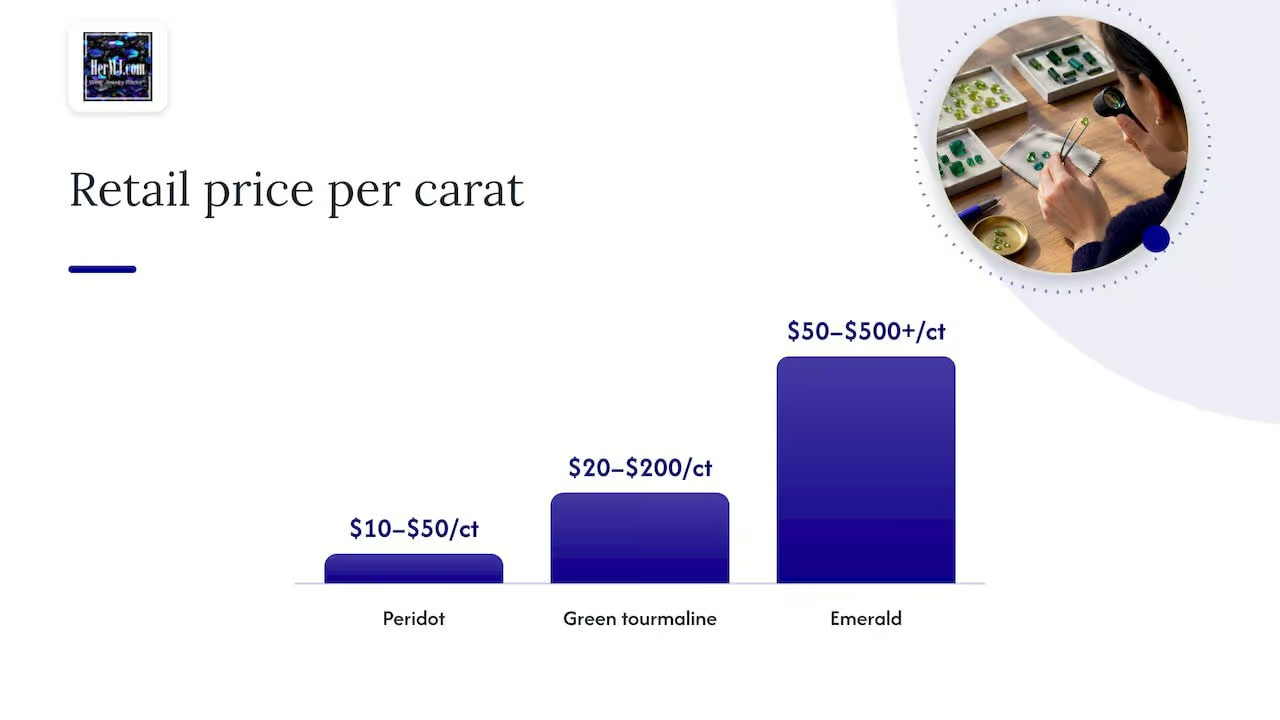
One published guide from Gemstone Rush put 2025 U.S. retail prices for commercial-quality stones at roughly $10 to $50 per carat for peridot, $20 to $200 for green tourmaline and $50 to $500 or more for emerald.
Prices shift with the market and quality, so treat them as ballpark figures. The takeaway: peridot, tourmaline and chrome diopside give you vivid green for much less than emerald.
How to choose your green
Start with how you’ll wear it. For daily bracelets, pick tougher stones such as jade, chrysoprase or tourmaline. For earrings and pendants, softer stones like malachite and peridot are safe because they rarely get knocked.
Then match tone to your style: mint for a fresh look, forest green for evening.
Green also suits the home. Polished aventurine, malachite and other crystals look wonderful on a shelf, and our room jewelry collection is made for exactly that. For month-based gifts, see our alternative birthstones by month.
For caring for pearls that sit beside your green stones, our pearl care page covers it.
HerMJ’s approach to green
We love green because it moves between casual and special occasion so easily. At HerMJ, we make handmade jewelry from genuine freshwater pearls, natural gemstones and crystals, and we aim for real craftsmanship at accessible prices.
Our favorite pairing is soft green stones beside creamy pearls. The pearl’s glow calms a vivid green, and the green gives the pearl some energy. It’s a combination that works with a white shirt and a black dress alike.
If you’re starting out, choose one stone you can’t stop looking at, then build around it.
Veronique
Shop green gemstone jewelry
Ready to wear one? Browse our pearl and gemstone jewelry for necklaces, bracelets and drop earrings. US orders ship free with no minimum, and international orders ship free for purchases of $150 or more.
You can also start with necklaces or bracelets.
FAQ
What is the most popular green gemstone?
Emerald is the best known, but peridot, jade and green tourmaline are common in everyday jewelry. They’re easier to find and generally much more affordable.
What are the cheapest green gemstones?
Green aventurine, chrysoprase and peridot sit at the budget end. Peridot offers a vivid color for a modest price per carat, as the figures above show.
Which green stones are durable enough for daily wear?
Beryl, tourmaline and chrysoprase rate 7 or higher. Jade resists breaking very well thanks to its interlocking structure. Softer stones such as malachite suit earrings and pendants.
What’s the difference between precious and semiprecious?
The USGS treats diamond, corundum, beryl, topaz and opal as generally precious, and other gemstones as usually semiprecious. It’s a trade classification, not a measure of beauty.
Sources
- Natural Gemstones – Key Terminology (USGS)
- GIA Green Gemstones Buying Guide
- Mohs Hardness of Selected Gems and Minerals
- Green Gemstones: Emerald, Jade, Peridot and more
- Tourmaline gemstone overview (GIA)
- Tourmaline price checks
- Gem Stones of the United States (USGS)
- Gemstones by color guide
Recommended
- Pink Gemstones List: 14 Stones, From Blush to Rose
- White Gemstones List: 18 Stones and How to Wear Them
- Gemstone Colors And Names — How Do They Get Their Color?
- Black Gemstones, Mohs Wearability and Care