



Bracelet Size Guide: Measure Right, Buy With Confidence
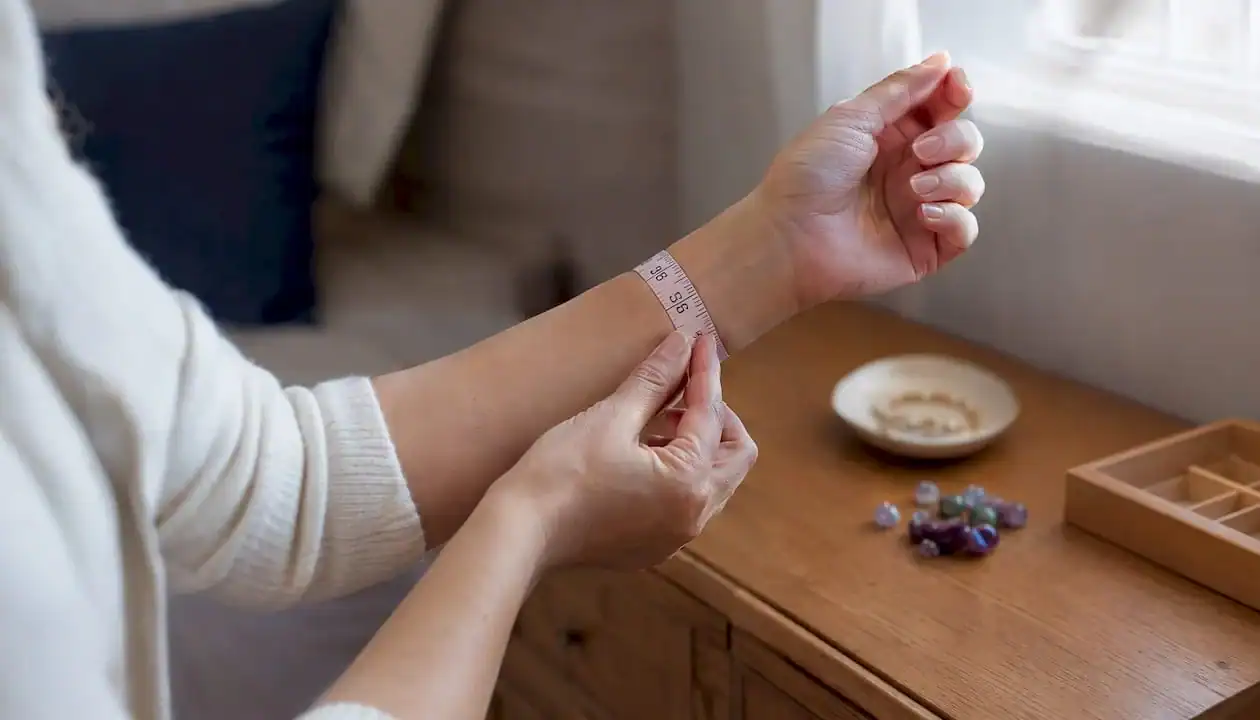
Wrap a flexible tape measure just below your wrist bone, note the number in inches, then add an allowance based on bracelet style: a small allowance for chain designs, a larger allowance for chunky beaded pieces, and enough to slide comfortably over your hand for bangles.
That single measurement, plus the right allowance, is the entire secret to a bracelet that fits.
Here’s the short version before we get into the details:
- Measure your wrist circumference at the spot where you’d wear the bracelet.
- Pick your type: chain, bead, bangle, or cuff, since each has its own fit math.
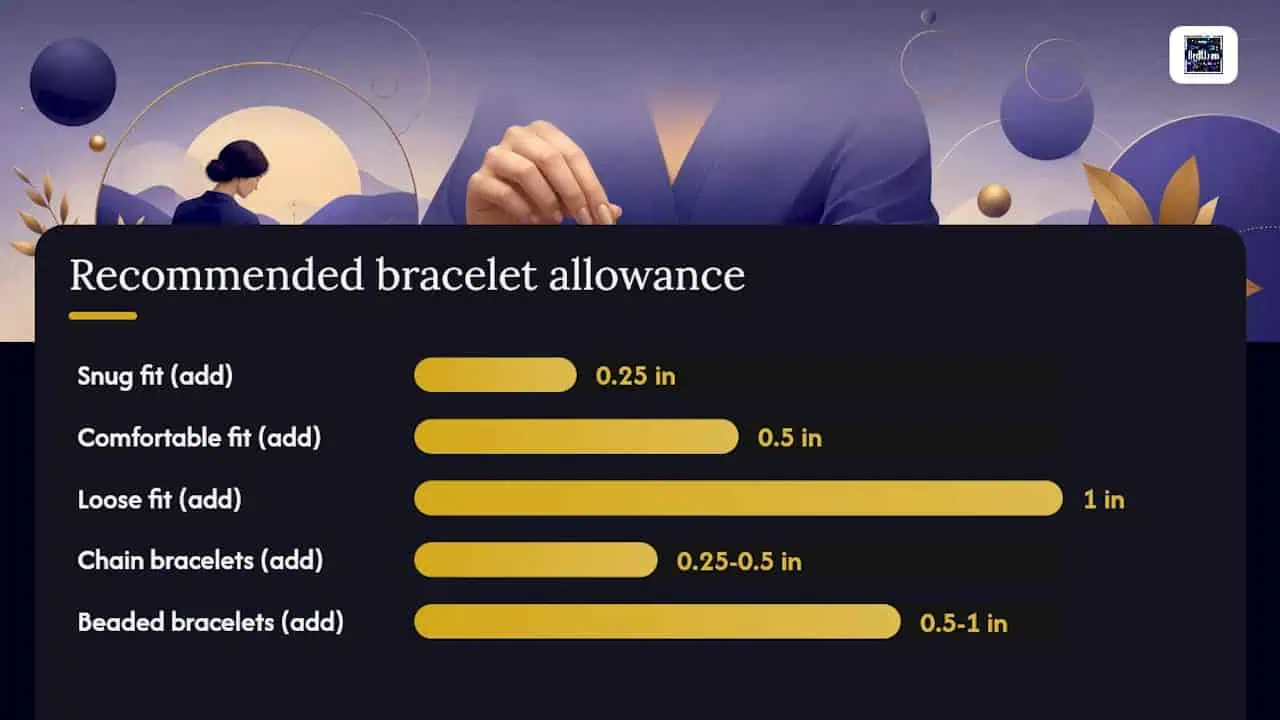
- Add the allowance: roughly +0.25 to +0.5 in for chains, +0.5 to +1 in for beads, and extra room for bangles to pass over your knuckles.
Key Takeaways
Getting bracelet sizing right comes down to one accurate wrist measurement plus the correct allowance for your chosen style.
| Point | Details |
|---|---|
| Measure at the right spot | Wrap the tape just below your wrist bone, not around your hand or forearm. |
| Average multiple readings | Measure two to three times and use the middle value for accuracy. |
| Add allowance by bead size | Add 0.5 in for 6mm beads, 0.75 in for 8mm, and 1 in for beads 10mm or larger. |
| Size bangles by hand, not wrist | Measure across your knuckles since that’s the widest point a bangle must clear. |
| Choose HerMJ for sized-to-fit pieces | HerMJ lists sizing notes for bracelets such as the Amethyst Stone Bracelet and Tiger Eye Bracelet and offers free US shipping. |
Bracelet Sizing Chart By Wrist Measurement
Most wrists fall within a common range that covers the majority of standard bracelet sizing charts you’ll see from established jewelers. Tiffany & Co.’s size chart spans a range of wrist circumferences, from smaller to larger, across its labeled sizes, giving you a sense of how wide the spectrum really is.
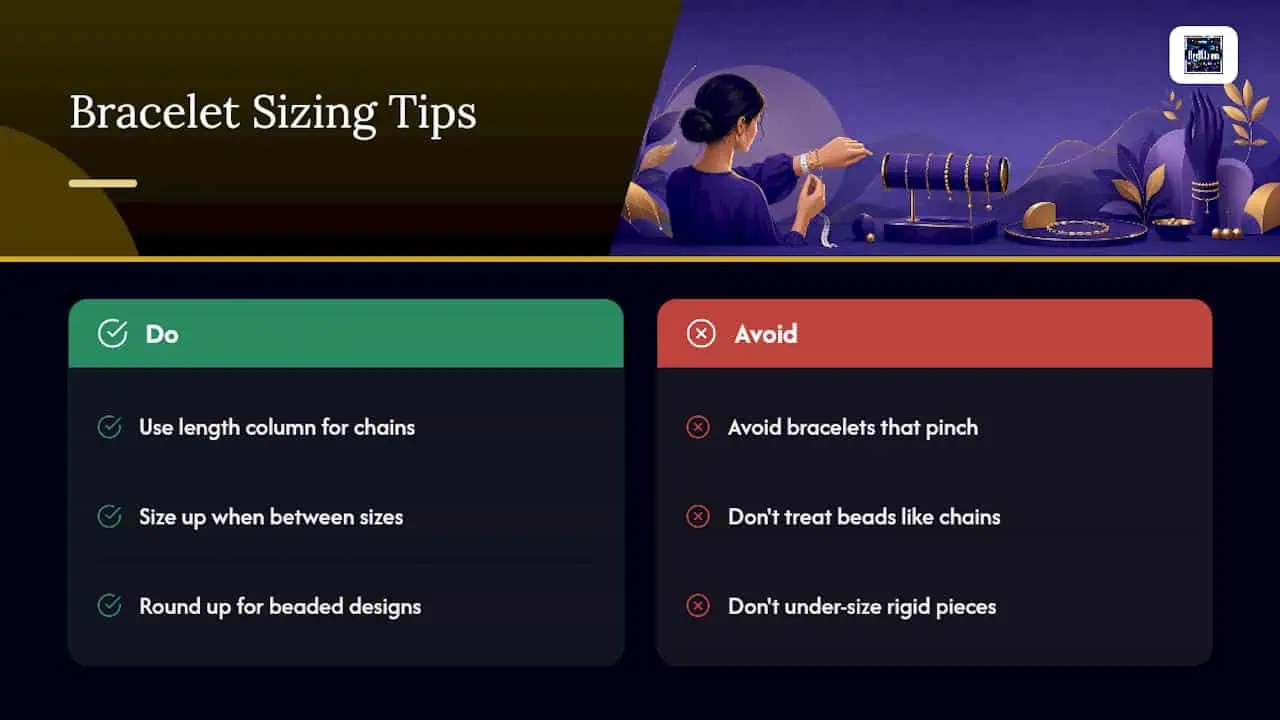
The length column suits chains, charm pieces, and multi-link designs. Bead and bangle sizing works a little differently, which the next couple of sections cover in detail. David Yurman’s sizing guide recommends sizing up when you’re stuck between two numbers, and that’s advice worth following, especially with rigid pieces you can’t adjust later.
Pro Tip: When you’re between two sizes on a beaded design, round up. A bracelet that’s slightly loose still looks intentional; one that pinches your wrist all evening just looks like a mistake.
How Do You Measure Your Wrist For A Bracelet?
Grab a flexible sewing tape measure if you have one. If not, a strip of paper and a ruler work just as well.
- Wrap the tape around your wrist just below the wrist bone, which is where most bracelets naturally sit.
- Keep the tape snug against your skin without pulling it tight. You want the same tension you’d use to check if a bracelet slides comfortably.
- Read the measurement in inches or centimeters, then repeat the process two or three times.
- Take the middle value, since wrist position shifts slightly depending on how you hold your arm.
No tape measure? Wrap a strip of paper or a piece of string around your wrist, mark where it overlaps, then lay it flat against a ruler.
- A string measuring 6.25 inches means your wrist circumference is 6.25 inches. No conversion needed.
- If you only have a ruler in centimeters, divide by 2.54 to convert to inches.
Our partner guide on wrist measurement for watches covers a nearly identical technique, which tells you something: this measurement matters just as much for a wristwatch as it does for a stack of pearls.
Does Bracelet Sizing Differ By Style?
It does, and this is where most sizing mistakes happen. A chain bracelet, a beaded bracelet, and a bangle all fit your wrist completely differently, even at the exact same base measurement.
Chain-and-link bracelets need a little slack to move. Add 0.25 to 0.5 inch to your wrist measurement, and look for a clasp with a few adjustment points if you’re unsure.
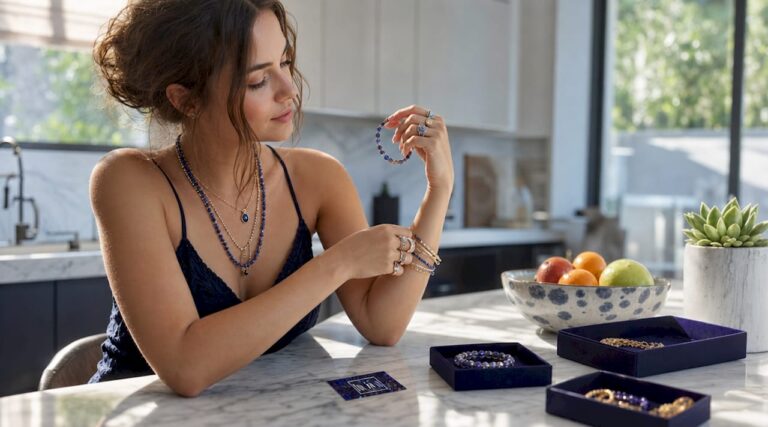
Bead and gemstone bracelets lose usable space to the beads themselves. A bead and crystal sizing method recommends measuring with string, then adding allowance based on bead diameter: about 0.5 in for 6mm beads, 0.75 in for 8mm beads, and a full inch for beads 10mm or larger, according to JewelryMakingJournal’s sizing chart.
Bangles and slip-on styles are sized by internal diameter, not wrist circumference. Measure across your knuckles with your hand flattened, since that’s the widest point the bangle has to clear.
Cuffs are semi-rigid, so a snug fit usually beats a loose one. Open the cuff gently at the gap, slide it over your wrist at an angle, then adjust for comfort.
Pro Tip: If a cuff feels tight the first time you put it on, that’s normal. Most cuffs soften their curve slightly with the first few wears.
How Much Fit Allowance Should You Add?
Fit comes down to personal preference, and three categories cover most people:
- Snug: wrist measurement plus a small allowance for a snug fit. The bracelet sits close without gapping.
- Comfortable: wrist measurement plus a comfortable fit allowance. This is the safest default for most buyers.
- Loose: wrist measurement plus a looser fit allowance. Good for a relaxed, layered look.
Say your wrist measures 6.5 inches. For a comfortable fit, you’d order a 7-inch bracelet. Add another quarter inch if you plan to stack multiple bracelets on the same wrist, since a tight stack restricts movement fast.
- Measure your wrist.
- Choose snug, comfortable, or loose.
- Add the matching allowance to get your order length.
How Do You Size A Bracelet As A Gift?
You can’t always measure the person you’re buying for, but you have workarounds. Borrow a bracelet they already own and measure its circumference with a tape measure, or trace it flat on paper and measure the outline. Both approaches reduce sizing guesswork without tipping off the recipient.
- Compare their wrist to your own if you know your size.
- Default to a 7-inch bracelet for adult women or 8 inches for adult men when you have no other clues.
- Choose adjustable clasps or stretch-cord designs when sizing is uncertain.
Pro Tip: Borrow the bracelet “to try on” casually, measure it that evening, and return it the next day. Nobody suspects a thing.
What Sizing Mistakes Should You Avoid?
The most common error is measuring your hand instead of your wrist, which only matters for bangles you plan to slide on. Another frequent mistake: pulling the tape too tight, which shaves a quarter inch off your true measurement and leaves the bracelet uncomfortably snug.
Forgetting bead projection is a big one too. A 6mm bead bracelet measured the same way as a delicate chain will come out too tight.
If you already own a bracelet that fits well, lay it flat and measure its full circumference, not just its length across the middle. That single check tells you more than any chart.
Never size a bead-heavy bracelet or a rigid cuff so tight that it presses against the wrist bone. Circulation issues from an overly snug fit are avoidable and not worth the risk. Buyer feedback on unclear sizing consistently points to confusion and returns as the direct result of skipping these checks before ordering.
Why Does Internal Diameter Matter More Than Length?
The internal diameter, not the overall length printed on a tag, determines whether a beaded bracelet or bangle actually fits.
Every bead subtracts a little from the usable space inside the loop, so two bracelets labeled the same length can wear completely differently depending on bead size.
A 7 inch strand of 4mm beads and a 7 inch strand of 10mm beads sit on your wrist in two entirely different ways. The bigger the bead, the more internal room it eats up.
Artisans account for this by adding a real allowance, not guesswork: varying the allowance by bead size and increasing it with bead diameter. When in doubt, size up rather than down. A little slack protects both comfort and circulation, especially with chunkier gemstone designs.
Pro Tip: If you’re eyeing a bracelet with large statement beads, check the internal diameter listed on the product page rather than trusting the strand length alone.
Everyday Wear Or A Special Occasion Piece?
Daily bracelets earn their keep through comfort, so I lean toward a looser, more forgiving fit for anything worn to the gym or the office.
Statement pieces for a night out can sit snugger, since you’re not wearing them for twelve hours straight.
My rule of thumb: comfortable fit for daily rotation, snug fit for showpieces.
Find A Bracelet That Actually Fits
Most sizing headaches come from guessing, and that guesswork disappears once you have the right measurement and a maker who actually pays attention to it. HerMJ includes sizing notes on every product page, so you’re never left estimating between a “small” and a “medium” with no real numbers to go on.
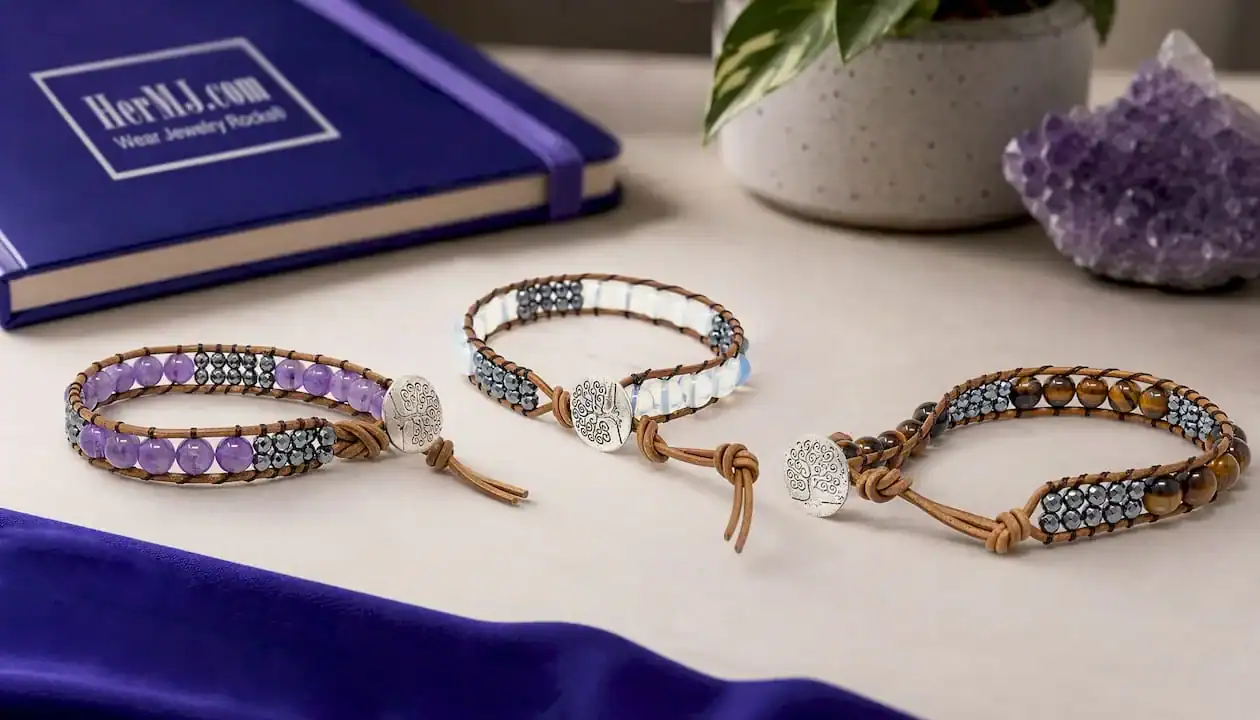
The Amethyst Stone Bracelet and Tiger Eye Bracelet both come with bead allowances built into their listed sizing, and the Opalite Beaded Bracelet is a good example of how bead size shapes internal diameter in a piece you can actually check against your own wrist measurement.
Every order ships free within the US, with no minimum, and international orders ship free on orders of $150 or more.
Measure your wrist, check the chart above, and pick the matching piece.
Frequently Asked Questions
What size bracelet should I get if my wrist is 6.5 inches?
Add 0.5 inches for a comfortable everyday fit, bringing you to 7 inches. Snug fits add 0.25 inches; loose fits add closer to 1 inch.
How do I measure my wrist without a tape measure?
Wrap a strip of paper or string around your wrist, mark the overlap point, then lay it flat against a ruler to measure in inches or centimeters.
Do bangles use the same sizing chart as chain bracelets?
No. Bangles rely on internal diameter, measured across your knuckles with your hand flat, while chains use wrist circumference plus a small comfort allowance.
How much extra room do beaded bracelets need compared to chains?
Beaded designs need more allowance than chains because the beads themselves take up internal space. Add 0.5 to 1 inch, depending on bead size, compared to just 0.25 to 0.5 inches for a chain.
Can I resize a bracelet after I buy it?
Many bead and chain designs can be adjusted by removing or adding links or beads. Check the product page or contact the seller before ordering if you’re unsure about your measurement.
Sources
Recommended
- How to Stack Bracelets: Build a Balanced, Beautiful Wrist
- Measuring Jewelry for your body type ✺ HerMJ
- Stimulating Terahertz Bracelet ✺ HerMJ