


How to Stack Bracelets: Build a Balanced, Beautiful Wrist

The most striking bracelet stack starts with one anchor piece and two contrasting layers. That single rule covers most of what makes a stack look intentional rather than accidental.
The anchor gives your wrist a focal point; the contrasting layers add texture and movement without competing for attention.
Every good stack shares three elements:
- An anchor piece: a bolder, more substantial bracelet that sets the visual tone. A cuff, a beaded gemstone bracelet, or a chunky chain
- Supporting textures: one or two mid-weight pieces that echo or contrast the anchor’s material (think a slim chain beside a beaded piece, or a pearl strand next to a metal bangle)
- Fit and sizing: bracelets that sit comfortably without pinching or sliding past the knuckle, leaving just enough room to move naturally
Before you buy anything else, start with a focal piece and build outward from there. That one purchase decision makes every subsequent choice easier.
Key Takeaways
A well-built bracelet stack always starts with one strong anchor piece and builds outward with contrasting textures and proportional sizing.
| Point | Details |
|---|---|
| Start with an anchor | Choose one bold or textured piece first; every other bracelet should support it, not compete. |
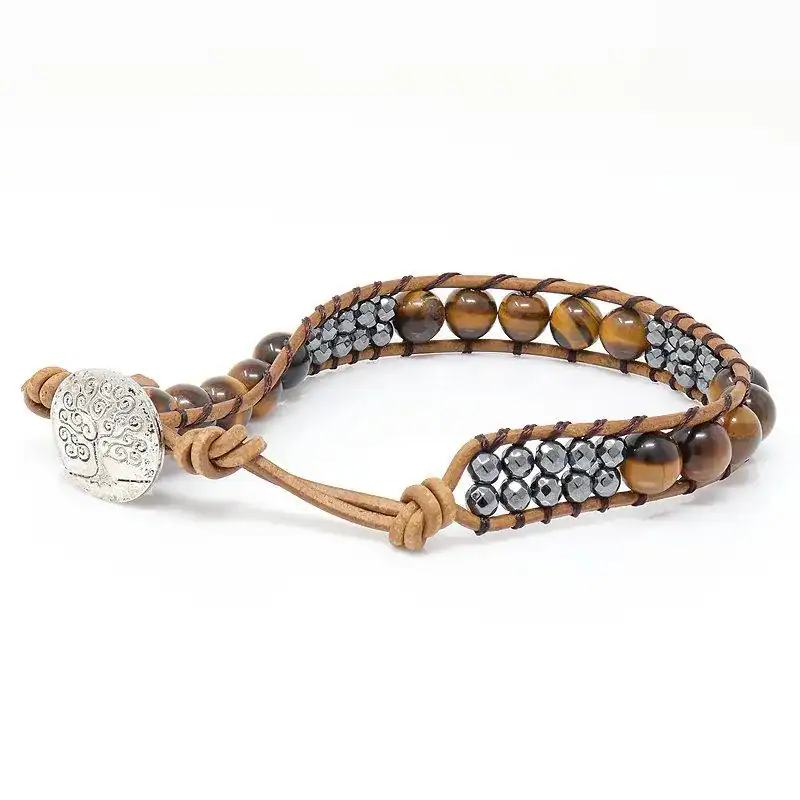
| Use odd numbers | Three, five, or seven pieces create asymmetry and visual energy more naturally than even numbers. |
| Order by visual weight | Place heavier pieces near the hand and finish with delicate chains to reduce tangling and add balance. |
| Size up for stacking | Add a quarter to half an inch to your usual bracelet size when buying pieces meant to be worn together. |
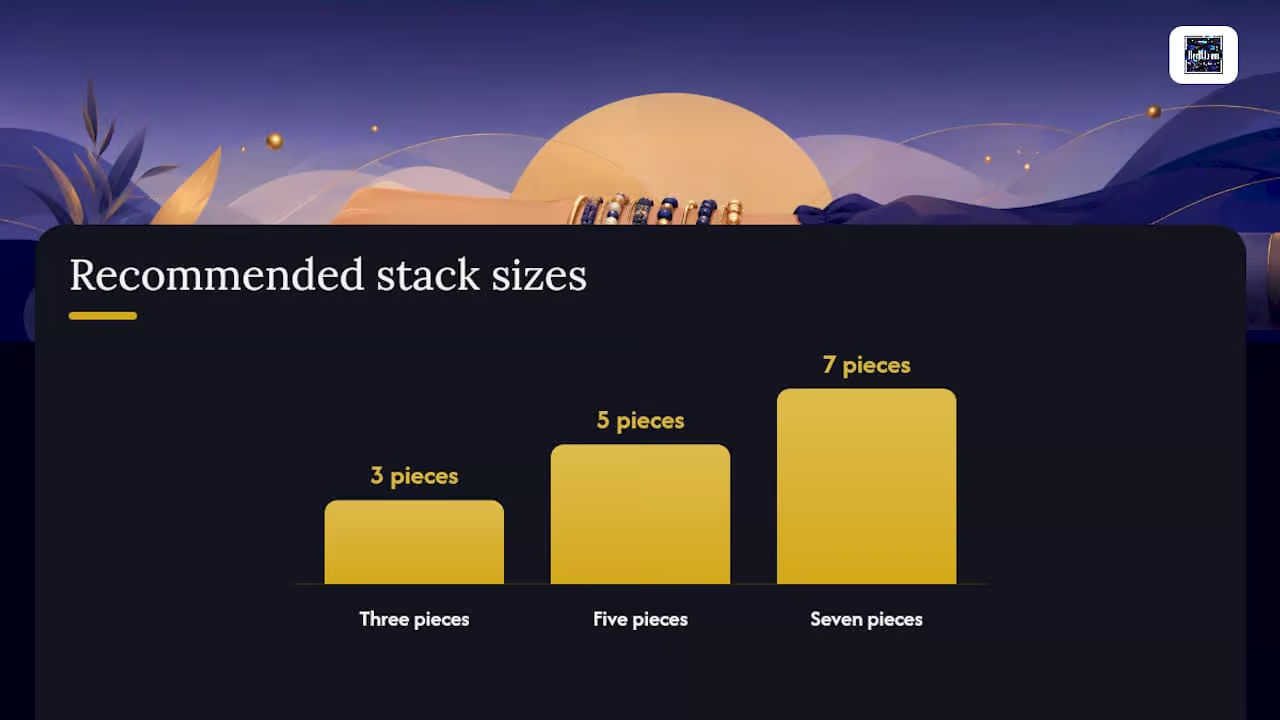
| HerMJ anchor pieces | The Golden Tiger Eye Bracelet and Etage Bracelet are handmade artisan options built to anchor or accent any stack. |
What is a bracelet stack, and why do people wear them?
A bracelet stack is simply two or more bracelets worn together on the same wrist. That’s the whole definition. What makes it interesting is everything you do with that combination.
People stack bracelets for a handful of genuinely different reasons:
- Self-expression: mixing materials, colors, and charms creates a wrist that tells a story no single piece could
- Texture and dimension: a flat metal bangle looks entirely different beside a beaded strand or a braided leather piece
- Outfit coordination: a stack can pull a color from your clothing or echo a metal tone in your earrings
- Practical pairing: many people use a watch as the natural anchor and build a small stack on the same wrist or the opposite one
The styling world swings between two poles here. Maximalist stacks with multiple pieces, mixed metals, and layered charms feel bold and fashion-forward. Dainty stacks of two or three delicate chains feel timeless and wearable every day.
Neither approach is wrong. The best stack is the one you’ll enjoy wearing.
How to stack bracelets in five clear steps
Building a cohesive stack doesn’t require a stylist. Follow these steps, and you’ll have a wearable combination in minutes.
Choose your anchor piece. Pick the bracelet with the most visual weight: a wide cuff, a gemstone beaded bracelet, or a statement chain. This piece sets the tone for everything else. Start with a focal piece and build around it. Stacks typically sit close to the wrist and mix cuffs, chains, and bangles for contrast.
Add a mid-weight piece. Choose something that shares one element with the anchor (a metal tone, a color, a material) but differs in texture or width. A slim chain beside a beaded bracelet works well here.
Finish with a delicate accent. A thin chain, a small charm bracelet, or a single pearl strand adds lightness and keeps the stack from feeling heavy. Arrange by visual weight, placing heavier pieces near the hand and finishing with delicate chains to create balance and reduce tangling.
Place the stack correctly. Start near the wrist bone, or just above a watch if you’re pairing with one. Bracelets that sit too high on the forearm tend to slide and bunch.
Test comfort and movement. Shake your wrist gently. Pieces should move independently without locking together. If two bracelets constantly catch on each other, swap one for a smoother-surfaced alternative.
Pro Tip: Lay your bracelets flat on a table in the order you plan to wear them before putting them on. This lets you spot clashes in color or texture before they’re on your wrist.
Which bracelet styles work best in a stack?
Each bracelet type plays a specific role. Knowing which role each fills helps you build a stack with intention rather than guesswork.
- Bangle: rigid, circular, and usually metal or resin. Bangles stack well in multiples and create that satisfying clink. They work best as mid-weight fillers or, if wide enough, as anchors.
- Cuff: a single open-ended piece that wraps the wrist. Cuffs have strong visual weight and almost always serve as anchors. One cuff per stack is usually enough.
- Chain bracelet: flexible and light, chains fill space without adding bulk. A fine cable chain or a paperclip chain pairs with almost anything.
- Tennis bracelet: a continuous line of stones set in metal. It reads as elegant and structured, making it a natural anchor for evening stacks or a refined mid-weight piece in daytime looks.
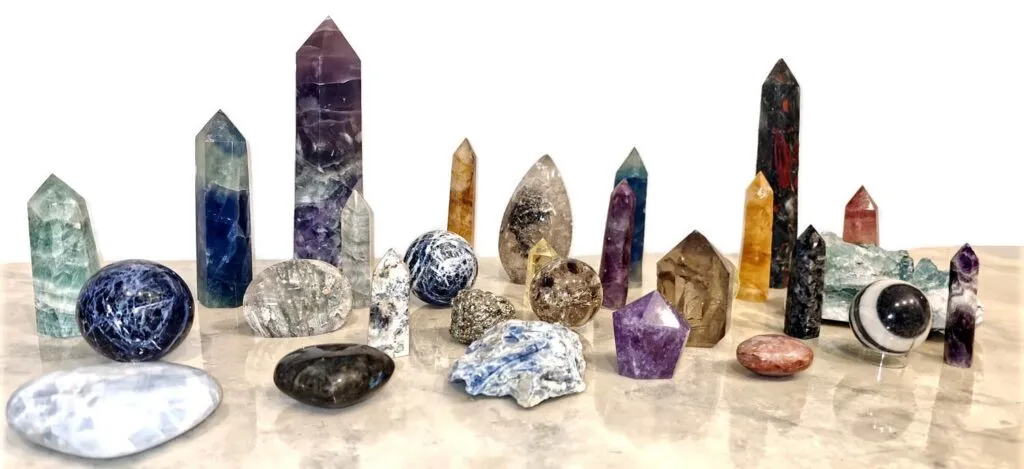
- Beaded bracelet: organic texture and color variety make beaded pieces highly versatile. Gemstone beaded bracelets, like a tiger eye bracelet, carry enough visual weight to anchor a stack while their earthy tones mix easily with metals.
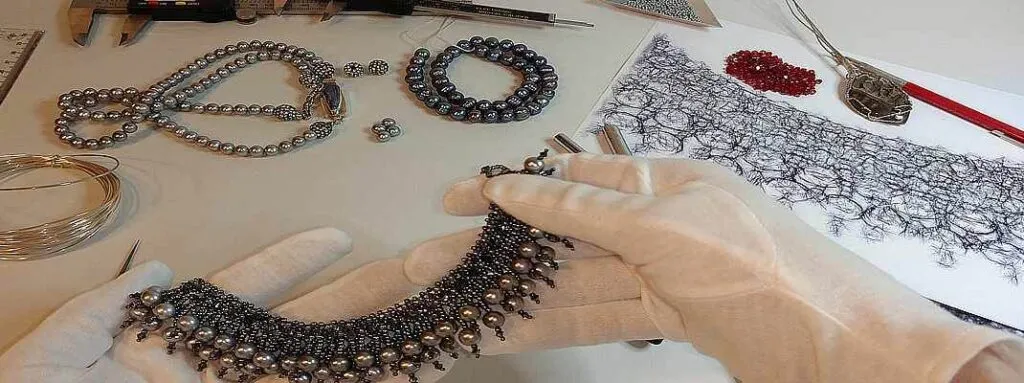
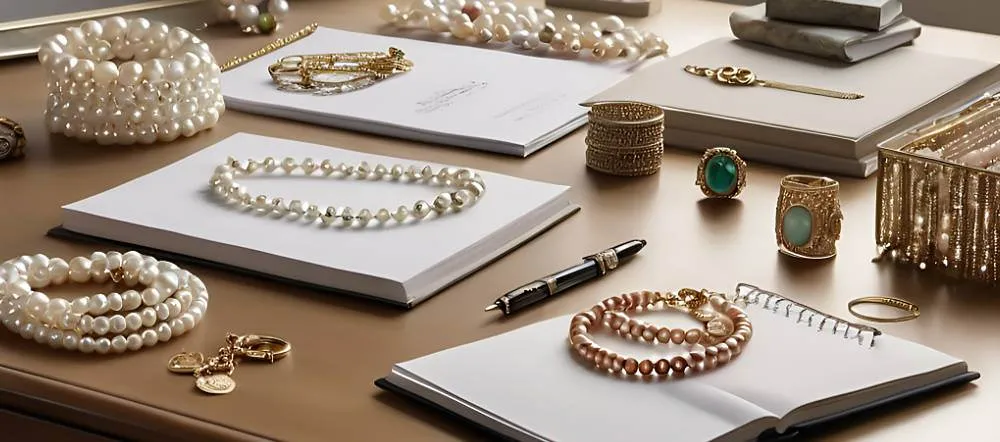
- Pearl bracelet: soft luster and a rounded silhouette contrast beautifully with metal chains or cuffs. Pearls work as mid-weight or accent pieces. For a full guide to stacking pearl bracelets, HerMJ covers the modern approach in detail.
- Charm bracelet: playful and personal, charm bracelets add narrative to a stack. They work best as accent pieces since their movement and detail can compete with a strong anchor.
A reliable pairing formula: cuff (anchor) + two slim chains (filler) + tiny beaded strand (accent). That combination covers rigid, flexible, and organic textures in one wrist.
How many bracelets should you wear, and how do you size a stack?
The right number depends on the width of the pieces you’re working with and on your wrist size.
- Delicate pieces (under 4mm wide): up to seven works well without looking crowded
- Medium pieces (4–10mm): three to five is the sweet spot
- Wide pieces (over 10mm): two to three, or even just one with a single accent
Asymmetry and odd numbers — three, five, seven — introduce dynamic visual energy and keep a stack from looking too symmetrical or stiff. An even number of identical-width bracelets tends to read as uniform rather than curated.

To measure your wrist, wrap a soft tape measure or a strip of paper just below the wrist bone. Add 0.5 inches for a snug fit, or 1 inch for a relaxed, stackable fit that lets pieces move freely. Most standard bracelets are sized at 7 inches for a medium wrist.
Coverage matters, too. Practical stacking rules include limiting coverage to maintain proportion. Avoid covering more than one-third of the forearm unless you’re making a deliberate statement. A stack that creeps halfway up the arm can look unintentional rather than bold.
How to mix metals, colors, and textures without clutter
Mixing metals used to feel like a style risk. It isn’t, as long as you use one of two approaches.
Coordinate: keep all metals in the same tone family (all gold, all silver, all rose gold). Vary the finish instead. Matte gold beside polished gold reads as intentional contrast without any clash.
Contrast with a linking element: mix gold and silver, but include one piece that incorporates both tones. A two-tone chain or a bracelet with mixed-metal hardware acts as a visual connector, making the combination feel planned. Using a connecting piece that incorporates both metal tones is a widely used tactic for mixed-metal stacks.
A few practical rules:
- Do vary texture alongside metal: a polished gold bangle beside a matte gold beaded piece looks richer than two identical polished bangles
- Do keep your color palette restrained. Two or three colors maximum, with one dominant
- Don’t mix more than two metal tones without a linking piece; three unconnected metals tend to look scattered
- Don’t pair very shiny pieces with very matte pieces of the same metal unless one of them is clearly the anchor
Texture does a lot of the heavy lifting here. A rough-textured hammered cuff and a smooth cable chain in the same metal tone create contrast that reads as sophisticated rather than mismatched.
How to style bracelet stacks for every occasion
Context shapes the stack. Here’s how to adapt your layered bracelets to four common situations.
Everyday casual: keep it relaxed with two to four pieces. Beaded gemstone bracelets, a thin chain, and a simple bangle cover most casual outfits. Earthy tones and natural materials like tiger eye or freshwater pearls work well with denim, linen, and cotton. For more ideas on pairing pearl jewelry with everyday outfits, the styling principles translate directly to bracelet stacks.
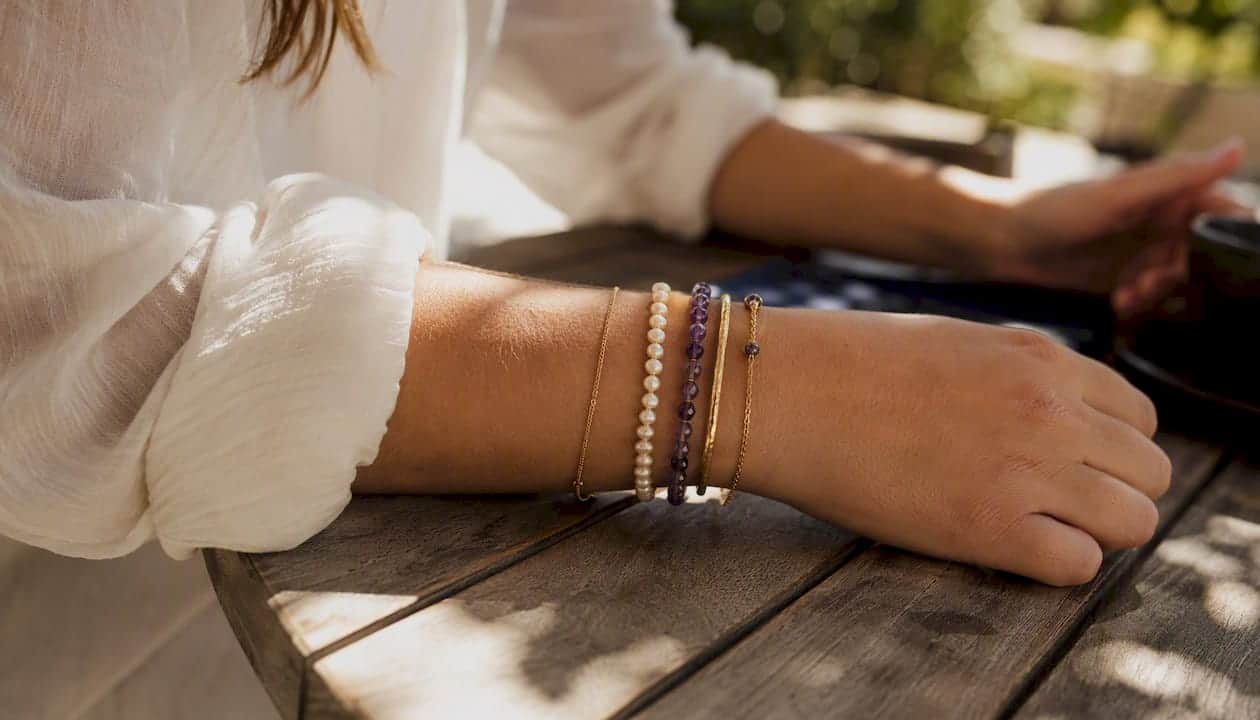
Work-appropriate: slim widths and subtle metals keep a stack professional. Two or three pieces in gold or silver, with minimal movement and no loud charms, reads as polished. Avoid pieces that clank against a keyboard or desk.
Evening and formal: this is where a tennis bracelet or a statement cuff earns its place. One bold anchor plus one delicate chain is often enough. Crystal accents or a pearl strand add luster without overwhelming a dressed-up look.
With a watch: let the watch be the anchor on one wrist and build a small two- or three-piece stack on the opposite wrist. If you prefer both on the same wrist, use a single slim bracelet on the watch side. Something that won’t scratch the case. Starting with a statement anchor and keeping the stack proportional to the outfit applies equally when a watch is part of the equation.
How to care for stacked bracelets by material
Stacking accelerates wear because pieces rub against each other. A little care goes a long way.
General rules for every stack:
- Remove bracelets before swimming, showering, or applying lotion, perfume, or sunscreen
- Store pieces separately, or at least keep them from piling on top of each other in a drawer
- Wipe each piece with a soft, dry cloth after wearing
Material-specific notes:
- Gold-filled and gold-plated: Avoid prolonged contact with sweat and chlorine. Clean with a damp cloth and dry immediately.
- Sterling silver: Silver tarnishes faster when stacked with other metals. Store in an anti-tarnish pouch and polish with a silver cloth as needed.
- Gemstones: Most are durable, but porous stones like turquoise and malachite absorb chemicals easily. Keep them away from perfume and clean with a barely damp cloth.
- Pearls: Pearls are organic and genuinely susceptible to acids, perfumes, and abrasion. Wipe them with a soft cloth after every wear, and store them flat or in a soft pouch, never tangled with metal chains.
- Leather: Keep leather dry. Moisture causes cracking and discoloration. Condition occasionally with a leather-safe product.
When a piece loses its finish or a clasp feels loose, take it to a jeweler rather than forcing it. Catching small issues early prevents bigger damage.
Ten bracelet stack recipes you can copy right now
These formulas work across styles and budgets. Each one names the role of every piece so you can substitute what you already own.
The Everyday Neutral: tiger eye beaded bracelet (anchor) + thin gold chain (filler) + small gold bangle (accent). Warm, grounded, wearable with anything.
The Pearl Classic: freshwater pearl strand (anchor) + delicate silver chain (filler). Clean and timeless for work or weekend.
The Boho Layer: wooden bead bracelet (anchor) + braided cord bracelet (filler) + thin hammered copper bangle (accent). Organic textures, earthy palette.
The Mixed Metal Edit: wide silver cuff (anchor) + gold paperclip chain (filler) + two-tone charm bracelet (connector). The two-tone charm ties the metals together.
The Evening Stack: crystal tennis bracelet (anchor) + thin gold chain (filler) + small pearl bracelet (accent). Luster-forward and elegant.
The Minimalist Two: one slim gold bangle + one delicate chain. Understated and always right.
The Statement Five: wide hammered cuff (anchor) + two medium bangles (fillers) + two thin chains (accents). Maximalist but ordered by weight.
The Gemstone Story: labradorite beaded bracelet (anchor) + amethyst beaded bracelet (filler) + thin gold chain (accent). Color-coordinated stones in the same cool tone family.
The Watch Companion: watch (anchor) + single slim pearl bracelet on the same wrist. The pearl adds softness without competing.
The Crystal Accent: Bondi Beach Crystal Bracelet (accent) + two thin gold chains (fillers) + small gold bangle (anchor). The crystal catches light and elevates even a simple stack.
For visual inspiration, a curated Pinterest board of bracelet stack ideas shows how these formulas translate across dozens of real-life combinations.
Why artisan gemstone and pearl stacks stand apart
There’s a real difference between a mass-produced bracelet and one made by hand from genuine materials. With artisan pieces, the stone’s natural variation, the hand-knotted cord, or the individually set bead is part of what you’re wearing. No two pieces are identical.
HerMJ crafts handmade bracelets from genuine freshwater pearls, natural gemstones, and crystals, with artisan-grade craftsmanship.
Two pieces worth knowing for stack building:
- Golden Tiger Eye Bracelet: the warm, chatoyant stone carries enough visual weight to anchor a stack, while its golden-brown tones mix naturally with both gold and silver metals. It’s one of those pieces that works in a casual daytime stack and transitions easily into an evening look.
- Lapis Lazuli Stretch Bracelet: a handcrafted piece designed to work in mixed-metal or mixed-texture stacks, making it a reliable mid-weight filler or a secondary anchor when you want something with more structure than a chain.
Pro Tip: When choosing an artisan piece as a stack anchor, look for a bracelet with a defined shape or a stone with strong color. Pieces that are too subtle get lost in a stack; pieces with a clear identity hold the whole combination together.
For a broader statement jewelry context, HerMJ’s annual style guide on statement pieces covers proportion and pairing principles that apply directly to building a wrist stack.
Tips for keeping your stack comfortable all day
A stack that looks beautiful at 9 AM but feels irritating by noon isn’t working for you. Comfort is a design choice, not an afterthought.
- Check clasp placement. When multiple clasps sit on the same side of your wrist, they dig in. Rotate clasps to different positions so they’re distributed around the wrist.
- Mix rigid and flexible pieces intentionally. A stack of all bangles clinks and slides constantly. Alternating one rigid piece with one flexible piece reduces movement and noise.
- Size up slightly for stacking. A bracelet that fits perfectly alone may feel tight when worn beside two others. Add a quarter to half an inch to your usual size when buying pieces specifically for stacking.
- Avoid pairing rough-textured pieces with delicate chains. Hammered metal or rough stone beads catch on fine chains and cause knotting. Keep rough textures beside smooth, wide pieces instead.
- Take the stack off in layers. Remove the outermost piece first and work inward. Pulling everything off at once stresses clasps and can tangle delicate chains.
A well-fitted stack should feel like it’s barely there after the first few minutes. If you’re still aware of it an hour in, something’s rubbing or pinching, and it’s worth adjusting before the habit sets in.
The styling trick I keep coming back to
I always build a new stack on my left wrist while wearing my usual watch on my right. That separation forces me to treat the stack as its own composition rather than an afterthought to whatever I’m already wearing. Starting with the anchor piece flat on a table, then adding pieces one at a time and holding them against my wrist before committing, takes about two minutes and saves a lot of second-guessing once everything’s on.
Stack-ready artisan pieces from HerMJ
The hardest part of building a bracelet stack is finding that one anchor piece with enough character to hold everything together. HerMJ’s handmade gemstone and pearl bracelets are built for exactly that role.
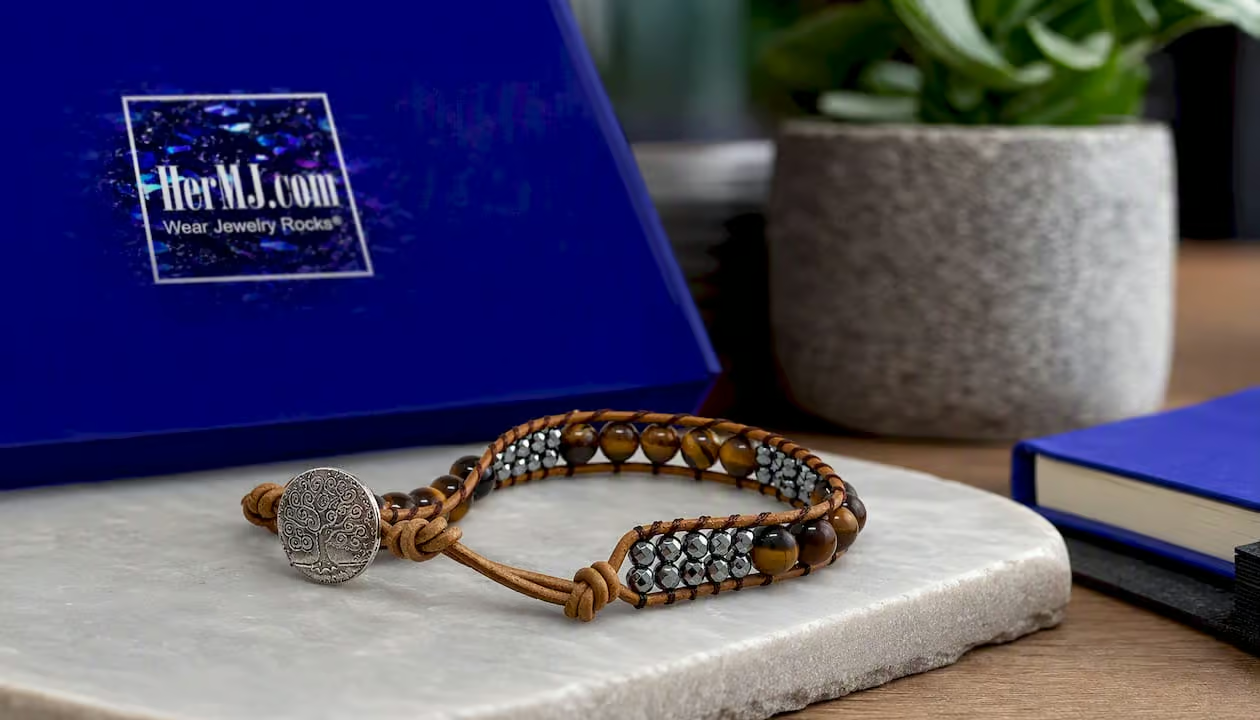
The Golden Tiger Eye Bracelet is a natural starting point: genuine tiger eye stone, warm golden tones, and a handcrafted finish that pairs with gold chains, pearl strands, and metal bangles alike.
It’s the kind of piece that makes the rest of the stack fall into place. The Etage Bracelet and the Bondi Beach Crystal Bracelet round out a stack with texture and light, whether you’re building for a casual day or a dressed-up evening.
Every piece ships free within the US with no minimum order. International orders ship free at $150 or more. Browse HerMJ’s full bracelet collection and find your anchor piece at Hermj.
Sources
These sources informed the styling guidance throughout this article. Each one is worth bookmarking if you want to go further.
- How to Stack Bracelets: Styling Tips | Swarovski US
- How to Create a Bracelet Stack: The Complete Guide to Bracelet Stacking & Styling | VRAI
- How to Stack Bracelets | Bracelet Stacking & Layering Guide | Brilliant Earth
- The Men’s Guide to Stacking Bracelets | Trendhim
Recommended
- How to Stack Pearl Bracelets the Modern Way
- Types of Jewelry Statement Pieces: Annual Style Guide
- How to Wrap Handmade Jewelry for Gifting Beautifully