


Calm Nights or Heart Healing? Amethyst vs. Rose Quartz for Jewelry
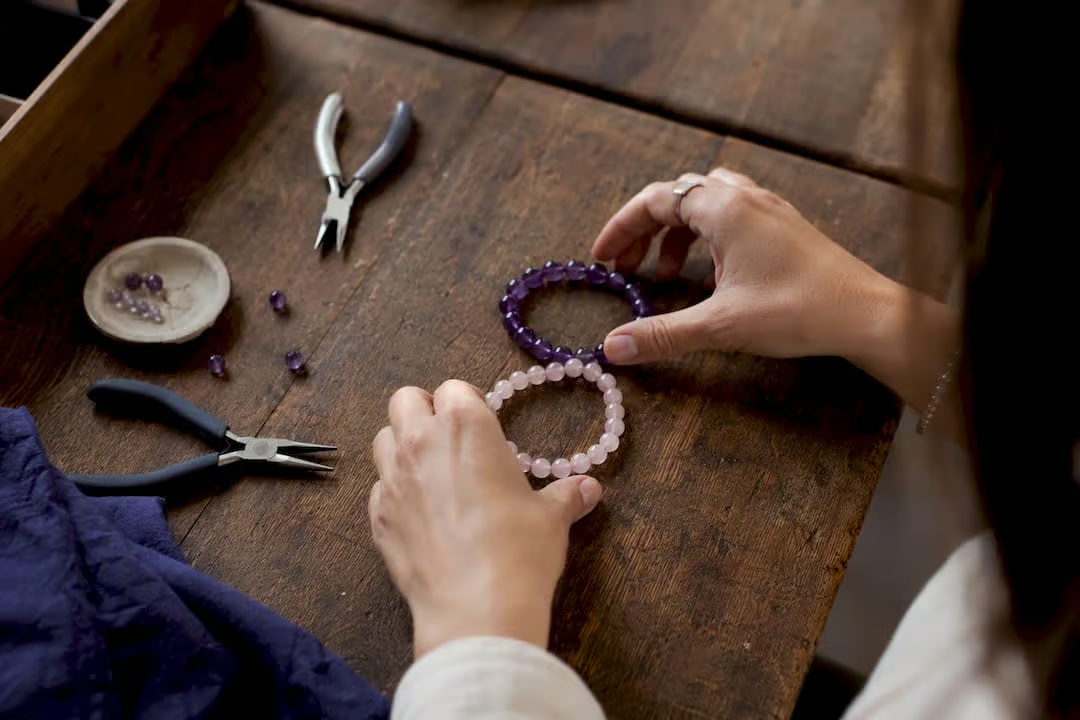
The Edit
- Amethyst’s deep violet color results from trace iron and irradiation, making it transparent and ideal for faceted jewelry, while rose quartz’s pink hue comes from microscopic fibers, giving it a milky appearance.
- Both stones are durable enough for daily wear, but their light handling and construction differ: amethyst often forms as prismatic crystals, whereas rose quartz appears in massive, chunky forms.
- Amethyst is generally more expensive when high quality and clarity are involved, and its color can influence price swings more than rose quartz, which remains broadly affordable.
- Neither stone has proven medical benefits; their metaphysical uses are based on tradition and ritual, not scientific evidence.
- Selecting between them depends on intended use: amethyst suits sleep and focus, while rose quartz supports emotional healing and self-love.
If you need calm focus and better sleep, amethyst is the stronger pick. If you’re working through emotional healing or self-love, rose quartz suits that job better.
Plenty of people simply wear both, letting each stone do its own work. If appearance or a specific piece of jewelry matters more to you than intention, choose by look instead. The quick comparison below breaks down the facts fast.
Amethyst vs Rose Quartz: A Quick Comparison
Both stones belong to the quartz family and share a Mohs hardness of 7, so neither is fragile in daily wear. The differences that matter most show up in how light passes through them and how each stone gets used.
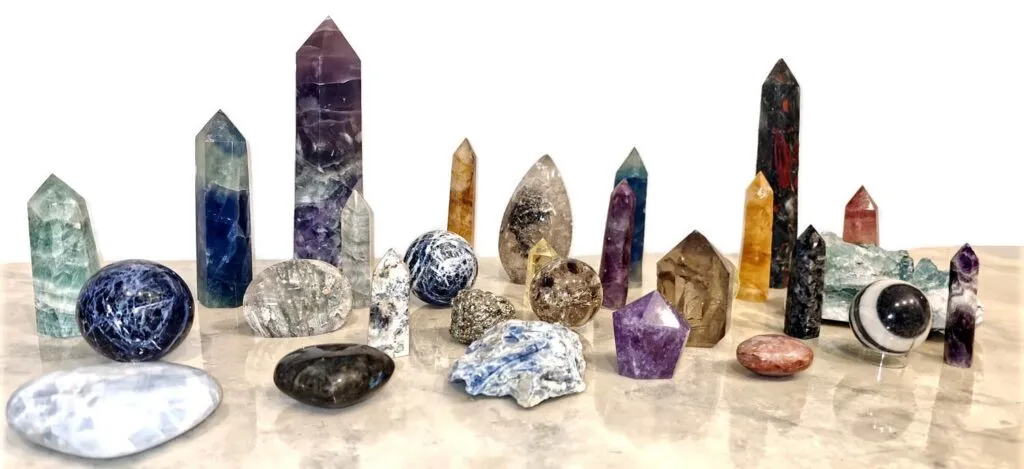
- Color and clarity: Amethyst is transparent purple, ranging from pale lilac to deep violet. Rose quartz is milky pink and almost never fully see-through.
- Hardness and wearability: Both sit at Mohs 7, tough enough for rings, bracelets, and necklaces worn most days.
- Typical metaphysical use: Amethyst gets reached for mental clarity, calm, and sleep support. Rose quartz gets reached for emotional healing and self-love work.
- Everyday jewelry role: Amethyst’s transparency makes it a natural fit for faceted pendants and statement rings. Rose quartz’s softer glow works well in beaded strands, cabochons, and tumbled bedside stones.
- Price and availability: Both are widely available and affordable compared to colored gems like sapphire or emerald, though deeply saturated, transparent amethyst commands more than average rose quartz.
If you’re shopping by budget alone, rose quartz usually costs less per carat unless you’re after a rare, transparent, pink specimen. Amethyst’s price swings more with color depth and clarity.
Why Do Amethyst and Rose Quartz Look So Different?
Both stones start as the same mineral, quartz (SiO2), yet they end up looking nothing alike. The reason comes down to what’s happening at the atomic level, not just surface polish.
Amethyst gets its violet color from trace iron impurities combined with natural irradiation in the earth over long periods, a process that leaves the crystal transparent and lets light travel cleanly through it.
That’s why cut amethyst reads as a true “gem” in jewelry, with facets that catch light the way a sapphire or garnet does. Amethyst most often forms as clear, prismatic crystals, and large deposits found in Brazil eventually made it far more affordable than it was centuries ago, when it ranked alongside ruby and emerald in value.
Rose quartz forms through a completely different mechanism. Its pink hue typically comes from microscopic fiber inclusions, often dumortierite, scattered through the crystal structure. Those fibers scatter light rather than letting it pass through cleanly, which is why rose quartz appears milky and translucent rather than glassy-clear.
It primarily grows in massive, chunky formations rather than clean prismatic points, so cutters shape it into cabochons, beads, and tumbled stones far more often than into faceted stones.
That contrast in how each stone handles light explains most of the practical differences you’ll notice while shopping. Amethyst behaves like a gem. Rose quartz behaves like a stone, and both roles have their place in a jewelry box.
Price tracks clarity and saturation in both cases. Pale or included amethyst sells for a fraction of what deep, transparent “Siberian purple” material commands, and the rare transparent rose quartz specimens (sometimes called pink amethyst) sell at a premium over typical milky material.
For most buyers, though, both stones stay firmly in the affordable range compared to colored gemstones like tourmaline or aquamarine.
What Do Amethyst and Rose Quartz Actually Do?
Crystal traditions assign fairly consistent roles to each stone, and understanding those roles helps you match a piece to what you actually need.
Rose quartz gets tied to the heart. People reach for it during emotional healing, self-love practice, or relationship stress, often keeping a tumbled piece on a nightstand or wearing it as a pendant close to the chest.
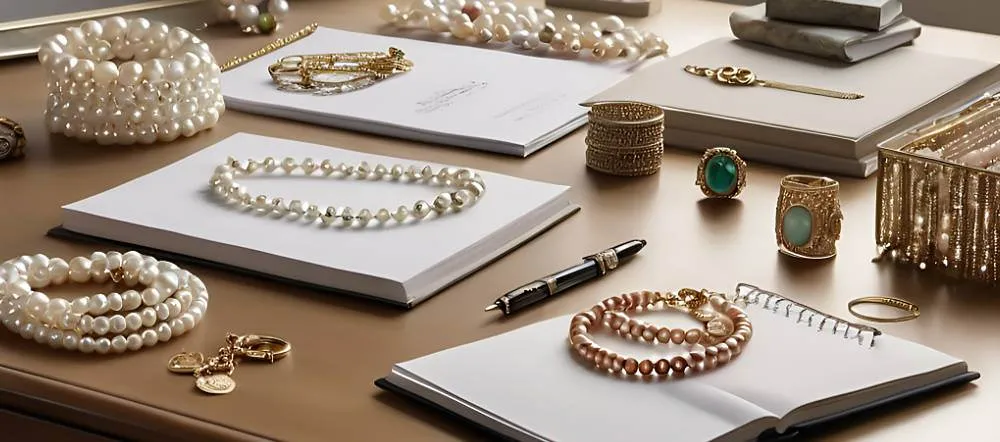
Gua sha tools carved from rose quartz have become common in skincare routines, and layered necklaces mixing rose quartz with pearls are a popular way to soften a look while keeping that emotional association close.
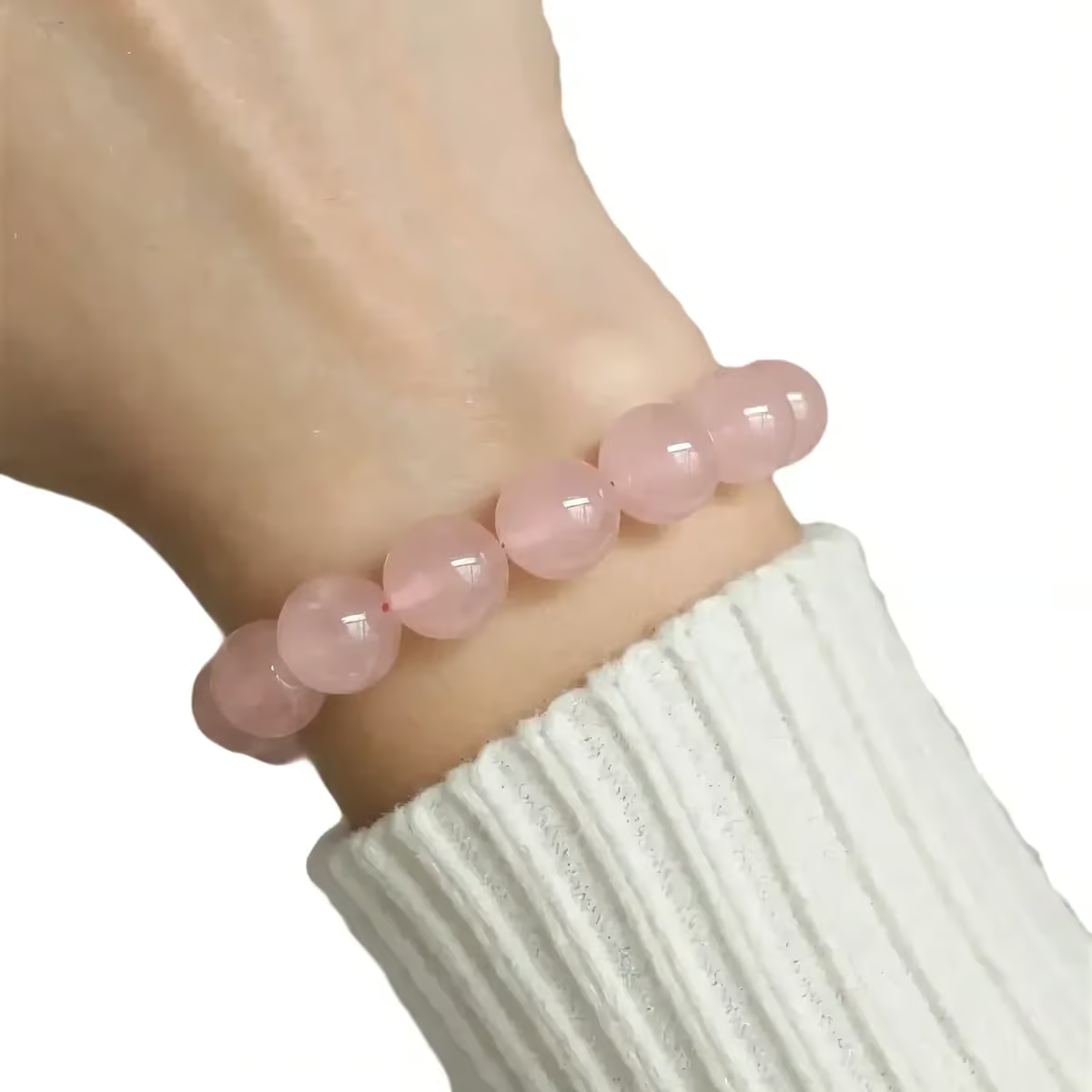
Amethyst gets tied to the mind. It’s the stone people place under a pillow for sleep support, hold during meditation for mental clarity, or wear as faceted jewelry for a sense of calm focus throughout the day.
Some people pair the two, wearing a rose quartz necklace for emotional grounding while keeping an amethyst piece nearby for mental quiet, treating the two stones as complementary rather than competing choices.
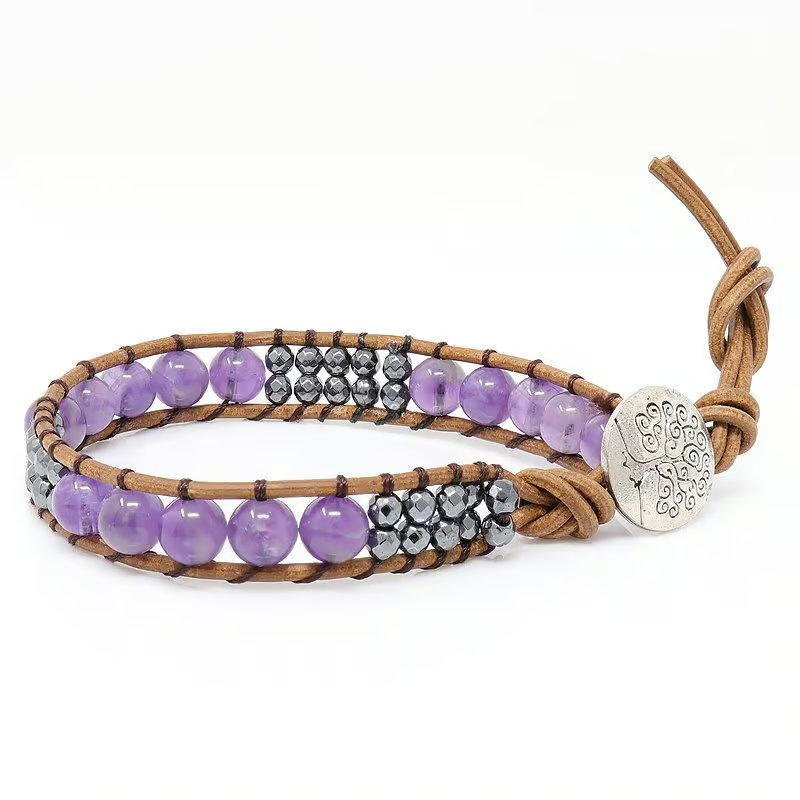
Pro Tip: If you’re new to crystal harmony, start small: a single tumbled stone on your nightstand does the same job as an expensive piece, and it lets you notice whether the routine itself, not the stone, is what’s helping you unwind.
Here’s the caveat worth sitting with. There’s no reliable clinical evidence that either stone treats or cures a medical condition.
The calming effect many people report likely comes from the philosophy itself, the quiet moment of holding a stone, breathing, and setting an intention, rather than any property inherent to the mineral. Treat both stones as a wellness ritual that supports good habits, never as a substitute for medical care.
How to Choose Between Amethyst and Rose Quartz
Start with a simple question: What job do you want this stone to do? From there, narrow your choice with these questions.
What’s the goal? Sleep and mental clarity point toward amethyst. Emotional support and self-love work: each points toward rose quartz.
How will you wear it? Amethyst’s transparency shines in faceted pendants, cocktail rings, and drop earrings where light needs to travel through the stone. Rose quartz looks better as rounded beads, cabochons, or a chunky bracelet where its soft glow reads well even without facets.
What’s your daily routine? If you’re outdoors often or work with your hands, consider a bracelet in a protective setting rather than loose beads, since both stones can chip if struck hard against a surface.
Does color or intention matter more? If you’re drawn to a piece because of how it looks with your wardrobe, buy by color first. Intention can follow.
Three quick scenarios show how this plays out. For a bedside stone meant to ease you into sleep, a tumbled amethyst piece sitting on your nightstand does the job without needing to be worn at all.
For a bracelet you’ll wear daily through errands, gym sessions, and work, rose quartz in a sturdy beaded strand holds up well and softens an outfit without demanding much care.
For a meditation companion you’ll hold in your palm, a smooth amethyst tumble or small sphere gives you something substantial to focus on during quiet moments.
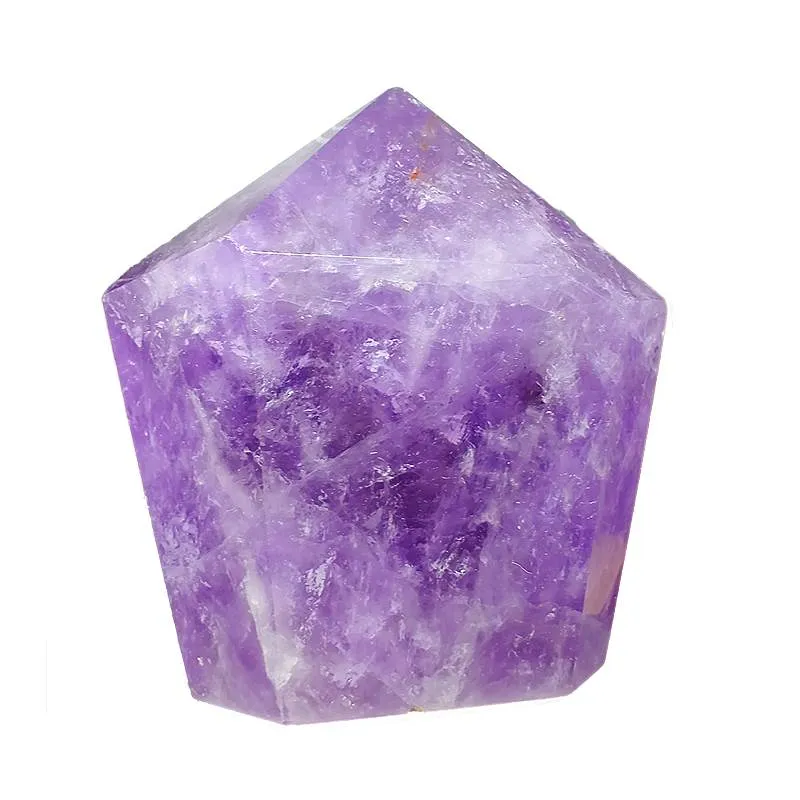
How Do You Keep Amethyst and Rose Quartz Looking Good?
Both stones are forgiving compared to softer gems like opal or pearl, but a few habits keep them looking their best for years.
- Clean both stones with mild soap, lukewarm water, and a soft cloth. Skip harsh chemicals or abrasive scrubbing.
- Avoid prolonged direct sunlight. Amethyst’s violet color can fade with prolonged UV exposure, and heat above roughly 300-400 degrees Celsius can shift it toward yellow or orange.
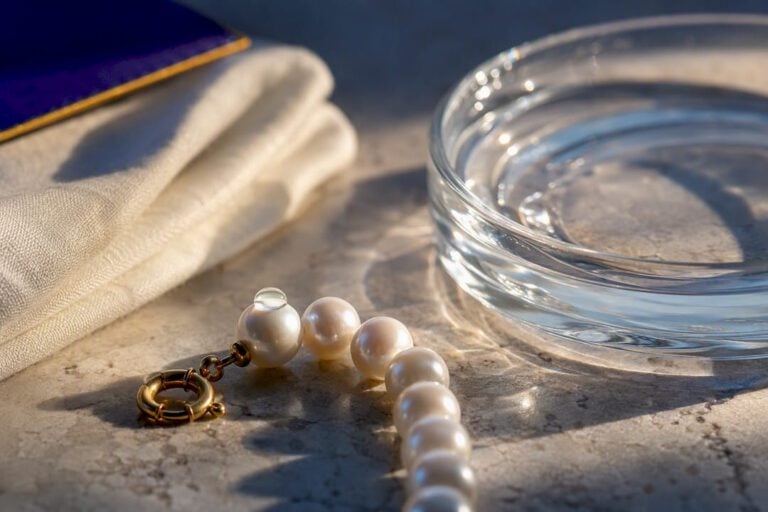
- Store pieces separately, wrapped in soft cloth, away from direct light, so they don’t scratch each other or fade over time.
- Remove jewelry before heavy manual work, cleaning with harsh products, or swimming in chlorinated water.
- Skip ultrasonic cleaners on treated or fracture-filled stones, since vibration can worsen existing internal flaws.
A quick home test: hold the piece up to a window for a few seconds. If the color looks noticeably paler than when you bought it, it’s been exposed to direct light for too long.
For a deeper look at safe home-cleaning methods, this jewelry care guide covers the basics well, and our own care guide for handmade gemstone jewelry walks through storage in more detail.
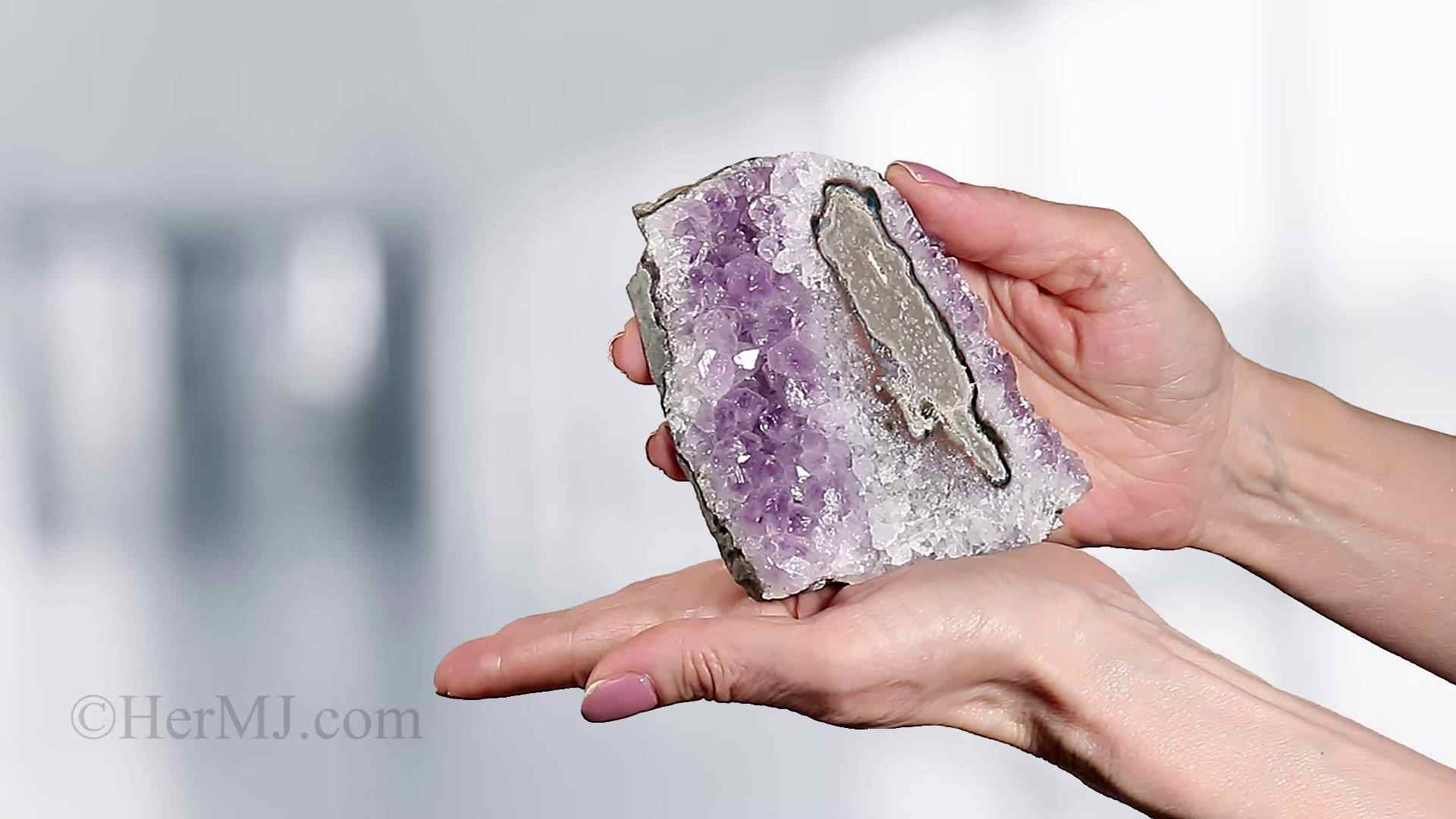
Why We Pair These Two Stones in Our Designs
I keep coming back to the same pairing in my own designs: amethyst for the mind, rose quartz for the heart, worn together in a layered necklace or mixed-material bracelet.

HerMJ works with genuine gemstones because the depth of real amethyst and the soft glow of real rose quartz simply can’t be faked in synthetic material. Pick whichever stone speaks to you, but weigh color and durability alongside intention. Jewelry you’ll actually wear beats jewelry that sits in a drawer.
— Veronique
Wear the Stone That Fits Your Life
HerMJ builds each piece around the same idea this comparison keeps coming back to: pick the stone that matches what you actually need, then make sure it’s crafted to last. Our amethyst bracelet suits anyone chasing calmer evenings and steadier focus, faceted just enough to catch light without feeling fussy for daily wear.
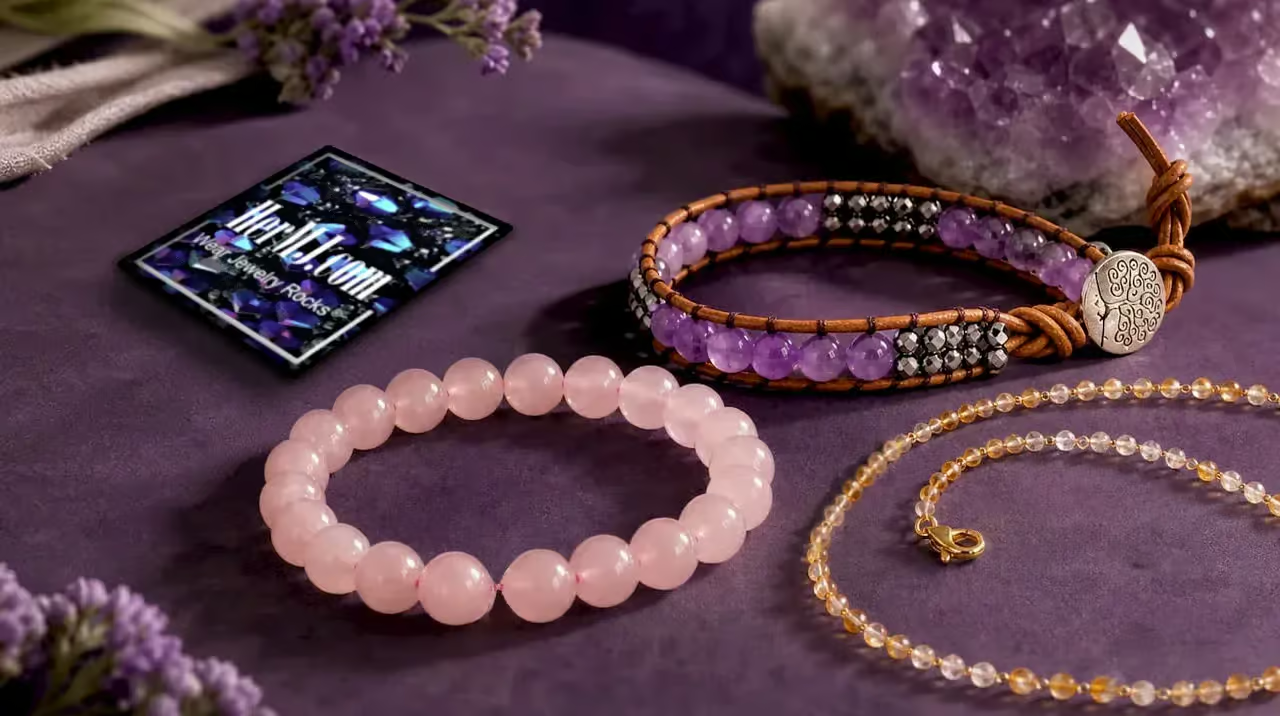
For emotional grounding, our rose quartz necklace sits close to the heart the way tradition suggests it should, with a soft pink glow that pairs easily with almost anything in your closet.
Beyond these two, our catalog covers plenty of ground: the Faceted Garnet Gemstone Necklace brings deep red warmth for cooler months, the Strawberry Quartz Gemstone Bracelet offers a shimmering alternative for everyday stacking, and the Incredible Seraphinite Bracelet suits anyone drawn to deep green, feathery patterns.
If pearls are more your style, the Elegant Freshwater Pearl Necklace and Lustrous Freshwater Pearl Bracelet for Elegance pair beautifully with either crystal, while the Pearl And Aquamarine Necklace and Lapis Lazuli Bracelet With Tahitian Pearl Accent bring in cooler blue tones for contrast. Craving something warmer and earthier? The Carnelian Necklace rounds out the collection with a rich orange glow.
US orders ship free with no minimum, and international orders ship free for orders of $150 and up. Browse our full gemstone jewelry collection and find the piece that matches what you’re working toward.
Sources
Recommended
- Room Jewelry – Carved Amethyst Fairy
- Room Jewelry – Lavender Amethyst Stalactite
- Room Jewelry – Pink Amethyst Gemstone
- Rose Quartz Stone Necklace