



Freshwater or Tahitian: Choose Baroque Pearls That Hold Their Value
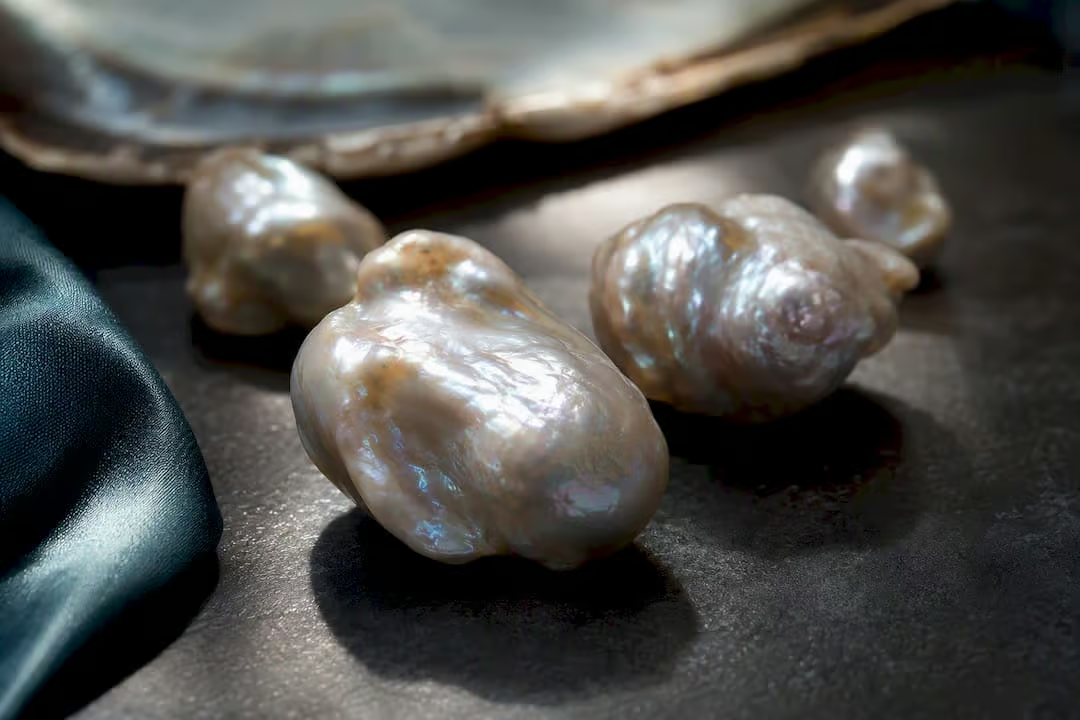
Baroque simply means irregular. It’s a shape, not a species, and a baroque pearl can be just as genuine and just as valuable as a round one.
This guide walks through how these pearls form, the shapes you’ll encounter, what actually drives their price, and how to wear, buy, and care for them with confidence.
The Edit
- Saltwater pearls tend to be more spherical due to bead nucleation, but many saltwater varieties, especially Tahitian, can be irregular and highly valuable.
- Larger freshwater baroque pearls, particularly potato and coin shapes, are generally generally more costeffective but are more versatile and suitable for modern, everyday wear.
- The most critical factor in valuing baroque pearls is luster, with higher luster significantly outperforming shape or surface blemishes in price.
- Genuine pearls feel cool to the touch, have some weight, and a slight grit against teeth, distinguishing them from imitations.
- When styling, pairing warm metals with warm-toned freshwater pearls and cool metals with darker Tahitian or gray pearls enhances their natural hues.
What Are Baroque Pearls? A Guide to How They Form
If you’ve read my blogs, you may already be familiar with the fact that pearls start as an irritant, a bit of shell or tissue, sitting inside a pocket called the pearl sac. From there, the mollusk coats it in layer after layer of nacre, the iridescent material that gives every pearl its glow. But the story only begins there.
When those layers deposit evenly, you get a round pearl. When they don’t, you get baroque. The Wikipedia entry on baroque pearls describes them: baroque pearls are irregular, non-spherical pearls, and freshwater cultured pearls are baroque more often than not because of how they’re nucleated.
That nucleation method matters more than most buyers realize. The process, also known as seeding freshwater pearls, typically starts with a small piece of donor mantle tissue, which gives the mollusk more freedom to grow the nacre unevenly.
Saltwater pearls, such as Akoya, Tahitian, and South Sea varieties, are usually started with a round bead nucleus, which guides growth into a spherical shape from the nacre (mother-of-pearl) that builds layers around the seed.
That’s why saltwater pearls skew rounder on average, though plenty of saltwater baroques exist too, often with a distinctive teardrop or drop shape rather than the potato and coin shapes common in freshwater strands.
A few other factors shape the outcome:
- Growth duration. Longer growing periods generally mean thicker nacre, which can deepen luster but also give more time for irregular deposits to form.
- Water movement and temperature. Currents and seasonal shifts affect how consistently the mollusk lays down nacre.
- Mollusk health and placement. A stressed or crowded farm environment tends to produce more irregular results.
- Nacre thickness. This is the material discussed in more depth on nacre and its role in pearl luster, and it’s the single biggest factor in how a pearl reflects light, baroque or not.
If you want the fuller mechanics of how nacre builds up layer by layer, it’s worth reading alongside this section, since nacre thickness reappears later when we talk about value.
What Shapes Do Baroque Pearls Come In?
Baroque isn’t one shape. It’s a whole category, and learning the vocabulary helps you shop with intention instead of guessing at what you’re looking at. Here’s how the main types break down.
- Coin pearls. Flat, disc-shaped, often freshwater. They’re a favorite for pendants and statement earrings because the flat face shows off surface luster in a single, dramatic plane.
- Teardrop pearls. Rounded at one end, tapering to a point at the other. Common in both freshwater and saltwater varieties, and a natural fit for drop earrings or a pendant that hangs with intentional movement.
- Potato pearls. Rounded but not quite spherical, slightly lumpy. The workhorse shape of modern freshwater strands, affordable and versatile.
- Twin (or “double”) pearls. Two lobes fused together, almost like a figure eight. Distinctive and a little whimsical, best suited to a standalone pendant where the shape can be appreciated on its own.
- Stick or Biwa pearls. Elongated, sometimes almost rectangular. Named after Lake Biwa in Japan, though most on the market today come from other freshwater farms. Striking in an asymmetrical necklace or a modern cuff.
- Keshi pearls. Small, often flat or petal-like, with no nucleus at all. These form as a byproduct of the culturing process and tend to have exceptionally high luster because they’re pure nacre through and through.
- Rice pearls. Small and ridged, resembling a grain of rice. Frequently used in multi-strand designs where texture matters more than any single pearl.
- Heart pearls. Naturally forming into a rough heart silhouette, prized as a novelty shape for pendants and gifts.
- Freeform pearls. The catch-all category for shapes that defy every label above, sculptural and unrepeatable.
Freshwater farms produce the widest variety, since mantle-tissue nucleation gives so much room for shape to wander. Saltwater farms, especially Tahitian ones, lean toward teardrop and semi-baroque forms, though a fully irregular Tahitian pearl is a genuine prize when you find one.
Pro Tip: If you’re building a first baroque piece, start with a coin or teardrop pearl in a simple bezel setting. Both shapes photograph well, sit flat against your skin, and give the visual drama of baroque without the learning curve of an asymmetrical design.
What Determines the Value of a Baroque Pearl?
Value doesn’t hinge on how close a pearl gets to a perfect sphere. It hinges on the same five factors the GIA uses to grade any pearl: luster, surface condition, color and orient, nacre thickness, and size. What changes with baroque pearls is how those factors get weighed.
- Luster. This is the factor that matters most. A baroque pearl with a mirror-bright surface will almost always outsell a lackluster round pearl of similar size.
- Surface condition. Fewer blemishes, pits, or cracks means a higher grade, regardless of shape.
- Nacre thickness. Thicker nacre tends to mean better durability and a deeper, warmer glow, a point worth remembering given how nacre thickness affects both durability and shine.
- Size. Larger baroque pearls, particularly in saltwater varieties, command a real premium.
- Color and origin type. Tahitian pearls in silver, green, or peacock tones, and South Sea pearls in gold or white, sit at the top of the price range.
Here’s the number that surprises most new buyers: on some Tahitian pearl farms, more than 40% of a single harvest can turn out baroque or semi-baroque.
That volume is exactly why South Sea and Tahitian baroques often cost more than their freshwater counterparts, even though the baroque shape is common in both. The scarcity of the saltwater material, not the shape itself, is what drives the price up.
Matching also plays into value more than people expect. A well-matched strand of similarly sized, similarly colored baroque pearls takes real skill to assemble and typically costs more than the same pearls sold loose.
As one buyer-focused guide puts it, a well-formed baroque pearl with strong luster can outshine a mediocre round one, and that’s the mindset worth carrying into any purchase. You can see how these pricing dynamics play out in practice in our freshwater pearl price guide.
How Should You Style Baroque Pearls?
Baroque pearls read as more casual and more sculptural than a strand of perfectly round pearls, and that’s exactly why they work so well across such a wide range of settings. A single coin pearl pendant on a delicate chain looks right with a T-shirt. The same pearl set in a heavier gold bezel and paired with drop earrings looks right at a dinner party.
A few styling principles hold up across most baroque pieces:
- Let the shape lead. Irregular pearls look best in settings that echo their asymmetry rather than fight it; think organic bezels or open prong work instead of rigid geometric frames.
- Warm metals flatter warm-toned pearls. Gold and rose gold bring out the cream and champagne tones common in freshwater baroques.
- Cool metals suit Tahitian and gray tones. Silver or white gold settings let the natural gray, green, or peacock orient of a Tahitian pearl take center stage.
- Mix sizes when layering. A stack of baroque bracelets or a multi-strand necklace looks intentional when pearl sizes vary slightly rather than matching too precisely.
- Balance scale with your frame. Larger baroque statement pieces suit bolder necklines; smaller stick or rice pearls layer well without overwhelming a petite frame.
If you’re picking a necklace specifically, our guide on choosing the right pearl necklace covers proportion and length in more detail than we have room for here.
How Do You Buy and Inspect Baroque Pearls?
A little diligence at the point of sale saves a lot of regret later. Work through this before you buy:
- Check the weight and temperature. Real pearls feel cool to the touch initially and have a bit of heft; the CIBJO classification guide notes that genuine pearls often show microscopic surface grit that imitations lack.
- Run the tooth test carefully. Remember that a genuine pearl feels slightly gritty against your front teeth; glass or plastic feels smooth.
- Ask about type and origin. Freshwater, Akoya, Tahitian, or South Sea each carry a different price ceiling.
- Ask about treatments. Bleaching or dyeing should be disclosed upfront.
- Confirm the return policy. Any reputable seller stands behind what they sell.
- Request an appraisal for high-value pieces. Worth the small cost of anything you’re insuring.
How Do You Care for Baroque Pearls?
Pearls are organic gems, softer than most stones you’ll wear, and their irregular surfaces can trap residue in ways a smooth round pearl doesn’t. Treat them like the living material they are.
- Put pearls on last when dressing, after perfume, hairspray, and lotion, and take them off first.
- Wipe them with a soft, damp cloth after each wear; skip harsh jewelry cleaners and ultrasonic devices entirely.
- Store pearls flat or in a soft pouch, never tossed in with harder gemstones that can scratch the nacre.
- Have strands restrung every couple of years if you wear them often, or sooner if you notice the silk stretching.
Pro Tip: Keep a separate soft cloth just for your pearls. Reusing one that’s touched other jewelry can transfer fine metal or stone dust onto the nacre surface over time.
Who’s Behind This Guide, and How Does HerMJ Choose Its Pearls?
This guide comes from Veronique, who writes on pearl and gemstone jewelry for HerMJ, drawing on GIA quality standards and CIBJO classification guidance to keep the advice grounded in how the industry actually grades these gems.
HerMJ builds its collection around genuine freshwater and Tahitian pearls, sourced for character as much as symmetry, then hand-set and customized so every irregular shape gets a setting that suits it rather than fights it.

My Take: Pick the Baroque Pearl You’ll Actually Reach For
If I had to choose one baroque shape for daily wear, I’d pick a freshwater potato pearl bracelet over a rare stick pearl pendant, simply because you’ll wear it more. Uniqueness only pays off if the piece leaves the jewelry box. Customization helps here too, letting you pick a shape that fits your hand, your neckline, your habits.
— Veronique
HerMJ Pieces Built Around Baroque Character
Once you know what to look for, the next step is finding pieces that actually show it off. HerMJ builds each design around genuine freshwater and Tahitian pearls, so the irregular shape and natural luster you’ve just learned to spot are the whole point of the piece, not an afterthought.
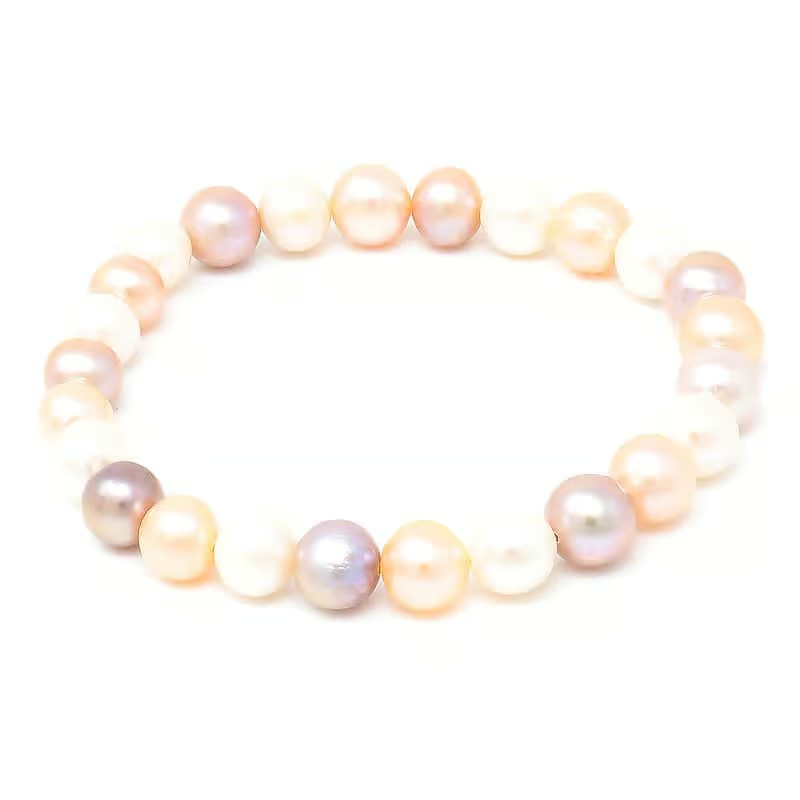
The Lustrous Freshwater Pearl Bracelet for Elegance is the everyday pick, a comfortable strand of baroque and near-round freshwater pearls that works from the office to dinner out.
For a gift that leans a little more special, the Pearl and Aquamarine Necklace pairs pearl luster with aquamarine’s cool blue, a combination that photographs beautifully and suits birthdays or anniversaries alike.
And if you want a genuine saltwater accent without committing to a full Tahitian strand, the Purple Lepidolite Bracelet with Tahitian Pearl Enchase gives you that rarer, higher-luster pearl set into a piece you can wear on repeat.
Every HerMJ piece is designed with modern style preferences and is ready to ship across the US for free with no minimum,
International orders get free shipping on orders of $150 or more.
Browse the full collection of pearl types to see how freshwater and saltwater options compare side by side, then head to the product page for the piece that caught your eye and check current sizing and availability.
Sources
- Baroque pearl – Wikipedia
- CIBJO Guide for Classifying Natural Pearls and Cultured Pearls
- GIA: Pearl quality factor
- What Are Baroque Pearls? Shape, Value, and Buying Notes – MJ Pearls
Recommended
- Saltwater vs Freshwater Pearls – A tale of Two Pretties
- What Makes Pearls Valuable: Exploring The Origin of Elegance
- Freshwater Pearl Prices: Your U.S. Buyer’s Guide
- Different Types of Pearls: Your Complete Visual Guide