



Agate Meaning: What This Banded Stone Represents

Agate is a banded form of chalcedony, a microcrystalline quartz that forms in layers inside volcanic rock cavities, and across cultures it symbolizes stability and grounding. At a Mohs hardness suitable for daily wear, it’s tough enough to have carried this “steadying stone” reputation for thousands of years.
The Edit
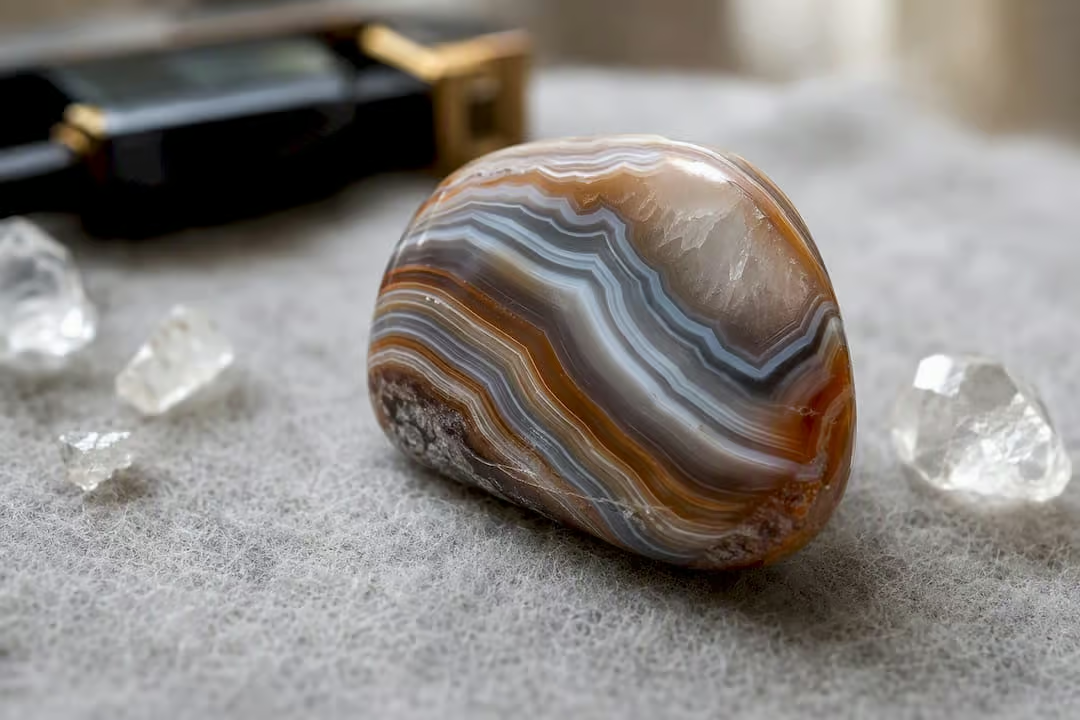
- Genuine agate shows visible concentric or parallel banding with a waxy luster and often translucent edges when held to light, unlike imitations or dyed stones.
- True agate forms inside volcanic vesicles over thousands of years through layered silica deposits, with various popular types including moss, blue lace, and fire agate.
- The hardness of agate (6.5 to 7 on Mohs scale) makes it suitable for daily wear, but dyed or treated specimens require gentle cleaning and cautious handling.
- Agate’s metaphysical reputation as a grounding and stabilizing stone is largely ritual-based, with its meaning built through consistent, long-term contact rather than immediate effects.
- The most durable, everyday wearable agate jewelry features secure settings with polished finishes, resistant to scratches and suitable for regular use.
What Does Agate Symbolize, Geologically and Otherwise?
Agate belongs to the chalcedony family, a fibrous, microcrystalline form of quartz built from silicon dioxide (SiO2). That composition puts it in the same broad mineral group as jasper, carnelian, and onyx, but agate earns its own name because of one distinguishing feature: banding.
Without visible bands, you’re looking at a different chalcedony variety, not agate.
The numbers matter here because they explain why agate shows up so often in jewelry and home decor. According to the 1911 Encyclopædia Britannica’s entry on agate, the stone measures medium-high on the Mohs hardness scale and has a moderate density typical of quartz minerals.
That’s harder than steel and roughly comparable to window glass, which means agate resists everyday scratches from keys, other jewelry, or a countertop far better than softer stones like turquoise or opal.
Pro Tip: If you’re not sure whether a stone in your collection is genuine banded agate or a look-alike, hold it up to a strong light. True agate often shows a faint translucency at its thinner edges, while dyed or opaque imitations usually stay flat and lightless all the way through.
A few identifying traits separate agate from its chalcedony cousins:
- Banding pattern. Concentric or parallel layers of color, often in waves, circles, or straight lines, is the single feature that defines agate as agate.
- Waxy luster. Polished agate has a smooth, slightly greasy sheen rather than the glassy brilliance of quartz crystals.
- Conchoidal fracture. Like other chalcedony, agate breaks in smooth, curved patterns rather than along flat planes.
- Translucency at edges. Thin sections often let light pass through slightly, even when the stone looks solid in the middle.
- No banding means no agate. Jasper is opaque and uniformly colored; carnelian is a solid reddish orange without layered bands. If a “agate” piece is one flat color with no pattern, it’s likely mislabeled.
You don’t need a lab to do a rough check at home. A jeweler’s loupe or even a bright phone flashlight held behind a thin slice will usually reveal the internal banding that confirms what you’re holding.
Weight is another clue: agate feels notably denser than plastic or glass imitations of similar size, thanks to that ~2.60 g/cm³ density.
How Does Agate Form, and What Varieties Exist?
Agate forms inside gas bubbles, called vesicles, left behind in cooling volcanic rock. As groundwater rich in dissolved silica seeps into these hollow pockets, it deposits thin layers of chalcedony one at a time, sometimes over thousands of years.
Each layer can carry a slightly different mineral impurity, which is why a single agate nodule often shows dozens of color bands stacked like miniature sedimentary rock. According to Wikipedia’s overview of agate, this cavity-filling process is what separates true agate from chalcedony varieties that form in solid rock without banding.
The banding itself falls into two broad patterns. Concentric banding follows the rounded shape of the original cavity, producing the classic circular “eye” look. Parallel banding, more common in slab-cut agate, runs in straighter horizontal lines and shows up frequently in bookend and coaster cuts.
The color shifts between bands trace back to changes in the chemistry of the silica-rich fluid as it moved through the cavity over time, according to Crystal Almanac’s geological breakdown of agate.
Several named varieties have built their own followings among collectors:
- Moss agate shows green, moss-like mineral inclusions that resemble plant growth trapped in clear or milky chalcedony.
- Blue lace agate displays soft, pale blue and white bands in delicate, ribbon-like patterns, mined primarily in Namibia.
- Fire agate develops an iridescent, flame-colored surface from thin layers of iron oxide, prized for its shimmer rather than its banding.
- Botswana agate carries gray, pink, and brown concentric bands and is one of the most widely available types in jewelry.
- Fortification agate (sometimes called banded agate) shows sharp, angular bands that resemble the walls of an old fort seen from above.
One caution worth knowing before you buy: moss agate and fire agate technically lack the continuous banding that defines classic agate, yet the trade has called them “agate” for so long the names have stuck.
That’s a naming convention more than a geological fact, and it’s worth keeping in mind if you’re buying based on authenticity rather than appearance alone.
What Are Agate’s Spiritual Meanings and Healing Attributions?
Agate’s reputation as a grounding stone runs through recorded history and modern crystal practice alike, though the two traditions frame it differently. Historically, cultures used agate as protective amulets.
Both Theophrastus and Pliny the Elder documented its occurrence and uses in antiquity, and Wikipedia’s agate entry traces that history back thousands of years. In contemporary crystal work, agate has settled into a few consistent themes: balance, stability, grounding, and protection.
Different varieties carry their own specific attributions, largely tied to color and pattern:
Blue lace agate is associated with clear communication and calm expression, likely because its pale, sky-toned bands feel visually soothing.
Moss agate is linked to growth, renewal, and connection to nature, an association that traces directly to its plant-like green inclusions.
Fire agate carries associations with vitality and personal courage, tied to its warm, flame-like surface colors.
Botswana agate is used for emotional grounding and comfort, particularly during transitions or grief.
Banded agate is worn or carried as a stabilizing stone, meant to support steady thinking rather than dramatic mood shifts.
Practitioners typically work with agate in one of a few simple ways: wearing it as a pendant or bracelet for all-day contact, carrying a small tumbled stone in a pocket, placing pieces in a grid or layout during meditation, or simply keeping a larger specimen visible on a desk or nightstand as a quiet visual anchor.
Crystal-meaning resources consistently describe agate as a long-term stabilizer rather than a stone that produces an immediate shift, a framing that shows up repeatedly across crystal meaning references.
That gradual framing matters, and it’s worth taking seriously rather than dismissing or overselling. Consumer-facing guides on agate’s reputed properties consistently describe its effects as steady and subtle, positioning it as a grounding and balancing stone rather than something that produces quick, dramatic change, according to HowStuffWorks’ look at agate stone meaning.
If you’re drawn to agate for its symbolism, the honest expectation is a slow, cumulative sense of steadiness, not an overnight transformation, and agate should never substitute for medical or mental health care when those are genuinely needed.
Pro Tip: If you want agate to feel like a daily touchstone rather than a shelf decoration, wear it somewhere you’ll notice throughout the day, a bracelet you glance at or a pendant that sits against your collarbone. The physical reminder does more work than the stone itself.
How Should You Use and Care for Agate Jewelry and Decor?
Agate shows up in more forms than almost any other ornamental stone: faceted or cabochon-cut beads for necklaces and bracelets, polished slices for coasters and bookends, full geode halves for statement decor, and smaller tumbled stones for pockets or altars.
Its hardness of 6.5 to 7 makes it a genuinely practical choice for pieces you plan to wear often, since it resists the everyday scuffs that would quickly dull softer stones.
Cleaning agate is refreshingly low maintenance. Warm water and mild soap, applied with a soft cloth, are generally safe for most agate jewelry and match the approach recommended in Wikipedia’s material overview. Slow down with dyed or treated agate, which is common since agate takes dye well and much of what’s sold in bright, saturated colors has been enhanced.
Harsh acids and ultrasonic cleaners can strip or fade that color layer, so stick to gentle hand cleaning for anything you suspect has been treated. If you’re unsure whether a piece has been enhanced, our guide on gemstone enhancements walks through how to spot the signs.
A few habits keep agate looking its best for years:
- Store pieces separately from harder gems like sapphire or diamond to avoid surface scratches.
- Keep agate out of prolonged direct sunlight, since some dyed varieties can fade over time.
- Avoid sudden temperature swings, such as leaving jewelry in a hot car, which can occasionally cause fracturing in banded stones.
- Wipe geode and slice decor with a dry or barely damp cloth rather than soaking large pieces.
Agate is one of the more forgiving stones in a jewelry box. Its durability means you don’t have to treat it like a museum piece, but its popularity for dyeing means a little caution goes further than you’d expect.
For more detailed handling and storage practices across gemstone types, HerMJ’s guide on caring for handmade gemstone jewelry covers the broader routine worth building into your week.
Who’s Behind This Guide to Agate’s Meaning and Properties
This guide was written by Veronique for HerMJ, where gemstone accuracy and material quality shape every piece in the collection. HerMJ specializes in artisan jewelry made from genuine freshwater pearls, natural gemstones, and crystals, and that hands-on relationship with real stones, rather than synthetic substitutes, informs the practical care advice throughout this piece.
Working directly with agate, garnet, seraphinite, and dozens of other gemstones means seeing firsthand which pieces hold up to daily wear and which need gentler handling. That experience shapes the durability notes and cleaning guidance here just as much as the geological sourcing does.
HerMJ’s focus on pieces for individual tastes also means fielding constant questions about stone authenticity and care, the same questions this guide is built to answer clearly and without exaggeration.
What Actually Matters When You’re Buying Into Agate’s Meaning
The geology is the easy part. What trips people up is the metaphysical side, where marketing often promises far more than any reasonable person should expect from a banded rock.
The most accurate read is that agate’s value as a “grounding stone” comes from ritual and repetition, not magic. Wearing the same bracelet every day gives your mind a consistent physical cue to check in. That’s real, but it’s psychological, not mineral.
Conventional advice falls short when it treats every agate variety as interchangeable. Moss agate and fire agate aren’t even true banded agate by strict definition, yet they get lumped in constantly. If authenticity matters to you, learn to spot banding before you buy.
Prioritize the physical facts first. Hardness, formation, and honest sourcing tell you what you’re actually holding. The meaning you build on top of that is yours to shape.
— Veronique
Where to Find Agate Pieces Built for Everyday Wear
If you’re drawn to agate’s grounding symbolism, the easiest way to keep that meaning close is wearing gemstones you actually reach for every morning, not ones tucked away for special occasions. HerMJ’s collection focuses on genuine stones set for real, daily use rather than delicate pieces you’re afraid to wear.
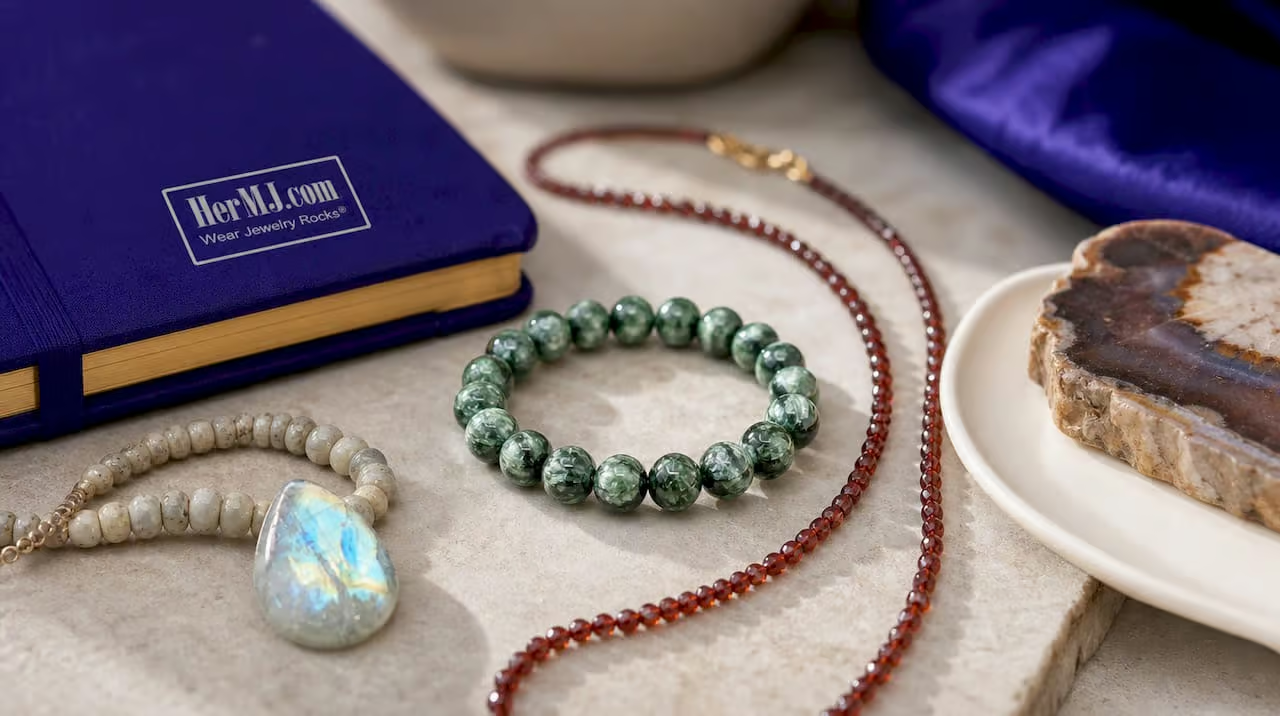
The Faceted Garnet Gemstone Necklace shows the kind of secure, well-polished setting that holds up to regular wear without losing its shine. For something with a softer, more layered look, the Incredible Seraphinite Bracelet pairs well with the same grounding intentions people bring to agate, and it wears comfortably enough for all-day use.
If you want a piece that combines multiple stones the way a well-chosen agate collection often does, the Australian Opal Necklace and Moonstone Pendant demonstrates how mixed gemstones can be set together without compromising durability.
For readers exploring long-term wear options beyond traditional settings, permanent jewelry services are worth a look too.
US orders ship free with no minimum, and international orders ship free on orders starting at $150. Browse the current collection and find a piece that fits the stone meaning you’re after.
Sources
For the geological and historical claims in this guide, the 1911 Encyclopædia Britannica entry on agate covers etymology, hardness, and early documentation. Wikipedia’s agate overview provides a broader look at formation, varieties, and care. Crystal Almanac explains banding formation in detail, and HowStuffWorks’ agate stone meaning piece offers a grounded take on the metaphysical side without overstating what the stone can do.
- 1911 Encyclopædia Britannica: Agate
- Agate: Wikipedia
- HowStuffWorks: Agate stone meaning
- Crystal Almanac: Agate
Recommended
- Gemstone Meaning for Gifts Explained: Choose With Intent
- Labradorite Meaning: Transformation, Intuition, and How to Use It
- Lapis Lazuli Properties, History, And Meaning ✺ HerMJ