



Avoid Losing Pearls: Match Pearl Necklace Clasps to Strand Weight
For most pearl necklaces, a box-style fishhook clasp or a bayonet push-to-open clasp gives you the best mix of security and ease of use, especially when it’s made in sterling silver or 14k gold.
The rule that matters most: match the clasp’s strength and metal to the total weight of your strand and the size of your pearls, not just the look you want. Heavier or multi-strand pieces need sturdier locking mechanisms and often benefit from a secondary safety latch.
TL;DR:
- When selecting a clasp, match its strength and metal to the total weight and size of the pearls, especially for heavier or multi-strand designs.
- Gold, sterling silver, and stainless steel clasps vary in durability and cost, with solid gold offering the highest value and tarnish resistance.
- For multi-strand necklaces, use clasps with independent anchor points and reinforced mechanisms to prevent stress on the strand.
- Replacing vintage clasps requires careful handling, as original soldered attachments and age can make traditional repairs risky or diminish value.
- Regularly inspect and clean clasps with soft cloths, and consider professional servicing for vintage or intricate designs to maintain durability and appearance.
What Are the Main Types of Pearl Necklace Clasps?
Pearl necklace clasps come in a handful of core mechanisms, and each has its own personality. I think of the fishhook, or box, clasp as the classic choice.
It slides a hook into a decorative box and locks with tension, and jewelers have used this basic form since the late 1700s, when box, pearl, and filigree clasps evolved from earlier spring-lock designs. That heritage matters because it’s why so many heirloom strands still wear one.
The ball or bead clasp takes a different approach. Two decorative halves snap together and often disappear right into the pearls around them, which is why you’ll see it on so many vintage and semi-formal strands.
Then there’s the bayonet, or push-to-open, clasp. You twist and lock it into place, and it tends to be gentler on your nails and your patience than a fussy fishhook.
Toggle clasps are ideal for style and ease of use. A bar slips through a ring, and the whole thing is meant to show.
Barrel clasps screw shut, which makes them dependable but slow to open one-handed.
Lobster and spring clasps are the workhorses of the jewelry world, springy and quick, though they’re less traditional on formal pearl pieces.
Here’s how I’d sort them by use case:
- Single-strand vintage or heirloom pearls: fishhook/box clasp, for its period-correct look and built-in secondary safety
- Multi-strand designs: box or bayonet clasps built with multiple holes or bars to anchor each strand evenly
- Statement or front-worn pieces: toggle or an ornate decorative box clasp, since it’s meant to be seen
- Everyday wear or gifting: lobster or spring clasp, for quick fastening without help
A comprehensive breakdown of pearl clasp categories also covers cage, pressure slide-in, and click mechanisms, each trading a bit of ease-of-use for a bit more security, or the reverse.
Sterling Silver, Gold, or Stainless Steel: Which Metal Holds Up?
The metal you pick affects cost, durability, and how the clasp feels against your skin, so it’s worth slowing down here. 14k or 18k solid gold clasps offer the most luxury and the best resale value, and they’re what you’ll find on high-end estate pearls. Gold-filled clasps give you a thick layer of real gold bonded to a base metal, a durable middle ground if solid gold feels out of reach.
Sterling silver, stamped 925, is the most common choice for everyday pearl strands, prized for its brightness against white and cream pearls. Stainless steel costs less and resists tarnish well, though it lacks the same soft luster. Gold-plated and plated base metals sit at the bottom of the price range, and that plating will eventually wear thin with regular contact against skin and clothing.
- 14k/18k solid gold: highest value, hallmark stamped, best for heirloom or investment pieces
- Gold-filled: budget-friendly, resists tarnish, holds color far longer than plating
- 925 sterling silver: classic look, occasional tarnish, easy to clean
- Stainless steel: hypoallergenic, tarnish-resistant, less decorative shine
- Plated base metal: lowest cost, plating wears through with time and friction
A hallmark stamp like “14k” or “925” isn’t decoration. It’s a legal declaration of metal content, and it’s the first thing a jeweler or appraiser checks when valuing a piece. If you have sensitive skin, stainless steel or 925 silver is usually the safer bet over plated alloys, which can react with moisture and body chemistry.
How Do I Match Clasp Strength to My Pearl Strand?
The clasp has one job above all others. It holds the weight of the strand without stressing open. Sizing the clasp to the strand’s full weight is the single most overlooked step in pearl necklace buying, and it’s the reason so many clasps fail. A dainty bead clasp that looks perfect on an 8mm single strand will struggle on a heavy triple strand of 10mm South Sea pearls.
Larger pearls and multi-strand designs call for box or bayonet mechanisms with reinforced tongues, not a delicate bead snap. Multi-strand necklaces should ideally use a clasp with individual soldered loops or multiple bars, so each strand’s tension is borne independently rather than pulling on a single point.
- Match clasp size visually to pearl diameter. A tiny clasp on large pearls looks and performs incorrectly.
- Look for a secondary safety latch, a small hinged bar that catches if the primary clasp slips.
- When checking fishhook designs, look for a double-latch mechanism. The hook nesting inside the box acts as a backup even if the tension loosens.
- For multi-strand pieces, confirm the clasp has separate anchor points for each strand rather than one shared loop.
How Do You Attach or Replace a Pearl Necklace Clasp?
Replacing a worn or mismatched clasp is a manageable weekend project if your pearls are strung on silk thread with simple knots. Here’s the basic sequence:
- Inspect the existing knots and thread condition before touching anything. Brittle or discolored silk means the whole strand needs restringing, not just a new clasp.
- Snip or unravel the old clasp attachment, keeping the strand’s tension intact.
- Attach the new clasp using a jump ring for a lightweight connection, or a French wire (bullion wire) loop for a cleaner finish that protects the silk from fraying.
- Re-knot each side snugly against the end pearl, then trim excess thread close to the knot.
- Pull gently on the finished clasp to confirm it holds before wearing.
You’ll need silk thread or beading wire, a beading needle, clamshell tubes or crimps, jump rings, and a pair of flush-cutting pliers.
Take vintage pieces, soldered gold clasps, or anything with questionable solder quality to a jeweler rather than DIYing them. Soldering fittings onto solid gold pieces requires heat and skill that can damage pearls if attempted at home, and re-knotting valuable strands is worth paying a professional to get right.
Should Your Clasp Be Hidden or Front and Center?
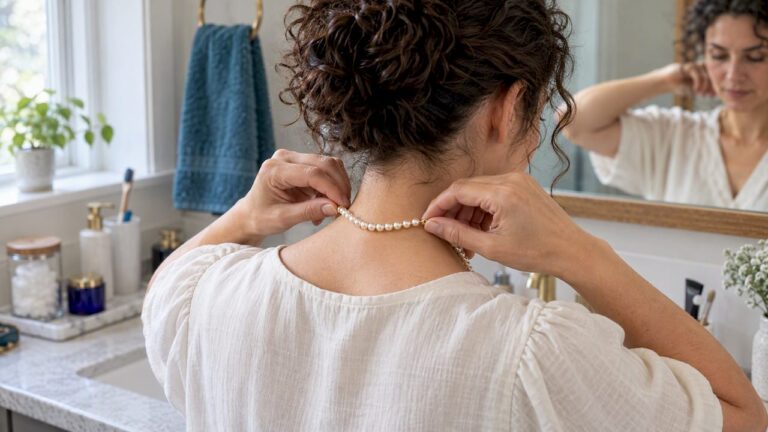
A clasp can disappear, or it can steal the show, and pearls give you room for both. A slim bayonet or bead clasp tucked at the nape of the neck lets the pearls do all the talking, which is the traditional approach for classic strands worn with formal wear. That invisibility only works if the clasp is properly sized. Anything too bulky will peek out or twist the necklace off-center as you move.
The opposite approach treats the clasp as jewelry in its own right. A decorative or gem-set clasp worn at the front of the neckline can add real visual and resale value to a piece, turning a simple strand into something with a focal point. Filigree work, a small diamond accent, or an engraved box clasp all serve this purpose well.
The tradeoff is proportion. A statement clasp needs to feel intentional, not oversized for the strand it closes. On a delicate single strand of small pearls, an oversized clasp looks like an afterthought rather than a design choice. On a bold multi-strand piece, though, that same clasp might be exactly the anchor the design needs.
Think about where you’ll be wearing the piece, too. A front-facing decorative clasp reads beautifully at a dinner or a wedding, while a hidden clasp suits daily wear or office settings where you want the pearls to feel understated.
How Durable Are Different Clasp Types Over Time?
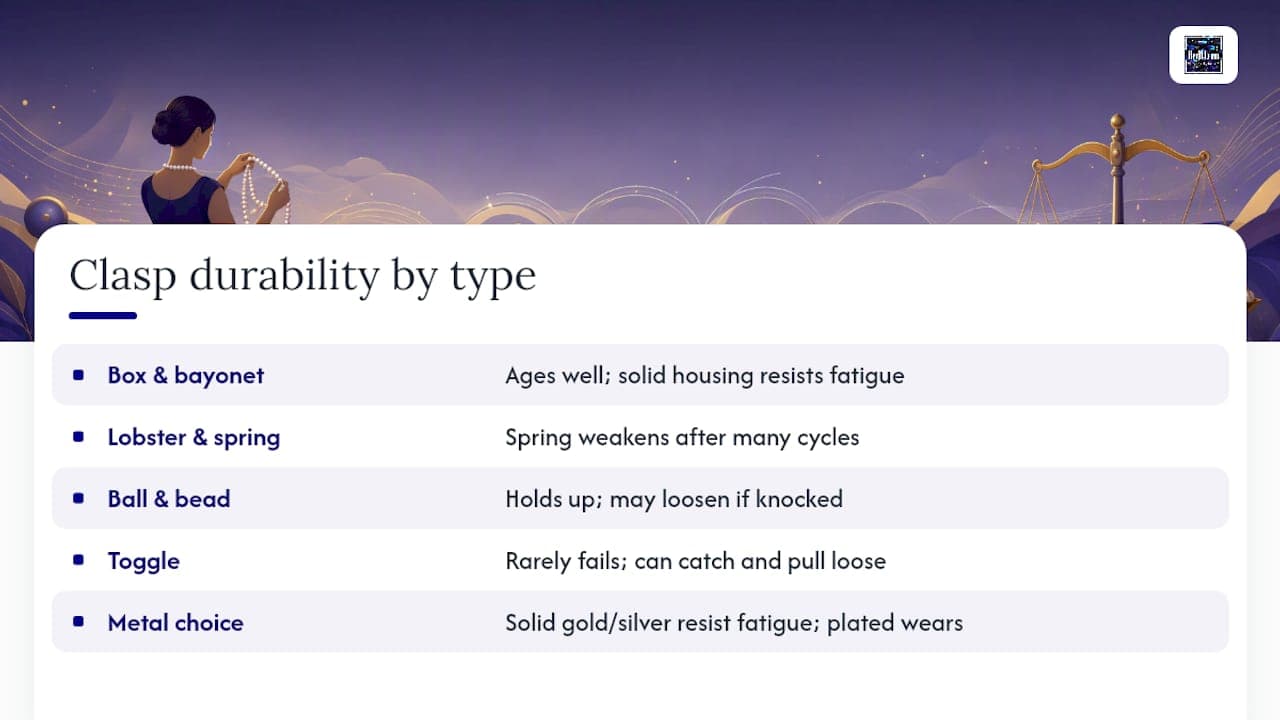
Durability comes down to moving parts and the choice of metal. Box and bayonet clasps tend to age well because their locking mechanism relies on tension against a solid housing, which resists the fatigue that springs suffer. Lobster and spring clasps see more wear, since the small internal spring weakens with thousands of open and close cycles, eventually leaving the clasp looser than it was new.
Ball and bead clasps hold up reasonably well but can loosen slightly if the halves are dropped or knocked against hard surfaces repeatedly.
Toggle clasps are mechanically simple and rarely fail outright, though their design is easily manageable for those of us who pride ourselves on being quick change artists between work and dinner dates.
Metal plays as big a role as the mechanism. Solid gold and sterling silver clasps resist metal fatigue better than plated alloys, whose thin outer layer can wear through at points of friction, exposing the base metal underneath. That’s when you’ll notice discoloration right at the hinge or latch, the spot that gets the most contact.
A little maintenance goes a long way regardless of type. Wipe the clasp with a soft, dry cloth after wearing to remove skin oils and residue, and check the hinge or spring every few months for stiffness or looseness. If a spring clasp starts feeling sluggish to open, that’s usually the first sign it’s heading toward failure, not something to ignore until it snaps.
Why Do Pearl Necklace Clasps Fail or Loosen?
Clasp failure almost always traces back to one of three causes: mismatched strength, metal fatigue, or an unnoticed manufacturing flaw.
A clasp too light for its strand’s weight is the most common culprit, and it’s an easy mistake to make when a delicate-looking bead clasp gets paired with a heavy multi-strand design purely for aesthetics.
Metal fatigue shows up differently depending on the mechanism. Springs in lobster clasps lose tension gradually, so the necklace starts to feel looser or less secure well before it actually fails.
Box clasps rarely weaken this way. Instead, their tongue can bend if forced open in the wrong direction, which is why fighting a stuck box clasp is worse than taking it to a jeweler for a quick adjustment.
If your clasp feels loose, don’t just keep wearing it and hoping. A gentle wiggle test tells you a lot: hold the closed clasp and try to rock it side to side. Any noticeable play means it’s time for a repair or replacement, not a “wear it a few more times” gamble.
A jump ring that has stretched slightly open is another common, quiet cause of loss. Check the rings connecting your clasp to the strand periodically, since even a small gap can let a heavy necklace slip free without warning.
What Should You Look for Depending on the Occasion and Pearl Type?
Choosing a clasp isn’t only about mechanics. It’s also about matching the piece to how and when you’ll actually wear it. For daily wear, prioritize ease of use over decoration. A toggle clasp you can fasten one-handed beats a fussy filigree box you need help closing every morning.
For formal or special-occasion pearls, security and appearance both matter more. A double-latch fishhook or an ornate box clasp suits an evening piece you’ll wear for hours at a wedding or gala, where you want confidence that it won’t slip loose on the dance floor.
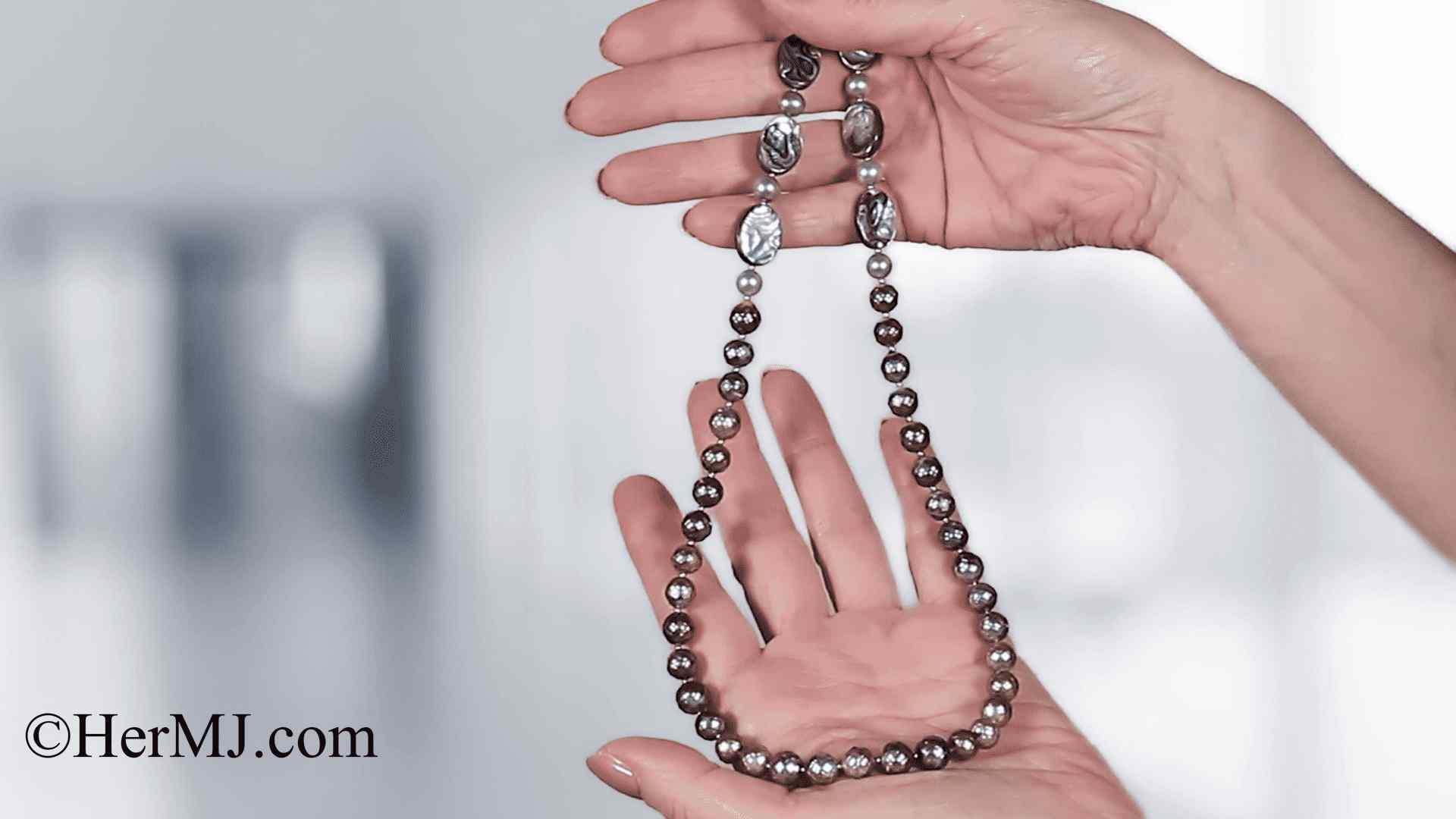
Pearl type matters too. Larger South Sea or Tahitian pearls carry real weight, so they need a correspondingly substantial clasp, ideally in sterling silver or gold rather than a lightweight plated alloy.
Finer freshwater pearls are more forgiving, and a delicate ball clasp often suits their proportions better than a heavy box clasp, which would visually overwhelm the strand.
If you’re buying pearls as a gift, lean toward simpler, more forgiving mechanisms. A recipient unfamiliar with the piece will appreciate a clasp that’s intuitive rather than one that requires a learning curve.
How Should You Clean and Care for a Pearl Necklace Clasp?
Pearls need gentle care, and their clasps need attention, too, just a different kind. Skin oils, perfume, and lotion build up in the small crevices of a clasp faster than anywhere else on the necklace, since that’s the part sitting closest against your neck and hands each time you fasten it.
Wipe the clasp with a soft, dry cloth after every wear, focusing on the hinge and any decorative filigree where residue tends to collect. Avoid submerging a pearl necklace in water or cleaning solution, since moisture that seeps into the silk thread can weaken it over time, and that’s separate from whatever metal the clasp itself is made from.
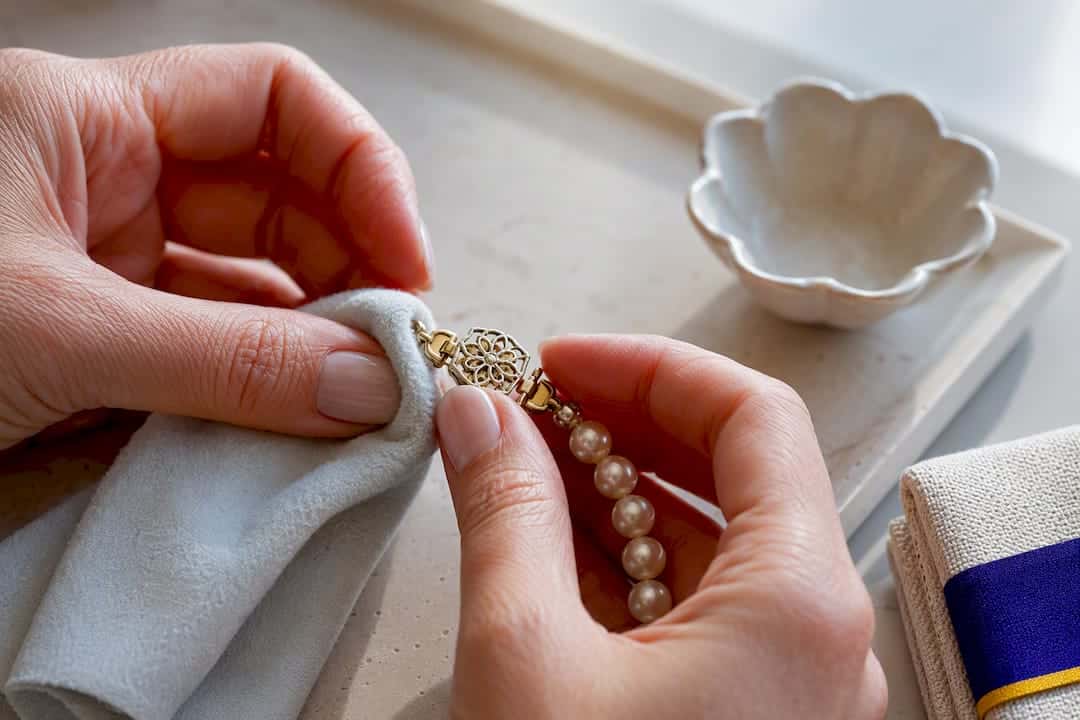
For sterling silver clasps, a light silver polishing cloth every few weeks keeps tarnish from creeping into engraved details. Gold and gold-filled clasps need less frequent attention, just an occasional wipe to keep them bright. Stainless steel is the lowest-maintenance option, resisting tarnish almost entirely.
Store the necklace flat or gently coiled in a soft pouch rather than hanging it, as hanging it puts constant strain on the clasp’s attachment point. If you notice any stiffness when opening or closing the mechanism, don’t force it.
A drop of specialized jewelry lubricant on a small spring clasp, or a professional cleaning for a box clasp, solves the problem without risking a bent tongue or broken latch.
Can You Replace a Clasp on a Vintage or Antique Pearl Necklace?
Vintage and antique pearls deserve a slower, more careful approach than a modern strand. Older clasps were frequently soldered directly onto the necklace rather than attached with a simple jump ring, and that solder can be delicate, brittle, or made from a gold alloy no longer common today.
If you inherit or buy a vintage piece with its original clasp intact, think twice before replacing it just for convenience.
Original fishhook and filigree box clasps from decades past often carry genuine value of their own, and swapping one out can lower a piece’s worth to a collector even if the new clasp performs better mechanically.
When a vintage clasp does need repair, a jeweler experienced with antique pieces should handle the solder work. Heat applied incorrectly can crack aged pearls or discolor delicate filigree that’s survived a century intact.
If the original mechanism is beyond saving, ask about a period-appropriate replacement style rather than defaulting to a modern bayonet or lobster clasp, which can look jarring against Edwardian or Art Deco design work.
Re-knotting is often the bigger issue with antique strands anyway. Silk thread degrades over decades regardless of how well the clasp itself has held up, so a vintage necklace showing a stretched or discolored clasp connection is usually telling you the whole strand needs restringing, not just a new fastener.
Author’s Note: How I Choose Clasps for HerMJ’s Handcrafted Pearl Necklaces
When I design a piece, security comes before decoration every time. I check that the clasp mechanism suits the strand’s actual weight, then I match the metal to the pearls’ tone before I ever think about whether the clasp itself should be seen or hidden. On a recent freshwater pearl design, a bayonet clasp in sterling silver won out over a decorative box, simply because the strand’s lighter pearls didn’t need the extra bulk. A clasp earns its spotlight only when the piece can carry it.
— Veronique
Shop HerMJ’s Ready-Made Pearl Necklaces and Request a Custom Clasp
Each necklace clasp choice is built around the strand it closes, not the other way around, so you’re never stuck with a fastener that undersells your pearls. The Elegant Freshwater Pearl Necklace pairs lustrous freshwater pearls with a secure, proportionate clasp chosen specifically for that strand’s weight, while the Peridot And Pearl Fusion Necklace uses a sturdier mechanism to support its gemstone accents without looking heavy-handed.
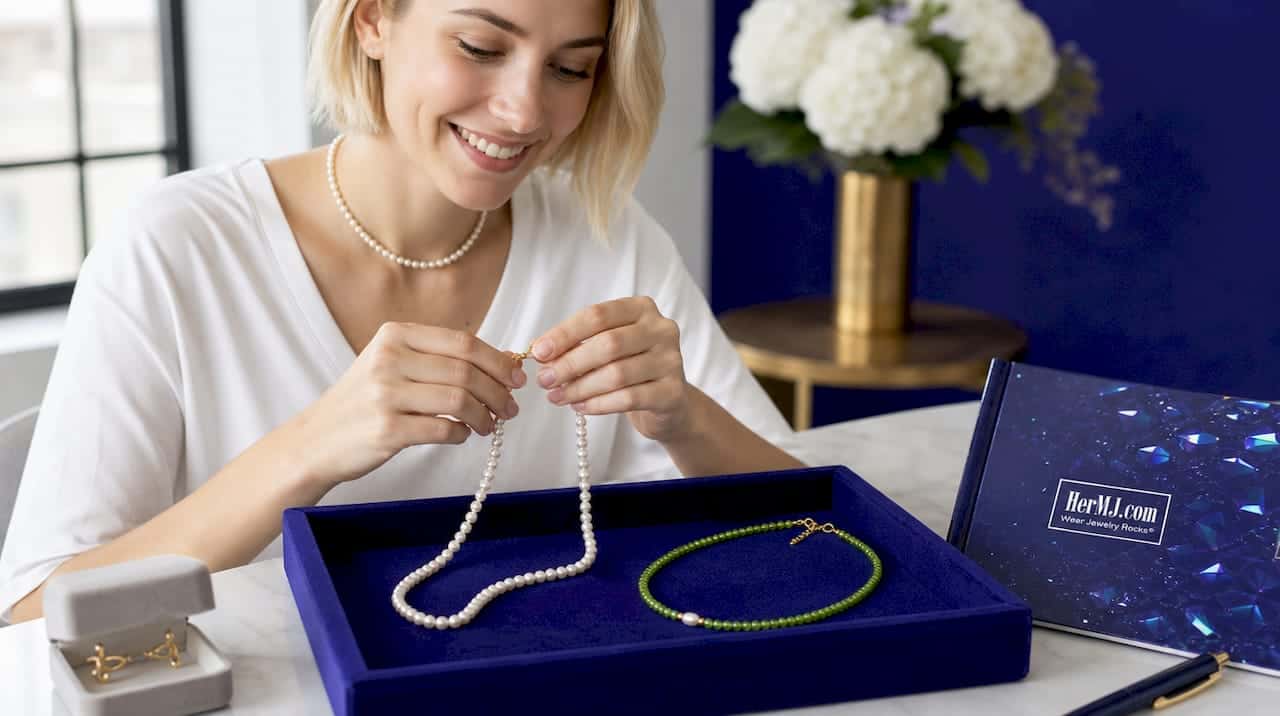
If you’d rather browse the full range first, HerMJ’s freshwater pearl jewelry collection shows the variety of clasp styles used across different designs.
US orders ship free with no minimum and international orders ship free for orders of $150 or more. Pick the necklace that fits your style and place your order today.
Sources
- Types of Jewelry Clasps : How Is a Lobster Like a Fish Hook? : Arden Jewelers
- Types of Jewelry Clasps & Closures – Halstead
- A comprehensive guide to pearl clasp types, functionality and style – Konig Jewelry
- What is a Pearl Clasp? | Antique Jewellery | AC Silver Blog
Recommended
- How to Store Pearls and Keep Them Lustrous
- How I Choose The Perfect Pearl Necklace: A Practical Guide
- The Truth About Pearl Durability: A Designer’s Guide to Care
- Do Pearls Lose Their Luster If Not worn? Restore Their Shine