


Carnelian Meaning: Mohs 7, Ancient Symbolism, and How to Buy
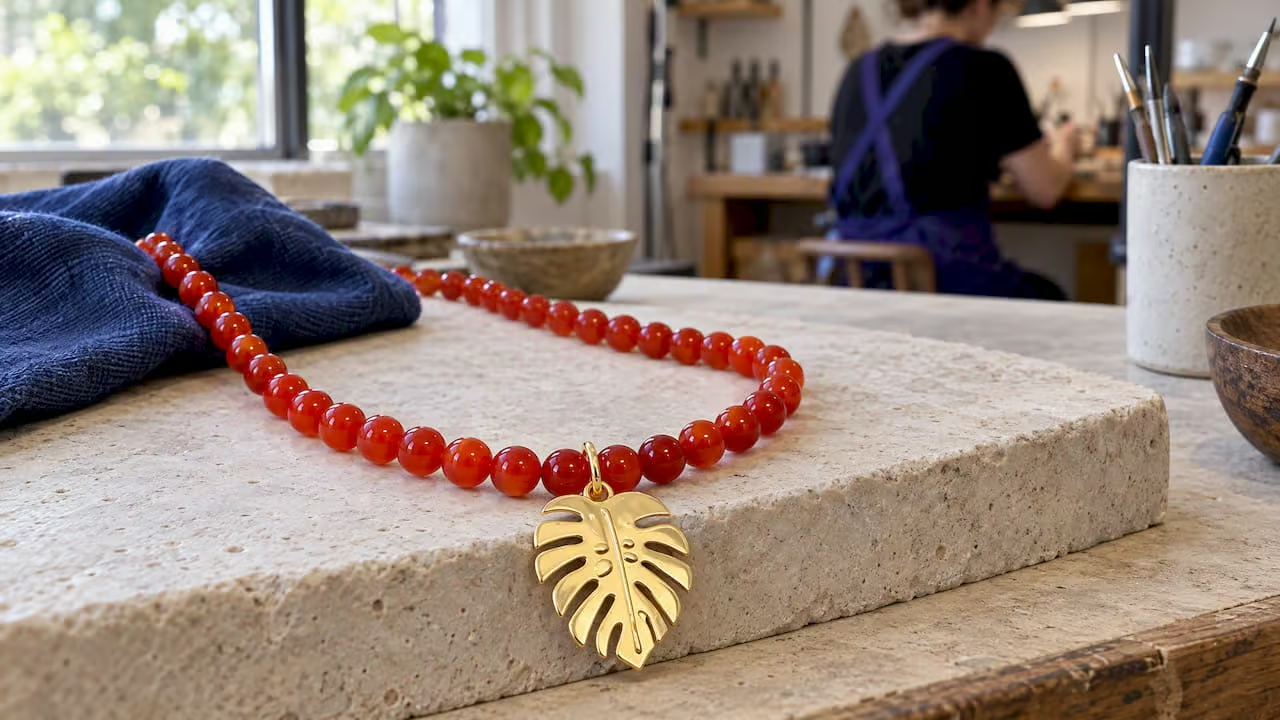
Carnelian is an orange-red variety of chalcedony, a fine-grained form of quartz, and people most often link it with vitality, creativity, and courage.
Because of its warm color, which comes from iron oxide, people have worn this symbolic stone for thousands of years. Today you’ll find it in necklaces, bracelets, and earrings, or on a desk as a small reminder to stay motivated.
TL;DR:
- Carnelian rates about 7 on the Mohs scale, so it resists scratches, but sharp impacts can chip it; choose a protective setting for daily wear.
- Ask whether the stone was heat treated, then clean it with mild soap, warm water, and a soft cloth; avoid ultrasonic cleaners and harsh chemicals.
- A 2025 review found no clinical evidence that gemstones produce direct medical effects, so treat carnelian as a reminder, not a substitute for medical care.
- Natural carnelian often shows subtle color variation and a waxy glow; glass may look uniform or contain tiny round bubbles, so request natural light photos.
What carnelian is: geology and visual traits
Carnelian belongs to the chalcedony family, which the USGS describes as a cryptocrystalline form of quartz.
“Cryptocrystalline” simply means the crystals are too small to see without serious magnification, which is why the stone looks smooth and waxy rather than glassy and sparkling.
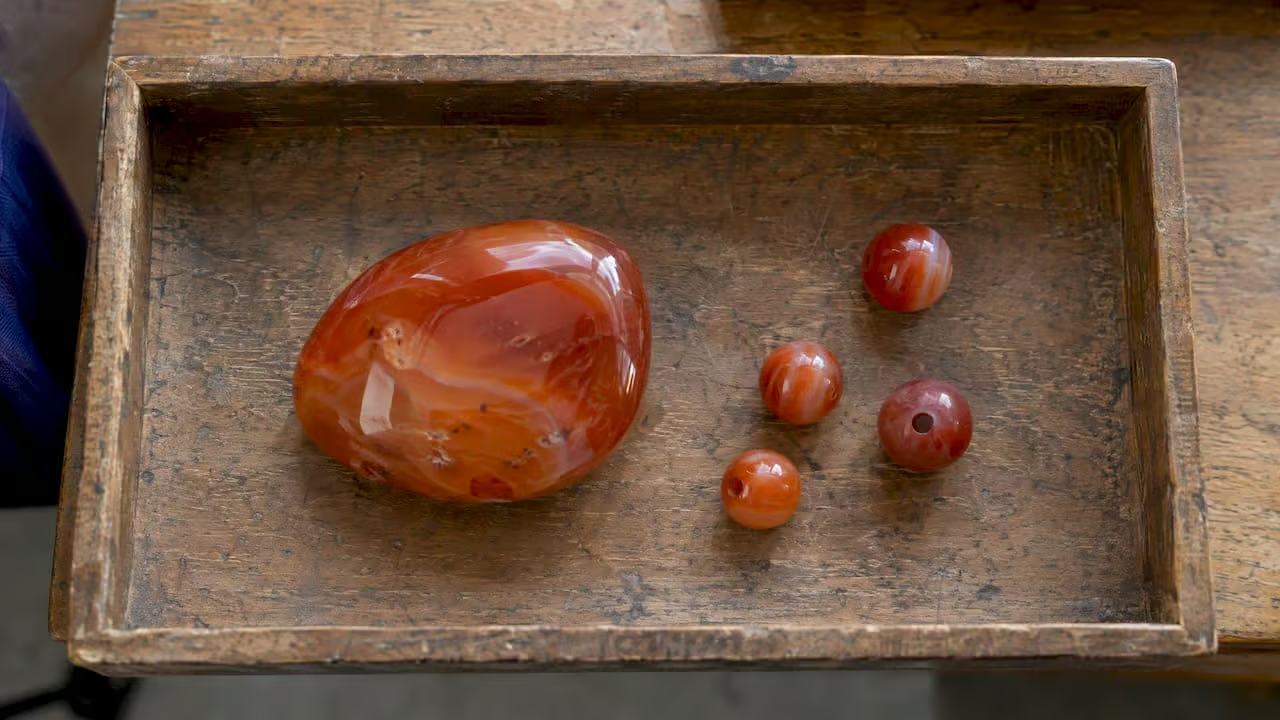
Its color runs from bright orange to deep reddish-brown, and that range comes from iron oxide impurities scattered through the quartz. More iron generally means a deeper, redder tone.
Here’s what to look for when you’re trying to recognize it:
- Color: Orange, red-orange, or reddish-brown, sometimes with soft cloudy or banded patterns.
- Translucency: Light passes through the stone, especially along thin edges, giving it a glowing look when held to a window.
- Luster: Waxy to glassy once polished.
- Common forms: Round and faceted beads, smooth cabochons, and carved pieces such as intaglios, which are designs cut into the surface.
- Hardness: About 7 on the Mohs scale, according to the same USGS entry.
That hardness figure is more important than it sounds.
Mohs 7 means carnelian resists scratching from most everyday dust and from steel, so a bead or cabochon holds its polish through regular wear. It’s a good fit for necklaces and bracelets that see daily life.
Hardness isn’t the same as toughness, though. A stone can resist scratches and still chip if it takes a sharp knock on a hard edge, so a protective setting still earns its place.
Because carnelian is so widely available in beads and cabochons, it’s one of the most approachable natural stones for first-time collectors. If you want to see how it looks finished, the HerMJ Carnelian Necklace shows the color range in a handmade piece.
How do you care for carnelian and what should sellers disclose?
Carnelian is forgiving, but it still rewards gentle habits. The GIA’s guidance on gem treatments notes that many gems are altered before they reach a jewelry case, and that a conservative cleaning approach is safest when you’re unsure what a stone has been through.
Carnelian may be heat-treated to alter its color. Ask the seller whether the stone has been treated.
Here’s a simple routine we suggest:
- Mix a few drops of mild soap into warm (not hot) water.
- Wipe the stone and any beads with a soft cloth, or use a soft brush around settings.
- Rinse briefly with clean water and pat dry with a lint-free cloth.
- Skip ultrasonic cleaners and harsh chemicals, including bleach and household sprays.
- Store each piece separately in a soft pouch so harder stones can’t rub against it.
- Avoid sudden temperature swings, like moving a piece from a hot car to cold water.
- Check clasps and settings before you wear a piece, especially after a long stretch in storage.
Pro Tip: If you’re unsure whether a stone has been treated or how it’s set, ask a bench jeweler before cleaning it with anything stronger than soap and water.
For more detail on keeping handmade pieces looking their best, my guide on caring for handmade gemstone jewelry walks through cleaning and storage step by step.
How did people use carnelian in ancient times?
Carnelian has a long history as an ornamental stone. The Metropolitan Museum of Art holds Egyptian pieces that show how early and how widely it was used, including a carnelian hand amulet from the Old Kingdom to First Intermediate Period.
Beads and intaglios appear in Egyptian archaeological contexts dating back to at least the Middle Kingdom (roughly 1981–1295 B.C.), so carnelian was in use by then.
A few patterns show up across ancient cultures:
- Egypt: Carnelian served as amulets, beads, and decorative inlay, and as functional seals.
- Mesopotamia: Carved carnelian beads and seals were prized objects that signaled status and ownership.
- Rome: Engraved carnelian intaglios were used to stamp wax seals on documents.
- South Asia: Carnelian bead-making grew into a long craft tradition, and the stone moved widely along trade routes.
Why this stone, and not another?
Part of the answer is practical. Its fine crystalline structure lets a carver cut small, detailed images without the stone shattering, and its hardness of nearly 7 keeps those images crisp for centuries. That made carnelian ideal for seals, which had to leave a clear impression again and again.
Another part of the answer is color.
Red and orange are the shades of blood, fire, and sunrise, so people naturally tied the stone to life, energy, and protection.
Wearing something that looked like a captured ember felt like carrying an element of that strength. Those associations traveled forward through time, and they’re the roots of the meanings people still attach to carnelian today.
What does carnelian symbolize?
Symbolism is where history turns personal. Across modern crystal traditions, carnelian is commonly linked with these ideas:
- Courage: A stone for facing something that makes you nervous, like a presentation or a big decision.
- Motivation: A reminder to start, not just plan.
- Vitality: A warm color associated with energy and stamina.
- Creativity: Often tied to artists, writers, and anyone hunting for a spark.
- Sacral chakra: In chakra systems, orange corresponds to the sacral chakra, which is associated with creativity and emotional flow, so carnelian’s color makes it a natural match.
These meanings aren’t fixed. Different traditions emphasize different things, and many of today’s associations are modern layers built on top of older ones.
An ancient Egyptian wearer and a person meditating today might share a love for the stone while holding very different ideas about what it’s for. That variety is part of the appeal, but it also means no single list is “official.”
It’s worth being clear about the evidence, too. A 2025 research review on placebo effects in alternative treatments found no clinical evidence that gemstones produce direct medical outcomes, and it linked perceived benefits to pre-existing beliefs and placebo effects.
No clinical evidence supports gemstones producing direct medical outcomes; perceived benefits are tied to belief and placebo effects.
That doesn’t make a symbolic stone meaningless. A traditional practice, a keepsake, or a visible reminder can help shape your mindset, and many people find that valuable. It just means carnelian works best as a personal support, not as a treatment.
How can you use carnelian today?
You don’t need a formal practice to enjoy carnelian. Here are the most common ways to bring it into daily life.
Wearing it
- Pendants and necklaces: Sit close to the chest and rarely take knocks, so they’re great for everyday wear. Browse our necklaces for options.
- Bracelets: Lovely, but they bump into desks and doorframes. Save delicate designs for lighter days, or look through our bracelets.
- Earrings: Light and low-contact, which suits occasional or daily wear. Our modern drop earrings are one place to start.
Meditation and ritual

- Hold a small piece for a few quiet minutes and set one intention for the day.
- Keep a stone in your pocket as a tactile cue to pause and breathe.
- Pair it with a short journaling habit if you want it to feed creative work.
Home and workspace
- Place a polished piece on your desk, a shelf, or a bedside table as a visual reminder. The HerMJ room jewelry collection is made for exactly that.
- Dust it gently with a soft cloth, and keep it out of harsh, direct sunlight if it’s set in glue or mixed materials.
Styling tips
- Gold and copper tones echo carnelian’s warmth, while silver gives a cooler contrast.
- It pairs nicely with lemon quartz, as in our Carnelian and Lemon Quartz Necklace, and with pearls, garnet, or neutral stones.
- Avoid stacking it loosely against softer materials that it could scratch.
How do you choose carnelian jewelry?
A little attention at the buying stage saves a lot of disappointment later. Use this checklist, whether you’re shopping online or in person:
- Color evenness: Look for a consistent, pleasing tone. Some banding or cloudiness is natural, but muddy patches can signal lower quality.
- Translucency: Good carnelian glows when light hits it. Photos can mislead, so ask for more than one angle or natural-light shots.
- Surface quality: Check for pits, scratches, or dull spots on the polish.
- Treatment disclosure: Ask whether the stone has been heat-treated or otherwise enhanced. The GIA advises that sellers disclose treatments, so a clear answer is a good sign.
- Cut and setting: Beads and cabochons are sturdy and easy to wear. For pieces you’ll wear often, choose protective settings, because a gemstone’s durability affects how it should be set and handled.
- Price: Carnelian is generally an affordable stone, so be skeptical of luxury pricing for plain beads. If a price or description seems off, a jeweler’s opinion is cheap insurance.
Imitations exist, including dyed agate and glass. Natural carnelian usually shows subtle color variation and a slightly waxy glow, while glass often looks too uniform and may show tiny round bubbles. When in doubt, a jeweler can confirm what you’re holding.
Why trust this guide and our approach to carnelian jewelry?
This guide was written by Veronique, and its facts come from named institutions: the USGS for mineral basics, the Metropolitan Museum of Art for archaeological evidence, and the GIA for treatment and durability guidance.
The healing discussion rests on a recent research review, and we’ve kept symbolism clearly separate from science.
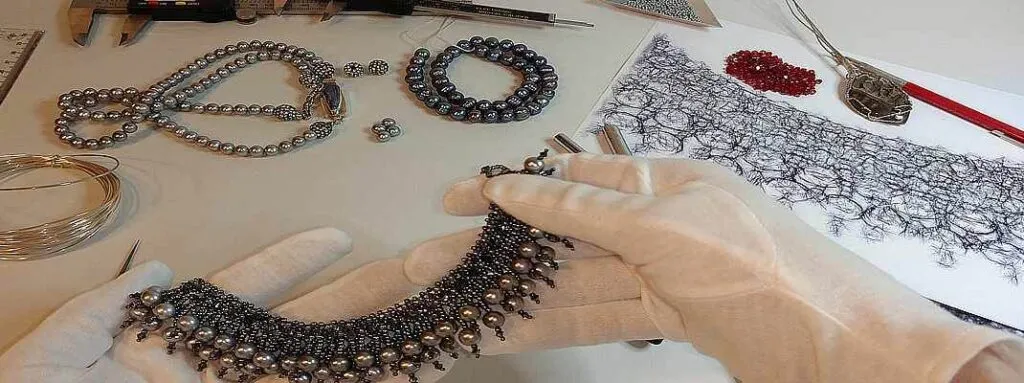
As a maker of handmade pearl and gemstone jewelry, we choose natural stones and finish each piece by hand. You can see that approach in our Carnelian Tibetan Necklace, an alternate carnelian design that lists its materials and care notes.
A symbolic stone is best chosen with clear eyes: know what it is made of, know how it was treated, and know what you want it to mean to you.
Carnelian pieces from our studio
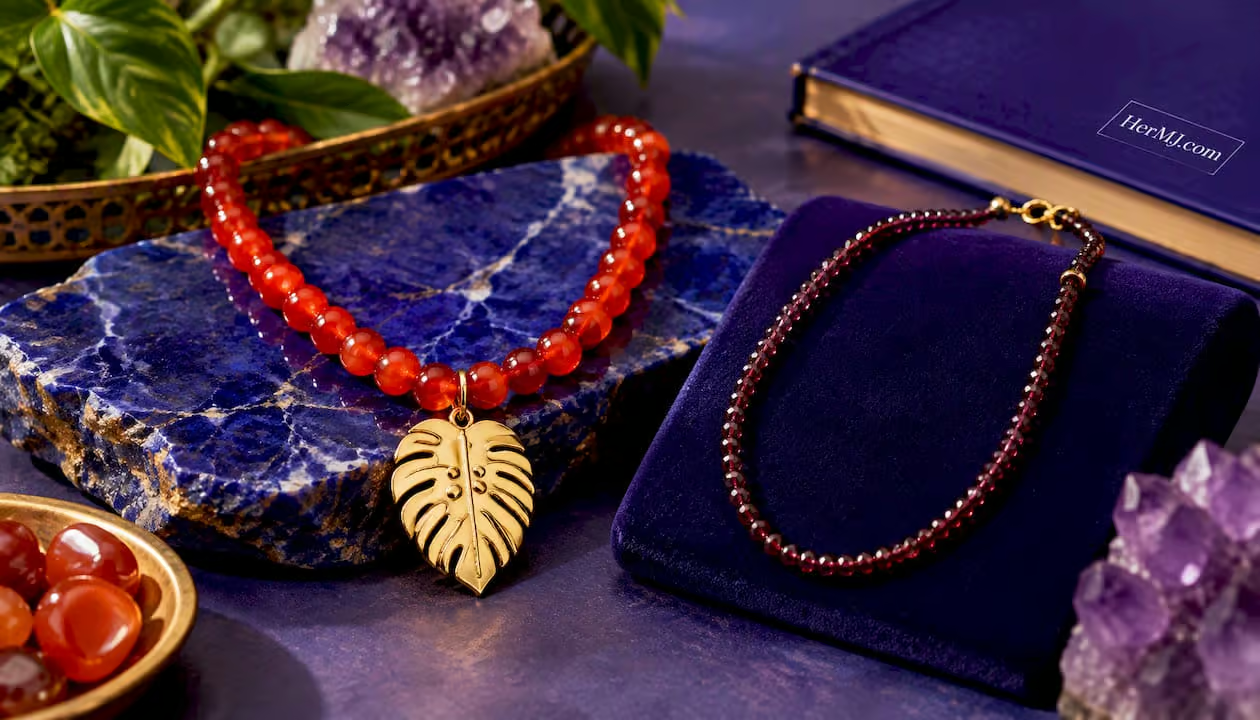
If you’re ready to wear carnelian, our Carnelian Necklace is a warm, easy starting point for daily styling.
If you like the same fiery mood with a deeper, wine-red tone, our Faceted Garnet Gemstone Necklace makes a lovely companion. You can browse everything in our pearl and gemstone jewelry collection, too.
US orders ship free with no minimum, and international orders ship free for orders of $150 or more. Pick a piece, and we’ll take it from there.
How I use carnelian without overpromising it
I wear carnelian on days when I need a nudge to begin something, like a blank page or a tough conversation.
The stone doesn’t do the work for me, but glancing at that warm orange color reminds me of the energy I want to bring.
That’s the role I’d encourage you to give it. Treat the meanings as personal supports, like a favorite scarf or a note taped to your mirror. And if you’re ever dealing with a health concern, talk to a medical professional, because a gemstone is a companion for your intentions, never a replacement for care.
— Veronique
FAQ
What is carnelian supposed to do?
People most often use carnelian as a symbolic stone for courage, motivation, and creativity. These are traditional and personal meanings, and a 2025 research review found no clinical evidence of direct medical effects from gemstones.
Can carnelian go in water?
Yes, brief contact with water is fine, since carnelian is a hard quartz variety. Wipe it with warm soapy water and dry it well, but skip long soaks if the piece has glued settings, cord, or mixed materials.
What should carnelian not be paired with?
Avoid storing carnelian loose against softer stones, which it can scratch, and keep it away from harsh cleaners. For wearing, it pairs well with most metals and stones, so choose by style and color preference.
Does carnelian need special cleaning?
Not really. Mild soap, warm water, and a soft cloth are enough; avoid ultrasonic cleaners and harsh chemicals, as the GIA recommends conservative care when treatments are unclear.
Sources
- Gemstones – Chalcedony
- Hand Amulet – Old Kingdom–First Intermediate Period – The Metropolitan Museum of Art
- Placebo effects in alternative medical treatments for anxiety: false hope or healing potential?
- An Introduction to Gem Treatments
Recommended
- Malachite meaning: Understanding Its Hardness And Insights
- Black Gemstones, Mohs Wearability and Care
- Citrine Meaning: Abundance, Chakra Links, and Care
- Carnelian Necklace