


Black Gemstones, Mohs Wearability and Care
Black gemstones are any dark minerals, crystals, or organic materials that read as black to the eye, whether that color comes from dense chemistry, graphite inclusions, or an organic origin like pearl or fossilized wood. This list walks through the major black gemstones you’ll find in jewelry today, with identification clues, Mohs hardness ratings, treatment notes, and everyday wearability you need to shop smart. I’ve included both mineral and organic gems because true black beauty comes in more than one form.
The Edit
- Choose gems rated Mohs 7 or higher, such as spinel, sapphire, or tourmaline, for rings; softer stones suit pendants and earrings better.
- Ask about treatment before buying: onyx is often dyed and zircon may be heat treated; request lab reports for high value black diamonds or opals.
- Avoid ultrasonic and steam cleaners for moderate, fragile, and organic gems; store pearls and jet separately because harder jewelry can scratch them.
- Black opal needs extra care: its Mohs 5 to 6.5 hardness and water content make it vulnerable to impact, heat, soaking, and ultrasonic cleaning.
Why Some Stones Turn Black and How to Read This List
Black isn’t just one color story in gemology. It’s several. Some stones, like onyx and black tourmaline, owe their color to dense inclusions within the stone’s crystal structure. Others, like black diamonds, turn opaque because dense clusters of graphite or fluid inclusions trapped during formation give natural black diamonds their depth, a trait GIA notes.
Organic gems such as jet and Tahitian pearls aren’t minerals at all: jet comes from fossilized wood, and pearls form inside living mollusks. Then there’s dye and heat treatment, which can turn a pale stone black entirely through human intervention rather than nature.
Here’s the shorthand we use to keep this list practical:
- Hardness tells you about daily wear. A Mohs rating of 7 or higher handles rings and bracelets well; anything below 5 benefits from gentler settings like pendants or earrings.
- Treatment status affects both price and care. A dyed or heat-treated stone isn’t less valuable, but it changes how you clean and insure it.
- Each entry below follows the same format: appearance, hardness, treatment notes, best jewelry use, and one care tip, so you can scan and compare quickly.
The Complete List of Black Gemstones
Black diamond
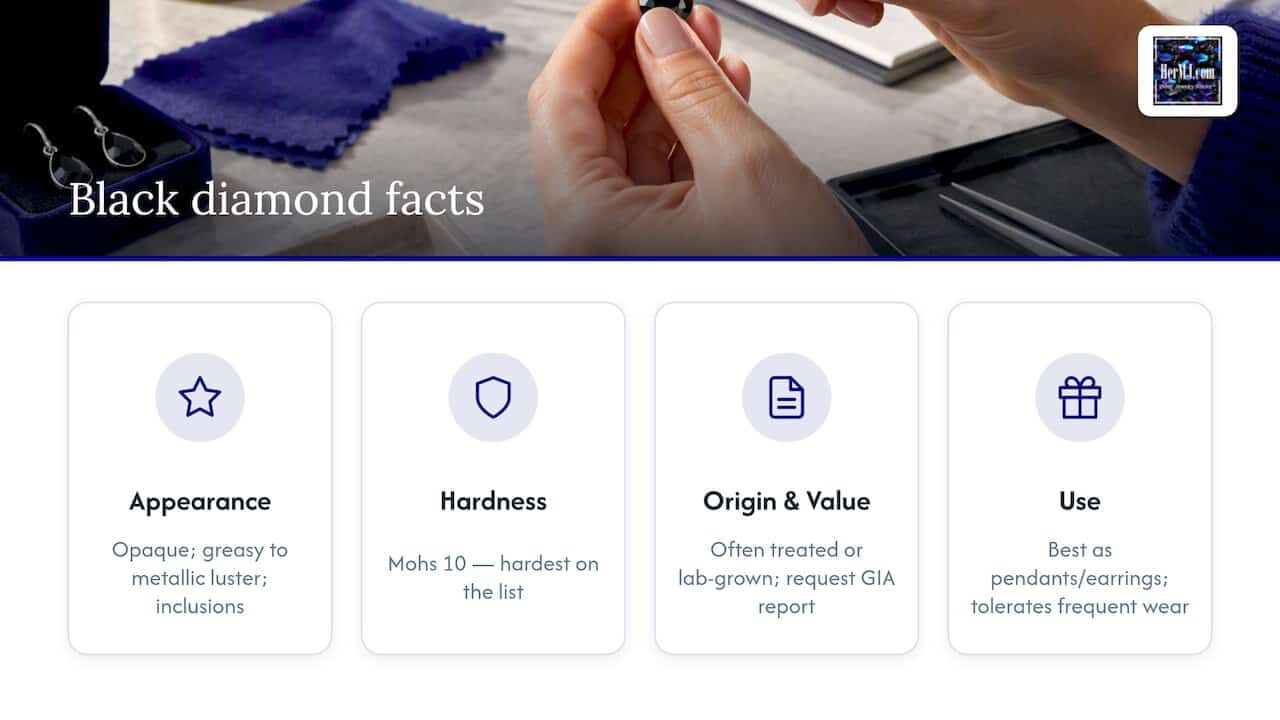
Black diamonds look completely opaque, with a glossy-to-metallic luster rather than the brilliant sparkle of colorless diamonds. That opacity comes from dense clusters of graphite or other mineral inclusions scattered through the stone.
On the Mohs scale, black diamond sits at the top with a 10, making it the hardest gem on this entire list and essentially immune to scratching from normal wear, a fact GIA confirms when it explains how hardness ranges across black gem varieties.
Natural black diamonds are genuinely rare, and many stones sold as “black diamond” today are treated by high-pressure, high-temperature processing or irradiation, or are lab-grown.
Because this difference matters so much for value, GIA issues a specialized Colored Diamond Identification and Origin Report specifically for opaque stones like these, confirming whether the color is natural or the result of treatment.
For any black diamond above a modest price point, ask for that report before you buy. In terms of their suitability, black diamonds work beautifully as pendant centerpieces or earrings where their density and contrast shine, and their hardness means they tolerate frequent wear without complaint.
Clean them with warm water and a soft brush; their hardness forgives most methods, though I’d skip harsh chemicals regardless.
Black onyx (black chalcedony)
Black onyx is a variety of chalcedony, a form of quartz, prized for its uniform, velvety black color and smooth, almost soap-like luster.
Most onyx on the market is dyed to achieve that deep, consistent black, since natural onyx in pure black is less common than banded or dyed versions.
At Mohs 6.5 to 7, onyx handles daily wear reasonably well, though it’s softer than sapphire or spinel and can pick up surface scratches over years of friction.
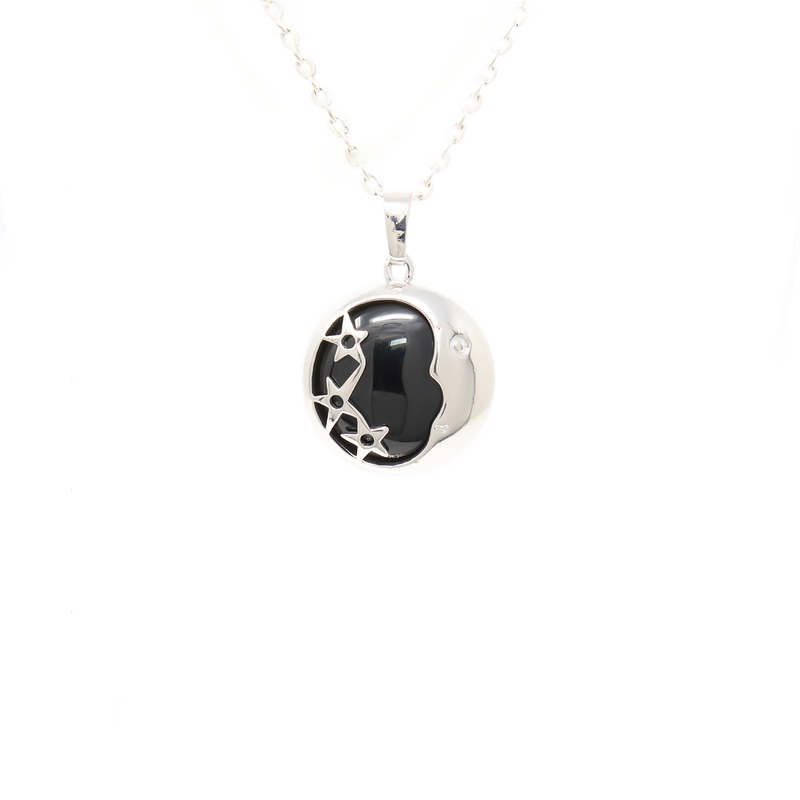
It’s a budget-friendly, versatile stone that works well in bracelets, beaded strands, and pendants. I cover its full symbolism and shopping considerations in the black onyx meaning guide, including what to ask before buying a dyed stone.
Clean onyx with mild soap and a soft cloth, and avoid prolonged soaking since dye can occasionally bleed with aggressive cleaning.
Black sapphire
Black sapphire is a variety of corundum, the same mineral family as blue sapphire and ruby, and it shows a similar glassy luster with a hint of metallic sheen under strong light.
Pure black sapphires are less common than the more typical dark blue-black or green-black stones, though well-cut pieces can look dramatically uniform.
Sapphire rates a 9 on the Mohs scale, just below diamond, which makes it one of the most durable colored gems for everyday jewelry.
Most black sapphire on the market is natural, though heat treatment is common across the sapphire family to improve clarity and color consistency.
Its hardness makes it an excellent choice for rings and bracelets that see regular wear, and it resists scratching from nearly everything except diamond itself. A simple wipe with a soft cloth after wear keeps its polish intact.
Black spinel
Black spinel often gets overlooked next to diamond and sapphire, but it deserves more attention as a genuinely durable, affordable black gem.
It shows a bright, almost glassy luster and comes in a true, deep black with no banding or visible inclusions in well-selected stones.
At Mohs 8, spinel sits comfortably between sapphire and tourmaline in hardness, tough enough for daily-wear rings without special caution. Most black spinel is natural and untreated, which appeals to buyers who want an unenhanced stone at a reasonable price.
It works for rings, bracelets, and earrings equally well, and its affordability makes it a smart substitute for black diamond in pieces where budget matters more than rarity. Clean with warm soapy water and a soft brush; its hardness tolerates most routine cleaning without issue.
Black tourmaline (schorl)
Black tourmaline, known mineralogically as schorl, is the most common tourmaline variety and shows a distinctly dull to vitreous luster with a slightly striated crystal surface when it’s uncut.
Widely available and typically sold in its natural state, there’s little commercial incentive to treat an already-abundant black stone.
Schorl rates Mohs 7 to 7.5, durable enough for most jewelry types including rings, though we’d still avoid banging it against harder surfaces.
It works well in bracelets, pendants, and earrings, offering a matte-to-satin black finish that reads more understated than onyx’s high shine. Keep cleaning simple: warm water and a soft cloth, and skip ultrasonic or steam cleaners, which can stress the stone’s internal structure over time.
Black opal
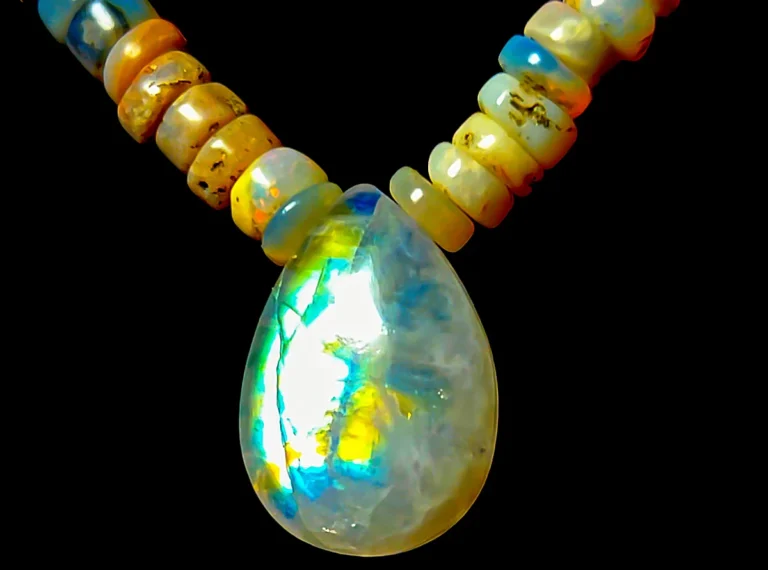
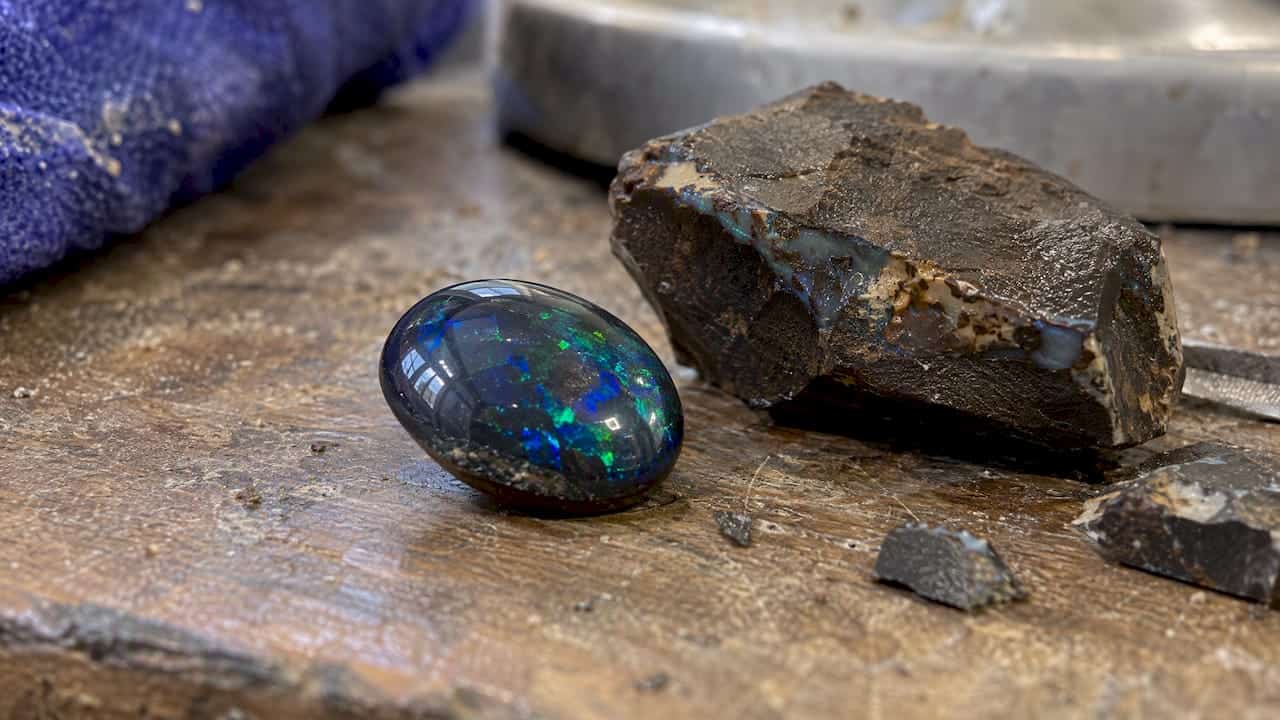
Black opal is the most prized member of the opal family, defined not by pure blackness but by a dark bodycolor, ranging from charcoal to true black, that makes its play-of-color pop with unusual intensity.
According to GIA’s opal description, black opal is translucent to opaque and derives its value more from the strength of that internal color flash than from how dark the background actually is.
The signature source is Lightning Ridge in Australia, where the dark ironstone host rock produces some of the most dramatic opals in the trade.
Opal rates only Mohs 5 to 6.5, among the softer gems on this list, which means it’s genuinely fragile and prone to scratching or cracking under impact or temperature swings. It’s best reserved for pendants, earrings, or occasional-wear rings rather than pieces that see daily friction.
Because black opal can be exceptionally costly, a lab report confirming natural color and identifying any treatment is worth requesting for higher-value pieces. Clean only with a soft, damp cloth; never soak opal or expose it to ultrasonic cleaning, since its water content makes it sensitive to both heat and chemicals.
Tahitian black pearl
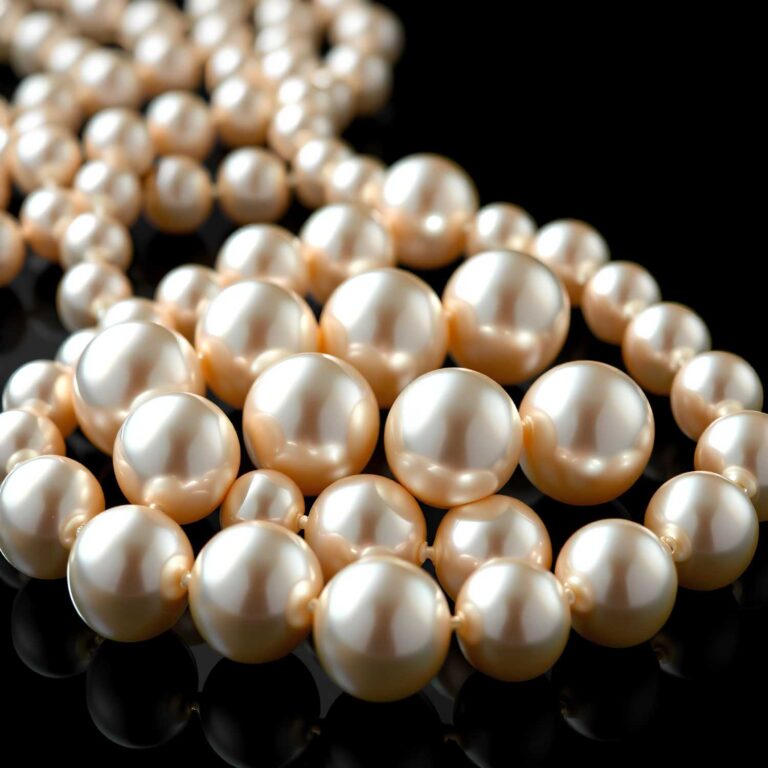
Tahitian pearls are saltwater cultured pearls grown primarily in French Polynesia, and GIA’s pearl description notes they range from gray to true black with overtones of green, blue, or purple shimmering across the surface.

That overtone variation is part of what makes each pearl distinct, and it’s a detail worth understanding if you’re choosing a strand or a single accent pearl.
You can look deeper into overtone selection in the HerMJ pearl overtone guide, which helps you match a pearl’s undertone to your skin tone and wardrobe.
As an organic gem, Tahitian pearl rates just Mohs 2.5 to 4.5, soft enough that it scratches easily against harder stones or metal clasps.
Pearls are gorgeous in necklaces, pendants, and earrings, but they’re a poor match for everyday rings where constant friction will dull their nacre over time. Clean them only with a soft cloth after wearing, and never use ultrasonic cleaners or harsh chemicals, which can strip the nacre’s luster permanently.
Obsidian
Obsidian is volcanic glass, formed when lava cools too quickly for crystals to develop, and it shows a glossy, almost liquid-looking shine with occasional reddish or smoky inclusions depending on the deposit.
According to Geology, obsidian rates Mohs 5 to 5.5, and beyond jewelry, it’s frequently used as a backing material for opal doublets and triplets because its deep black color increases contrast against the opal’s play-of-color.
That dual role matters if you’re evaluating a composite opal piece, since the “black” you’re seeing in the base may be obsidian rather than the opal itself.
As a standalone gem, obsidian suits bracelets and pendants better than rings, since its glassy structure chips more readily than crystalline stones. Clean gently with a soft cloth and lukewarm water, avoiding sudden temperature changes that can cause fracturing.
Jet (Whitby jet)
Jet is fossilized wood, compressed over millions of years into a lightweight, deeply black material that takes an exceptional polish.
Historically mined around Whitby, England, geology.com describes Whitby jet as the material behind centuries of mourning jewelry, prized for a brightness of polish that belies how soft it actually is.
Jet rates only Mohs 2.5 to 4, making it one of the most delicate materials on this list, easily scratched by anything harder, including everyday dust and grit.
It’s best suited to pendants, brooches, or earrings where it won’t rub against other jewelry or hard surfaces. Clean jet with a dry or barely damp soft cloth only, store it separately from harder stones, and keep it away from heat, which can cause it to crack.
Hematite
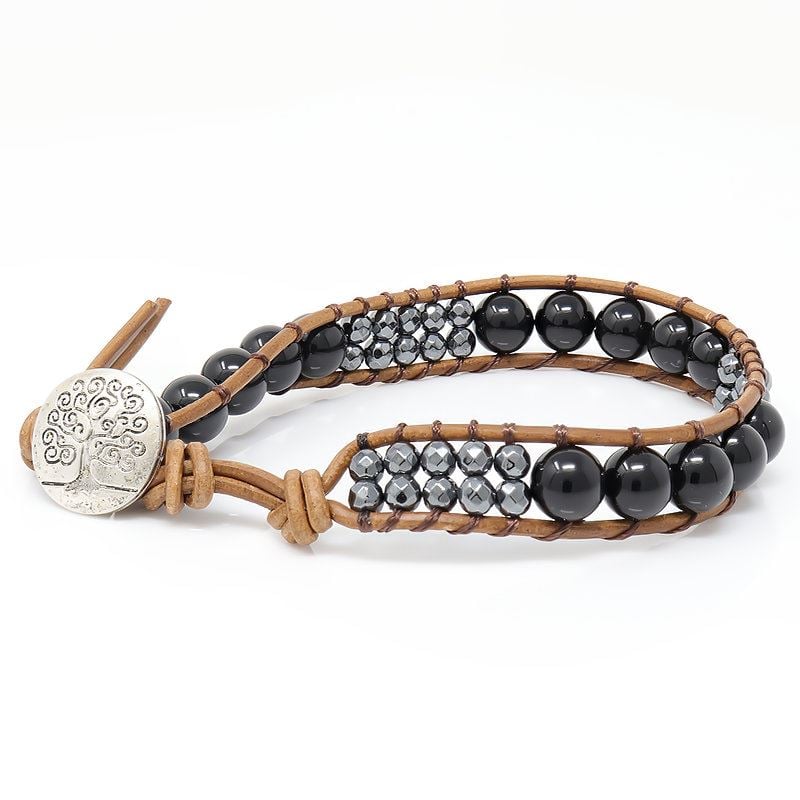
Hematite is an iron oxide mineral known for its distinctive metallic, almost mirror-like sheen, setting it apart from every other stone on this list, none of which show that steel-gray-to-black metallic luster.
It rates Mohs 5 to 6, moderately durable but still soft enough to scratch against harder gems or metal edges. Hematite is popular in bracelets and beaded jewelry, where its weight and reflective surface create a bold, modern look when paired with stones like onyx.
Because it’s iron-based, hematite can rust if left in water for extended periods, so we’d recommend wiping it dry immediately after any contact with moisture rather than letting it air dry.
Black jade
Black jade, typically a variety of nephrite, shows a smooth, slightly waxy luster and a dense, almost opaque black that’s prized in carved pieces and beads alike.
It rates Mohs 6 to 6.5, tough enough for beaded bracelets and pendants, though not quite as resilient as sapphire or spinel against sharp impact.
Much of the black jade on the market is natural, though some stones are dyed or treated to deepen an uneven color.
It works well in bracelets and carved pendant pieces, less so in rings that take daily knocks. Clean with mild soap and water, and avoid harsh chemical jewelry cleaners that can affect any surface treatment.
Melanite (black garnet)
Melanite is a black variety of andradite garnet, showing a bright, almost adamantine luster that catches light differently than the duller finish of onyx or jet.
It’s genuinely uncommon in jewelry compared to red garnet varieties, which makes it a distinctive choice for anyone wanting a black gem with a story.
Garnet as a family rates around Mohs 6.5 to 7.5, and melanite falls within that range, durable enough for pendants and earrings, with reasonable caution for rings.
It’s almost always natural and untreated, since there’s little commercial reason to enhance a stone already sold on rarity. Clean with warm water and a soft brush, avoiding sudden temperature shifts.
Nuummite
Nuummite is a rare metamorphic rock from Greenland showing an iridescent, almost labradorescent flash of gold, green, or blue across a dark gray-to-black background, a visual effect that sets it apart from the flat black of onyx or obsidian.
It rates Mohs 6 to 7, reasonably tough for pendants and beaded jewelry. Nuummite is sold natural and untreated, and its rarity alone makes it a collector favorite rather than a mainstream staple.
It suits pendants and statement pieces best, where its iridescent play can be appreciated, rather than rings where the flash gets lost against the hand. Clean with a soft cloth and mild soap.
Black zircon
Black zircon is a naturally dark variety of zircon, showing a bright, almost diamond-like luster when well cut, thanks to its high refractive index.
It rates Mohs 6 to 7.5, moderate durability that suits pendants and earrings better than rings subjected to daily impact. Some black zircon is heat-treated to deepen or stabilize its color, so it’s worth asking a seller directly about treatment status before buying.
Its brilliance makes it a striking, budget-conscious alternative to black diamond for statement earrings. Clean gently with warm water and a soft cloth, avoiding ultrasonic cleaners, which can exploit zircon’s tendency toward internal stress fractures.
Black chalcedony and black jasper
Black chalcedony, the broader mineral family that includes black onyx, shows a smooth, semi-translucent to opaque finish with a gentle waxy luster.
Black jasper, a chalcedony relative with more visible internal texture, often shows mottled or banded patterns even within an overall dark tone.
Both rate Mohs 6.5 to 7, solid performers for bracelets, beaded strands, and pendants. These stones are typically natural, sometimes with minor dye enhancement to even out tone.
They’re among the most affordable and versatile black gems available, forgiving choices for everyday beaded jewelry. Clean with mild soap and water and a soft brush for any textured surfaces.
Black diopside
Black diopside is a less common pyroxene mineral showing a dark, almost velvety luster with occasional chatoyancy (a soft, cat’s-eye-like sheen) in well-cut cabochons.
It rates Mohs 5.5 to 6.5, moderate hardness that favors pendants and earrings over rings. Most black diopside is natural and untreated, sold more for its understated texture than overt sparkle.
It appeals to collectors and anyone looking for a quieter, matte alternative to glossier black stones. Clean with a soft cloth and mild soap, avoiding abrasive cleaning tools that can dull its finish.
Caring for Black Gemstones by Hardness Group
Grouping black gemstones by hardness makes care simple, because stones in the same range usually tolerate the same cleaning methods and need similar settings.
- Hard minerals (Mohs 7 and up): black diamond, sapphire, spinel, tourmaline, zircon, and melanite tolerate warm soapy water, a soft brush, and most daily wear, including rings.
- Moderate minerals (Mohs 5 to 6.5): onyx, jade, hematite, nuummite, chalcedony, jasper, diopside, and obsidian need gentler handling, mild soap, no soaking, and settings that protect edges from impact.
- Soft opal (Mohs 5 to 6.5 but structurally fragile): black opal needs its own category because water content makes it sensitive to heat and dehydration, not just scratching.
- Organic materials (Mohs 2.5 to 4.5): jet and Tahitian pearl are living or once-living materials that reject ultrasonic cleaning, steam, and chemical cleaners entirely.
Skip ultrasonic and steam cleaners for anything in the moderate, soft, or organic groups, since vibration and heat can crack stones or strip nacre and polish.
A bezel setting protects softer stones’ edges far better than a prong setting, which exposes more surface to knocks; save prongs for your hardest stones.
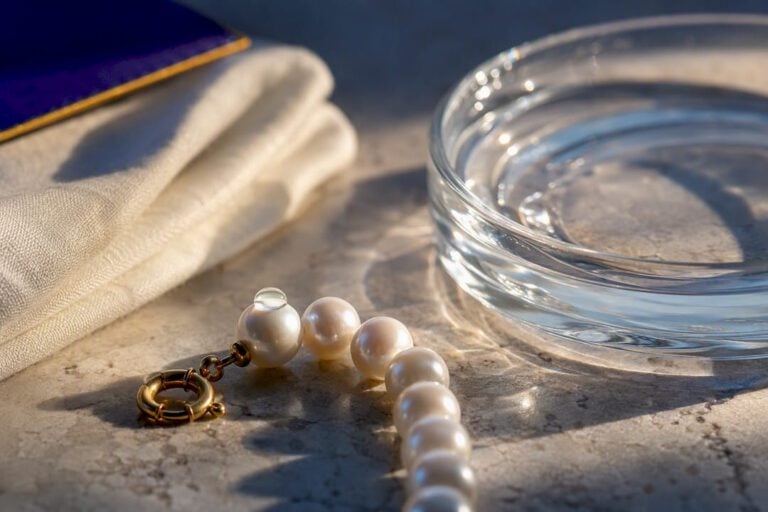
Store pearls and jet separately from other jewelry, ideally in a soft pouch, since even gentle contact with harder gems or metal clasps can leave lasting scratches.
The HerMJ guide on caring for handmade gemstone jewelry walks through cleaning routines in more detail, including how often to check prongs and clasps for wear.
Pro Tip: Wipe any gemstone or pearl piece with a soft cloth immediately after wearing, before oils and lotions have a chance to settle into the surface.
How to Choose the Right Black Gemstone
- Match hardness to the piece. Choose Mohs 7 or higher (spinel, sapphire, tourmaline) for rings, and reserve softer stones like opal, jet, or pearl for pendants and earrings that see less friction.
- Decide if treatment matters to you. Dyed onyx and heat-treated zircon are perfectly good jewelry, but if you want natural, untreated color, ask directly and request documentation for anything above casual pricing.
- Request a lab report for expensive pieces. For black diamonds or black opal especially, a GIA colored-diamond report or equivalent documentation confirms natural color versus treatment.
- Set a realistic budget. Natural black diamond and fine black opal sit at the rare, costly end of this list, while spinel, onyx, and chalcedony offer striking black color at accessible prices.
- Ask sellers the right questions. Origin, treatment history, return policy, and whether a lab report comes with the piece are all fair questions, and a seller who can’t answer them clearly is worth a second look.
- Understanding how a stone’s cut and shape affect its price also helps you judge whether a quote feels fair.
A Personal Note on Styling Black Gems
I’m Veronique, and styling black gemstones is one of my favorite parts of designing jewelry, because black does something no other color does: it makes every metal and every neighboring stone look sharper by contrast.
Pair glossy blacks like onyx or obsidian with warm gold tones for a dramatic, polished look, or pair matte blacks like tourmaline with silver for something quieter and more textural.
Tahitian pearls deserve their own spotlight; their subtle overtones shift depending on the light, which pearl overtone guide explains in more depth.
When Bold Black Beats Subtle Dark, and Vice Versa
Minimalist black jewelry has had a real moment, thin onyx bands and single hematite beads worn almost like a quiet signature. But I still think a bold black opal or a dramatic Tahitian pearl pendant earns its place for the right occasion, the kind of piece you wear once a season and remember for years. For daily pieces, lean durable: spinel, tourmaline, onyx. For rare nights out, let yourself choose something delicate. Customization is how you get both without compromise.
— Veronique
Find Your Black Gemstone Piece at HerMJ
If this list has you leaning toward a specific black stone, HerMJ has a few pieces that make the decision easy.
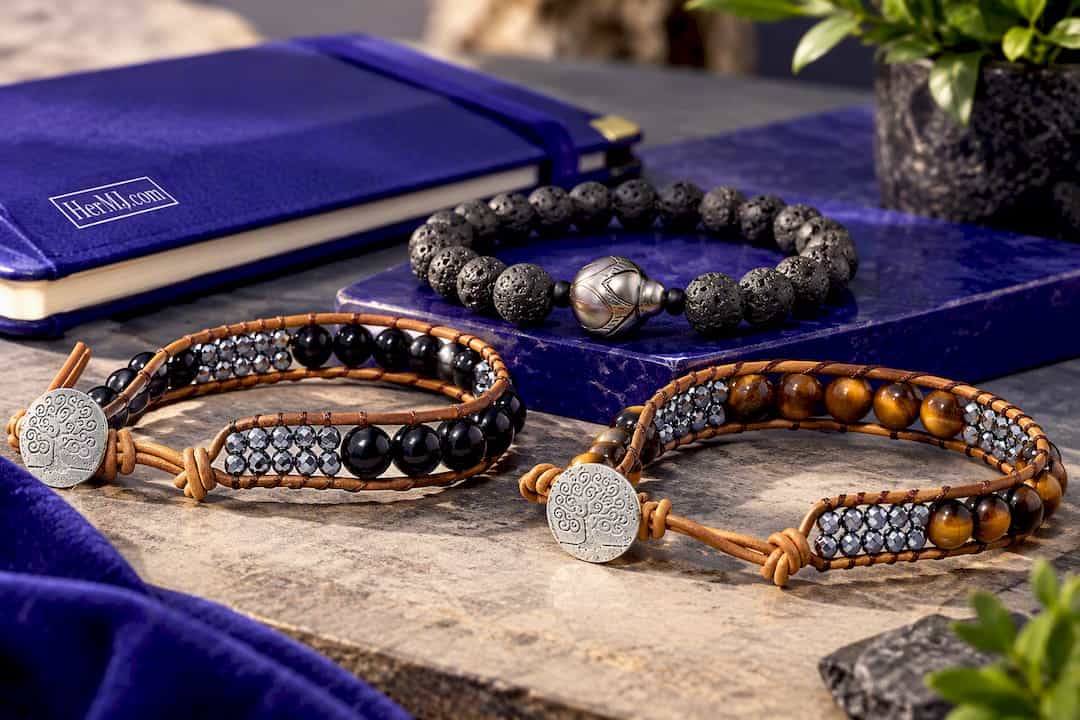
The Onyx Beads Bracelet is a daily-wear favorite, durable enough for constant use and polished enough to look intentional every day.
For something dressier, HerMJ’s Black Lava Stone Tahitian Pearl Bracelet pairs organic pearl luster with the deep texture of lava stone, a combination that reads richer than either material alone.
And if you want a warmer, golden-toned dark stone instead of true black, The Tiger Eye Bracelet offers that chatoyant, banded look as an alternative.
- US orders ship free with no minimum.
- International orders ship free on orders of $150.
| Product | Best for | Material highlight |
|---|---|---|
| Onyx Beads Bracelet | Everyday wear | Durable black onyx beads |
| Black Lava Stone Tahitian Pearl Bracelet | Dressier occasions | Tahitian pearl and lava stone |
| Tiger Eye Bracelet | Alternative dark tone | Golden tiger eye |
Browse our full bracelets collection, or explore necklaces, earrings, and room jewelry if you’d like to build out a full black-gemstone look at home or on your wrist.
FAQ
What is the rarest black gem?
Natural black diamond is among the rarest black gems, since most black diamond color comes from dense inclusions that form only under specific conditions, and GIA notes that many stones sold as black diamond are actually treated or lab-grown. Fine black opal from sources like Lightning Ridge is similarly rare and often commands high prices for strong play-of-color.
Who should not wear black obsidian?
Obsidian is volcanic glass with a Mohs hardness around 5 to 5.5, so anyone who works with their hands constantly or wears rings through rough daily tasks may find it chips more easily than harder stones. It’s better suited to pendants, earrings, or occasional-wear rings than to a piece worn nonstop.
What is the most powerful black gemstone?
“Powerful” isn’t a gemological measurement, but in terms of sheer durability, black diamond and black sapphire lead the list at Mohs 10 and 9. If you’re asking about visual impact instead, black opal’s play-of-color against a dark bodycolor creates one of the most striking effects of any gem on this list.
What is a glossy black gemstone?
Glossy black gems get their shine from a smooth, polished surface and include black onyx, obsidian, and jet, all known for taking a bright, almost mirror-like finish. Hematite stands apart with a distinctly metallic sheen rather than the glassy gloss of the others.
Sources
Recommended
- Mohs Gemstone Hardness: Is Your Diamond A Jewelry Killer?
- Black Onyx Meaning Explained: Properties and Purchase Guide
- How to Care for Handmade Gemstone Jewelry