



Stretch Bracelet Care: 5 Habits That Protect Pearls and Elastic
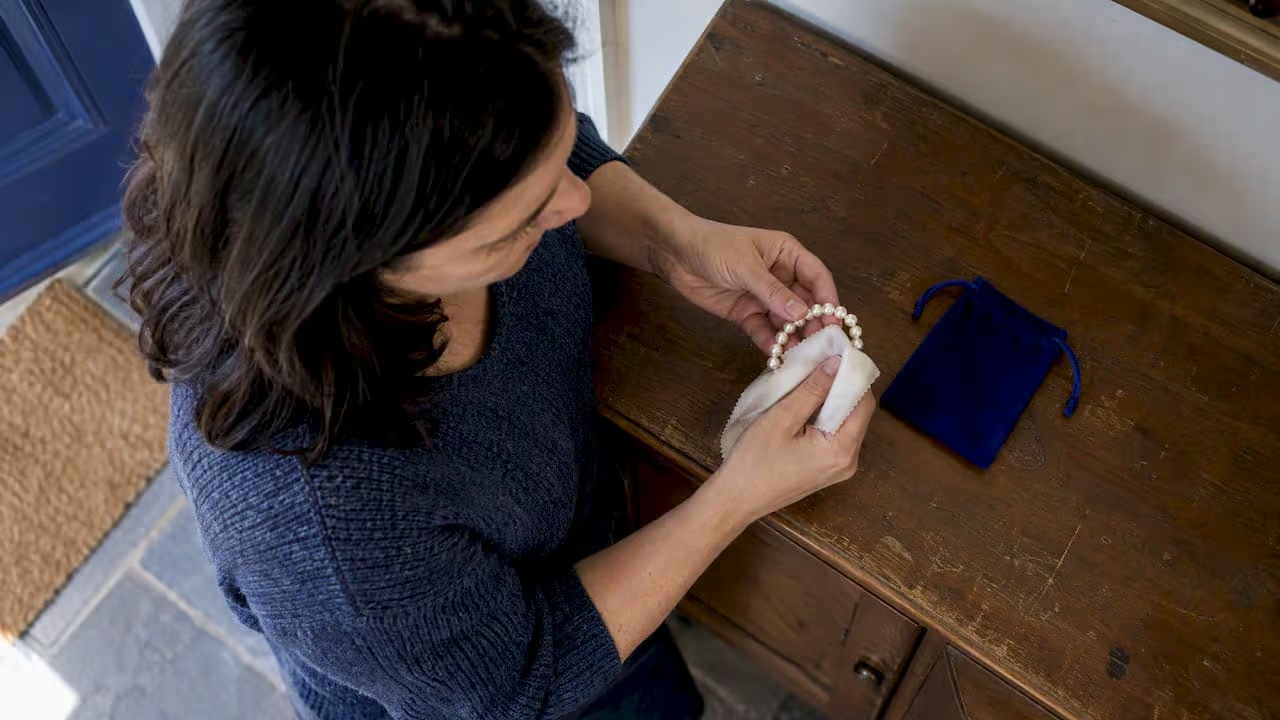
The short answer: keep your stretch bracelet away from water, perfume, and lotion, roll it on and off instead of yanking it over your hand, and wipe it down after every wear.
Pearls and softer gems like turquoise need extra caution since they scratch and absorb chemicals easily. We’ll walk through daily habits, cleaning by material, and simple repairs below.
The Edit
- A bracelet worn too tightly stays under constant strain, so choose a comfortably loose fit and store it flat or loosely coiled rather than hanging.
- Pearls rate about 2.5 on the Mohs scale, so wipe them with a soft cloth and keep them away from chemicals, steam, and ultrasonic cleaners.
- Turquoise and coral can absorb chemicals and scratch easily, so limit water exposure and store them apart from harder beads.
- For harder gems, swish the bracelet in lukewarm water with mild soap every few weeks, rinse briefly, and dry it completely before storage.
- Inspect elastic every few months for fraying or discoloration, and replace brittle cord rather than patching it; a jeweler should handle loose or cracked beads.
Your everyday do and don’t checklist
Most damage to a stretch bracelet happens in small, repeated moments, not one dramatic accident. A few consistent habits protect the elastic and the beads strung on it far better than occasional deep care ever will.
- Roll the bracelet on and off your wrist instead of stretching it wide to force it over your hand.
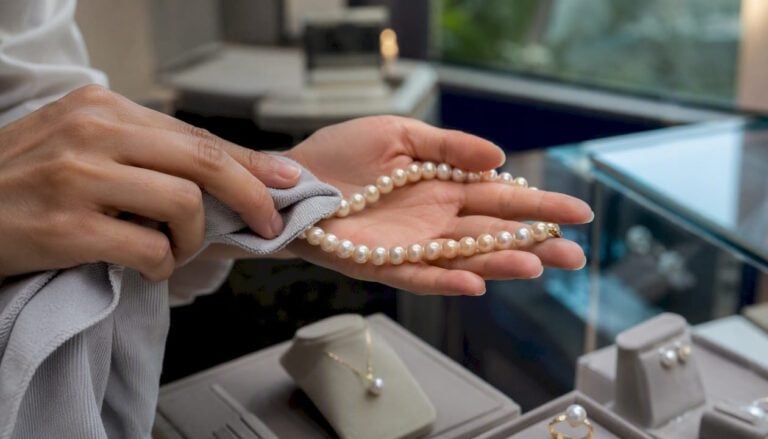
- Wipe it with a soft cloth after each wear to lift away oils, sweat, and skin residue.
- Take it off before showering, swimming, exercising, or applying any beauty product.
- Keep it away from perfume, hairspray, lotion, and hand sanitizer, since these can degrade both elastic and beads.
- Choose a size that sits comfortably loose rather than tight, so the cord isn’t under constant tension.
That last point matters more than people expect. A bracelet that’s always stretched to fit is aging faster every single day you wear it, even when it looks fine.
A simple at-home cleaning routine
You don’t need a jewelry box full of tools to keep a stretch bracelet looking its best. A short, consistent routine does more good than an occasional intense scrub.
- Wipe the bracelet with a soft, lint-free cloth after every wear to remove surface oils before they settle into the beads.
- For a deeper clean every few weeks, swish it gently in lukewarm water with a drop of mild soap.
- Rinse briefly under cool running water, then lay it flat on a towel until it’s completely dry before storing.
- Skip ultrasonic or steam cleaners entirely, since both can crack glued beads and strip the surface off pearls.
- If a bracelet has deep grime, a broken strand, or beads that feel loose, bring it to a jeweler instead of trying a risky home fix.
Knowing the line between a quick wipe and a trip to a professional is worth it before a small problem becomes a bigger one.
Cleaning and care by material
Not every bead on a stretch bracelet asks for the same treatment, and treating them all the same way is where a lot of accidental damage starts.
- Pearls: avoid chlorine, perfume, and chemical contact; never use an ultrasonic or steam cleaner; simply wipe with a soft cloth and let them air-dry.
- Porous or soft gems like turquoise and coral: keep away from prolonged water exposure and household chemicals, dry them fully, and store them apart from harder stones that could scratch their surface.
- Harder gems such as garnet, quartz, and tiger eye: a gentle soap-and-water clean is fine, but skip high heat and strong chemical cleaners.
- Metal spacers and plated beads: dry them completely after cleaning, and avoid abrasive polishes that wear down thin plating.
- Wood and acrylic beads: never soak them; a quick wipe with a barely damp cloth followed by air drying keeps them intact.
Pearls deserve special attention because they sit low on the Mohs hardness scale, around 2.5, making them easy to scratch and especially vulnerable to chemical damage.
That’s a different kind of fragility than a quartz or garnet bead faces, and it’s why a single care routine for “all beads” tends to fail pearls first.
If your stretch bracelet mixes pearls with sturdier stones, care for the whole piece as gently as its most delicate component.
Repair, restringing, and knotting basics
A stretch bracelet rarely snaps without warning. Fraying near the knot, thinning cord, or small gaps opening between beads are all signs to catch early.
- Check the cord every few months by stretching it slightly and looking for thin or discolored spots, especially near the clasp or knot.
- Match your cord thickness to your beads. Many crafters use 0.7 mm to 1.0 mm cord for standard gemstone beads and closer to 0.5 mm for seed beads.
- Pre-stretch new elastic cord before you string beads onto it. This single step reduces the sagging and gapping that shows up months later.
- Finish with a surgeon’s knot rather than a simple overhand knot, then add a small dab of flexible jewelry glue like E6000 or GS Hypo Cement to lock it in place.
- Tuck or cover the finished knot inside a bead so it doesn’t rub against skin or catch on clothing.
- If the elastic itself feels brittle or stretched out, replace the cord entirely rather than patching the old knot. Save the reinforcement trick for a knot that’s simply loosened, and bring anything with cracked or missing beads to a jeweler.
Pro Tip: Pre-stretch your elastic cord by pulling it firmly a dozen times before stringing a single bead. It takes thirty seconds and saves you from a saggy bracelet in a few months.
Storing and traveling without damage
Where you keep a stretch bracelet between wears matters almost as much as how you clean it. Heat, sunlight, and the wrong container all work against the elastic over time.
- Store bracelets flat or loosely coiled in a soft pouch rather than hanging them, since gravity gradually stretches elastic over weeks of hanging.
- Keep pieces separated so harder beads can’t scratch pearls or softer gems sitting next to them.
- Skip plastic bags for long-term storage. Plastic can release chemicals that damage pearls over time, and heat trapped inside a sealed bag doesn’t help elastic either.
- When you travel, pack bracelets in a carry-on rather than checked luggage, and seal any liquid toiletries separately so a leak can’t reach your jewelry.
- Avoid hot, dry spots like a car dashboard or a sunny windowsill, both of which weaken elastic fibers faster than you’d expect.
A soft pouch and a few extra seconds before you pack can prevent most of the damage that happens on the road.
What we’ve learned from years of handmade bracelets
We build every stretch bracelet by hand, so we see firsthand which finishing choices hold up and which don’t. A tucked, glued knot outlasts a loose overhand knot by a wide margin, and we never choose the cord diameter for a given bead size as an afterthought.
If you’ve bought a pearl or gemstone stretch bracelet from us, the same rules above apply, with one addition: check our guide on storing pearls and our broader notes on caring for handmade gemstone jewelry for piece-specific nuance.
Wipe after wear, store flat in a pouch, and avoid chemical contact. That’s the short version, and it’s the same advice we’d give a friend.
Why most bracelet care advice misses the point
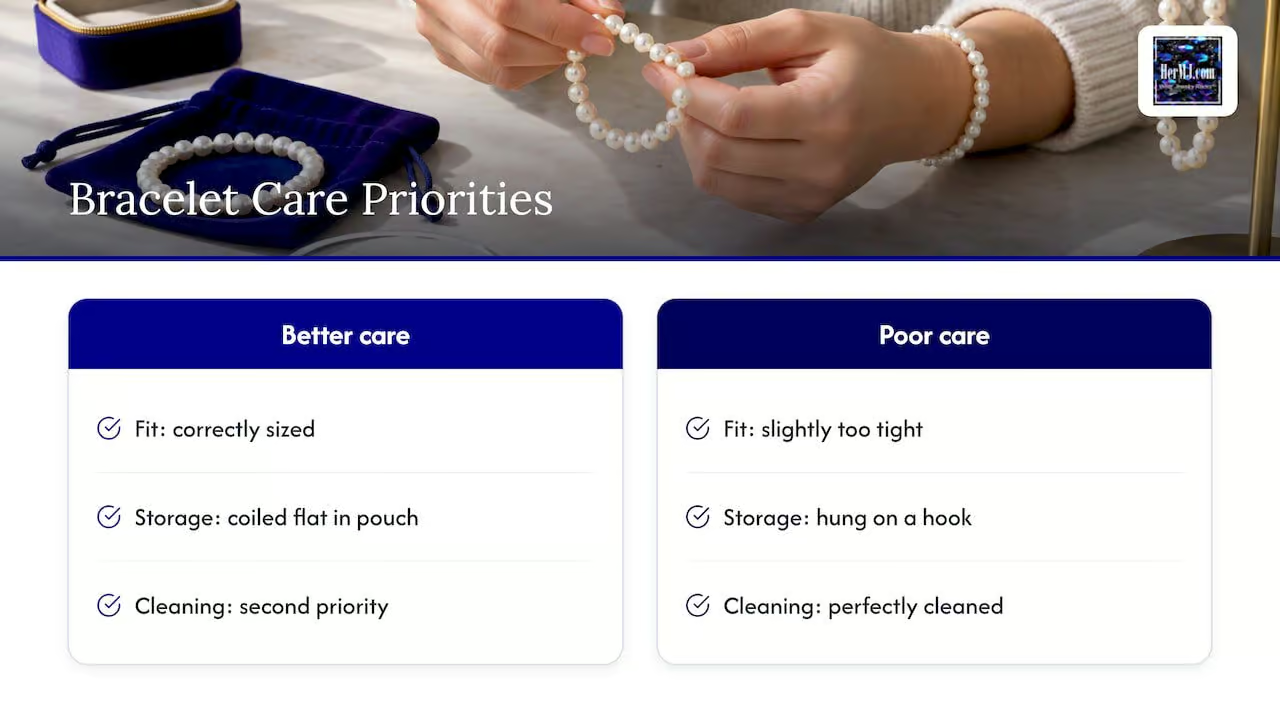
Most care guides treat a stretch bracelet like a static object you clean occasionally. We’d argue the real threat isn’t dirt. It’s tension.
A bracelet that’s slightly too tight is stressed every hour you wear it, not just during a harsh cleaning session, and that constant pull on the elastic creates more cumulative stress than an occasional splash of water ever will.
The conventional advice gets cleaning right but underweights fit and storage. A bracelet sized correctly and coiled flat in a pouch will often outlast one that’s cleaned perfectly but worn too tight and hung on a hook.
If you take one thing from this guide, make it sizing and storage first, cleaning second. Chemical exposure matters too, and perfume or sunscreen contact is a real risk, but it’s usually occasional.
Tension and poor storage are daily ones, and daily problems compound faster than occasional ones.
— Veronique
Need a repair or a replacement bracelet?
If a stretch bracelet is past the point of a quick fix, or you want a fresh piece with sturdier knotting from the start, we’re happy to help. We use reinforced, pre-stretched cord and bead pairings chosen to wear evenly over time.
Browse our Lustrous Freshwater Pearl Bracelet for Elegance or explore the full bracelets collection to find a piece built to last. Reach out through our site if you’d like guidance on sizing or care for a bracelet you already own.
FAQ
How do I redo a stretchy bracelet that’s gone loose?
Cut off the old knot, pre-stretch a fresh piece of 0.7 mm to 1.0 mm elastic cord depending on your bead size, restring the beads, and finish with a surgeon’s knot secured with a dab of flexible jewelry glue. Tuck the knot inside a bead to keep it hidden and protected.
Why do my string bracelets smell bad?
A sour or musty smell usually comes from sweat, lotion, or oils that soak into the elastic cord or settle around the beads over time. Wipe the bracelet with a soft cloth after every wear, and let it air-dry fully before storing to help prevent this buildup.
How do I bring a dull-looking bracelet back to life?
A gentle wash in lukewarm water with a drop of mild soap, followed by thorough air-drying, restores shine on most hard gemstone beads. For pearls, stick to a soft cloth wipe only, since soaking or scrubbing can wear down their delicate surface over time.
Will permanent bracelets stretch out over time?
Permanent bracelets use a fixed, welded chain rather than elastic cord, so they don’t stretch like a traditional stretch bracelet. Elastic stretch bracelets, by contrast, do loosen gradually with wear, especially if stored hanging rather than flat or loosely coiled.
What should I avoid putting on my bracelet before wearing it?
Never apply perfume, hairspray, lotion, or hand sanitizer before putting your bracelet on; do it after, since these products can degrade elastic and damage pearls or soft gemstones on contact. If you enjoy sampling different fragrances, let any scent dry completely before your bracelet touches your skin.
Sources
- Pearl care and cleaning | GIA
- How to make elastic bracelets that don’t break — The Spruce Crafts
- Beads
- Traveling in style: A guide to traveling with jewelry — GIA 4Cs
Recommended
- How Often to Restring Pearls and Key Signs to Watch
- Can Pearls Get Wet? 4 Real Life Fixes From a Designer
- How to Store Pearls and Keep Them Lustrous
- Wipe Pearls After Every Wear: How to Clean Pearls Safely