


Crafted for Eternity: The Art and Science Behind Ancient Egyptian Jewelry
Crafted for Eternity: Ancient Egyptian Jewelry History
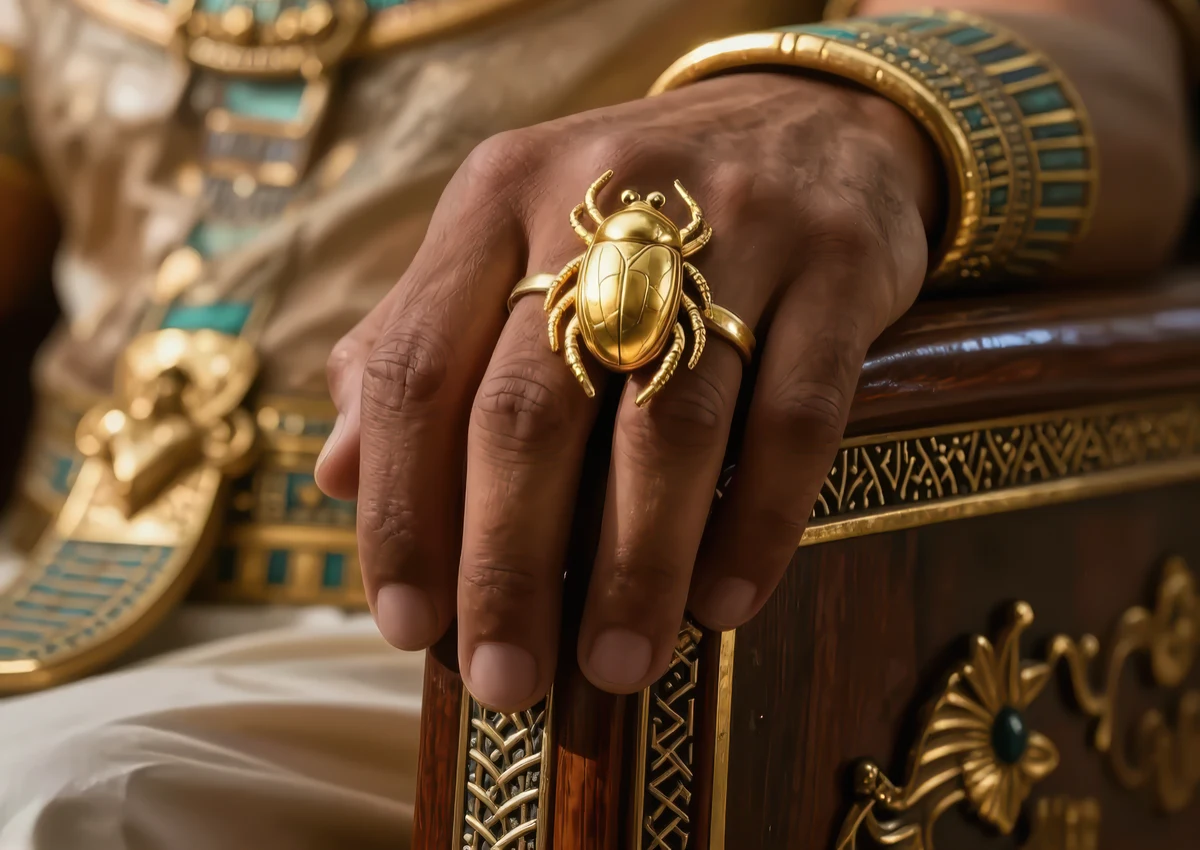
Article Brief
Step back through history and discover the amazing step-by-step process of ancient Egyptian jewelry design.
Think of ancient Egypt, and images often turn to pyramids, pharaohs, or hieroglyphics, but another aspect that captivates is just as symbolic. Their jewelry.
To our modern eye, Egyptian gold necklaces and lapis lazuli collars are stunning works of art.
But for the people who wore them thousands of years ago, these pieces were talismans of power, symbols of status, and essential tools for navigating the afterlife.
So, how was Egyptian jewelry crafted?
To understand, we’ll take a journey back in time to explore the materials, techniques, and cultural significance of ancient Egyptian jewelry-making.
The Palette: Materials Sourced from Across the World
The Egyptians were not limited by their local geography; they traded extensively to acquire the raw materials needed for their finest pieces.
- Gold: Known as the “flesh of the gods,” gold was the most prized metal because it never tarnished, symbolizing immortality and eternity. Most Egyptian gold came from Nubia (modern-day Sudan), transported via caravans across the desert or up the Nile.
- Silver: It may be difficult to imagine today, but unlike gold, silver was rarer in ancient times. It was often more valuable initially and was associated with the moon and the bones of the gods.
- Semi-Precious Stones: The Egyptians loved color. Lapis lazuli (often imported from Afghanistan) represented the sky; carnelian and red jasper symbolized blood and life; turquoise from the Sinai Peninsula evoked water and joy.
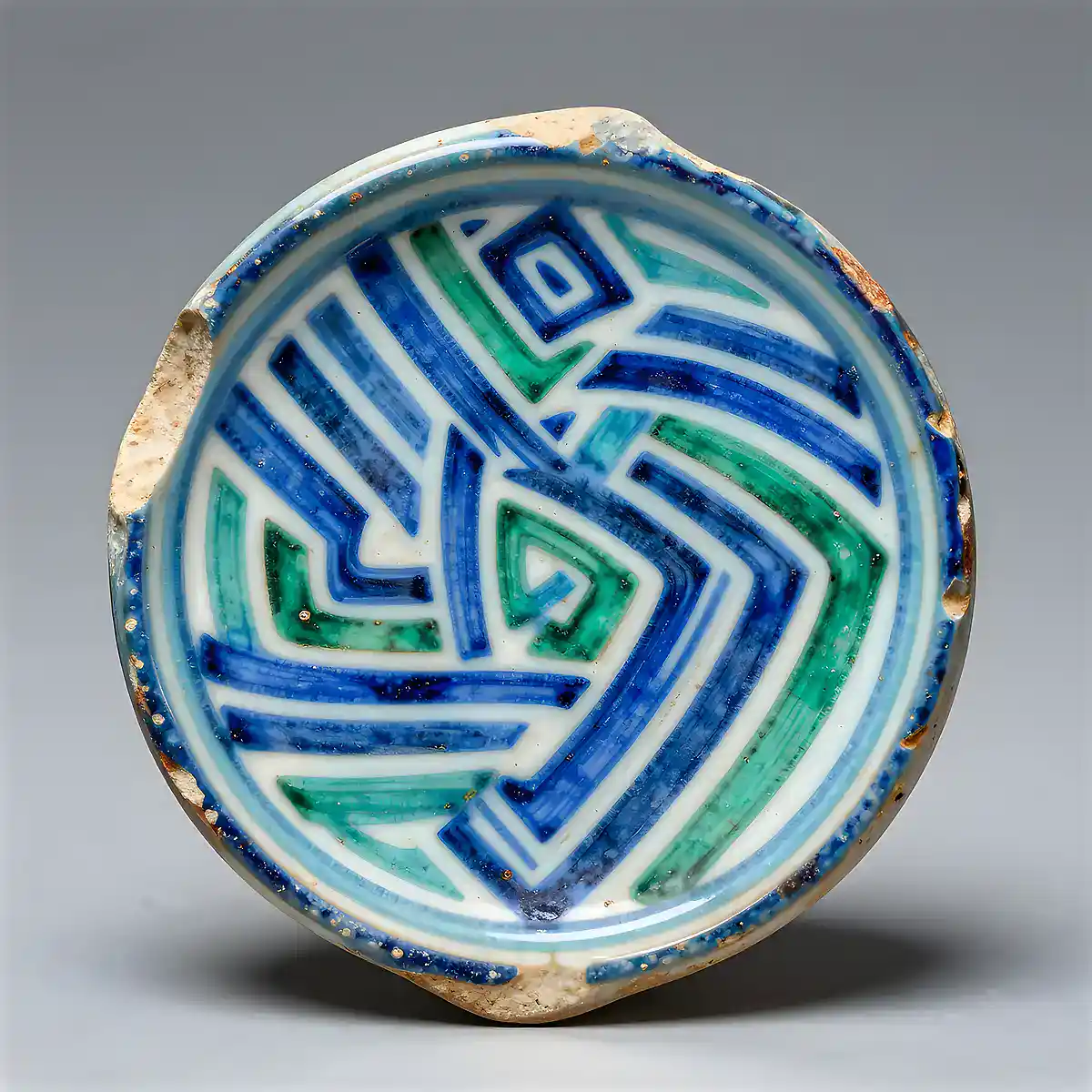
- Faience: This was a unique material, known for its brilliant blue-green hues and glassy, self-glazing surface, developed in Egypt as a sintered quartz ceramic glazed in blue or green to imitate precious stones like lapis lazuli and turquoise. It was inexpensive but highly effective for mass-produced amulets.
The Artisans: Master Craftsmen of the Nile
Jewelry making was a specialized craft, often passed down through generations within specific guilds or workshops. These artisans worked in small towns near the royal palaces, particularly during the New Kingdom (c. 1550–1070 BCE).
Ancient Egyptian Jewelry History: Tools of the Trade
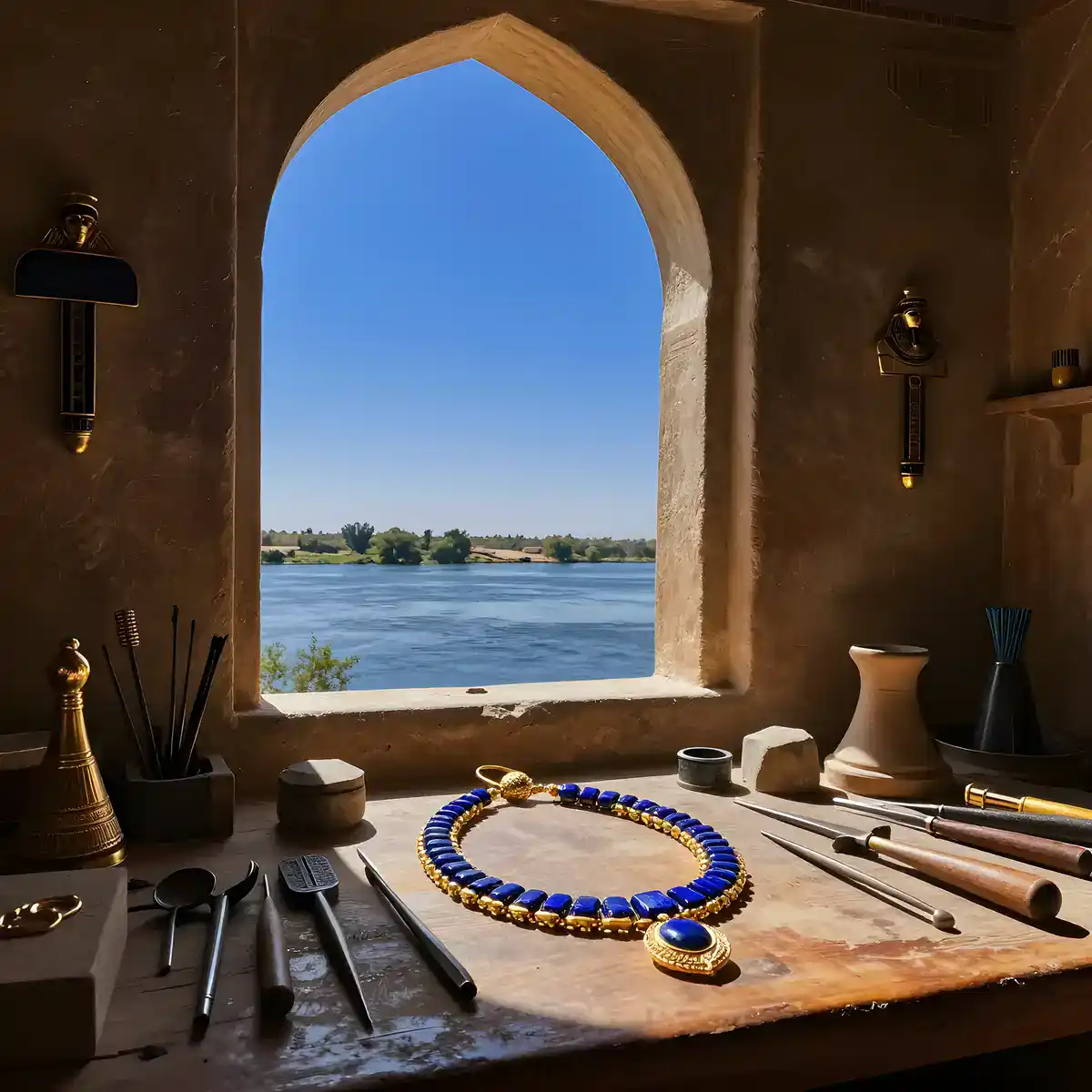
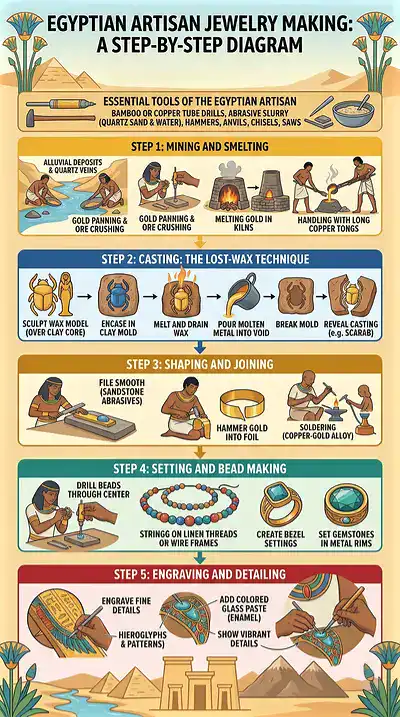
The Egyptians did not have ironworking technology for jewelry; they relied on copper and bronze tools. To cut stone, they used drills made of bamboo or copper tubes filled with an abrasive slurry (such as quartz sand mixed with water). To shape metal, they used hammers, anvils, chisels, and saws.
Step-by-Step: How the Jewelry Was Made
The creation of Egyptian jewelry was a labor-intensive process involving several stages of transformation from raw material to finished adornment.
1. Mining and Smelting
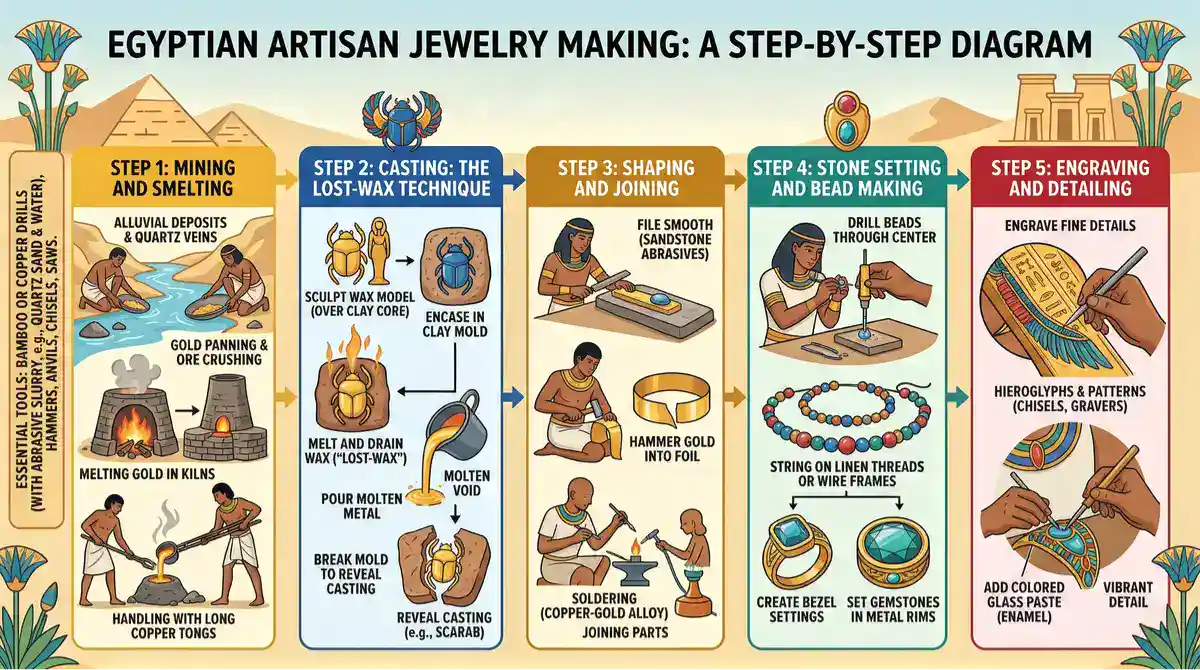
Gold was often found in alluvial deposits (river sands) or quartz veins. Miners would crush the ore and use gold panning methods. Once extracted, the metal was melted in crucibles using charcoal-fired kilns, reaching high temperatures. Copper rods were used as crucible tongs to handle the molten metal without burning their hands.
2. Casting: The Lost-Wax Technique
For intricate shapes like animal heads or deity figures (such as the scarab beetle), artisans employed the lost-wax casting method.
- A model of the jewelry piece was sculpted in wax over a clay core.
- This model was encased in more clay to create a mold.
- The mold was heated until the wax melted and drained out (hence “lost-wax”).
- Molten gold or bronze was poured into the hollow void left by the wax.
- Once cooled, the outer clay shell was broken away to reveal the metal casting.
3. Shaping and Joining
Once cast, the metal pieces were filed smooth using abrasive stones like sandstone. For items made of thin sheets (like bracelets or pendants), artisans would hammer gold into foil. They used soldering techniques with a copper-gold alloy to join different parts.
4. Stone Setting and Bead Making
Cutting hard gems was difficult. Artisans likely cut them into small beads by drilling through the center using hand drills. These beads were then strung onto linen threads or wire frames. To set stones, they would create bezel settings (metal rims) to hold the gemstones securely in place.
5. Engraving and Detailing
Fine details, such as hieroglyphs or feather patterns, were engraved with chisels and gravers. Occasionally, colored glass paste was used as an enamel to add vibrant detail to metalwork.
Beyond Decoration: The Symbolic Power of Jewelry
Why did the Egyptians spend so much effort on jewelry?
- Protection: Many pieces were amulets intended to protect against evil spirits or disease (e.g., the Eye of Horus).
- Afterlife Preparation: Jewelry was buried with the dead to ensure their beauty and protection in the next world. This is why we have such well-preserved examples today, such as those from tombs like Tutankhamun’s.
- Status: The amount and quality of gold one wore indicated social standing. Only royalty or high priests could afford large quantities of pure gold.
A Legacy That Endures
The techniques used to craft Egyptian jewelry thousands of years ago were remarkably sophisticated, laying the groundwork for the metallurgy we still use today.
From the lost-wax casting method to the intricate beadwork seen in modern bohemian fashion, the influence remains visible.
When you admire a piece of ancient Egyptian jewelry, take a moment to appreciate its reflection of incredible craftsmanship, profound spirituality, and a timeless pursuit of beauty.
Each artifact invites us to celebrate the rich grandeur of Egypt, just like the iconic golden statues and majestic pyramids that have become symbols of this remarkable culture.
It’s an amazing reminder of our shared heritage captured in time.