


Crystals That Fade in Sunlight: What to Keep in the Shade
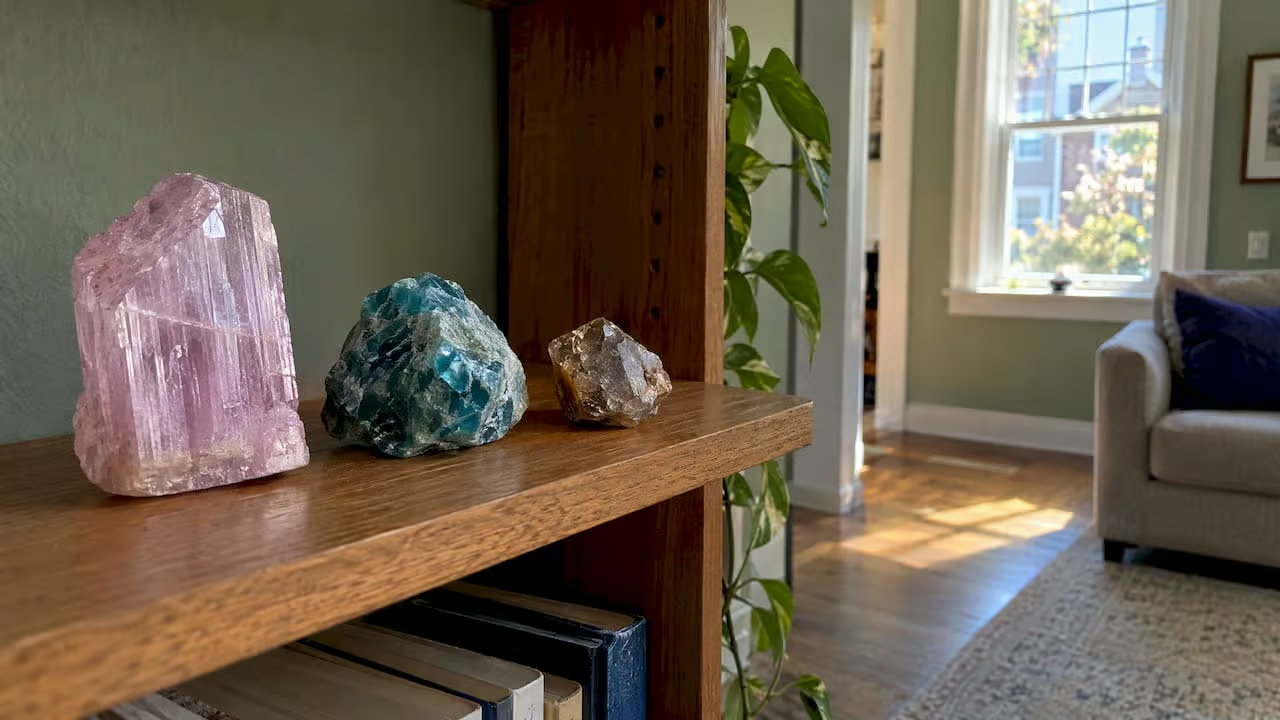
Amethyst, kunzite, citrine, rose quartz, apatite, and some sapphires are the stones gemologists most often flag as light-sensitive. Fading comes from prolonged light and heat on a sunny windowsill (or a bracelet routinely left out in the sun) and can cause color depth to fade over months or years.
But it’s easy to prevent. Where a stone sits matters more than which stone you choose, and a few habits can keep your crystal decor and jewelry looking the way they did on day one.
This guide covers the stones to watch, why light changes color, the difference between fading and heat damage, and how to place decor and store jewelry so you can enjoy both.
TL;DR
- Amethyst, citrine, kunzite, topaz, apatite, zircon, and some sapphires can fade or shift color with prolonged light or heat, and the change is usually slow and permanent.
- Sunlight is the biggest source of damage, but warm display cases, car interiors and hot spots near glass count too.
- A plain glass window cuts sunlight’s damaging effect by about two-thirds, so bright shade or rotation does better than a sunny sill.
- Pearls and other organic gems also dislike long-term heat and light, so store them away from windows.
- Keep light-sensitive pieces in bright, indirect light, rotate them, and put jewelry back in a pouch or box after wearing.
Why Some Crystals Lose Color in Sunlight
Most gem color comes from tiny flaws or impurities in the crystal’s structure. Gemologists call some of these flaws color centers: lattice defects that absorb certain wavelengths of light, which is what gives the stone its hue. Some color centers are stable. Others are fragile, and the LMHC, the committee that harmonizes gem lab practice, explains that unstable color centers can fade or shift after prolonged daylight exposure, naming certain padparadscha and fancy sapphires, spodumene, sodalite, and zircon.
Think of it like a watercolor left in a bright room. The pigment hasn’t gone anywhere, but the light slowly changes how it behaves. A mineral scientist at the New Mexico Museum of Science and Natural History summarized the research in a landmark 1992 paper on light-sensitive minerals identified 35 light-induced color changes, along with light-induced decompositions and surface reactions. In other words, this is a well-studied phenomenon, not a crystal-shop myth.
If you want the bigger picture of where color comes from in the first place, my guide to how gemstones get their color walks through it in plain language.
The Stones Most Likely to Fade
Not every crystal is equally sensitive. Here’s how the best-documented ones stack up, based on gemological references.
| Stone | What can happen | Source |
|---|---|---|
| Amethyst | Purple can lighten after long exposure to bright light; heat can fade or crack it | GIA display guidance, International Gem Society |
| Citrine | Heat-treated citrine fades with heat | International Gem Society |
| Kunzite | Color, including irradiation-produced color, fades with prolonged light | CIBJO guide |
| Topaz | Some colors can fade or change with prolonged light | GIA durability blog |
| Apatite | Heat and strong light can cause color to change or fade | San Diego Gemological Laboratory |
| Zircon | High heat or strong light could change color | San Diego Gemological Laboratory |
| Yellow and padparadscha sapphire | Unstable color centers may fade with light or heat | GIA Gems & Gemology |
Amethyst
Amethyst is the stone readers ask about most, and the answer is yes. GIA’s display guidance says amethyst may fade after prolonged exposure to light. The International Gem Society adds that most amethyst is heat-treated to bring out its best color and can crack and fade at high temperatures. That explains why a purple cluster that looked deep and velvety in a shop can look washed out after a summer in a south-facing window.
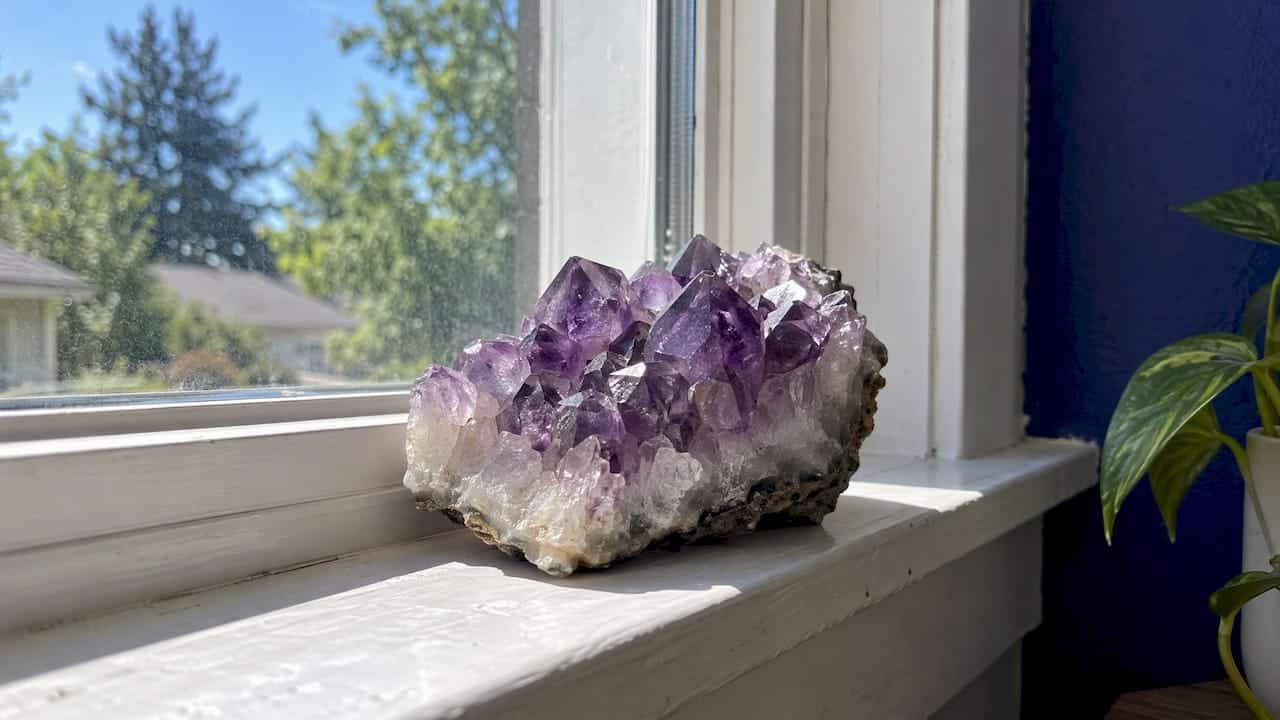
The retail-side standard agrees. The CIBJO Retailers’ Reference Guide notes that some amethyst may lighten in tone over time after prolonged exposure to bright light. It also says kunzite, one of the most light-sensitive gems, should be kept in a dark container when it isn’t being worn.
Citrine, topaz, and other quartz and beryl
GIA’s gem durability article defines stability as how well a stone withstands chemicals, light, and changes in temperature or humidity. It notes that citrine, amethyst, kunzite, and topaz can fade or change color from prolonged light exposure. The same piece notes that long-term heat and light can damage most organic gems, including pearls, amber, coral, and jet.
Heat is a particular issue for treated stones. Heat-treated citrine fades when heated, and even heat-treated blue aquamarine can lose color. If a stone’s color was enhanced with heat in the first place, high temperatures can push it the wrong way.
Apatite, zircon and kunzite
The San Diego Gemological Laboratory’s care chart is blunt about these three: heat and strong light can change kunzite’s color, can cause apatite’s color to change or fade, and could change zircon’s color. These stones are lovely in everyday jewelry, but they’re best tucked away rather than left out on a sunny dresser.
Sapphires with a yellow component
Sapphire has a reputation as tough and stable, and in most colors it is. The exception is worth knowing. GIA’s Gems & Gemology reported that some sapphires with a strong yellow component, including padparadscha, contain unstable color centers that may fade with light or heat. The Swiss Gemmological Institute explains the odd twist: in these stones, the faded state can often be reversed with UV radiation, and the more saturated orange or yellow is actually the stone’s unstable color. It’s a niche case, and most sapphire jewelry never requires it.
Fading Isn’t the Same as Heat Damage
Two different things can go wrong near a sunny window, and they call for slightly different care.
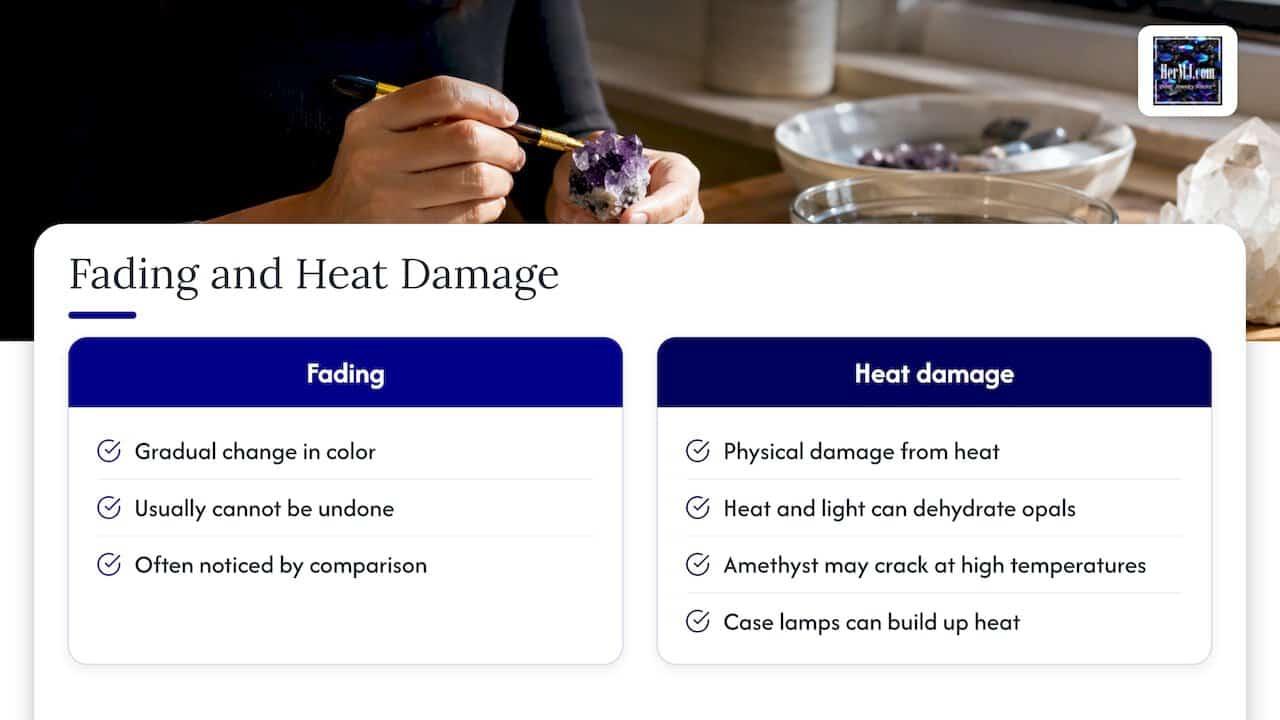
Fading is a change in color. It’s usually gradual, and in most cases you can’t undo it. Because it creeps in slowly, many owners don’t notice until they compare a piece that lived on a shelf with one that stayed in a drawer.
Heat and drying damage is physical. Opals contain water, and GIA’s display chart warns that heat and strong light can dehydrate opals, causing cracking, crazing or fracture. Amethyst can crack at high temperatures, as noted above. A display case with a built-in lamp can build up enough heat to cause this, which is why GIA’s guidance flags light and heat produced inside a case.
A third issue is worth a sentence for decor lovers. A clear quartz sphere won’t fade, but any glass-clear ball can focus sunlight into a hot point. Keep spheres away from curtains, paper, and anything flammable, even if the stone itself is tolerant.
Can Faded Color Come Back?
Sometimes, but only for certain stones. Color that disappears because a color center switches off can occasionally switch back on. The LMHC describes this as reversible photochromism, also called tenebrescence, where UV light or sunlight can re-activate the color center. Hackmanite, a variety of sodalite, is the classic example. It’s the exception, though, not the rule.
For amethyst, citrine, kunzite, and most of the stones above, treat fading as permanent. A stone that has lightened won’t recover its depth by sitting in the dark. The best approach is prevention, and it’s refreshingly simple.
How Much Light Is Too Much?
There’s no single number, since stones vary and so does the sun. Still, the research gives us some useful anchors.
In the New Mexico abstract, the researcher calls sunlight the greatest source of damage for light-sensitive minerals and suggests moderating or changing light sources. Using filters helps too: a plain glass window lessens sunlight’s damaging effect by two-thirds, and specialized filters do more. So, while a window helps to a degree, it doesn’t make a sunny windowsill safe for months at a time.
For the lab side of things, the LMHC’s color stability test gives a sense of what “a lot of light” means to a gemologist. Labs grade the stone’s color under standard light, then expose it 5 to 10 cm from a strong LED or halogen lamp (about 100 W) for at least 3 hours, then grade it again.
You don’t need to run that test at home. It simply shows that a few hours of intense light can reveal an unstable stone, and a sunny window can deliver that day after day.
How to Display Crystal Decor Without Losing Color
The goal isn’t to hide your stones. It’s to give them the light they flatter in without the light that wears them down. Here’s the routine I’d follow.
Choose bright, indirect light
A shelf across the room from a window, or a spot that gets an hour of morning light, is far kinder than a sill that sees hours of afternoon sun. My piece on how light transforms crystal decor in your home shows how to get that glow from lamps and reflected daylight instead.
Rotate and rest your pieces
If you love a particular spot, swap the pieces that live there every few weeks. Resting a light-sensitive stone in a drawer or cabinet gives it a break, and the museum guidance recommends storing specimens in boxes or drawers with only occasional light exposure. A simple habit worth borrowing from collectors: photograph your stones when you get them and again once or twice a year. You’ll catch subtle changes early, and you’ll learn which pieces in your home are the most sensitive.
Watch the heat sources
Glass-fronted cabinets with built-in lights, shelves above radiators, and sunny car interiors can all get hotter than a room feels. Heat is the common thread in amethyst, citrine, opal, and pearl damage, so cool placement protects many stones at once.
Be careful with sun-cleansing rituals
Many people set crystals in the sun to recharge them. For the sensitive stones listed above, that’s the quickest route to a faded stone. My guide to cleansing crystals safely at home covers gentler methods that don’t risk fading color.
Use a centerpiece in the shade
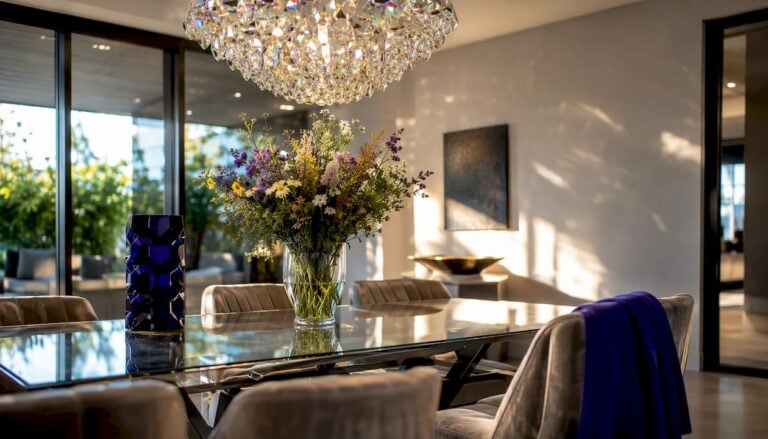
Table arrangements are ideal for light-sensitive stones because they sit in room light rather than a window. If you’re planning one, these crystal centerpiece ideas with gemstone accents give you layouts that look good under lamplight.
Protecting Jewelry Is Even Easier
Jewelry spends most of its life in a box or on your body, so it already has an advantage. A few habits keep the color steady.
- Put it away after wearing. Light-sensitive pieces like amethyst, citrine and kunzite do best in a pouch or lined box, away from the sun-warmed dresser.
- Skip the car. Dashboards and parked cars heat up quickly. Don’t leave a bracelet or earrings there.
- Don’t leave a favorite piece in a bright bathroom or window display. Constant light adds up.
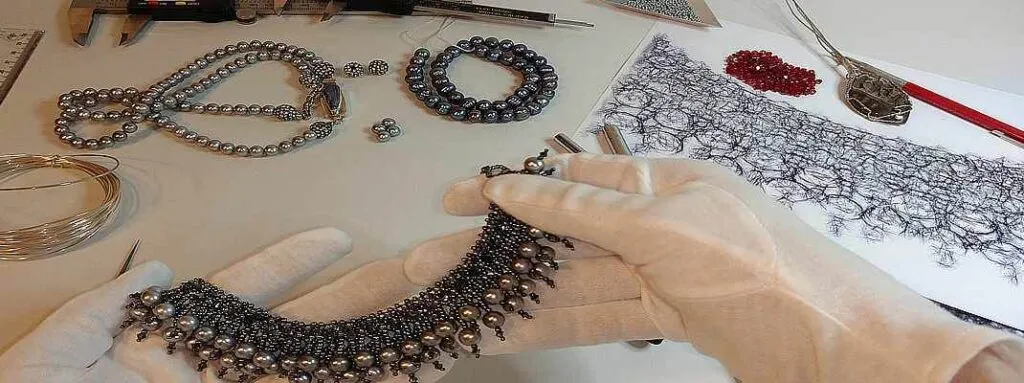
- Remember pearls. Since GIA notes that long-term heat and light can damage organic gems, store pearls out of direct sun. Our page on pearl care covers maintenance and storage in full.
- Follow general gemstone habits. The HerMJ guide to caring for handmade gemstone jewelry pulls the everyday routine together.
What About the Stones That Do Fine in Light?
Gemologists tend to publish lists of sensitive stones rather than lists of safe ones, because stability depends on the specific stone, its origin, and any treatments.
For example, the San Diego lab’s chart lists ruby and sapphire as generally robust gems, with yellow or padparadscha sapphires as the exception noted above. Rather than memorize a safe list, a more useful rule is this: if you don’t know what a stone is or how it was treated, give it the same bright-shade placement you’d give an amethyst. You lose nothing by doing so.
That also helps when you’re buying. A seller who can tell you which stones are in a piece lets you plan where it will live.
My Perspective
I love color, so I always think about how long it lasts. Gemstone decor and jewelry should feel like something you can enjoy every day, not something you have to guard. That’s why, in my design, I like to think of light as an ingredient: the right amount shows off a stone’s luster and depth, and too much slowly flattens it.
The habits in this guide are small. A shelf away from the window, a pouch for the evening, a quick rotation when the seasons change. They cost almost nothing, and they keep a piece looking as it did when you first fell in love with it. At HerMJ we build our collections around real pearls, natural gemstones and crystals so that you can wear them, display them and live with them, and we’d rather you know how to look after them than wonder why a favorite changed.
Choose pieces you adore, put them where the light is gentle, and they’ll reward you for years.
Veronique
Find Pieces Made to Be Lived With
If you’re ready to bring color into your home or your jewelry box, we offer handmade pieces made from genuine freshwater pearls, natural gemstones, and crystals. Browse crystal and gemstone room decor for shelves, desks, and tables that sit happily in soft, indirect light.
If you prefer to wear your crystals, European crystal jewelry and our pearl and gemstone jewelry collection cover everything from everyday necklaces to special-occasion earrings.
U.S. orders ship free with no minimum, and international orders ship free on orders of $150 or more.
FAQ
What crystals should avoid sunlight?
Amethyst, citrine, kunzite, topaz, apatite, zircon, and some yellow or padparadscha sapphires are the best-documented light-sensitive stones. Opal and pearls also dislike heat and strong light, though for a different reason: they can dry out. Place any of these in bright, indirect light rather than direct sun.
Do amethyst crystals fade in sunlight?
Yes. GIA’s display guidance says amethyst may fade after prolonged light exposure, and heat can fade or crack it. A few hours of morning light won’t ruin a piece, but months on a sunny sill can noticeably lighten the purple.
Does a window protect my crystals from fading?
It helps, but only partly. Research from the New Mexico Museum of Science and Natural History found that plain window glass reduces sunlight’s damaging effect by about two-thirds. A window shelf in strong afternoon sun can still fade a sensitive stone over time, so move those pieces back from the glass.
Can I bring faded color back?
For most stones, no. Fading in amethyst, citrine, and kunzite is generally permanent. A few stones, such as certain sapphires and hackmanite, have color centers that UV light can re-activate, but that’s a specialist case rather than a home fix.
Is jewelry at risk too?
Only if it spends long hours in bright light or heat. Wearing a piece is fine. Store it in a pouch or box when you take it off, and keep it out of sunny windows and hot cars.
Sources
- Yellow Sapphires with Unstable Color, GIA Gems & Gemology
- Gemstone Care Guide, International Gem Society
- Gem Care Chart, San Diego Gemological Laboratory
- Light Sensitive Minerals, New Mexico Mineral Symposium abstract
- More than the Mohs Scale: Understanding Gem Durability, GIA
- Colour Stability Testing of Gemstones, LMHC Information Sheet
- Gemstone Durability: Design to Display, GIA
- Retailers’ Reference Guide: Gemstones, CIBJO
- Colour Stability of Gems, SSEF Swiss Gemmological Institute
Recommended
- Crystals for Living Room: Best Picks and Styling Ideas
- Best Practices for Cleansing Crystals Safely at Home
- How Light Transforms Crystal Decor in Your Home