



Lapis Lazuli Symbolism: History And Meaning
Article Brief
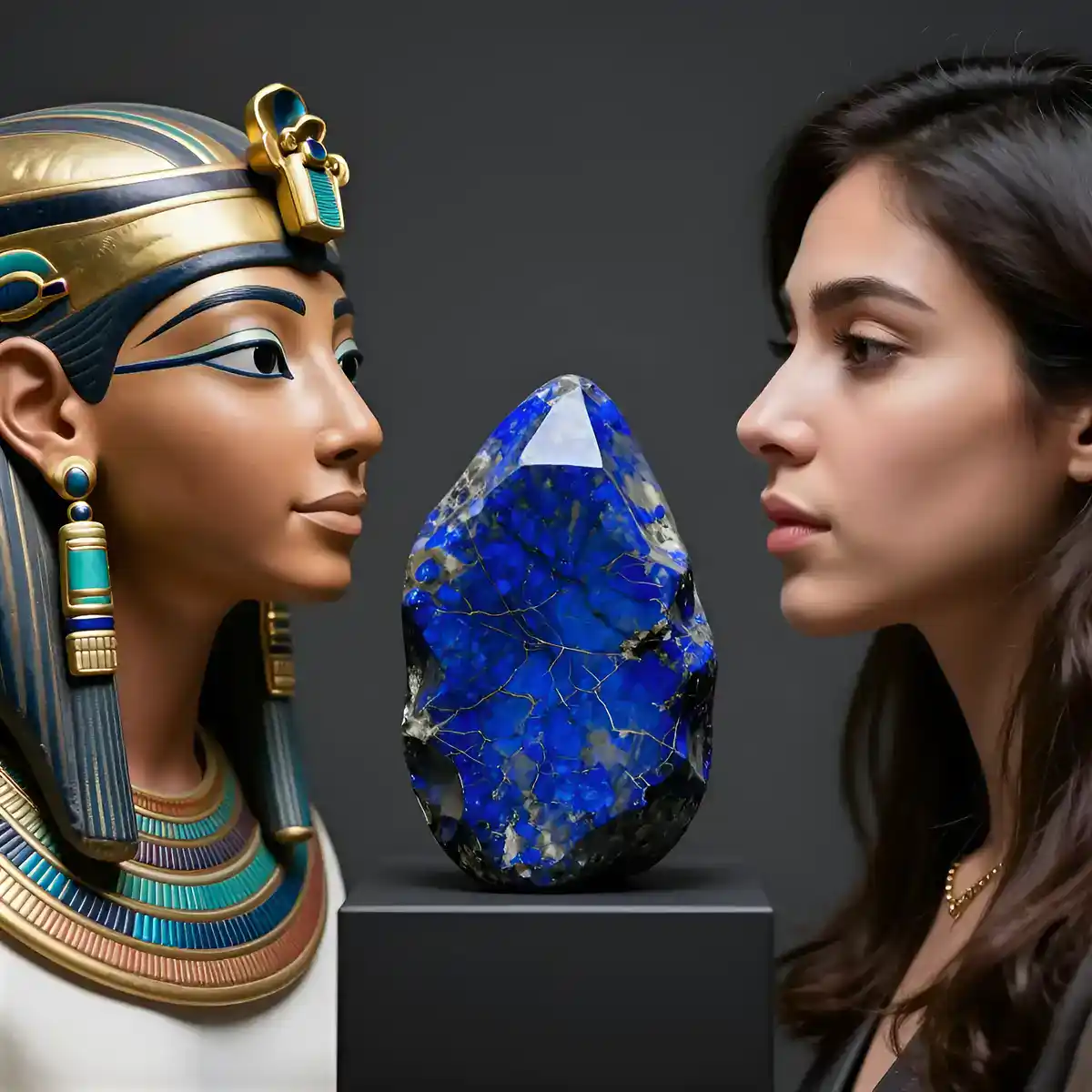
This article examines lapis lazuli symbolism, including the stone’s origin and meaning. Its centuries-old history places it within the royal chambers of European aristocracy and Egyptian Pharaohs, with a widespread admiration for the stone’s beauty and metaphysical properties at the heart of its narrative.
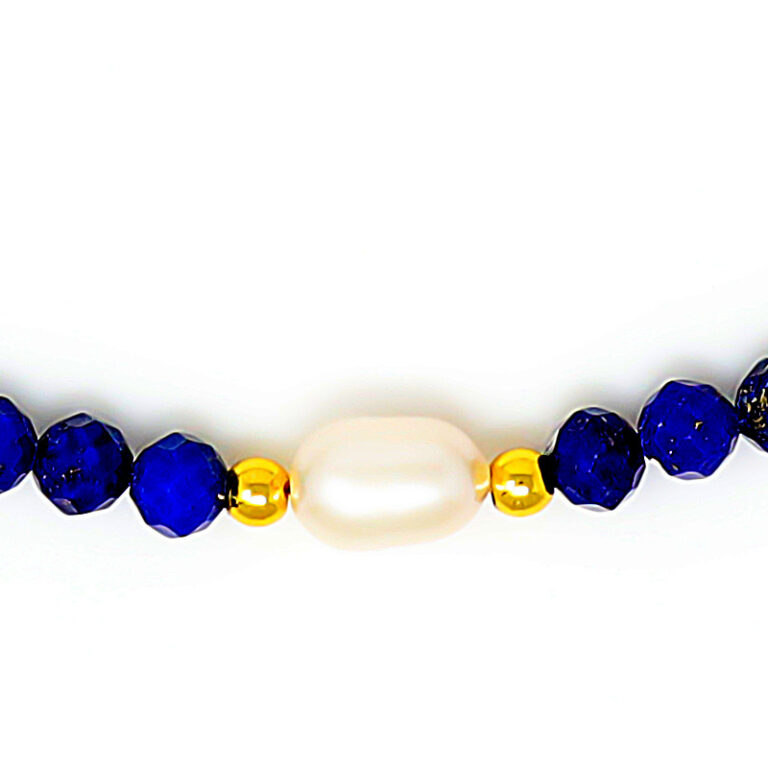
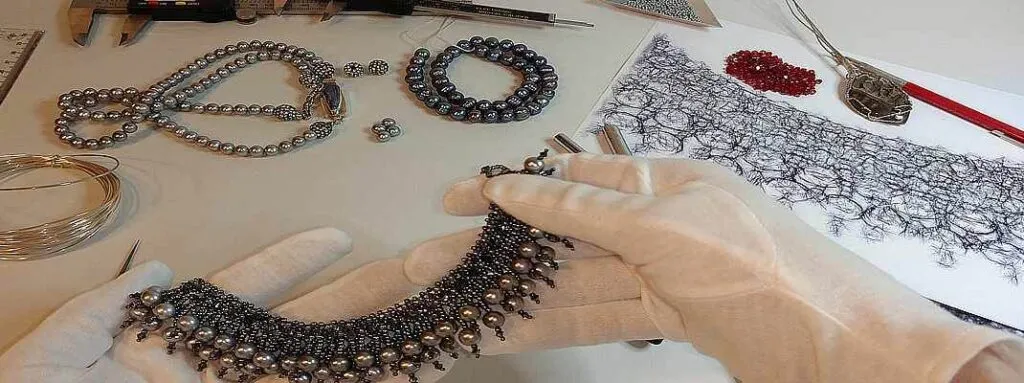
Through my jewelry designs, I occasionally meet people drawn to lapis lazuli symbolism and history as much as its irresistible blue color. Unlike so many modern fashion trends, the symbolism of lapis lazuli is rooted in millennia of documented cultural practice. This article examines the verified historical and cultural associations of this stone, distinguishing between established tradition and contemporary interpretation.
Geological Context: A Rock of Distinction
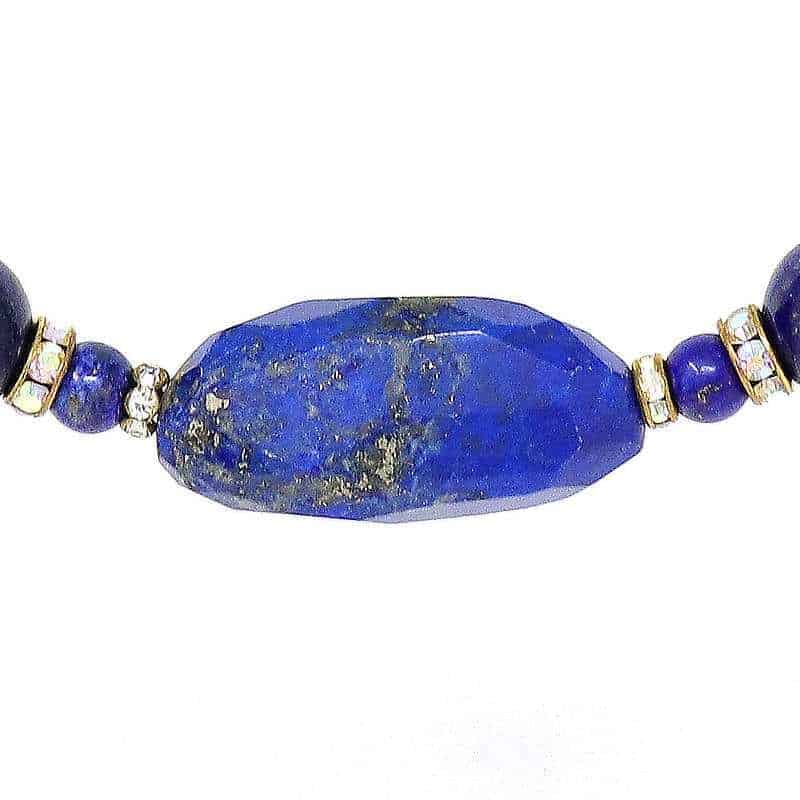
Before exploring its symbolism, it is essential to understand the material itself. Lapis lazuli is not a single mineral but a metamorphic rock composed primarily of the blue mineral lazurite 1. It typically contains calcite (white veins), pyrite (gold-colored flecks), and sometimes sodalite or hauyne. The presence of pyrite, an iron sulfide mineral, creates metallic speckles that are often mistaken for gold inclusions 2. This geological reality underpins its historical value; the stone’s durability allowed it to survive as a medium for art and adornment across thousands of years.
Ancient Egypt: Divinity and the Afterlife
In ancient Egyptian culture, lapis lazuli held profound religious significance. The deep blue color was associated with the heavens and the night sky.
- Deities: Linked to the gods Ra (the sun god) and Horus (the falcon-headed god of the sky), lapis was considered to offer its owner protection in the afterlife.
- Funerary Art: A definitive example of this symbolism is in Egyptian funerary masks, including the famous exhibit of Tutankhamun (c. 1323 BCE), which reflects a symbol of divine power and eternal life.
- Kohl: Ground used as an ingredient in kohl, the dark eye makeup was used in beauty rituals and also served a practical purpose (reducing sun glare), along with its symbolic weight as protection against evil spirits 3.
Mesopotamia and the Indus Valley: Status and Trade
Lapis lazuli was highly valued by Sumerian civilizations around 4000 BCE, where the durability of carved stones with intricate designs was used to stamp clay tablets for record-keeping.
Lapis beads were discovered at archaeological sites from the Indus Valley Civilization (c. 3300–1300 BCE) in Harappa and Mohenjo-daro. These findings indicate that a trade network existed to transport the stone from Afghanistan to South Asia thousands of years ago, establishing it as a commodity of significant economic value.
Persia and Etymology: The Sky Stone
The meaning of “lapis lazuli” reflects its journey through history. The term derives from the Latin lapis (stone) and lazulum, which itself comes from the Arabic lāzaward and Persian lāzhward. In Persian culture, the stone was associated with the heavens due to its color. This linguistic connection reinforces the long-standing symbolic link between lapis lazuli and the sky or divine realm in Middle Eastern traditions.
Renaissance Europe: Wealth and Devotion
During the Middle Ages and the Renaissance in Europe, lapis lazuli was valued as highly as gold. This extended to its use as a pigment, ground into a fine powder to produce ultramarine.
Did You Know..?
- The term “ultramarine” literally means “beyond the sea,” referring to the fact that the raw material had to be imported from Asia via maritime trade routes. Because of its cost and rarity, it was often reserved for depicting the Virgin Mary’s robes in religious paintings.
- Artists such as Jan van Eyck and Michelangelo used ultramarine from ground lapis in their masterworks. Their application elevated lapis lazuli’s reputation from mere ornamentation to a material of immense economic value, symbolizing purity and devotion in Christian iconography.
Tibetan Buddhism: Truth and Compassion
For centuries, Tibetan Buddhism used the stone in religious art and jewelry, associating it with truth and compassion, integrating lapis within the design of statues depicting deities adorned with lapis beads or inlays. This usage continues to this day, including modern symbols within Eastern spiritual traditions.
Modern Symbolism: Wisdom and Truth
In contemporary gemology and jewelry culture, the symbolism of lapis lazuli has evolved but retains its historical roots. It is widely recognized as a symbol of wisdom, truth, and self-realization. This modern interpretation aligns with the ancient associations of the stone representing clarity (the sky) and insight (wisdom).
Many individuals find personal meaning in wearing lapis lazuli for focus or calm, while others are drawn to the stone for what they consider its philosophical or wellness properties. These effects are subjective experiences rather than scientifically verified outcomes. The enduring value of the stone lies in its historical continuity as a marker of status, spirituality, and artistic excellence.
Final Thoughts
As someone who loves gemstones, I find lapis lazuli a meaningful element to bridge the beauty of artisanal design with the power to make emotional statements, drawing on the stone’s uniquely beautiful blue hue and its long, symbolic history.
From the burial masks of pharaohs to the robes of Renaissance paintings and contemporary spiritual practices, lapis lazuli’s symbolism extends well beyond its modern aesthetics.
References
- Webster R. Gems: Their Sources, Descriptions and Identification. 5th ed. Oxford: Butterworth-Heinemann; 2010. ↩︎
- Kenoyer JM. Ancient Cities of the Indus Valley Civilization. Karachi: Oxford University Press; 1998. ↩︎
- Arnold D. Ancient Egyptian Architecture: The Construction and the Creator. Princeton: Princeton University Press; 1998. ↩︎