



Revive Old Singles: 5 Easy Mismatched Earring Combos, No New Buys

Yes, mismatched earrings are a wearable, current trend. It’s not a fashion risk you need to tiptoe around.
Designers and celebrities have spent the last few years making asymmetry look deliberate, and the easiest way to join them is to keep one detail consistent between your two earrings, whether that’s metal, color, or shape. Everything else is just practice.
The Edit
- Keep one detail, such as metal or color, consistent across both earrings to make mismatched styles look intentional rather than accidental.
- Match earrings through gemstone or motif echoes, and balance visual weight to prevent one side from overpowering the other.
- Use existing singles or simple basics in your jewelry collection to create multiple mismatched combinations without buying new pieces.
- Choose mismatched earrings based on ear anatomy and piercings, ensuring comfort and a flattering balance for your specific ear shape.
- Opt for subtle contrasts in jewelry for work and formal settings, while bold looks are more suitable for casual or evening wear.
Styling rules that help to make mismatching look intentional
The difference between “mismatched on purpose” and “didn’t notice they don’t match” comes down to a few repeatable rules. Once you internalize them, you can mix almost anything in your jewelry box like a pro.
- Keep one element the same across both earrings: the metal tone, a stone color, the general scale, or a repeated motif like a star or a pearl.
- Balance visual weight so one earring doesn’t overpower the other. A chunky drop on one side usually wants a smaller, quieter counterpart, not another big piece.
- Work with the piercings and ear shape you actually have, rather than forcing a combination that was designed for a different ear.
- Let something else in your outfit echo the earrings. A bag clasp, a ring, or a necklace in the same metal. You’ll be impressed by how well it ties the whole look together.
Stylist guidance consistently points back to that first rule: one consistent detail is what separates “intentional” from “mismatched by accident.”
Pro Tip: If you’re unsure where to start, match the metal exactly and let the shapes do the talking. It’s the lowest-risk way to test the trend.
Five easy mismatched earring combos to try today
You don’t need a new jewelry collection to try this trend. Most people already own enough pieces to build at least two or three of these combinations tonight.
- Everyday minimal: Mate a small stud on one ear with a small hoop in the same metal tone on the other, for a barely-there asymmetry that works at the office or the grocery store.
- Work-appropriate: Choose the same metal in two different shapes, like a round stud on one ear and a teardrop on the other, so the look stays polished but not flashy.
- Night out: Wear a statement drop on one side and a single simple stud on the other, letting the drop carry the whole look.
- Curated ear: Stack two or three small studs up one ear and balance them with one long drop on the opposite side.
- Boho and playful: Combine a charm earring (a moon, a shell, a small bead cluster) with a textured hoop for a look that feels collected rather than coordinated.
Each of these works because it follows the same principle: one side of the equation stays simple so the mismatch reads as a choice, not an oversight.
How metal, gemstones, and motifs read as intentional
Shapes can differ wildly between two earrings and still look like a pair if the color story matches. This is the quiet trick behind most mismatched looks that photograph well.
- Match the metal or the gemstone color when the shapes are different, so your eye connects the two earrings even though they’re not identical.
- Echo a motif across both sides. A star on one earring and a smaller star detail on the other. Or a pearl paired with a different pearl shape.
- When mixing metals, pick one piece as the anchor (your statement side) and let the other earring borrow a subtle hint of that metal, even just in a clasp or wire.
- Full contrast (different metal, different stone, different shape) works best for evening looks where drama is the point, not daytime wear where cohesion reads more polished.
A deeper look at these principles lives in this guide to asymmetrical jewelry design, which breaks down how designers use asymmetry as a deliberate stylistic tool rather than an afterthought.
Building a mismatched-friendly jewelry collection
You don’t need a drawer full of earrings to make this trend work. You need a few flexible basics and a habit of treating each earring as its own unit instead of a locked pair.
- Start with plain hoops in one or two sizes, a few simple studs, one long drop earring, and one charm-style piece. Those four categories alone create dozens of combinations.
- Buying a single statement earring on purpose is a smart move, since it gives you a focal piece without committing to a matching twin you may never wear.
- Before buying anything new, go through your jewelry box first. Lonely singles from pairs you’ve lost are often the easiest starting point for a mismatched look, and reviving them is a lot more sustainable than buying a whole new set. Editorial guidance on mismatching treats earrings as individual units rather than fixed pairs for exactly this reason.
- Prioritize. Remember, quality over quantity on the one or two pieces you’ll wear most often. A well-made stud or hoop earns its place in dozens of future combinations.
Pro Tip: Before you shop, lay out every single earring you own on a flat surface. You’ll usually find at least one ready-made combination hiding in plain sight.
Runway and celebrity moments that normalized the trend
Mismatched earrings didn’t start as a shortcut for the undecided. Designers turned asymmetry into a signature by intentionally contrasting scale and shape while repeating one small detail, like a stone or a metal finish, so the look held together.
- Because it looks so natural, you many not have noticed runway designers using mismatched earrings as a deliberate styling device for seasons. It’s never been an accident of sample availability.
- High-profile editorial and red-carpet moments have helped push the look from niche to mainstream, giving everyday wearers permission to experiment.
- Editorial coverage notes that as the trend grew, jewelry brands began selling asymmetrical sets and single earrings specifically designed to be worn unmatched, which made the look far easier to shop for.
Those editorial moments are worth noticing because they prove the same point this guide keeps making: the mismatch only works when something ties the two sides together.
How to adapt mismatched earrings to your ear anatomy
Your piercings and ear shape change which combinations will actually sit well and feel comfortable, so it helps to think about anatomy before you think about style.
- If you have a single lobe piercing on each ear, pick one focal piece and pair it with a quieter complementary earring rather than two competing statements.
- If you have multiple piercings, stack a few small pieces on one ear and let that stack balance a single longer drop on the opposite side.
- For cartilage or helix piercings, use small studs or cuffs to counterweight a heavier drop lower down, so the ear doesn’t feel visually lopsided.
- Heavier statement pieces can pull at the earlobe over a long day, so test any new combination by wearing it around the house for an hour before committing to it for a full event.
Stylist and editorial guidance consistently recommends adapting combinations to your specific piercings and ear shape rather than copying someone else’s setup exactly.
What flatters a triple-lobe ear won’t necessarily flatter a single-lobe one.
HerMJ’s perspective: why pearls and gemstones anchor mismatched looks
Pearls carry a kind of built-in cohesion that makes them forgiving partners for asymmetry. Two pearls of slightly different shapes or sizes still read as a pair because their luster and color do the connecting work for you.
The same thing goes for gemstones in a consistent hue family: a pearl paired with a soft aquamarine accent, for instance, keeps the eye moving between the two ears without confusion.
HerMJ’s approach to gemstone jewelry outfit pairing leans on this same idea: let one necklace or bracelet in a matching stone or metal act as the visual anchor that pulls a mismatched earring look together, rather than trying to force the earrings alone to carry the whole outfit.
A short history of the mismatched earrings trend
Mismatched earrings weren’t born as a trend so much as a styling habit that slowly earned a name.
For a long time, asymmetry in jewelry was treated as a mistake, something to fix rather than feature. That changed as designers began using intentional contrast, pairing a bold shape on one ear with a restrained piece on the other, as a signature move rather than an accident.
As the look moved from runway to street style, retailers responded. Editorial and retail reporting notes that single earrings and asymmetrical sets became more widely available as the trend grew, which made it far simpler for everyday shoppers to buy pieces that were designed to be worn unmatched from the start.
Before that shift, anyone who wanted the look had to cobble it together from existing pairs or shop vintage.
What’s notable is how the trend’s growth tracked a broader shift in how people think about personal style: less about matching sets, more about assembling a look that feels specifically yours.
Mismatched earrings became a small, low-cost way to signal that shift without overhauling an entire wardrobe.
Common mistakes to avoid when styling mismatched earrings
A few missteps show up again and again, and most of them come down to skipping the one rule that makes this trend work: a consistent detail.
Little mistakes to avoid
The most common mistake is pairing two earrings that share nothing in common, no metal, no stone color, no motif, which reads as unfinished rather than intentional.
A close second is choosing two pieces of equal visual weight, like two statement drops, which compete for attention instead of creating a clear focal point.
Comfort gets overlooked too.
A heavy drop on one ear and a feather-light stud on the other can look striking in a photo but feel noticeably uneven after a few hours of wear.
And some first-timers go too big too fast, reaching for dramatic contrast before they’ve tried a smaller, same-metal version that would have felt more natural.
The fix for nearly all of these is the same: slow down, pick one shared detail, and resist the urge to make both earrings the star of the look.
Balancing mismatched earrings with your outfit and accessories
Mismatched earrings work best when they’re not fighting for attention against everything else you’re wearing.
If your earrings are already doing something bold and asymmetrical, keep your other accessories simple, a single bracelet, a plain necklace, or nothing else at all.
If you want to layer in more jewelry, use it to reinforce the earrings rather than compete with them.
A necklace or bracelet in the same metal or a matching gemstone can act as a visual anchor that makes the mismatch look like part of a coordinated plan rather than a standalone statement.
This is especially useful with pearl jewelry, where a necklace’s luster can echo an earring’s color and quietly tie the whole look together.
Hair matters here too. Pulling hair back or styling it in a way that keeps both ears visible lets the mismatch actually register, and keeps edges and ears clear is worth a look if you want your earrings to be seen rather than half-hidden.
Choosing mismatched earrings for casual, formal, or work settings
Context changes which combinations make sense. A pairing that feels playful on a weekend can feel out of place in a client meeting.
For casual days, lean into contrast: a charm earring with a textured hoop, or two different stud shapes in a shared metal. This is the lowest-stakes setting to experiment in.
For work, keep the mismatch subtle. Same metal, different shape is the safest formula, polished enough to pass as a matching set at a glance, interesting enough to feel like a deliberate choice up close.
For formal occasions, a statement drop on one side paired with a single quiet stud on the other brings drama without overwhelming an evening look. This is also where a slightly bigger contrast in scale works in your favor, since formal settings tend to reward a clear focal point.

What most advice about this trend gets wrong
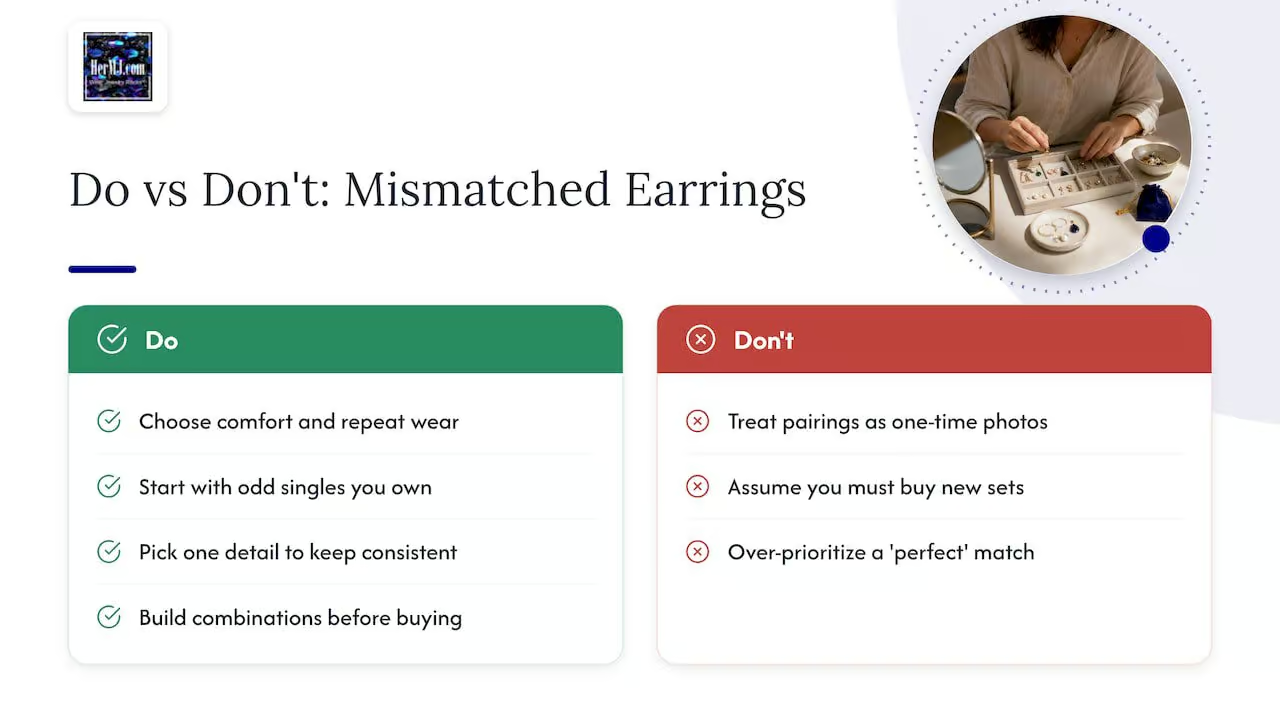
Most guides to mismatched earrings focus so heavily on finding the “right” combination that they skip over the part that actually matters: comfort and repetition.
A styling rule is only useful if you’ll actually wear the result more than once, and a lot of mismatched-earring content treats every pairing like a one-time photo opportunity rather than something meant for a regular Tuesday.
The bigger miss, though, is how little attention goes to the earrings you already own.
Most advice assumes you’re shopping for a new asymmetrical set, when the more useful starting point is almost always the odd singles sitting in a drawer from pairs you lost years ago.
That’s not just a budget-friendly approach, it’s a genuinely better way to develop a personal style, since the combinations you build from pieces with history tend to feel more like you than anything bought as a matched set from the start.
If there’s one thing worth prioritizing, it’s this: pick the one detail you’ll keep consistent, then build outward from what you have before you buy anything new.
The trend rewards curiosity more than it rewards shopping.
— Veronique
Shop HerMJ pieces that pair well with mismatched earrings
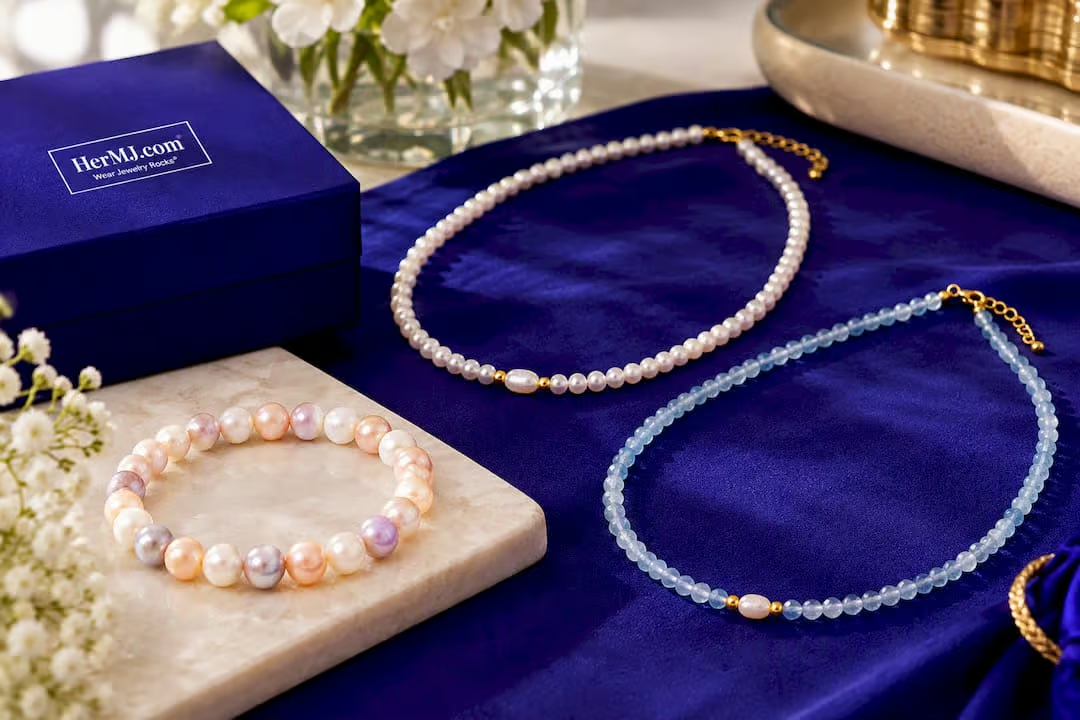
Handmade pearl and gemstone pieces make natural anchors for a mismatched look, since each piece is shaped by hand rather than mass produced, which means no two earrings in a set are ever perfectly identical to begin with. A few places to start:
- Browse modern drop earrings for a statement half of your next pairing.
- Pair your earrings with the Elegant Freshwater Pearl Necklace or the Pearl And Aquamarine Necklace to echo color and tie the look together.
- Add the Lustrous Freshwater Pearl Bracelet for Elegance as a quiet metal or pearl echo on your wrist.
US orders ship free with no minimum, and international orders ship free on orders over a $150.
Browse the full pearl and gemstone jewelry collection to find your next anchor piece.
FAQ
Is it fashionable to wear mismatched earrings?
Yes, mismatched earrings are considered fashionable and have been popularized by designers and celebrities through runway and red-carpet appearances, according to editorial trend coverage. The key to pulling it off is keeping one consistent detail, like metal or stone color, so the pairing looks deliberate.
Are mismatched earrings in style today?
Mismatched earrings remain a current, wearable style choice, supported by continued availability of single earrings and asymmetrical sets as noted in trend reporting. The trend has moved from a niche runway device to an everyday styling option.
What are the easiest earring trends to try right now?
Easy entry points include pairing a small stud with a small hoop in the same metal, or choosing two different shapes in one consistent color or finish. Stylist guidance recommends starting with small, same-metal mismatches before trying bigger contrasts.
What are the trendiest earrings right now?
Asymmetrical sets, single statement drops, and modular pieces designed to mix and match are among the most popular options, since retailers have expanded availability of earrings meant to be worn unpaired. Handmade pearl and gemstone drop earrings also work well, since their natural variation already leans into the asymmetrical look.
How do I choose mismatched earrings for my ear piercings?
Match your combination to your piercing setup: a single lobe wearer should pick one focal piece plus a quieter complement, while someone with multiple piercings can stack small pieces on one ear to balance a longer drop on the other, per editorial how-to guidance. Always test comfort before wearing a heavier combination for a full day.
Sources
- Mismatched Earrings: How to Master the New Earscape Trend
- The dos and don’ts of mismatching your earrings like Queen Camilla
Recommended
- Mixing Metals Jewelry: Simple Rules for Looks You Can Wear
- Combining Freshwater Pearl and Gems For A Stunning Contrast
- Mix Gemstone Jewelry into Modern Looks That Turn Heads