


What Is Asymmetrical Jewelry Design? A Style Guide
The Edit
- Asymmetrical jewelry design uses intentional imbalance and shared visual elements to create cohesive, personal styles. Crafting these pieces involves technical skill, careful engineering, and attention to detail to ensure wearability and aesthetic coherence. Well-chosen materials and thoughtful styling highlight how asymmetry expresses individuality and modern fashion trends.
Asymmetrical jewelry design is the art of intentional imbalance: two sides that differ yet feel visually resolved.
Rather than mirroring each element, a designer uses shared color, material, or motif (what makers call visual DNA) to hold the composition together. The result reads as deliberate, not accidental. Mismatched pieces feel intentional when they share a unifying thread, whether that’s a repeated bead, a complementary color palette, or a consistent metal finish.
- Asymmetry is a technique, not a mistake. Every imbalanced element is a compositional decision.
- Visual DNA is the glue. Shared color, material, or motif makes unlike pieces read as a coherent set.
- It’s personal. Asymmetrical jewelry styles are one of the clearest ways to express individual taste without saying a word.
What is asymmetrical jewelry design, really?
The core principle is intentional balance rather than mirror symmetry. Designers resist the brain’s natural pull toward identical harmony and instead use planar relationships, including the way lines and planes orient on a piece, to make an uneven composition feel grounded rather than chaotic.
Think of it like a balance scale: two objects can look physically different yet carry equal visual weight when their color density, mass, and texture are calibrated against each other.
Practical composition techniques include:
- Offset focal points: placing the dominant element slightly off-center to draw the eye deliberately
- Anchor elements: one heavier or bolder piece that grounds the whole composition
- Scale contrasts: pairing a large organic form with a delicate chain or small accent stone
- Shared finish: using the same metal tone across different shapes to create cohesion
Pro Tip: Before finalizing an asymmetrical piece, hold it against your body and check how your neckline and hair interact with it. A dramatic left-side drop earring reads very differently with hair up versus hair down, and wearer variables like neckline and ear placement can make or break the composition.
Why asymmetrical jewelry is everywhere right now
The appetite for asymmetry reflects a genuine cultural shift. Rigid “matching set” rules have given way to curated mismatching and personal storytelling, and the jewelry world has followed. Asymmetrical earrings now appear across demi-fine to high jewelry, fueled by the “curated ear” trend that encourages mixing multiple piercings with intentionally mismatched styles.
Contemporary designers draw on influences like wabi-sabi and mid-century modern art, using organic stones and mixed metals to create pieces that feel alive rather than manufactured.
Street style and high fashion reinforce each other here: what appears on a runway in an avant-garde form shows up six months later as an accessible mismatched earring pair at every price point.
Key drivers behind the trend:
- The “curated ear” movement normalizing multiple piercings with varied styles
- Social media amplifying individual expression over coordinated sets
- A broader fashion appetite for pieces that tell a personal story
- Accessibility: asymmetrical designs work from artisan studios to mass-market retailers
Common asymmetrical styles you’ll recognize
| Style | Visual DNA | Balance Technique | Best Occasions |
|---|---|---|---|
| Mismatched earrings | Shared metal or color | Scale contrast (stud + drop) | Everyday, casual, work |
| Layered offset necklaces | Complementary stones or lengths | Staggered focal points | Evening, date night |
| Mixed-length bracelets | Repeated bead or texture | Anchor piece + delicate layers | Casual, weekend |
| Single-drop pendant | Asymmetric stone placement | Off-center focal point | Work, smart casual |
| Sculptural one-sided pieces | Organic form + clean metal | Visual weight on one side | Statement occasions |
Mismatched earrings are the entry point most people try first: one stud paired with a longer drop, both in the same metal family. Layered necklaces work by staggering lengths so the eye travels down in steps rather than landing on one focal point.
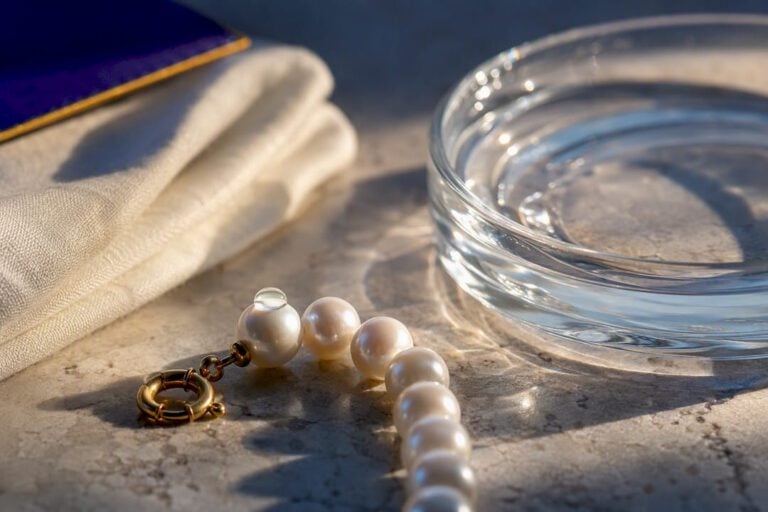
For bracelets, mixing a textured gemstone piece with a smooth pearl strand creates contrast while the shared wrist placement unifies them. Off-center pendants are subtler but equally effective — the stone sits slightly left or right of the chain’s midpoint, giving the piece a sense of movement.
Pro Tip: When styling statement jewelry asymmetrically, keep one side of your look quieter. If the dramatic earring is on the left, skip a necklace or choose a very fine chain so the composition has room to breathe.
Materials that naturally suit asymmetrical designs
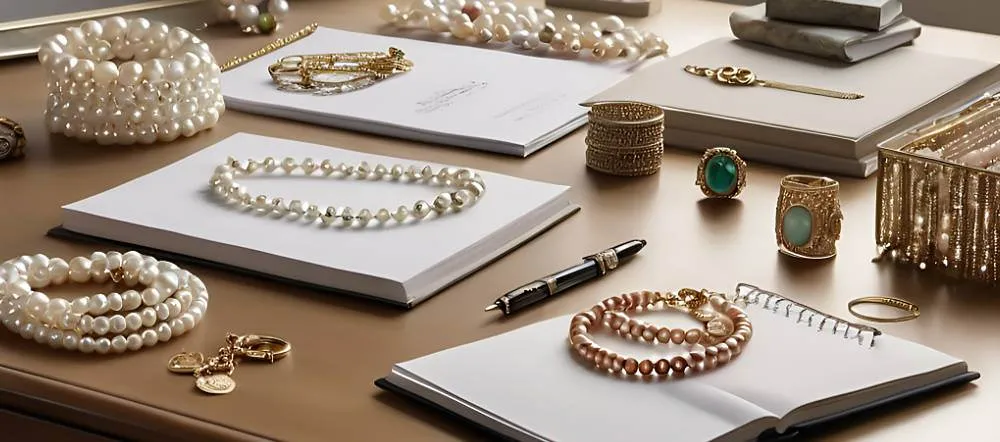
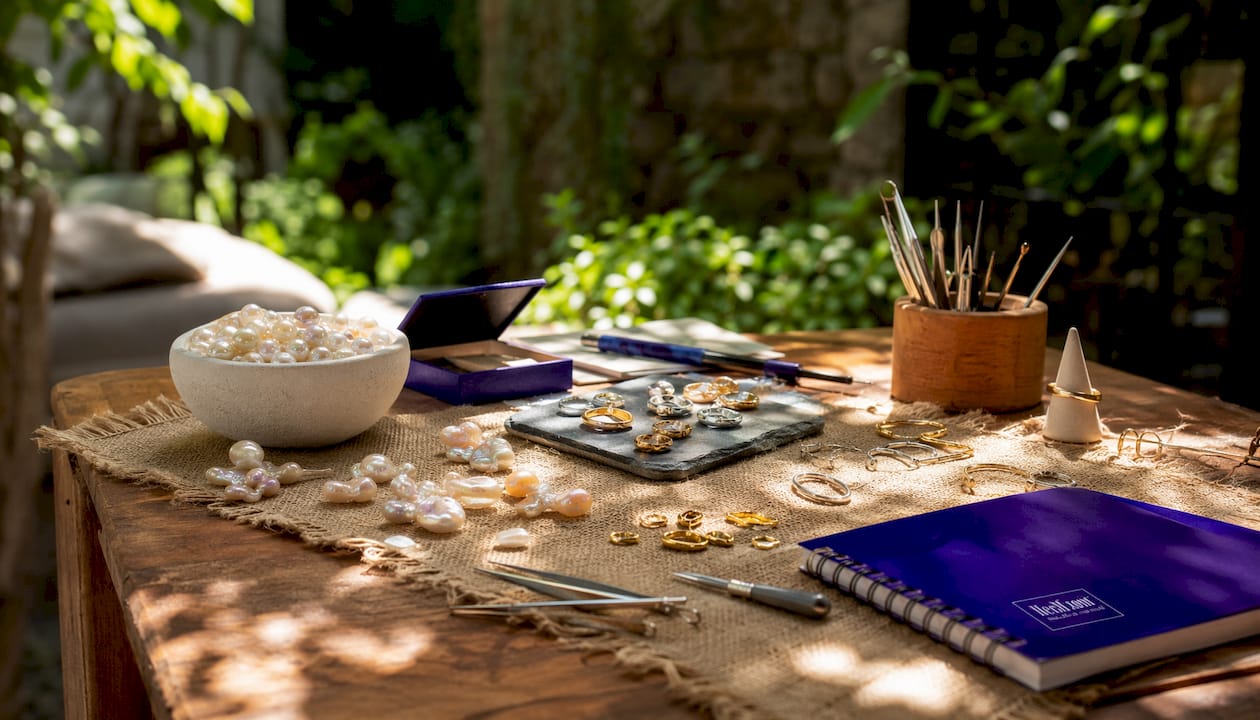
Certain materials almost ask to be used asymmetrically. Baroque and keshi pearls, for instance, are never perfectly round. Their organic shapes carry their own visual weight and make identical mirroring impossible anyway. That irregularity becomes an asset.
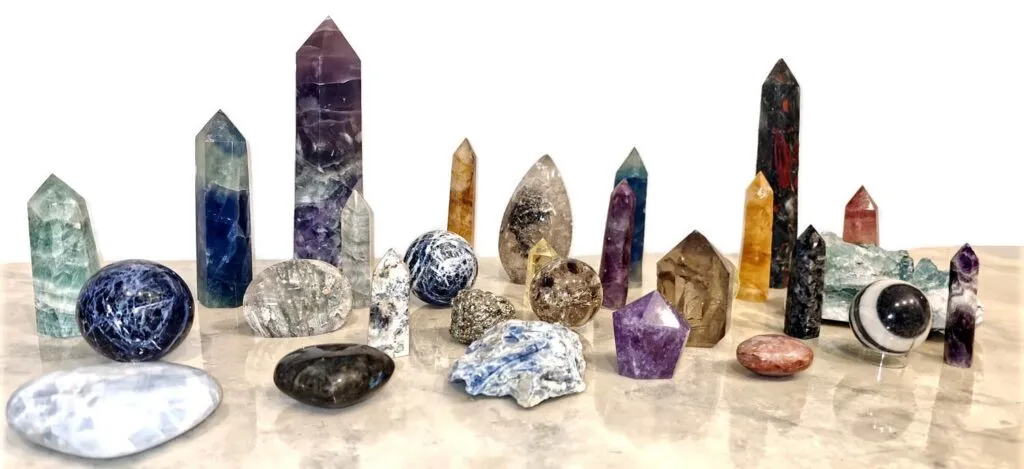
Raw and freeform gemstones work the same way: a salt-and-pepper diamond or a rough garnet slice has a presence that a faceted round stone simply doesn’t.
| Material | Asymmetry Advantage | Care Notes |
|---|---|---|
| Baroque/keshi pearls | Organic shape resists forced symmetry | Wipe with soft cloth; avoid chemicals |
| Raw gemstones (garnet, quartz) | Freeform silhouette adds visual weight | Store separately to prevent scratching |
| Mixed metals (gold + silver) | Finish contrast creates visual DNA | Polish each metal separately |
| Polished vs. matte finishes | Texture contrast reads as intentional | Avoid abrasives on matte surfaces |
Mixed metals deserve special attention. Pairing a polished gold element with a matte silver one creates a finish contrast that functions as visual DNA. The two pieces look related even though they’re different.
Gemstone jewelry styling works on the same logic: a warm-toned strawberry quartz bracelet and a cool-toned aquamarine necklace can coexist when they share a similar translucency or bead size.
How artisans actually build asymmetrical pieces
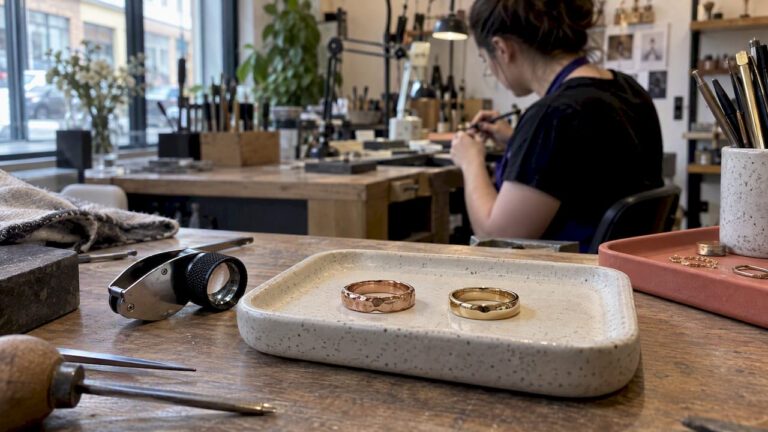
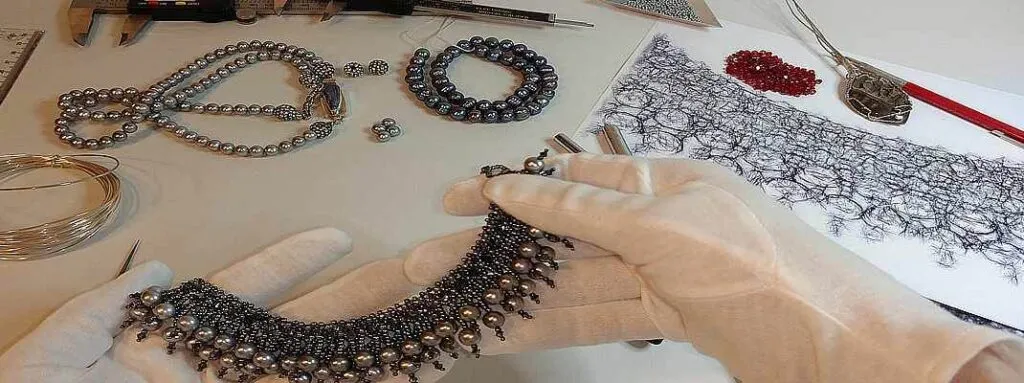
Designing for asymmetry is technically harder than designing for symmetry. A maker typically starts with sketches to map visual weight, then moves to CAD modeling to check wearability and balance before a single piece of metal is touched.
CAD ensures wearable balance while hand-forging adds the subtle maker marks and organic forms that distinguish artisan work from mass production.
The engineering challenges are real. Artisan pieces often include hidden counterweights and interlocking shapes to prevent snagging on fabric and keep the piece sitting correctly on the body.
Mass-produced asymmetrical accessories frequently skip this step, which is why they shift, catch, or feel uncomfortable after an hour of wear.
Quality signals to look for when buying artisan asymmetrical jewelry:
- Secure joins — no sharp edges or exposed wire ends at connection points
- Even wear surfaces — backs and clasps finished as carefully as the front
- Comfortable counterweights — heavier elements balanced so the piece doesn’t pull or tilt
- Smooth interlocking shapes — no elements that catch on hair or fabric
- Maker marks — subtle tool impressions or hand-formed curves that show individual craft
You can learn more about spotting these details in HerMJ’s guide to artisan craftsmanship signals.
How to wear asymmetrical jewelry with confidence
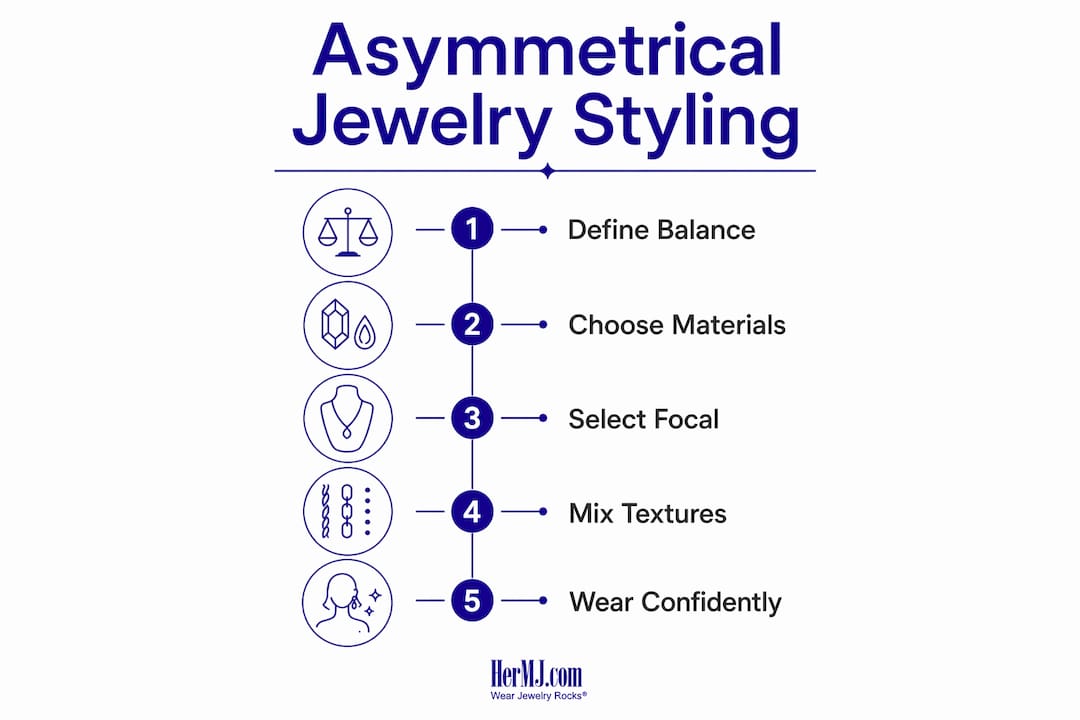
Start with one rule: anchor the look with visual DNA, then experiment outward. If you’re wearing a mismatched earring pair, both pieces should share at least one element: metal tone, stone color, or scale family. From there, you can push contrast as far as feels right.
- Choose your dominant side first. Place the bolder, heavier piece on the side that faces your audience most naturally (usually your dominant hand’s opposite side).
- Match metals or commit to contrast. Mixing gold and silver works when it’s deliberate; it reads as an error when it looks accidental.
- Hair up amplifies asymmetry. An updo exposes both ears fully, making mismatched pairs more visible and dramatic.
- Keep the neckline simple. A high neckline competes with layered necklaces; a V-neck or open collar lets offset pendants shine.
- For work, go subtle. One offset pendant or a small stud-plus-huggie earring combination reads as polished rather than experimental.
Pro Tip: To build a curated ear gradually, start with a single dramatic piece in one ear and a simple stud in the other. Once that feels natural, add a second small piece to the stud ear. You’re building asymmetric layering one step at a time rather than committing to a full look at once.
Do mix textures that share a color family. Don’t combine clashing metals without a linking element (a pendant that incorporates both tones, for example). Do let one side of your look stay quiet when the other is speaking loudly.
What to check before you buy asymmetrical jewelry
Buying asymmetrical pieces requires a slightly different checklist than buying a classic matched set.
Artisan-made pieces justify a higher price because of the engineering and individual attention that goes into each one; mass-produced versions are cheaper but often skip the wearability details that make asymmetry comfortable all day.
- Materials: confirm genuine gemstones or pearls, not resin or glass substitutes
- Weight distribution: hold the piece and check that it doesn’t immediately tilt or pull
- Clasp and back finishes: rough or unfinished backs scratch skin and signal shortcuts
- Return policy: asymmetrical pieces are harder to judge from photos alone; a fair return window matters
- Maker credentials: look for a named artisan, a described process, or customer reviews that mention fit and comfort
Customization adds cost but often adds value too. Requesting a specific stone placement, a different metal tone, or an adjusted length means the piece is built around your proportions rather than a generic template. For asymmetrical designs especially, that fit difference is noticeable.
HerMJ’s approach to asymmetrical design
HerMJ builds each piece from genuine pearls and gemstones, with customization available so the asymmetry works for your specific style. Several pieces in the collection suit asymmetrical styling particularly well.
- The Elegant Freshwater Pearl Necklace works as an anchor layer in a staggered necklace stack, its clean pearl strand grounding bolder or shorter pieces above it.
- The Pearl and Aquamarine Necklace combines two materials with different visual weights, making it a natural fit for mixed-material asymmetric styling.
- The Faceted Garnet Gemstone Necklace brings warm color and faceted texture, ideal as the dominant piece in an offset layering arrangement.
- The Lustrous Freshwater Pearl Bracelet pairs with the Strawberry Quartz Gemstone Bracelet or the Tiger Eye Bracelet for a mixed-length wrist stack where pearl softness contrasts with gemstone texture.
Customer reviews consistently highlight the quality of the materials and the care in finishing, both of which matter most in asymmetrical pieces where every element is visible. HerMJ also welcomes hearing your comments, so if you want a specific stone placement or a length adjusted for your frame, that conversation is worth starting.
Key Takeaways
Asymmetrical jewelry design is a deliberate technique that uses visual DNA, intentional balance, and planar relationships to make unlike elements feel coherent and personal.
| Point | Details |
|---|---|
| Asymmetry is intentional | Every imbalanced element is a compositional decision, not an accident. |
| Visual DNA unifies pieces | Shared color, material, or finish makes mismatched pieces read as a set. |
| Wearability requires engineering | Quality artisan pieces include counterweights and smooth joins that mass-produced versions skip. |
| Style rule: anchor first | Choose one dominant piece, then build contrast outward from that anchor. |
| HerMJ for artisan asymmetry | HerMJ’s pearl and gemstone pieces are handcrafted with customization options for a personal fit. |
Why asymmetry speaks louder than a matched set
Most people assume asymmetrical jewelry is simply mismatched, as if the wearer forgot to check the mirror. What I find fascinating is how much more thought goes into a well-designed asymmetrical piece than into a perfectly matched pair. You’re making a compositional argument about how unlike things can belong together.
The pieces I find most compelling are the ones where the asymmetry isn’t immediately obvious. A pearl necklace layered slightly off-center, or a bracelet stack where one piece is smooth and one is textured, creates a quiet tension that a matched set never achieves.
That tension is what makes people look twice. My advice to anyone curious about this style: start small. One offset pendant or a single mismatched pair of earrings is enough to feel the difference. You don’t need a full transformation to understand why asymmetry, done with intention, feels more alive than symmetry ever could.
HerMJ’s pearl and gemstone pieces, made for your style
Artisan-made asymmetrical jewelry doesn’t have to cost what a gallery piece does. HerMJ offers handcrafted pearl and gemstone pieces at accessible prices, with free shipping on all US orders and free international shipping on orders of $150 or more.
Every HerMJ piece is crafted from genuine materials and finished with wearability details that matter. Browse the freshwater pearl jewelry collection to find your anchor piece, or go straight to the Pearl and Aquamarine Necklace for a ready-made mixed-material starting point. Read what other customers say about fit, finish, and quality on the HerMJ reviews page before you decide.
Recommended
- What Is Gemstone Cluster Jewelry: Style Guide 2026
- What Is Art Deco Jewelry Style? A Design Guide
- The Role of Jewelry in Fashion: Your Modern Style Guide
- Jewelry Styles Explained: Know What’s Important