


Pearl Sizes Guide: How to Pick the Right Size for You
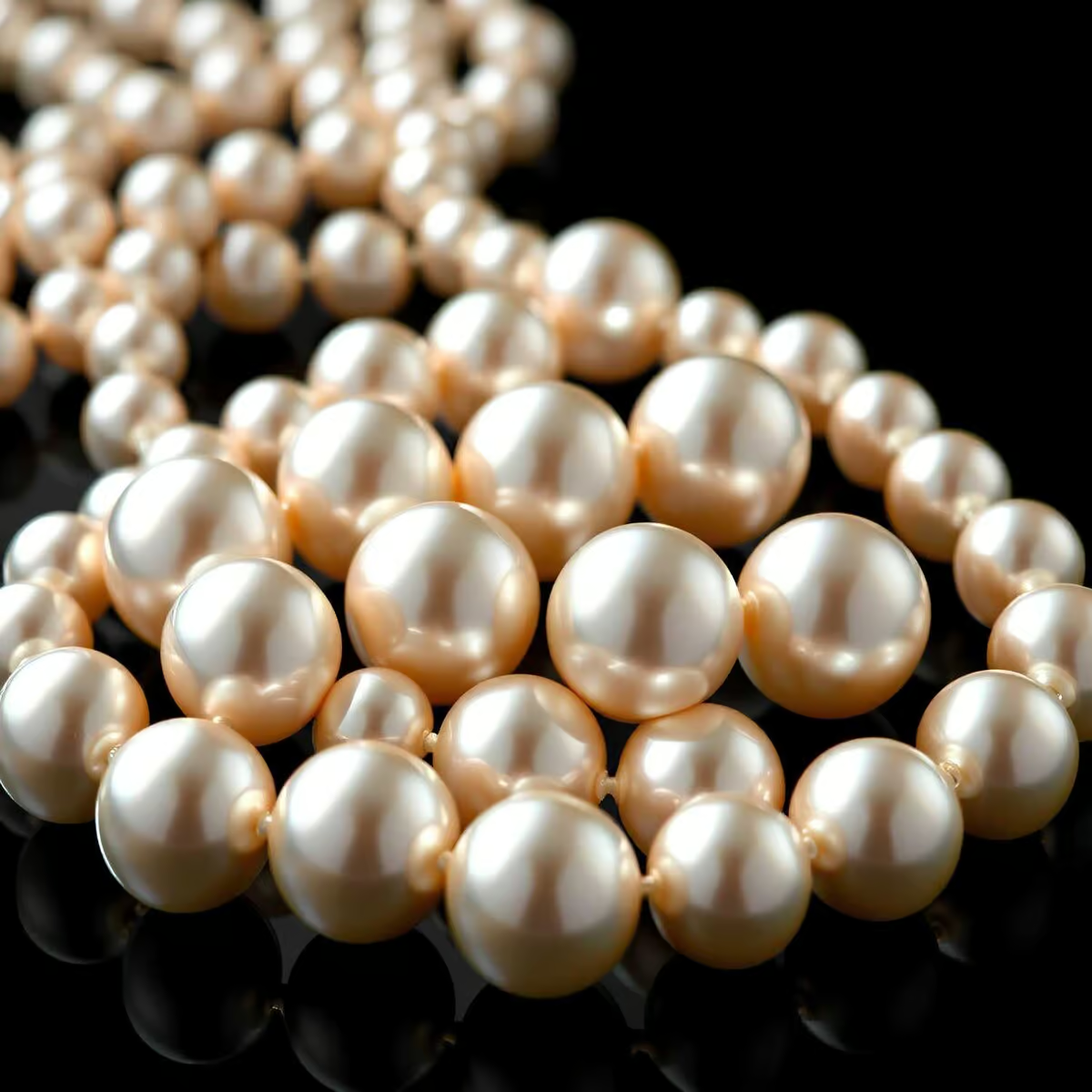
If you want the short answer: 7 to 8 mm pearls are the most versatile choice for everyday wear, and 9 to 11 mm pearls give you more presence for elevated or formal looks.
Anything past 12 mm moves into statement territory, worn deliberately rather than casually. That’s the whole verdict in one sentence. Everything below explains why and helps you apply it to your exact piece.
The reasoning comes down to three things: biology, math, and how your eye reads scale. The Gemological Institute of America sets size ranges for each pearl family, and those ranges are hard limits, not marketing categories.
Pricing climbs in a non-linear curve as diameter increases, because bigger pearls are dramatically rarer. And a shift of just 2 to 3 mm is enough to change how a pearl reads on the body, moving it from quiet and classic to something people notice across a room.
Here’s how that translates into fast decisions:
- Studs: default tnless you specifically want a bolder look.
- Necklaces: pair 7 to 9 mm with shorter or classic lengths, and 9 to 11 mm when you want more visual weight.
- Bracelets: stick to 6 to 8 mm for comfort, since larger beads can feel bulky against the wrist.
Key Takeaways
The right pearl size depends on jewelry type and occasion, with 7 to 8 mm serving as the most versatile everyday standard and 9 mm and above reserved for elevated or statement wear.
| Point | Details |
|---|---|
| Everyday sizing | Choose 7 to 8 mm for studs, classic necklaces, and daily wear. |
| Elevated sizing | Move to 9 to 11 mm for formal occasions or more visual presence. |
| Species set the ceiling | Akoya tops out around 9 mm; South Sea can reach 20 mm. |
| Price rises sharply with size | Diameter increases become far more expensive past common thresholds due to rarity. |
| Quality outranks diameter | Luster, nacre, and matching often matter more than raw millimeter size. |
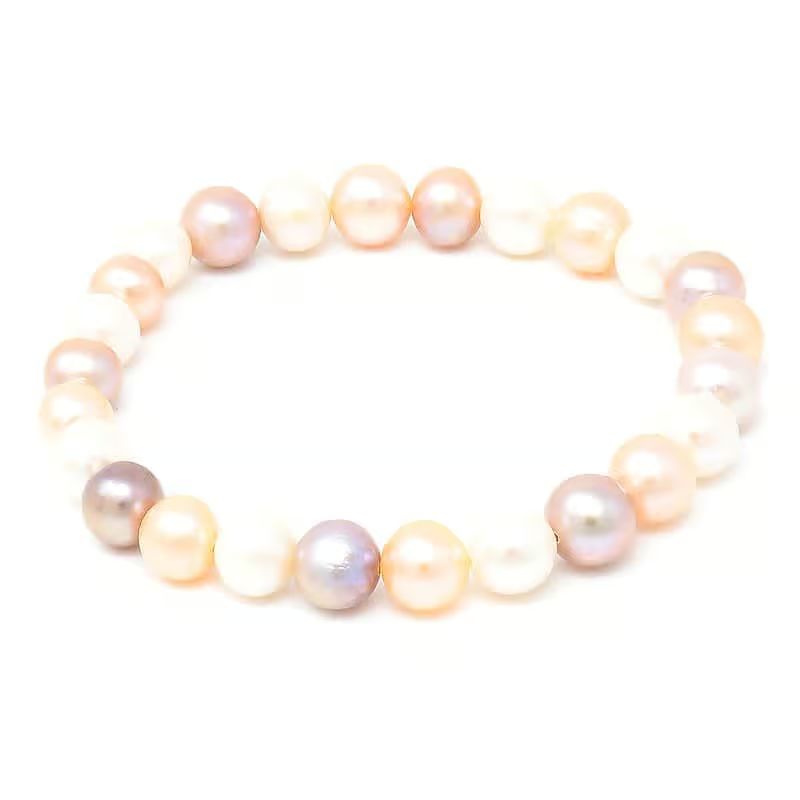
| HerMJ sizing options | HerMJ offers pieces like the Lustrous Freshwater Pearl Bracelet and Blueberry Gelato Necklace across everyday and elevated size ranges, with custom sizing available on request. |
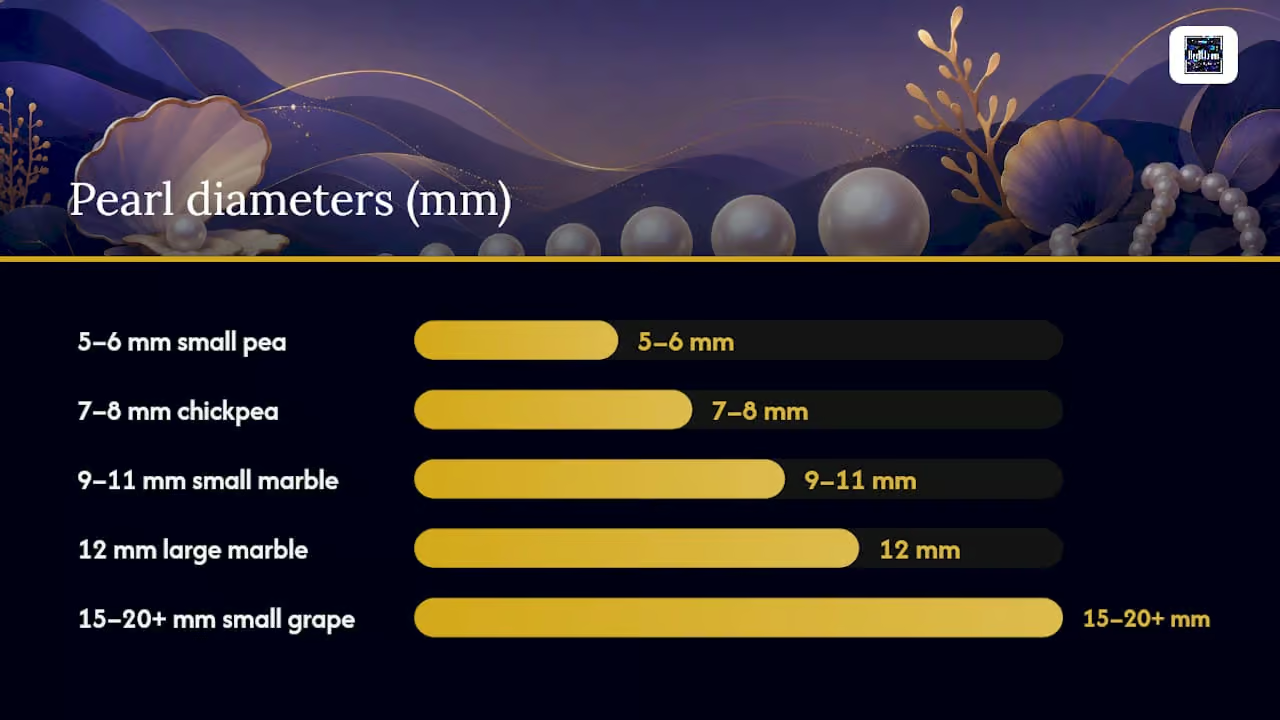
Pearl Size Chart: Millimeter Ranges and What They Look Like
Pearl sizes get discussed in millimeters measured across the widest point of the pearl, and the numbers can feel abstract until you compare them to something you already know the size of.
| Diameter Range | Everyday Comparison | Typical Use |
|---|---|---|
| 3–4 mm | Pencil eraser tip | Delicate seed pearl accents, layered pieces |
| 5–6 mm | Small pea | Petite studs, dainty bracelets |
| 7–8 mm | Chickpea | Classic everyday studs and strands |
| 9–11 mm | Small marble | Elevated necklaces and statement studs |
| 12 mm | Large marble | Bold statement pieces, South Sea strands |
| 15–20 mm+ | Small grape | Rare, high-end South Sea showpieces |
Two size bands do most of the heavy lifting in real wardrobes. The 7 to 8 mm range is what most people picture when they imagine “classic pearls,” the size that reads polished without shouting for attention.
Step up to 9 to 11 mm and the piece starts to feel dressier, the kind of pearls that hold their own at a wedding or under camera flash. Past 12 mm, you’re in statement territory on purpose.
Pro Tip: A 2 to 3 mm jump is the smallest change your eye can reliably detect on a pearl. If you’re deciding between two sizes and can’t tell them apart in a photo, they’ll likely read the same on your ear or neck too.
One quirk worth knowing: necklaces are almost never labeled with a single diameter. A strand marked “8–9 mm” means the pearls graduate slightly across the piece, which is normal and often intentional for a balanced drape.
Akoya and South Sea strands are typically graded in 0.5 mm increments, while freshwater pearls are sometimes graded in full millimeters because of how irregular their growth can be.
What Size Ranges Are Normal for Each Pearl Type?
Not every pearl can grow to every size. The mollusk species that produces a pearl sets a biological ceiling, and knowing that ceiling saves you from chasing a diameter that doesn’t exist in your preferred pearl type.
- Tahitian: roughly 8 to 16 mm, known for dark, often iridescent bodycolor.
That range difference changes what a single millimeter measurement actually means. A 9 mm Akoya pearl sits near the top of what that oyster can produce, so it’s genuinely large for its type.
A 9 mm Tahitian or South Sea pearl is closer to the small end of normal for that family. Comparing “9 mm” across two different pearl types without accounting for the species is like comparing a large apple to a small watermelon and calling them the same size.
If your priority is a bigger diameter without stretching your budget past reason, freshwater pearls give you more room to work with since their commercial range runs so wide.
If you specifically want the drama of a large, glowing bead, South Sea or Tahitian pearls deliver that at sizes that would be exceptional (and expensive) in an Akoya.
How Do You Measure a Pearl Correctly?
Getting the size right starts with knowing exactly what number you’re looking at, since not every listing measures pearls the same way.
- Measure at the widest point. For a round pearl, that’s the diameter straight across the middle.
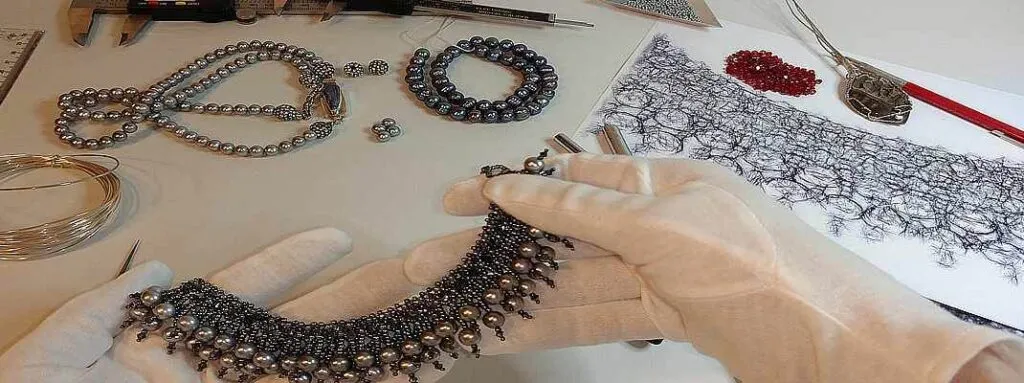
- Use calipers, not a ruler. A jeweler’s caliper gives you a precise millimeter reading; eyeballing against a ruler invites error.
- Check if it’s a single number or two. Round pearls get one diameter. Drop and oval pearls get two dimensions, listed as width by length (for example, 9 x 13 mm).
- Confirm the increment. Akoya and South Sea pearls are commonly graded in 0.5 mm steps; freshwater pearls sometimes jump in full millimeters.
Before you buy, ask the seller three things: the exact diameter (not a size label), the matching tolerance across a strand or pair, and how the measurement was taken. “Small, medium, large” tells you nothing useful, since those labels shift from one seller to another with no fixed standard behind them.
Pro Tip: Never trust a product photo alone to judge scale. Photos get cropped and zoomed, and a 6 mm pearl can look identical to a 10 mm pearl without a size reference in frame.
How Do You Choose the Right Pearl Size for Earrings, Necklaces, and Bracelets?
Size decisions change depending on what you’re wearing and where on your body the piece sits. A diameter that looks perfect on your earlobe might feel oversized on your wrist.
Earrings
Studs are the most forgiving category, and 7 to 8 mm is the safe, flattering default for nearly any face shape or lobe size. If you want your earrings to register from across a room, or you’re pairing them with an updo that leaves your ears exposed, 9 to 11 mm gives you that extra presence without tipping into costume territory.
Pay attention to the setting too. A heavier gold mount on a large pearl adds weight your earlobe has to support all day, so lighter settings matter more as diameter climbs.
Necklaces
Strand length and pearl diameter work together, not separately. A choker, sitting tight at the base of the neck, generally looks best at 6 to 8 mm, since anything larger can look crowded against that shorter length. A princess length, landing around the collarbone, pairs naturally with 7 to 9 mm for a classic, versatile look, similar to what you’ll find in a piece like the Blueberry Gelato Collection Freshwater Pearl Necklace.
A matinee length calls for 8 to 10 mm to keep the proportions balanced, and an opera length can carry 9 to 12 mm without feeling heavy, since the extra drape gives larger pearls room to breathe. For deeper guidance on matching length to diameter, our practical necklace guide walks through it piece by piece.
Bracelets
Bracelets ask for restraint. Because the beads sit close together around a curved, moving wrist, 6 to 8 mm tends to feel comfortable and wearable, while anything larger can start to feel stiff or bulky, especially if you’re stacking multiple bracelets. A piece like a pearl necklace with a toggle clasp shows how clasp design and bead size need to work together for comfort, a principle that carries over directly to bracelets.
A few decision rules worth keeping in mind:
- Match paired pieces (earrings, bracelet sets) within 0.5 mm of each other so they read as a matched set, not mismatched leftovers.
- Don’t default to the largest diameter you can afford. Luster, surface quality, and how the piece actually sits on you matter more than raw size.
- Check clasp strength on any strand or bracelet using larger pearls. Weight adds up fast, and a delicate clasp under a heavy strand is a repair waiting to happen.
Pro Tip: If you’re buying your first pearl piece and you’re unsure, go smaller rather than larger. A 7 to 8 mm strand gets worn constantly for years; a 12 mm strand gets saved for occasions and worn less often, even though it usually costs more.
How Does Pearl Size Affect Price and Value?
Price doesn’t rise in a straight line with diameter. It climbs sharply once you cross certain thresholds, because larger pearls take longer to cultivate and far fewer of them come out of the water at high quality.
A jump from 7 mm to 8 mm might cost you modestly more. A jump from 10 mm to 12 mm can multiply the price several times over, since fewer oysters produce a pearl that large without surface flaws or shape distortion.
That math changes how you should shop. A well-proportioned 7 to 8 mm pearl with excellent luster and clean surface quality often looks and photographs better than a 10 mm pearl with dull shine or visible blemishes, and it usually costs a fraction as much. Before you chase a bigger number, run through this checklist:
- Compare the pearl’s luster against its diameter. A glowing 7 mm pearl beats a flat, chalky 10 mm one nearly every time.
- Check nacre thickness on cultured pearls, since thin nacre affects both appearance and how the pearl holds up over years of wear.
- Look at surface condition under bright light. Small blemishes matter more as pearls get more expensive.
- On multi-pearl pieces, ask about matching, since inconsistent color or shine can undercut the value of even large pearls.
Our breakdown of what makes pearls valuable covers this pricing logic in more depth, and our freshwater pearl pricing guide walks through real budget ranges by size if you want specific numbers to plan against.
Why Do Luster, Nacre, and Matching Matter More Than Size Alone?
Diameter is only one of seven factors the GIA uses to grade pearl quality, and treating it as the only one that matters is where a lot of buyers go wrong.
- Shape: round pearls are the most sought after, though drops and ovals have their own appeal.
- Color: bodycolor plus overtone, the subtle secondary hue that shifts how a pearl catches light.
- Luster: the sharpness and depth of the reflection on the pearl’s surface, arguably the single most important visual factor.
- Surface quality: how clean or blemished the pearl’s skin is.
- Nacre quality: the thickness and structure of the coating that gives a pearl its glow.
- Matching: how consistent multiple pearls look together in a strand or pair.
- Size: the diameter measurement covered throughout this guide.
A smaller pearl with sharp luster and clean orient can look genuinely more luxurious than a larger pearl that’s dull or blemished, since orient (the subtle iridescent glow beneath the surface) reads as “alive” in a way size alone can’t fake. This matters even more on necklaces and paired earrings, where consistent color and shine across every pearl often does more visual work than a slightly bigger diameter.
Before buying a multi-pearl piece, ask about matching tolerance and, if buying loose pearls, request close-up photos or a grading certificate so you can judge nacre and surface for yourself. Our piece on why pearl jewelry gets undervalued digs further into the factors buyers tend to overlook.
How Do Different Pearl Sizes Actually Look When Worn?
Numbers on a screen don’t always translate to how a pearl sits on an actual body, so it helps to picture each size range in context.
- 6 mm on the earlobe reads delicate and understated, easy to wear from morning meetings straight through dinner without drawing much attention.
- 7 to 8 mm across the collarbone gives you that classic, polished look, visible but never loud, the size most people picture when they think “pearl necklace.”
- 9 to 11 mm on the earlobe or throat has genuine photo presence. It catches light from a few feet away and holds up under evening lighting or a camera flash.
- 12 mm and up on any part of the body announces itself. It’s the size for a moment you want remembered, not a Tuesday commute.
When shopping online, look past the hero shot and check for close-up photos next to a model’s ear, neck, or wrist, since scale is nearly impossible to judge from an isolated product photo with nothing to compare it against. Our visual guide to pearl types includes exactly these kinds of comparison shots if you want a clearer sense of scale before you commit to a size.
What Does the Research Say About Pearl Size Limits?
The size ranges guiding every recommendation in this piece aren’t stylistic opinion. They trace back to biology.
Each pearl-producing mollusk species has its own growth ceiling, shaped by shell size, growing time, and the environment it’s cultivated in. That’s why Akoya oysters, which are physically smaller than South Sea oysters, simply cannot produce a 15 mm pearl, no matter how long it’s left to grow.
The GIA’s size data confirms this pattern across every major pearl family, and it’s the same reasoning behind why South Sea and Tahitian pearls dominate the large end of the market: their host oysters are physically bigger, giving the nacre more room and more years to build up before harvest.
That biological scarcity is also what drives the non-linear pricing curve, since fewer oysters survive the multi-year growing period required to produce a large, well-formed pearl.
What Buying Habits Actually Work for Choosing Pearl Size?
I tell people the same thing every time: start with 7 to 8 mm for your first classic piece, then let a second purchase stretch into 9 to 11 mm once you know how pearls fit into your wardrobe. That order rarely disappoints, since a smaller size gets worn far more often than people expect.
At HerMJ, that logic shapes how we design. The Lustrous Freshwater Pearl Bracelet for Elegance sits in that comfortable everyday range, while the Golden Swirl Gelato Collection Freshwater Pearl Necklace leans toward elevated, special-occasion wear.
US orders ship free with no minimum, and international orders ship free for orders starting at $150. If you need a custom size, reach out. We build pieces around real people, not just standard charts.
Find Your Size at HerMJ
HerMJ makes handmade pearl jewelry sized around exactly the guidance in this piece, from everyday 7 to 8 mm studs and bracelets to elevated 9 to 11 mm necklaces for the moments that call for more presence. Unlike mass-market retailers running fixed size runs, HerMJ builds pieces by hand, without the markup that usually comes with bespoke work elsewhere.
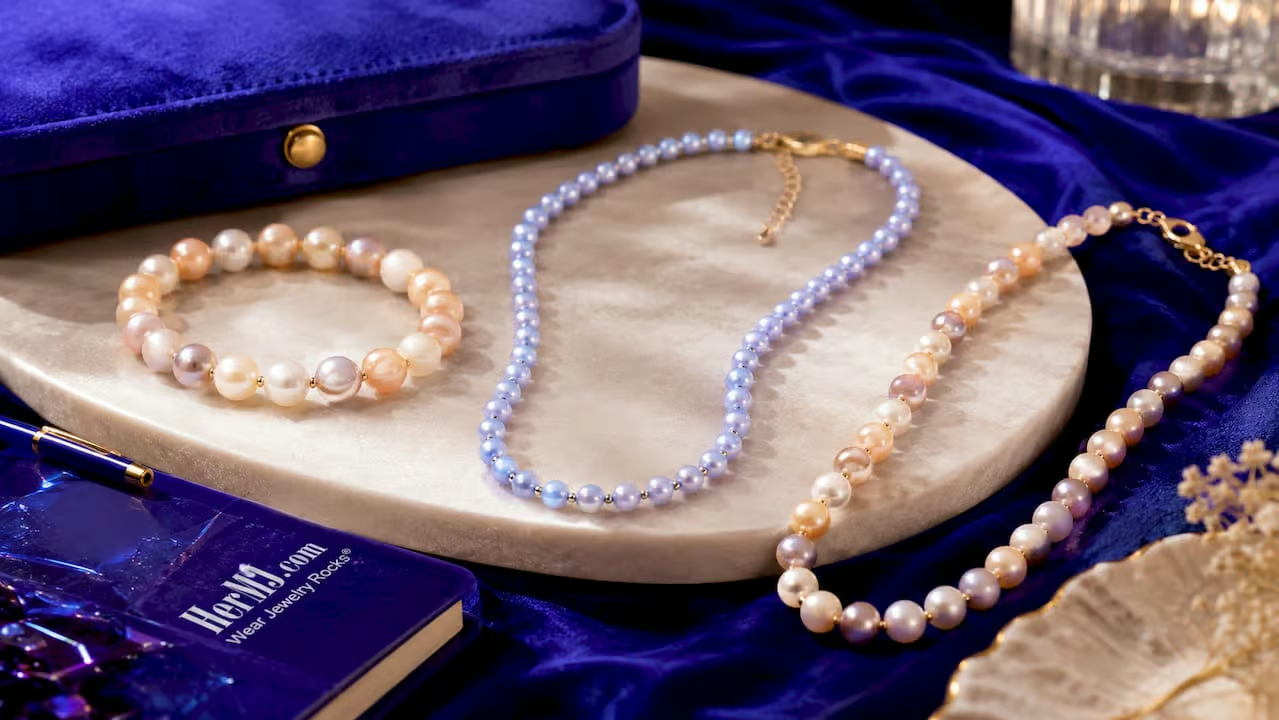
If you already know your ideal range, the Blueberry Gelato Collection Freshwater Pearl Necklace is a strong starting point for a versatile, everyday-to-elevated piece, and the Lustrous Freshwater Pearl Bracelet for Elegance pairs naturally alongside it for a matched look.
Browse the current collection, check sizing details on each product page, and reach out if you want help choosing the right piece for your own collection.
Frequently Asked Questions
How do you tell pearl size?
Pearl size is measured in millimeters across the widest point of the pearl, ideally with a jeweler’s caliper. Round pearls get one diameter measurement; drop and oval pearls get two, listed as width by length.
What is a good pearl size?
For most people, 7 to 8 mm is a genuinely good, versatile size that works for daily wear and holds up well over years of use. If you want a piece with more visual weight for formal occasions, 9 to 11 mm is a strong next step up.
Are 7 mm pearls too small?
No. 7 mm sits right in the classic everyday range and is one of the most popular sizes sold, especially for studs and princess-length necklaces. It only looks small next to a specifically oversized piece, not on its own.
Why do larger pearls cost so much more?
Larger pearls take longer to cultivate and fewer of them survive that growing period without flaws, which makes them rarer. That scarcity is what drives the sharp, non-linear jump in price as diameter increases.
Does pearl type affect what size I should buy?
Yes. Akoya pearls rarely exceed 9 mm, while Tahitian and South Sea pearls commonly start around 8 mm and can reach 20 mm. If you want a large diameter, freshwater or South Sea pearls give you more realistic options than Akoya.
Sources
Recommended
- How I Choose The Perfect Pearl Necklace: A Practical Guide
- Pearl Overtone Guide: Pick the Right Color for You
- Style Pearl Jewelry with Everyday Outfits: Easy Looks