



Wipe Pearls After Every Wear: How to Clean Pearls Safely
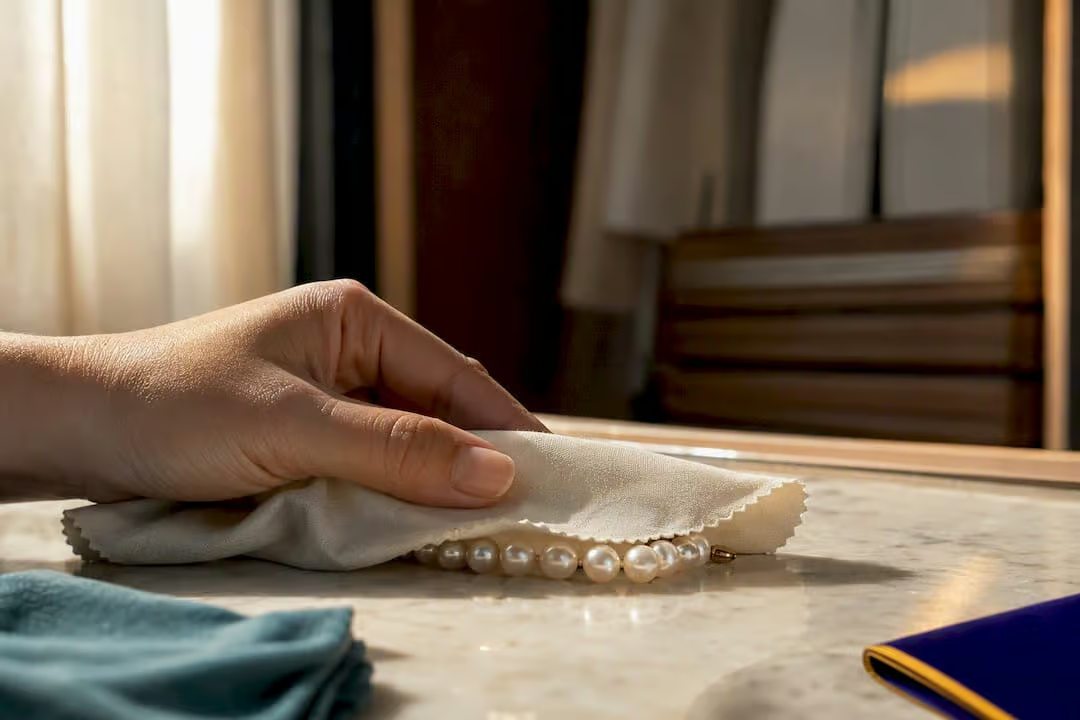
The safest way to clean pearls is to wipe them with a soft, slightly damp cloth after every wear. For a deeper clean, use a wrung-out cloth with a drop of mild, fragrance-free soap in lukewarm distilled water, but never submerge strung pearls.
Skip ultrasonic and steam cleaners entirely, dry pearls flat before storing, and if you wear a piece often, plan on professional restringing regularly, typically yearly for frequent wear.
TL;DR:
- Using distilled water and a mild, fragrance-free soap, clean pearls gently with a damp cloth while avoiding soaking or ultrasonic cleaners to prevent damage.
- Yellow stains from skin oils and lotions can often be lifted with mild soap, but avoid harsh chemicals like hydrogen peroxide or abrasive pastes that may harm the nacre.
- Never use steam or ultrasonic cleaners, acids, or stiff brushes, as these can crack nacre, weaken silk threads, or cause irreversible damage to pearls.
- After cleaning, dry pearls flat on a soft cloth and store them in a fabric pouch away from harder jewelry, avoiding plastic bags and airtight containers.
- Regular inspections and restringing every one to two years are recommended for frequently worn pearls, with professional help advised for persistent yellowing or frayed threads.
How Do You Clean Pearls at Home Safely?
Pearls are organic gems, closer in nature to shell than stone, which is why the wrong cloth or a splash of (mineral-rich) tap water can leave lasting marks. Getting the routine right matters more than getting it fancy.
Start by gathering the right materials: a soft microfiber or cotton cloth, distilled water, and a mild, fragrance-free dish soap or baby shampoo. Distilled water matters here because tap water contains chlorine and minerals that can dull nacre over time, leaving pearls looking flat rather than glossy.
Once your materials are ready, follow this sequence:
- Mix a barely sudsy solution: a few drops of soap in a small bowl of lukewarm distilled water.
- Dip your cloth, then wring it out until it’s just damp, not wet.
- Wipe each pearl individually, working the cloth gently along the surface.
- Rinse the cloth in plain water, wring again, and wipe away any soap residue.
- Pat the strand dry with a fresh towel, then lay it flat to air-dry completely before storing.
Do this over a closed sink or a towel-lined bowl. Loose pearls have a way of finding drains at the worst possible moment. And never soak strung pearls. The silk thread inside a necklace absorbs water, and repeated soaking weakens it long before you’ll notice a change in the pearls themselves.
Pro Tip: Wipe from the clasp toward the pearls, not the other way around. This keeps you from driving moisture into the knots between each pearl, which is exactly where silk thread starts to fray first.
How Do You Get Yellow Stains Out of Pearls?
Yellowing usually comes from years of contact with skin oils, perfume, and lotion, not from any single mistake. Treat it as a slow buildup problem, and escalate your response gently rather than reaching for something aggressive on day one.
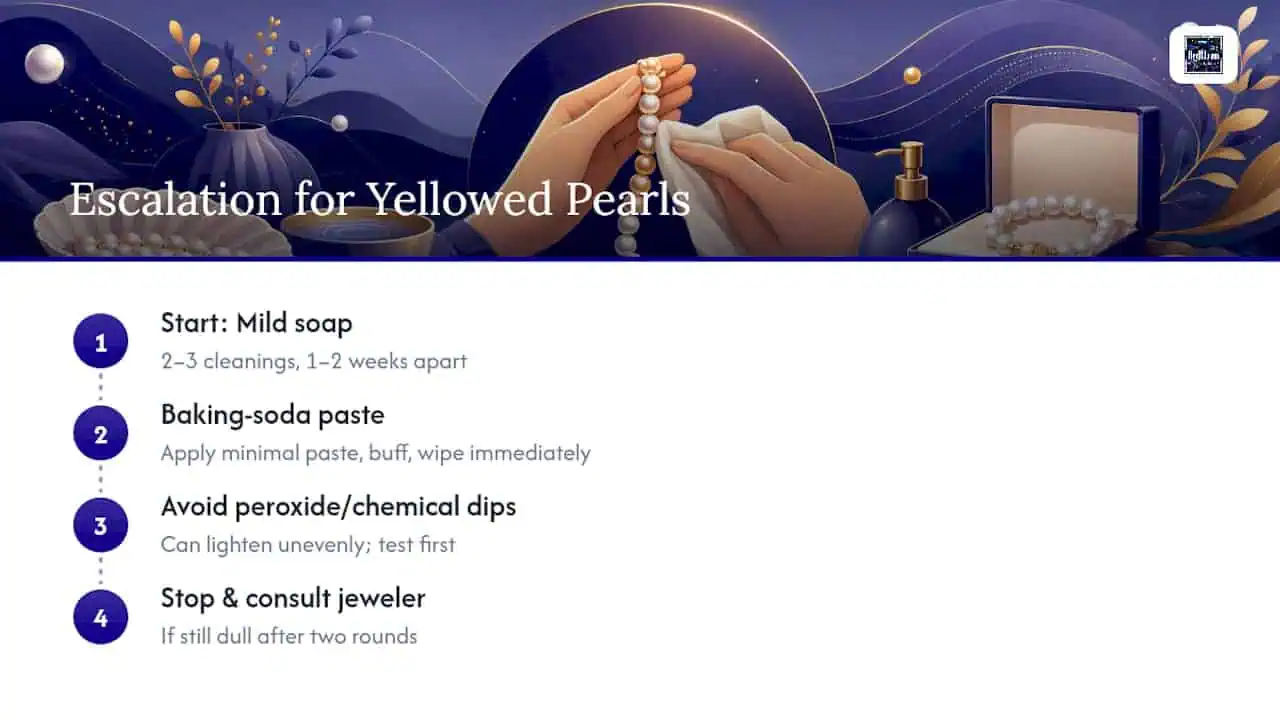
Begin with the same mild-soap method described above. If the yellowing is light, two or three gentle cleanings spaced a week or two apart often lift it. Don’t repeat the treatment daily. Pearls are porous, and even mild soap used too often can wear on the nacre’s surface.
Hydrogen peroxide and other chemical dips can lighten pearls unevenly, and there’s no undoing an uneven result. Abrasive treatments increase the risk of permanent thinning of the nacre.
Pro Tip: If a pearl still looks dull after two rounds of gentle cleaning, stop. Surface yellowing usually responds to these steps. Anything deeper is a job for a jeweler, not a kitchen counter.
What Should You Never Use to Clean Pearls?
A few products keep showing up in pearl-cleaning myths, and each one causes real, often irreversible damage.
- Ultrasonic and steam cleaners. The vibration and heat can crack nacre and melt the silk thread inside a strand. The GIA is explicit on this point: never use either device on pearls, full stop.
- Vinegar, bleach, and other acids. Pearls are made mostly of calcium carbonate, and acid dissolves it. Even brief contact can etch the surface.
- Dry baking soda or stiff brushes. Without moisture to buffer it, baking soda acts as an abrasive and scratches the nacre instead of lifting stains.
- Soaking strung pearls. Prolonged water exposure weakens the silk thread, and a weakened thread eventually snaps, usually while you’re wearing it.
- Plastic storage bags. Some plastics off-gas chemicals that yellow pearls from the outside inward over months of contact.
How Should You Dry and Store Pearls Between Wears?
After cleaning, pat pearls dry with a soft towel and lay the strand flat on a clean cloth until it’s completely dry, which can take several hours. Never hang a wet strand to dry. Gravity pulls moisture straight into the knots.
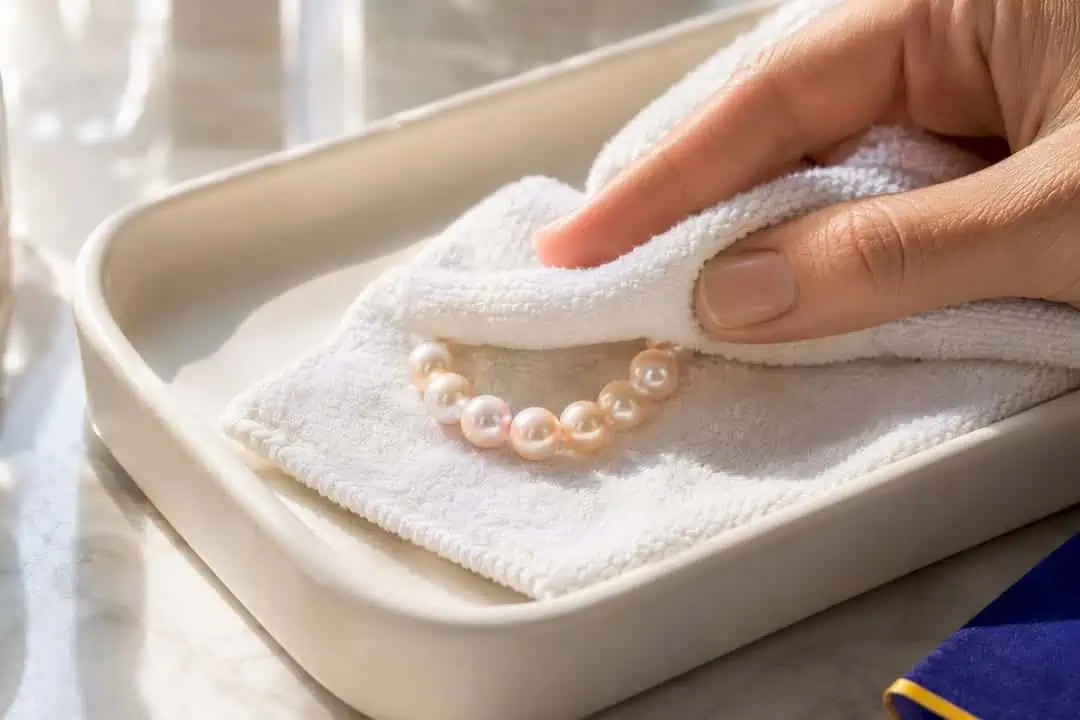
For storage, a soft fabric pouch or a lined drawer compartment works best. Keep pearls separate from harder gemstones and metal pieces that could scratch them, and skip plastic bags or airtight boxes.
Pearls need a little air and moderate humidity to stay stable. Our guide on how to store pearls covers this in more depth if you’re setting up a jewelry box for the first time.
Wearing habits matter just as much as storage. Treat pearls as the last thing you put on and the first thing you take off, since minimizing contact with perfume and lotion does more to prevent yellowing than any cleaning routine ever will.
Remove pearls before swimming, showering, or exercising.
- Rotate between pieces rather than wearing one strand daily.
- Periodically check knots and thread tension for signs of wear or discoloration.
Pro Tip: A quick monthly check of the knots between pearls catches thread wear long before it becomes a breakage emergency.
When Should You Take Pearls to a Jeweler?
Some problems are beyond a cloth and a bowl of soapy water. Watch for these signs:
- Yellowing that doesn’t budge after two gentle at-home attempts.
- Nacre that looks flaky, chalky, or visibly thinner in spots.
- Silk thread that’s frayed, stretched, or shows dark spots between pearls.
- A clasp or setting that feels loose or catches on fabric.
Frequently worn pieces deserve an annual inspection, in line with the cadence Southern Living recommends for regular maintenance. Restringing frequency varies with wear; pearls worn often may need restringing every one to two years, while occasional use allows for longer intervals between restringings.
A jeweler restrings with knots placed correctly between each pearl, which prevents rubbing and catches loose settings before they cause a pearl to fall out entirely.
What Does HerMJ Recommend for Pearl Care?
Our jewelry starts with genuine freshwater pearls, hand-selected and strung to withstand real, everyday wear, not just for display. That’s part of why care habits matter so much to us.
Here’s Veronique’s short checklist for keeping any pearl piece looking its best:
- Wipe after every wear, no exceptions, even on a day you barely broke a sweat.
- Save perfume and lotion for after you’ve put on your pearls.
- Store flat, in fabric, away from harder jewelry.
- Book a professional check once a year if you wear the piece often.
If yellowing has already set in, our guide on fixing yellowed pearls walks through the restoration steps in more detail.
Why Most Pearl Care Advice Gets the Order Wrong
Most guides treat pearl cleaning as one event: something you do when pearls look dull. That’s backward.
Pearls are a living record of how they’ve been worn, and the real work happens in the small habits, wiping them after wear and putting them on last, that’s what prevents dullness from building up in the first place.
Where I think conventional advice falls short is in how casually it treats escalation.
Plenty of sites jump straight to peroxide or vigorous scrubbing the moment a pearl looks less than bright, when a sparing baking-soda paste, tried patiently and stopped after two attempts, resolves most surface yellowing without any risk to the nacre.
Aggressive fixes solve today’s problem and create next year’s.
If you take one thing from this guide, prioritize prevention over restoration. A pearl wiped down every time it’s worn rarely needs rescuing. One left in a jewelry box for years, coated in old perfume and lotion, almost always does.
— Veronique
Give Your Pearls Something Worth Protecting
Everything in this guide only matters if the pearls underneath are worth the effort, and that’s where HerMJ comes in.
HerMJ pieces are designed and strung with genuine freshwater pearls, so the wipe-after-wear habit and gentle soap cleaning described above will keep the luster looking the way it did the day it arrived.
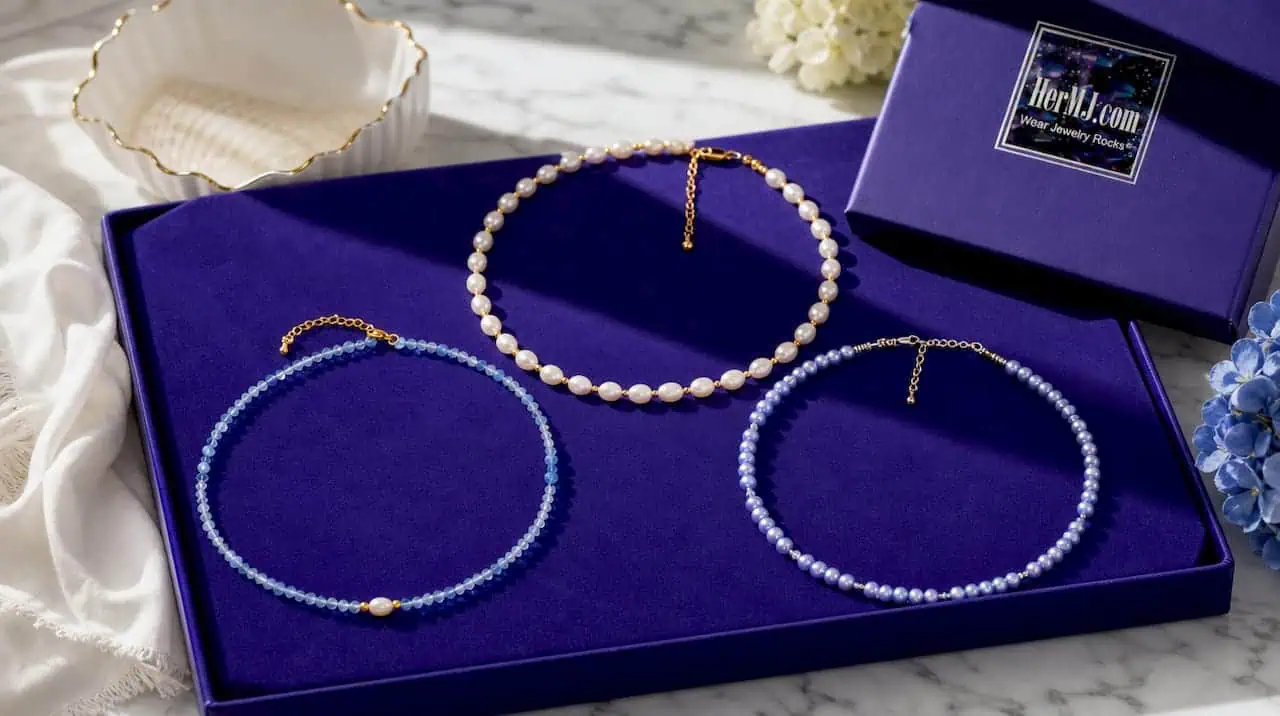
Our Pearl and Aquamarine Necklace pairs classic pearl strands with a cool gemstone accent that holds up beautifully to the cleaning steps above.
The Coconut Gelato Collection Freshwater Pearl Necklace and the Blueberry Gelato Collection Freshwater Pearl Necklace both feature richly colored freshwater pearls that show scratches and buildup fast if neglected, and shine right back with regular gentle care.
US orders ship free with no minimum, and international orders ship free at on orders $150 or more. Browse the full collection and pick a piece you’ll actually want to wipe down after every wear.
Sources
- Pearl care and cleaning guide | GIA
- How to clean pearls without ruining them | Jewelers Mutual
- How to Restore Yellowed Pearls: Expert Cleaning Methods That Work | Grise NYC
- How to clean pearls: Simple guide for maintenance | Southern Living
Recommended
- How to Fix Yellowed Pearls: Safe Home Methods That Work
- How to Store Pearls and Keep Them Lustrous
- Pearls and Perfume: How to Wear Both Without Regret
- The Truth About Pearl Durability: A Designer’s Guide to Care