




Restrung Every 1–2 Years? When to Restring Pearls and What to Ask
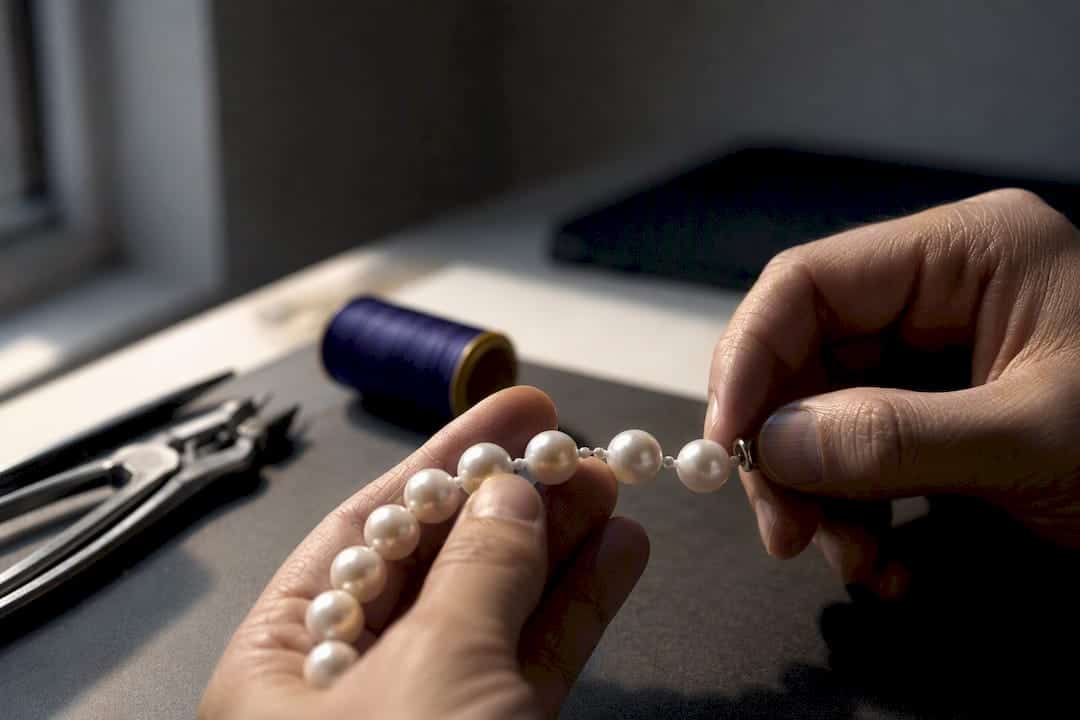
If you wear your strand often, restring it every one to two years. I suggest restring immediately if you notice gaps between pearls, fraying or discolored thread, a stretched hangline, or a loose clasp. Even occasional wearers should get an annual check, since silk weakens quietly long before it snaps.
The Edit
- Pearls worn frequently should be restrung every one to two years, while occasional wearers should have an annual check for signs of wear.
- Gaps, fraying fibers, loose pearls, or a wobbly clasp indicate the need for restringing to prevent loss or damage.
- Proper knotted restringing, which includes inspecting pearls and upgrading clasps if needed, ensures structural integrity and maintains value.
- Cost varies depending on knotting, length, pearl size, and clasp updates, with simple restringing generally cheaper than full knotting.
- DIY restringing is only advisable for low-value strands, as improper knots or wrong materials can damage high-value pearls.
When Should You Restring Pearls? Signs to Watch For
Pearls tell you when they’re struggling, if you know where to look. The most reliable clue is spacing: pearls should sit snug against each other in a smooth curve.
If you see small gaps or your necklace hangs looser than it used to, the silk cord has stretched from repeated wear and the natural give of the material.
Fraying is the next warning sign, and it’s usually visible before a strand actually breaks. Fuzzy fibers poking out near the clasp, or thread that’s turned yellow, gray, or waxy looking, means oils, lotion, and sweat have worked their way into the cord.
GIA’s pearl-care guidance notes that silk darkens and weakens with wear, which is exactly why frequently worn strands need attention sooner than pieces kept for special occasions.
A few other signals matter just as much:
- Pearls that slide or rotate loosely on the cord rather than staying fixed in place like they used to
- A concerning clasp that feels stiff, wobbly, or doesn’t latch securely anymore
- Any strand that has already broken once, even if you’ve knotted it back together yourself
- A missing pearl, which almost always means the cord failed nearby, too
Pro Tip: Check your pearls right after wearing them somewhere you applied perfume or hairspray close to your neck. That’s when contamination happens fastest, and a quick wipe-down afterward buys the silk real time.
Why Restringing Protects Your Pearls’ Value
Pearls are organic gems, formed by a living mollusk, and that soft, layered structure is part of what makes them beautiful and part of what makes them vulnerable.
The nacre can scratch if pearls rub against each other with no barrier between them. That’s the real job silk cord does beyond just holding the necklace together.
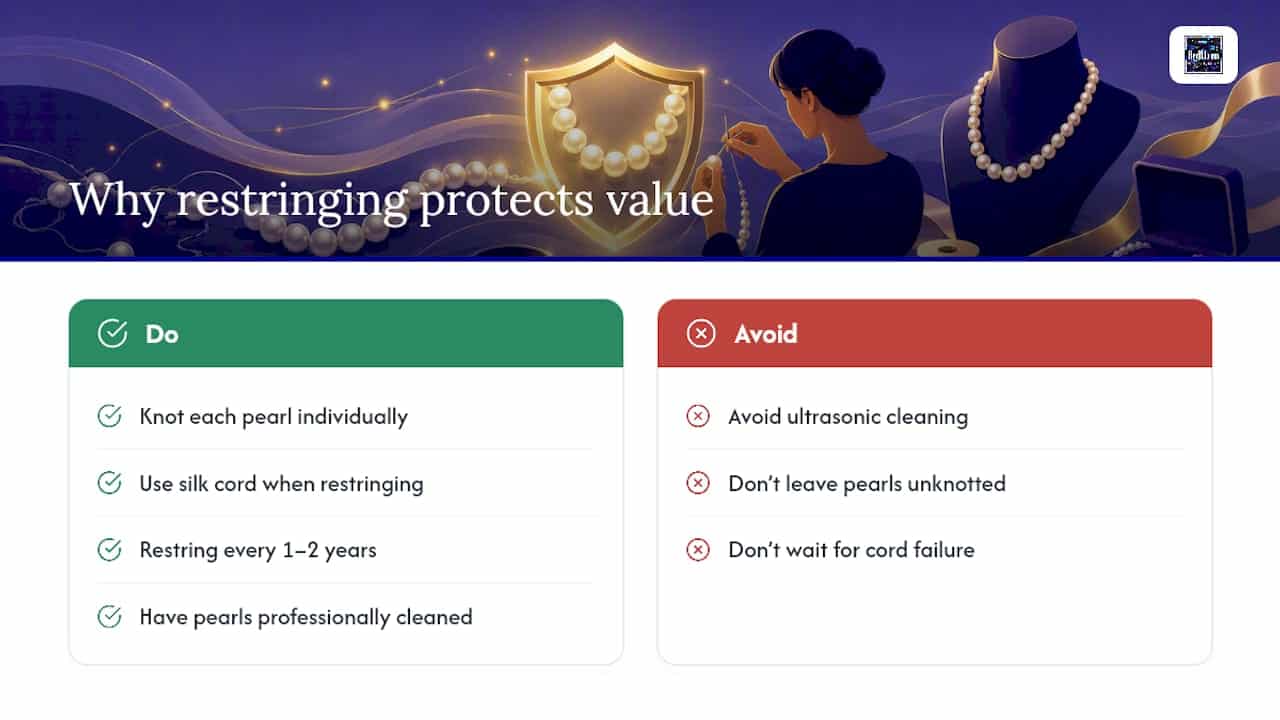
Knotting or a divider between each pearl isn’t decorative. It’s a structural choice that keeps pearls from grinding against one another and, just as important, contains the damage if the cord ever fails.
GIA’s care FAQ points out that a properly knotted strand will typically drop only one pearl if it breaks, not the entire necklace scattering across a floor or sidewalk.
Restringing also gives you a built in reason to have your pearls professionally cleaned the right way.
Pearls should never go through an ultrasonic cleaner. The vibration and heat can crack the nacre or loosen the drill holes, damage that’s often invisible until months later when a pearl suddenly looks dull or chips.
A restrung strand looks the way pearls are supposed to look: pearls sitting close, drape falling naturally, luster intact. That matters whether the piece is for weekly wear, or one you’re planning to eventually pass down.
What Happens During Professional Pearl Restringing?
Reputable jewelers follow a fairly consistent process, and knowing the steps helps you judge whether a quote is fair or a shortcut is being taken.
- Inspection first. The jeweler examines each pearl for cracks or drill-hole wear, checks the current knots, and evaluates the clasp.
- Cleaning by hand. Pearls get wiped with a soft, slightly damp cloth, never submerged in harsh solvents or run through ultrasonic equipment.
- Re-knotting. A fresh cord, usually silk, goes through the strand with a hand-tied knot between every pearl. Spacing and tension matter here. Knots pulled too tight stiffen the drape; knots left too loose defeat the whole purpose of knotting in the first place.
- Clasp decisions. This is your moment to upgrade to a more secure clasp or an easier-to-open style if the original one becomes a hassle.
- Return and packaging. Most shops hand back a finished strand within a week, according to jeweler write-ups on the restringing process, longer if they need to special-order a clasp.
Pro Tip: Ask to see the knots before the jeweler starts. A quick look at their prior work tells you more about skill level than any price sheet.
How Often Should You Restring, and What Does It Cost?
The honest answer depends on how often the pearls touch your skin. Tiffany & Co.’s care guidance recommends annual cleaning and restringing for cultured pearls worn regularly, while occasional wear can safely stretch to every 2 to 5 years. Either way, a yearly visual check costs you nothing and catches problems early.
Cost swings mainly on a few factors:
- Whether the work includes hand-knotting between each pearl or a faster, unknotted restring
- The strand’s length and how many pearls need to be strung
- Pearl size and type, since larger cultured or heirloom pearls take more careful handling
- Clasp replacement, especially if you’re upgrading to a more secure or accessible style
A simple, non-knotted restring on a short strand can be more affordable than full knotted work on a long necklace with a clasp swap, a pattern confirmed by jeweler pricing breakdowns on restringing costs.
Prices vary by region and by shop, and heirloom pieces sometimes cost more due to the extra care they demand.
For a closer look at what drives the per-inch pricing, HerMJ’s restringing cost breakdown walks through the math. Ask about rush service if you need pearls back for a specific event. Most shops can accommodate it for an added fee.
How to Choose a Jeweler for Pearl Restringing
Not every jewelry counter handles pearls with the same care, so a little vetting up front saves you regret later.
Ask about pearl-specific experience. A shop specializing in rings and watch batteries isn’t automatically wrong for pearls, but you want to see actual restringing work, ideally in photos or reviews mentioning pearls by name.
Ask exactly what materials they use. Silk is the traditional standard; some shops use synthetic cord for added durability. Either can work, but you want a straight answer, not a shrug.
Confirm knots are included. A price that seems unusually low often means no knotting, which balances security with speed.
Ask how they clean pearls. Anyone mentioning ultrasonic cleaners for pearls is a red flag worth walking away from.
Get shipping and insurance details in writing if you’re mailing pearls in. A trustworthy shop will insure the package and confirm receipt.
Vague answers, no written estimate, or pressure to decide on the spot are all signs to look elsewhere.
Can You Restring Pearls Yourself? What to Know Before Trying
DIY restringing has its place, mostly with inexpensive practice strands or costume pearls where a mistake costs you little. Many hobbyists start exactly this way, learning knot tension on beads as a testing ground before ever touching something valuable.
Heirloom pearls and higher-value cultured strands are a different story. A single misplaced knot or the wrong cord weight can shorten a strand’s life instead of extending it.
If you’re going to try it on a low-stakes piece, keep the toolkit simple:
- Silk cord in a size matched to your drill holes
- Bead reamer or fine awl for gentle knot placement
- Clear-drying clasp cement, used sparingly
- Tweezers for pulling knots snug without straining the silk
The most common mistakes are knots pulled too tight, which stiffens the drape, and using the wrong cord thickness, which leaves pearls loose or overly snug.
Harsh jewelry cleaners are another frequent misstep. For safe upkeep between restrings, HerMJ’s pearl cleaning guide covers what actually works.
Pro Tip: Although it may save time and money for the short-term, treat any home restring as temporary. It buys you time until a professional can do the knotting.
HerMJ’s Perspective on Pearl Care
I design HerMJ jewelry for everyday wear, not just display, which means the maintenance conversation matters as much as the design conversation.
Our guide on pearl durability and care goes further into daily handling that extends the life of jewelry between professional visits. If you’re weighing a restring against a repair, the restringing cost article breaks down what shapes the final price.
What This Guide Gets Right That Most Advice Misses
Most pearl care advice repeats the same “every couple of years” line and stops there, which leaves owners guessing about the in-between period.
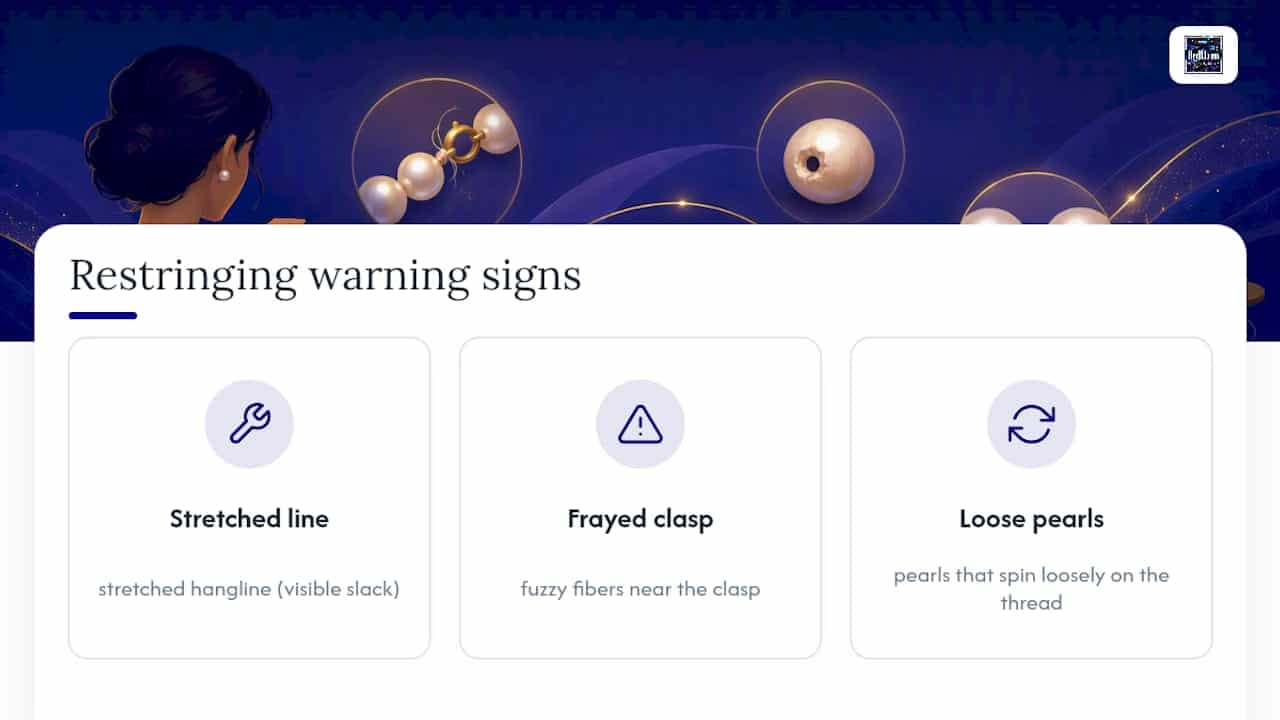
The most important things to watch for are the observable signs, a stretched hangline, fuzzy fibers near the clasp, pearls that spin loosely, that tell you the interval doesn’t apply to your particular strand anymore.
Conventional advice also underplays how much the questions you ask a jeweler matter. Pricing alone tells you almost nothing; knotting technique and cleaning method tell you everything about whether your pearls will come back looking better or quietly worse.
If I had to prioritize one habit for readers, it’s the annual visual check, done not matter how often you wear the piece.
It costs nothing, takes two minutes, and catches thread wear while it’s still a minor fix rather than a necklace scattered across a sidewalk.
— Veronique
Shop Pearls Built With Maintenance in Mind
Pearl pieces are designed knowing they’re meant for real wear, not just a jewelry box, so every strand is built to be cared for rather than replaced.
If you’re drawn to color alongside your pearls, the Peridot and Pearl Fusion Necklace pairs warm green tones with lustrous pearls for a piece that stands out without shouting.
Owners who want something simpler for daily rotation often gravitate toward the Elegant Freshwater Pearl Necklace, a classic strand that pairs easily with anything in a closet.
For a cooler palette, the Pearl and Aquamarine Necklace blends soft blue stones with pearl luster in a way that photographs beautifully for both everyday wear and special occasions.

Curious about upkeep costs before you buy or before your current strand needs attention? Read HerMJ’s restringing cost breakdown or browse the full necklace collection to find a piece that fits your style.
US orders ship free with no minimum, and international orders ship free at $150 and up. Have a maintenance question about a piece you already own? Reach out to HerMJ’s customer support team directly through the contact us page.
Sources
- Is It Time To Restring Your Pearls? (Smith’s Jewelers)
- Pearl care and cleaning — GIA
- How do I care for my pearl jewelry? | Tiffany & Co.
- The Art of Restringing: A Guide to Pearl Necklace Repair (Van Adams Jewelers)
FAQ
How Much Does It Cost to Restring a Pearl Necklace?
Cost depends on strand length, whether knots are tied between each pearl, and whether you’re replacing the clasp, with knotted work on longer strands costing more than a simple unknotted restring, according to jeweler pricing guidance. HerMJ breaks down these variables in more detail in its restringing cost article.
Is It Worth Restringing Pearls?
Yes, especially if the strand sees regular wear, since a worn or fraying cord risks losing pearls entirely and knotting limits damage if a break happens anyway. Restringing also refreshes the drape and appearance, which matters for pieces you plan to keep wearing or pass down.
How Much Is a 50-Year-Old Pearl Necklace Worth?
Value depends heavily on pearl type, quality, and condition rather than age alone, so an older strand could range from modest to significant depending on whether it’s natural, cultured, or freshwater and how well it’s been maintained. A jeweler or certified appraiser is the only reliable way to get an actual figure for a specific piece.
What Is the Rule About Wearing Pearls?
A common guideline is “last on, first off,” meaning pearls go on after you’ve applied perfume, lotion, and makeup, and come off before you shower or exercise. This limits exposure to the oils and chemicals that darken and weaken silk cord over time.
How Often Should Pearls Really Be Restrung?
Regularly worn pearls typically need restringing every 1 to 2 years, while occasional wear can stretch to 2 to 5 years between restrings. An annual visual check, regardless of wear frequency, catches thread wear before it becomes a real problem.
Recommended
- How to Store Pearls and Keep Them Lustrous
- Do Pearls Lose Their Luster If Not worn? Restore Their Shine
- Avoid Losing Pearls: Match Pearl Necklace Clasps to Strand Weight