


What is Corundum? Unveiling the Gem Behind Rubies and Sapphires
Corundum is an aluminum oxide (Al₂O₃) gemstone with a Mohs hardness of 9; it resists scratches and wear, second only to diamond.
Exactly what Is Corundum, Anyway?
Corundum is an aluminum oxide (Al₂O₃) gemstone with a Mohs hardness of 9; it resists scratches and wear, second only to diamond.
The intense geological heat and pressure over millions of years have made it one of the most resilient gemstones.
The word “corundum” comes from Tamil, a language of South Asia, reflecting its historical ties to India’s gem-rich regions.
The gem forms deep within the Earth over a million years and develops vibrant color and a distinctive character that make it one of the most favored gem varieties in jewelry design.
As a jewelry designer, I’m drawn to the red rubies and the blue sapphires. Despite their differences, both forms belong to the corundum mineral family, a mineral that’s loved by jewelers and enthusiasts at first sight.
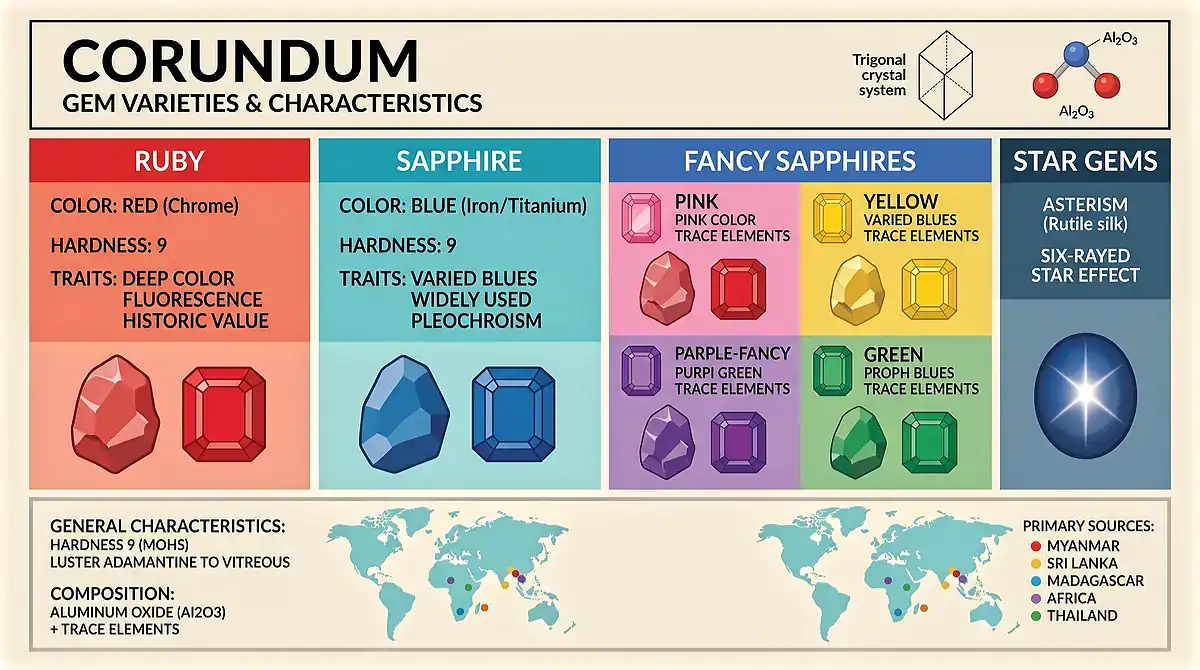
Corundum Gem Varieties
| Gem Material | Composition and type | Mohs hardness | Typical jewelry use |
| Corundum (ruby/sapphire) | Aluminum oxide; colored gemstone family | 9 | Engagement rings, fine rings, earrings, bracelets, high‑end pieces |
| Diamond | Durable carbon-based stone | 10 | Engagement rings, high‑wear rings, prestige jewelry |
| Emerald | Beryl colored by chromium/vanadium | 7.5–8 | Dress rings, pendants, earrings need less care due to durability |
| Quartz (amethyst, citrine) | Silicon dioxide; common colored stones | 7 | Fashion jewelry, beads, lower‑stress settings (pendants, earrings) |
Ruby vs. Sapphire: Sisters Under One Name

Ruby

Sapphire
The magic of corundum lies in its versatility; add chromium, and it becomes the fiery ruby, a long-standing symbol of passion and luxury; add titanium or iron, and it produces sapphires ranging from sky-blue to pastel pink and green.

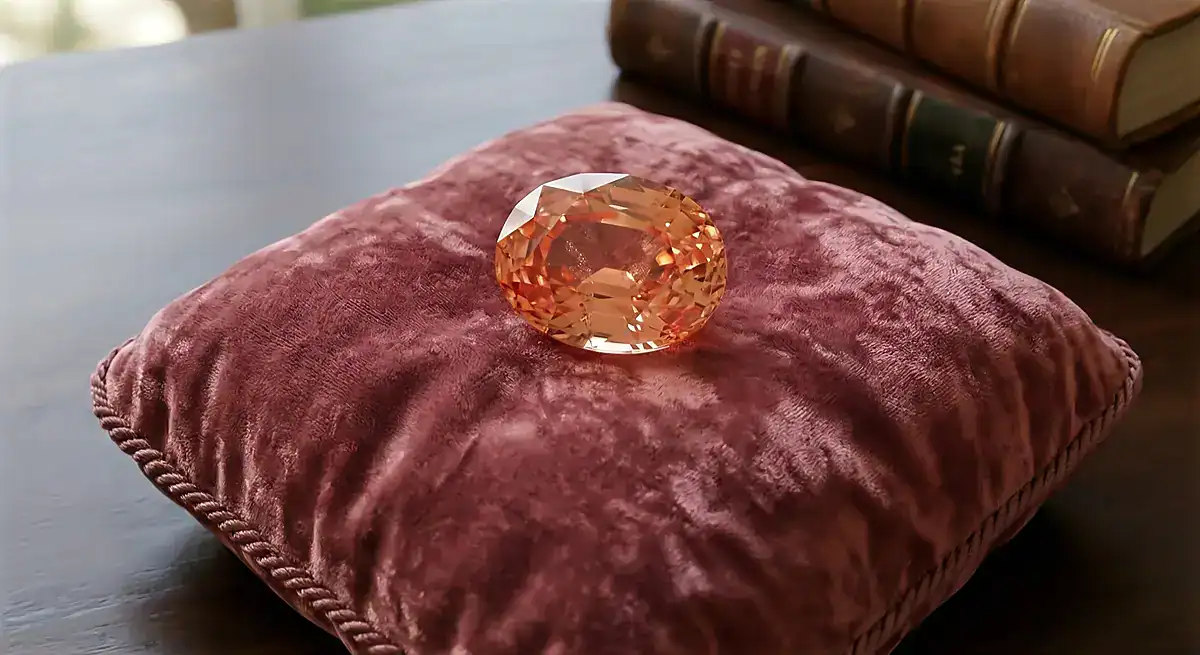
Even the rare “Padparadscha” (pink-orange) sapphire, considered a fancy sapphire, falls under this family. Primarily mined in Sri Lanka, where its color is likened to a lotus flower, this rare variety of corundum is named after the Sinhala term for “aquatic flower.” Due to this corundum variety’s scarcity, it is highly valued by collectors and connoisseurs
Corundum Hardness In Fancy Sapphires
Imagine pure corundum as a blank canvas, a colorless crystal made of aluminum oxide. The stunning variety of colors in fancy sapphires results from tiny impurities, called trace elements, and minor structural flaws, known as color centers.
Just a few parts per million of other elements can dramatically transform this blank canvas, seamlessly integrating into the gem’s crystal grid to create what’s considered a fancy gemstone.
| Trace Element | Resulting Color(s) |
| Iron (Fe) | Yellow, green, or deep blue (in combination with titanium). Specific concentrations and electronic states (like $Fe^{3+}$) dictate the precise hue. |
| Chromium (Cr) | Pink (in low concentrations). Higher concentrations creates the vibrant red of ruby; lower concentrations produce delicate, lovely pink sapphires. |
| Vanadium (V) | Purple and violet shades. |
| Padparadscha Blend | Unique colors like the pink-orange of Padparadscha require a complex interplay of chromium (pink) and iron (orange/yellow hues). |
Corundum Hardness: Crystal Grid And Color Centers
When these trace elements replace aluminum atoms in sapphire’s regular crystal lattice, they seldom fit perfectly, leading to slight shifts. These tiny distortions, along with trapped electrons or missing atoms, form stable points known as color centers by gemologists.
Think of these as highly specialized light filters that are uniquely designed to absorb specific wavelengths (colors) of white light while letting others pass. The particular trace element involved, along with the exact geometric and electronic state of the color center, determines which colors are filtered out and which are visible to us.
Often, a single element isn’t responsible for just one color. The interactions can be intricate, with multiple elements and defects working together. This widget shows how various trace elements produce filtering effects and generate a beautiful rainbow of colors.
To demonstrate, here is a Padparadscha sapphire with colors resulting from trace elements.
Corundum Durability for Artisans
The hardness of corundum enables jewelers to create fine gemstone settings and pendants that resist chipping and discoloration, keeping pieces wearable across generations.
Timeless Appeal Across Cultures
Rubies and sapphires have been worn by nearly every civilization. Myanmar’s (Burma) rubies are legendary, while Sri Lanka’s Ceylon sapphires have decorated royal jewelry for centuries.
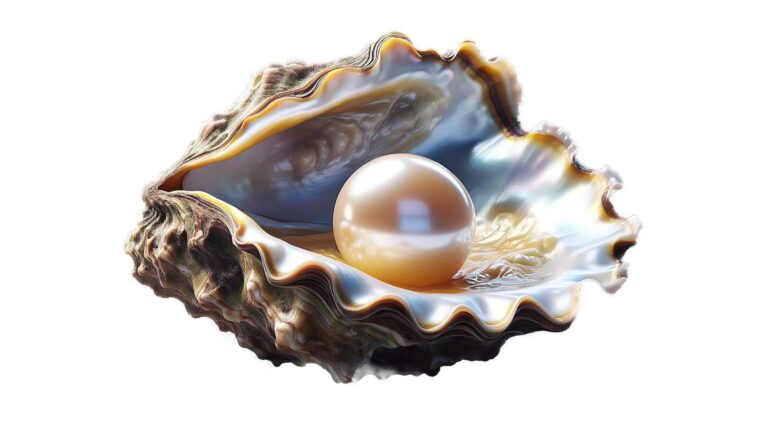
Today, we combine corundum with pearls or metals to create looks that feel both timeless and modern.
The next time you hold a ruby or sapphire, remember the ancient journey that shaped it, one of long geological evolution followed by skilled human artistry.
Whether you’re wearing ruby or sapphire as a bold statement piece or an understated charm, you’ll look beautiful and feel confident because this stone is built to last.
Discover A World Of Color In The HerMJ Jewelry Gallery