


What Is Crystal Decor? A Home Design Guide
The Edit
- Crystal decor comprises natural mineral specimens and crafted crystal glass that enhance light and texture in home interiors. It offers practical benefits like light amplification, tactile contrast, and emotional resonance, suitable for various rooms with proper selection based on durability. Choosing and styling a few well-placed pieces with intention elevates space while preserving their natural beauty and staying power.
Crystal decor refers to decorative objects made from natural minerals or crafted crystal glass that enhance home interiors through light refraction, texture, and natural beauty.
It’s not like ordinary decorative accessories. Crystals interact with light in ways that transform a room’s atmosphere, creating prismatic effects that no painted surface or fabric can replicate.
Well-known brands like Baccarat have built entire design legacies on this principle, while the broader market now consists of everything from raw amethyst clusters to precision-cut Bohemian crystal vases.
If you’re drawn to the geological richness of a rose quartz sphere or the formal elegance of a crystal candle holder, understanding what crystal decor actually is will help you choose pieces that genuinely work in your space.
What is crystal decor, and why does it matter in home design?
Crystal decor refers to any decorative item, from sculptures and spheres to bowls, clocks, and candle holders, that uses natural stone or crafted crystal as its primary material.
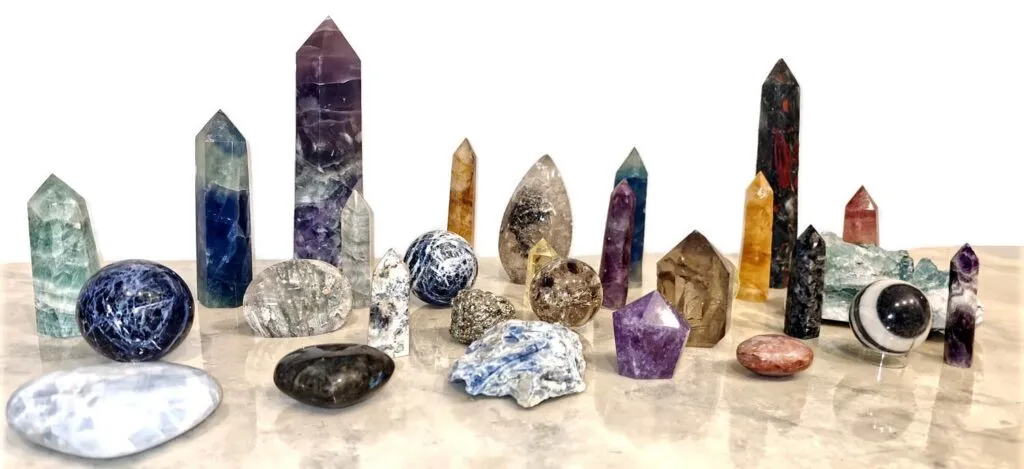
The category spans raw, unpolished specimens like agate slabs and geode bookends, as well as refined, faceted pieces like lead-free crystal vases and gemstone trays. What unites them is their relationship with light and their tactile presence in a room.
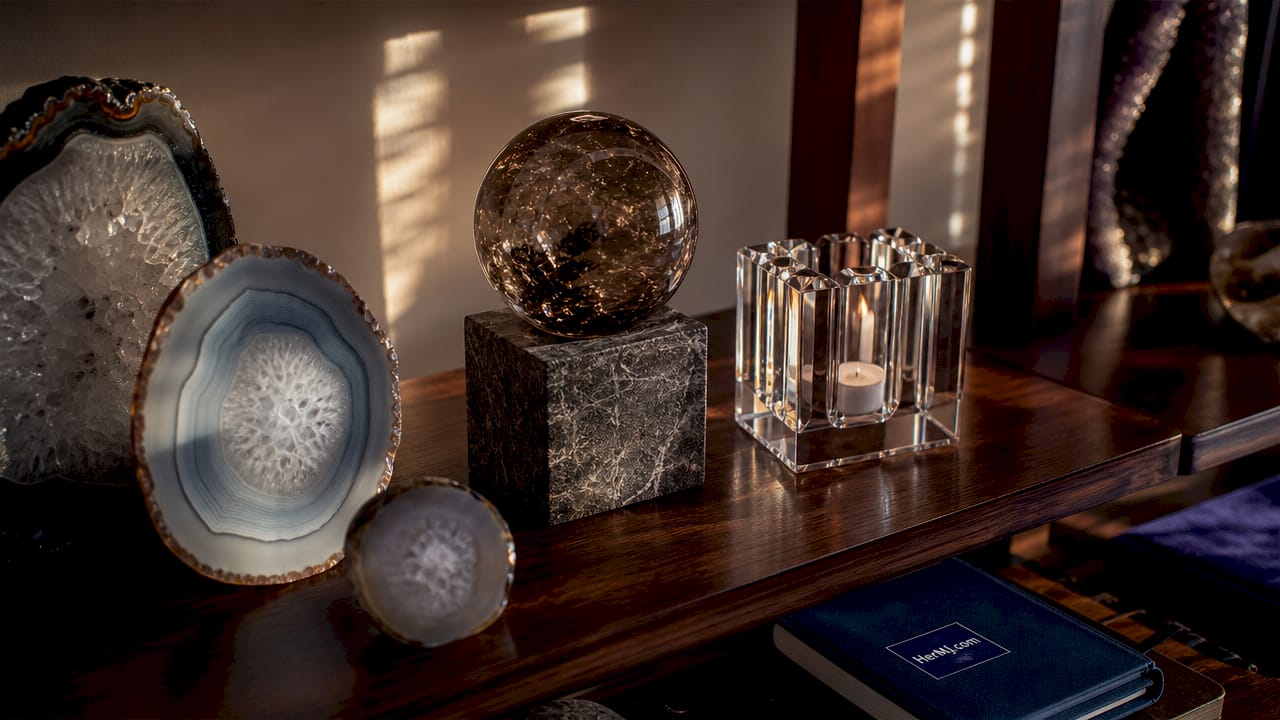
The distinction between natural crystal and crystal glass matters here.
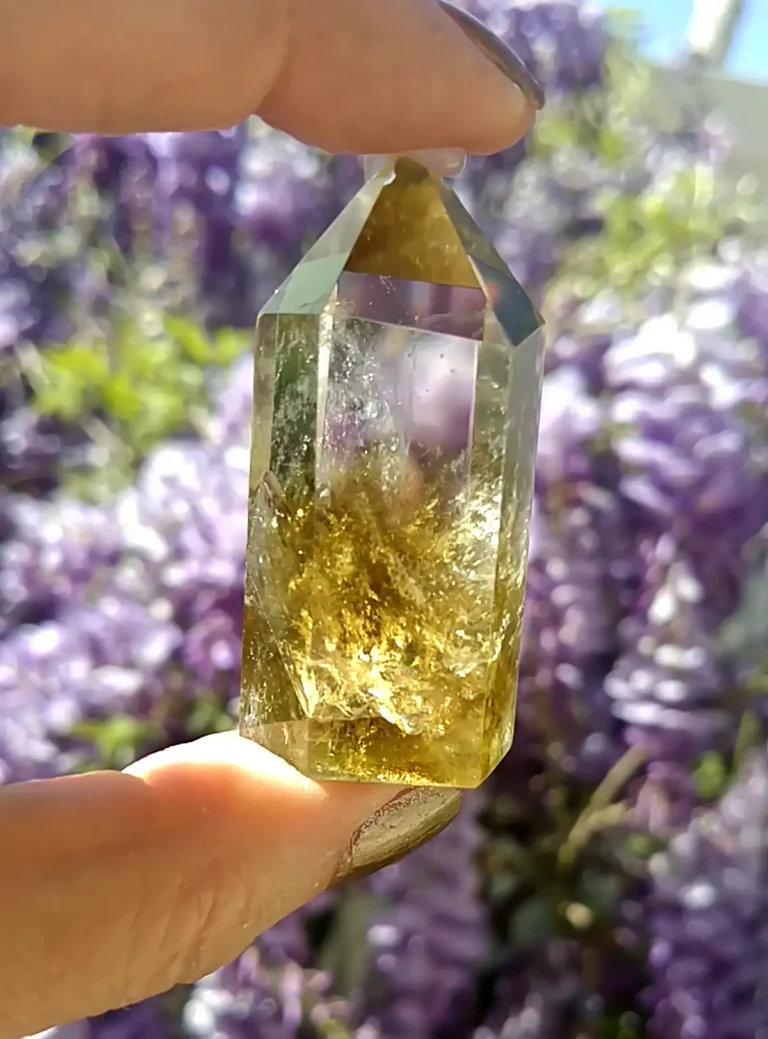
Natural crystal, such as quartz, amethyst, or citrine, forms over thousands of years in the earth.
Crystal glass, associated with brands like Waterford or Baccarat, is a manufactured material with a high refractive index that mimics the sparkle of natural stone.
Both fall under the crystal decor umbrella and serve the same core design function: adding luminosity and refinement to a living space.
Historically, crystal decor was a mark of aristocratic taste. Venetian glassmakers and Bohemian crystal artisans set the standard for centuries, producing chandeliers, decanters, and tableware that defined luxury interiors.
Today, the category has opened up considerably. You can find gemstone home decor at accessible price points without sacrificing the visual impact that made crystal desirable in the first place.
What benefits does crystal decor bring to living spaces?
Crystal’s light refractive properties brighten rooms and add sparkle, creating airy, luxurious atmospheres even in dim or compact spaces.
A design trick interior stylists use regularly is placing a faceted crystal object near a window or lamp to multiply light, making a room feel larger and more alive.
As a bonus, it costs far less than a renovation.
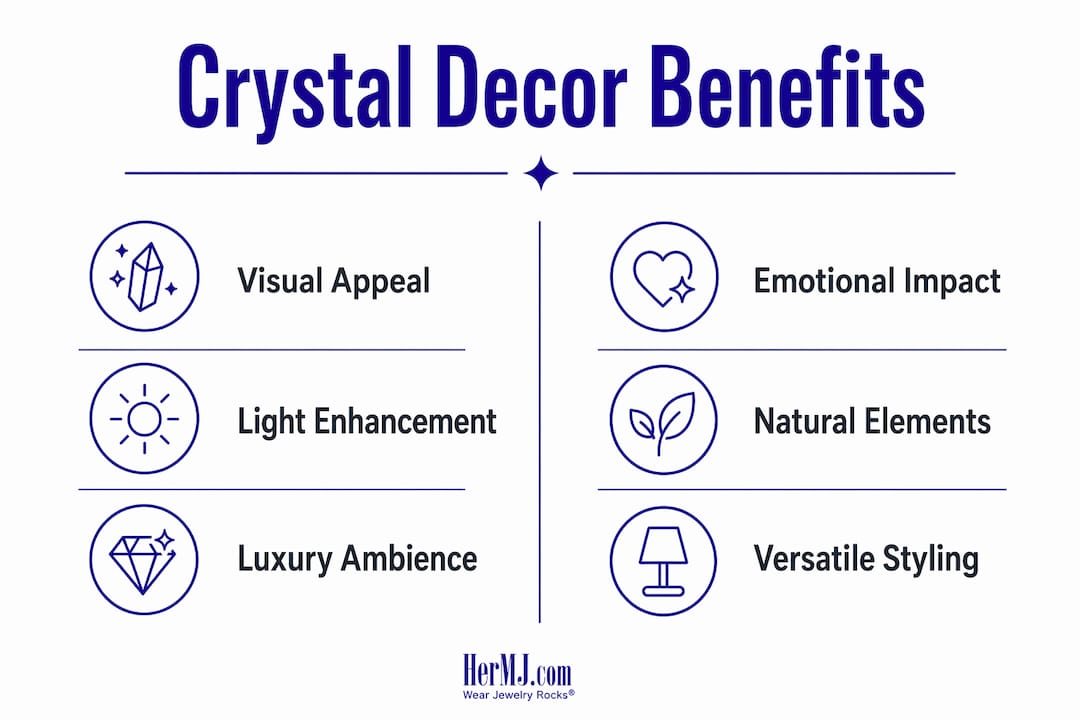
Beyond light, crystal decor carries a psychological dimension. Crystals serve both aesthetic and symbolic functions in mindful living and interior design, acting as purposeful anchors for focus and awareness.
People often find that a carefully placed amethyst cluster or a smooth obsidian sphere introduces a sense of calm into a busy room. This isn’t mysticism; it’s the same principle that makes natural materials like wood and stone feel grounding in interior design.
Here’s a quick look at the core benefits Crystal Decor delivers:
Light amplification: Faceted surfaces scatter and multiply natural and artificial light, reducing the need for additional fixtures.
Textural contrast: Raw or polished crystal introduces organic texture that softens rooms dominated by smooth, manufactured surfaces.
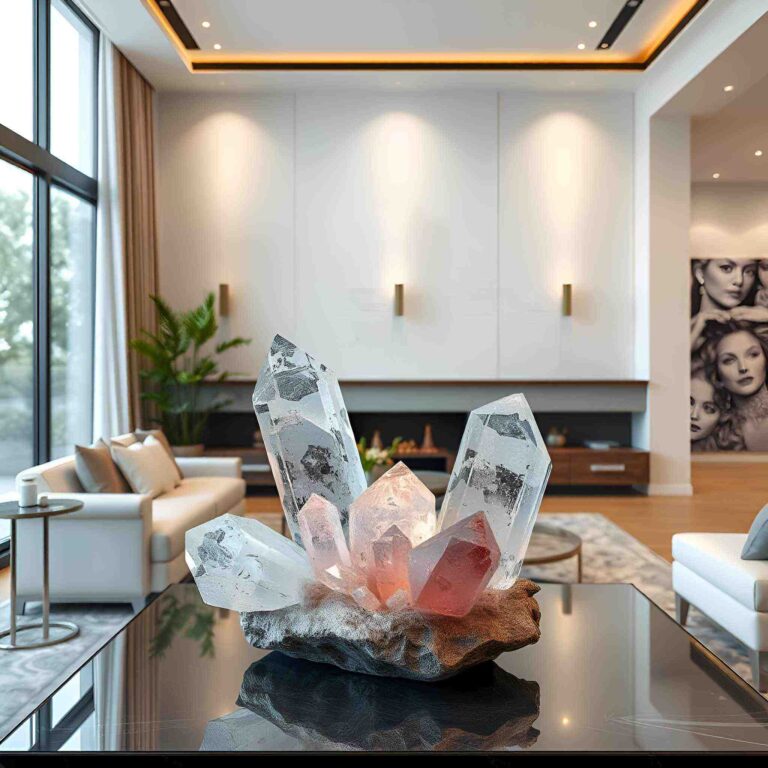
Focal point creation: A single large specimen, like a quartz tower or geode, anchors a shelf or coffee table without additional styling.
Emotional resonance: Handcrafted gemstone decor adds texture, personality, and timeless appeal, moving beyond trend into lifestyle choice.
Versatility: Crystal pieces work across design styles, from minimalist Scandinavian interiors to maximalist, jewel-toned rooms.
The combination of visual and emotional benefits makes crystal decor one of the few home accessory categories that genuinely earns its place in a room rather than simply filling space.
How to choose the right crystals for different rooms
Selecting crystal decor isn’t purely an aesthetic decision. The mineral hardness and environmental conditions of each room determine which crystals will last and which will degrade.
The Mohs hardness scale measures scratch resistance on a 1 to 10 scale, with quartz rated 7, making it scratch-resistant and suitable for high-traffic areas like living rooms and kitchens. Softer minerals like selenite (rating 2) are better suited to low-contact display shelves in bedrooms.
Room environment matters just as much as hardness. Bathrooms are the most chemically hostile environment for crystal decor, with humidity, temperature swings, and cleaning chemicals all capable of damaging porous or water-soluble stones.
Only crystals stable in water and chemicals, such as quartz, jasper, and obsidian, should be placed in bathrooms. Selenite, malachite, and pyrite will deteriorate quickly in that environment.
| Room | Recommended crystals | Why they work |
|---|---|---|
| Living room | Clear quartz, amethyst, agate | Durable, visually striking, tolerates handling |
| Bedroom | Rose quartz, selenite, moonstone | Soft energy, low-contact display, calming tones |
| Bathroom | Black tourmaline, quartz, jasper | Water-stable, humidity-resistant |
| Kitchen | Citrine, carnelian, tiger’s eye | Warm tones, hard enough for occasional contact |
| Home office | Fluorite, lapis lazuli, clear quartz | Visually grounding, suitable for desk display |
To maintain crystal decor, dust with a soft, dry cloth rather than wet wipes. Avoid placing water-sensitive stones near humidifiers or in direct sunlight for extended periods, as UV exposure can fade colored minerals like amethyst over time.
Pro Tip: Before buying a crystal for a specific room, check its Mohs rating and water sensitivity. A quick search of the mineral name alongside “water safe” or “humidity stable” will tell you everything you need to know before placing it in a bathroom or kitchen.
You can find detailed crystal placement guidance for each room in your home, covering both aesthetic and durability considerations.
What are the most popular types of crystal decor?
Crystal decor spans a wide range of forms, and each serves a distinct visual and functional role. Understanding the categories helps you shop with intention rather than impulse.
Crystal spheres: Spheres serve as rest notes in design, balancing angular decor and visually anchoring spaces. A labradorite or obsidian sphere on a wooden stand brings geological richness to a coffee table while softening the hard lines of modern furniture. They’re one of the most versatile crystal home accent options available.
Agate clocks and slices: Backlit agate slices are among the most dramatic crystal decor ideas. The translucent banding in blue lace agate or Brazilian agate glows when light passes through it, serving as both a timepiece and an art object.
Gemstone bowls and trays: Carved from solid stone, these pieces serve a practical purpose while showcasing the mineral’s natural color and pattern. Onyx, malachite, and rose quartz are common choices.
Crystal candle holders: Pairing candlelight with crystal amplifies the warm glow and creates moving light patterns across walls and ceilings. Selenite candle holders are particularly popular for this effect.
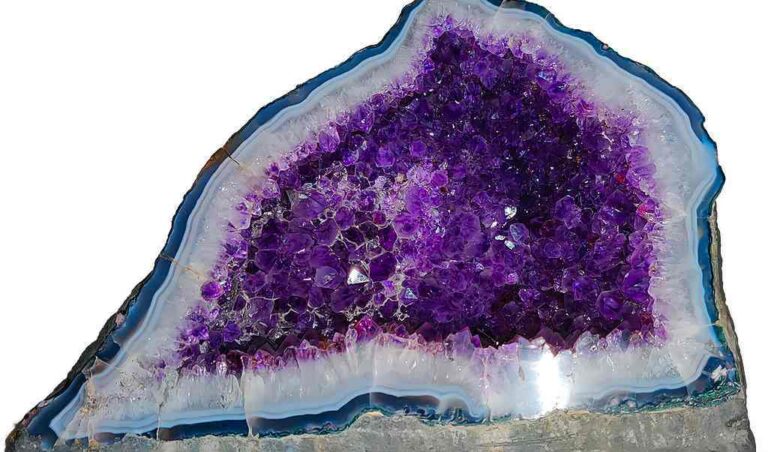
Freeform and raw specimens: Unpolished amethyst clusters, citrine cathedrals, and raw pyrite cubes bring an earthy, unedited quality to a room. They suit both minimalist and maximalist interiors, depending on scale.
“Large mineral specimens like crystal spheres work best as visual anchors or rest notes in interior design, avoiding visual overload and balancing angular furnishings.” — Crystal Spheres: Natural Stone Spheres for Interior Design
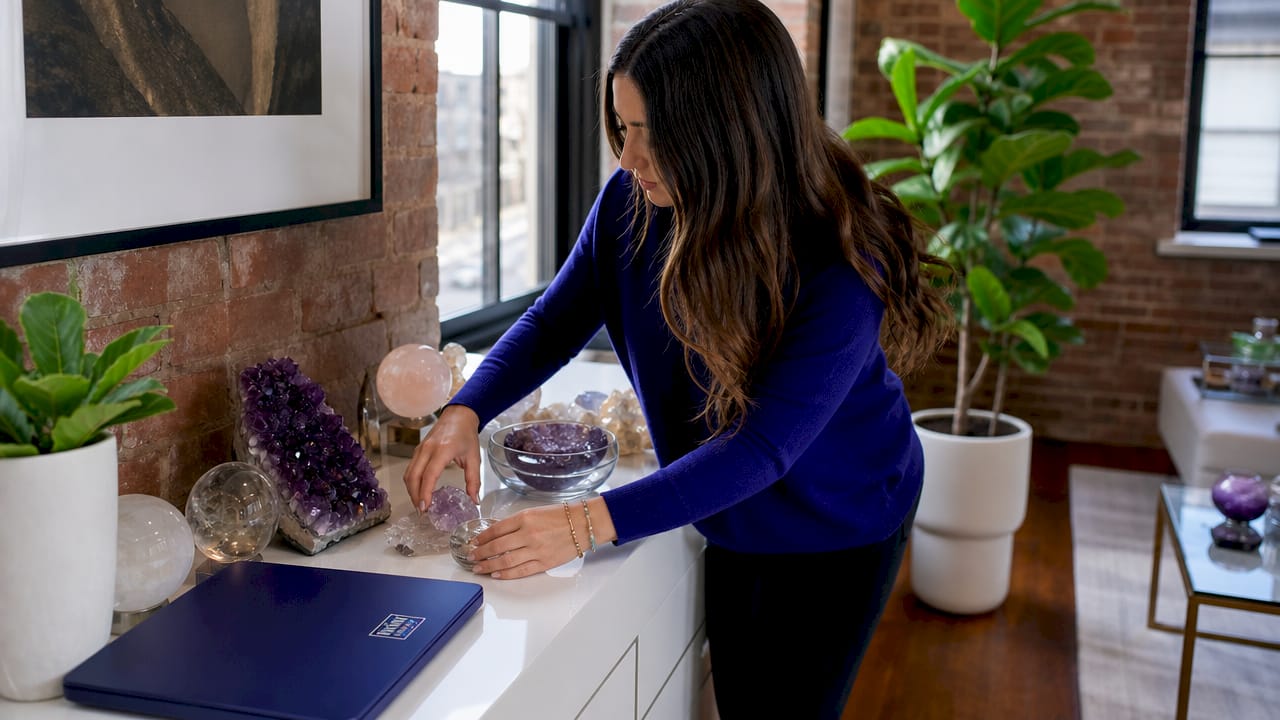
For styling, the most effective approach is restraint. One or two statement pieces carry more visual weight than a shelf crowded with small specimens. Pair a large amethyst cluster with a single clear quartz point and a neutral ceramic vessel for a composition that feels considered rather than collected.
A full crystal types style guide can help you match specific minerals to your existing decor palette and room style.
What is affordable crystal decor, and how do you use it well?
Affordable crystal decor is real, and it doesn’t require compromising on authenticity. The key is knowing which categories offer genuine stone at accessible prices and how to mix them with higher-investment pieces for a layered, collected look.
- Start with small accent pieces. Tumbled stones, small quartz points, and agate coasters are widely available for under $20 each. Group three or five together on a tray for a styled vignette that reads as intentional.
- Choose crystal-inspired items for high-use areas. Crystal glass votives, geode-printed cushions, and mineral-toned ceramics bring the aesthetic of crystal decor into spaces where genuine stone might be impractical or at risk of damage.
- Invest selectively in one statement piece. A single quality amethyst cluster or a carved onyx bowl anchors a room and makes the surrounding affordable pieces look more considered. The contrast between raw and refined is a classic design principle.
- Shop affordable crystal accents during seasonal sales. Many artisan suppliers discount genuine stone pieces significantly around major holidays, making it possible to acquire quality specimens at budget-friendly prices.
- Mix natural stone with crystal glass. A Waterford-style crystal vase paired with a raw quartz cluster creates visual dialogue between the refined and the organic, and the combination costs far less than filling a space with premium natural stone alone.
Pro Tip: When mixing affordable and premium crystal pieces, vary the finish rather than the size. Pairing a polished rose quartz sphere with a raw amethyst cluster creates texture contrast that makes both pieces look more intentional and expensive.
Key takeaways
Crystal decor transforms living spaces by combining natural mineral beauty with functional light enhancement, making it one of the most versatile and enduring categories in home design.
| Point | Details |
|---|---|
| Definition matters | Crystal decor includes both natural stone specimens and crafted crystal glass, each with distinct properties. |
| Light is the core benefit | Faceted crystal surfaces amplify brightness in dim spaces, reducing the need for additional lighting. |
| Room environment determines selection | Use the Mohs scale and water stability data to choose crystals appropriate for each room’s conditions. |
| Restraint improves impact | One or two statement pieces outperform a crowded display in both visual weight and design clarity. |
| Affordable options are genuine | Tumbled stones, small quartz points, and crystal glass pieces deliver the aesthetic at accessible price points. |
Why I think crystal decor deserves more credit than it gets
Most home decor advice treats crystal as a trend, something you add during a wellness phase and quietly retire when the aesthetic shifts. I disagree with that framing entirely.
What I’ve observed, both in my own experience with natural materials and in the way clients respond to gemstone pieces, is that crystal decor has staying power precisely because it isn’t manufactured.
A raw amethyst cluster doesn’t go out of style the way a chevron-patterned throw does. It’s geological. It predates every design movement.
Where I see people go wrong is in the quantity. There’s a version of crystal decor that feels like a mineral shop exploded in a living room, and it undermines the very qualities that make crystal compelling.
The light play, the textural contrast, the sense of natural calm. All of that disappears when every surface is covered. My approach has always been to treat each piece like a piece of art: give it space, give it light, and let it do its work.
The durability question is one I wish more people would consider before buying.
A selenite tower looks ethereal on a bathroom shelf, but it will dissolve with repeated exposure to moisture. Because of this, knowing the best crystal for your home before you buy saves both money and disappointment.
The science of mineral hardness isn’t intimidating once you understand that a simple Mohs rating tells you almost everything you need to know about placement.
My recommendation: Start with one piece that genuinely moves you, place it where light will find it, and live with it for a season before adding more. Crystal decor rewards patience and intention far more than accumulation.
— Veronique
Discover HerMJ’s gemstone and crystal-inspired pieces
If this guide has you thinking about how natural stone and gemstone beauty can extend beyond your walls and shelves, HerMJ’s artisan collection is worth exploring.
HerMJ crafts handmade jewelry from genuine pearls and gemstones, including pieces featuring tiger’s eye, garnet, aquamarine, and strawberry quartz.
Each piece carries the same natural mineral character that makes crystal decor so compelling, worn close rather than displayed on a shelf. The Tiger Eye Bracelet and the Faceted Garnet Gemstone Necklace are two standout examples of how genuine stone translates into wearable elegance.
Browse the full collection at HerMJ to find a piece that resonates with your personal aesthetic.
FAQ
What is crystal decor made from?
Crystal decor is made from natural minerals such as quartz, amethyst, agate, and obsidian, or from crafted crystal glass with a high refractive index. Both categories enhance light and add visual elegance to home interiors.
What is a crystal sphere used for in home decor?
A crystal sphere serves as a visual anchor in interior design, balancing angular furniture and creating a calm focal point. Spheres preserve the stone’s full mineral interior, offering geological richness alongside their aesthetic function.
How do I know which crystals are safe for bathrooms?
Only water-stable, humidity-resistant crystals like quartz, jasper, and obsidian belong in bathrooms. Minerals like selenite and malachite are water-soluble and will degrade quickly in high-humidity environments.
Is affordable crystal decor worth buying?
Affordable crystal decor, including tumbled stones, small quartz points, and crystal glass accents, delivers genuine aesthetic value when styled with intention. Mixing budget pieces with one quality statement specimen creates a layered, collected look without significant expense.
How do I style crystal decor without overcrowding a space?
Limit crystal displays to one or two statement pieces per surface and give each piece adequate space and light exposure. Restraint amplifies the visual impact of each individual piece far more effectively than volume does.
Recommended
- Types of Crystals for Home Decor: Your Style Guide
- Luxurious Gemstone Home Decor And Crystal Decoration
- Crystal accents: crystals for the bathroom, bedroom and more
- Crystal Decoration Ideas: 5 Tips To Master Healthy Home Decor