


What Makes Pearls Valuable in 2026: Exploring The Origin of Elegance

What Makes Pearls Valuable: Cultural and Traditional Importance
The Edit
- This article examines each aspect of what makes pearls valuable, including their origin, the differences between pearl varieties, and their impact across cultures and throughout history.
Pearl Value Factors: What makes pearls valuable
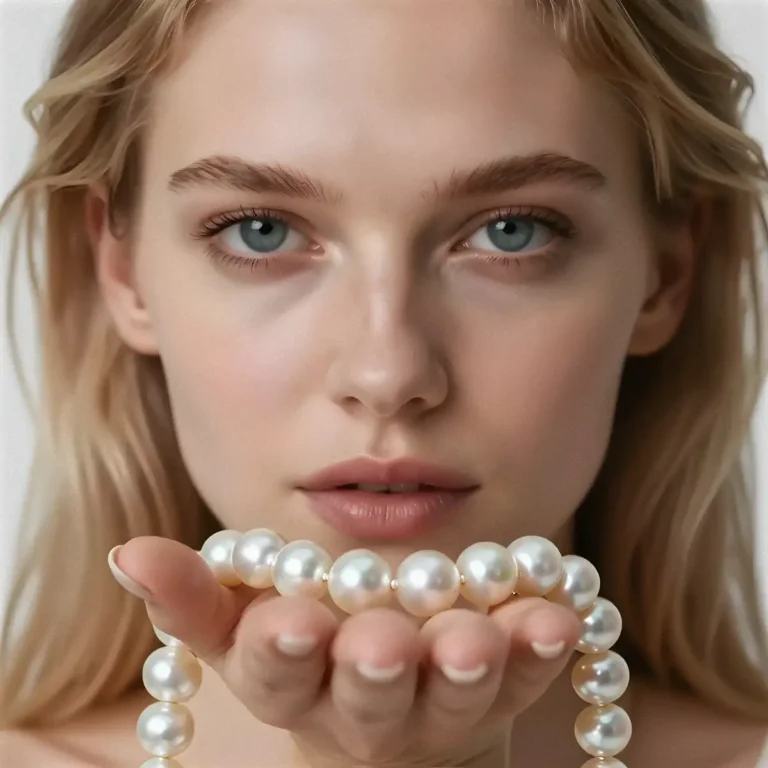
To discover what makes pearls so valuable, we must look back as early as 5 BC, when the Romans and Egyptians recognized their uniqueness and beauty, and the natural pearl began its ascension to be crowned the Queen of Gems. Pearl quality was first assessed by fishermen, scouring the shores to feed their families, when the oyster’s secret was soon found to be even more precious than the mollusk’s delicate flesh. Hidden within the oyster was the luminous sphere that the fishermen raised to the heavens to marvel at the extraordinary luster of their new treasure. And so began their worship of the new queen. But what is a pearl?
High-quality freshwater pearls, particularly the ones that are perfectly round and exhibit exceptional luster, are rare and highly prized. While freshwater pearls are the most common type of pearl available, only a small percentage meet top-tier standards for beauty and value.
These premium freshwater pearls are notable for their rich, bright luster and smooth surface. Their rarity stems from the difficulty of cultivating pearls that meet these exacting criteria, a key factor in terms of what makes pearls valuable.
Pearls of this caliber are often found in high-end jewelry stores and are treasured for their unique charm and enduring beauty. Investing in these premium pearls offers not only immediate visual appeal but also a timeless luxury to be appreciated for a lifetime.
Cherished, prized, and highly sought after, the pearl has become a quintessential adornment, a fashion statement, a symbol of commitment, and much more. Before they were cultivated as cultured pearls, the ocean’s pearls were found at an astonishingly low rate of just 1 pearl per 10,000 oysters. This long, impatient period between each discovery only fed the desire for the elusive pearl and all but assured this minute natural wonder’s status as a rare symbol, accessible only to those fortunate enough to possess it because of the correspondingly high cost of pearls.
Listen To The Podcast
Queen of Gems

Another Queen renowned throughout history, Cleopatra, owned the two largest natural pearls of her time. Placing one of them in a vessel containing wine so strong it melted the pearl, and then, to demand Marc Anthony’s attention, she lifted the vessel and swallowed the wine along with the dissolved pearl. She remarked that she had made her expensive toast to honor Anthony (with the added benefit of the wine serving as an aphrodisiac, given the pearl’s association with the Goddess of Love, Venus).
The pearl even garnered Caesar’s attention, who marveled at its radiance, often holding it and gazing at the wonder of its shape and size. In fact, Caesar’s obsession was said to have motivated his legion’s first invasion of Britain in 55 BC, in search of Scottish pearls.
Pearls in Art

Vermeer, who loved how pearls brought life to his paintings, included them in 21 of his masterpieces. His style composed the paintings with a magical, soft focus, while accentuating his attention to detail in his portrayal of the pearl.
Such works include Woman with a Pearl Necklace, featuring natural pearl earrings and a pearl necklace (1664), Girl Writing a Letter, (c 1662-1667, also known as a Woman Writing a Letter, featuring a pearl necklace and earrings), Woman with a Lute, (1662-1663, featuring pearl earrings and necklace, produced when Vermeer was in his 30s), and Study of a Young Woman, (c 1665-1667, featuring a pearl earring and painted around the same period as Girl with a Pearl Earring).
Our appreciation of what makes pearls so valuable even finds its influence in what can arguably be considered the first introduction of social media, further shaping our appreciation via its painted depiction by artists like Johannes Vermeer, who in 1665 painted his venerated Girl with a Pearl Earring, heralded for the breathtaking depiction of its single magnificent pearl earring. In 2006, the Dutch nominated it as the most beautiful painting in the Netherlands.
The cultured freshwater pearl originated in Asia, where the first blister pearl (a shell-attached pearl often flat on one side) was produced through human intervention via the manual insertion (a process termed seeding or nucleation) of a small horn-like substance into the oyster.

After this nucleus was implanted into the oyster, the tiny invader activated the oyster’s natural defense against foreign bodies by encasing it in layers of nacre. This would be the natural pearl’s genesis. Over time, it has been found that any shelled mollusk can use this process to produce a pearl, including abalone, marine snails, clams, mussels, and, last but not least, oysters.
At the final stage of the pearl’s cultivation, the process ends with the pearl farmer. To complete the harvest task, the farmer extracts the precious gem from the delicate, organic anatomy of its mollusk host. The gem is graded before setting out on the journey from its original pearl farm to the jewelry designer and, ultimately, to you.

How long does it take to form a natural pearl?
For Akoya pearls, produced by oysters in Japan, it can take 5 to 6 weeks. In the case of freshwater cultured pearls, produced in freshwater mussels, the process can take as little as 2 to 3 weeks.
How to tell real pearls from costume jewelry
1. Visual Inspection
- Luster & Nacre Rings: Hold a pearl under bright light (LED recommended). Genuine pearls reflect sharp, iridescent highlights from their nacre layers. Costume pearls often appear dull or chalky.
- Surface Texture: Gently rotate the pearl. Real ones may show faint imperfections, like tiny dimples or ridges (not holes). Synthetic pearls are typically flawless and uniform.
2. Magnification
Use a jeweler’s loupe (10x) to examine:
- Patterns: Real pearls have irregular, organic surface markings. Fake ones often show repetitive patterns or seams.
- Drill Holes: Cultured pearls may have small drill marks for stringing. Avoid those with large, uneven holes.
3. Weight & Feel
Genuine pearls feel substantial and cool to the touch (due to the density of nacre). Costume jewelry is lightweight and often hollow-feeling.
4. Heat Test
- Lightly press a pearl against your skin or hold it for 10–15 seconds. Real pearls retain cooler temperatures longer; synthetic materials warm up quickly.
5. Price Point
Genuine pearls (especially larger, higher-quality ones) are expensive. Bulk-priced pearls sold at very low prices often indicate that they are synthetic materials such as plastic, glass, or mother-of-pearl simulants. Inspect them carefully.
6. Provenance
Shop from reputable sellers who stand behind their designs, offer consistent quality, and reliably support their products.
Professional Verification
For high-value pieces, consult a gemologist using advanced techniques like:
- X-ray: Reveals organic vs. synthetic internal structures.
- Acid Test: Detects nacre’s chemical response (not recommended for routine use).
Avoid Common Misconceptions
- “All Real Pearls Glow Under UV Light“: This is a false statement. Only some natural pearls fluoresce weakly; most do not.
- “Freshwater Pearls Are All Low-Quality”: This is also incorrect. High-grade freshwater pearls, such as those from China, rival saltwater pearls in luster and durability.
Genesis of the Cultured Freshwater Pearl
What Makes Pearls So Valuable? Know The Investment Appeal Of Pearls
What makes pearls so valuable? Similar to the way we evaluate a diamond by appraising its famous 4 C’s (Carat weight, Color, Clarity, and Cut), a pearl achieves its highest value by its own set of standards. To determine why pearls are so special, use these five aspects of the pearl’s pedigree:
Explore The HerMJ Pearl Gallery
- Surface
- Shape
- Size
- Shine
- Shade

Surface
One method we use to check whether a strand of pearls is the ‘real thing’ is the popular oral test, in which the sensation known as grit occurs when a true pearl is rubbed against a natural tooth. If the pearl’s surface feels smooth rather than leaving the telltale sandy impression as it slides along a tooth, the pearl is likely not authentic; in other words, you’ve discovered a fake.
Shape
When identifying quality pearls, shape plays a significant role in determining a pearl’s price. The rounder the gem, the more it is considered a perfect pearl, and the greater the price it can command. Historically, the rounder, more expensive pearl was likened to the celestial perfection of a full moon; however, times have changed, and while the basic shape of perfectly round pearls is still highly desired for their impressive ability to hold their value, other uniquely shaped pearls are often considered equally as valuable – and in some cases even more so.
Such is the case for semi-baroque pearls, which are more irregular and more imperfect. Examples include egg-shaped, button-shaped, pear-shaped, and circularly shaped pearls, such as the coin pearl. Tahitian black pearls are commonly circular, with a groove encircling the pearl’s diameter. These pearls are striking for their natural black beauty and luster.
Size
The wide range of sizes spans 2 mm to 25 mm (with larger pearls being rare). Pearls measuring 8-9 mm come with a substantially increased pearl price, in sharp contrast to those in the 2 mm range. As with any commodity, when large numbers of similarly sized pearls are harvested, the cost of the pearl decreases due to oversupply and correspondingly limited demand. Alternatively, by the same law of supply and demand, when demand for a given pearl exceeds the available supply, the cost increases.
In the case of saltwater pearls formed by oysters, only one pearl can be produced by a host at a time. Amazingly, creating a necklace with matching pearls in size, shape, and luster can take many years, as it requires harvesting the necessary components for a single necklace; the long process of creating such a rare piece of jewelry is reflected in its cost.
Shine
Of course, the glory of a pearl’s shine depends on its luminosity. The more lustrous the pearl, the more valuable it is. This is the result of the pearl’s creation, which begins as an act of the oyster’s natural defense mechanism toward a parasite (sometimes it’s organic matter, such as a simple grain of sand entering the shell). To protect itself from unwanted intruders, the oyster secretes a substance known as Mother of Pearl. This secretion will continue to form concentric layers of nacre over the oyster’s perceived enemy, layer over layer. Over time, the layers become the lustrous end product we know as the pearl. In terms of nacre quality, the longer the pearl remains in its shell, the denser the nacre thickness, and the more lustrous the pearl becomes.
Shade
Although the classic creamy white pearl has long been an iconic symbol of elegance, other shades have grown in popularity. The more golden the pearl, the more we can trace its origin to the Southern Seas. This is a result of the water’s temperature and its influence over the pearl. With the warm waters of the Philippines at the equator, the oyster is more golden, in turn giving the pearl within it its golden color.
An equally important indicator of a pearl’s value is that the fewer blemishes it has, the more precious it is considered; however, pearls such as Tahitian black or Baroque, which bear the unique signature of Mother Nature’s ideal imperfections, are also highly regarded. Regardless of shape, size, and degree of luster, natural pearls are as unique as each of us, with their visual allure attracting their ultimate owner. Examples of these differences include South Sea and Tahitian black pearls.
Types Of Pearls & The Value Of Pearls
Tahitian Black Pearls
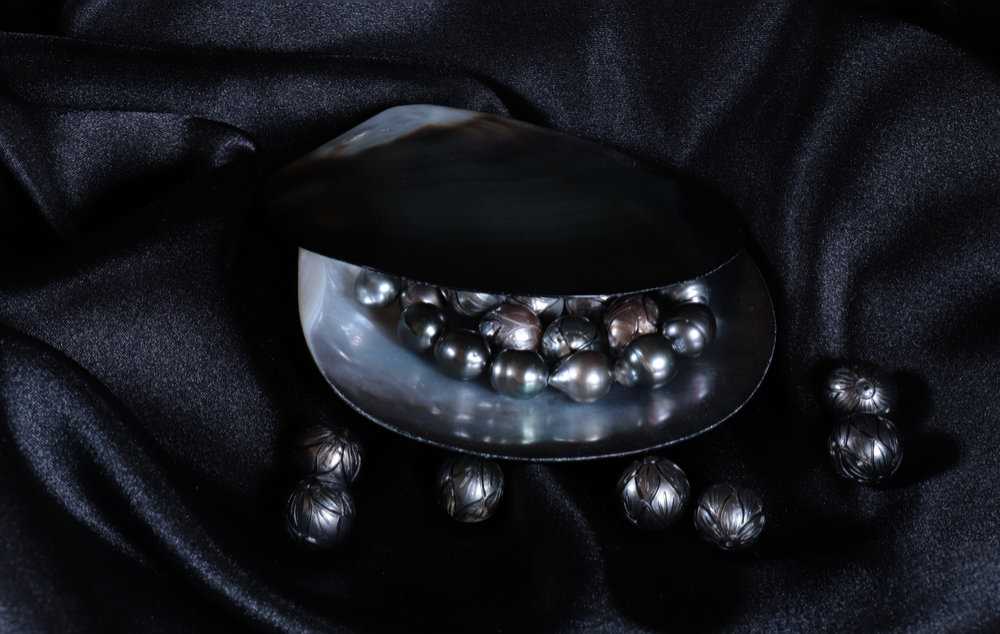
Dark and exotic, the Tahitian pearl is highly prized for its beauty, with black, brown, grey, and green hues. These colors are produced by the magnificent Pinctada Margaritifera: the black-lipped oyster native to the Pacific Ocean. The most desirable Tahitian pearl color is peacock, with a kaleidoscope of hues ranging from green and pink to purple. Most striking of all, the Tahitian pearls are the only natural black pearls.

Among high-quality pearl types, the South Sea variety is the Rolls-Royce of natural pearls, more valuable than those produced in Pinctada Fucata by Asian countries such as Indonesia, Burma, Malaysia, and the Philippines, as well as along Australia’s north coast (about 100 miles south of Broome). The offspring of the magnificent Pinctada Maxima oysters, these pearls are unrivaled in their natural beauty.
These are created by the largest pearl oysters, which can produce pearls up to 305 mm in diameter (that’s 12 inches – a valid Amazon of the oyster world). Not surprisingly, the Pinctada Maxima is also the largest-producing oyster in the world. The colors of the pearl, derived from the Mother of Pearl’s color, correspond to the color of the interior lip of a closed oyster shell.
South Seas Pearls
For this reason, it can take many years to form a South Sea Pearl necklace. Each time the oyster is harvested, it’s a guess as to what color pearl the oyster will have produced.
Freshwater Pearls

These affordable pearls are loved for the fashion-forward appearance they contribute to their necklaces. Known for their baroque shapes and colors. These pearls come in a beautiful array of colors, including white, cream, violet, pink, ivory, and peach. Also available in metallic and classic on-trend colors produced by dyeing the pearl, they are extremely versatile.
Conch Pearls
The Conch pearl is produced by its namesake, the Conch, and not by an oyster. It is a pink-to-peach pearl and is approximately 3 times as valuable as the South Sea pearl.
Sea of Cortez Pearls
These beautiful pearls are produced by the Pteria Sterna oyster, which is found in the shallow tropical and subtropical waters of the Pacific coast of America. This oyster produces pearls in colors ranging from green, gold, and pink to gray and purple.
Pearl Colors and Their Countries
| Country | Color |
| Australia | White, Silver white |
| Indonesia | Golden, Cream, Off-white |
| Philippines | White, Silver, Cream |
| Malaysia | White, Silver, Cream |
| Japan | Golden, White |
| Thailand | White, Silver, Cream |
| Tahiti | Black, Brown, Peacock |
Size of the South Sea Pearl

Another example of why pearls are considered so valuable is found in the Pinctada Maxima, known as the cream of the crop. The Pinctada Maxima oyster can live up to 40 years and creates the largest pearls in the world. These pearls are so highly sought that one Australian South Sea pearl necklace fetched more than 1.5 million dollars at auction.
Using the 5 S’s as a standard for judging a pearl aids in the careful task of matching gemstones in jewelry designs and ensuring that a necklace is made of pearls with the same surface quality, size, shape, luster, and color. At Her Majesty’s Jewels, we take pride in selecting and crafting our necklaces and bracelets, offering pearl jewelry of excellent value and enduring beauty. This is what makes pearls so valuable. And when shopping online, remember that pearls, in line with today’s jewelry trends, make perfect accents for men, too.
Discover Precious Pearls at HerMJ.com
Experience Nature’s Perfect Gem
The Value of Handmade Pearl Jewelry
Journey Of The Pearl
Detailed Timeline of Main Events Related to Pearls
Before 5 BC:
Formation of Natural Pearls: Mussels and other shelled mollusks produce pearls as a natural defense mechanism against foreign invaders (like parasites or sand grains) by encasing them in layers of nacre. This process can take anywhere from 2-3 weeks for freshwater cultured pearls to several years for saltwater pearls.
5 BC:
Early Recognition of Pearl Value: Romans and Egyptians recognized the uniqueness and beauty of natural pearls, elevating them to the status of “Queen of Gems.”
Fishermen Discover Pearls: Fishermen scouring shores for food discover the luminous spheres within oysters, marveling at their extraordinary luster and beginning their “worship of the new queen.”
55 BC:
Caesar’s Invasion of Britain: Julius Caesar, obsessed with pearls and their radiance, motivates his legion’s first invasion of Britain in search of Scottish pearls.
Unspecified Historical Period (after 5 BC, before 1660s):
Cleopatra’s Pearl Display: Cleopatra, renowned throughout history, owns the two largest natural pearls of her time. She famously dissolves one in wine and swallows it to honor Marc Anthony, also associating pearls with Venus, the Goddess of Love, for their aphrodisiac qualities.
1662-1667:
Vermeer’s Pearl Paintings: Johannes Vermeer, known for his love of pearls in art, paints several masterpieces featuring them, including:
Woman with a Lute (1662-1663) Woman with a Pearl Necklace (1664) Study of a Young Woman (c 1665-1667) Girl Writing a Letter (c 1662-1667)Girl with a Pearl Earring (1665) – arguably the first introduction of social media influence on appreciation for pearls.
19th Century (Implied through mention of cultured pearls genesis):
Genesis of Cultured Freshwater Pearl: Human intervention begins in Asia with the manual insertion (seeding/nucleation) of a small horn-like substance into oysters to create blister pearls, initiating the process of cultured pearl farming.
Modern Era (2026 ongoing practices):
Pearl Farming Operations: Pearl farmers extract gems from mollusk hosts, grade them, and send them to jewelry designers.Detailed Timeline of Main Events Related to Pearls
Akoya pearls in Japan take 5-6 weeks to form. Freshwater cultured pearls in freshwater mussels take 2-3 weeks to form.Freshwater mussels are surgically implanted with 24-32 pieces of mantle tissue and produce 24-32 (potentially up to 50) pearls over 2-7 years.
Commercial Pearl Grading and Sales: Pearls are evaluated based on 5 “S” factors: Surface, Shape, Size, Shine, and Shade.
2006:
“Girl with a Pearl Earring” Nomination: The Dutch nominate Vermeer’s Girl with a Pearl Earring as the most beautiful painting in the Netherlands.
References
Romans (Ancient Civilization): Recognized the unique beauty and value of natural pearls as early as 5 BC.
Egyptians (Ancient Civilization): Shared the Romans’ early appreciation for pearls, recognizing their uniqueness and beauty by 5 BC.
Fishermen: Discovered the luminous pearls hidden within oysters while scouring shores for food, leading to the initial “worship” of the pearl.
Cleopatra: A renowned queen throughout history who owned the two largest natural pearls of her time. Famous for dissolving one in wine as a toast to Marc Anthony, linking pearls to aphrodisiac qualities and Venus, the Goddess of Love.
Marc Anthony: Roman general and triumvir. Cleopatra’s elaborate pearl toast was performed to gain his attention and honor him.
Julius Caesar: Roman general and statesman. Obsessed with pearls, his desire for them is cited as the motivation for the first Roman invasion of Britain in 55 BC.
Johannes Vermeer (1632-1675): A Dutch painter renowned for his use of light and realistic detail. He incorporated pearls into 21 of his masterpieces, notably Girl with a Pearl Earring, Woman with a Pearl Necklace, Girl Writing a Letter, Woman with a Lute, and Study of a Young Woman, showcasing pearls’ ability to “bring life” to his paintings.
Pearl Farmers: Individuals responsible for cultivating and harvesting cultured pearls. They surgically implant tissue into mollusks and extract the finished gems.
Veronique Adrien: A writer and contributor to HerMJ’s blog, credited with articles such as “The Beauty of South Sea Pearls and Jewellery,” “The Complete Guide To The Best Necklace Length For Men,” “A Guide To Different Styles Of Jewelry,” “Peridot – August’s Birthstone,” “Turn Heads In Red (Bonjour Red!),” and “The Ultimate Guide to Statement Jewelry for Collectors.”
HerMJ offers a diverse range of pearl jewelry, including necklaces, bracelets, and earrings, featuring pieces such as the Freshwater Pearl Necklaces and Organic Gemstone jewelry.
Operating from California, HerMJ manages online sales and customer engagement through the HerMJ.com website.HerMJ (Her Majesty’s Jewels): A company specializing in real pearl jewelry, including necklaces, bracelets, and earrings. They pride themselves on selecting and crafting pearl pieces of excellent value and enduring beauty. Veronique Adrien is a contributing writer for their articles.
Quality Factors: Frequently Asked Questions
What Makes Pearls Valuable: More Pearls Of Wisdom