



The Role of the Jeweler in Design: A Complete Guide
The Edit
- Jewellers play a vital role in transforming a designer’s concept into a durable and wearable piece through precise fabrication. They ensure structural integrity and overall quality by applying technical skills like metalworking, gem setting, and finishing. Collaborating closely with designers helps produce jewelry that is both beautiful and long-lasting.
The jeweler’s role in design has one core responsibility: translating an artistic design vision into a wearable, durable, and structurally sound piece of jewelry.
This is not passive manufacturing.
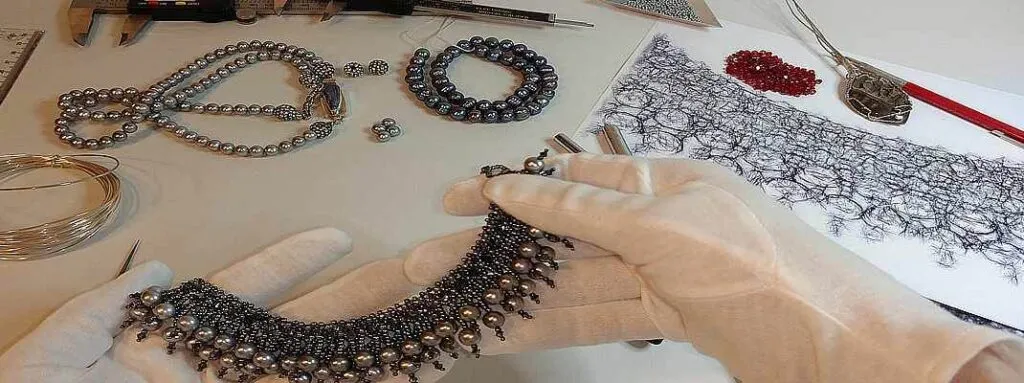
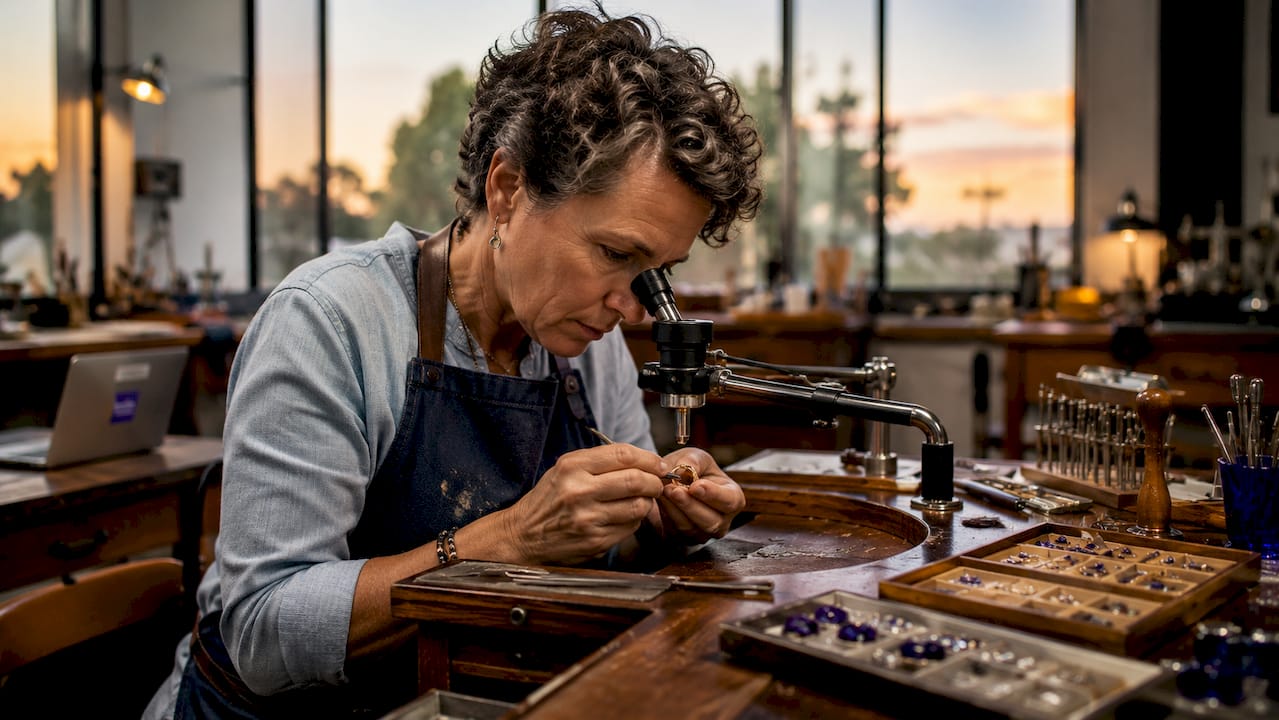
A skilled jeweler applies deep knowledge of metalwork, gemology, and fabrication techniques to bring concepts to life. The process, known professionally as jewelry production or bench work, sits at the intersection of art and engineering.
With approximately 80,329 jewelry businesses operating in the U.S. as of 2025, the standards jewelers uphold directly shape the quality you wear every day.
What responsibilities does a jeweler hold in design and creation?
A jeweler’s responsibilities span the entire jewelry design process, from reading technical drawings to delivering a finished, polished piece. These responsibilities go far beyond cutting metal. They require judgment, precision, and a trained eye for both beauty and structure.
The core fabrication tasks a jeweler manages include:
- Casting and forming metals: Pouring molten metal into molds, then refining the shape through filing and forging.
- Soldering and joining: Fusing metal components with heat to create seamless connections that hold under daily wear.
- Stone setting: Securing gemstones using techniques like prong, bezel, pavé, or channel setting, each chosen to protect the stone and maximize its brilliance.
- Finishing and polishing: Applying surface treatments, from high-mirror polish to matte textures, that define the piece’s final character.
- Quality control: Checking structural integrity, prong security, clasp function, and overall wearability before a piece leaves the bench.
Precision is non-negotiable at the fabrication stage. Tech packs with tolerances of ±0.1 mm are standard for components such as ring shanks and stone seats. That level of accuracy prevents misaligned settings and ensures a consistent fit across production runs.
Bench jewelers manage the physics of every piece, balancing aesthetic vision with the realities of daily wear. A prong that looks elegant in a sketch can become a fabric-snagging hazard on the wrist. The jeweler catches that problem before it reaches you.
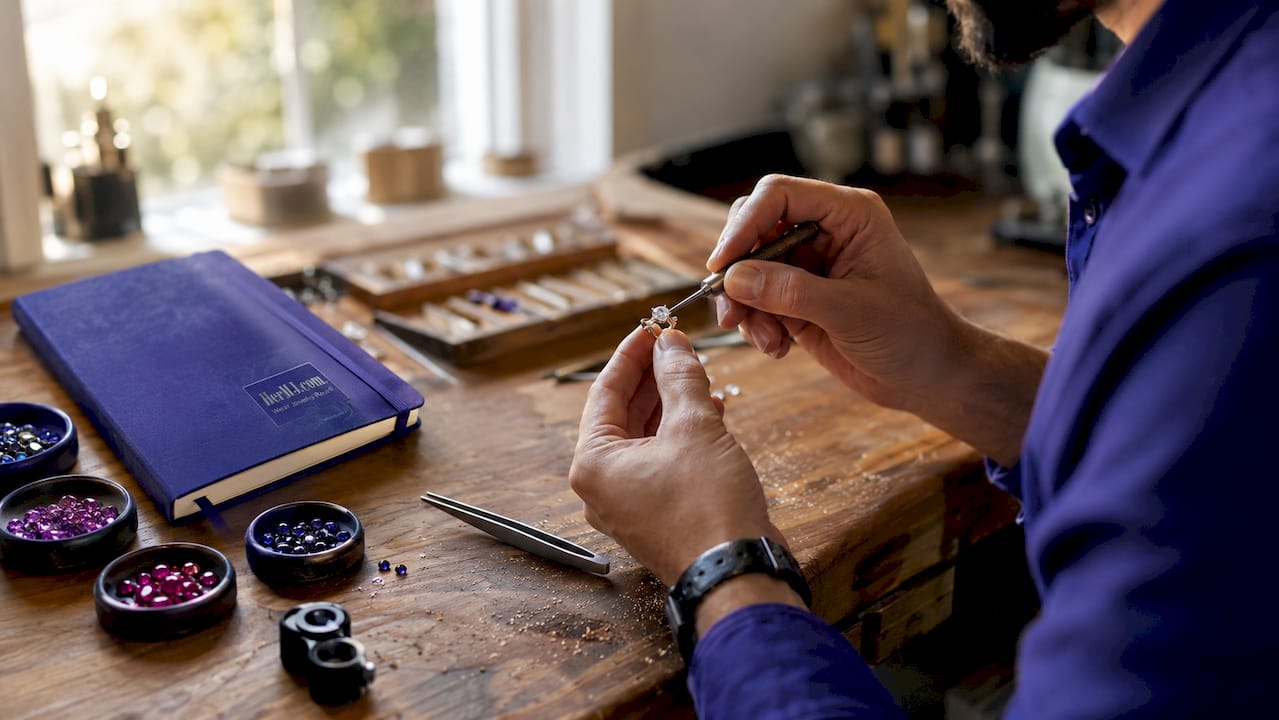
Pro Tip: When commissioning a custom piece, ask your jeweler to walk you through the stone setting method they plan to use. Understanding why they chose prong over bezel, for example, tells you a lot about their technical depth and care for your gemstone.
How does the jeweler collaborate with jewelry designers?
Jewelry design collaboration is an ongoing conversation, not a one-time handoff. The designer brings the vision. The jeweler brings the reality check. Together, they produce something neither could achieve alone.
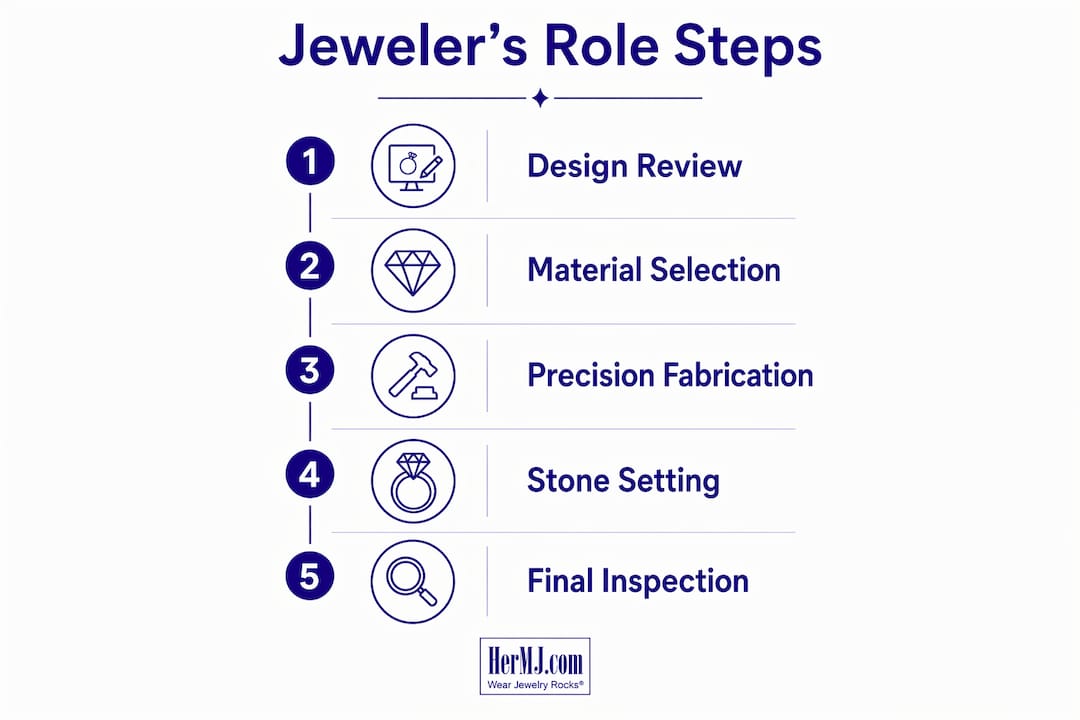
The collaboration typically follows a structured workflow:
- Initial design review: The jeweler evaluates sketches or CAD models for structural feasibility, flagging elements that won’t survive casting or daily use.
- Material selection dialogue: Designer and jeweler discuss metal choices, alloy grades, and gemstone options, balancing aesthetics and budget.
- Tech pack review: Detailed technical files that account for casting shrinkage and polishing allowances are reviewed and refined together.
- Prototype feedback: A wax or resin prototype is assessed for proportion, comfort, and structural soundness before committing to precious metal.
- Iterative adjustments: The jeweler proposes modifications when a design element creates a structural weakness, always aiming to preserve the designer’s intent.
The jeweler serves as what one industry observer calls a “pragmatic poet,” connecting the designer’s conceptual world with physical reality. That description captures something real. The best jewelers don’t just execute. They protect the design from itself.
Collaboration between designers and jewelers consistently leads to higher customer satisfaction and more emotionally meaningful pieces. When both parties communicate openly, the result is a piece that looks exactly as imagined and lasts for decades. For aspiring designers, this means learning to speak the jeweler’s language early. Understanding terms like “casting shrinkage,” “seat depth,” and “metal gauge” makes every conversation more productive.
What skills set a jeweler apart in the design process?
The jeweler’s creative role extends well beyond hand skills. The most respected bench jewelers combine material science, gemological knowledge, and design intuition in ways that actively shape the final piece.
Here are the core skill areas that differentiate an exceptional jeweler:
Material knowledge: Understanding how gold alloys, sterling silver, and platinum each behave under heat, stress, and polishing informs every fabrication decision. A jeweler who knows that 14k yellow gold is more malleable than 18k white gold will choose the right alloy for a delicate filigree setting.
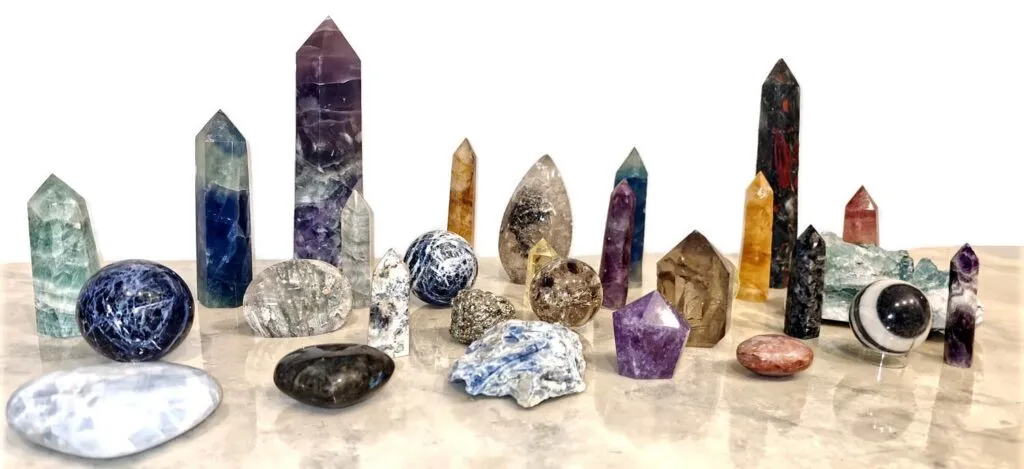
Gemological expertise: Knowing a stone’s hardness, cleavage planes, and thermal sensitivity determines how it’s set and finished. An emerald, for example, requires far more careful heat management during soldering than a diamond. Exploring how gemstone properties influence design is something every aspiring designer benefits from studying.
Creative problem solving: Designers often create visually perfect concepts that fail structural tests. The jeweler’s job is to find a solution that preserves the aesthetic while meeting durability requirements. This might mean thickening a prong by 0.2mm or switching from a tension setting to a bezel for a softer stone.
Hand finishing techniques: Engraving, milgrain edging, and hand-applied textures are skills that no machine fully replicates. These finishing touches are what separate a mass-produced piece from a truly handcrafted jewelry work of art.
CAD and 3D modeling literacy: Modern jewelers work alongside CAD-to-casting workflows that cover ideation, prototyping, casting, stone setting, and finishing. A jeweler who can read and critique a 3D model catches errors before they become expensive metal mistakes.
Pro Tip: If you’re an aspiring designer, spend time at the bench before you finalize any design. Even a few hours watching a jeweler solder or set stones will change how you sketch. You’ll stop drawing details that are beautiful on paper but impossible to execute in metal.
Why does understanding the jeweler’s role matter for enthusiasts and designers?
Understanding the jeweler’s contribution makes you a better client, a more informed collector, and a more effective designer. The importance of jewelers goes beyond their technical output. They shape what’s possible.
For jewelry enthusiasts, this knowledge pays off in several concrete ways:
- Better custom commissions: When you understand fabrication constraints, you communicate more clearly with your jeweler. You know why a very thin band needs a thicker gauge, and you don’t push back on changes that protect your piece.
- Smarter quality assessment: Recognizing the difference between a hand-set stone and a machine-pressed one helps you evaluate what you’re paying for. Artisan craftsmanship details like hand-engraved bezels and individually polished prongs are signs of genuine bench skill.
- Realistic design expectations: Some design ideas look stunning in a rendering but require compromises in metal. Knowing this upfront prevents disappointment and builds trust with your jeweler.
- Informed jeweler selection: Professional jewelers serve as collaborators and quality gatekeepers, translating client stories into wearable art through structural engineering and gemological knowledge. Choosing a jeweler based on their technical depth, not just their portfolio photos, leads to better outcomes.
For aspiring designers, the lesson is even more direct. The jeweler’s creative role doesn’t compete with yours. It completes it. The most celebrated jewelry houses in history have always paired visionary designers with master bench jewelers. That partnership is the product.
Key takeaways
The jeweler’s role in design is inseparable from the final quality, durability, and beauty of every piece produced.
| Point | Details |
|---|---|
| Jeweler as technical partner | Jewelers apply fabrication, gemology, and material science to make designs structurally sound. |
| Precision standards matter | Tolerances of +/- 0.1mm in tech packs are standard for accurate casting and fit. |
| Collaboration drives quality | Open dialogue between designer and jeweler produces more durable, satisfying pieces. |
| Skills go beyond hand work | CAD literacy, gemological knowledge, and creative problem solving define top jewelers. |
| Informed clients get better results | Understanding the jeweler’s role helps you commission, evaluate, and select jewelry more effectively. |
What I’ve experienced from watching designers and jewelers work together
I’ve spent years involved in moments a designer hands a sketch to a jeweler. That handoff is where the real work begins, and it tells you everything about the relationship between imagination and craft.
I respect designers who treat their jeweler as a co-author, not a contractor. They ask questions. They listen when the jeweler says a prong placement won’t hold. They understand that a modification suggested at the bench isn’t a rejection of their vision. It’s a protection of it.
What surprises most aspiring designers is how much the jeweler contributes creatively. The choice of a finishing texture, the decision to hand-engrave a bezel rather than leave it plain, and the suggestion to use a slightly deeper stone seat for a better light return. These aren’t technical footnotes. They’re design decisions. The jeweler makes them every day, often without credit.
My advice: if you’re serious about designing jewelry, build a real relationship with a bench jeweler before you finalize anything. Sit with them. Watch them work. Ask why they make the choices they make. The education you get in one afternoon at the bench is worth more than a semester of design theory.
The pieces that endure, the ones passed down through generations, are always the result of that partnership. Art and engineering, held together by trust.
— Veronique
HerMJ’s artisan jewelry: craftsmanship you can see and feel
At HerMJ, every piece reflects the same principles described in this article: skilled hands, genuine materials, and a commitment to quality that goes beyond surface appearance.
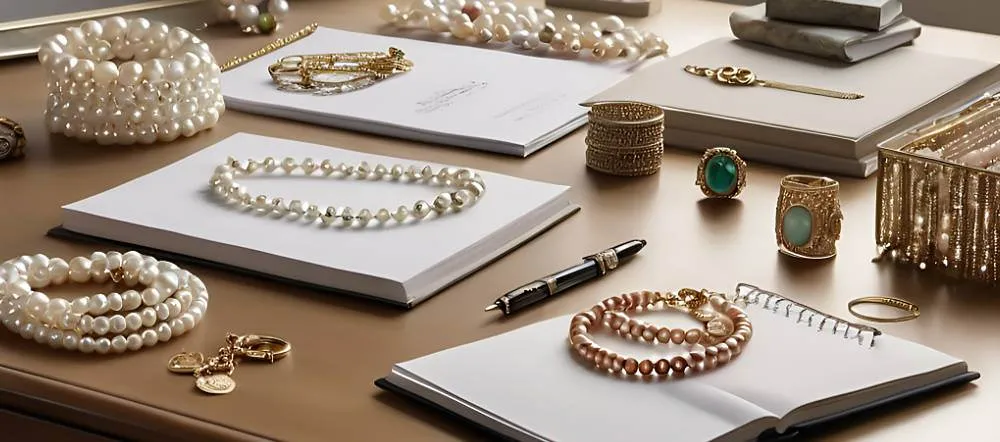
HerMJ’s collection of handcrafted pearl and gemstone jewelry is built on the same bench-level care that separates a truly artisan piece from a mass-produced one. The Elegant Freshwater Pearl Necklace and the Pearl and Aquamarine Necklace are two pieces that show what thoughtful material selection and careful finishing look like in practice.
US orders ship free with no minimum. International orders ship free for orders of $150 or more. For international orders under $150, USPS rates apply. Browse the full freshwater pearl jewelry collection and see the difference craftsmanship makes.
FAQ
What is the primary role of a jeweler in design?
The jeweler’s primary role is to translate a designer’s concept into a structurally sound, wearable piece using fabrication techniques like casting, soldering, and stone setting. They also serve as quality gatekeepers, ensuring every element meets durability and aesthetic standards.
How does a jeweler differ from a jewelry designer?
A jewelry designer creates the visual concept and aesthetic direction, while a bench jeweler executes that concept in metal and stone. The jeweler applies technical knowledge of materials and fabrication to make the design physically possible and durable.
What does jewelry design collaboration look like in practice?
Designers and jewelers review CAD models and tech packs together, discuss material choices, and refine prototypes through iterative feedback. This collaborative process consistently produces pieces with higher structural integrity and greater client satisfaction.
Why do tech packs matter in the jewelry production process?
Tech packs provide the exact millimeter dimensions and tolerances, often within +/- 0.1mm, that jewelers need for accurate casting and fitting. Without them, metal shrinkage during casting and polishing allowances can cause costly errors in the finished piece.
How can I choose the right jeweler for a custom piece?
Look for a jeweler who asks detailed questions about how you plan to wear the piece, explains their stone setting method, and can show examples of hand-finished work. Professional jewelers who combine gemological knowledge with structural engineering skills produce the most durable and beautiful custom results.
Recommended
- How to Appreciate Artisan Jewelry Craftsmanship Details
- Jewelry Styles Explained: Know What’s Important
- What Is Gemstone Cluster Jewelry: Style Guide 2026