

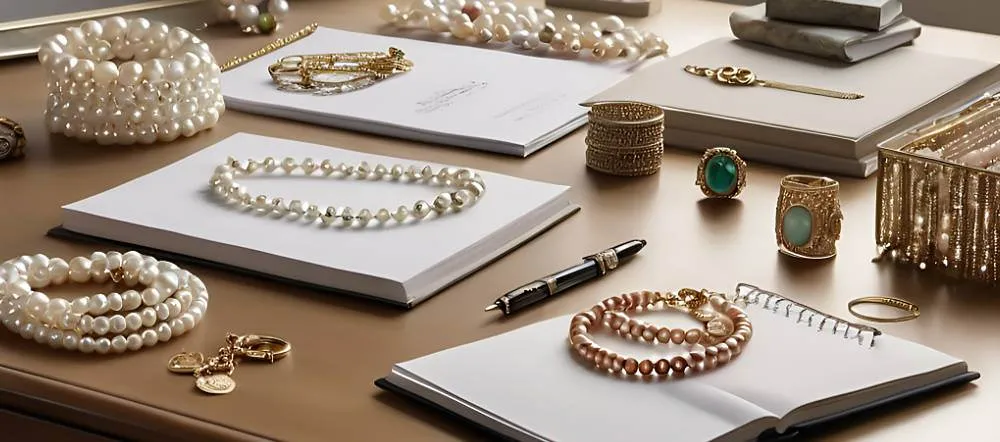

What Is a Signature Jewelry Piece? Your Style Guide

The Edit
- A signature jewelry piece is the accessory you wear habitually and that reflects your personal identity. It is defined by emotional resonance, versatility, and durability, not by price or trend. Building a collection of 12 to 20 cohesive, versatile pieces creates a complete personal style system that suits every occasion.
A signature jewelry piece is defined as the one accessory you wear so consistently that it becomes your personal logo.
It’s not about price or prestige. It’s the necklace you reach for every morning without thinking, the bracelet that feels wrong to leave behind. Style experts and recognized jewelers describe this concept as a personal style anchor that reflects your authentic identity through habitual wear and emotional connection, not through trend cycles or cost.
What is a signature jewelry piece and why does it matter?
A signature jewelry piece is defined not by luxury, but by consistent, habitual wear that makes it synonymous with your identity. Think of it as the jewelry equivalent of a personal logo. It anchors your style so reliably that people begin to associate it with you, the way a designer’s monogram signals their brand.

The importance of signature jewelry goes beyond aesthetics. When you wear the same piece day after day, it stops being an accessory and starts being part of how you present yourself to the world. That shift from decoration to identity marker is what separates a signature piece from everything else in your jewelry box.
Defining signature jewelry also means understanding what it is not. It’s not the most expensive piece you own. It’s not the showiest or the one you save for special occasions. It’s the piece that feels incomplete to leave behind, the one that quietly completes every outfit without demanding attention.
What are the key characteristics of a signature jewelry piece?
Several distinct qualities separate a true signature piece from a favorite or a collector’s item. Recognizing these characteristics helps you identify what already qualifies in your collection and what to look for when choosing something new.
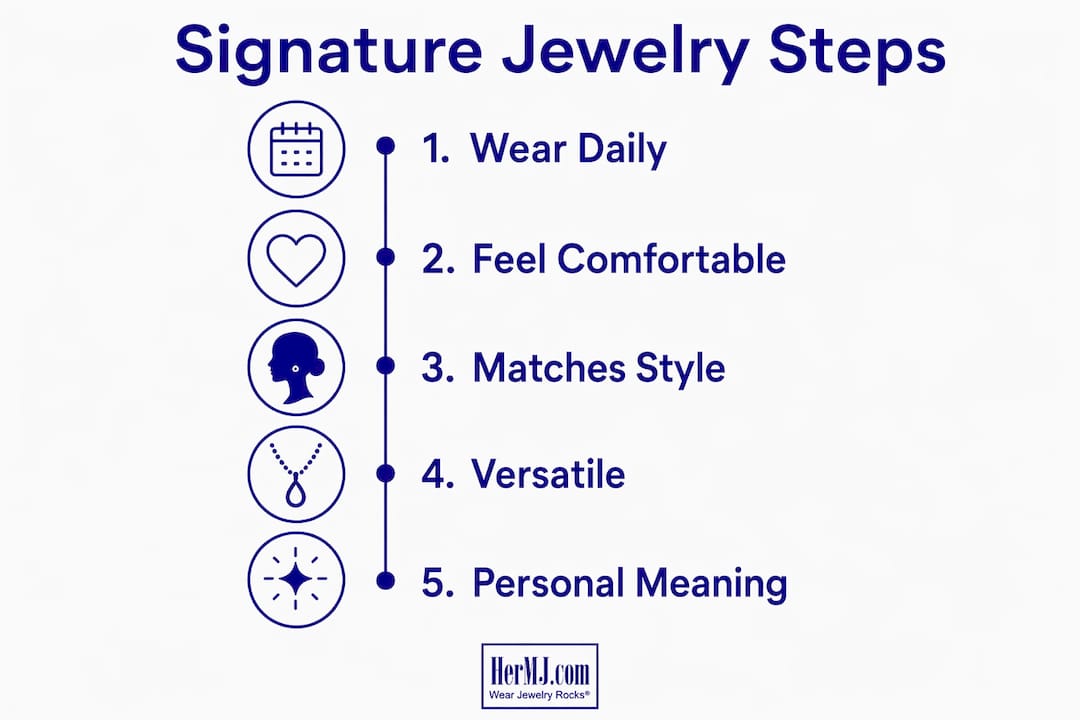
- Habitual wear. You put it on automatically. You don’t deliberate. If you’re mentally debating whether to wear a piece each morning, it hasn’t earned signature status yet.
- Emotional resonance. The piece carries personal meaning. It might mark a milestone, reflect your values, or simply feel like “you” in a way you can’t fully explain.
- Versatility. A true signature piece transitions from casual to formal effortlessly. It works with a linen shirt on a Saturday and a blazer on a Tuesday.
- Durability. Signature pieces are worn through real life. They develop battle scars that add personal story and emotional value over time. Fragile “look but don’t touch” pieces simply can’t fill this role.
- Distinction from trends. Signature pieces exist outside of seasonal fashion cycles. They don’t go out of style because they were never about style in the first place. They’re about you.
The crossover between fancy and casual is exactly where authentic personal style lives. A pearl necklace that works equally well at brunch and a board meeting isn’t just versatile. It’s a signature piece in the making.
Pro Tip: Don’t evaluate a piece by how it looks in the store. Evaluate it by how it feels after three days of continuous wear. Comfort and forgetting it’s there are the real tests.
How can you discover your own signature jewelry piece?
Many people assume they need to go shopping to find their signature piece. In reality, it often emerges through repeated wear and personal discovery rather than a deliberate purchase. The piece that becomes your signature is usually already somewhere in your life, waiting to be recognized.
Here’s a practical method to identify it.
- Audit your current jewelry. Lay out everything you own. Notice which pieces you reach for most often. Frequency of wear is your first and most honest signal.
- Run the 7-day test. Choose one piece and wear it continuously for a week. The key marker is forgetting you’re wearing it. If it causes no irritation, no self-consciousness, and no urge to remove it, you’ve found a strong candidate.
- Observe your natural patterns. Do you consistently gravitate toward gold or silver? Delicate or bold? Pearls or gemstones? Your instincts reveal your style language more accurately than any quiz.
- Align with your lifestyle. A piece worn to the gym, the office, and dinner out is more likely to become a signature than one reserved for weekends. Match the piece to the full texture of your daily life.
- Check for jewelry styles that feel like home. Some people are drawn to organic shapes and natural materials. Others want clean lines and geometric forms. Your signature piece should feel like it was made for your specific aesthetic, not borrowed from someone else’s.
Pro Tip: Try pieces outside your theoretical preferences. You might think you’re a gold person and discover that a freshwater pearl bracelet never leaves your wrist. Let your body vote, not just your brain.
What’s the difference between a signature piece and signed jewelry?
This distinction matters, and it’s one many jewelry lovers get confused about. A signature piece is a personal style concept. Signed jewelry is a collector’s market term. They’re related in name only.
| Feature | Signature jewelry piece | Signed jewelry |
|---|---|---|
| Definition | A piece worn habitually as part of personal identity | A piece bearing a maker’s mark or hallmark for authentication |
| Primary value | Emotional and stylistic | Historical, collectible, and financial |
| Who cares about it | Style-conscious wearers | Collectors, auction houses, investors |
| Resale relevance | Minimal | Significant, often premium |
| Examples | A pearl necklace you wear daily | An Art Deco brooch with a verified maker’s mark |
Signed jewelry bears maker’s marks that are essential for authentication and often command a higher resale value in collectible contexts. The premium depends on the house, rarity, and historical significance, with Art Deco-era pieces being a well-known example.
Signed pieces give collectors what experts call exit confidence, meaning documented authenticity and known provenance that support resale liquidity.
Your personal signature piece may or may not be signed. A handmade pearl necklace from HerMJ carries no auction-house hallmark, but it can absolutely become your most meaningful daily piece. Knowing how to identify handcrafted jewelry helps you appreciate the craftsmanship behind the pieces you wear most, whether or not they carry a collector’s mark.
How to build a signature jewelry collection
One signature piece is a foundation. A signature jewelry collection is a complete personal style system. Think of it the way fashion editors think of a capsule wardrobe: a small, intentional set of pieces that covers every occasion without redundancy.
A well-built signature collection typically consists of 12–20 pieces curated for versatility, cohesion, and longevity. That range is enough to cover daily wear, professional settings, and formal events without tipping into excess. Quality and intentionality matter far more than quantity.
Here’s what a strong collection includes:
- Two or three daily wear pieces. These are your true signatures. A necklace, a bracelet, and perhaps a pair of earrings that you wear on most days.
- A few elevated pieces for professional settings. Slightly more polished, but still cohesive with your daily aesthetic.
- One or two statement pieces for special occasions. These should still feel like you, just amplified. Explore statement jewelry with significance to understand how bold pieces can still carry personal meaning.
- Seasonal additions. Gemstones and colors that shift with the seasons keep your collection feeling alive without requiring a full overhaul.
Cohesion is the quality that separates a collection from a pile of jewelry. Stick to one or two metal tones. Choose a consistent style language, whether that’s organic and earthy, clean and minimal, or rich and layered. When every piece feels like it belongs to the same family, getting dressed becomes effortless.
A curated signature collection requires patience and conscious selection, avoiding impulsive purchases and fast trends. The best collections build over years. Each piece earns its place through wear, meaning, and staying power, not because it was on sale or trending that season.
Pro Tip: Before adding a new piece to your collection, ask whether it works with at least three other pieces you already own. If it doesn’t, it’s a novelty, not a signature.
Key takeaways
A signature jewelry piece is the one you wear habitually, that feels like an extension of your identity, and that works across every setting in your life.
| Point | Details |
|---|---|
| Definition rooted in habit | A signature piece is defined by consistent daily wear, not price or prestige. |
| Durability is non-negotiable | Pieces must withstand real life and develop personal stories through wear. |
| The 7-day test works | Wearing a piece continuously for a week reveals whether it truly fits your identity. |
| Signed vs. signature | Signed jewelry is a collector’s term; a signature piece is a personal style concept. |
| Collections need cohesion | A 12–20-piece collection built around consistent metals and style language serves every occasion. |
Why your signature piece doesn’t need to be perfect
I’ve worked with jewelry long enough to know that the pieces people treasure most are rarely the ones they planned to love. The pearl bracelet a client bought on a whim becomes the one she never takes off. The garnet necklace chosen in five minutes outlasts every carefully researched purchase.
What I’ve found is that people overthink this. They wait for the “right” piece, the one that checks every box on a mental list. But signature pieces don’t announce themselves that way. They reveal themselves quietly, through the mornings you reach for them without thinking, and the evenings you feel slightly off without them.
Price is almost never the deciding factor. I’ve seen inexpensive handmade pieces become someone’s most treasured daily wear, while expensive statement pieces sit in a box. What matters is the connection, the comfort, and the way a piece fits into the actual texture of your life, not the life you imagine having.
My advice: stop waiting for the perfect piece and start paying attention to what you already wear. Your signature piece is probably already telling you something. Listen to it. And when you do find it, wear it with confidence. The small scratches and patina it develops over time aren’t flaws. They’re the story of you.
— Veronique
HerMJ’s pearl and gemstone pieces are worth wearing every day
Finding a piece worthy of daily wear starts with craftsmanship that holds up to real life.
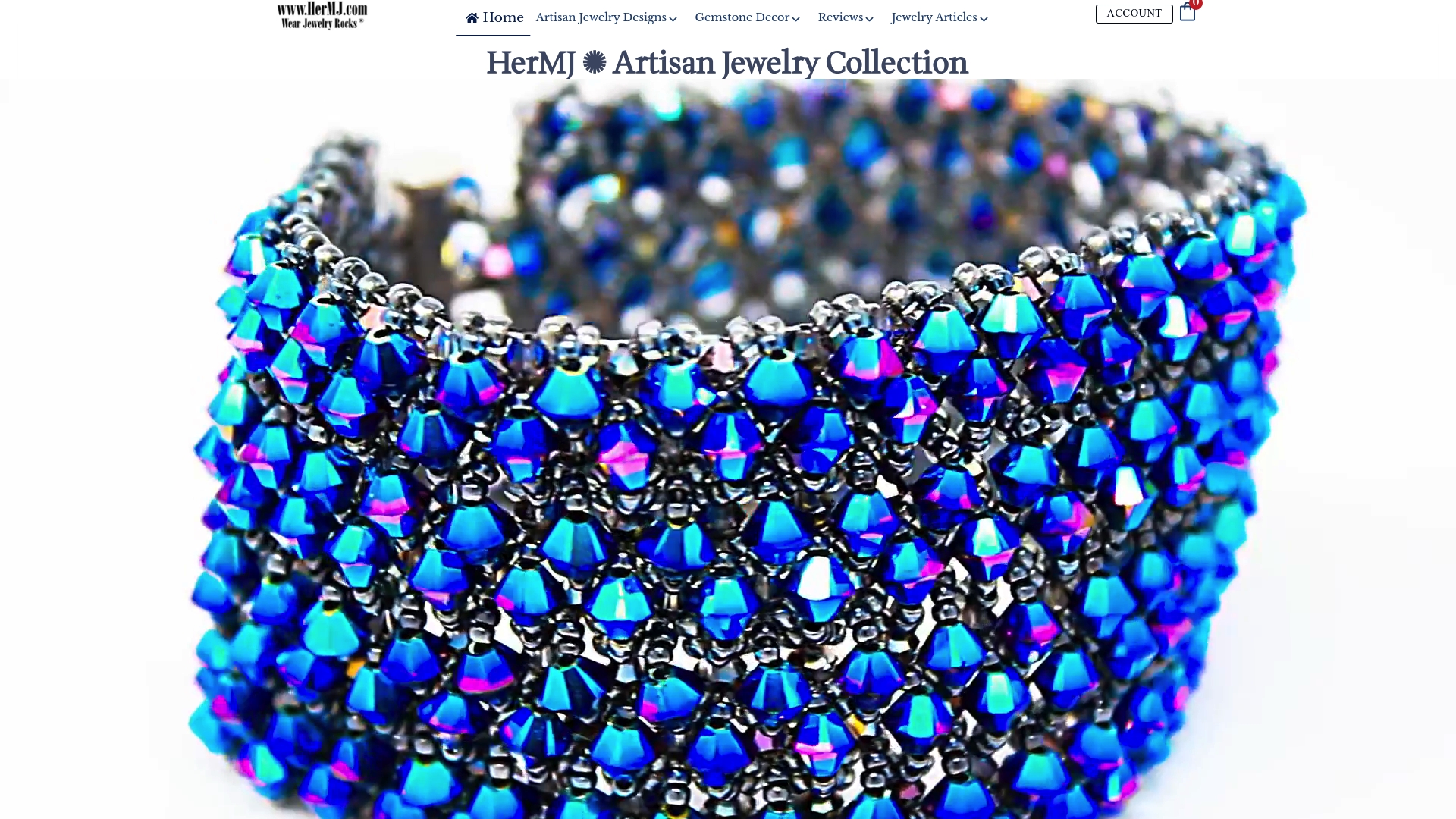
HerMJ’s handmade pearl and gemstone jewelry is built for exactly that. The Elegant Freshwater Pearl Necklace offers the kind of quiet, timeless luster that pairs with everything from a morning coffee to an evening out.
For wrist wear, the Lustrous Freshwater Pearl Bracelet delivers durability and elegance in equal measure. If you want color and character, the Faceted Garnet Gemstone Necklace brings warmth and depth to any look. Every piece is handcrafted from genuine pearls and gemstones at accessible prices.
US orders ship free with no minimum order, and international orders ship free on orders of $150 or more.
FAQ
What is a signature jewelry piece?
A signature jewelry piece is an accessory worn so consistently it becomes part of your personal identity. It’s defined by habitual wear and emotional connection, not by price or rarity.
How do I find my signature jewelry piece?
Use the 7-day test: wear one piece continuously and notice whether you forget it’s there. If it causes no discomfort and feels natural across all settings, it’s a strong signature candidate.
What’s the difference between a signature piece and signed jewelry?
A signature piece is a personal style concept based on daily wear and identity. Signed jewelry is a collector’s term for pieces bearing maker’s marks that authenticate origin and support resale value.
How many pieces should a signature jewelry collection include?
A well-curated signature collection typically includes 12–20 pieces covering daily wear, professional settings, and formal occasions, with cohesion in metal tone and style language throughout.
Does a signature piece need to be expensive?
No. The defining quality of a signature piece is how consistently and comfortably you wear it, not its price. Many people’s most-worn pieces are affordable handmade items with strong personal meaning.
Recommended
- Jewelry Styles Explained: Know What’s Important
- What Is Gemstone Cluster Jewelry: Style Guide 2026
- What Is Art Deco Jewelry Style? A Design Guide
- What Is A Statement Piece Of Jewelry?