


Artisan Jewelry Construction: 9 Handcrafted Techniques
Artisan jewelry construction covers a rich range of handcrafted methods, each producing pieces that no machine can replicate exactly. If you’re learning to make jewelry yourself or shopping for something genuinely one-of-a-kind, understanding these techniques helps you recognize real craftsmanship when you see it.
The main types of artisan jewelry construction include:
- Wire wrapping: Bending wire around stones or into frames without soldering
- Fabrication: Cutting, shaping, and joining metal sheet and wire by hand
- Beading: Stringing natural or synthetic beads using various threading methods
- Hand stamping and engraving: Impressing or carving designs directly into metal
- Enameling: Fusing colored glass powders onto metal surfaces with heat
- Metal clay: Shaping clay-like metal material that fires into solid metal
- Casting: Pouring molten metal into molds, often using the lost-wax method
- Stone setting: Securing gemstones with bezel, prong, or channel settings
- Mixed media: Combining two or more of the above methods in a single piece
Each method carries its own tools, materials, and learning curve. A wire-wrapped pendant and a fabricated silver cuff both qualify as artisan work, but they feel completely different in the hand and tell entirely different stories about how they were made.
What are the main types of artisan jewelry construction?
Understanding each technique changes how you look at a finished piece. Here’s how the major methods actually work.
Wire wrapping
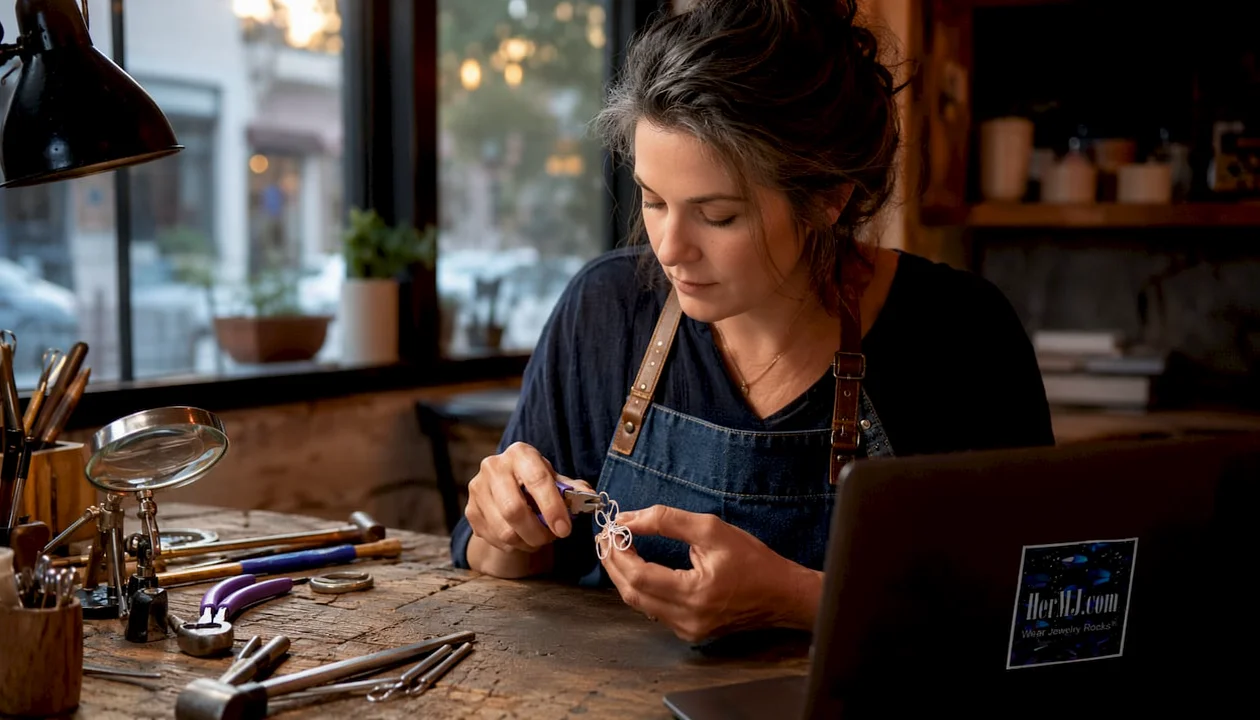
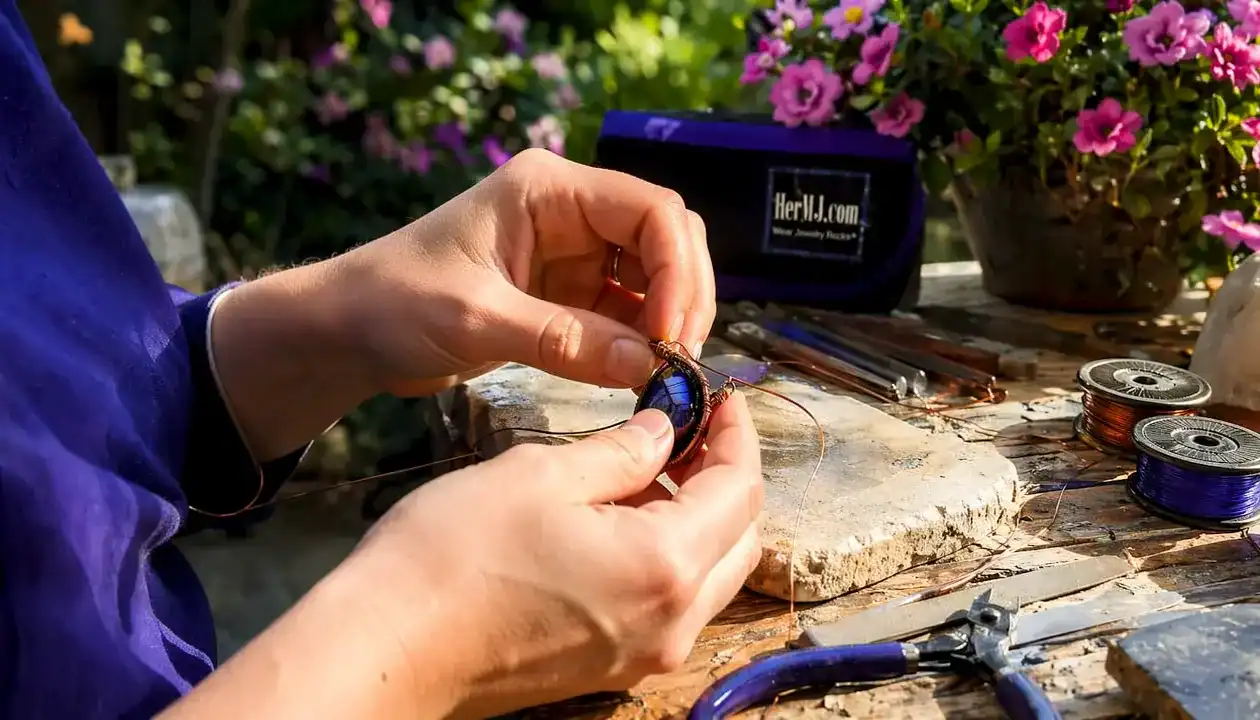
Wire wrapping is one of the most accessible entry points into artisan jewelry. The maker bends wire, typically copper, sterling silver, or gold-filled, around a stone or into a decorative frame using only pliers and cutters.
No torch, no solder.
The wire itself becomes both the structure and the ornament, and skilled wrappers can create intricate, almost lace-like patterns that hold a stone securely without a single heat source. Because each wrap is guided entirely by hand, no two pieces come out identical.
Fabricated jewelry
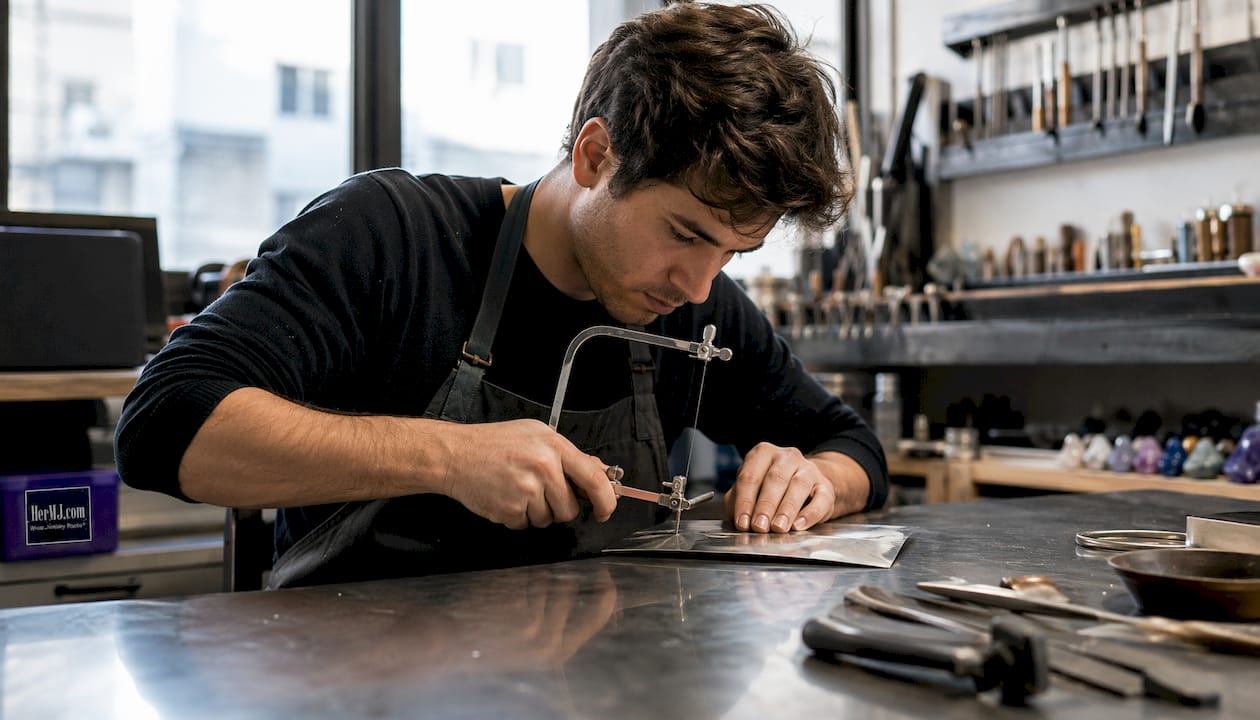
Hand-fabricated jewelry involves cutting, shaping, braiding, twisting, and soldering wire and sheet metal, with every step controlled manually by the maker. A fabricator might saw a piece of silver sheet, file its edges, form it over a mandrel, and then solder a bezel onto it for a stone. Forged, cast, and fabricated jewelry share similar silhouettes but differ in internal logic: fabricated pieces show seams and joins that reveal how each component was assembled. That evidence of process is part of what makes fabricated work so compelling to collectors.
Beaded jewelry
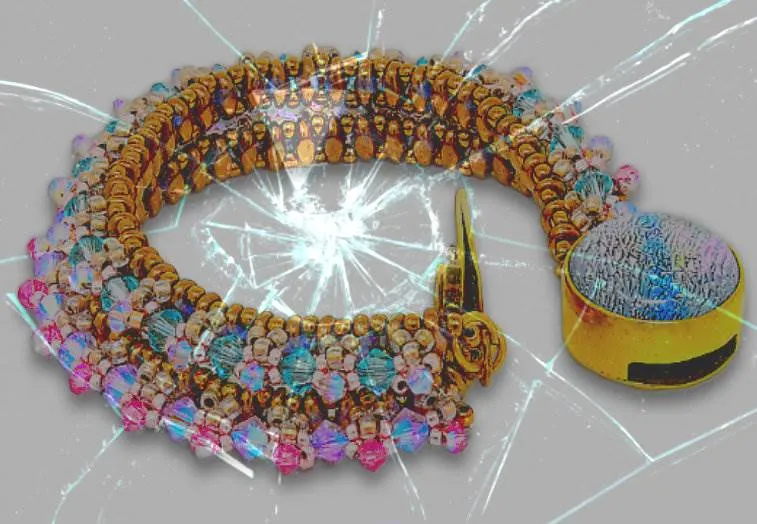
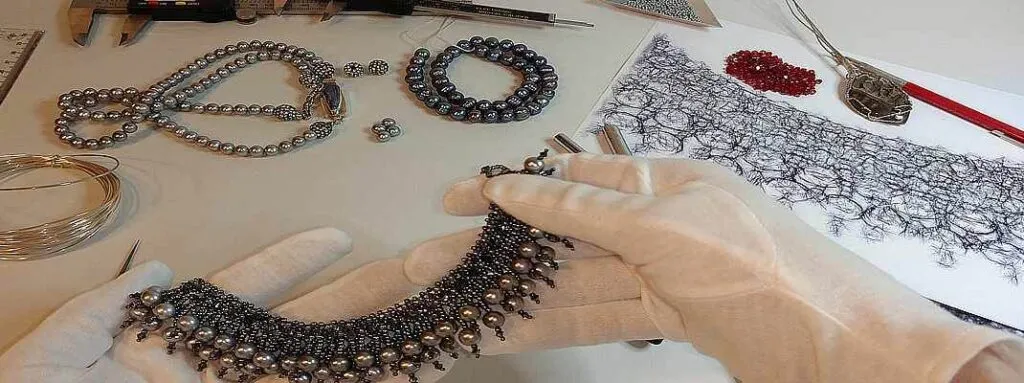
Beading spans a fairly wide spectrum, from simple strung necklaces to complex woven structures made with seed beads and a needle. Materials range from freshwater pearls and gemstone chips to glass, ceramic, and resin beads.
The stringing method matters as much as the beads themselves: silk thread suits pearls, while nylon-coated wire works better for heavy stones. Knotting between each pearl, a traditional technique, protects the beads and keeps the strand from scattering if the thread breaks.
Hand stamping and engraving
Hand stamping uses metal stamps and a hammer to press letters, symbols, or textures into a metal surface, creating permanent impressions.
Engraving goes further, with a graver or rotary tool cutting lines and patterns directly into the metal. Both methods leave marks that are entirely the maker’s own. The depth, angle, and spacing of each strike or cut vary with every hand, which is why two stamped pieces from the same design look subtly different.
Enameling
Enameling fuses powdered glass onto metal at high temperatures, producing colors that are far more permanent than paint or plating.
The main styles include cloisonné, where thin wire separates color sections; champlevé, where recessed areas carved into the metal hold the enamel; and vitreous enamel, a broader category that covers torch-fired and kiln-fired work.
Each firing cycle can alter the color slightly, so artisan enamelers develop an intuitive feel for their kiln and materials over years of practice.
Metal clay
Metal clay is a relatively modern material, a mixture of fine metal particles, water, and a binder that you can shape like pottery clay. Once fired in a kiln or with a torch, the binder burns away, and the metal particles sinter together into solid fine silver, bronze, or copper.
The technique opens up organic, sculptural forms that would be difficult to achieve with sheet metal alone. Texture from leaves, fabric, or carved stamps transfers beautifully into the clay before firing.
Casting techniques
Casting uses a wax or digital model to create detailed jewelry forms by pouring molten metal into molds. Lost-wax casting, the oldest and most common artisan method, involves carving or sculpting a wax model, encasing it in investment plaster, burning out the wax, and then casting metal into the cavity.
The result captures organic textures and complex shapes that fabrication can’t easily replicate. Artisan casters still hand-finish every piece after casting, removing sprues, filing seams, and polishing surfaces.
Stone setting
Stone setting secures a gemstone within a metal framework so it stays put through daily wear. The three most common artisan settings are bezel (a strip of metal folded over the stone’s girdle), prong (small claws that grip the stone from above), and channel (a groove that holds a row of stones).
Each setting style requires soldering skills and precise metalwork. A bezel set with uneven walls or a prong that doesn’t seat flush against the stone tells you immediately that the maker’s skills are still developing.
Mixed media approaches
Mixed media jewelry combines two or more construction methods or material types in a single piece. A maker might fabricate a silver frame, set a stone with a bezel, and then add wire-wrapped accents and a resin element.
Textile, leather, wood, and resin all appear in contemporary artisan work alongside traditional metals. The design-to-production pipeline for mixed media pieces tends to be longer and more complex, since each material has its own finishing requirements.
Technique highlights at a glance:
- Wire wrapping requires no heat, making it beginner-friendly and travel-safe
- Fabrication produces the cleanest lines and most precise geometry
- Beading offers the widest material variety and color range
- Enameling creates the most permanent color effects on metal
- Metal clay suits sculptural, organic forms
- Lost-wax casting excels at reproducing complex, detailed shapes
- Stone setting is a foundational skill that appears across nearly every other method
What actually makes jewelry “handmade” under U.S. law?
The U.S. Federal Trade Commission strictly defines handmade jewelry as requiring that all shaping and finishing be done by hand power or hand guidance. Punch presses, CNC machining, and automated casting all disqualify a piece from the “handmade” label. Manually guided tools like drills and lathes are permitted, as long as a human hand controls every movement.
The distinction between hand fabrication and simple assembly matters here. FTC rules prohibit falsely labeling mass-produced or assembled pieces as handmade, which protects buyers from paying artisan prices for factory-made goods.
Assembling pre-made findings, snapping a pendant onto a chain, or stringing beads onto a pre-cut cord doesn’t meet the standard. The maker must shape and finish the work themselves.
Artisan jewelry is made by skilled craftspeople with years of training who create unique, small-batch, or one-of-a-kind pieces using traditional handcrafting techniques and careful material selection.
That’s the meaningful gap between artisan and hobbyist work: not just the method, but the depth of skill and intentionality behind every decision. Artisan mastery usually implies a professional skill level, high-quality material choices, and time-intensive methods, which is why artisan pieces command premium pricing compared to machine-made alternatives.
How to start making artisan jewelry as a beginner
Starting with artisan jewelry doesn’t require a full metalsmithing studio. Wire wrapping, beading, and basic metal stamping are all torch-free and require only a modest toolkit.
Essential beginner tools:
- Round-nose pliers, flat-nose pliers, and wire cutters for wire work
- A beading mat, needles, and thread or nylon wire for beading
- Metal stamps and a chasing hammer for stamping
- A steel bench block for stamping and forming
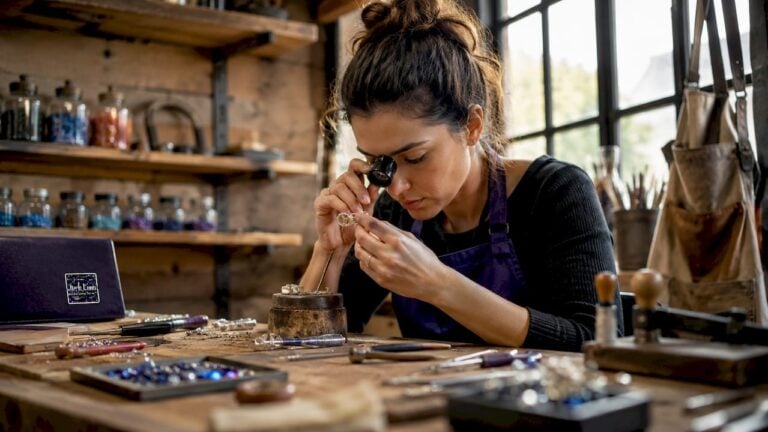
- A jeweler’s loupe for inspecting your work closely
Start with wire wrapping or beading, since both methods let you produce finished pieces quickly and help you develop your eye for proportion and balance.
Once you’re comfortable with those, simple fabrication, cutting, and filing sheet metal teach you how metal behaves under tools. From there, soldering opens up a much wider range of construction possibilities.
Sourcing materials responsibly makes a real difference in the quality of your work. Sterling silver wire from a reputable metals supplier behaves more predictably than mystery-alloy wire from a craft store.
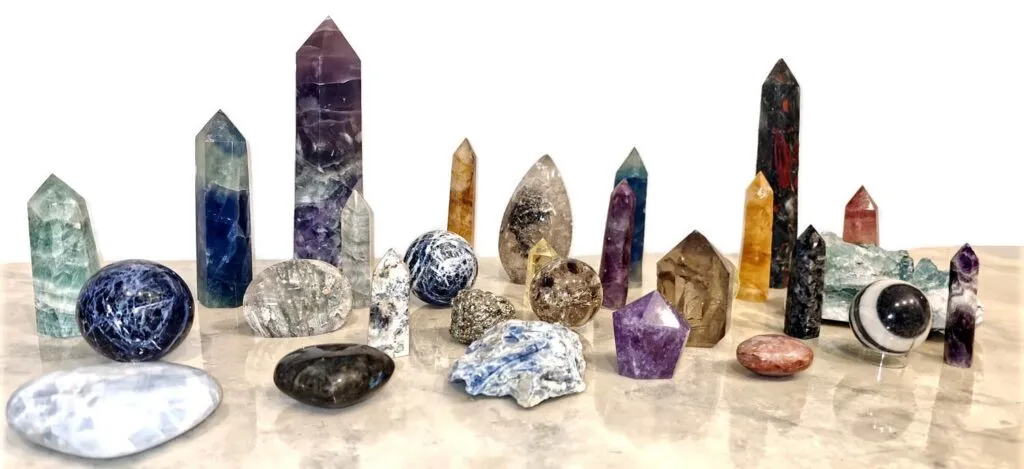
For stones, buying from established gem dealers or attending gem shows gives you access to better material and the chance to learn about what you’re working with.
Pro Tip: Practice stamping on copper sheet before moving to silver. Copper is inexpensive, soft, and forgiving, and it gives you a clear read on how hard to strike before you commit to a more costly metal.
Skill-building resources like handcrafted jewelry techniques guides walk you through foundational methods step by step. Community classes at local bead shops or art centers offer hands-on feedback that’s hard to replicate from a video alone.
How to recognize quality craftsmanship in artisan jewelry
Knowing what to look for transforms you from a passive buyer into someone who can genuinely evaluate a piece. Quality artisan work leaves specific physical evidence.
Signs of skilled construction:
- Solder joins that are smooth and nearly invisible, with no gaps or excess solder blobs
- Bezel walls that sit flush and even around a stone’s entire circumference
- Wire wraps that are tight, consistent, and free of sharp ends that could snag skin
- Surface textures that are intentional and consistent, not accidental scratches
- Stone settings where the gem sits level and secure, with no wobble
Genuine hand fabrication shows tool marks that are part of the design, not defects to hide. A planished surface, hammered with a smooth-faced hammer, has a deliberate rhythm to its texture.
Machine-made pieces, by contrast, tend to have perfectly uniform surfaces with no variation, because a machine can’t make the subtle, organic choices a human hand makes.
Material choices also signal quality. Sterling silver, solid gold, and genuine gemstones age gracefully and can be repaired. Base metal with a thin plating layer will eventually show wear at the edges and high points.
When you’re buying artisan work, asking about the metal content and stone origin is completely reasonable. A maker who knows their craft will answer those questions without hesitation. You can learn more about reading these details in artisan craftsmanship guides that break down exactly what to look for in a finished piece.
Key Takeaways
Artisan jewelry construction spans nine distinct handcrafted techniques, each requiring specific skills, tools, and materials that no automated process can fully replicate.
| Point | Details |
|---|---|
| Nine core techniques | Wire wrapping, fabrication, beading, stamping, enameling, metal clay, casting, stone setting, and mixed media each produce distinct results. |
| FTC handmade definition | U.S. law requires that entire shaping and finishing be done by hand, with power or guidance; automated processes disqualify a piece from the “handmade” label. |
| Artisan vs. hobbyist | Artisan mastery implies professional skill, high-quality materials, and time-intensive methods that justify premium pricing. |
| Beginner starting point | Wire wrapping and beading require no torch and a modest tool kit, making them the most accessible entry points. |
| HerMJ’s approach | HerMJ applies these handcrafted construction methods to genuine pearls and gemstones, offering artisan quality at accessible prices. |
Why artisan construction still matters in 2026
There’s a tendency to treat handmade jewelry as a niche preference, something for craft fair enthusiasts rather than serious collectors. I’d push back on that framing pretty firmly.
The techniques covered here- wire wrapping, lost-wax casting, hand fabrication, enameling- aren’t just charming traditions. They’re the methods that produce pieces with actual structural integrity, repairability, and a relationship to the maker’s hand that mass production simply can’t fake.
What I find most underappreciated is how much the construction method shapes a piece’s life. A bezel-set stone in sterling silver can be re-polished, re-tipped, and worn for decades.
A glued stone in a plated setting has a fixed lifespan. When you understand the construction, you understand what you’re actually buying, and that changes the conversation from “how much does it cost” to “how long will it last and what does it mean.”
The growing consumer interest in handmade quality isn’t nostalgia. It’s a practical response to the reality that artisan-constructed jewelry holds up, holds value, and holds meaning in a way that factory output rarely does.
Buying artisan means buying something that carries the evidence of a human decision at every stage of its making.
HerMJ brings artisan craftsmanship to genuine pearls and gemstones
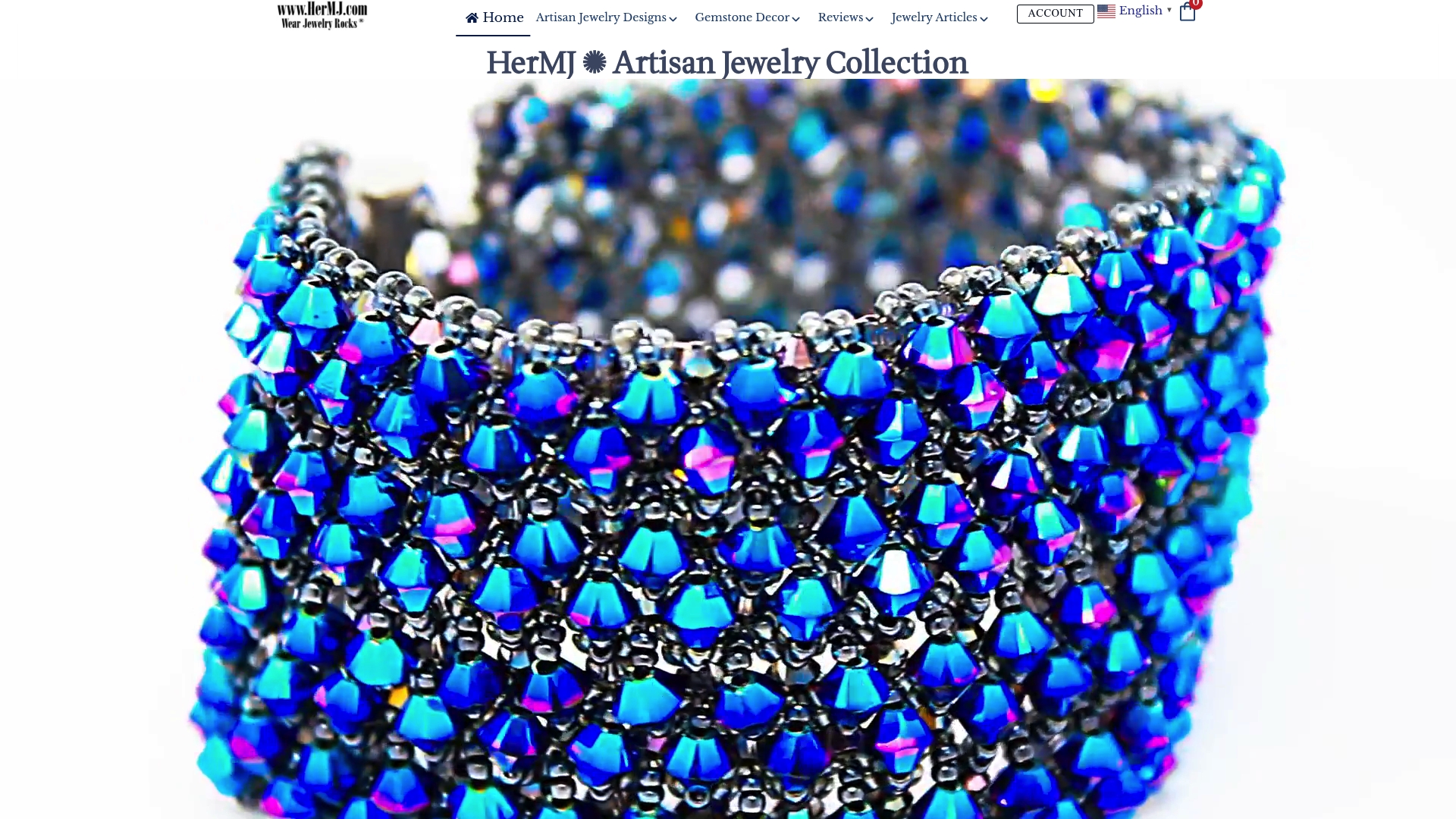
HerMJ builds every piece around the same construction principles this article covers: hand-finished settings, genuine freshwater pearls, and carefully selected gemstones. The difference from a typical jewelry retailer is that you’re getting artisan-level craft without the gallery markup.
An elegant freshwater pearl necklace or a faceted garnet gemstone necklace from HerMJ reflects the same attention to material quality and finishing detail that this guide describes.
The full freshwater pearl jewelry collection spans everyday pieces and special-occasion designs, all crafted with genuine stones and hand-finished components. U.S. orders ship free with no minimum order required.
Recommended
- Handcrafted Jewelry Making Techniques for DIY Creators
- How to Appreciate Artisan Jewelry Craftsmanship Details