


Pearl vs Moonstone: Which June Gem Wears Better?
Pearls suit readers who want a classic, warm luster and don’t mind extra care, while moonstone offers a modern glow with a bit more everyday resilience. Pearls are organic gems formed inside mollusks, soft and sentimental.
Moonstone is a feldspar mineral with a glowing sheen that’s harder, but it still needs modest care to prevent chipping. Your choice really comes down to style, durability, care habits, and budget, all of which we break down below.
The Edit
- Moonstone rates 6.0–6.5 on Mohs, compared with pearls at 2.5–4.5, but its cleavage makes sharp impacts risky, so choose a protective bezel.
- Put pearls on after makeup and fragrance, wipe them with a soft cloth after wearing, and avoid ultrasonic or steam cleaning for either gem.
- Choose colorless orthoclase for the traditional moonstone look and soft blue sheen; rainbow moonstone is usually white labradorite, valued for shifting multicolored flashes.
- When comparing quality, prioritize pearl luster and nacre over size; for lower prices, consider baroque pearls or moonstone with a softer sheen.
Pearl vs Moonstone: The Quick Comparison
Before you commit to one gem over the other, it helps to see the differences laid side by side.
Pearls and moonstone come from entirely different corners of the natural world, and their origins shape everything from how they look to how long they last.
- Origin: pearls grow inside mollusks as organic, layered nacre; moonstone forms as a feldspar mineral, mined from rock deposits.
- Hardness: moonstone rates about 6.0 to 6.5 on the Mohs hardness scale, while pearls sit much softer, around 2.5 to 4.5.
- Optical effect: pearls glow with a soft, layered luster; moonstone flashes adularescence or, in rainbow varieties, a multicolored labradorescence.
- Price and buyer type: pearls tend to appeal to traditionalists and gift buyers seeking heirloom pieces, while moonstone draws shoppers who want a modern, bohemian edge at a similarly approachable price point.
Neither gem is a tough, everyday workhorse like sapphire or diamond, so your decision usually comes down to which look and level of care fits your life.
What Makes Each Stone Glow
Pearls get their gentle radiance from nacre, the microscopic layers of calcium carbonate a mollusk secretes over time.
Light bounces between those layers, creating the luster, overtone color, and the subtle orient you see shifting across a high-quality pearl’s surface.
When you’re shopping, look for a sharp, almost mirror-like reflection rather than a chalky or dull finish. That sharpness is often the first sign of a well-formed pearl.
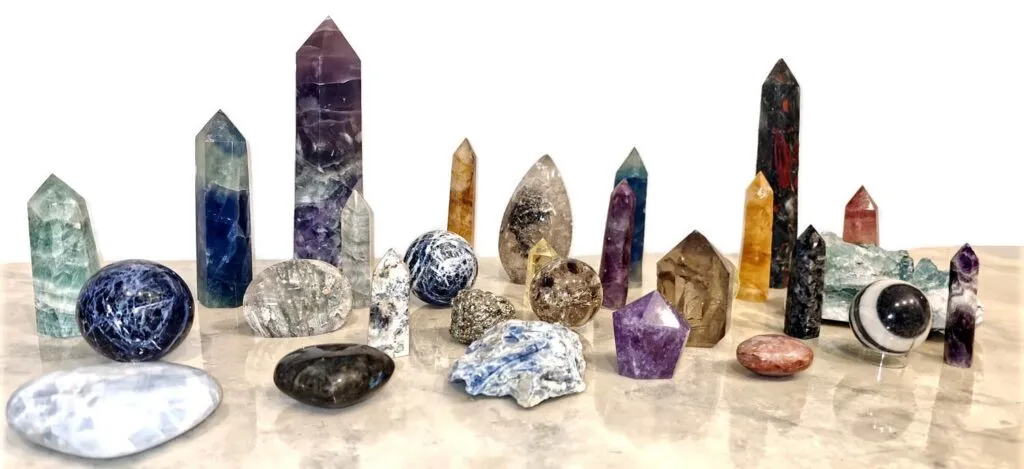
Moonstone works through a different kind of magic. True moonstone, technically orthoclase or adularia, shows adularescence, a soft blue-to-white sheen that seems to float beneath the surface.
Rainbow moonstone, by contrast, is usually white labradorite, and its multicolored flash is called labradorescence rather than true adularescence, according to GIA’s gemological comparison.
- Classic white moonstone: colorless body, blue sheen, quieter glow.
- Rainbow moonstone: often shows flashes of blue, green, pink, or gold across the surface.
Buyers who want bold visual drama tend to prefer rainbow moonstone; those who prefer the traditional moonstone look should seek colorless, blue-adularescent orthoclase, per GIA’s guidance.
In photos, watch how the stone reacts when you tilt it. A true moonstone’s sheen stays soft and ghostly, while rainbow moonstone throws distinct color flashes as it moves.
How to Protect Pearls and Moonstone Day to Day
Durability is where these two gems really part ways, and it’s worth understanding before you decide how you’ll wear your piece.
Moonstone’s harder mineral structure, around 6.0 to 6.5 on the Mohs scale, makes it more resistant to everyday scratching than pearl, which falls between 2.5 and 4.5 according to GIA’s moonstone buying guide.
That said, moonstone has natural cleavage planes, so a sharp knock can chip or crack it even though its surface resists scuffs.
Pearls face a different threat entirely. As an organic material, nacre is vulnerable to chemicals in perfume, hairspray, and even skin oils, which can dull or slowly dissolve that beautiful luster, as GIA explains.
A simple daily routine protects both gems for years:
- Put your pearls on last, after makeup and fragrance, and take them off first when undressing.
- Gently wipe pearls with a soft cloth after every wear to remove oils and residue.
- Skip ultrasonic or steam cleaners entirely for both pearls and moonstone.
- Rinse occasionally in warm water with a drop of mild soap, then pat dry.
- Store each piece separately in a soft pouch to avoid surface contact with harder jewelry.
Pro Tip: Treat your pearls like your favorite silk scarf: gentle, chemical-free, and stored with care.
For either gem, we’d steer away from high-impact rings. A protective bezel setting, where metal wraps around the stone’s edge, reduces chipping risk for moonstone and shields pearls from scuffs against hard surfaces.
How Experts Judge Pearl and Moonstone Quality
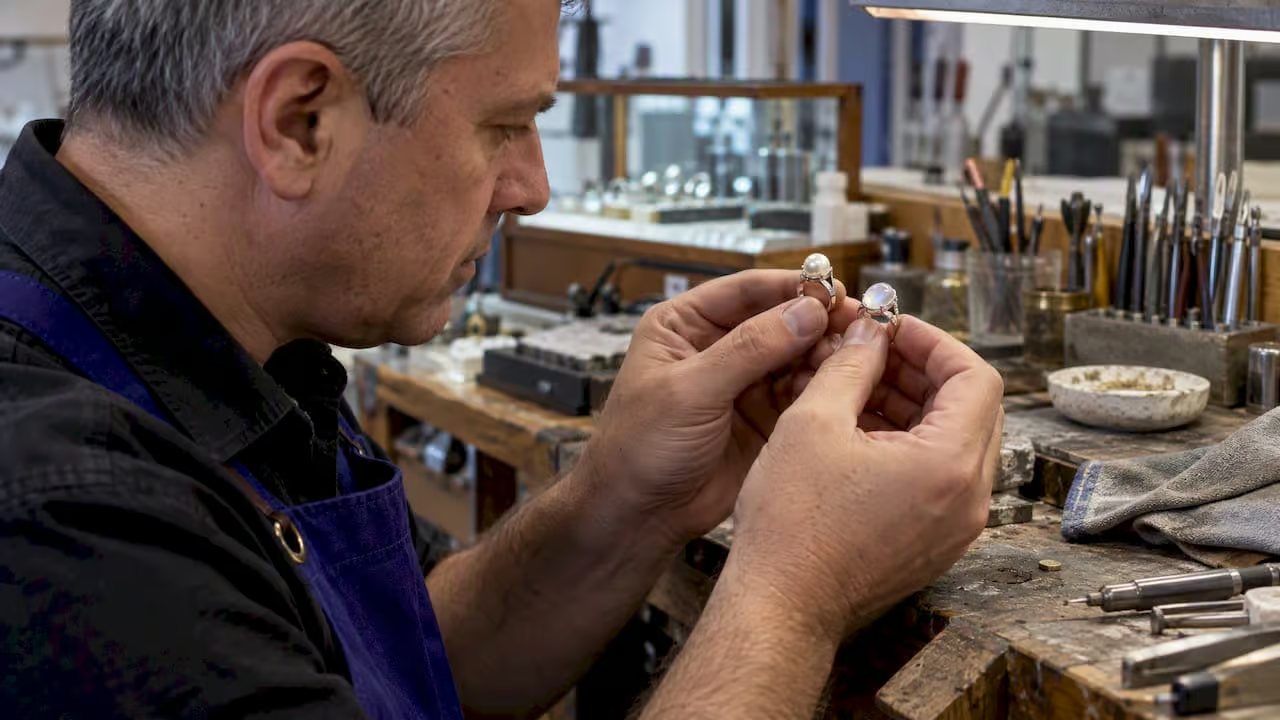
Jewelers don’t evaluate value randomly. For pearls, GIA identifies seven core value factors: size, shape, color, luster, surface quality, nacre quality, and matching across a strand.
Luster and nacre quality often carry more weight than sheer size when it comes to perceived beauty and how well a pearl will hold up over time.
Moonstone is judged differently, based on the strength and visibility of its sheen, its body color, and its clarity.
A colorless stone with a vivid, floating blue sheen typically commands the highest prices in the category, while cloudier or weaker-sheen stones cost less.
- Round, well-matched pearls with high luster sit at the top of the pearl value scale.
- Clear, blue-adularescent moonstone with strong visibility commands the biggest premium among moonstone varieties.
- Rainbow moonstone’s value often tracks the intensity and spread of its color flashes.
If you’re working with a tighter budget, slightly baroque pearls or moonstone with a softer sheen still deliver real beauty for noticeably less.
Choosing the Right Gem for Each Piece
Where you’ll wear the stone matters as much as what the stone is. Pearls lean naturally toward classic, formal pieces: strand necklaces, delicate stud or drop earrings, and bridal jewelry meant to feel timeless.
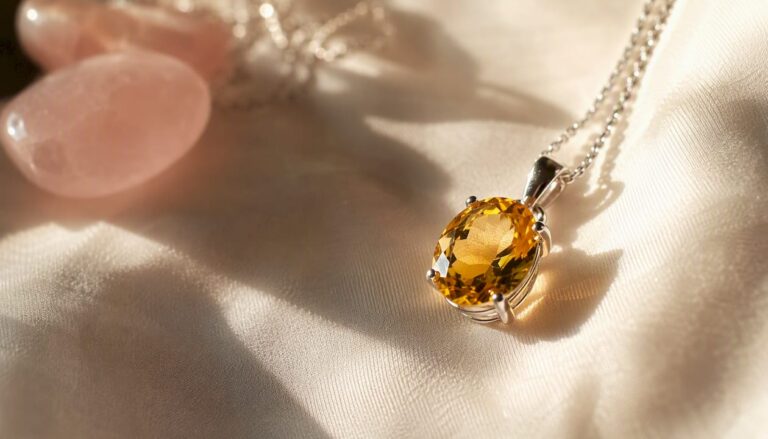
Moonstone, with its glow and movement, fits modern pendants and statement cabochons that catch the light as you move.
- Choose pearl for a bridal look, an heirloom gift, or a piece that feels quietly elegant for decades.
- Choose moonstone for mood and visual motion, especially in pendants or drop earrings.
- Reserve pearls for lower-friction daily wear, like simple studs, rather than pieces that may encounter bumps against desks or other hard surfaces.
- Save delicate pearl strands for special occasions if your routine involves a lot of physical activity.
Both make spectacular necklace gems, which is one reason they pair so often in the same collection.
A Quick Checklist to Help You Decide
Run through a few honest questions about your life before you buy, and the right gem usually becomes obvious.
- How often will you wear this piece: daily, or mostly for special occasions?
- Will it be regularly exposed to perfume, lotion, or rough use?
- Does the traditional meaning of a June birthstone matter to you personally?
- What’s your realistic budget for the look you want?
Scenario 1: you want a pendant for an active, on-the-go lifestyle. Moonstone in a protective setting handles daily bumps better than pearl, which can be exposed to chemicals and wear down the surface.
Scenario 2: you’re buying a gift for someone born in June who loves a classic, elegant style. Pearl is the clear match, carrying centuries of tradition and a classic look that never goes out of style.
Scenario 3: you want a bold, artistic statement piece. Rainbow moonstone certainly delivers the drama, with color flashes that shift every time you move.
My Take on Pearls, Moonstone, and Handmade Design
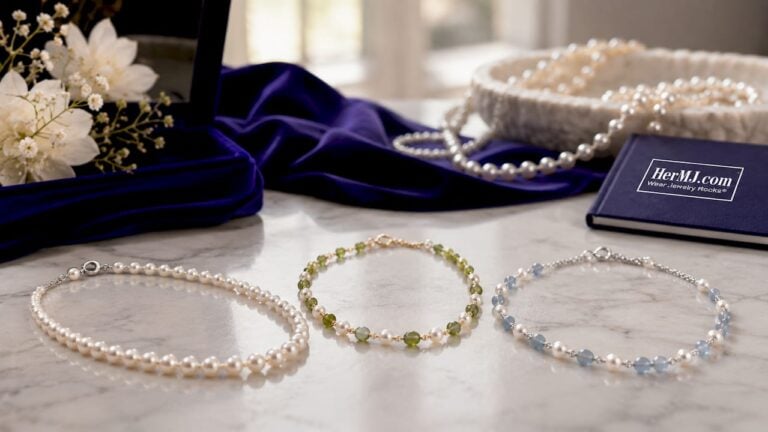
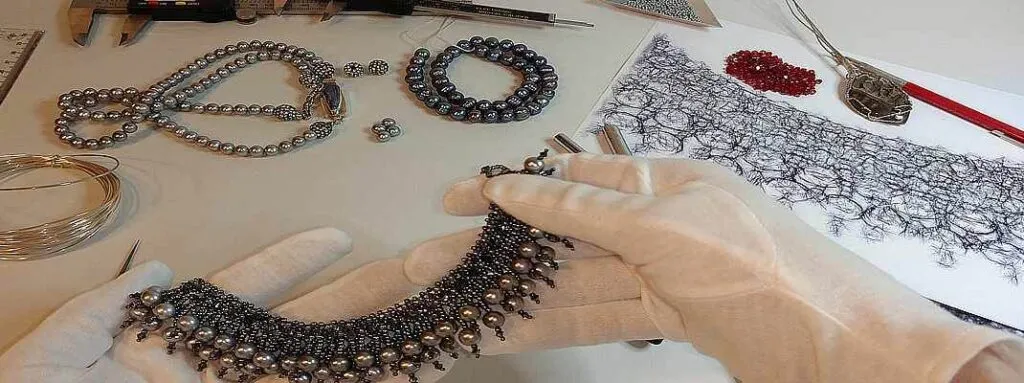
HerMJ specializes in artisan pearl and gemstone jewelry, pairing genuine freshwater pearls with natural stones at accessible prices.
If you want to understand why moonstone glows the way it does, my piece on adularescence explains it further, and our guide to what makes pearls valuable walks through the grading factors in more depth.
Many of HerMJ’s necklace and pendant designs lean into the classic pearl aesthetic I’ve described above, built for exactly the kind of everyday elegance this comparison points toward.
Sentiment or Practicality: Our Editorial Take
We think the best choice rarely comes down to gem science alone. If a June birthstone carries family meaning for you, that sentiment is worth more than a hardness rating.
But you can combine both: a well-set, well-cared-for pearl piece holds its sentimental weight for generations while still fitting your daily life.
— Veronique
Discover HerMJ’s Handcrafted Pearl Necklaces
I believe pearls deserve settings that highlight their quiet glow, so I’ve designed genuine freshwater pearls with complementary gemstones for a look that feels personal, not mass-produced.
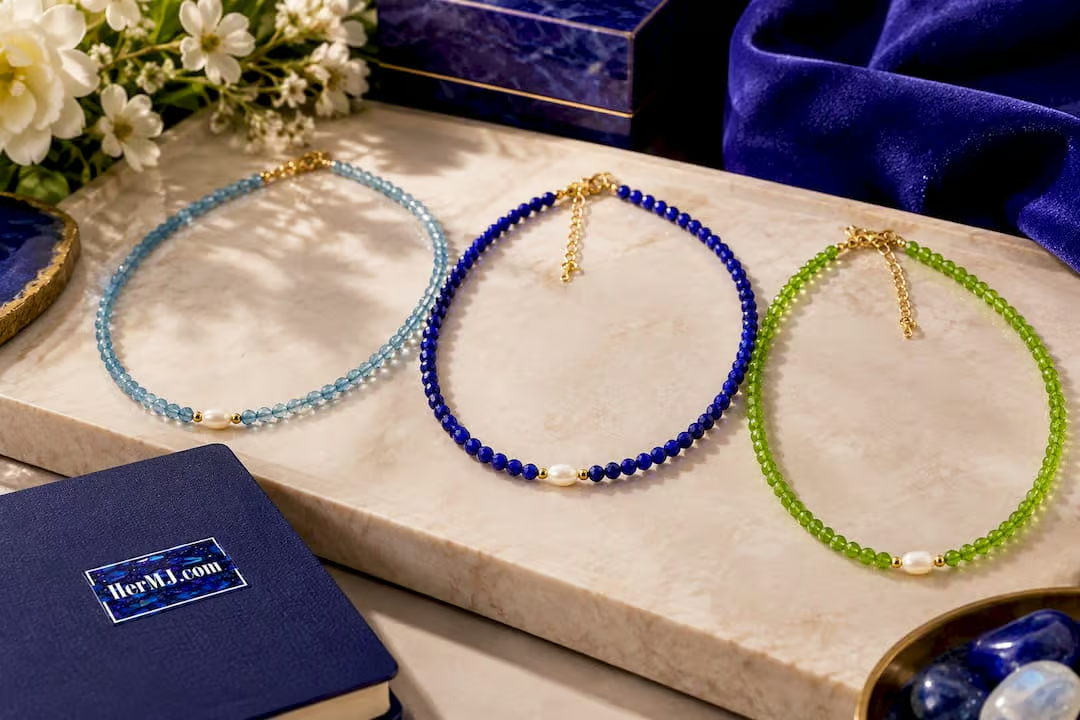
- Pearl and Aquamarine Necklace: best for a soft, beach-inspired everyday look.
- Lapis Lazuli Pearl Necklace: best for bold contrast and a rich, statement feel.
- Peridot and Pearl Fusion Necklace: best for a bright, modern take on a classic gem.
Every US order ships free with no minimum. Browse our full necklace collection to find the piece that fits your story.
FAQ
What’s the difference between white moonstone and rainbow moonstone?
White moonstone is orthoclase or adularia, showing a soft blue-to-white glow called adularescence. Rainbow moonstone is usually white labradorite, a related but distinct feldspar that produces multicolored flashes known as labradorescence instead.
Why can’t you wear pearls on your wedding day?
You absolutely can wear pearls on your wedding day, and many brides do, since pearls have long symbolized purity and elegance. The caution some people repeat is really about care: pearls are sensitive to perfume and hairspray, so it’s best to put them on last and avoid direct contact with beauty products.
Which stone represents the Moon?
Moonstone carries the lunar association, named for the way its glow seems to shift like moonlight across the surface. Pearls carry their own symbolism tied to purity and the sea, but the Moon connection belongs specifically to moonstone.
Is moonstone more valuable than opal?
Value depends heavily on quality within each gem type rather than a blanket comparison. A moonstone with strong, visible adularescence and good clarity can command a solid price, but opal’s value swings widely based on its own play of color and body tone, so neither gem is universally worth more than the other.
Recommended
- Alternative Birthstones | Handmade Gemstone Jewelry by Month
- June Birthstone Pearls: Choose and Care for the Perfect Gift