



Citrine Meaning: Abundance, Chakra Links, and Care
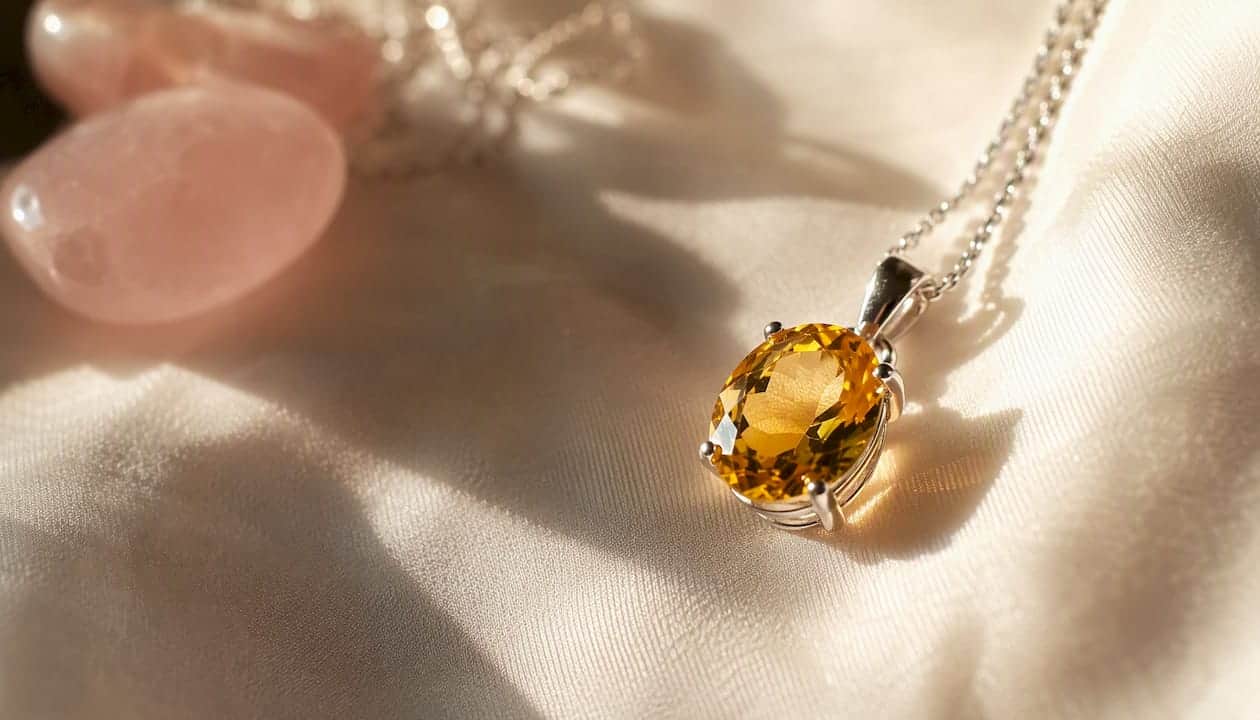
Citrine is the gemstone of abundance, optimism, and personal power. Recognized by the GIA as a yellow-to-brownish-orange variety of quartz, and documented by Britannica as a stone colored by trace iron, citrine carries one of the most consistent symbolic identities in the gem world: it draws prosperity, lifts mood, and strengthens personal will.
Quick associations you’ll find across gemological and practitioner sources:
- The Merchant’s Stone: historically carried by traders to attract wealth and encourage generosity
- Solar Plexus activator: linked to confidence, willpower, and self-trust
- Manifestation tool: used in intention-setting rituals and abundance practices
- Joy and optimism: its warm yellow color is central to its emotional symbolism
- November birthstone: added to the modern birthstone list in 1952
Key Takeaways
Citrine’s core meaning (abundance, optimism, and personal power) is consistent across gemological sources and practitioner traditions, and its practical value comes from pairing that symbolism with concrete daily habits.
| Point | Details |
|---|---|
| Core symbolic meaning | Citrine represents abundance, optimism, and personal power; historically called the Merchant’s Stone. |
| Primary chakra link | Associated with the Solar Plexus Chakra, governing confidence, willpower, and decision-making. |
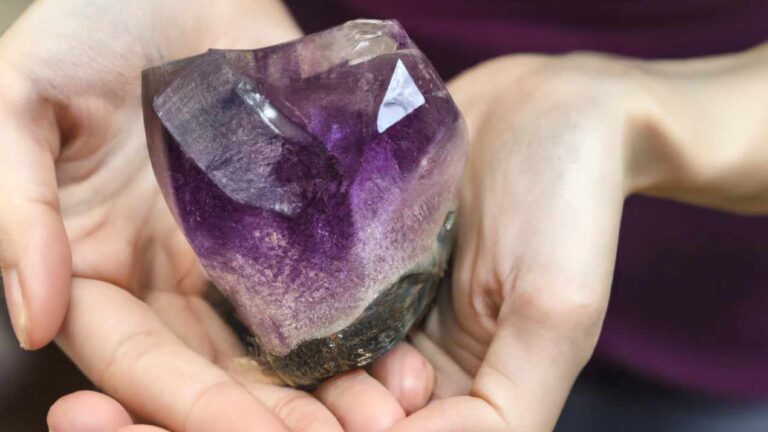
| Geology note | A quartz variety (SiO₂, Mohs 7) colored by trace iron; most commercial citrine is heat-treated amethyst. |
| Buying tip | Ask sellers about treatment history and look for pale yellow tones as a sign of natural origin. |
| HerMJ recommendation | HerMJ’s handcrafted citrine jewelry uses genuine stones, ships free in the US, and is available in the designer crystal collection. |
What does citrine mean for your mind, body, and spirit?
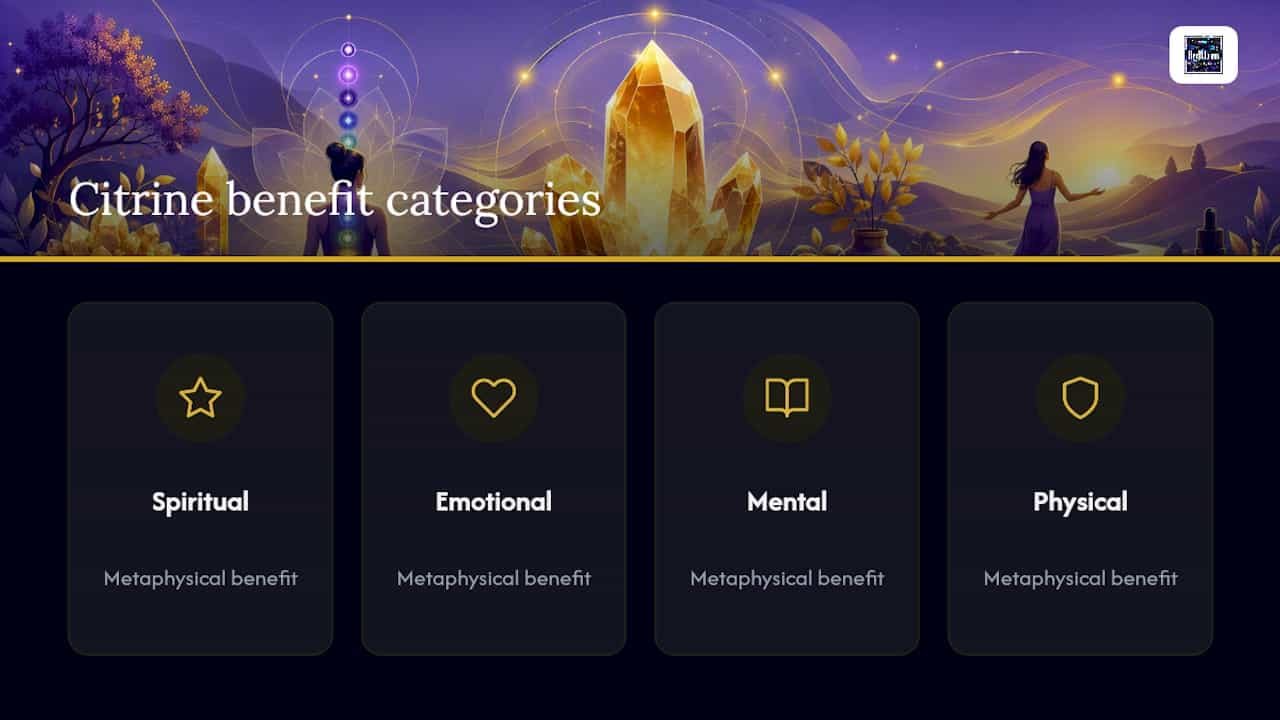
Crystal practitioners organize citrine’s metaphysical benefits into four broad categories. Each one reflects a different way people work with this stone in daily life.
Spiritual
Spiritually, citrine is associated with alignment and clarity of purpose. Practitioners often place it on an altar or hold it during meditation to reinforce intentions around growth and abundance. The stone’s warm, solar energy is thought to connect the wearer to a sense of higher purpose and forward momentum.
Emotional
On an emotional level, citrine is one of the most consistently recommended stones for lifting low moods and reducing self-doubt. Mindbodygreen notes that practitioners recommend it for confidence and willpower, particularly during periods of transition or creative blocks. Wearing a citrine bracelet or pendant close to the body throughout the day is a common practice for this reason.
Mental
Mentally, citrine is associated with clarity, focus, and decision-making. Practitioners describe it as useful for cutting through mental fog, especially when facing complex choices. Some people place a citrine point on their desk as a visual anchor for clear thinking during work sessions.
Physical
Clinical evidence best supports physical claims about citrine only weakly, so view them as traditional or metaphysical. Some practitioners associate it with digestive health and energy levels, drawing on its connection to the Solar Plexus.
Citrine is not a medical treatment and should never replace professional healthcare. Safe, common practices include wearing citrine jewelry, placing specimens in living spaces, or holding a tumbled stone during breathwork.
Pro Tip: If you’re new to working with citrine, start with a single piece of citrine jewelry worn daily for two weeks. Consistency matters more than ritual complexity when you’re building a new mindfulness habit.
- Citrine’s color psychology plays a real role here: bright yellow objects are consistently linked in color research to reported mood uplift and increased alertness.
- Practitioners and retailers should frame citrine’s wealth associations as mindset tools rather than financial guarantees, per Crystal Meanings.
How do chakra and zodiac associations shape citrine’s use?
The Solar Plexus Chakra (Manipura) is citrine’s primary association, and it’s the one you’ll find in nearly every practitioner guide. This chakra governs confidence, personal power, and the ability to act on decisions. Some traditions also link citrine to the Sacral Chakra, particularly when working with creativity and emotional fluidity.
Zodiac associations most commonly cited:
- Scorpio: Citrine is a traditional birthstone for Scorpio and is used to balance the sign’s intensity with optimism
- Sagittarius: linked to citrine’s expansive, opportunity-seeking energy
- Aries and Leo: fire signs that resonate with citrine’s solar warmth and drive
- Gemini: sometimes listed for its mental clarity associations
Two practical usage examples tied to these associations:
- Meditation placement: Lie down and place a citrine tumble stone on your solar plexus (just above the navel) for 10 minutes while focusing on a specific goal. This is a standard Solar Plexus activation practice recommended by crystal guides.
- Desk charm: A small citrine point or cluster on your workspace serves as a daily visual reminder of your intentions, particularly useful for Sagittarius and Aries placements who benefit from environmental cues for focus.
What is citrine, geologically speaking?
Citrine is a transparent variety of quartz (silicon dioxide, SiO₂) colored by trace iron impurities. Britannica notes that colloidally suspended hydrous iron oxide contributes to color in some specimens.
As a result, the color ranges from pale lemon yellow to deep brownish-orange, depending on iron concentration and geological conditions.
Key gemological data:
| Property | Citrine |
|---|---|
| Mineral family | Quartz (SiO₂) |
| Mohs hardness | 7 |
| Color range | Pale yellow to brownish orange |
| Transparency | Transparent |
| Luster | Vitreous |
Principal localities include Brazil (the world’s largest supplier), Uruguay, the Ural Mountains in Russia, Scotland, Madagascar, and North Carolina.
Britannica confirms Brazil and Uruguay as primary sources, while Geology.com notes that color ranges widely across these origins. Mindat provides specimen-level locality data and photos for collectors who want to assess specific finds.
Visual clues for recognizing citrine:
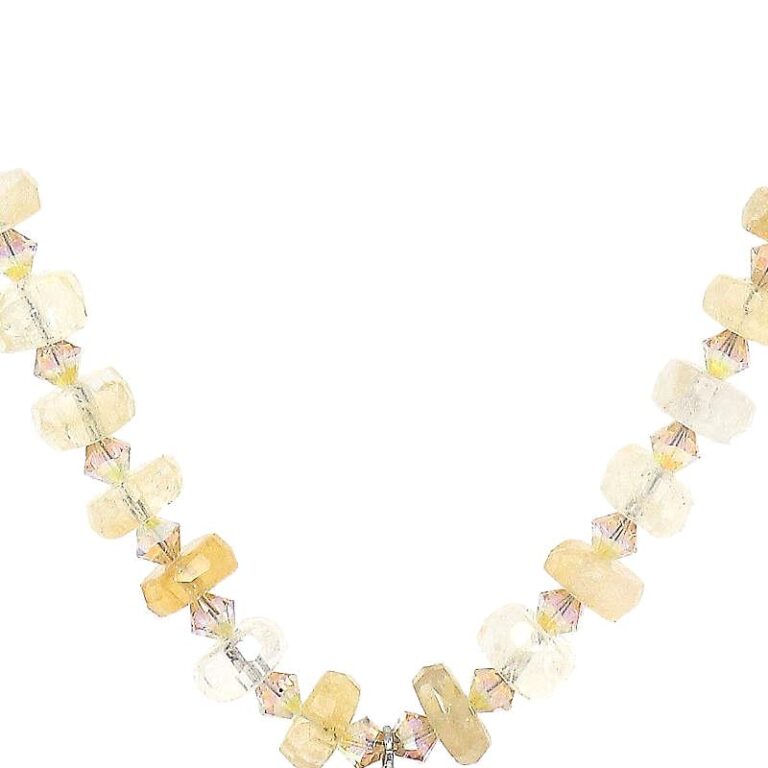
- Natural citrine tends toward pale yellow or slightly smoky tones
- Vivid orange or reddish-orange saturation usually signals heat treatment
- Color distribution in natural citrine is often even throughout the crystal
- Heat-treated material may show color concentrated at the base or tips of a crystal point
How has citrine’s meaning evolved through history?
Citrine’s story is longer than most people realize, and its symbolic identity shifted considerably over the centuries.
Ancient Greece, ca. 300 B.C.: Citrine was used as a decorative gem in ancient Greek jewelry. Early use was primarily aesthetic, though yellow stones generally carried solar symbolism across Mediterranean cultures.
Medieval naming roots: The name comes from the Latin citrus and the French citrin or citron, both referring to the lemon tree. The American Gem Society records the first English use of the name in the 14th century, when the stone was already associated with warmth and vitality.
The Merchant’s Stone tradition: Traders historically carried citrine to attract prosperity and encourage generosity in business dealings. This association with commerce and abundance became the stone’s most enduring folkloric identity.
Topaz confusion: For centuries, people sold citrine and yellow topaz interchangeably. The International Gem Society notes that topaz is harder and heavier than citrine, but the visual similarity led to overlapping folklore. Some historical “topaz” talismans were almost certainly citrine.
Modern birthstone status: Citrine was added to the modern birthstone list in 1952, according to Geology.com, giving it an official calendar anchor as a November stone alongside topaz.
The Merchant’s Stone label is the piece of folklore that stuck most firmly, and it’s easy to see why. Citrine’s color evokes gold and sunlight, two of the oldest visual metaphors for wealth and warmth across cultures.
You can read more about how jewelry has carried symbolic weight through history in this piece on jewelry and relationships.
How can you use citrine in daily rituals and jewelry?
Citrine works best when it’s woven into consistent habits rather than saved for occasional ceremonies. Here are two practical frameworks.
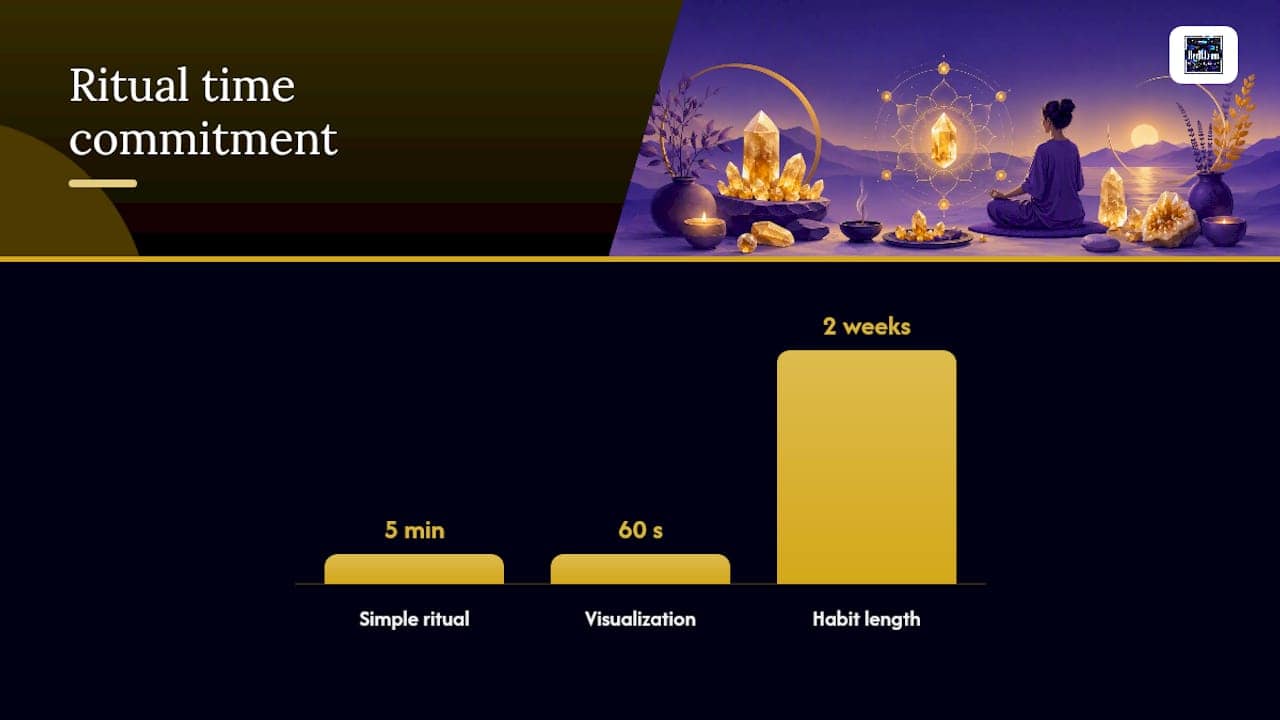
Simple manifestation ritual (5 minutes):
- Hold your citrine piece in both hands and close your eyes.
- State one specific intention aloud. Not a vague wish, a concrete goal (“I’m building a client base of 10 steady customers”).
- Visualize the outcome for 60 seconds, focusing on how it feels rather than how it happens.
- Place the stone somewhere visible as a daily anchor for that intention.
- Repeat each morning for at least two weeks to build the habit loop.
Everyday wearing tips:
- Wear a citrine bracelet on your dominant wrist to keep the stone’s energy active throughout the day
- Layer citrine with clear quartz for amplified clarity, or with tiger eye for grounded confidence (a tiger eye bracelet pairs naturally with citrine’s solar energy)
- Gold settings complement citrine’s warm tones better than silver, though both work stylistically
- For home placement, a standing double-point citrine specimen on a desk or in a home office keeps the stone’s abundance symbolism present in your workspace
Pairing suggestions:
- Clear quartz: amplifies intention
- Tiger eye: adds grounding and practical focus
- Pyrite: reinforces the prosperity theme
- Amethyst: balances citrine’s active energy with calm
For a broader look at how crystals fit into home and personal practice, the crystal uses guide covers placements and rituals across a range of stones.
How do you identify real citrine and buy it wisely?
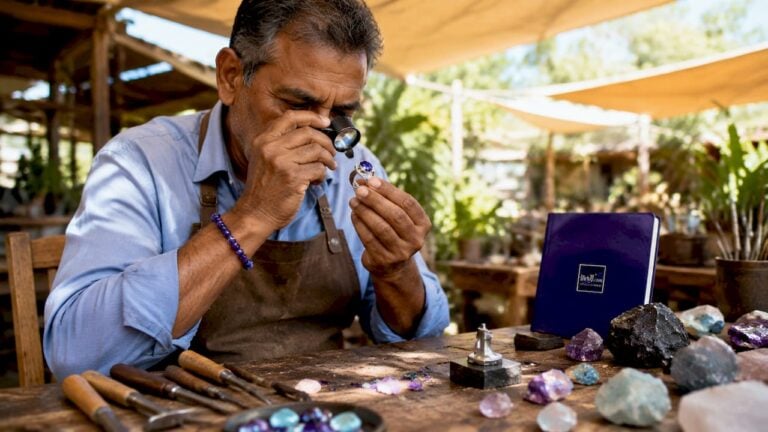
This is where knowing your gemology pays off. Most commercial citrine is heat-treated amethyst, and that’s not necessarily a problem, but you deserve to know what you’re buying.
Buying checklist:
- Ask the seller directly whether the stone is natural citrine or heat-treated amethyst
- Look at the color: pale yellow or slightly smoky tones suggest natural origin; vivid orange or reddish saturation usually means heat treatment
- Buy from sellers who disclose treatment history transparently
- Check the color distribution: heat-treated material often shows color concentrated near the base or tips rather than evenly throughout
GIA confirms that natural citrine is rarer than heat-treated material and that color intensity and distribution are the primary visual clues. Heat-treated amethyst can be beautiful and durable. The distinction matters for pricing and authenticity, not necessarily for wearability.
Care instructions:
- Clean with mild soap, warm water, and a soft brush
- Avoid prolonged exposure to direct sunlight, which can fade citrine’s color over time
- Keep away from high heat sources (steam cleaners, ultrasonic cleaners with heat settings)
- Store separately from harder stones to prevent surface scratching
Many practitioners describe citrine as “self-cleansing,” meaning it doesn’t accumulate negative energy the way some stones are said to. This is a metaphysical belief rather than a measurable physical property, as Wikipedia’s entry on citrine notes. That said, occasional energetic cleansing with moonlight or sound is common practice and does no harm to the stone.
Pro Tip: If you’re handling rough citrine specimens for lapidary work, wear a dust mask. Quartz dust is a respiratory hazard. This is a safety standard for all quartz-family minerals, not specific to citrine.
What does the research actually say about citrine’s reputation?
It’s worth separating what gemology confirms from what practitioners claim, because both have real value when understood correctly.
Gemological facts (confirmed):
- Citrine is silicon dioxide with a Mohs hardness of 7, chemically distinct from topaz despite visual similarities, per Britannica
- Most retail citrine is heat-treated amethyst; natural citrine is genuinely uncommon, per GIA
- Citrine is the most frequently purchased yellow-to-orange gem due to its color, clarity, durability, and accessible price, per Geology.com
Psychological framing (evidence-informed):
Color psychology research consistently links bright yellow to reported increases in alertness, optimism, and energy. When you wear or work near a yellow object you’ve assigned meaning to, you’re more likely to notice opportunities that align with that meaning.
This is a well-documented cognitive bias called attentional priming. Crystal Meanings frames citrine’s wealth associations this way: the stone doesn’t create money, but it can shift your mindset toward opportunity-seeking behavior.
Common misconceptions:
- “Natural citrine is common”
False. The most affordable citrine is heat-treated amethyst. - “Citrine and topaz are the same stone”
False. They share color but differ in hardness, specific gravity, and chemical composition. - “Citrine guarantees financial results”
No reputable practitioner or gemologist makes this claim. The stone’s value is symbolic and psychological.
Practical takeaway: Pair citrine’s symbolic framework with a concrete habit. A written goal, a daily check-in, a specific action tied to your intention. The stone works best as an anchor for practices you’d benefit from anyway.
A note from HerMJ on styling citrine
When I style citrine, my first suggestion is always to let the stone’s warmth lead. Citrine reads beautifully against warm skin tones in gold settings, but it’s equally striking on cool skin tones with silver or white gold; the contrast makes the yellow pop rather than blend in.
A citrine ammonite necklace worn at the collarbone, for example, draws the eye upward and adds a sculptural quality that plain pendants don’t achieve. At HerMJ, every citrine piece is handcrafted with select stones, so you’re getting the real material, not a synthetic substitute. US orders ship free with no minimum; international orders ship free on orders of $150 or more.
Citrine jewelry worth wearing every day
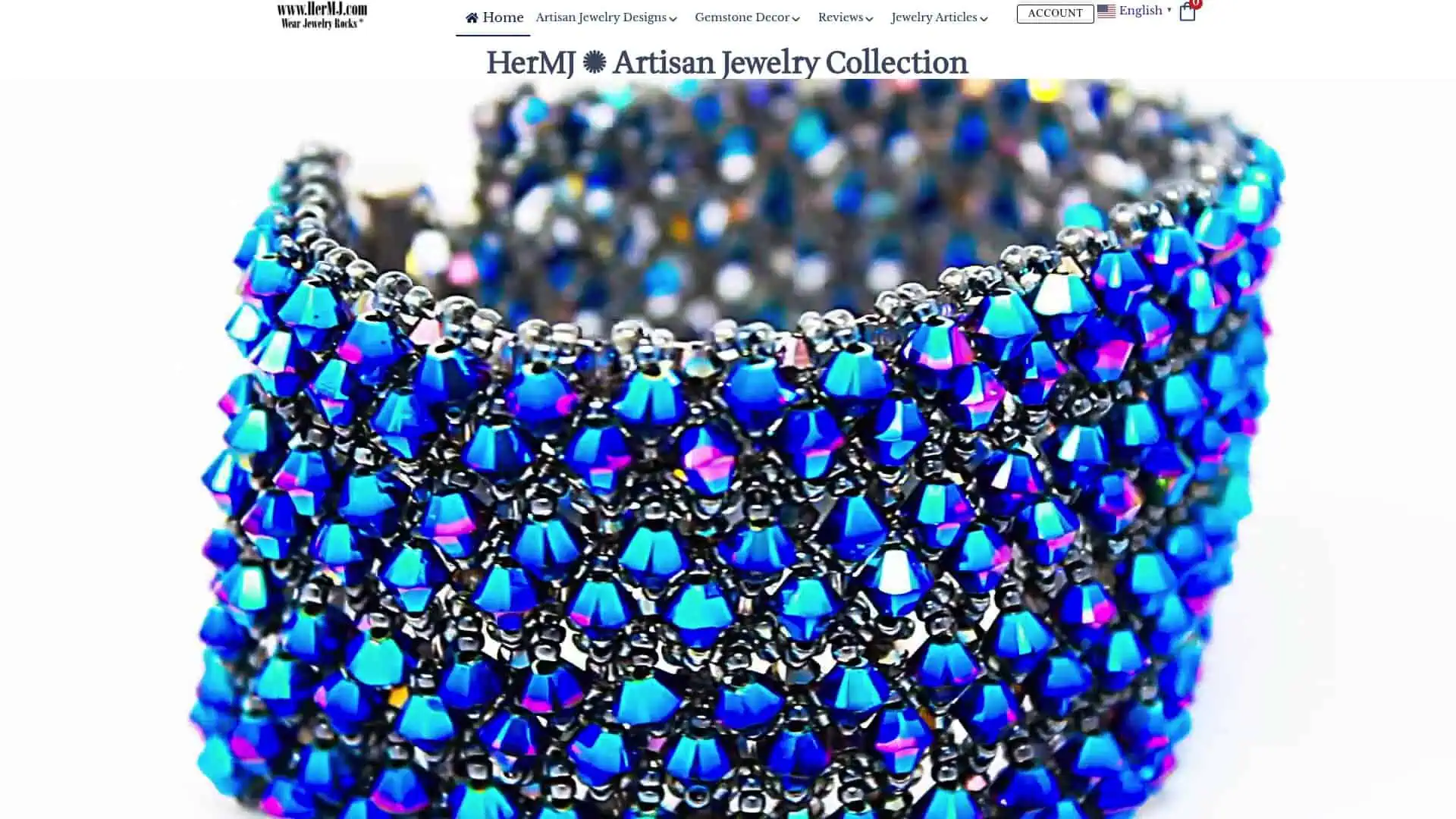
If this guide has you thinking about adding citrine to your collection, HerMJ’s handcrafted gemstone pieces are a natural next step. Each one is made with genuine citrine and finished by hand, so the quality you read about here is the quality you receive.
Visit the designer crystal jewelry collection for a wide range of styles to pair citrine with other stones, such as the Pearl and Aquamarine Necklace, Elegant Freshwater Pearl Necklace, Lustrous Freshwater Pearl Bracelet for Elegance, Faceted Garnet Gemstone Necklace, Strawberry Quartz Gemstone Bracelet, and Tiger Eye Bracelet. Each complements citrine’s warm energy beautifully. US shipping is always free, with no minimum order required.
Sources
- The folklore of citrine | American Gem Society
- Citrine Crystal: Meaning, Healing Properties, Uses + More | mindbodygreen
- citrine | Description, Properties, & Facts | Britannica
- Citrine | GIA
Recommended
- The Golden Connection: Metaphysical Citrine Benefits
- Crystal Uses: A Guide to Healing, Decor, and Spirit
- The Crystal Life: Exploring the Fascinating Origins of Gemstones
- Citrine Crystal Bracelet ✺ HerMJ